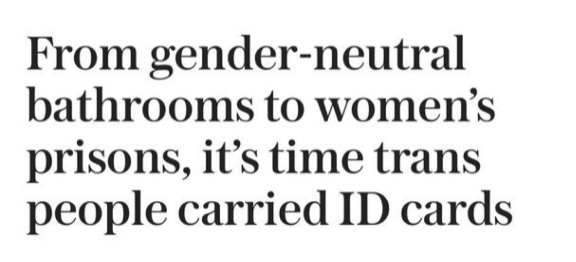
Yesterday was just another day in the UK press. The Telegraph suggested that trans people should be made to carry ID cards in order to go to the toilet. The Times lauded a new anti-trans hate group specifically set up to exclude trans people from the wider LGBT+ rights movement. The Daily Mail and The Sun continued to make hay from claims that two young trans people “forced” a multinational corporation to “erase women”.
It was just another day on the internet too, with trans people being abused 8 times a minute. That abuse ranged “from insults and harassment to calls for the genocide of transgender people and their allies”, with people suggesting that it’s OK to kill trans people because they’re “less than human”.
It makes for incredibly grim reading. On Twitter, 12% of posts relating to trans issues or people are abusive; elsewhere abuse makes up 18% of blog comments, 19% of news comments, 40% of forum discussions and 78% of YouTube comments. And that’s just clearly abusive posts. It doesn’t include dog-whistles where bigotry makes its point more carefully.
Despite this, these are still very minority views. As the report notes: “constructive, pro-trans conversation far outweighs the negative. Transphobic conversation is in the minority, but it’s still very loud and very damaging.”
These may be minority views, but they represent the majority of trans-related coverage in most of the UK press and broadcasting media. A vicious, vocal minority is being repeatedly platformed by editors and broadcasters who should, and I suspect who do, know better.
Every single trans person I know is tired of this and terrified by it too.
Thomas’s argument is simple. “If drivers, pensioners, students and disabled citizens have cards that establish their bona fides”, why shouldn’t trans people?
There are two answers to that.
One, drivers, pensioners, students and disabled people don’t have to produce ID so they can go for a piss in safety or get on with their lives without being beaten up.
Here’s Ellen Murray from TransgenderNI:
Having this for trans people “voluntarily” is against the law, absolutely unenforceable, breaches human rights grossly and is a very dangerous direction to go down.
And two, because they have been tried before.
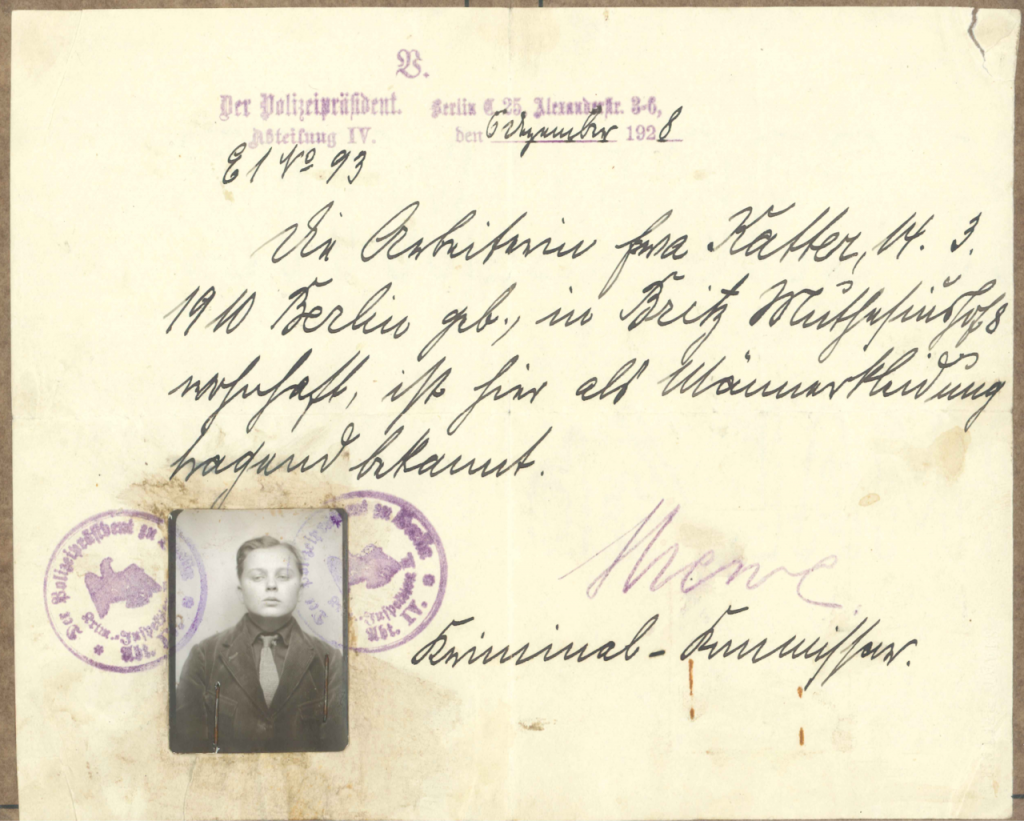
Here’s one.
These passes were “transvestite passes”, which were granted by German police until 1933 based on diagnostic interviews by sexologist Magnus Hirschfeld at the Institute for Sexual Research. The holders were allowed to wear the opposite gender’s clothing in public without fear of arrest.
They weren’t granted after 1933 because on the 6 of May that year Nazi students and soldiers stormed the Institute, destroyed equipment and materials (the most famous photo of book-burning Nazis is of those people destroying Hirschfeld’s work), and seized the records of people who’d been interviewed by Hirschfeld. Those people were then specifically targeted by the Nazis and sent to concentration camps where they were ostracised by other prisoners, abused, experimented on and killed.
If Thomas isn’t aware of this terrible history, he should educate himself. And if he is aware but chose to ignore it, he should be ashamed of himself.
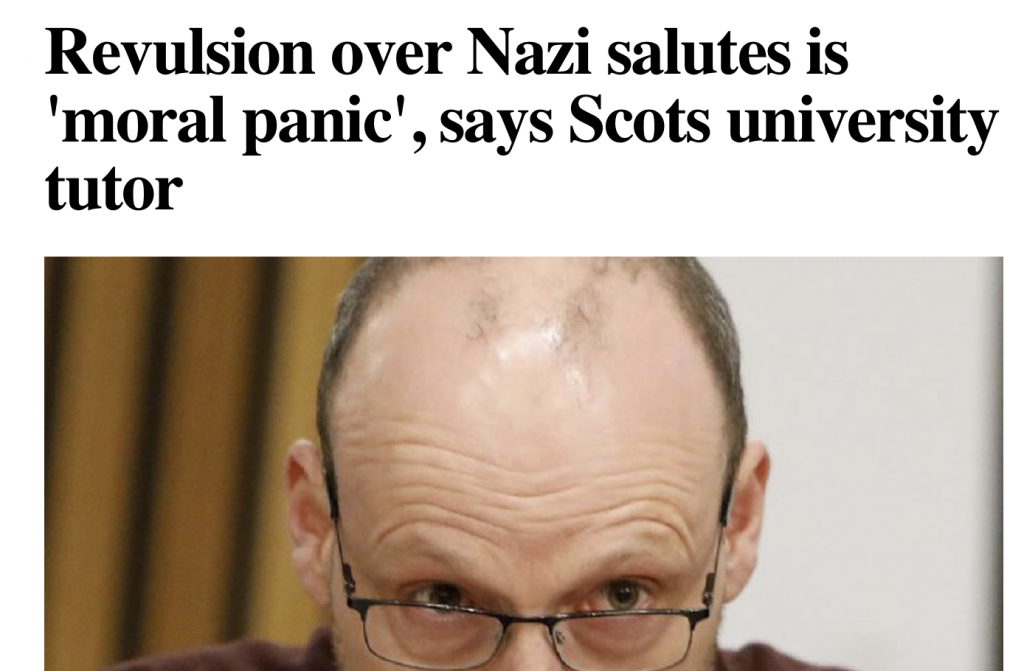
There was widespread revulsion on social media yesterday over this article.
Mr Waiton here isn’t a tutor, he’s a senior lecturer. He’s also a Brexit Party candidate. And the newspaper this article is from, The Scotsman, is his occasional employer. He’s also a regular contributor to the Herald, Scotland’s other national daily, where he helps fuel the moral panic around the existence of trans people. Naturally he’s a regular Spiked contributor too.
As ever, trans people told you he was a bad ‘un and nobody listened.
As publisher and commentator Laura Waddell noted yesterday:
Stuart Waiton was handed a microphone and met with applause at a Glasgow anti-GRA [Gender Recognition Act] event with subsequent national press writeups completely unequipped to see how the subject is like flypaper for those with broader reactionary, anti-feminist, anti-minorities agendas.
…this abhorrent view is nothing new. And yet we have #buyapaper appeals from those papers who pay this guy and others like him for his views, while the press landscape in Scotland remains heavily skewed towards men? The problem isn’t just corporate cuts.
Elsewhere in “people who are awful to trans people tend to be awful people full stop” news:
I’ve posted this cartoon by Barry Deutsch before, I know, but that’s because it’s good.
I tend to gravitate towards people who are clever and kind, and as a result I’m friends with a lot of people who work in charities, voluntary groups and other good places. They’re generally trans-inclusive places but they don’t always have many or any trans staff or volunteers, so from time to time my friends will ask me about trans-related stuff.
I’m not going to name any of the organisations for reasons that should become pretty obvious.
The other day, one of my friends wanted my opinion on something. Her organisation is happily trans-inclusive, and it was considering publicly supporting this year’s Transgender Day of Remembrance. It’s an annual event to mark the people murdered for their gender identity (21 so far in the US alone this year), and it’s an opportunity to show support for the wider trans community. It wouldn’t involve any time, effort or money, just a statement of support on social media.
My advice: don’t do it.
That’s because some of my other friends also work for or with organisations that are happily trans-inclusive, and when some of those organisations have said so publicly – usually in response to social media queries – they’ve been the victims of ongoing campaigns of social media abuse. One of my other friends recently told me of the weeks of sustained abuse one particular organisation received over every social media channel, abuse that a year later still happens almost every day.
These aren’t politicians or contrarians who say hateful things online and then run to the newspapers claiming abuse when people criticise them. These are good people in good organisations who can’t express the most innocuous sentiment –  we don’t hate trans people – without inviting sustained and often co-ordinated campaigns of abuse accusing them of the most terrible things.
This happens on an individual level too. I was at a social media workshop for LGBT+ people the other day, and one of my fellow attendees was the mum of a trans kid. She was considering going on networks such as Twitter to help humanise trans people, to share her story so that others could understand.
My advice to her: don’t do it.
I know several mums of trans kids who use social media. Without exception they face constant, vicious abuse. People try to find their home addresses and private photos of their children. People repeatedly accuse them of child abuse. In some cases people even report them to social services in the hope of getting their children taken into care.
Some of those women are much stronger than I am and continue to try and do some good online, but you need to be a very special, very strong and very secure person to deal with that every day. And the reality is that most people aren’t special, strong or secure enough to invite such hatred into their lives.
As I’ve written endlessly, lots of people are making a good living from claiming to be “silenced” in their frequently published and handsomely paid articles for The Guardian, The Spectator, The Telegraph, The Times, The Sunday Times, The Daily Mail, The New Statesman and many, many more, as well as on national radio and on television and on the lecture circuit.
These people claim to be oppressed, to be silenced, to be victims. And they do so while sending tens of thousands of social media followers to hound, harass and humiliate ordinary women. To claim victimhood while orchestrating online abuse against women who don’t have power, a platform or the Today Programme on speed dial is beneath contempt.
It already does. The teacher at the centre of the anti-education protests in England has received death threats; threats of violence are common against LGBT+ people and their supporters online. I posted the latest England and Wales hate crime figures a few days ago; in the days following, my news feed has been full of local press stories detailing even higher increases in specific parts of the country. For example, the 25% national increase in hate crimes against LGBT+ people was bad enough, but in North East England the figure is up by nearly 60%.
One of the reasons for the increasingly hateful climate is that people are now being told that LGBT+ rights, and trans rights specifically, are part of a war. That means it’s okay to make death threats to children: they’re enemy combatants.
As ever, this framing began as Christian Right messaging and it’s since been adopted by anti-trans activists and bigoted trolls. The long-standing Twitter hashtag #waronwomen, used to tag issues such as right-wingers trying to remove women’s rights, has been hijacked by right-wingers trying to roll back LGBT+ rights – rights that of course include rights for cisgender women as well as trans women.
Framing a minority as the enemy in a war is deliberate and dangerous. In a war, there are no shades of grey. The enemy must be destroyed. No quarter shall be given.
This kind of language has been poisoning social media for some time now. For example, yesterday the SNP’s new women’s convener, Rhiannon Spear, was warned by multiple social media posters that she was now “the enemy” in the so-called war on women.
Poster 1: You are the enemy now of the very people you dare to claim to protect. The enemy. And should be treated as such.
Poster 2: I agree entirely. Rhiannon Spear is an enemy to women.
Spear, a young pregnant woman, has been on the receiving end of this stuff for months now.
There’s lots of this online, and of course it never gets reported because it doesn’t fit the narrative of sinister trans people silencing debate.
Any woman who dares to say she isn’t against basic dignity for trans people is hounded and often abused by people using increasingly violent rhetoric. And the social networks, our press and even some senior politicians are turning a blind eye to it.
The latest Home Office figures show once again that hate crimes are soaring in England and Wales. The number of reported hate crimes has doubled since 2013.
The majority of hate crimes are racial, and there were a shocking 78,991 such crimes in 2018 – an increase of 11%. And there are also worrying increases in hate crimes against disabled people (up 14%), Jewish people (up 50%), gay and lesbian people (up 25%) and trans people (up 37%).
Remember too that the majority of hate crimes are never reported, and the ones that are rarely end in prosecution.
offences are less likely to be reported if they are considered more minor by the victim (such as verbal abuse) and not worth police time, or when committed against people who are regularly victimised and have normalised it as ‘part of everyday life’. Certain barriers are more specific to the victim community. For example, qualitative research with the LGBT community found that fear of being ‘outed’ was a frequent concern
Part of the increase is better recording, but that isn’t the whole story. If it were, you would have consistent increases across all categories, and you wouldn’t see spikes such as the increase in race-hate crimes around the EU referendum and the 2017 terrorist attacks.
If you look at those numbers again, the biggest increases are among the groups most commonly singled out by social media and mainstream media. Anti-semitism has come roaring back thanks to far-right social media users, who frequently spread hatred about disabled and LGBT+ people too; the massive rise in hate crimes against trans people corresponds with a period of hysterical scaremongering about them by supposedly respectable newspapers and broadcasters.
Once again you’ll be told that this is the result of a snowflake generation reporting free speech on social media, but the Home Office’s own analyses in recent years show that that isn’t true. These are not arseholes being arseholes on Twitter; these are hate crimes that happen in the street, perpetrated by people who often commit other kinds of crimes, especially violent ones. More than half of hate crimes are public order offences and a third involve “violence against the person”. Â Online hate crimes are a tiny amount (2% in 2016/17, mostly racist).
I sometimes wonder if a master satirist has seized control of parts of the mainstream media. How else to explain the Telegraph’s video that asks us to consider the plight of poor, marginalised, oppressed… Tories?
I’m not joking. The video tells us that the only safe space – a term the Telegraph despises, yet uses without irony here – for young Tories is the Conservative Party Conference. It even pauses to show us the terrible headline: Abused for being a Tory.
In one particularly traumatic event, one young man was called “a *** in a park” by teenagers, presumably of the ruffian variety.
A ****! In a park!
Oh Lordy, trouble so hard, don’t nobody know their troubles but God.
To be fair, the video does include someone saying that they have been told to kill themselves by strangers on the internet. And as someone who has also been told to kill myself by strangers on the internet – interestingly, strangers whose post history indicates that they are Tory supporters; my goodness isn’t that a strange coincidence what are the chances etc etc etc – I know how upsetting that can be.
If these people are being abused randomly online or in public then of course that’s unacceptable.
But.
You knew there was a but coming.
But it seems a bit off to complain that people accuse you of racism, sexism and homophobia if you’re out canvassing for a party that’s clearly racist, sexist and homophobic.
That’s not to say these particular young people are any or all of those things. I’m quite sure the Telegraph has carefully selected them and checked their social media history to make sure they haven’t publicly posted the kinds of terrible, despicable, bigoted things that, er, their party leader would put in a Spectator column.
But.
The abuse they’re getting is probably because they publicly support the party of benefit cuts and hostile environments, the party of Windrush and of slashed spending on disabled support and mental health services, the party of austerity and an enfeebled NHS, a party whose Prime Minister has said terrible things about ethnic minorities and LGBT+ people and whose cabinet largely voted against equal marriage.
It’s a bit like complaining that people are calling you a Nazi just because you’re goose-stepping around the place in a Hugo Boss uniform with a swastika wrapped around one of your biceps. Just because you’re herding minorities onto trains doesn’t mean you aren’t committed to social justice and LGBT+ equality!
There’s an obvious solution, which echoes the advice many Tory people like to offer LGBT+ people who talk about the much more serious and sustained abuse they experience.
Yesterday, Home Secretary Priti Patel threw immigrants under the bus. With obvious delight, she vowed to “end the free movement of people once and for all”; in a deeply sinister dog-whistle she added: “this daughter of immigrants needs no lectures from the North London, metropolitan, liberal elite.”
The phrase “North London metropolitan elite” (also expressed as “North London liberal elite”) is a common far-right dog-whistle, because North London is where many of the Jewish community live.
There are two possible explanations for a senior politician using a well-known dog whistle in a speech. One, they knew exactly what they were doing and used it deliberately, in which case they’re wicked. Or two, they’ve heard others use it and didn’t realise it’s a favourite of anti-semites, in which case they’re incredibly thick.
Either way, it’s pretty scary.
It’s the other part of her sentence I want to talk about here, though. “This daughter of immigrants” needs no lectures on the effect her policies will have on families just like her own, on fuelling the hostile environment that targets families just like her own, on the intolerance she’s helping breed against families just like her own.
What Patel is effectively saying is simple. I’m not like those people. I’m one of the good ones.
The ethos of the Racial Gatekeeper = my policies against [x] cannot be regressive, because I myself am of [x]. To escape my policies, [x] must be exceptional, like me.
…The problem with Priti Patel’s dog-whistle is that those who hear it will never love her as much as she wants them to.
Such gatekeepers can be found in all kinds of minority groups.
There are some gay men who speak with the evangelical right against gay men; trans women who ally themselves with anti-trans bigots; people of colour who get into bed with openly racist political parties.
“We’re not like those people,” they say to the people they try to ingratiate themselves with. “We’re the good ones.”
And to prove it, they throw their communities under the bus.
Okwonga:
Priti Patel cheerleading for the end of freedom of movement, oblivious to Sajid Javid being thrown under the bus as soon as Trump came to the UK. When fascism enters the room, immigrants get swept under the carpet.
Priti Patel, Sajid Javid, Candace Owens and others are performing the role of “racial gatekeepersâ€. They validate far-right political positions, thinking that being non-white makes them immune from critique. They’re bouncers for nightclubs to which they’ll never be admitted.
If they weren’t so dangerous I’d have some sympathy, because I think I understand part of the mindset.
You don’t want to be defined by your identity, whether that’s your race or your gender identity or your romantic orientation. You want to be seen as a success, and a success in your own right. You are not your identity.
And how better to prove that than by helping others pick on people just like you?
If that sounds rather playground, well… that’s because it is. And so is the inevitable result, which is that the person who allies themselves with the bullies is hated by by both sides.
People who act as racial (or gay, or trans, or…) gatekeepers are often loathed by the communities they come from and loathed by the people they so desperately want to impress. I won’t name names here but I can think of multiple individuals whose personality is rather like that of a beaten dog that returns to be kicked again and again and again.
The abuse appears to do something strange. It appears to make the people more extreme. The abuse from the community they’re betraying convinces them that they’re in the right, that they’re heroic truth speakers; the abuse they get from their so-called allies makes them more extreme because they convince themselves that it’s really aimed at those people, not the gatekeeper, and if they just tried a bit harder everybody would see that they’re not like those people. They’re one of the good ones.
I’ve experienced it myself: when I first came out a few years ago I was keen to distance myself from those trans people. You know. The weirdos. What I didn’t realise at the time, and what I’m deeply sorry for not understanding at the time, was that the weirdos didn’t really exist. A handful of extreme and completely unrepresentative examples were being used to demonise an entire group, and I’d fallen for it. When I realised this and started to question the stories I was being told, the storytellers turned on me too. I was no longer one of the good ones, no longer a useful idiot to legitimise what I now understand was bigotry (incidentally, that’s one of the reasons I’m so vocal now: I’m trying to compensate for any damage my naivety might have caused).
The problem with trying to be one of the good ones is that your identity is still there. You’re still one of those people.
You’re not there because you’re special.
You’re there because you’re useful.
You don’t have that platform because you’re a skilled politician, an accomplished orator or a great thinker.
You’re there because your presence enables others to hurt people like you without feeling bad about themselves for doing it.
How can it be racist if a black man says it’s a good thing? How can we be accused of being anti-LGBT if a gay guy’s in our party? How can the Prime Minister be misogynist if a woman defends him?
The key thing to remember – having known people with Patel’s worldview – is that being a Racial Gatekeeper is very lonely. It creates a genuine feeling that you are a member of a heroic and hounded minority, even though it is a membership of a cruel club you chose with relish.
The only way to evade the loneliness is to double down at every turn, to adopt views so extreme that that they startle even those you are trying to impress. You say the nastiest things you can with the biggest smile. Drawing fuel from adversity is all you have.
If you spend years doing that – surrounded by people who tell you that you’re better than those [x], since unlike them you worked hard, raised yourself up – you begin to believe your myth, to buy into your sense of destiny. But the people who surround you are still afraid of you.
And the people from your community will pay the price for your ego.
Image by Martin WeFail. You can buy his disturbing prints at wefail.art.
(Content warning: slurs)
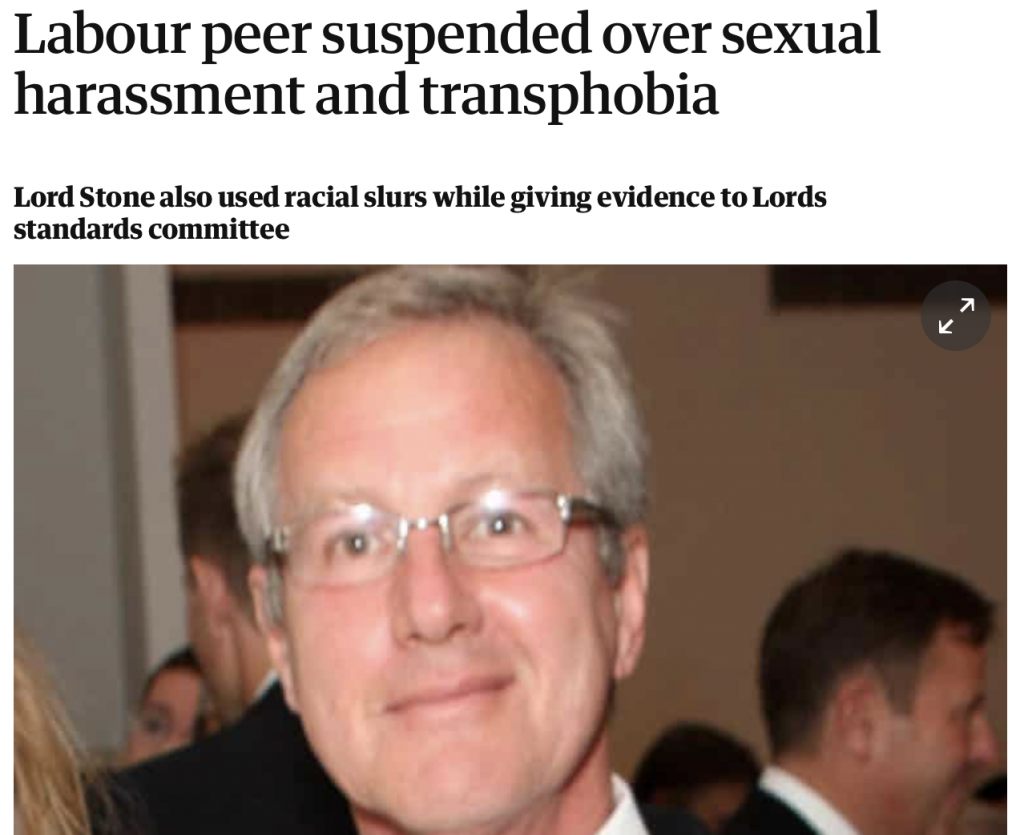
If it were possible to bet on the public pronouncements of terrible people, you could make a ton of money with a very simple rule: if someone has awful opinions on trans people, sooner or later you’ll discover that they have lots of other awful opinions too.
Here’s just one day’s trawl.
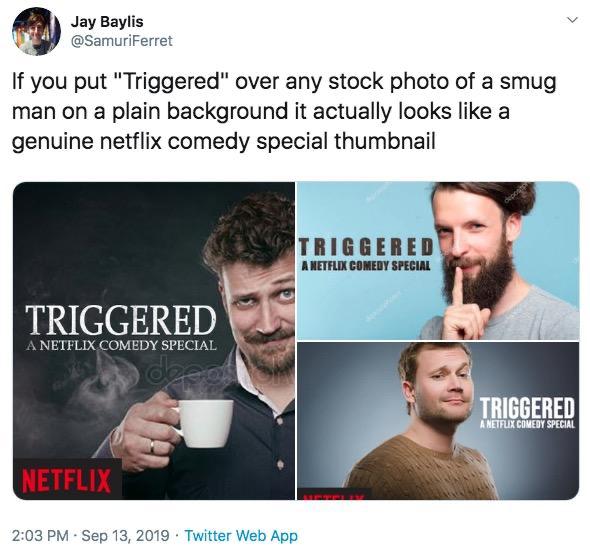
First, SNP MSP John Mason lodged a Holyrood motion calling for the Scottish Parliament to restrict abortion. Trans people were shocked – shocked! – by the news that someone who is a vocal critic of trans women’s rights and bodily autonomy would also like to restrict the rights and bodily autonomy of other women.
“This is our shocked face,” we said.
Then, tiresome contrarian Brendan O’Neill of climate-denying, right wing billionaire-funded Spiked incited violence on a current affairs programme. Trans people were shocked – shocked! – by the news that someone whose publication repeatedly incites hatred against minority groups might also incite hatred against other groups.
“No, really, this is our shocked face,” we said. “We’re shocked. So, so shocked.”
What’s almost as tiresome as these tedious arseholes is the fact that a significant number of people couldn’t care less about any of it until and unless their own particular group is suddenly in the firing line.
Mason’s anti-trans stuff merited barely a squeak, but now he’s targeting cisgender women there’s finally talk on whether the SNP’s broad church should be a little less broad, and whether a modern, supposedly progressive political party should accommodate creationists with regressive views. There’s an irony to that, of course: two very high-profile SNP politicians are science deniers too, but because the science they deny is about trans people that’s apparently okay.
And then there’s Spiked, which rose from the ashes of the Balkan holocaust-denying LMÂ and whose writers are reliably on the wrong side of everything.
Despite its origins as a far-left publication, LM quickly tacked rightwards and was beloved of far-right thinktanks. It was against the anti-apartheid sanctions on South Africa, claimed straight people didn’t need to worry about AIDS, attacked environmentalism (the greens were “Hitler-loving imperialists”), told its readers that whaling bans were “cultural imperialism”, was against the no-platforming of the National Front and (as Wikipedia puts it)Â “engaged in a sustained campaign of denial of the 1994 Rwandan genocide.” They were memorably described by one old socialist as “media pranksters and disco fascists.”
To borrow a phrase from Douglas Adams, LM were a bunch of mindless jerks who’ll be first against the wall when the revolution comes. And yet they’ve carved out an important niche in the UK media.
Despite the obvious fact that you shouldn’t trust any of them to tell you the time, Spiked writers and O’Neill especially have been on the BBC’s speed-dial list for years to rail against feminism, LGBT+ rights, Muslims and of course trans people with very little opprobrium; it’s only when the hateful rhetoric finally extended to “ordinary” people that there seems to have been any sign of surprise, let alone a backlash.
Sorry, but if you invite someone who has written pieces like:
Why I’m Sick of Gay Pride
Now It’s The Tranny State
Angelina Jolie’s Mastectomy; When It’s Trendy to Be Ill
and
Breivik: A Monster Made by Multiculturalism
you can’t legitimately feign shock when he talks crap.
But it’s not just talking crap. It’s sowing division and in some cases, hatred. By the time “ordinary” people start to pay attention, those bitter seeds have already been sown.
And the media has played a huge part in it. In much the same way it ignored the danger of Trump because he was good for ratings, it treated genuinely dangerous people like Nigel Farage – who yesterday told the Brexit Party faithful that the people would “take the knife to the pen-pushers in Whitehall” – as ratings fodder. Spiked’s BBC presence has long been massively out of proportion to its UK readership because its writers can be relied upon to say “controversial” things on cue. And thanks in a large part to the state broadcaster, we’ve been encouraged to see hateful, unethical and amoral people such as Jacob Rees-Mogg and Boris Johnson as hilarious comic figures.
It’s been really strange to see so many people’s reaction to the Prime Minister’s furious, frightening posturing this week. Boris – BoJo – is bad? But he’s the funny man from the TV!
Because of course, for most of us Boris is the funny man from TV – a character the media continued to push, despite the reality being much darker. This is of course the man who as a journalist, falsified stories; the man who as a more junior politician conspired to have a journalist beaten up; the man who as a schoolboy was part of a group famous for destroying restaurants and humiliating homeless people.
It’s the same with Rees-Mogg, another hilarious rich man from the TV. His unlawful machinations around Brexit are entirely in keeping with his record. Suzanne Moore in The Guardian:
Rees-Mogg is a class warrior (for his class alone) who has a track record of voting down every socially progressive policy. Far from being “eccentric†or “freethinkingâ€, as the extreme right likes to characterise itself, he embodies their tick-box views: anti-gay marriage; anti-abortion; doesn’t believe in climate-change legislation, votes against any rise in benefits, even for disabled people; supports zero-hours contracts and tuition fees. He supported Trump, although he has since distanced himself. This is pure neocon territory.
He’s like a walking version of Spiked. And inevitably, where one lot of intolerance exists, more is just around the corner.
…When the Tory party was pushing for more ethnic-minority candidates, he warned against having too high a proportion of them. “Ninety-five per cent of this country is white. The list can’t be totally different from the country at large,†he said. In 2013, he was “guest of honour†at – and gave a speech to – the annual dinner of Traditional Britain Group (TBG), which describes itself as “the home of the disillusioned patriotâ€. It wants to return black people to “their natural homelandsâ€.
Can you believe that a man with terrible right-wing views seems to be racist too? This is my shocked face.
the “big thinkers†who pander to these instincts are never going to be the ones getting hurt.
…To adapt that phrase of the alt-right to whom you tack closer every day: mobs don’t care about your feelings. If I had to come up with an adjective to help you understand mobs, it would probably be mob-like. Very mobby. Mobtastic. If you go to the country in a people v parliament election, you may indeed get elected and be part of a triumphant Tory majority. But when you have been elected, and when you’ve “got Brexit done†– which is to say, when you’ve either taken the UK off the no-deal cliff, or opened up the next however many painful years of trade negotiations fuckery-pokery, which is never going to solve the problems it is magically supposed to – you, then, are “parliamentâ€.
The even angrier people are then versus YOU. That’s when they come for you, because you asked them to. You invited them in. I don’t know if you’ve ever heard this line “the revolution devours its children� That’s you, babe.
There is a well-worn path between demonising minorities and advocating violence – whether literal violence or metaphorical violence such as a “hostile environment” that treats some people as lesser humans, or a state that deprives humans of their rights. But again and again we ignore that and put terrible people on TV because they’re good for ratings. We give them publicity, and a presence. And by doing so we give them terrible power.
As Postman wrote, Huxley’s vision was that the people in power wouldn’t need to seize our rights because we would be persuaded to hand them over voluntarily.
in Huxley’s vision, no Big Brother is required to deprive people of their autonomy, maturity and history. As he saw it, people will come to love their oppression, to adore the technologies that undo their capacities to think.
What Orwell feared were those who would ban books. What Huxley feared was that there would be no reason to ban a book, for there would be no one who wanted to read one. Orwell feared those who would deprive us of information. Huxley feared those who would give us so much that we would be reduced to passivity and egoism. Orwell feared that the truth would be concealed from us. Huxley feared the truth would be drowned in a sea of irrelevance. Orwell feared we would become a captive culture. Huxley feared we would become a trivial culture, preoccupied with some equivalent of the feelies, the orgy porgy, and the centrifugal bumblepuppy.
At the very end of his book, Postman concluded:
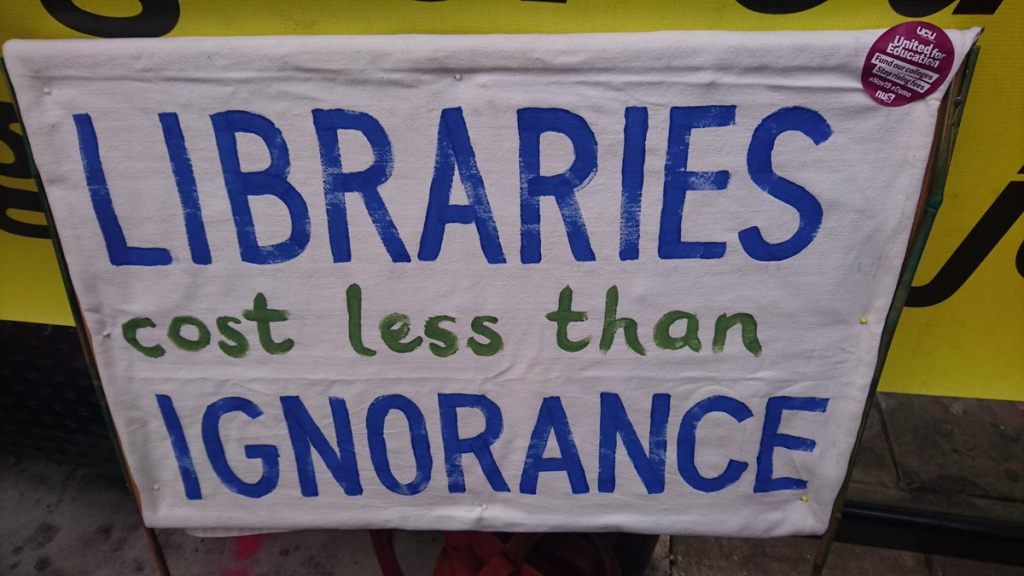
What I suggest here as a solution is what Aldous Huxley suggested, as well. And I can do no better than he. He believed with H. G. Wells that we are in a race between education and disaster, and he wrote continuously about the necessity of our understanding the politics and epistemology of media. For in the end, he was trying to tell us that what afflicted the people in Brave New World was not that they were laughing instead of thinking, but that they did not know what they were laughing about and why they had stopped thinking.