Author: Carrie

  • #GwiththeT: not in their name

    Last year, lesbian women used the #LwiththeT hashtag to declare solidarity with trans people. Now it’s the men’s turn, with an open letter proudly labelled #GwiththeT.

    Stonewall:

    In solidarity with the hashtag #LWithTheT that sprung up last summer, the outpouring of support for the #GWithTheT movement and support from all parts of LGBT communities shows that those who oppose trans equality do not represent us.

    As the open letter notes:

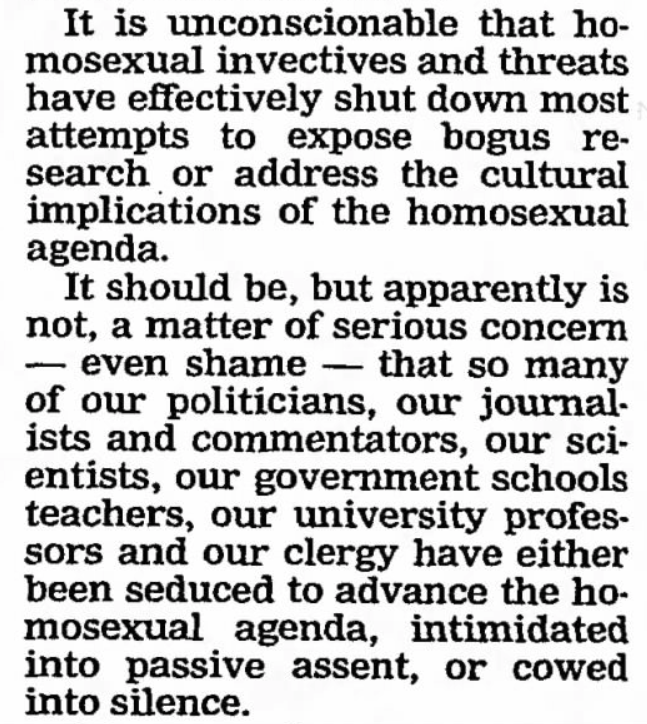
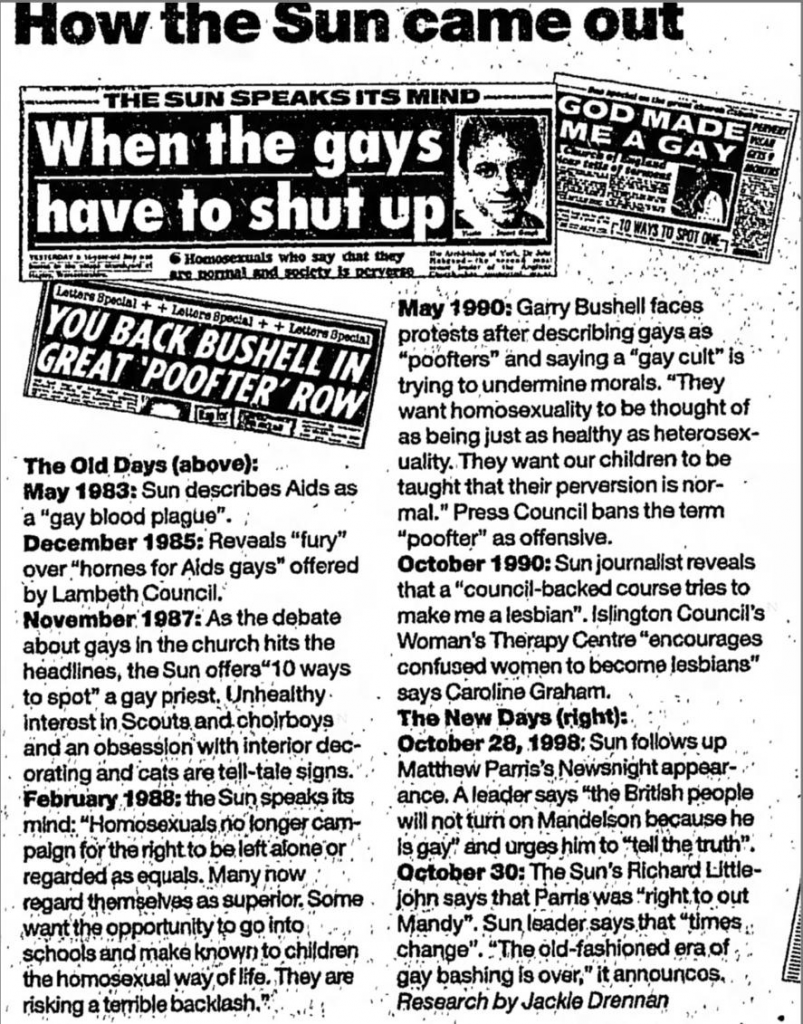
    Today’s transphobia is yesterday’s recycled homophobia. We all remember and feel the impact of the pernicious Section 28. We are reminded of Martin Niemöller’s poem “First they came for the for the…”. Gay men cannot afford to sit out this fight. Transphobic people aren’t just coming for trans rights; they’re coming for all of us.

    These letters really matter. The constant barrage of anti-trans propaganda isn’t exactly great for trans people’s mental health, and all too often a couple of unrepresentative gay or lesbian people are held up to falsely claim that trans people are not welcome in the wider LGBT community. We are, overwhelmingly so, and it really helps to be reminded of that.

    Update, 15/3: The letter was originally signed by 72 men. One day later it’s at 540.

  • Metal baby, oh metal baby…

    This is Maria, who you may recognise from the 1927 sci-fi classic Metropolis. I met her at the weekend, and if you pop along to the National Museum of Scotland in Edinburgh you can meet her too. She’s one of the attractions in the museum’s robots exhibition, which is great fun – there’s a Terminator! – and features some more practical, modern bots too. £10 for grown-ups, kids go free.

  • Read it in books

    My life isn’t all glamorous launches and rock concerts, you know. Sometimes I’ll stay in and read a book, usually a music one. Here are a few recent reads:

    Breaking Down the Walls of Heartache: How Music Came Out by MARTIN ASTON

    This is incredible. It’s the queer equivalent of Revolution In The Head, an incredibly exhaustive (592 pages!) chronicle of the history of LGBTQ musicians in modern culture.

    Anything that begins with John Grant’s Glacier and segues into 1920s lesbian blues guitarists is going to win me over, and that kind of contrast is what makes the book so much fun: it’s not a dull historical tract, but a celebration of some incredible music by some equally incredible people.

    It’s also a sober reminder of how much progress has happened in a very short space of time. The chapters on music in the time of the AIDS panic are particularly sobering.

    UNCOMMON PEOPLE BY DAVID HEPWORTH

    I’m a big fan of Hepworth, who helped create Q Magazine, Empire and the much-missed Word magazine. This felt more like a collection of one-shot magazine features than a book, though.

    The uncommon people of the title are rock stars, with Hepworth giving each of his chosen ones a chapter (or in the case of The Beatles, a few chapters). He argues that the era of the rock star is over: today, even financial traders call themselves rock stars. The book is his attempt to illustrate the rise and fall of a group of people we probably won’t see the likes of again.

    It’s still interesting in places but felt a little insubstantial: perhaps the problem is that it feels aimed at the kind of people who don’t normally read rock stars’ biographies for whom the tales of Fleetwood Mac, The Who and Led Zeppelin may feel sparkling and new.

    PLEASE KILL ME: THE UNCENSORED ORAL HISTORY OF PUNK BY LEGS MCNEIL AND GILLIAN McCAIN

    I hated this one.

    I hated it because like most oral histories, the talking is mainly done by the people left behind by those who ascended to greater things – so it can be hard to concentrate over the sound of axes being ground.

    I hated it because it’s terribly edited, giving very minor characters far too many column inches.

    But the main problem I had with it is that I was reading it with a 2018/2019 sensibility. Reading about your supposed rock idols committing statutory rape, abusing groupies and generally acting like misogynist arseholes palls very quickly in our more enlightened age.

    SMALL VICTORIES: THE TRUE STORY OF FAITH NO MORE BY ADRIAN HARTE

    This promises to be the definitive biography of one of my favourite bands, and it’s well-researched with good access to most (but not all) of the band past and present.

    But beware: it suffers from the rock-biog curse of pomposity, with some sections almost hilariously overwritten.

    If you can get past that – and if you’re not a picky, whinging writer like me, you probably can – it’s probably as good a biog as FNM are going to get.

  • You do it to yourself, and that’s what really hurts

    One of the weird things about doing creative things is that your feelings oscillate wildly. One minute you’re the greatest, most talented human being who ever lived; the next, you’re in a corner weeping about how worthless you are as you set fire to your latest creations. There’s rarely any middle ground. I don’t write a song and think “hmm, that’s okay.” I imagine thousands of screaming fans – for about five minutes, and then I want to hurl myself off the Erskine Bridge for creating such a terrible piece of music.

    I wonder, do people with proper jobs experience this? Do truck drivers barrel down the road bellowing “I am the king of trucks!” before the critical voices kick in and they have to park in a lay-by for a cry?

    I think the answer is probably no, because being a truck driver and being creative are different things. Truck drivers may well be really creative people in their spare time, but the day job isn’t really about that.

    I think part of it is because creating things from scratch is a really weird thing to do. It’s something you generally do for little or no reward (sometimes there are no rewards, just penalties: bad reviews, indifferent crowds, being broke), but the act of creating something gives you an endorphin rush. That’s where bouncing around the room wearing a cape and shouting “I am the greatest of all time!” comes from. Whether you’re composing or performing, there’s a moment when everything comes together and you feel there’s magic in the room – magic that you’ve somehow channelled into this thing you’ve created or helped to create.

    And then it goes, because if it doesn’t, if you think you’ve created the very best thing that has ever been or ever will be created then there’s zero incentive to create anything else. Whereas if you conclude that everything you’ve done so far is crap, then the next thing you do has got to be better.

    I think, too, there’s the gap between what we imagine and what we can play, or what we can create in other ways. The gap between what I hear in my head and what I can actually play is huge, and no matter how good my version is I can always hear how it falls short. For example, the other week my piano teacher – an incredible musician – had a go at one of my songs, and what she did with it was absolutely beautiful. I’ll never be able to play it the way she played it. In my head I’m a ballet dancer, but in real life my limbs are made of lead.

    It’s a strange addiction. You spend incredible amounts of time and effort and money in the pursuit of highs that are only ever fleeting, and which are always followed by the lowest lows. And yet somehow, it’s worth it.


  • A good day for a SWIM

    I went to the launch of SWIM yesterday. SWIM, Scottish Women Inventing Music, is a collective of women from across the music industry: performers and promoters, managers and marketers, DJs and drum techs.

    It was brilliant.

    The day was a mix of formal panel discussions, informal networking and the presentation of a lifetime achievement award to the fabulous and funny Janet Beat, Scottish composer and electronic music pioneer. That last bit was an unexpected highlight, both hilarious and moving.

    I enjoyed the whole day. The panel discussions were thought-provoking, insightful and useful and the buzz during the breaks was palpable: so many amazing, inspiring women who do amazing, inspiring things making connections and sharing experiences.

    The panels were diverse, too, and I think that’s incredibly important: many of the issues affecting women in music are intersectional, so for example the things that affect all women may be amplified or complicated for women who are also black, or gay, or older, or who have family responsibilities. It was also refreshing to see the panelists drawn not just from the rock concert industry but from club culture, folk, jazz and other genres.

    I don’t think I’ve experienced anything like it, and I went away with a head full of ideas and a bag full of flyers and business cards pointing me towards new music (I haven’t checked them all out yet but if they’re as good as the first artist I’ve listened to, Rosie Bans, my ears are in for a really great day).

    And on a personal level, this really mattered. From the website:

    when stating ‘women’ or ‘female’ this includes all people who identify as female.

    SWIM is a diverse, inclusive organisation, and it welcomes non-binary people and trans women. It’s hard to overstate how important that feels, to be in a space that actively welcomes you, where you’re actively made to feel part of the family. I may have shed a tear or two.

    Enough about me. SWIM has the potential to be an incredibly positive force in the music business, whether you’re a musician or a technician, a plugger or a promoter. If you’re interested in finding out more, becoming a member or volunteering, you can find everything you need on the SWIM website.

  • A privileged position

    It’s International Women’s Day today. As someone who’s played for both teams, transitioning has been a major eye-opener: when you’re living life in the body of a straight, white, middle-class man you don’t realise how privileged you are.

    Privilege doesn’t necessarily mean you have an easy life. But it means that your life is not made more difficult because of a particular group you belong to. For example, if you’re straight and cisgender you don’t have to deal with the abuse and discrimination LGBTQ people experience. If you’re white, you don’t encounter structural racism. And if you’re a man, you don’t experience the world in the same way women do.

    IWD isn’t about picking on men. It’s about recognising that the world is still an unfair place. From reproductive rights to the justice system, in education and employment, in the public sphere and on social media, in healthcare and in the home, the world is a different and often worse place for many women. IWD is about raising awareness of that, and of inspiring people to change it.

    Today, some men on the internet will be shouting “Yeah, but when is international men’s day?” The answer, of course, is 19 November. But the real answer is that every day is international men’s day.

  • We always come back to the ones we love

    This rather poor quality photo is from October 1998, long before decent digital cameras or smartphones. It was taken on stage at Glasgow’s legendary Barrowland, where my band had been picked as the local support for Mansun. I’m the skinny guy in the middle of the shot (lead guitarist Mark Clinton, now of The Lonely Souls, is in the foreground and bassist Chris Warden is just visible behind me), and I’m playing my favourite guitar.

    I’ve owned quite a few guitars, but my Telecaster was always my favourite. It cost a ridiculous amount of money when I bought it back in the mid-90s, but I got my money’s worth: I played it on stages and in studios for years, and I’ve still got it today. It hasn’t been played for a very long time, though, because other guitars have competed for my affection: the beautiful but ridiculously big Epiphone Riviera I got for my 40th, the wonderfully quirky Fender Marauder I do most of my songwriting on, the Fender Stratocaster I rehearse with and the pointy Epiphone Explorer I play when I want to, er, play something pointy.

    There are other reasons. I didn’t play it because there was something wrong with the pickup switch, so it could only make its most screeching sounds – something Telecasters are brilliant at, but which you don’t want all the time any more than you’d want to eat steak for every meal – and I didn’t want to spend money getting it fixed because I was always broke.

    And I didn’t play it because it’s part of my past, which I don’t always want to think about.

    But it was, and is, a beautiful guitar. So the other night I decided to get it out of its case.

    It was a strange feeling because I genuinely haven’t looked at it, let alone touched it, for years. The catches on the case were stiff with rust, the case itself covered with access all areas passes for gigs so long ago I can barely remember the venue, never mind the gig. But the guitar itself was just as it was the last time I played it. It was even in tune.

    It’s really, really weird to pick up a guitar that you haven’t played for years when you used to play it all the time, to feel the weight of it, the tension of the strings, the way the strap feels on your shoulder, the height of it, the way it fits in your hands. All of the things you got used to over time, all of the things your other guitars don’t have. It’s like getting into your own bed when you’ve been staying somewhere else: the beds do the same job, but only one of them is yours.

    It turns out that the problem was so simple to fix that even I could fix it, so I did. And I plugged it in, and I played it, and heard that sound, the sound only a Telecaster makes, the sound only my Telecaster and my fingers make.

    And I realised that while I like all of my guitars, there’s only one that I ever loved.


  • “It’s not protecting a child’s innocence to avoid sensible, open discussions”

    The Guyliner’s Justin Myers has written a good piece about sex and relationship education for British GQ:

    Trust me: children deal with far more puzzling concepts than the existence of same-sex couples, gender-queer people or trans men and women. Think of the mindblowing fact we’re a rock revolving around a huge ball of fire and that, before us, huge lizards – either with or without feathers depending on which textbook you’re using – roamed the muck below the very streets we live.

  • A point proven

    More good news from the TIE campaign:

     And entirely predictable news from one of the signatories, the journalist Angela Haggerty. Haggerty has been targeted by anti-trans activists. Other signatories have been targeted too. As Haggerty posted on Twitter:

    This is what the @tiecampaign letter was addressing. The tone and nature of this stuff is very distressing, and completely unnecessary.

    …Women supporting the trans community should not have to face malicious misrepresentation simply for speaking out. I hope others will join us and put their names to the @tiecampaign letter – this stuff is harmful.

    Once again there are very strong parallels between anti-choice activists, far-right figureheads and anti-trans activists: they’re all very well behaved on TV, but on social media the mask quickly slips.

  • A terrible lesson for children

    After ongoing protests, a Birmingham primary school has suspended its “no outsiders” programme, which teaches children about equality. The protesters have done the usual religious thing, accusing the school of “promoting gay and transgender lifestyles.” It’s been reported as a muslim protest but many of the parents protesting are christians; the lessons have been reported as “LGBT lessons” when they’re also about religion, race and disability.

    No Outsiders is about teaching children that “there are no outsiders here!” I know this because the programme is available online, as are presentations to parents about it.

    Here’s a slide explaining the ethos.

    The characteristics of the Equality Act are age, disability, gender reassignment, marriage/civil partnership, pregnancy and maternity, race, religion/belief, sex and sexual orientation.

    As the course’s creator Andrew Moffat MBE explains: “we have to find ways to encourage children to choose to sign up to living in a multicultural and multi-faith UK, where they can live alongside, work alongside and get along with people who are different to them.”

    Cancelling the lessons sets a terrible precedent. The aim of the lessons is to teach children “to recognise and celebrate diversity and difference in their own communities and in the wider society.” Letting the intolerant shut them down is entirely the wrong lesson to teach children.