Author: Carrie

  • “The lucrative gas-lighting industry”

    Writing in New Socialist, Pete Mitchell does a thoroughly entertaining demolition of two books making the culture war argument that “the left” is somehow silencing free speech. The whole thing’s worth a read but I particularly liked these bits:

    In Lukianoff and Haidt’s account, college students aren’t distressed because they’re facing unprecedented debt and insecurity, because those safety nets they had are being stripped away from them, because they can no longer look forward to a recognisable future – or indeed because white supremacists keep trying to gather on their campuses to intimidate them, while their parents’ generation stands around finger-wagging about the importance of robust debate – but because they’re decadent, attached to their phones, full of self-pity, over-indulged and lacking in will.

    The well-worn argument here is that millennial snowflakes refuse to be exposed to opposing views from people who disagree with them.

    As anyone who’s spent any time around these debates knows by now, those “opposing views” usually turn out to be some variation of exactly the same one, and the “people who disagree with you” are always some variation of the same person: a well-paid white man who isn’t sure where all these women and brown people and queers came from but has some ideas about where he’d like to send them.


  • Feminists to columnists: you do not speak for us

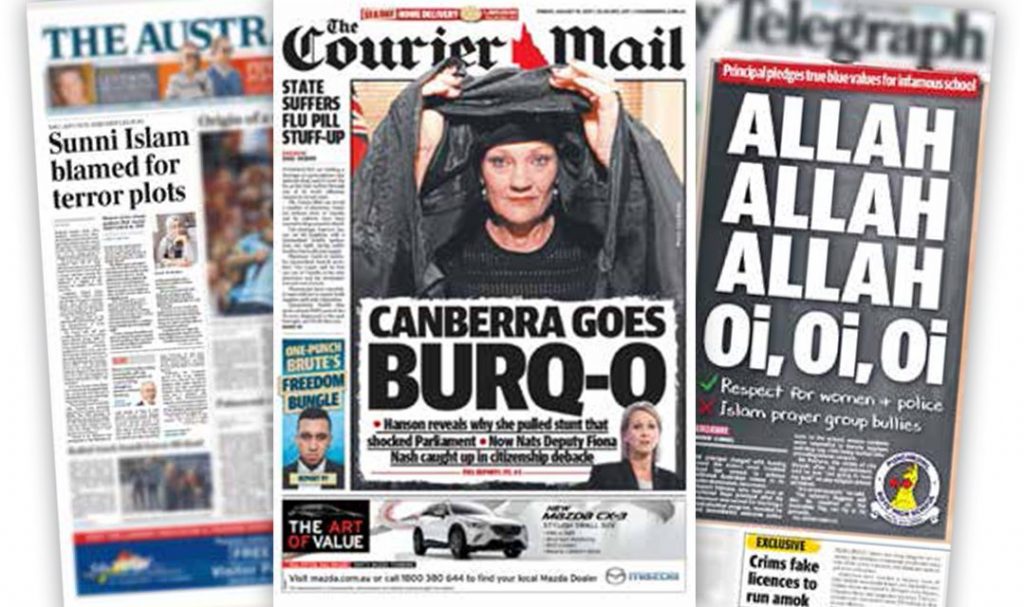
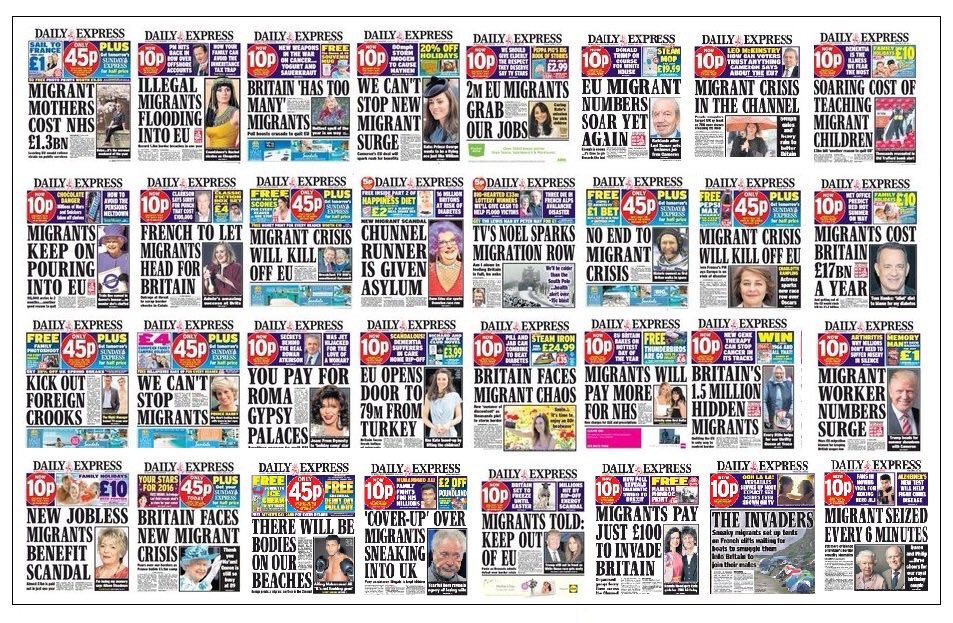
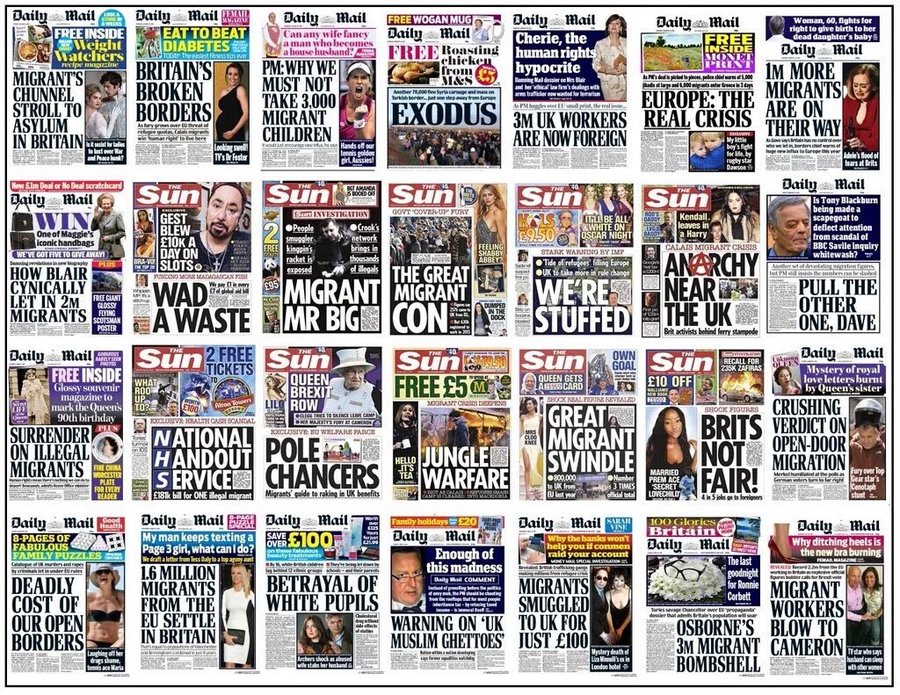
    More than 70* notable women including politicians, representatives of vulnerable women’s groups, businesswomen and journalists have written an open letter to the Herald about the despicable coverage of trans women it and other newspapers publishes.

    In the Scottish Government’s recent public consultation on reforming the Gender Recognition Act (2004) a majority of respondents supported gender self declaration, as well as recognising non-binary people. As a collective of women, we urge that trans-exclusionary writers do not suggest that their narrow and archaic arguments are in any way representative of the women of Scotland. They do not speak for us.

    …When this conversation is reduced to allegations of “shutting down debate” whenever misrepresentation or misinformation is challenged, the result is to purposefully discount the position of many women – like us – who support the trans community. We will be heard.

    Trans people have played an integral role in every civil rights movement to date; from LGBT equality to women’s causes. Attempts to airbrush trans people from conversations regarding equality and human rights, or to exclude them from advancements for LGBT and women’s rights, have happened before. Such efforts may have re-energised, but they are nothing new, and we say as a collective of women: they are not representative of us. We support trans rights.

    • Since the letter was published, the organisers have been contacted by several hundred more women who want to sign it.
  • Stop us if you’ve heard this before

    On Twitter, users mimmymum and the implausible girl have shared a few newspaper clippings about the dangerous people tricking their way into bathrooms and locker rooms, demanding inclusion in education and other terrifying things. No, not trans people. Gay and lesbian people.

    Irony fans will appreciate this first one, about Martina Navratilova, because her recent comments about trans people have – surprise! – been used by anti-LGBT politicians to support anti-trans legislation.

    The fonts make me think it’s The Sun. It claims that because of lesbian athletes like Navratilova, “young girls were scared to go into tournament changing rooms” and were “being led into homosexuality.”

    This is a letter to the Daily Utah Chronicle in 1998 about whether gay people should be allowed to work as changing room attendants.

    This is from the Edwardsville Intelligencer in 1977. It’s not that gay people are wicked, it’s that they’re sick and should be kept away from children.

    1974, the Philadelphia Daily News.

    The Vancouver Promise, 1973, suggesting that homosexuality is spread by social contagion. The same argument against trans these days is called Rapid Onset Gender Dysphoria. It’s still bullshit.

    The Indianapolis News, 1974:

    The Ottawa Journal, 1979:

    And way back in 1956, the Coos Bay Times on the fact that gay people aren’t really gay; they’ve been talked into it, and will revert to being normal if they’re kept away from evil gay influences.

  • “Respect for all”, apart from the gays and the transes

    There’s a predictable media storm in England (Scotland has a different, more enlightened education system) about plans to revise sex education, something that’s been overdue for decades now, to include “respect for all”. It’s predictable because various right-wing rabble-rousers have been banging on about the spectre of “gay and trans lessons” – a phrase you can thank the ever LGBT-friendly Times newspaper for. Education secretary Damian Hinds, who appears to be a coward, has now promised that “respect for all” does not have to include respect for gay or trans people.

    The columnists, and the 100-odd-thousand parents who’ve signed a petition objecting to their children being taught basic human decency, appear to be misunderstanding a fairly basic point.

    In primary school, and for much of secondary school, sex and relationship education is not about fucking.

    Sorry for the language, folks, but that’s what the outrage is about here: the not-too-hidden message the likes of Melanie Philips are perpetuating is that gays will be teaching five-year-olds about poppers and fisting while the transes will be trying to persuade five-year-olds to chop their cocks off.

    We went through this decades ago with Section 28, which did incredible harm to LGBTQ people. Can we maybe not do it all over again?

    As the BBC reports, the guidance says in regards to LGBT content: “pupils need to understand ‘that some people are LGBT [lesbian, gay, bisexual and transgender], that this should be respected in British society’.”

    That teaching should be age-appropriate, so in primary school it’s nothing more than awareness that not everybody has a mum and a dad, and that that’s perfectly normal.

    I’m the trans parent of a five year old and an eleven-year-old. Some of my fellow parents are gay. To pretend that we don’t exist, to refuse to let children know that some of their peers have two mums or two dads or a dad who looks like a mum, to refuse to reflect the reality that every single LGBT adult was a child once is ridiculous.

    All it does is create a vacuum that bigots are all too happy to fill.


  • Free speech, not free reach

    After far too long, far-right puppet Tommy Robinson has been kicked off Facebook and the Facebook-owned Instagram for flouting the rules on hateful conduct.

    Which makes it a good time to link to this piece by Renee Diresta, Free Speech Is Not The Same As Free Reach.

    in this moment, the conversation we should be having—how can we fix the algorithms?—is instead being co-opted and twisted by politicians and pundits howling about censorship and miscasting content moderation as the demise of free speech online. It would be good to remind them that free speech does not mean free reach. There is no right to algorithmic amplification. In fact, that’s the very problem that needs fixing.

    …The social internet is mediated by algorithms: recommendation engines, search, trending, autocomplete, and other mechanisms that predict what we want to see next. The algorithms don’t understand what is propaganda and what isn’t, or what is “fake news” and what is fact-checked. Their job is to surface relevant content (relevant to the user, of course), and they do it exceedingly well.

    That efficiency gives the likes of Robinson disproportionate visibility and influence, something the social media giants still don’t seem to have woken up to. If they can’t prevent the likes of the far-right from gaming the system, then they need to do a better job of keeping them off their platforms.

  • Schrödinger’s trans

    The Observer, this week, : “Gender identity clinic accused of ‘fast-tracking’ trans patients.”

    The Guardian, its sister paper, two days later, reporting the hellish, many-years wait for trans people to get any treatment whatsoever:

    Trans men and women are being left humiliated and desperate after seeking care from their GP, according to a Guardian investigation that has shed light on serious flaws in how the NHS treats transgender patients.

  • Mark Hollis RIP

    Mark Hollis, singer in the critically acclaimed Talk Talk, has died. He was 64.

    The word “genius” is thrown around a lot in music, but Hollis was the real deal. I was mesmerised by Talk Talk as a young teenager and developed a deep love of their music that I still have today. They made a string of extraordinarily beautiful records (and he made another one as a solo artist) and then they stopped, leaving an incredible musical legacy.

    It’s always sad when a favourite musician dies, but this loss feels devastating. Hollis wrote the soundtrack to so much of my life.

  • The silencers

    Being trans is a bit like Chinese water torture sometimes. It’s not that the individual drops hurt; it’s that they don’t stop. So for example being misgendered by someone who hears a male voice isn’t upsetting on its own if that’s the only occurrence that day, but being called a man four times during a ten-minute radio programme by a presenter who knows your name and pronouns is profoundly embarrassing.

    This is one of the reasons trans people do things like voice therapy or very stereotypical female presentation, incidentally. We do it because it makes life a little bit easier. If you don’t immediately hear my voice as male, maybe you won’t call me sir, or a man, or refuse to accept I’m the policyholder when I’m on the phone to your call centre. I don’t particularly want to modify my voice, not least because it’s a lot of work, but I can do without the arguments.

    The worst, though, is the constant attacks on trans people, the misinformation and propaganda that appears in the media. It’s not so much that it gets printed. It’s that it gets shared online by people you may come into contact with personally or professionally.

    For example, I’m supposed to be going to a music organisation’s launch day soon. The organisation is for women and it’s explicitly inclusive of trans women, something its organisers have also confirmed to me privately. And yet I’m not sure if I’m going to go, partly because a couple of the key figures who’ll be there on the day have shared anti-trans stories on social media.

    I don’t think these people are bigots; they shared what they thought were legitimate news stories in a kind of “oh, for fuck’s sake” way (I know one of them through work and we’ve always got on very well, although I haven’t met her since I started transition). But it means they have shared content that states people like me are fraudulently gaining access to women’s spaces.

    How do you sit comfortably in a women-only event when you know that?

    How do you read the room without wondering who else has those views, or who has much more extreme views? Are the informational and networking opportunities of the day worth the risk of some kind of confrontation from someone who does not believe you should be there?

    That’s what the drip, drip, drip of anti-trans polemic does. It makes you afraid. Afraid to take part in things even when you’ve been invited. Afraid to be in spaces you’re entitled to be in. Afraid to do normal things. Afraid to show up. Afraid to speak. Afraid to just sit in a room.

    The next time someone tells you and tens of thousands of other readers that they’re being silenced by those awful trans people, think about that and ask yourself: who’s really being silenced here?

  • Everybody panic

    U.S. Forest Service photo.

    For years, we’ve been told not to panic. It turns out that maybe we should be panicking after all.

    Writing in the New York Times, David Wallace-Wells says “the age of climate panic is here.”

    We are living today in a world that has warmed by just one degree Celsius (1.8 degrees Fahrenheit) since the late 1800s, when records began on a global scale. We are adding planet-warming carbon dioxide to the atmosphere at a rate faster than at any point in human history since the beginning of industrialization.

    We can no longer stop climate change. It’s already happening. But if we panic, we can at least make it slightly less catastrophic and deadly than it would otherwise be.

    For years, we have read in newspapers as two degrees of warming was invoked as the highest tolerable level, beyond which disaster would ensue. Warming greater than that was rarely discussed outside scientific circles. And so it was easy to develop an intuitive portrait of the landscape of possibilities that began with the climate as it exists today and ended with the pain of two degrees, the ceiling of suffering.

    In fact, it is almost certainly a floor. By far the likeliest outcomes for the end of this century fall between two and four degrees of warming.

    Wallace-Wells rightly says that complacency is a huge problem, and that individual acts are pointless if we don’t do anything about, say, farming and industry:

    Buying an electric car is a drop in the bucket compared with raising fuel-efficiency standards sharply. Conscientiously flying less is a lot easier if there’s more high-speed rail around. And if I eat fewer hamburgers a year, so what? But if cattle farmers were required to feed their cattle seaweed, which might reduce methane emissions by nearly 60 percent according to one study, that would make an enormous difference.

    …No matter how bad it gets, no matter how hot it gets, we’ll still have the ability to make successive decades relatively less hot, and we should never stop trying. There is always something we can do. It’s too late to avoid a 21st century that is completely transformed by the forces of climate change, but we have to do everything possible to make the future cooler, safer, and healthier.

    One of the most frightening theories I’ve heard about climate change is that the wealthiest, most powerful people in the world know full well what climate change will do, and they want it to happen.

    It’s called “exterminism”. Rather than worry about saving the poor, feeding them, educating them, ensuring clean air and water for them… why not just let them burn? If you have sufficient resources, you can survive the eco-apocalypse and return to your rightful place in a world that no longer has to worry about all those inconvenient poor people.

    If people believed such things, they wouldn’t be investing in climate change. They’d be buying bunkers.

    And that’s what some of the world’s wealthiest people are doing.


  • Hat’s entertainment

    This is one of my new favourite things: it’s I Want My Hat Back, a children’s book by Canadian writer Jon Klassen. It’s just wonderful, a simple tale told with style and great wit. My son and I both giggle like loons when we read it and its follow-on books This Is Not My Hat and We Found A Hat. There’s a wickedly dark sense of humour to it all, which of course is what makes the books so appealing.

    Another writer my son and I are really enjoying is Chris Haughton, whose books are just as economical and just as funny, if not quite so dark.

    This image is from Shh! We have a plan, in which a group of hunters attempt to track a bird while shushing one of the group. Inevitably the shushed one turns out to have the best plan of all.

    It’s a great time to be reading to your children, because not only are we having something of a golden age of picture books but we also have access to all the classics too – so the work of these writers and illustrators sits happily in my son’s bookshelf alongside Dr Seuss and Maurice Sendak. Reading is one of life’s great joys, and introducing it to your children is another.