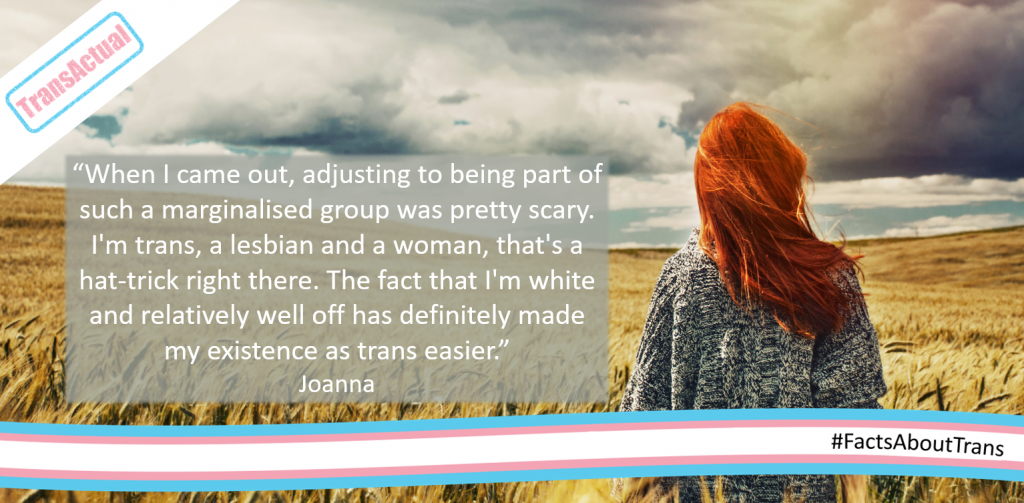
The above image, which has saved me a bit of typing because it pretty much describes my situation, is from the resources page of Still Here. I wasn’t aware of it before and it’s clearly a work in progress but it may be worth bookmarking.
The above image, which has saved me a bit of typing because it pretty much describes my situation, is from the resources page of Still Here. I wasn’t aware of it before and it’s clearly a work in progress but it may be worth bookmarking.
Channel 4 has been uncovering some truly despicable behaviour by the Leave.EU campaign. First, there were the videos:
The pro-Brexit campaign group, Leave.EU, faked a viral video and appear to have staged photos of “migrantsâ€, shortly before the EU referendum.
An investigation by Channel 4 News found that images purporting to show “migrants†attacking young women in London seem to have been staged.
Then, advertising specifically targeted at racists.
Leave.EU paid for Facebook adverts targeted at supporters of the National Front, the BNP, Britain First and the EDL.
The number of recorded hate crimes in England and Wales spiked after the Brexit referendum. The Home Office specifically mentions the increase in xenophobic hate crimes.
We already know that Leave.EU was involved in illegal election activity, but this is a whole new level of wickedness. In any sane country this would be a national scandal and we’d be putting heads on spikes.
Am I missing something, or is this idea incredibly, dangerously bad?
Labour’s LGBT+ advisor calls for UK-wide ‘safe spaces’ for transgender people
Mr Watson wants Ministers to give Local Authorities the powers to outline special zones for transgender people so they can socialise safely with family, friends and the wider LGBT+ community.
I’m hoping that something has become horrendously garbled between meeting and press release, and that the call is for councils to fund safe meeting places and organisations such as the excellent LGBT Health & Wellbeing. But I doubt it.
“I’m urging the Government to devolve powers to Mayors and Local Authorities across Britain so they can designate safe spaces for trans people. It could be part of a long-term solution in making them feel comfortable within their communities while promoting social cohesion.â€
There’s a lot to unpick in just that paragraph.
We have a word for “designated safe spaces” for minorities. It’s “ghetto”.
Think about it for a moment. He wants councils to create special zones for transgender people where they can “socialise”. What about the bits that aren’t special? Are we to be excluded from them? By implication, if you have some areas that are “safe spaces” for trans people, the areas without that designation are and should remain unsafe.
Second, “making them feel comfortable in their communities”. What communities? My community is Partick, musicians and alcoholics. How exactly will a designated Be Trans Here And You Probably Won’t Get Beaten Up zone in the Merchant City going to make me “feel comfortable” in the bit of Glasgow where I actually live, work and socialise?
And as for promoting social cohesion: you don’t promote social cohesion by othering and segregating minorities in much the same way you don’t promote fire safety awareness by burning down everybody’s house.
This idea is “a bid to protect [us] from the worrying rise in hate crime.” Here’s how you do that. You chuck the bigots out of your own party. You stop fearing the wrath of Murdoch and introduce a system of press regulation that actually works on behalf of the public, not the publications. And more than anything, you enforce the laws on hate speech and hate crimes that we already have.
Writing in The Nation, Eric Alterman isn’t pulling any punches.
one family has been able to use the power of the press to subvert democratic norms, misinform citizens, undermine governments, and fill our national debates with lies, misogyny, racism, and ethnocentrism while calling it news.
Nothing in the article is particularly new: Murdoch’s power over politicians in his native Australia and in the UK is well-known and well documented. But in the age of Brexit and Trump that power is becoming even more malign – and it is power aided by the actions of a group of people who rarely get named in articles about Murdoch’s malevolence.
…the greatest shame of this story goes to people who receive no mention at all. It belongs to the journalists who, against all evidence and to the detriment of their profession and their nations’ democracies, continue to participate in the charade that what the Murdochs do is journalism and that, therefore, their dishonesty, provocation, and propaganda deserve to be taken seriously as news.
There are two pieces in the Guardian about a growing trend: people arguing that criticism is “silencing”. First up, Jack Bernhardt on comedy.
we witnessed another great moment in comedy this week, when the BBC’s head of comedy asked the question we didn’t realise needed to be asked: is comedy dying because the internet is turning people into Victorians?
…[such comments perpetuate] a culture war based on ignorance, allowing rightwing newspapers to paint a dystopian caricature of social media, where white men are oppressed with terrifying phrases like “check your privilege†and “identity politicsâ€, and opinionated children burn effigies of John Cleese.
Elsewhere in the paper, Dawn Foster takes historian Niall Ferguson to task for his persecution complex.
I would pause, for at least a few seconds, if I found myself arguing that my freedom of speech was in a state of extreme jeopardy in this, my column in a national newspaper.
Of all the tired tropes trotted out by the quick to whinge and slow to think, the “I’m being silenced” one in national, sometimes global media is one of the most tiresome. To hear handsomely paid, high profile media voices claim to be an oppressed minority would be laughable if it weren’t so serious.
As ever, the problem isn’t that anybody is being silenced. It’s that powerful people are being criticised.
You’d think academics such as Ferguson would know the difference between censorship and criticism.
Foster:
the Venn diagram of men arguing that freedom of speech is the central, precious tenet of “western civilisationâ€, and those who scream bloody murder the second they are subject to any criticism, or are forced to bear any responsibility for their speech, is a single perfect circle.
Free speech does not occur without responsibility: to use the traditional metaphor, if you scream “Fire!†in a crowded theatre, you will be culpable when a stampede ensues. If your arguments are racist, sexist or homophobic, the people you attack will rightly point out your prejudice and query whether your professional position is compromised by holding such prejudices.
This isn’t difficult. Freedom of speech means the government can’t put you in prison for having an opinion. What freedom of speech does not guarantee is freedom from criticism.
Time for this cartoon again.
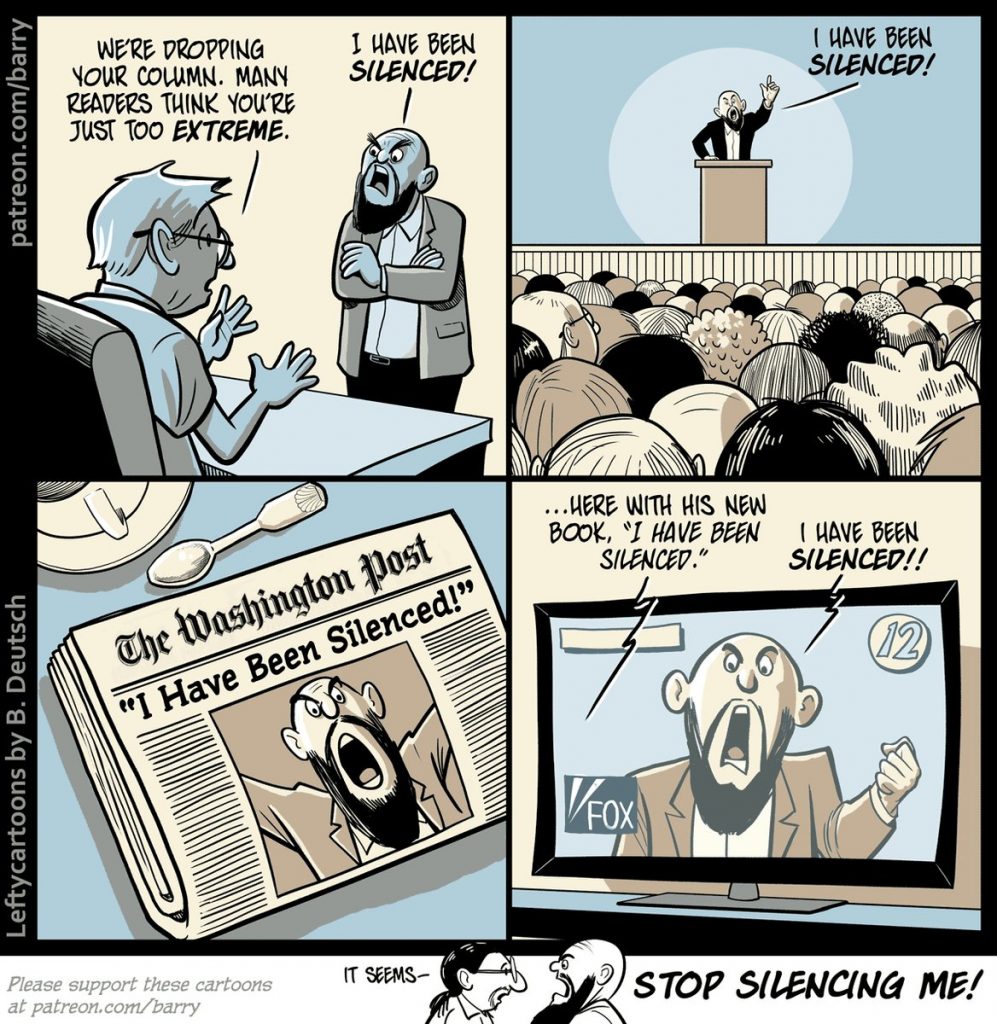
This isn’t about censorship. It’s about ego and status preservation. People who are used to having their words taken as gospel are suddenly hearing people disagree with them, and they don’t like it.
For years, privileged men have been able to frame themselves as agents provocateurs – often spouting the kind of opinions a roaring, angry drunk on the night bus might, but with a plummy accent, an Oxford degree, and an overreliance on antiquated vocabulary – in columns in national newspapers. Their fury is not that they have been silenced – they have not – but that their victims have argued back, and they have been forced to bear responsibility for their words.
The FT asks, “can you be a mother and a senior law firm partner?” It’s not asking whether women are capable of the job, thankfully; it’s a piece about the assumptions made about women that aren’t made about men.
The generally accepted issue is the choice many women face between partnership — on call 24/7 and under pressure to generate business — or starting a family.
The linked article quotes Farmida Bi of Norton Rose Fulbright:
For example, partners looking to build a team to work on a deal may assume a mother will not want a demanding client calling at 2am, or to travel frequently for work. These assumptions are not made about fathers.
As the article rightly notes, there is another assumption here: the assumption that 2am calls are necessary for that kind of work in the first place. But even if they are, there’s no fundamental reason why a woman would be any less suited to the role: it’s entirely possible that her partner is the one who looks after the kids while she’s fielding those oh-so-important calls.
The FT piece is about the legal profession but conscious and unconscious bias affects women in all industries. The 1950s characterisation of rainmakers vs homemakers, of men as high achievers and women as marking time until they pop out a bunch of babies is partly why women are under-represented at senior levels in so many organisations, why women are more likely to work part-time and why women are more likely to work in lower paid jobs.
Writer (and FT contributor) Sarah O’Connor recalls a conversation that perfectly illustrates the problem.
I once asked the head of a law firm why his firm had zero female partners. He said “Unfortunately being partner just isn’t compatible with having a family”. He had a photo of his kids on his desk.
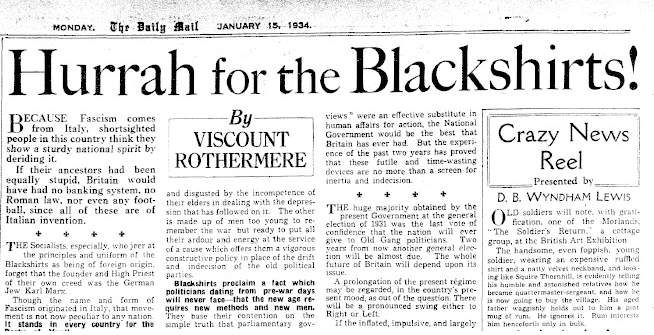
MP David Lammy is being lambasted by the right-wing press for comparing the Brexit-pushing European Research Group to Nazis and suggesting that the Brexit debate has helped spread far-right hatred. You can probably write the articles yourself: leftie commie, traitor to Britain, etc.
Except he’s right. And he’s not the only politician saying so. Here’s that infamous commie, former Tory PM Michael Heseltine:
But you can’t escape this chilling thought: the extremes of the ’30s were born of economic stress, and the thing that is driving the extremism today is the fact that since 2008 we have had frozen living standards and people are looking for alibis.
And if you put together the bureaucrats of Brussels, the immigrants and the foreigners and the elite … all that sort of stuff … it has a sort of basic, chilling appeal for people who are desperately looking for an alternative.
Here’s FT commentator David Allen Green on Twitter.
Those who do not think the rising threats of political violence, strident nationalism, attempts to bypass parliamentary institutions and increasing nastiness towards minorities do *not* indicate the beginning of a turn towards fascism must ask themselves…
…what would?
He continues:
The way fascism manifested itself in the 1920s and 1930s was not the only way it can manifest itself.
Fascism does not only exist in black and white photos and Pathe news reels.
The nastiness adapts to new promising environments.
Think, for example, of the independent institutions which extreme “will of the people” Brexiters have sought to trash:
– parliamentary “saboteurs”
– judicial “enemies of the people”
– civil service “traitors”Even demanding letters to universities.
This cannot be healthy.
…And look at the routine casual insults and nastiness regarding Jewish people, Muslims, trans people.
Attacks on LGBT education.
And recall the first books to be burned: https://en.wikipedia.org/wiki/Institut_f%C3%BCr_Sexualwissenschaft#Nazi_era
Lots of “others” to be de-humanised, despised, mocked.
We all know where 1930s fascism ended, but it seems that many of us have forgotten or choose to forget how it began.
It’s just another week on the internet, with yet another bunch of women experiencing massive campaigns of online abuse for having the temerity to say they don’t think trans women are monstrous predators. Singer Lisa Moorish is currently under siege and receiving dire threats and abuse from the “protect women” crowd, while comedian Janey Godley made a video after several days of ongoing harassment:
I support trans community pic.twitter.com/iekzI3FuRJ
— Janey Godley (@JaneyGodley) April 8, 2019
Sally Hines, a professor of sociology and gender identities in the University of Leeds, has long been a target of the anti-trans crowd. She describes what it’s like:
So… You’re in a (supposedly) feminist thread. There is disagreement around sex/gender. You reply briefly (its Twitter not a publication, lecture or an irl sit-down chat). The reply may – though often not -have a little irony, a tad of sarcasm, a bite of humour.
The tweet is taken out of the thread – divorced from its context – and retweeted *multiple* times. People notify others and a pile-on starts. Things very quickly become nasty. Personal and professional attacks escalate.
In the midst of this you are *bombarded* with demands to a)expand and clarify b)answer countless questions on issues aside to the original tweet c)send reading lists d)divulge personal aspects of your life. Repeat. Repeat. Repeat. Per minute. Per hour. For days. On end.
So there’s the bombardment but there’s the *demand*. Not an invitation or even a request. A hostile insistence to engage NOW. Hostility is key. As is belittlement. It intensifies. Faster. Nastier. Repeat. Repeat. Repeat. Minute. Hour. Days. On end.
Here are *some* personal examples from the last TWO days. You: shouldn’t have your job; are retarded, crazed, delusional, sick; on drugs; a woman hater; a man; responsible for brain washing/grooming young people; removing women’s rights; aiding the genocide of women and girls.
And *always* the handmaiden. The cock lover. Patriarchy’s slave. The traitor. The female cuckold. The feminist pussy. Be shamed. I *will* shame you. Shaming is the game.
You don’t respond. It multiples. People notify others. It becomes a circus-people trying to please with wit. Trying to impress their own/ please let me make you laugh. Who can be the nastiest? Who can be the one who will WIN? As bullies bond in a playground. Dirt turns to filth.
And the media is @ in to complaints about you. Your funding body and employer are repeatedly @ in. People who liked one of your tweets are targeted insesiently. People who follow you are rounded on. Threats are made.
And on still. More minutes. More hours. More days. Repeat. Repeat. Repeat.
And some of those people are the very journalists whose names appear on supposedly unbiased articles about trans people.
Many of the people reporting on trans issues have picked a side, usually against trans women. For example, writers for The Herald, The Spectator and The Times/Sunday Times make no secret of their support for anti-trans pressure groups with opaque finances and links to US anti-women, anti-LGBT evangelical groups.
The idea that journalists should be objective seems to have got lost somewhere. Of course journalists have opinions, but their job is to leave those opinions at the door and report the facts. A journalist should not take part in activities or support organisations that limit or affect their ability to be objective and independent.
We all know this. If a writer is being paid by company X, they can’t be trusted to report objectively on issues that affect company X. If a writer is a member of UKIP, they can’t be trusted to report objectively on Brexit. And if a writer makes no secret of hating LGBT people or a subset of LGBT people, they can’t be trusted to report objectively on LGBT issues. By employing propagandists rather than journalists, news media is hammering more nails into its own coffin.
There’s an interesting piece in NY Magazine about the corrosive effects of highly partisan news.
I heard from more than a hundred people who felt like they could relate to what they all seemed to think of as a kind of ideological brain poisoning. They chose Fox News over their family, people told me. They chose Fox News over me.
It’s not just Fox, and not just America: the article notes that stories also came of families broken by left-wing partisanship, and by publications such as the UK’s Daily Mail – but Fox has a huge reach and is arguably the most biased of all the major news outlets.
Whatever the root, it’s incredibly saddening
“Maybe he was always like this, but lacked the exhaust chamber to say out loud what he was thinking. I’ll never know,†one person told me. “It just sucks because I know the people he hates so much are basically the same people as me.â€
Writing for the NYT, Jennifer Finney Boylan compares anti-trans rhetoric to anti-immigration rhetoric.
When members of the present administration claim that people like me should be “erased,†are they not saying, in so many words, “Build that wall?†Are they not echoing the cries of every xenophobic bigot throughout history in furiously demanding that I Go Back Where I Came From?
I’m not going back. I’m staying here, in the land I struggled so hard to reach. It is here, as a woman, that I’ve built a home. Is where I began my days really so much more important than where I wound up?
…What the world needs now is not more walls — to keep out the strange, the different, the new. What the world needs now is not hatred — of men, of women, of anyone in between.
What the world needs now is bridges: across rivers, across genders, across every last border that divides us, one soul from another.
Trust me: it’s never a good idea read the comments on these pieces.