Author: Carrie

  • Ban this sick filth

    There’s something missing from the ongoing coverage of homophobic, transphobic parents demanding schools cancel their inclusive education classes: any detail about what’s actually being taught. So hurrah for Luke Tryl, formerly of education watchdog Ofsted and director of the New Schools Network, who’s shared an example of the kind of thing these parents want to protect their children from.

    Imagine letting your children see this.

    The whole thing’s thoroughly depressing, of course, but at least there’s some gallows humour on Twitter. This, by the writer Paul Coleman, made me laugh.

    Homophobic parents are right to be worried about their children turning gay after lessons about LGBT awareness. I lived as a Tudor wench for 2 years following a history class.

  • Just an ordinary day

    How’s your day going?

    Just after midnight, I saw The Economist tweet this.

    It turns out that the article was about Japan, and it has since been corrected with a less inflammatory headline. But as the writer Diana Tourjeé pointed out, “should trans people be sterilised?” is part of the regular media discourse on trans people alongside whether we should be banned from public toilets, whether we should be allowed to participate in sports, whether we should be acknowledged in the history books and in education, whether we should be allowed in homeless shelters, whether we should be given life-saving healthcare, whether we should be allowed correct identity documents, whether we should be allowed to serve in the military, whether we should be given normal health screening, whether killing us should be a hate crime, whether we should be allowed to adopt or raise children, whether we should be protected from discrimination. After all, “they chose this. They are sick. They are perverts. They are not normal.”

    Responding to the thread another journalist, Katelyn Burns, noted that “Every single one of these questions in this thread has been the subject of major media coverage, op eds in large publications, or proposed in legislation over the last 6 months.”

    On my way back from the school run, I listened to Radio Scotland where the discussion was about gender neutral toilets, a largely cost-based decision by local councils building new schools. Much of the discussion was about trans people; online, some listeners condemned the PC agenda, trans people etc. One approvingly shared links to news articles about parents getting “LGBT rights classes” dropped: “We desperately need a revolution” against LGBT people, he said.

    Back home, on Twitter I saw Andrea Leadsom apparently supporting parental “choice” about whether or not children get to know that LGBT people exist, and I saw footage of Donald Trump nodding approvingly while Brazil’s bigoted president said he and Trump stand “side by side” in the war on “gender ideology”. Gender ideology is a meaningless phrase beloved by the hard right to describe all kinds of things they disapprove of: trans people, mainly, but also equal marriage, immigrants and women’s reproductive rights.

    Also on Twitter, I saw that one Scottish school has canned its inclusive education because of it featured this poem:

    Despite my best efforts my news app continues to show me right-wing newspapers, one of which is defending a woman who accused the CEO of trans charity Mermaids of “mutilating” her child and promoting “child abuse”. Almost all of the press and TV coverage has portrayed this not as vicious libel, but as a nice Catholic lady being victimised for using the wrong pronouns.

    This is exceptionally common online: anti-trans activists will conduct a prolonged campaign of bullying against trans people or allies, and when it gets bad enough for the police to get involved they run to the papers claiming they’re being picked on for using the wrong pronouns. The police don’t give a shit what pronouns you use, but they do investigate harassment and malicious communications. The misreporting simply fuels anti-trans hatred.

    My news app also gives me the terrible news that not only is Ricky Gervais still alive, but that his latest material includes more stuff punching down on trans people.

    All of this before 11am on an entirely typical day.  I am so, so tired of this.

  • Criticism of sex education, and why it’s wrong

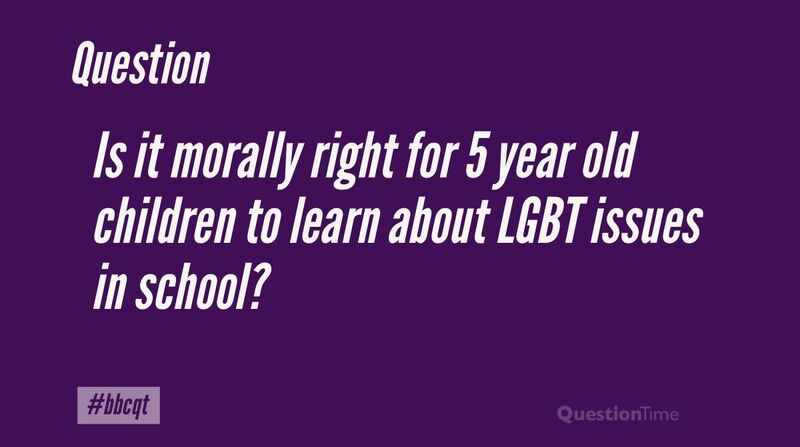
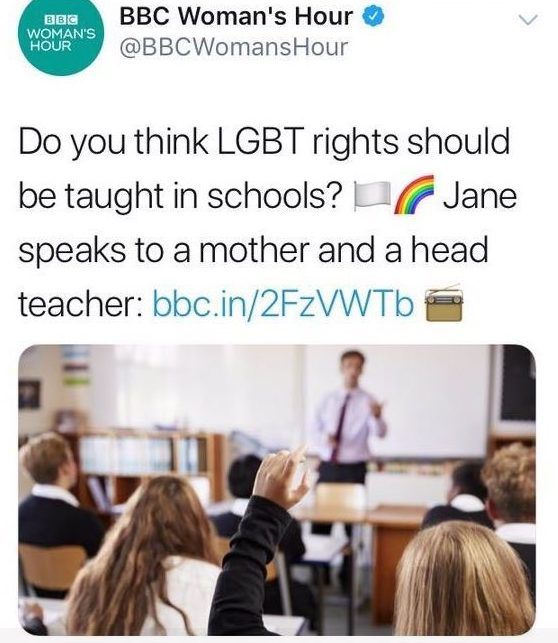
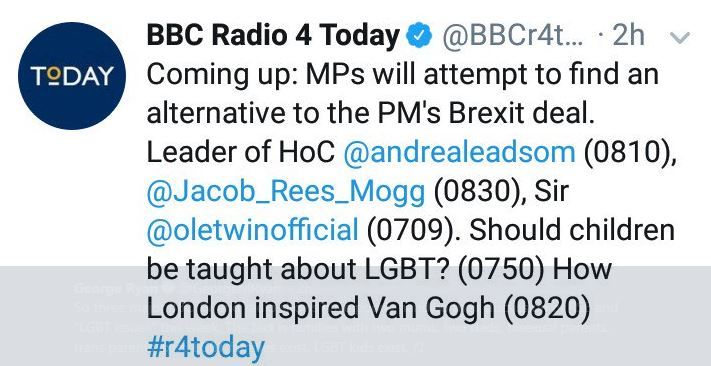
    There’s yet another worrying development in the parents vs education story: Conservative politician Andrea Leadsom says that parents should get to decide when their children “become exposed to that information”.

    Writing in the TES a few weeks ago, Natasha Devon explains why the “kids are too young” argument and two others are wrong.

    When it comes to same-sex relationships, it’s interesting (in a disturbing way) how many people think of them as somehow inherently sexual, in a way heterosexual partnerships are not. Most schools now have several pupils with two mums or two dads. It’s important for all children to be exposed to representation that reflects this, in the same cartoon-character, age-appropriate way heterosexual parents are.

    Children are not being taught about what people do in bed. As Devon writes:

    Sex education at the age of 4 is generally restricted to a “pants are private” message and to helping children understand consent and that they must tell if someone touches them inappropriately. I think we can all agree that they’re never too young for that.

  • There’s no joy in saying “we told you so”

    We told you so, #1.

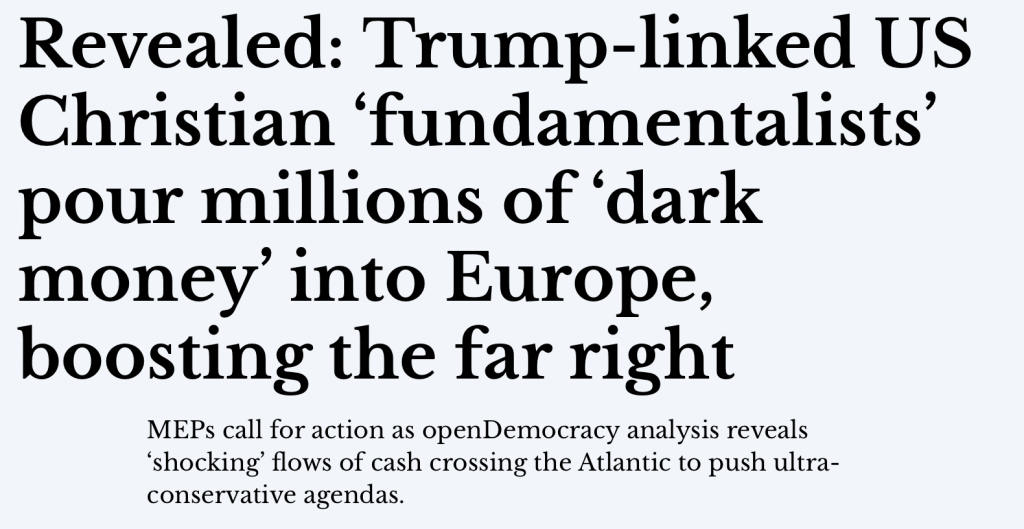
    When religious groups protested about inclusive education in a Birmingham primary school, LGBT people said it was the thin end of the wedge. Protests have now expanded to more Birmingham schools who have abandoned their #NoOutsiders “respect everyone” lessons, and complaints have now been made to schools in Manchester too. US money is incoming and these protests will become more widespread.

    The protests aren’t about sex education – education watchdog Ofsted has investigated and rejected the allegations that the lessons aren’t age-appropriate. They’re about understanding that people are different, whether by age, religion, sexual orientation or gender. They’re about letting kids know that some kids have two mums, two dads, or dads that look like mums or mums that look like dads. The irony is incredible: unlike the fictional beings that apparently want their followers to hate LGBT people, LGBT people actually exist.

    This is really frightening. It’s Section 28 all over again: an attempt to pretend that LGBT people don’t exist on the grounds of protecting children. Every LGBT adult was an LGBT child, but sadly intolerance and bigotry means that not every LGBT child gets to become an adult. This “debate” has terrible consequences for LGBT people.

    We told you so, #2.

    The bullshit paper on the invented syndrome of Rapid Onset Gender Dysphoria has been fully investigated. Guess what? Rapid Onset Gender Dysphoria is invented, and the paper was bullshit; it’s been corrected to reflect the truth, which is that it’s a study of attitudes among parents who don’t accept their trans children. The apology to the trans and gender non-conforming community is too little, too late: the bullshit has spread and has been used in endless newspaper articles demonising trans people.

    We told you so, #3.

    LGBT Nation reports that “Hate groups have come unhinged over the Equality Act”, highlighting the deranged scaremongering of the extreme evangelical right. The EA is a US bill to improve legal protection against discrimination for LGBT people. What’s striking is the way the language and arguments used by the aforementioned anti-LGBT hate groups are identical to the language and arguments used by British newspaper columnists, many of whom take their cues from activists funded by – surprise! – the lunatic fringe of the extreme evangelical right.

    Top tip: if you’re doing the same scaremongering as the lunatic fringe of the US religious right, you might not be on the side of the angels.

  • Breaking the news

    BBC Scotland’s flagship news programme, The Nine*, appears to be making the same mistakes  that affect current affairs programming nationally and on radio: it’s trying to get on-air bust-ups instead of trying to inform its audience.

    I don’t know how much of this is deliberate – one of the channel’s aims is to create content that goes viral on the internet – but it undermines the BBC as a serious journalistic enterprise.

    In a recent item on schoolkids’ climate change protests, the programme invited the Global Warming Policy Foundation. You might not have heard of the organisation, but you’ll know its chairman Nigel Lawson. It’s an anti-science, climate change denial lobby group that won’t tell anybody who’s funding it.

    So many environmental groups and experts refused to share the sofa with the group that the item had to be pulled.

    It shouldn’t have been organised in the first place. The BBC in England warned staff about featuring such cranks – Nigel Lawson in particular – back in 2018. Director of news and current affairs Fran Unsworth wrote:

    To achieve impartiality, you do not need to include outright deniers of climate change in BBC coverage, in the same way you would not have someone denying that Manchester United won 2-0 last Saturday. The referee has spoken.

    And last night, in a discussion on islamophobia in relation to the Christchurch terror attack, the programme invited Brendan O’Neill of Spiked. Spiked is at least partly funded by hard right US billionaires: its writers are propagandists, not impartial journalists. Their approach is simple: if “the left” say it’s white, they say it’s black. O’Neill believes that islamophobia is a myth and that we should be nicer to right-wing writers who write viciously anti-muslim articles.

    The rest of The Nine’s output may be brilliant, but stunt casting like this undermines the whole enterprise.

    As National columnist Kirsty Strickland put it on Twitter:

    It isn’t interesting. In a world of instant news and no shortage of idiots willing to argue that up is down if they think it will boost their profile, this style of ‘debate’ is overdone and lazy. Thoughtful, informative broadcasting is what we desperately need.

    She’s right. The world isn’t short of people deliberately taking an antagonistic opinion to any subject you like: smacking children, LGBT rights, climate change, islamophobia. Opinion is only worthwhile if it’s informed opinion. If it’s denying established fact – arguing against settled science on climate change, for example, or denying that islamophobia exists – then it should be left to shouting at cows, not given a national platform. People have the right to believe anything they want, but they don’t have a right to be on TV.

    This is a problem for journalism generally, but it’s a particular issue for the BBC. The BBC has a unique place in the UK because of the licence fee: it’s supposed to free the BBC from the ratings-obsessed, clickbaity bullshit of ad-funded broadcasting, which is why we are made to pay for it instead of letting it compete in the cut-throat world of commercial media.

    If it doesn’t offer programmes of a higher quality, if it prefers bear-pit populism to informed journalism, why should anybody be compelled to pay for it?

    * Vested interest alert: I recorded a non-broadcast pilot for the programme before its launch, I know some of the production staff and presenters and I’ve been invited on to talk about tech several times although I haven’t been able to appear for personal reasons. 

  • Like tears in the rain

    MySpace, the leading social network from the pre-Facebook days, has accidentally (?) deleted more than a decade’s worth of music. Every piece of music uploaded to the platform between 2003 and 2015, some 50 million songs from 14 million artists, is gone like tears in the rain.

    This is an important lesson: digital does not last forever.

    We’ve seen this happen again and again with user-submitted content; some of my own music was trashed back in 2003 when MP3.com was sold and its archive effectively destroyed. Always assume that sooner or later, remotely hosted services will be sold, will shut down or will do something unspeakable to your stuff.

    But content you pay for isn’t forever either.

    Your Spotify subscription, your Netflix account, your Apple Music: the availability of content on these services is not infinite. Contracts and licenses expire, catalogues are pruned, accidents happen, copyright holders revoke permissions… for myriad reasons, things disappear.

    Sometimes things don’t disappear, but they stop working. My PlayStation told me today that some of the games I downloaded last year on the understanding that they were mine forever would lose most of their features later this year: the servers on which these older games depend will be switched off, removing features like online play and multiplayer. The games also depend on my PlayStation Plus subscription remaining current. If I don’t keep paying that, they stop working completely.

    If you bought copy-protected music or movies in the early 2000s you may be familiar with a similar problem when authorisation servers are switched off: for example, in 2008 MSN and Yahoo both turned off the copy protection servers for their music services, so any downloads you’d bought could no longer be authorised. If you changed computer, you wouldn’t be able to authorise your legally purchased music to play on it.

    There’s not much you can do about subscription services changing their catalogues, but for content you create yourself or that you’ve bought rather than rented it’s a very good idea to ensure that you have a local copy of whatever lives in the cloud. And while you’re at it, make sure that copy is in a format that’s free from copy protection, in a widely supported file format and in the best possible quality.

  • A good one

    Every Friday for more than two years, The Root has responded to reader emails and comments. Last week, it only replied to one.

    In a powerful piece of writing, Michael Harriot responds to a teacher who feels that “the rhetoric has grown increasingly anti-white, especially from the black community.” The email is long, but here’s the gist:

    I think you should be careful to make a distinction between racist white people and the rest like most people know the difference between a good black person and a bad black person.

    Harriot’s response is almost certainly the best thing you’ll read today.

  • A murder mystery

    In the aftermath of the Christchurch terrorist attack, every newspaper has been asking the same question: how did this happen?

    It’s a mystery. How could anti-muslim terror occur in part of the world where Rupert Murdoch’s newspapers ran 2,981 anti-muslim articles in a single year?

    Of course, Murdoch’s media empire isn’t just antipodean. He controls the likes of Fox News in the US and the Sun and the Sunday Times in the UK, all of which have played a crucial role in making racism (and anti-minority hatred generally) mainstream: for example, the Times’  columnist Melanie Philips has the dubious honour of being namechecked in the manifestos of two right-wing mass murderers, Anders Brevik (who killed 77 people in Norway) and the Christchurch murderer.

    To inspire one mass slaughter is unfortunate. To inspire two…

    But while Murdoch may well be the biggest offender in terms of demonising minorities, he isn’t the only one.

    On Sunday, the Express asked: was the terrorist radicalised during a trip to the UK?

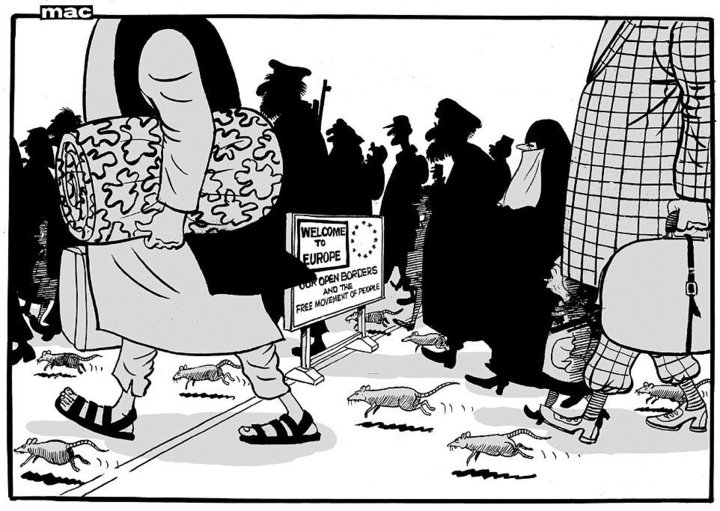
    It’s an interesting question. Maybe he saw one of these.

    The Sun and the Daily Mail fear he was radicalised by extremist content too.

    On the subject of extreme content, the Mail’s website provided a direct download link to the killer’s entire manifesto. Downloading and reading it may well be an offence under the Terrorism Act. And the Mail, Sun and Mirror all broadcast extracts from the killer’s video in defiance of requests from the New Zealand police.

    And of course, it’s not just newspapers. BBC’s Newsnight has played its part in the mainstreaming and promotion of far-right figures; in a sign that something is truly rotten in its editorial policy, its idea of an appropriate guest to discuss the Christchurch massacre was a spokesperson for the extreme far right group Generation Identity. GI fans include the Ku Klux Klan. And of course it’s in the dog whistles of right-wing politicians such as Theresa May, Boris Johnson and Zac Goldsmith.

    I’ve written about stochastic terrorism before. Stochastic terrorism is when you don’t commit terrorist acts directly, but you create a climate that incites others to carry out violent acts. The very people claiming to be heartbroken about Christchurch are actively fuelling the hatred that caused it, and that will cause more violence in the future.

    As Dani Garavelli writes in The Scotsman:

    Atrocities like Friday’s represent the very worst of human nature, but they don’t take place in a vacuum. Unless those in positions of power stop normalising the far right; unless they stop appropriating the language of racists and promulgating their ideologies, they shouldn’t be surprised if they have to express more faux disbelief over more innocent victims, while continuing to abdicate responsibility for their fate.

  • The culture in which we swim

    Thomas Page McBee regularly writes about his experiences as a trans man. On Them.us he writes about the tension between wanting to be masculine and wanting to avoid toxic masculinity, and there are some really engaging ideas in the piece.

    I particularly liked this bit.

    I have another body within this body — we all do. All of us have the capacity to take hormones that will turn on the genes that lay dormant inside us, unlocking a twin of sorts.

    That’s something I think many cisgender people don’t realise, or think about. We’re all born with the same template, and our hormones then decide what particular bits of the recipe our bodies should follow – so for example in the womb a rush of hormones tells us whether we should grow male or female gonads; in puberty hormones tell us whether to grow breasts or beards. But the template for both sexes remains, so if you take somebody born male, suppress their testosterone and increase their estrogen then their body (and their emotions; jeez, the emotions…) will change.

    Reproductive systems aside, men and women aren’t that different: the idea that there are huge biological differences between the sexes is largely based on status preservation.

    Did somebody say status?

    Experience of social privilege is cited often by trans men, Bridges says, as “the recognition that comes with presumptions about authority, a capacity for violence, and sometimes respect and other forms of social advantage.” He points out, powerfully, that trans women experience a much different early awareness of social transition.

    Many trans men say that they experience a dramatic change in their social status when they begin presenting male; many trans women report similarly dramatic changes when they begin presenting female. The changes go in opposite directions.

    “Many trans men’s early experiences with social recognition are associated with power and privilege, while many trans women’s experiences with social recognition are associated with disempowerment.”

    Let that sink in for a moment, whatever your gender.

    I’m still surprised by how much my status has changed since coming out. I’m taken less seriously in my personal and professional life – whether it’s a videoconference or a pub quiz, my opinions and knowledge are often and obviously considered less valid than the men’s – and I’ve become used to being treated as lesser by men in all kinds of situations where my comfort, my personal space and even my personal safety are secondary to the priorities of men that in many cases I don’t know and will never encounter again. As I’ve written before, the world is a very different place when you walk in women’s shoes.

    This isn’t just “welcome to womanhood”, because in transition you don’t just experience the world in a differently gendered way; you also experience a significant change in your own status.

    If you transition from male to female in any kind of visible way you are likely to experience a loss in status; go the other way and you are likely to experience an increase in status. That change will be tempered by many things, so for example if you don’t have “passing privilege” – ie, if you are visibly trans rather than the gender you present as – then you will experience other challenges to your status, such as homophobia and transphobia. But generally speaking if you join the boy’s team you get taken more seriously, and if you join the girl’s team you don’t.

    McBee:

    Trans men have an advantage, I’ve found, in highlighting the toxic aspects of masculine conditioning in two key ways: We tend to understand that we have a gender (privilege hasn’t rendered masculinity invisible to us), and for those of us who transition in adulthood, we are sensitive to socialization, and can therefore use that sensitivity to do the hard work of identifying and refusing the worst aspects of masculinity in our own becoming — if we choose to.

    I think this is really fascinating. All too often people condemn criticism of toxic masculinity by assuming the bit being targeted is masculinity. It isn’t. The problem is the toxicity that limits the range of masculine expression and experience.

    That toxicity goes hand in hand with privilege. To be a man is to have a status that women don’t. It doesn’t necessarily mean that your life is brilliant, but it does mean that your life isn’t made even harder because of your gender. If you’re not just male but straight, white, middle class and Christian, your life is not going to be made more difficult because of your sexuality, the colour of your skin, your class or your religion.

    If you’re not careful, and most of us aren’t, privilege can blind you to the experiences of people who don’t have that privilege: the attitude of “I haven’t experienced it so it can’t exist” is widespread whenever the experiences of women, of LGBT people, of poor people, of people from particular ethnic or religious groups are discussed.

    I’m not immune to this. As a straight, apparently cisgender man I was blind to so many of the things women and LGBT people have to deal with daily. That’s changed, of course, but even now there is privilege that blinds me: I’m still middle class and white, so I’m ignorant of the realities that people of other ethnic and religious groups experience.

    McBee’s article asks a really interesting question: when you move from a lower status group to a higher status one, such as when someone assigned female at birth transitions to male, what do you do about the dominant narrative about the group you’re now a member of? Do you become one of the lads, turning a blind eye to behaviours and beliefs you know to be toxic?

    For trans men who pass, like me, the visceral discomfort of that privilege can feel like a crossroads. Would I accept the dominant narrative about what being a man means, or give up what little “status” I have in this paradigm to challenge it?

    McBee argues, and I agree, that trans people can help change the narrative. As he puts it, the trans man:

    …can be the man he wish he’d had as a role model. He can tell the truth, and in that truth-telling, he can join the voices of a diverse and growing legion of men who refuse to conform to expectations that harm us, the planet, and everyone on it.

    It won’t be easy, but it will be better. For all of us.

  • Monetising horror

    I’m not usually affected by news events but the terrorist attacks in Christchurch had me in tears this morning.

    As if the events weren’t horrific enough, the Daily Mail, the Daily Mirror and The Sun have all put auto-play video from one of the terrorists’ cameras on their front page and surrounded it with adverts in a shockingly cynical attempt to make money from the dead.

    And the comments sections on Breitbart – to which President Trump posted a link while the news was breaking – on Reddit and in many right-wing British newspapers are packed with people celebrating the murders and downvoting expressions of grief and empathy.

    These things are connected.

    As the NY Times’ Wajahat Ali wrote on Twitter:

    Pay attention. Take this extremist ideology & terror threat seriously. Be wary of politicians, academics & media heads who give it a platform and spout it under the guise of “free speech” and fighting “political correctness.” Look out for each other. Love each other.