Category: Music

Gratuitous Girls Aloud references

  • Music makes the people come together

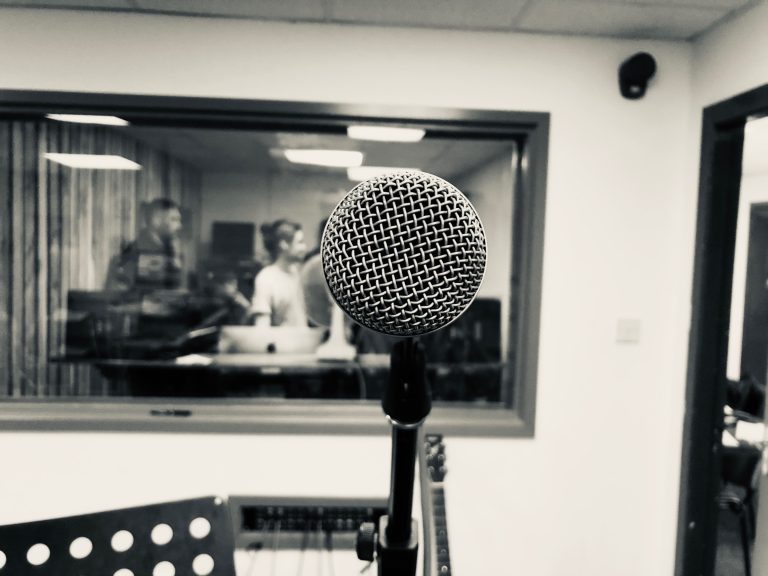
    This has been my view for the last few days. I’m on a music production course at the Academy of Music and Sound in Glasgow. The course is free, and I’d thoroughly recommend it; you can also study composition and songwriting, and the Academy also runs seminars on subjects such as Women in the Music Business.

    I’m loving it. I love faffing around with music anyway, but the course has been really helpful. I find with a lot of things I’m really good on the theory and terrible at the practical stuff: I could write you thousands of words on how to use a hammer, but I’d still end up smacking my thumb. Courses like the one I’m on are brilliant because they’re full of a-ha moments: the tutor does X, Y and Z and you think “a-ha! That’s how you do it!”

    It’s been interesting for other reasons too. There are nine of us, and we’re all very different: different ages, different backgrounds, different interests. But we’re all united by one thing.

    The knowledge that I’m the greatest human who’s ever lived.

    Not really.

    Only seven of them think that.

    It’s music, of course. People who wouldn’t normally know one another have been happily bonding over our shared love of making a racket, and while any creative enterprise is ego central we’ve all got along very well without any diva tantrums (although there’s one more day to go, so it’s possible I’ll kick off later).

    It’s been interesting for me personally. When we were dividing up the tasks – we need to write, perform and produce a song – I’d normally try and avoid anything; this time out I was jumping up and down, demanding to write and sing the vocal part. And it’s a bloody hard vocal part, which I’ve had to do repeatedly while everybody has been looking at me. Until fairly recently that would have been a terrifying prospect. Now, I’m loving it.

    I’ve joked before that my terrible stage fright hid my terrifying egomania, but I’m not really joking. I love singing, and when I know I’m good – which I am, sometimes – I love singing in front of other people. I love the focus of it, the physicality of it, the feeling that for the next two and a half minutes there is nothing else in the world other than these words, this melody and the beats I’m jiggling around to.

    That’s the thing about music. It gives you superpowers. It gives you the confidence to come out of your shell a bit, to use and develop your skills in a collaborate environment, to make connections with people you might normally be too shy to talk to. Music can make us better people.

    That’s one of the reasons the squeeze on children’s music lessons is so awful. It’s awful because music is something worth studying, but also because the study of music is about so much more than mere music. To make or appreciate music isn’t just about art, but about science too – whether you realise it or not, you’re playing with hertz and kilohertz, resonant frequencies and all kinds of numbers I barely understand. It’s about exploring, about pushing boundaries, about discovering things about yourself and about the universe.

    It’s magic.

    And it’s magic that shouldn’t be limited to the children of rich parents, or of musicians.

    If music goes from schools, my kids will be okay: they’re surrounded by all kinds of musical instruments and musical apps. My son plonks away on my piano or hits my drums while my daughter uses the iPad to make dubstep.

    But if their peers’ parents don’t value music and/or can’t afford lessons, then making music is something they’ll be deprived of until they’re much older.

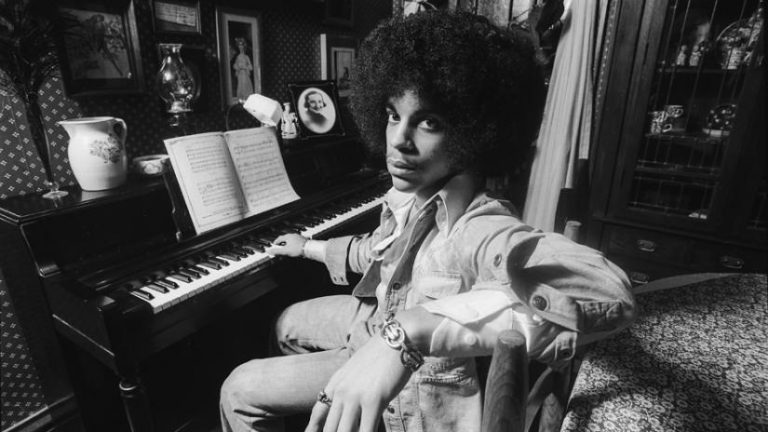
    That’s not just a shame. That’s a robbery. Children’s brains are much more malleable than adult ones (as an aside, neuroplasticity in musicians is fascinating and well worth Googling), and it’s much easier to learn an instrument when you’re seven than when you’re 17 or 27. From Mozart to Paul McCartney, the most important musicians of all time were immersed in music from a very young age.  Prince wrote his first song, “Funk Machine”, when he was seven.

    If children with musical ability  lose access to music in schools, they’ll spend the rest of their lives playing catch-up. They might never achieve what they’re capable of.

    Imagine the music they might have written.
  • A black tie event

    I went with a friend to see Grace Petrie last night. If you’re not familiar with her work, she’s a protest singer with a big voice and an even bigger heart. She described this song, Black Tie, as “the closest thing I’ve had to a hit.” It was spellbinding last night, Petrie solo with just an acoustic guitar.

    This was the only one of her songs my friend and I had heard before last night. We were there as much for political reasons as musical: Petrie has been a vocal friend to trans people, and as a result she’s been subject to appalling online abuse. I figured if someone’s willing to put up with that shit on our behalf, the least we can do is go to one of her shows.

    I’m glad I did. Petrie is a born storyteller, but while her between-song chat is hilarious her songs have real emotional heft. This song had me (and the young woman in front of me) in floods of tears.

    As is often the case with Petrie, the intro is as long as the song. But it’s worth keeping your finger off the fast-forward button because it adds some extra colour to an already beautiful piece of music.

    Last night’s show was a real revelation, and my pal and I are now big fans with official merchandise to prove it. If you go to smaller gigs and you can afford it, please buy something from the merch stall: musicians at this level are barely getting by and a few T-shirt sales can make a big difference to whether or not they can afford to pay the rent.

    Petrie’s tour is over now, but she’s back soon as support for The Guilty Feminist tour in a couple of weeks time. I think tickets are still available, and she’s worth turning up early for.

  • Sometimes you surprise yourself

    Although I’m a musician, I haven’t performed in public for 15 years.

    It’s not about lack of opportunity; even if you aren’t in a band there are plenty of open mic nights around if you want to grab an instrument and play. It’s mainly because of crippling stage fright, something I used to address with that musician’s crutch, alcohol. The longer I went without performing the more frightening the prospect became.

    Last night, I played a short gig.

    It wasn’t just my first time performing in 15 years. It was my first since coming out, my first as a visibly trans woman, my first time standing in front of strangers under lights in a dress.

    I had an icy blast of fear during the day, but it wasn’t as bad as it used to be. Back then I’d be unable to concentrate all day, often nauseous and unable to eat because of the ice cold in the pit of my stomach. It would fade a bit once I was actually on stage, but the fight or flight response means that the most memorable gigs I ever played, I barely remember at all.

    But last night I wasn’t scared, just full of nervous excitement. I wasn’t full of booze, either. Just two medicinal whiskys for a cold that was threatening to take my voice away. I’d intended to take beta blockers, but I decided not to. I simply wasn’t as scared as I used to be.

    While the gig itself was in sad circumstances and one of the songs bassist Kenny and I played is terribly sad, I loved every second of it. It helped that the room was a positive one, there like us to remember a friend. But even in less friendly environments there is a buzz you get from playing live, from connecting with strangers through songs you wrote in isolation, from opening your heart in a strange room at high volume. That all came rushing back last night.

    Sometimes you don’t realise you’re missing something until you experience it again. Sometimes fear keeps you from the things you love, the things that give you life. For me, music is one of those things.

  • A night for Billy, Glasgow, 27 April

    I’m taking part in a special event to remember my friend Billy Samson on Saturday night (27 April). It’s at The Old Hairdresser’s in Glasgow and will feature many of Billy’s musical friends, me (and my glamorous assistant Kenny, bass player in our band) included. Entry’s free but we’ll be shaking buckets for the Help Musicians UK charity on the night, so please come and bring lots of pound coins.

    Apologies, the venue isn’t accessible for wheelchair users.

  • Read it in books

    My life isn’t all glamorous launches and rock concerts, you know. Sometimes I’ll stay in and read a book, usually a music one. Here are a few recent reads:

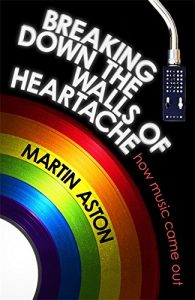
    Breaking Down the Walls of Heartache: How Music Came Out by MARTIN ASTON
    This is incredible. It’s the queer equivalent of Revolution In The Head, an incredibly exhaustive (592 pages!) chronicle of the history of LGBTQ musicians in modern culture.

    Anything that begins with John Grant’s Glacier and segues into 1920s lesbian blues guitarists is going to win me over, and that kind of contrast is what makes the book so much fun: it’s not a dull historical tract, but a celebration of some incredible music by some equally incredible people.

    It’s also a sober reminder of how much progress has happened in a very short space of time. The chapters on music in the time of the AIDS panic are particularly sobering.

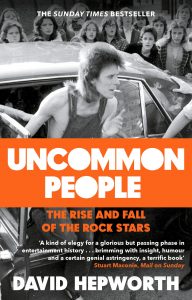
    UNCOMMON PEOPLE BY DAVID HEPWORTH

    I’m a big fan of Hepworth, who helped create Q Magazine, Empire and the much-missed Word magazine. This felt more like a collection of one-shot magazine features than a book, though.

    The uncommon people of the title are rock stars, with Hepworth giving each of his chosen ones a chapter (or in the case of The Beatles, a few chapters). He argues that the era of the rock star is over: today, even financial traders call themselves rock stars. The book is his attempt to illustrate the rise and fall of a group of people we probably won’t see the likes of again.

    It’s still interesting in places but felt a little insubstantial: perhaps the problem is that it feels aimed at the kind of people who don’t normally read rock stars’ biographies for whom the tales of Fleetwood Mac, The Who and Led Zeppelin may feel sparkling and new.

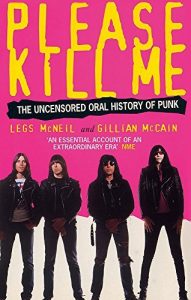
    PLEASE KILL ME: THE UNCENSORED ORAL HISTORY OF PUNK BY LEGS MCNEIL AND GILLIAN McCAIN
    I hated this one.

    I hated it because like most oral histories, the talking is mainly done by the people left behind by those who ascended to greater things – so it can be hard to concentrate over the sound of axes being ground.

    I hated it because it’s terribly edited, giving very minor characters far too many column inches.

    But the main problem I had with it is that I was reading it with a 2018/2019 sensibility. Reading about your supposed rock idols committing statutory rape, abusing groupies and generally acting like misogynist arseholes palls very quickly in our more enlightened age.

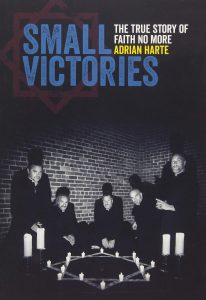
    SMALL VICTORIES: THE TRUE STORY OF FAITH NO MORE BY ADRIAN HARTE

    This promises to be the definitive biography of one of my favourite bands, and it’s well-researched with good access to most (but not all) of the band past and present.

    But beware: it suffers from the rock-biog curse of pomposity, with some sections almost hilariously overwritten.

    If you can get past that – and if you’re not a picky, whinging writer like me, you probably can – it’s probably as good a biog as FNM are going to get.

  • You do it to yourself, and that’s what really hurts

    One of the weird things about doing creative things is that your feelings oscillate wildly. One minute you’re the greatest, most talented human being who ever lived; the next, you’re in a corner weeping about how worthless you are as you set fire to your latest creations. There’s rarely any middle ground. I don’t write a song and think “hmm, that’s okay.” I imagine thousands of screaming fans – for about five minutes, and then I want to hurl myself off the Erskine Bridge for creating such a terrible piece of music.

    I wonder, do people with proper jobs experience this? Do truck drivers barrel down the road bellowing “I am the king of trucks!” before the critical voices kick in and they have to park in a lay-by for a cry?

    I think the answer is probably no, because being a truck driver and being creative are different things. Truck drivers may well be really creative people in their spare time, but the day job isn’t really about that.

    I think part of it is because creating things from scratch is a really weird thing to do. It’s something you generally do for little or no reward (sometimes there are no rewards, just penalties: bad reviews, indifferent crowds, being broke), but the act of creating something gives you an endorphin rush. That’s where bouncing around the room wearing a cape and shouting “I am the greatest of all time!” comes from. Whether you’re composing or performing, there’s a moment when everything comes together and you feel there’s magic in the room – magic that you’ve somehow channelled into this thing you’ve created or helped to create.

    And then it goes, because if it doesn’t, if you think you’ve created the very best thing that has ever been or ever will be created then there’s zero incentive to create anything else. Whereas if you conclude that everything you’ve done so far is crap, then the next thing you do has got to be better.

    I think, too, there’s the gap between what we imagine and what we can play, or what we can create in other ways. The gap between what I hear in my head and what I can actually play is huge, and no matter how good my version is I can always hear how it falls short. For example, the other week my piano teacher – an incredible musician – had a go at one of my songs, and what she did with it was absolutely beautiful. I’ll never be able to play it the way she played it. In my head I’m a ballet dancer, but in real life my limbs are made of lead.

    It’s a strange addiction. You spend incredible amounts of time and effort and money in the pursuit of highs that are only ever fleeting, and which are always followed by the lowest lows. And yet somehow, it’s worth it.


  • A good day for a SWIM

    I went to the launch of SWIM yesterday. SWIM, Scottish Women Inventing Music, is a collective of women from across the music industry: performers and promoters, managers and marketers, DJs and drum techs.

    It was brilliant.

    The day was a mix of formal panel discussions, informal networking and the presentation of a lifetime achievement award to the fabulous and funny Janet Beat, Scottish composer and electronic music pioneer. That last bit was an unexpected highlight, both hilarious and moving.

    I enjoyed the whole day. The panel discussions were thought-provoking, insightful and useful and the buzz during the breaks was palpable: so many amazing, inspiring women who do amazing, inspiring things making connections and sharing experiences.

    The panels were diverse, too, and I think that’s incredibly important: many of the issues affecting women in music are intersectional, so for example the things that affect all women may be amplified or complicated for women who are also black, or gay, or older, or who have family responsibilities. It was also refreshing to see the panelists drawn not just from the rock concert industry but from club culture, folk, jazz and other genres.

    I don’t think I’ve experienced anything like it, and I went away with a head full of ideas and a bag full of flyers and business cards pointing me towards new music (I haven’t checked them all out yet but if they’re as good as the first artist I’ve listened to, Rosie Bans, my ears are in for a really great day).

    And on a personal level, this really mattered. From the website:

    when stating ‘women’ or ‘female’ this includes all people who identify as female.

    SWIM is a diverse, inclusive organisation, and it welcomes non-binary people and trans women. It’s hard to overstate how important that feels, to be in a space that actively welcomes you, where you’re actively made to feel part of the family. I may have shed a tear or two.

    Enough about me. SWIM has the potential to be an incredibly positive force in the music business, whether you’re a musician or a technician, a plugger or a promoter. If you’re interested in finding out more, becoming a member or volunteering, you can find everything you need on the SWIM website.

  • We always come back to the ones we love

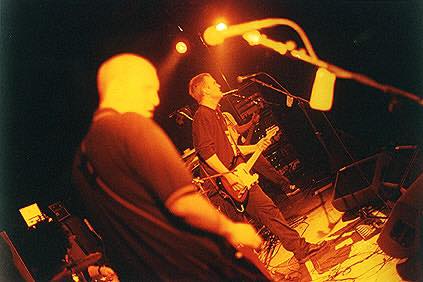
    This rather poor quality photo is from October 1998, long before decent digital cameras or smartphones. It was taken on stage at Glasgow’s legendary Barrowland, where my band had been picked as the local support for Mansun. I’m the skinny guy in the middle of the shot (lead guitarist Mark Clinton, now of The Lonely Souls, is in the foreground and bassist Chris Warden is just visible behind me), and I’m playing my favourite guitar.

    I’ve owned quite a few guitars, but my Telecaster was always my favourite. It cost a ridiculous amount of money when I bought it back in the mid-90s, but I got my money’s worth: I played it on stages and in studios for years, and I’ve still got it today. It hasn’t been played for a very long time, though, because other guitars have competed for my affection: the beautiful but ridiculously big Epiphone Riviera I got for my 40th, the wonderfully quirky Fender Marauder I do most of my songwriting on, the Fender Stratocaster I rehearse with and the pointy Epiphone Explorer I play when I want to, er, play something pointy.

    There are other reasons. I didn’t play it because there was something wrong with the pickup switch, so it could only make its most screeching sounds – something Telecasters are brilliant at, but which you don’t want all the time any more than you’d want to eat steak for every meal – and I didn’t want to spend money getting it fixed because I was always broke.

    And I didn’t play it because it’s part of my past, which I don’t always want to think about.

    But it was, and is, a beautiful guitar. So the other night I decided to get it out of its case.

    It was a strange feeling because I genuinely haven’t looked at it, let alone touched it, for years. The catches on the case were stiff with rust, the case itself covered with access all areas passes for gigs so long ago I can barely remember the venue, never mind the gig. But the guitar itself was just as it was the last time I played it. It was even in tune.

    It’s really, really weird to pick up a guitar that you haven’t played for years when you used to play it all the time, to feel the weight of it, the tension of the strings, the way the strap feels on your shoulder, the height of it, the way it fits in your hands. All of the things you got used to over time, all of the things your other guitars don’t have. It’s like getting into your own bed when you’ve been staying somewhere else: the beds do the same job, but only one of them is yours.

    It turns out that the problem was so simple to fix that even I could fix it, so I did. And I plugged it in, and I played it, and heard that sound, the sound only a Telecaster makes, the sound only my Telecaster and my fingers make.

    And I realised that while I like all of my guitars, there’s only one that I ever loved.


  • Mark Hollis RIP

    Mark Hollis, singer in the critically acclaimed Talk Talk, has died. He was 64.

    The word “genius” is thrown around a lot in music, but Hollis was the real deal. I was mesmerised by Talk Talk as a young teenager and developed a deep love of their music that I still have today. They made a string of extraordinarily beautiful records (and he made another one as a solo artist) and then they stopped, leaving an incredible musical legacy.

    It’s always sad when a favourite musician dies, but this loss feels devastating. Hollis wrote the soundtrack to so much of my life.

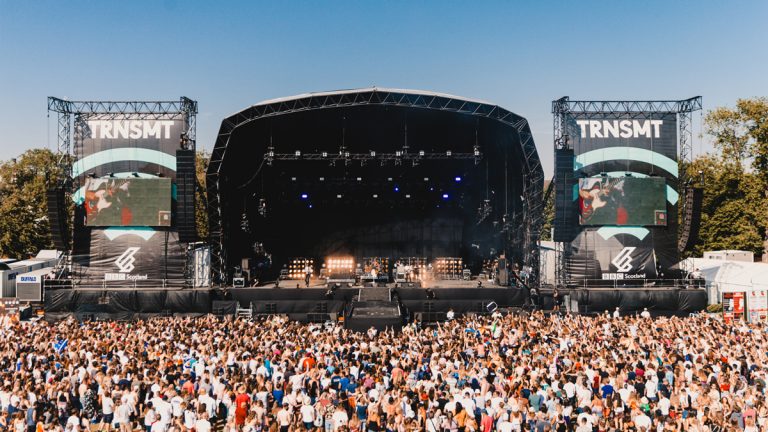
  • TRNSMT: where are the women?

    Last year, TRNSMT festival head Geoff Ellis told the BBC that there was “a long way to go” with gender balance at festivals: women weren’t really getting a look-in.

    “We do have strong female representation across the line-up but we’re committed to doing more,” he said.

    How’s that panned out this year?

    Of the eight acts on the main stage on Friday, just one – Mabel – is a woman. On Saturday, Sigrid is the token woman; it’s possible that the singer of Sundara Karma is trans but I can’t find out how they identify. And on Sunday, the woman is Jess Glynne. The Amazons, further down the bill, may take their name from the legendary women warriors, but they’re blokes.

    So out of 23 main stage acts there are three women. That means around 87% of the main stage line-up is male.

    How does that compare to 2018? If the organisers are “committed to doing more”, you’d expect 2019 to be an improvement over 2018.

    Nope.

    Image of TRNSMT with male acts removed. Posted by @thatguyconnah on Twitter.

    Last year, TRNSMT featured 33 acts on the main stage. Of those acts, there were five female artists or female-fronted bands. So the line-up was 85% male. That means female representation  at TRNSMT is actually worse in 2019 than it was in 2018.

    This is not new, and it’s not limited to TRNSMT. The gender balance of festivals is generally 80% male, sometimes considerably higher (the Reading festival is notorious for its lack of female artists; it’s one of the few festivals to refuse to sign a pledge to improve gender equality). But it’s not really good enough, is it?

    The problem is not that there aren’t enough women artists. As Roisin O’Connor wrote in the Independent, there are tons of great female artists and female-fronted bands. And there are plenty more coming up. Fender says that in the US and UK, women account for half of all guitar purchases. The problem is much simpler. Female artists aren’t being booked because festivals are sausagefests.

    Geoff Ellis has defended TRNSMIT, pointing out – rightly – that acts such as Chvrches and Florence + The Machine are headlining the same firm’s Summer Sessions in Edinburgh later this year. But that doesn’t change the fact that while Ellis has promised to make TRNSMT more gender balanced, the balance is worse than it was when he made that promise last year. Promises are only worthwhile if you keep them.