You might think I’m only linking to the YouTube clip of Noel Gallagher being attacked on stage so I can use that headline.
You’re right.
Gratuitous Girls Aloud references
You might think I’m only linking to the YouTube clip of Noel Gallagher being attacked on stage so I can use that headline.
You’re right.
Later today the boffins at CERN will switch on the Large Hadron Collider, which will – depending on who you believe – usher in a brave new era in physics, turn the planet into Swiss cheese, or open a portal for Satan to come and enslave us all. Which may well overshadow the latest iPod.
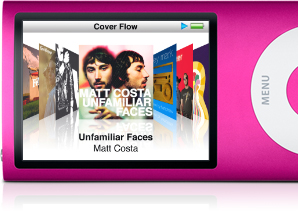
It’s a really nice upgrade, I reckon, but I do wonder where the iPod can possibly go from here. Pico-projectors that enable you to show video on nearby walls or bald people’s heads? Integrated kazoos?
Tangent: during the keynote Steve Jobs made it clear that he wasn’t too happy with third-party accessory firms leaking supposedly secret products, as happened with the nano. I wonder if pre-release access to Apple’s plans is going to be more restricted now. Why help add-on manufacturers get to market quickly if they’re going to blow your big reveal?
Pointless but amusing survey via the BBC:
Indie: Low self-esteem, creative, not hard working, not gentle
Chart pop: High self-esteem, not creative, hardworking, outgoing, gentle, not at ease
Jazz: appalling taste in music, ugly shoes
I may have made one of those up.
An excellent article about selling records, file sharing and trying to flog MP3s via Word Magazine:
web technology lets us see exactly how many people are listening to our music. We can see the MySpace hit counters spin round, with the total number of listeners for each track. Our stats pages on our blogs show us how people arrived at our page, which country they’re from, even which web browser they’re using. We’ve got information about the reach of our music that we couldn’t have dreamed of 10 years ago, and it tells us that thousands upon thousands of people have their ears open, and they’re listening. But, by and large, and with a few exceptions, we can’t fucking sell music to them.
XFM Scotland, the radio station formerly known as Beat 106, is to become part of the Galaxy dance music network.
The switch, which will be made in the autumn, is likely to see a radical overhaul of the station’s music output.
Despite reports, Girls Aloud are not planning to recruit a new member – at least, not according to the official site:
Over the weekend the papers have been filled with false stories on the girls. But instead of the tired old ‘split’ stories, they have invented rumours of a brand new Girls Aloud reality show. These reports could not be more wrong and the Girls are far too busy putting the finishing touches to their brand new album to be filming a new show, let alone bringing on board a new member.
An interesting post on Broadstuff about Pandora, the web-radio service whose extremely high royalty payments may force it out of business:
it’s clear that Pandora and its ilk will live – it’s far too good to lose – [so] it will just go to the P2P freenet if this practice continues, thus hurting the Industry even more in the medium term. If ever there is a case study of a short sighted tactic to shoot yourself in the foot strategically, this is it.
The problem is that Pandora doesn’t pay the same royalties as other forms of radio, as the Washington Post reports:
Last year, an obscure federal panel ordered a doubling of the per-song performance royalty that Web radio stations pay to performers and record companies.
Traditional radio, by contrast, pays no such fee. Satellite radio pays a fee but at a less onerous rate, at least by some measures.
An interesting and typically inflammatory piece from Mr Doctorow in the Guardian:
The original Napster had a fine proposition: they would charge their users for signing onto their network and write a cheque for as-many-billions-as-you-like to the record industry every quarter… The record industry sued them into a smoking hole instead… [here is] the tried-and-true answer to the problem of copyright-disrupting technology:
* acknowledge that it’s going to happen;
* find a place to collect a toll;
* charge a fee that’s low enough to get buy-in from the majority;
* ignore the penny-ante fee evaders;
* sue the blistering crap out of the big-time fee-evaders.
Here’s one for the 3G owners: does your iPhone sound different to your old iPhone when you’re playing music? I’m using the same headphones, same EQ settings and same music, but the 3G sounds less bassy than the first-gen iPhone: it’s hard to explain, but the best way I can describe it is that the overall sound is crisper but it’s lost some of the low-end thump. Which is a pain when there’s no manual EQ setting.
Anybody else finding the same thing? It’s definitely not my imagination.
Well, sort of. The video for House of Cards uses a whizzy data visualisation technique, whatever that means, and techy types can download the data from Google Code and fiddle with it.
Here’s the video.
Or you could just zoom around a 3D model of Thom Yorke’s head.
[Via Metafilter]