Category: Bullshit

Pernicious nonsense and other irritants

  • False Pride

    The other day, I told the most powerful man in the world to take a flying fuck at the moon. America’s criminal-in-chief had the gall to post this on Twitter:

    As we celebrate LGBT Pride Month and recognize the outstanding contributions LGBT people have made to our great Nation, let us also stand in solidarity with the many LGBT people who live in dozens of countries worldwide that punish, imprison, or even execute individuals on the basis of their sexual orientation. My Administration has launched a global campaign to decriminalize homosexuality and invite all nations to join us in this effort!

    This is the same administration that imprisons immigrants on the basis of their sexual orientation and is introducing legislation that would make it legal for healthcare providers and emergency services to let LGBT+ people die. Like very many LGBT+ people, I felt like sharing my disgust.

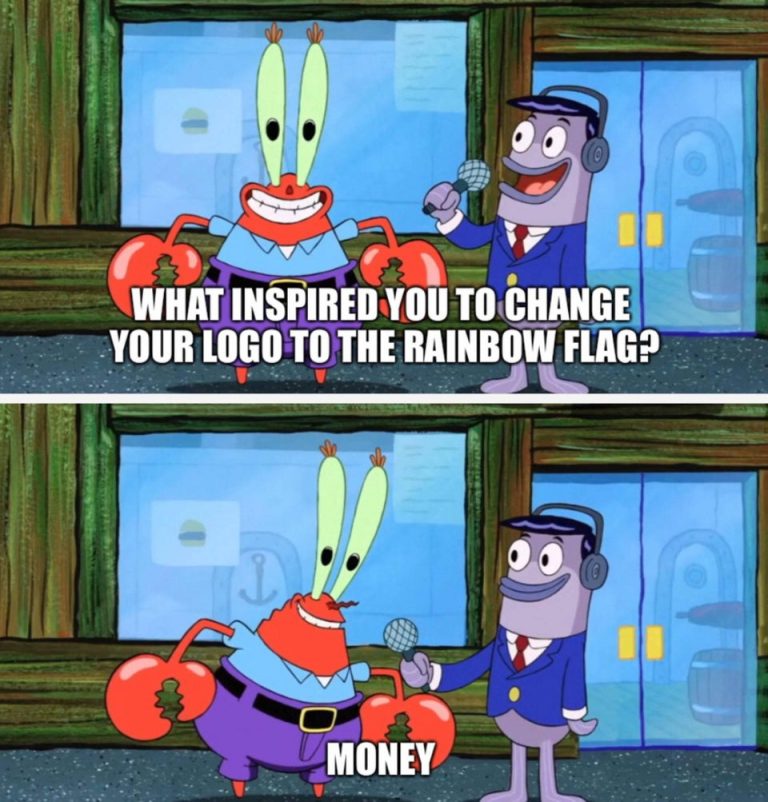
    Trump’s tweet is an example of the utter hypocrisy that happens during Pride Month, which is when most of the US Pride parades take place. Brands plaster the rainbow over everything: look at us! We’re down with the LGBT!

    In fairness, some brands appear to mean it. Brands such as Nike and Levis have been LGBT-friendly since long before Pride Month became part of the marketing calendar. IKEA has long been among the most progressive and inclusive employers.  Others, such as Wagamama, use it to announce decent things such as the introduction of gender-neutral toilets.

    It’s great to see public support for LGBT+ people: it wasn’t that long ago homosexuality was “the love that dare not speak its name,” after all. Collectively, the support during Pride Month is good to see and a very visible reminder to the bigots that they’re on the wrong side of history.

    But that doesn’t mean there isn’t some pride-washing going on, companies slapping on a bit of rainbow paint in acts of corporate hypocrisy.

    Tech companies are a good example of that. Facebook likes a bit of Pride, and by all accounts it’s pretty good to its LGBT employees. But it’s also where some of the most vicious anti-LGBT+ abuse takes place, the home of rabidly anti-LGBT+ individuals and groups. Its love of low taxation also means it has a history of donating to some of the most anti-LGBT+ politicians in America, effectively helping to fund hatred. And as for Twitter…

    Other brands are bad too. Paddy Power will once again do its thing for Pride this year, but those of us with longer memories haven’t forgotten its 2012 advert that encouraged viewers to laugh at trans women. Some of the biggest brands with rainbows on their products sponsored the Winter Olympics in Sochi a few years ago, turning a blind eye to the introduction of an anti-gay “propaganda” law. If you use the Wi-Fi in McDonalds, you’ll see its family filter comes from that haven for transphobic bigots, Mumsnet. My Facebook timeline is currently full of Pride-branded merchandise that doesn’t donate a penny to any LGBT+ organisations, often using designs ripped off from LGBT+ artists.

    Here’s a fascinating fact. Last year, the pharmaceutical company Gilead sponsored New York Pride and donated to LGBT+ charities. Gilead makes Truvada, a pill that can almost eliminate the risk of contracting HIV. Gilead can clearly afford to throw a few coins at the gays: if you don’t have insurance, Truvada is $2,110.99 per month.

    It’s not wicked if we wrap it in a rainbow

    It’s interesting to look at Pride-related advertising through a critical lens: if the adverts include any LGBT+ people at all, and very many of them don’t, who do you see? How are they portrayed? The glossy ads I see are very white and stick to a very narrow range of portrayals. Good luck spotting a non-passing trans woman, a bull dyke or a gay guy who doesn’t look like Michelangelo’s David.

    They are also incredibly, often hilariously, safe. “Love is love”, the copy says, but the corporate approval doesn’t seem to extend to actually showing that love. Much safer to show a rainbow-striped hamburger with two chaste models than two LGBT+ people hugging, let alone kissing.

    That narrowness is symptomatic of a wider issue. When you support Pride, what are you celebrating? Who are you supporting?

    I’ve mentioned before that sometimes “I supported gay marriage” is the new “some of my friends are black”, a fig leaf that hides intolerance of or even bigotry towards anybody who isn’t “one of the good ones” such as loudly feminine men, genderqueer and non-binary people, trans women and men and anyone with (to the straights) awkward or unpalatable opinions. Some of the marketing around Pride Month feels the same.

    Pride started with a riot

    Marketing isn’t brilliant at history, so it’s worth remembering what Pride Month actually is. It’s a commemoration of the Stonewall Riots of June 1969, when a bunch of LGBT+ people got pissed off with the police. At the time, it was illegal for women to wear fewer than three pieces of feminine clothing or for men to dress as women. The police would regularly raid places such as the Stonewall Inn and force the patrons to “verify their sex”, arresting anyone who didn’t stick to gender norms and sexually assaulting some of them.

    Wikipedia describes what happened on 28 June 1969:

    Those dressed as women that night refused to go with the officers. Men in line began to refuse to produce their identification. The police decided to take everyone present to the police station, after separating those cross-dressing in a room in the back of the bar.

    …A scuffle broke out when a woman in handcuffs was escorted from the door of the bar to the waiting police wagon several times. She escaped repeatedly and fought with four of the police, swearing and shouting, for about ten minutes. Described as “a typical New York butch” and “a dyke–stone butch”, she had been hit on the head by an officer with a baton for, as one witness claimed, complaining that her handcuffs were too tight. Bystanders recalled that the woman, whose identity remains unknown (Stormé DeLarverie has been identified by some, including herself, as the woman, but accounts vary), sparked the crowd to fight when she looked at bystanders and shouted, “Why don’t you guys do something?” After an officer picked her up and heaved her into the back of the wagon, the crowd became a mob and went “berserk”: “It was at that moment that the scene became explosive.”

    That’s what the rainbows are commemorating: a bunch of LGBT+ people losing their shit.

    Pride is a celebration. But it’s a celebration that rages and mourns. It rages against a society that others, fears and hates us and it mourns the many people who died from a big disease with a little name. It rages against those who want us to hate ourselves and to hurt ourselves, and it mourns the lives lost to that hatred. It rages against the pundits and the priests and the politicians who want to deny us our humanity, and it mourns the many LGBT+ children who never got to become LGBT+ adults.

    Put that on your billboard.
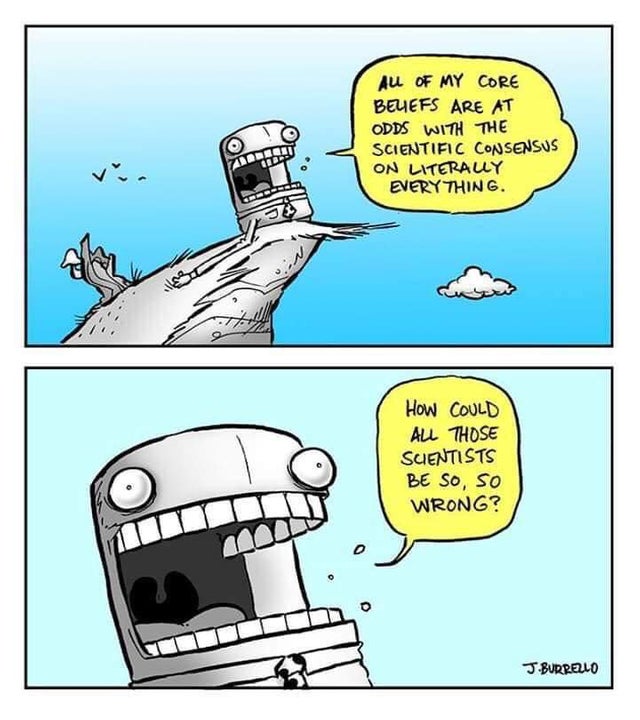
  • “We know for a fact that the facts are not facts”

    I saw this on Reddit just after I wrote this post.

    You may recall the recent furore in the Scottish press over Glasgow Live’s policies for trans people in public spaces such as gyms and swimming pools. The policy – we’ll do what the law says we should do – led to the publication of yet more anti-trans columns and a flood of online abuse against trans people.

    One of the inconvenient facts about the policy, which activists claimed would lead to the abuse of women, is that it had been in place for several years with no problems whatsoever.

    That can’t be true! said the bigots. We demand evidence!

    The evidence is in. Since the policies were enacted, how many complaints have there been about trans people?

    None.

    The response? Inevitably: “fake news!”

    Representatives from the group Forwomen.scot said they were “astonished” by the statistics, adding: “We know for a fact there have been several complaints about the policy.”

    Susan Sinclair, who tweets as Scottish Women, added: “The best way to measure whether or not women are concerned about women only spaces and services being inclusive isn’t to go by the number of complaints they’ve received.”

    The fact that there have not been any complaints is not a fact. And anyway, even if facts really were facts you can’t measure the number of complaints by counting the number of complaints. Why do you hate women?

    They do this over more serious issues too, such as inclusivity in rape crisis centres. When rape crisis charities tell them that they have been trans-inclusive for years without incident, and that trans women are vulnerable women, they get the same response: your facts are not facts because they are not the facts I believe the facts should be. Why do you hate women?

    These are the voices columnists write approvingly about in our newspapers, that broadcast media expects trans people to “debate”, that our MSPs invite to Holyrood to discuss whether we should have human rights.

    Update: Apologies. It turns out there was one complaint. But it wasn’t about a trans woman. It was about a cisgender woman verbally abusing a trans woman.

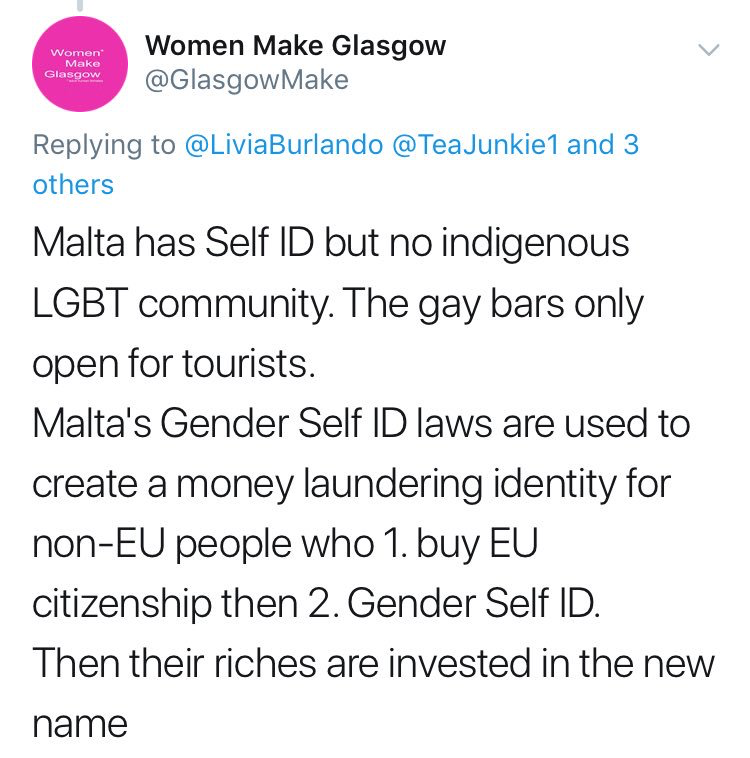
  • There are no gays in Malta

    This is what “reasonable debate” about trans people looks like.

    Update: that’s not even the maddest thing these yahoos and their supporters have claimed today. Apparently it’s impossible to raise estrogen levels to typical female levels artificially, which is going to be a surprise for the endocrinology profession and the many cisgender women on hormone replacement therapy. Oh, and they’re also arguing that testosterone is not made by the testicles. No, apparently it’s made by the penis, which is a magical hormone tube.

    Meanwhile in the reality-based community, here’s a trans woman who was denied healthcare because the doctor hated trans people.

  • Not mad. Not bad. Just normal.

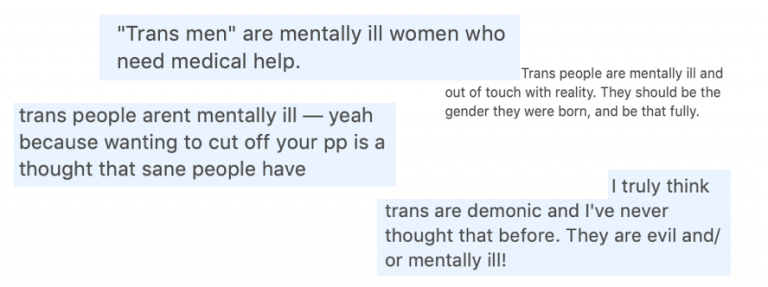
    There isn’t a single day when I don’t see somebody claiming that trans people are mentally ill and/or degenerates. Here’s some geniuses from this morning.

    A huge problem is that public awareness of trans people – and of what the medical consensus is about trans people – is incredibly out of date.

    For a long time, normal human variety and behaviour has been pathologised – that is, labelled as a medical problem when it isn’t.

    A good example of that is in the pathologisation of women. In the Victorian era, women who rebelled against domesticity could be labelled insane and thrown into asylums. Doctors considered women to suffer from an invented condition called “hysteria”, a condition that should be cured by finding a husband. In the 1950s, women were routinely sedated to deal with their unhappiness. In the 1960s and 1970s, feminism was considered by many to be a medical problem.

    And that’s before we get to the queer folk. In the US, homosexuality was classified as a medical condition until 1973. It isn’t, of course, but the supposed science was based on gender beliefs about the supposedly essential qualities of men and women. To put it simply, if you weren’t a manly straight man or a girly straight girl there was clearly some sort of medical problem.

    The treatment was harsh. Some people were given electro-shock therapy, a practice that continues in China to this day, or aversion therapy, or other supposed cures that caused great damage.

    The Bible of psychiatric conditions for US doctors is the Diagnostic And Statistical Manual, or DSM for short. It’s a reference manual produced by the American Psychiatric Association (APA) and its first two editions included homosexuality. The APA was very resistant to improved scientific knowledge because it contradicted its members’ beliefs that gay people had a “degenerative” condition.

    American psychiatry mostly ignored this growing body of sex research and, in the case of Kinsey, expressed extreme hostility to findings that contradicted their own theories.

    Some gay activists were complicit in this.

    …some mid-20th century homophile (gay) activist groups accepted psychiatry’s illness model as an alternative to societal condemnation of homosexuality’s “immorality” and were willing to work with professionals who sought to “treat” and “cure” homosexuality.

    It’s easy to condemn now, but “be nice to them, they’re mental” was a step forward from “throw rocks at them, they’re perverts”.

    Eventually, though, science won: fact beat faith, and homosexuality was no longer a medical condition in the DSM III onwards – although it remained a “sexual orientation disturbance” until 1987. Nevertheless, “APA’s 1973 diagnostic revision was the beginning of the end of organized medicine’s official participation in the social stigmatization of homosexuality. Similar shifts gradually took place in the international mental health community as well.”

    There was a wider context to this: the World Health Organisation’s International Statistical Classification of Diseases and Related Health Problems, ICD for short. In 1948, the WHO published version six of the ICD, ICD-6, which classified homosexuality as a “sexual deviation”.

    The ICD listed homosexuality as a mental disorder until 1992.

    Most people understand that gay people are perfectly normal, but until very recently the official medical literature said otherwise. And that legitimised hatred.

    As a result [of removing homosexuality from the DSM and ICD], cultural attitudes about homosexuality changed in the US and other countries as those who accepted scientific authority on such matters gradually came to accept the normalizing view. For if homosexuality was no longer considered an illness, and if one did not literally accept biblical prohibitions against it, and if gay people are able and prepared to function as productive citizens, then what is wrong with being gay? Additionally, if there is nothing wrong with being gay, what moral and legal principles should the larger society endorse in helping gay people openly live their lives?

    The result, in many countries, eventually led, among other things, to (1) the repeal of sodomy laws that criminalized homosexuality; (2) the enactment of laws protecting the human rights of lesbian, gay, bisexual and transgender (LGBT) people in society and the workplace; (3) the ability of LGBT personnel to serve openly in the military; (4) marriage equality and civil unions in an ever growing number of countries; (5) the facilitation of gay parents’ adoption rights; (6) the easing of gay spouses’ rights of inheritance; and (7) an ever increasing number of religious denominations that would allow openly gay people to serve as clergy.

    Most importantly, in medicine, psychiatry, and other mental health professions, removing the diagnosis from the DSM led to an important shift from asking questions about “what causes homosexuality?” and “how can we treat it?” to focusing instead on the health and mental health needs of LGBT patient populations.

    Guess what? The DSM and ICD also pathologised trans people. The DSM detailed “gender identity disorder” until 2013, when DSM-5 reclassified it as “gender dysphoria” – not perfect, but better.

    The widely circulated belief in a made-up condition called Autogynephilia (short version: trans women are either narcissists or confused gay men; as ever, trans men aren’t given much thought) has been thoroughly debunked; being trans is not considered a mental illness in the DSM any more: the problem isn’t being trans, but the distress that comes from trying not to be.

    The same thing is happening with the ICD. As the WHO announced last year, “transsexualism” is being removed from ICD-11 – so the diagnosis I have, of “transsexualism male to female ICD10 F64”, will be consigned to the history books. The change was ratified this month by the Assembly of States of the WHO.

    As with the DSM, some concerns remain (not least whether US insurers will continue to pay for trans people’s transition-related healthcare).

    Here’s the Council of Europe Commissioner for Human Rights.

    While the removal of gender identity from the list of mental illnesses is a positive step, several concerns remain with the ICD11, and I call on WHO member states to continue improving the text to promote respect of human rights.

    Such concerns include the term “gender incongruence” retained in the ICD11 which may lead to interpretations suggesting abnormality, as well as the continued listing of gender incongruence in childhood in the ICD.

    I particularly regret that no progress was achieved in the ICD11 toward depathologisation of intersex people, and that terms such as “sex development disorders” continue to appear in the text. Language in the ICD Foundation suggesting sex “normalising” surgeries remains, which is of major concern.

    As with the DSM, it’s not perfect, but it’s better. As the Commissioner says:

    The pathologisation of trans people has served to justify serious violations of their human rights over the years, including attempts to “cure” them through conversion or reparative therapies; psychiatric evaluations, and sterilisation. In many countries, legal gender recognition is only possible upon medical diagnosis.

    Science, knowledge and understanding isn’t a fixed point. We now know that feminist women are not hysterical or insane. We know that you can’t pray the gay away or make people straight by electrocuting them. And we know that being trans isn’t an illness.

  • If only we’d known, say the people who knew

    Writing on Twitter, co-founder Ev Williams (@ev) talks about the problem of abuse and harassment on the platform.

    *And*, yes, we (Twitter) should have invested more heavily in abuse before. I think we did more in the early days than we often get credit for (and they are doing way more today). *And* I personally underestimated the looming problem during my brief tenure as CEO.

    Had I been more aware of how people not like me were being treated and/or had I had a more diverse leadership team or board, we may have made it a priority sooner.

    This is something you see from all the social media heads: if only we knew people were being bad on our services! But they did know. High profile publications were highlighting the problem of abuse more than ten years ago.

    Here’s just one example, from the high profile news site C|Net. It describes Twitter’s “wishy-washy” approach to online abuse and compares it unfavourably to other social sites.

    Either way, what Waldman calls “community management” is something that Twitter has to sort out–fast. As Twitter breaks further out of Silicon Valley culture, the service will invariably have to deal with users who cry foul over far tamer situations. Much like its famous outages, which the site finally addressed in full this week, abuse and harassment is something that Twitter can’t simply ignore.

    The date stamp on the article? May 2008.

  • Bad-faith theatre

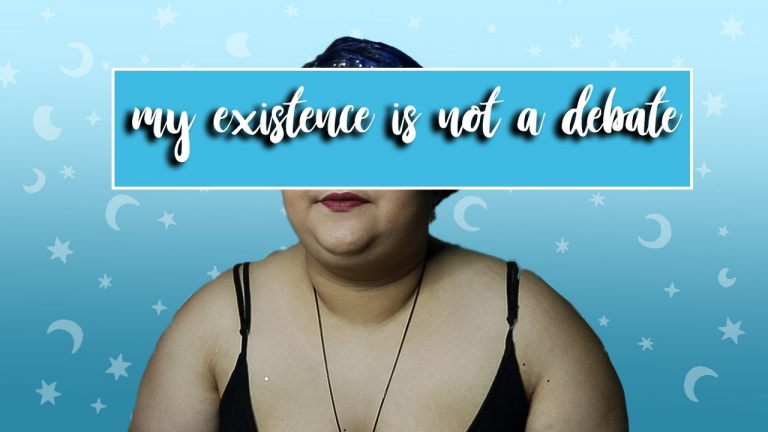
    Image by Jude Valentin, YouTube.

    Yesterday I linked to a piece about women of colour being overwhelmed with requests to educate people. Not all of those requests are made in good faith, and even the ones that are can be exhausting.

    This morning. Afua Hirsch writes about her experience on Sky News. Hirsch was asked to explain why an image was racist.

    here was an instantly recognisable trope, familiar to generations of black people, shared on the birth of a baby whose family includes an African American grandmother, by someone paid by the BBC. That there was widespread condemnation of its racist nature – including from the man who posted it – is one of many reasons I was exasperated at having to debate it.

    Hirsch’s appearance went viral when she decided she’d had enough of this particular game.

    I realised, on air, that I had had enough – not just of having to deal with the content of an idea that compares people like me to another species, but of then being expected to persuade people why that’s bad.

    Because this emotional labour is not distributed equally, broadcasters – by placing one black person in a hostile space and then requiring them to explain the injustice of racism – become complicit in that injustice.

    The idea that everything is a debate, and that terrible bigotries can be defeated by it, is a bad idea.

    Laurie Penny:

    There’s a term for this sort of bad-faith argument: it’s called the justification-suppression model. The theory is that bigots refrain from directly defending their own bigotry but get hugely riled up justifying the abstract right to express bigotry. So instead of saying, for example, “I don’t like foreigners,” they’ll fight hard for someone else’s right to get up on stage and yell that foreigners are coming to convert your children and seduce your household pets.

    You can’t defeat bad faith with good words, because the other side isn’t debating. They’re performing.

    Remember the U.S. presidential debates of 2016? Remember how the entire liberal establishment thought Hillary Clinton had won, mainly because she made actual points, rather than shambling around the stage shouting about Muslims? What’s the one line from those debates that everyone remembers now? It’s “Nasty Woman.” What’s the visual? It’s Trump literally skulking around Hillary, dominating her with his body. It’s theatre. And right now the bad actors are winning.

    Libertarians like to talk about “the marketplace of ideas”, but as Penny rightly points out, marketplaces are full of conmen and counterfeiters and criminals. “As always,” she says, “when the whole thing comes crashing down, it’s ordinary marks who lose everything.”

    Public debate — at least the way I was taught to do it at my posh school — is not about the free exchange of ideas at all. You only listen to the other guy so you can work out how to beat him, and ideally, humiliate him.

    …trying to bring someone over to your side by publicly demonstrating that their ideas are bad and that they should feel bad is like trying to teach a goat how to dance: the goat will not learn to dance, and you will make him angry.

    Debate doesn’t stop bigots or fascists. We’ve been exposing far-right ideologies to sunlight for several years now, and the far right is stronger than ever. Since the UK began debating hard-right Brexiteers, racist incidents and discrimination have soared.

    We’ve been debating LGBT rights for decades, and the bigots continue to argue against science and basic humanity. Since the UK began debating equal rights for LGBT people and trans people in particular, hate crimes against LGBT people and trans people in particular have soared.

    Since the US religious right began an aggressive campaign demanding  we debate women’s reproductive freedom, legislation has been passed to remove that freedom altogether. The goal is to have similar legislation nationwide.

    The “debates” over whether it’s okay to compare people of colour to monkeys, whether parents are right to stop their kids being taught about the existence of LGBT people, whether women should have bodily autonomy, whether trans people should have basic human rights… these aren’t debates. The debates were settled a long time ago.

    What we have now is bad-faith theatre. The cruel, the career contrarians and the clueless punch down using “free speech” and “reasonable concerns” to disguise what they’re doing, dog whistling to their supporters and demonising their targets. Off-camera they and their supporters let the mask slip. On-camera they stay strictly on message and on brand. Debating these people is merely handing them a megaphone.

    Fascists weren’t defeated by debate in the 20th century; they were defeated by bullets. People of colour didn’t get civil rights by asking nicely. The road to equal rights for LGBT rights began with riots.

    As Michael J Dolan wrote on Twitter yesterday:

    When you argue that fascists should be defeated through debate, what you’re actually suggesting is that vulnerable minorities should have to endlessly argue for their right to exist and that at no point should the debate be considered over and won.

  • How can you edit a paper if you don’t read it?

    James Doleman’s Twitter account is providing an unintentionally hilarious account of Katherine O’Donnell’s employment tribunal.

    Today, Times editor John Witherow is giving evidence. A pattern appears to be emerging.

    Counsel for the complainant presents to the court another Times article, a “self-identification,” of gender. This refers to the Soham Murderer, Ian Huntley, and suggests he was transitioning his gender. This, the lawyer said was false, “I didn’t know that,” Witherow replies

    Asked about an article that suggested the gender question was to be removed from the census, Witherow replied he didn’t know the article. So couldn’t comment on its accuracy

    Next Times headline Refer to pregnant people not women government suggests to UN.” Counsel points out the government said this was not true, “it was a suggestion” Witherow replies.

    The lawyer from the complainant asked the witness about a joke about Transgender people in the Times, “these things had been written about a black person you would have sent it back,” she says “It probably shouldn’t have went in,” Witherow replies.

    Next piece referred to was: “Trans women using the swimming pond in Hampstead heath were driving women away.” Counsel suggested that this was not accurate, “thats your assertion, I don’t know if its right or wrong,” the witness replied.

    The court was then shown another article: “Transgender row over sleeper train cabins.” The source was a post on Mumsnet, “from someone who hasn’t used the sleeper,” counsel says.
    Witherow: ““I don’t think this is the finest piece of journalism The Times has published, if I had seen it I would have spiked it.”

    You’d think the editor might be aware of the content of some of the paper’s more prominent exclusives. He’s also quick to defend columnists’ lurid allegations, such as trans people “sacrificing children”, as opinion rather than deliberate scaremongering.

    But for me, one particular exchange sums up the problem with trans reporting at The Times and Sunday Times: it’s relentlessly one-sided. It rushes to publish even the flimsiest allegation about trans people and doesn’t care when the allegations are proven to be fictitious and/or malicious.

    Counsel then notes The Times did report a case where a researcher on trans issues had his thesis rejected and went to the High Court for judicial review. “His case was dismissed without merit, did you know that?” Counsel asked.

    “We reported it,” Witherow replies.

    “You didn’t report the result,” counsel retorted.

  • Manufacturing consent

    I’m indebted to Tennessee Pete on Twitter for the link to and commentary on this story:

    As he put it:

    This is such a good case study for manufacturing consent because it’s just… ‘in response to Iran’

    In response to Iran doing what?

    No, not in response to any provocation, just in response to Iran. The continued existence of Iran.

  • “A level sufficient to qualify as a vendetta”

    One of the witnesses in Katherine O’Donnell’s employment tribunal against her former employer The Times  is Christine Burns MBE. Burns played a key part in the creation of UK equality legislation, and she’s been monitoring and reporting on the press coverage of trans issues for very many years. In her submission to the tribunal, she describes the Times’ recent coverage of trans issues.

    During the course of 2016 the Times and Sunday Times featured approximately half a dozen trans-related stories, led by writers such as Rod Liddle. This did not appear at the time to be a departure from business as usual. Certainly, for Liddle, the opinions voiced about trans children and adolescents (as an example) seemed to be in keeping with his brand of polemic. The level of coverage in the whole year did not raise eyebrows, except in exasperation at the one-sidedness.

    That pattern changed markedly in 2017, however — and it changed uniquely for the Times.

    Burns describes how the Times and Sunday Times coverage of trans issues went into overdrive, essentially demonising trans people at every opportunity.

    This wasn’t business as usual. It hadn’t happened in the run-up to the introduction of the Gender Recognition Bill in 2004, or of the Equality Act in 2010. The recent focus on and demonisation of trans people appears to be a deliberate change in editorial strategy.

    As Burns also points out, “the other notable factor about this tsunami of negative coverage, beginning in 2017, was the degree to which editorial standards appeared to be abandoned.”

    I’m not a news journalist, but I when I wrote tech news it was drilled into me that a single-source story wasn’t good enough; “person claims thing” is not news until it’s been fact-checked and experts consulted.

    Many of the people writing for these newspapers are members of the National Union of Journalists, whose code of conduct compels journalists to “strive to ensure that information disseminated is honestly conveyed, accurate and fair” and “differentiates between fact and opinion.” It also says that a journalist “produces no material likely to lead to hatred or discrimination on the grounds of a person’s age, gender, race, colour, creed, legal status, disability, marital status, or sexual orientation.”

    Burns agues that the two papers appeared to decide that editorial standards, that the basic journalistic principles outlined in the NUJ code of conduct, no longer applied if the stories were about trans people. The views of failed sculptors were prized above those of experts. Baseless claims were printed without fact-checking, and often rescinded after intervention by Ofcom. Anti-semitic tropes of child sacrifice and sinister Jewish lobbies made it into print.

    The two titles were standing up their pieces with largely one-sided opinion from personalities with no genuine qualifications in the subject matter and an axe to grind. By comparison, clinical or legal experts in the subject matter did not feature highly and trans views appeared to be treated as suspect, driven by (hinted) ulterior motives and fit for condemnation. The paper’s line of topics seemed to reflect the talking points of a small cohort of commentators who had appeared as if from nowhere to be interviewed as authorities on a regular basis. Trans people and the charities working in this area were presented as ‘powerful’ (the implication being ‘too powerful’). Conspiracy theories about the involvement of jewish billionaires and ‘big pharma’ were aired without challenge.

    …What shocked trans observers in 2017 was that editorial standards appeared to have been suspended in this sphere. This is underlined when the basis for many stories was later established to be false. False interpretation of statistics about trans prisoners and offending. Unbalanced reporting of the nature of the proposed changes to the Gender Recognition Act, presenting only a one-sided pejorative view of the implications. False insinuation about the leadership of the trans charity Mermaids — even after the Heritage Lottery Fund had reexamined plans to award a grant to them in 2018.

    The tribunal continues.

  • One of these things is different from the other

    When Michael Phelps, who is a straight white man, became the most decorated Olympian of all time he was hailed as a “legend” and greeted with glowing newspaper profiles on how “a biomechanical freak of nature” had a competitive advantage over other athletes because he had a “body made to swim”.

    When Caster Semenya, who is a gay black woman, became an Olympic champion she was greeted with racist, misogynist, homophobic hatred and a vicious campaign that now means she  will be forced to alter her natural body chemistry in order to remove her competitive advantage over other athletes.

    I wonder if there’s some kind of explanation for the way in which Michael Phelps, who is a straight white man, was treated differently from Caster Semenya, who is a gay black woman. It’s a mystery!