Author: Carrie

  • Travelling while trans

    Owl Stefania writes in Metro about her experiences travelling as a trans person.

    ‘Are you sure this is your passport, ma’am?’ the passport controller asked me while writing something down on her computer. With a large amount of anxiety about what was to come, I nodded and said yes, it certainly was my passport. She frowned a little in confusion, then said, while staring intently at me: ‘This passport says “male” but you’re obviously female’.

    I don’t travel much these days but when I do, the ID thing is a major source of stress: like Stefania I’ve been the one holding up the queue while desk agents (loudly) try to decide whether I’m trans or a terrorist. It’s excruciatingly embarrassing and you don’t relax until the plane’s actually taken off: until then you’re convinced security is going to come looking for you and prevent you from flying.

    It’s a good example of how trans people’s lives are often easier the closer they conform to gender stereotypes (stereotypes they’re then criticised for upholding by anti-trans activists): my passport has a big F on it, and the more stereotypically female I present the less confusion there is at the airport and the less likely I am to be the person holding you up. This is one reason why many countries now offer an X for non-binary people: it eliminates the confusion that can occur when the passport says A but the presentation is neither A nor B.

    The stress doesn’t stop when you’re checked in. There’s airport security scanning and pat downs, which is a whole other world of fun – although to be fair we’re relatively good at this in the UK. In the US, many trans people have been treated appallingly by airport security staff.

    Given the choice, I’d rather take the train than fly. Train travel is hardly perfect but it’s a more relaxed experience if you’re travelling while trans (assuming your carriage doesn’t contain any arseholes, of course. That’s a whole other set of fears. And of course train travel has many other problems compared to flying).

    Being LGBT+ doesn’t just affect how you travel. It affects where you can travel to. Stefania:

    Every time I go somewhere overseas I have to consider whether I am going to be safe as transgender person. There are countries that I wouldn’t even consider traveling to due to hostile attitudes towards people like me and with good reason.

    That’s something I do too. If you’re cisgender and/or straight it’s something you don’t have to think about, but if you aren’t then something as simple as planning a family holiday involves a whole extra level of research because some countries are actively hostile to LGBT+ people. For some of us, the key criteria in choosing a city break isn’t the price or what’s on; it’s whether those streets are safe for us to walk down.

  • Nobody should be forced to come out

    Popular YouTube beauty blogger Nikkie de Jager, aka NikkieTutorials, has come out to her many millions of followers as transgender.

    It wasn’t her choice: as Stylist magazine points out, she came out because unnamed persons were threatening to “out” her to the press.

    That isn’t just a gross invasion of privacy, although of course it is: somebody’s decision about when (or if) to come out and who to come out to is entirely their business, and being outed or forced to come out can mean having to deal with a lot of really big stuff before the person is ready or able to deal with it. Coming out is hard even if you are ready and do have support; it’s harder still if you aren’t and don’t.

    Outing somebody is also very dangerous.

    As Stylist notes:

    Online harassment and abuse of transgender people has been on the increase in recent years, and it has been especially prevalent on YouTube.

    While the initial reaction to de Jager’s announcement has been positive, she’ll now receive transphobic abuse on every YouTube clip she posts – and she may experience worse. High profile trans women are often on the receiving end of terrible online abuse, some of it orchestrated by even higher profile Twitter users who send the mob after anyone they disapprove of. The abuse some LGBT+ people experience online has led them to take their own lives; the fear of it has led others to do the same.

    As Harron Walker writes on Vice, outing trans women is nothing new: it happened to Bond actress Caroline Cossey, effectively ending her modelling career.

    Speaking to the Huffington Post, Cossey recalled:

    the tabloids were able to destroy my professional career and even my personal life, fueled by the ignorant thinking about transgender people in mainstream society and the laws of those times.

    It was a similar story for Tracey Africa and April Ashley, who were also outed by the tabloids. Vice:

    De Jager might have been the one to release her coming out video, but only after her would-be blackmailers forced her hand. Four decades after a hairdresser’s assistant outed Tracey Africa on the set of an Essence shoot and News of the World published Caroline Cossey’s backstory without her consent, transness remains a liability to a woman’s career, one that can be weaponized against her even if she chooses not to make it known.

    This, incidentally, is one of the reasons we have the Gender Recognition Act in the UK: under Section 22 of the Act it’s an offence for someone in an official capacity to disclose that the possessor of a Gender Recognition Certificate has a trans history, for example by selling the story to a tabloid newspaper (although here’s a fun fact: the number of prosecutions brought under Section 22 in the 16 years since the law was introduced is zero).

    Of course, the threat of outing by the tabloids has long been used not just against trans women, but against LGBT+ people more generally. Just this month Lib Dem MP Layla Moran was forced to come out as pansexual because the newspapers were about to out her.

    over the last couple of months journalists have been sniffing around this story. They’ve asked friends, made indirect approaches, and more recently, very direct approaches to people I know, asking for information about my personal life.

    One of the newspapers that was about to out her, the Mail on Sunday, then accused her of “weaponising” her sexuality to “look woke” and quoted the usual rabble of Mumsnet trolls saying awful things. Hell hath no fury like a tabloid deprived of its salacious scoop.

    And salacious is all that it is. What kind of people Layla Moran loves, what genitals Nikkie de Jager was born with, are none of our damn business. Moran isn’t hypocritically pushing an anti-LGBT+ agenda in her politics; de Jager’s history is not relevant to her celebrity. And yet the tabloids and their demonic helpers will happily expose and potentially damage their private lives for a fast buck because web clicks matter more than ethics.

    Many of us will look back at the 80s outing of Caroline Cossey and consider it a despicable invasion of privacy, but in 2020 the tabloids are still doing it. Not only that, but they’re approaching LGBT+ people with Hobson’s choice: try to stay closeted and we’ll out you; spoil our scoop and we’ll do our best to destroy you.

    As Moran wrote:

    It’s possible that to some journalists and readers this is a jolly jape where they get one over me, but to me, this is my life.

  • A tale of two princesses

    Buzzfeed UK has compared various newspapers’ stories about Meghan Markle with the same papers’ stories about Kate Middleton. The differences are striking.

  • Stewart Lee on Ricky Gervais

    My favourite comedian isn’t pulling any punches.

    [Jeremy Clarkson’s and Boris Johnson’s] careers have flourished by exploiting the notion that they are lone voices of sanity against a politically correct snowflake cabal intent on silencing normal blokes like them. Their comedy counterpart Ricky Gervais has managed to monetise this notion spectacularly, saying the things that he is apparently not allowed to say, on a variety of global media platforms, for millions of dollars, with the full co-operation and approval of the legal representatives of the institutions on which, and about which, he says the things he is not allowed to say, his functionally adequate standup act having been overpromoted worldwide off the back of his pitch-perfect contribution to the ground-breaking Office sitcom two decades ago.

  • Satan

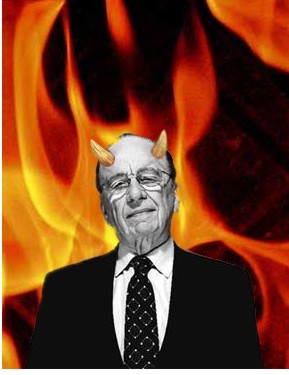
    The New York Times has published a detailed investigation into Rupert Murdoch’s empire, arguing that “Murdoch and his children have topped governments on two continents and destabilised the most important democracy on Earth.”

    It’s a long read but here are some key claims:

    Fox News has long exerted a gravitational pull on the Republican Party in the United States, where it most recently amplified the nativist revolt that has fueled the rise of the far right and the election of President Trump.

    Mr. Murdoch’s newspaper The Sun spent years demonizing the European Union to its readers in Britain, where it helped lead the Brexit campaign that persuaded a slim majority of voters in a 2016 referendum to endorse pulling out of the bloc. Political havoc has reigned in Britain ever since.

    And in Australia, where his hold over the media is most extensive, Mr. Murdoch’s outlets pushed for the repeal of the country’s carbon tax and helped topple a series of prime ministers whose agenda he disliked, including Malcolm Turnbull last year.

    While Australia burns, Murdoch’s media outlets continue to spread climate denial; across the world his columnists and talking heads have fuelled far-right, anti-islamic, anti-semitic and anti-LGBT+ hatred; and his networks have enthusiastically spread white nationalism.

    Murdoch isn’t in the news business. He’s in the propaganda business.

    NYT:

    A March study by Navigation Research, a Democratic firm, found that 12 percent of Fox News viewers believe that climate change is mostly caused by humans, compared with 62 percent of all other Americans. At the same time, 78 percent of Fox viewers believe that Trump has accomplished more than any president in American history, compared with 17 percent of other Americans.

  • Broadcasting a joyful noise

    This the astonishing Ndlovu Youth Choir performing the MOR hit Africa on America’s Got Talent. As someone who doesn’t watch TV, it had passed me by – so when I heard it in a Radio 4 programme this morning, it hit me like a truck full of sunshine and flowers. I like the song anyway, but the Choir elevate it into something utterly joyous and beautiful by bringing traditional African call and response to the main riff and chorus.

    I heard the song on Radio 4’s Soul Music, which devoted an entire episode to Africa – not just the version above but versions by acoustic performers and versions played in a 24-hour charity marathon. It’s a wonderful episode, a little ray of light in a very dreich day.

  • What you call others says a lot about you

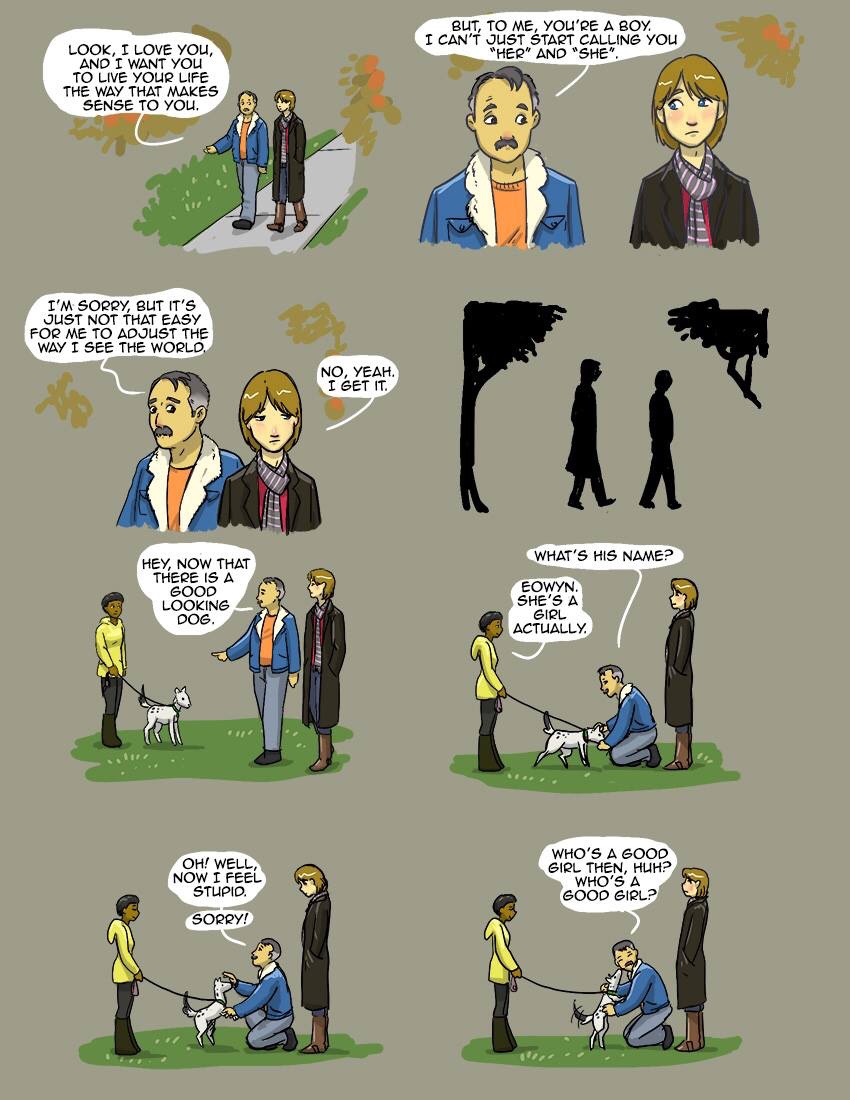
    Cartoon by – I think – SamWitch13 on Tumblr (Click for bigger)

    Owl Stefania writes in the i Paper about the singular “they” pronoun, voted word of the year and word of the decade, and pronouns more generally.

    Pronouns themselves might not seem important to people who’ve always been comfortable with theirs, but for non-binary people (and transgender people in general), pronouns carry a lot of weight.

    Owl mentions something many trans and non-binary people know very well: some people are very mindful of the pronouns they use for dogs but won’t extend the same courtesy to human beings.

    Most people will assume and use the pronoun ‘she’ to refer to my dog, and then profusely apologise when I tell them his name is Soldier and refer to him as ‘he’ and never make the mistake again.

    The same can be said about academic or professional titles and other honorifics, the possessors of which can be awfully huffy. Here’s one of them, Alan Sugar, on people asking to be called “they” a few months ago:

    They need to pack it in, it’s nonsense. The people promoting it need to be shipped off to Mongolia. Send them away, get them out the country. Go away. It always boils down to a small bunch of people that promote it.

    Unlike, say, the similarly small bunch of people swanning around demanding people call them Sir this or Lord that. Eh, Alan?

    Cheap shots aside, I wouldn’t call Lord Sugar “Alan” to his face any more than I’d call my doctor “David” or refuse to address anybody else using their professional title: it’s inappropriate and profoundly disrespectful.

    Whether it’s professor, lord, lady, baron, he, she or they, calling people what they prefer to be called isn’t difficult. It’s just basic politeness. If you choose not to do it for particular groups of people, that says much more about you than it does about them.

  • This is the future liberals want

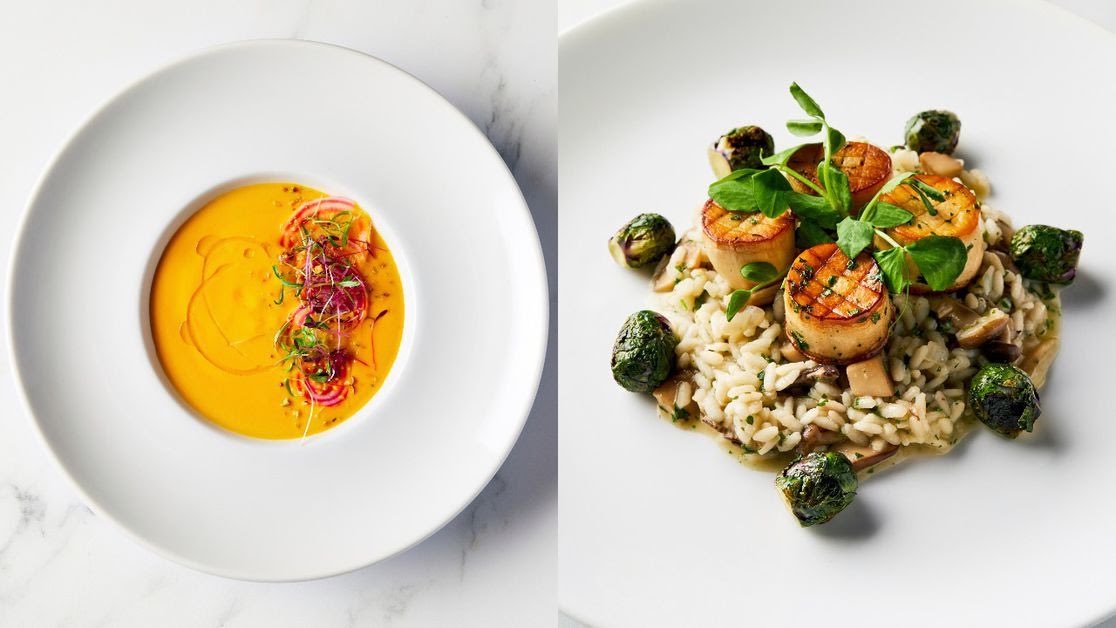
    What’s in this picture? Is it (a) a tasty-looking meal? Or is it (b), an Orwellian nightmare pushed by sinister “vegan extremists”?

    Let’s ask Sun columnist Dan Wooton, who tweeted the picture and wrote:

    This is the plant based meal being given to all guests at the Golden Globe Awards this year. No option with meat at all. No choice. Welcome to Hollywood in 2020 where vegan extremists rule. 🤮🤮🤮

    It’s worth pointing out that Wooton wasn’t even at the Golden Globes, so what we’re seeing here is a grown man getting upset about somebody else eating vegetables on the other side of the planet.

    There’s a lot of it about: last week we had various middle-aged men whingeing about Greggs introducing a vegan version of its steak bake (a version which, I’m told, tastes like a bridie; if it does then it may well be the best snack-related news I’ve heard this year so far).

    This outrage is entirely predictable, so much so that it’s become a PR strategy: as PR Week reported this time last year, upsetting florid-faced middle aged media figures is a key part of many food firms’ PR strategies. But it’s still pathetic that in 2020, “real men don’t eat vegetables” is still seen by some as being edgy and sticking it to the libs – particularly when the people so outraged about vegetables are so quick to damn people who care about considerably more serious things.

    As comedy writer James Felton put it:

    Hi I’m a boomer. You may remember me from such hits as “aww does the widdle millennial snowflake need a safe space because he’s so offended”. Today I’ll be losing my shit because a shop I don’t visit is selling a vegan steak bake I am under no obligation to buy.

  • “Forgive yourself. Every goddamn day.”

    Over at Ask Polly, Heather Havrilesky responds to a reader who’s finding it hard to find joy any more. 

    Engage with this crisis instead of trying to cut it off. Let these feelings in instead of blaming yourself for them. Be more patient with your own sadness. And look for joy everywhere you can, every day, from the first hour you’re awake until the moment you fall asleep. Stop torturing yourself and make joy the first priority of every single day. I know I’m a broken record on that front, but it’s honestly the one clear and solid contribution I feel I have to make to this world: reminding people that just enjoying yourself is important. It matters.

  • “Biology” as a cover for bigotry

    Katelyn Burns writes about the Maya Forstater case for The New Republic.

    Cases like this—which pit the actual lives of trans people against the beliefs of somebody who decided to test her colleagues’ patience by posting over 150 anti-trans tweets in a single week—are a win-win for anti-trans activists. If they prevail, they have a new legal basis to treat trans people like garbage without reprisal. If they lose, they can bang on about how trans people are spreading a totalitarian belief system that crushes anyone who might disagree.