Author: Carrie

  • LGB people: the LGB Alliance do not speak for us

    (Click for full size version)

    This week, various outlets gave yet more publicity to the LGB Alliance, a single-issue anti-trans hate group that purports to be about LGB people’s rights but has no policies about, er, LGB people’s rights. This hasn’t stopped Scotland’s press and BBC Radio Scotland giving them uncritical coverage and endless opportunities to scaremonger about trans people.

    It’s incredibly one-sided. The LGB Alliance’s co-founder and director got to rabbit on about supposedly dangerous trans people all week – BBC Radio Scotland’s John Beattie programme even had him on as an expert in biology to question whether trans women were “women or (merely) trans women”, because who better to talk about the complexity of biology than a film director? – but when he also claimed that predatory gay teachers would show children gay pornography and prey on them in LGBT school groups not a single mainstream news outlet picked up on it. They don’t seem interested in the LGB Alliance’s full-page newspaper ads promoting organisations that are against life-saving treatment for gay men and organisations that were founded by anti-semitic conspiracy theorists, or the fact that they are linked to the US right-wing heritage foundation which campaigns against women’s rights and LGB people’s rights.

    As far as the Scottish media is concerned, if the LGB Alliance says they represent the views of the LGB community, then they must clearly represent the views of the LGB community.

    They don’t, and Scotland’s LGB people are getting pretty sick of it. So today, over 70 Scots LGBT groups large and small and their allies have published an open letter stating their support for trans people and gender recognition reform.

    The letter has been published in today’s Herald newspaper:

    Signed by sports groups, health charities, independence-supporting groups, Pride organisations and police-affiliated LGBT groups, the letter goes on: “We have been concerned by attempts by some to isolate the trans community from the wider LGBT community; this goes against everything we stand for. Trans people are the women, men, and non-binary people that they say they are.”

    I don’t expect this to change the uncritical support our press is giving the LGB Alliance. Our press continues to pretend gender recognition reform is not supported by women’s groups, even though every major women’s group in Scotland supports GRA reform; they continue to misrepresent anti-trans hate groups as representative of feminists or women generally.

    But it’s important to realise that when the LGB Alliance claim to be speaking on behalf of LGB people, the Aberdeen LGBTQ+ Forum, Amazing Gracies, Auld Reekie Roller Derby, Ayrshire LGBT+ Education Network, Ayrshire LGBTQ, Ayrshire Pride, Bute LGBT+, Bute Pride, Caledonian Thebans RFC, Colinton Squashers, ConnexONS Fife, Dumfries & Galloway LGBT Plus, Dundee Frontrunners, Dundee Pride, Dundee University LGBT+ Society, Dunoon Pride, Edinburgh Frontrunners, Edinburgh Racqueteers, Edinburgh STRIDE, Edinburgh University Staff Pride Network, Equality Network, Four Pillars, Free Pride Glasgow, Glasgow Alphas RFC, Grampian Pride, Hebridean Pride, Highland LGBT Forum, Highland Pride, HIV Scotland, HotScots FC, LEAP Sports Scotland, LGBT Health and Wellbeing, LGBT Unity, LGBT Youth Scotland, LGBT+ Conservatives, LGBT+ Labour Scotland, Moray LGBT, NetworQ Orkney, Oban Pride, Orkney Pride, Out for Independence, Out On Sundays, PCS Proud, Perth Parrots Floorball Club, Perthshire Pride, Pink Saltire, Pride East Kilbride, Pride Edinburgh, Pride Glasgow, Pride in the Borders, Pride Proms Project, Pride Saltire – East Lothian, Queer Ephemera, Queer Napier, Rainbow Glasgaroos, Rainbow Greens, Saltire Thistle FC, Scene Alba Magazine, Scene Radio, Scottish Borders LGBT Equality, Scottish LGBTI Police Association, Sisters Scotland, SQIFF, Stirling University LGBTQ+ Society, Stonewall Scotland, SX Health, Terrence Higgins Trust Scotland, Time For Inclusive Education, Vale Pride, Waverley Care, West Lothian Pride and Winter Pride Scotland have made it very clear that they do not.
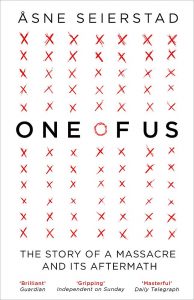
  • Another powerful and desperately sad book

    I’ve just finished One Of Us by Ã…sne Seierstad. It’s very similar to Dave Cullen’s Columbine in that it’s an incredibly powerful piece of non-fiction about a massacre largely inspired by white supremacist rhetoric. In this case, the massacre is the 2011 bombing and subsequent gun massacre by Anders Brevik, who slaughtered 77 people.

    It’s an extraordinary, shocking and upsetting book that tells the stories of the victims as well as the story of the massacre and the utter incompetence that enabled Breivik to kill so many people; as a piece of journalism it’s an incredible work.

    It’s also deeply chilling. Breivik is seen as a hero in some right-wing circles and has been the inspiration for subsequent shootings, and the beliefs that radicalised him are commonplace in our mainstream and social media today.

    Breivik was particularly enamoured of the UK writer Melanie Phillips, who he quoted multiple times in his poisonous manifesto. Phillips is famous for writing guff like this:

    The traditional family […] has been relentlessly attacked by an alliance of feminists, gay rights activists, divorce lawyers and cultural Marxists who grasped that this was the surest way to destroy Western society.

    Cultural marxism is an anti-semitic term based on an anti-semitic conspiracy theory dating back to the 1920s. Breivik used it over 600 times in his manifesto. It appears with similar frequency in the Daily Mail.

    The Guardian:

    The theory of cultural Marxism is also blatantly antisemitic, drawing on the idea of Jews as a fifth column bringing down western civilisation from within, a racist trope that has a longer history than Marxism. Like the Protocols of the Elders of Zion, the theory was fabricated to order, for a special purpose: the institution and perpetuation of culture war.

    …It allows those smarting from a loss of privilege to be offered the shroud of victimhood, by pointing to a shadowy, omnipresent, quasi-foreign elite who are attempting to destroy all that is good in the world. It offers an explanation for the decline of families, small towns, patriarchal authority, and unchallenged white power: a vast, century-long left wing conspiracy.

    Breivik was an islamophobe, but his targets were not Muslims: they were left-wing kids he believed were “cultural Marxists”.

    As Dr Arun Kundani wrote about Breivik’s manifesto in 2012:

    The bulk of the document constitutes a compilation of texts mainly copied from US far-Right websites… These writers are paranoid conspiracy theorists who claim Islam is a totalitarian political ideology that aims at infiltrating national institutions in order to enact sharia law. Like Breivik, they blame Western elites for pandering to multiculturalism and enabling “Islamic colonisation of Europe” through “demographic warfare”.

    …It would be easy to dismiss Breivik’s beliefs as the ramblings of a man gone insane. But that would be to ignore the danger they represent. His case demonstrates that the new “anti-Islamist” far-Right is as compatible with terrorist violence as older forms of neo-Nazism. And, whereas neo-Nazism is a fringe phenomenon, anti-Islamism attracts wide support, including among mainstream politicians, newspaper columnists and well-funded think-tanks.

    As Ian Buruma wrote in his review of One Of Us:

    …what about the ideas that inspired Breivik? To be sure, the likes of Spencer, Wilders or Bawer do not preach violent revolution. They never told anyone to kill a Muslim, let alone a “cultural Marxist”. But their talk of war, of a Muslim threat to our civilisation, “Eurabia” and of the complicity of cultural elites in our imminent downfall, does create a toxic climate in which fantasists such as Breivik can find a justification for their horrible deeds.

    Breivik may or may not be a madman. The court psychiatrists in Oslo differed on this. In the end it was decided that he was not. But that ideas have consequences cannot be denied. This book throws a great deal of light on the life and times of a miserable killer. That he had a sick imagination is clear. More is to be said about the ideas that fed it.

    Ideas that have continued to inspire murderer after murderer after murderer.

    David Neiwert, writing in The Daily Kos:

    The pattern is becoming frighteningly familiar: A white man, radicalized online at alt-right media websites and through social media into hateful white nationalist beliefs built around the anti-Semitic conspiracy theories about “cultural Marxism,” walks into a mass gathering of his selected targets (which can be any of the perceived participants in the conspiracy, including liberals, Jews, Muslims, Latinos, any nonwhite person, LGBTQ folk, even moviegoers) and opens fire.

    Neiwert describes what he calls “chain terrorism”, where murderers such as Breivik and the people who inspired them go on to inspire the next generation of mass murderers.

    Brian Levin of the Center for the Study of Extremism and Hate at California State University, San Bernadino, says the newer dynamic replicates the old content, but everything happens with much greater speed. “In pre-Internet days, the violent extremist act itself of neo-Nazis and white supremacists was considered messaging and labeled ‘propaganda of the deed,’” he told Daily Kos. “Today, sociopaths, particularly ideological ones, are seeing social media not just as a radicalizing and messaging tool, but also as an archive of a folkloric warrior narrative,” he continued. “Once they too act out, they have a link to notorious killers of the past, where their new manifestos are inscribed in a continuing perverse online subculture of scripted violence.”

    Paul Rosenberg in Salon:

    As Neiwert writes, a specific anti-Semitic narrative about “cultural Marxism” — meaning “Marxism translated from economic into cultural terms” by a cabal of Jewish intellectual émigrés from Nazi Germany known as the Frankfurt School — is motivating these massacres, whose victims have included Muslims in New Zealand as well as Jews in America.

    This is a narrative Donald Trump has long echoed, especially with his attacks on “political correctness.” For potential terrorists, it’s also embedded in a very specific, dynamically evolving matrix of right-wing political activity and institutions that marks out a wide range of other targets for retribution, up to and including mass murder.

    Anyone who’s traditionally of lower status — women, minorities, non-Christians, immigrants, LGBTQ individuals, etc. — is a potential target.

  • My life story

    After a lot of delays, I’ve finally received the psychologist’s report I need in order to apply for my Gender Recognition Certificate. Unfortunately I can’t actually afford the application fee for said certificate because why should anything be easy – I’ve also had to halt my weekly electrolysis sessions because paying the equivalent of some people’s mortgages isn’t easy when you also have actual rent to pay – but at least I’ve got the paperwork for when I can.

    It’s a very strange thing to receive. I hadn’t really thought about it, but the evidence the doctor needs to provide includes all the documentation of my initial assessments and subsequent appointments. As a result I’ve got copies of the doctor-to-doctor letters detailing my entire life story. Spoiler alert: it turns out I’m trans.

    Obviously I know what the letters contain, but it’s still a bit disconcerting to read your own life story when somebody else is telling it. It’s bittersweet, too: despite the dispassionate, clinical language the story it tells isn’t a happy one. It’s a story about somebody who tried very, very hard to be somebody they weren’t for a very long time.

  • More evidence for the tabloids to ignore

    An important new survey from the US has investigated the effectiveness and risks of puberty blockers in trans teens. The short version: they’re safe, reversible and life-saving.

    The study is significant not just because of what it found, but how it found it. Mostly when you read about puberty blocking in the press it’s based on the evidence-free assertions of anti-trans pressure groups who believe they know better than scientists and doctors, something they share with anti-vaccination cranks. This study is based on interviews with pediatricians and over 20,000 trans people.

    CNN:

    Transgender youth have a much greater risk of suicide, according to the US Centers for Disease Control and Prevention. However, if they have access to a puberty blocker, their chances of suicide and mental health problems in the immediate term and down the road decline significantly, a new study finds.

    It’s important to note, because the press coverage isn’t big on context, that the positive impact of puberty blockers only applies to teens who want to medically transition and who want to pause puberty to give them time to be sure. Not all trans teens do; in fact, most don’t.

    One reason anti-trans groups focus on the number of gender non-conforming teens referred to gender clinics but not the number of teens who have been carefully assessed over time and finally prescribed puberty blockers is because the latter number is vanishingly small. While the number of referrals have soared in recent years, the number of prescriptions for puberty blockers has not.

    I wrote about this a few months back:

    More referrals does not mean more prescriptions. In 2014-2015, the number of under-15s referred to the UK’s only gender clinic for adolescents rose from 46 to 52 – but the number of people prescribed hormone blockers dropped from 41 to 32. Puberty blocking remains exceptionally rare. These drugs aren’t and won’t be handed out like sweets.

    The medical model is based on what’s called “affirmative care”. As trans healthcare expert Ruth Pearce explains on Twitter [emphasis mine]:

    …an affirmative model of care for trans youth means providing space for those who want to transition and those who don’t, those who want physical interventions and those seeking mental health support. Flexibility, individual care and responsiveness, not imposition.

    So yeah, this research (which has an impressively large sample, and aligns with findings from other studies) shows what we already knew – hormone blockers help kids who need hormone blockers. But no-one is pushing them onto young people who aren’t seeking this treatment.

    It’s important to view this in the context of the US, where multiple states are attempting to ban puberty blockers altogether (one state would imprison doctors for prescribing them), and in the UK where anti-LGBT+ groups continue to claim that teenagers are being forced to take medicine that they claim will have terrible long-term effects and where newspapers deliberately and maliciously tell their readers that puberty blockers are “cross-sex hormones”. Yet again the medical evidence is being ignored in favour of ideology.

    As pediatrician Dr Michelle Forcier told CNN:

    “Historically we have known the puberty blockers are safe and effective and this is totally reversible, so the benefits far outweigh any risk.”

  • The tedious mediocrity of the “anti-woke”

    Novelist and journalist Huw Lemmey asks why the UK media is so obsessed with demonising the “woke”.

    The English media is in the middle of a full-throated culture war, from bendy bananas to woke snowflakes, Stormzy to burqas, trans rights to free speech on campus. It seems like over the past decade the intensification of that journalism, combined with the exaggerating effect of social media on editorial choice, has created a print and TV comment culture dedicated to creating a popular spook or ogre, then to ripping it apart. The English press has developed into a unique combination of bullying and blackmail, where a relentlessly vicious tone of mockery and enforced conformity is policed with the justification that either the enemy is at the school gates, or that their furious mockery is “only banter”. In the process, from sheer incuriosity, a whole generation of journalists have confused disagreement with taking offence, criticism with trolling.

    …if you want to know what “woke” means, and why a “woke elite” are trying to shut down all criticism, why not read Andrew Doyle’s new book, ‘Woke’, in character as Titania McGrath, with glowing reviews from Rod Liddle, Sarah Vine and Ricky Gervais? Why not read Brendan O’Neill’s spiked editorial on Markle, “A woke Wallis Simpson”? Why not read Rod Liddle’s latest on the “wokeplace romance”? Why not check out Toby Young on how the Labour Party got woke and broke? Why not see what Sarah Vine likes so much about Ricky Gervais, “the Wokefinder General”? Why not read Helen Lewis on the superwoke elite, or listen to Helen Lewis on the News Quiz, supposedly the country’s leading news satire radio programme, where the assassination of Soleimani revolved around a joke that the Left wouldn’t have criticised the attack if the Iranian general had misgendered someone.

    As Lemmey points out, the attack lines and tropes are so lazy that last week, Rod Liddle and Giles Coren wrote almost identical articles with almost identically unfunny jokes. I guess it makes a change from using pseudonymous social media accounts to post racist or antisemitic messages.

    I thought this bit was interesting.

    We are reaching the culture war singularity. To all intents and purposes, in terms of England, the right have won the culture war on most fronts. But now they’re left with a problem — they need an enemy. After we leave, and Francois has had his bongs, what replaces the narrative of EU tyranny that has driven English Euroscepticism?

    We’re starting to see the answer to that. It’s the blacks, and the gays, and the trans, and the young, and the feminists, and anyone else who can be dismissed as “woke”. It’s no coincidence that the people spearheading this backlash are white, straight, cisgender, middle-aged and largely male; the people who applaud them on social media are from the same demographic.

    The thing about being “woke” is that being woke is a good thing. It means being aware of injustice in society, particularly racism.

    The Guardian:

    Criticising “woke culture” has become a way of claiming victim status for yourself rather than acknowledging that more deserving others hold that status. It has gone from a virtue signal to a dog whistle.

    What we’re seeing here is exactly what happened with political correctness: the perversion of a term by right-wingers in an attempt to claim that the real victims are the people who have all the power.

    Comedian Stewart Lee skewered that one a decade ago.

    The only time you ever see PC mentioned is when people are complaining about PC. For money. And usually on the very publicly funded radio stations that these dicks believe are involved in a politically correct conspiracy to silence them.

  • At home with the Hitlers

    This week, the BBC introduced people to the “tradwife” movement – “a growing movement of women who promote ultra-traditional gender roles”. The tone of the piece is warm and fluffy, and says that people who claim “tradwives” are connected with the far right are mistaken.

    The BBC is very wrong on this. “Tradwife” is yet another example of neo-Nazi signifiers moving into the mainstream because organisations such as the BBC don’t do sufficient research.

    This information is hardly difficult to find; for example, the New York Times covered the phenomenon in 2018.

    Enter the tradwives.

    Over the past few years, dozens of YouTube and social media accounts have sprung up showcasing soft-spoken young white women who extol the virtues of staying at home, submitting to male leadership and bearing lots of children — being “traditional wives.” These accounts pepper their messages with scrapbook-style collections of 1950s advertising images showing glamorous mothers in lipstick and heels with happy families and beautiful, opulent homes. They give their videos titles like “Female Nature and Advice for Young Ladies,” “How I Homeschool” and “You Might be a Millennial Housewife If….”

    But running alongside what could be mistaken for a peculiar style of mommy-vlogging is a virulent strain of white nationalism.

    Nicolette Michelle, writing on Medium:

    By mobilizing sites like Twitter, the #tradwife, as they label themselves, are utilizing their social platforms to spread white nationalist ideologies, all under the domestic guise of be a perfect wife, and you’ll live a perfect life, but as long as it’s also a white life… their way of life and thinking is almost eerily cult-like, especially with their emphasis on preserving the European race and disdain towards anyone that is non-white.

    TradwivesSeyward Darby, writing on Topic.com about the women activists in the far-right movement:

    On her website, [Ayla] Stewart promotes #tradlife—traditionalist homemaking and white culture—and the “white baby challenge,” in which she encourages “white people to have children to combat demographic decline.”

    …Once in the fold, women are potent disseminators of racist ideology, palatable voices who provide the Far Right with a thin, dangerous veneer of feminine domesticity and normalcy.

    As the NYT writer Annie Kelly noted two years ago:

    Tradwives may seem like a lunatic fringe at present, but they may not stay one for long.

    Especially not if organisations such as the BBC whitewash – pun fully intended – where the movement comes from.

  • “On Jan. 6, 2000, I did it.”

    Jennifer Finney Boylan writes in the New York Times about her 20th anniversary of coming out as trans.

    So much has changed since then. In some ways, this country has become safer, as more and more of us step forward to proclaim our realness.

    In other ways, we’re more threatened than ever.

    When I came out, no one had yet been schooled on the finer points of hating me; most bigots in this country didn’t know a trans woman from the Trans-Siberian Railway.

    Because my existence was so far off their radar, few people had bothered to come up with laws to make my life worse.

    She asks herself a question that I’ve been asked too: if you had known what you know now, if you had known the hatred and ignorance that would become part of your everyday reality simply for existing, would you still have come out?

    Would it have deterred me, if I had known for certain that the world would also contain truly heartless and terrible people, at least one of whom would eventually become the president? It would not.

    I would still have gone about the business of becoming myself.

    That would be my answer too.

  • From the reading list

    I’ve made a conscious effort to stay off Twitter outside of working hours, partly because it’s full of terrible people and primarily because it’s a waste of time I could be putting to much better use by making music and reading books. Here are a few things I’ve read in the last few weeks that I’d heartily recommend.

    This Searing Light, The Sun and Everything Else, Jon Savage

    An oral history of Joy Division, one of the UK’s most important bands. I thought I’d heard it all before – I’ve read lots of books about Joy Division and by members of Joy Division – but it turns out I hadn’t. The book’s a little pretentious in places, but that tends to happen with this band.

    Here’s a fascinating pop anecdote: I once met the late Tony Wilson, Joy Division’s label boss and indie music legend. He told me he didn’t like my T-shirt.

    The Bi-Ble, various contributors

    A collection of personal essays about bisexuality. I found this absolutely fascinating, and not just because I know and admire some of the contributors.

    Queer Intentions, Amelia Abraham

    Part memoir, part travelogue, Queer Intentions is compelling and fascinating: Abraham travels the world to discover how LGBT+ people live and love. The book covers everything from the sass of drag conventions to the brave souls marching for Pride in very anti-LGBT+ parts of Eastern Europe. I bought this one from Category Is books, Glasgow’s very best bookshop.

    Hotel World, Ali Smith

    There are huge gaps in my knowledge of Scots writers – for example, I haven’t read Alastair Gray’s famous Lanark; it’s currently in the to-read pile next to the sofa – and that means Ali Smith is new to me. A friend gave me There But For The, which I loved, and then loaned me Hotel World, which I loved even more. I was in bits at the end.

    Since We Fell, Dennis Lehane

    It’s been a while since I devoured a big daft thriller, and this is very big and very daft. Lehane is a fantastic writer and the first half of Since We Fell is superb; the second half, while fast and gripping, gets very silly indeed. This is a gourmet cheeseburger of a book: it might be a cheeseburger, but it’s a very good cheeseburger.

  • The people who matter

    Three years ago today, I came out to most of my friends and colleagues. I don’t know what I expected, but I definitely didn’t expect the outpouring of love and support – both of which are still very much evident now.

    I know some people who read this blog are in the place I was in a few years ago: trying to make sense of it all and scared shitless by the prospect of coming out, which will surely mean public humiliation at the hands of angry mobs. But my experience, and the experience of many trans and non-binary people I know, is that the pitchfork-wielding mobs you imagine don’t exist in the real world. Even online, where they appear to be everywhere, they’re a very small minority.

    There’s an old phrase I found pretty helpful and pretty accurate: “the people who matter don’t mind; the people who mind don’t matter”. That’s probably an understatement: the support I’ve had from some of my friends and family goes far beyond “don’t mind”.

    I’m not going to pretend that coming out is easy or that you’ll get through it with all your current relationships intact. It’s not the easiest road to walk. But I found, and I think you’ll find too, that there are many good people who will walk at least some of it with you.

  • This is why we change our birth certificates


    Interesting news from Northern Ireland, where Ava Moore (pictured) has reached a £9,000 settlement with Debenhams over its refusal to hire her because she is transgender.

    I’ve written before about how Gender Recognition Certificates, which enable trans people to change the gender marker on their birth certificates, are designed to protect trans people from discrimination. While this case took place in Northern Ireland where anti-discrimination legislation is slightly different from the rest of the UK, it’s a good example of why it can be important for trans people’s documentation to match their lived gender.

    ITV News:

    Ava said: “This job was exactly what I’d been looking for and I thought that I’d be really good at it. However, during the course of the interview I felt a change in the atmosphere after I provided my birth certificate which discloses my gender history and the fact that I am a transgender woman.”

    After being formally informed of the decision by Debenhams not to employ her, Ava received an anonymous email which alleged that she had been unsuccessful in her job application because she is a transgender woman.

    I know a woman who experienced something similar: when she was invited to a job interview for a position she was eminently qualified for, she was asked to bring her birth certificate to demonstrate her eligibility to work in the UK. As she was not then eligible to apply for a Gender Recognition Certificate to change the gender on her birth certificate, her paperwork revealed her trans history to her potential employer. She didn’t get the job.

    While fantasists fill endless column inches with invented scares about the supposed dangers of gender recognition reform, dangers that have not materialised in any other country with more flexible gender recognition legislation, the unnecessary difficulty and expense of getting a Gender Recognition Certificate means there will be other men and women like her and like Ava Moore.

    Nobody has to produce their birth certificate to go to the toilet, but many people have to bring their birth certificates to job interviews.