Author: Carrie

  • Mark Hollis RIP

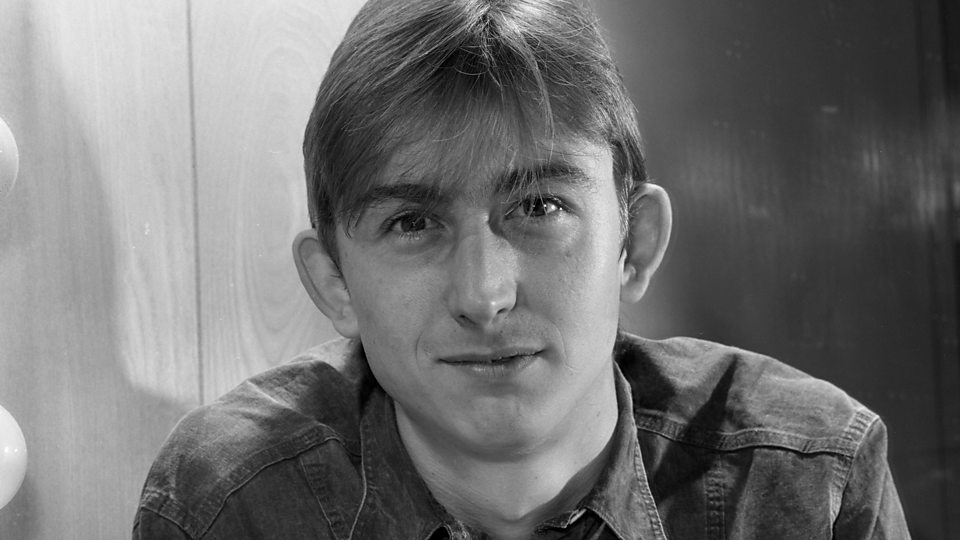
    Mark Hollis, singer in the critically acclaimed Talk Talk, has died. He was 64.

    The word “genius” is thrown around a lot in music, but Hollis was the real deal. I was mesmerised by Talk Talk as a young teenager and developed a deep love of their music that I still have today. They made a string of extraordinarily beautiful records (and he made another one as a solo artist) and then they stopped, leaving an incredible musical legacy.

    It’s always sad when a favourite musician dies, but this loss feels devastating. Hollis wrote the soundtrack to so much of my life.

  • The silencers

    Being trans is a bit like Chinese water torture sometimes. It’s not that the individual drops hurt; it’s that they don’t stop. So for example being misgendered by someone who hears a male voice isn’t upsetting on its own if that’s the only occurrence that day, but being called a man four times during a ten-minute radio programme by a presenter who knows your name and pronouns is profoundly embarrassing.

    This is one of the reasons trans people do things like voice therapy or very stereotypical female presentation, incidentally. We do it because it makes life a little bit easier. If you don’t immediately hear my voice as male, maybe you won’t call me sir, or a man, or refuse to accept I’m the policyholder when I’m on the phone to your call centre. I don’t particularly want to modify my voice, not least because it’s a lot of work, but I can do without the arguments.

    The worst, though, is the constant attacks on trans people, the misinformation and propaganda that appears in the media. It’s not so much that it gets printed. It’s that it gets shared online by people you may come into contact with personally or professionally.

    For example, I’m supposed to be going to a music organisation’s launch day soon. The organisation is for women and it’s explicitly inclusive of trans women, something its organisers have also confirmed to me privately. And yet I’m not sure if I’m going to go, partly because a couple of the key figures who’ll be there on the day have shared anti-trans stories on social media.

    I don’t think these people are bigots; they shared what they thought were legitimate news stories in a kind of “oh, for fuck’s sake” way (I know one of them through work and we’ve always got on very well, although I haven’t met her since I started transition). But it means they have shared content that states people like me are fraudulently gaining access to women’s spaces.

    How do you sit comfortably in a women-only event when you know that?

    How do you read the room without wondering who else has those views, or who has much more extreme views? Are the informational and networking opportunities of the day worth the risk of some kind of confrontation from someone who does not believe you should be there?

    That’s what the drip, drip, drip of anti-trans polemic does. It makes you afraid. Afraid to take part in things even when you’ve been invited. Afraid to be in spaces you’re entitled to be in. Afraid to do normal things. Afraid to show up. Afraid to speak. Afraid to just sit in a room.

    The next time someone tells you and tens of thousands of other readers that they’re being silenced by those awful trans people, think about that and ask yourself: who’s really being silenced here?

  • Everybody panic

    U.S. Forest Service photo.

    For years, we’ve been told not to panic. It turns out that maybe we should be panicking after all.

    Writing in the New York Times, David Wallace-Wells says “the age of climate panic is here.”

    We are living today in a world that has warmed by just one degree Celsius (1.8 degrees Fahrenheit) since the late 1800s, when records began on a global scale. We are adding planet-warming carbon dioxide to the atmosphere at a rate faster than at any point in human history since the beginning of industrialization.

    We can no longer stop climate change. It’s already happening. But if we panic, we can at least make it slightly less catastrophic and deadly than it would otherwise be.

    For years, we have read in newspapers as two degrees of warming was invoked as the highest tolerable level, beyond which disaster would ensue. Warming greater than that was rarely discussed outside scientific circles. And so it was easy to develop an intuitive portrait of the landscape of possibilities that began with the climate as it exists today and ended with the pain of two degrees, the ceiling of suffering.

    In fact, it is almost certainly a floor. By far the likeliest outcomes for the end of this century fall between two and four degrees of warming.

    Wallace-Wells rightly says that complacency is a huge problem, and that individual acts are pointless if we don’t do anything about, say, farming and industry:

    Buying an electric car is a drop in the bucket compared with raising fuel-efficiency standards sharply. Conscientiously flying less is a lot easier if there’s more high-speed rail around. And if I eat fewer hamburgers a year, so what? But if cattle farmers were required to feed their cattle seaweed, which might reduce methane emissions by nearly 60 percent according to one study, that would make an enormous difference.

    …No matter how bad it gets, no matter how hot it gets, we’ll still have the ability to make successive decades relatively less hot, and we should never stop trying. There is always something we can do. It’s too late to avoid a 21st century that is completely transformed by the forces of climate change, but we have to do everything possible to make the future cooler, safer, and healthier.

    One of the most frightening theories I’ve heard about climate change is that the wealthiest, most powerful people in the world know full well what climate change will do, and they want it to happen.

    It’s called “exterminism”. Rather than worry about saving the poor, feeding them, educating them, ensuring clean air and water for them… why not just let them burn? If you have sufficient resources, you can survive the eco-apocalypse and return to your rightful place in a world that no longer has to worry about all those inconvenient poor people.

    If people believed such things, they wouldn’t be investing in climate change. They’d be buying bunkers.

    And that’s what some of the world’s wealthiest people are doing.


  • Hat’s entertainment

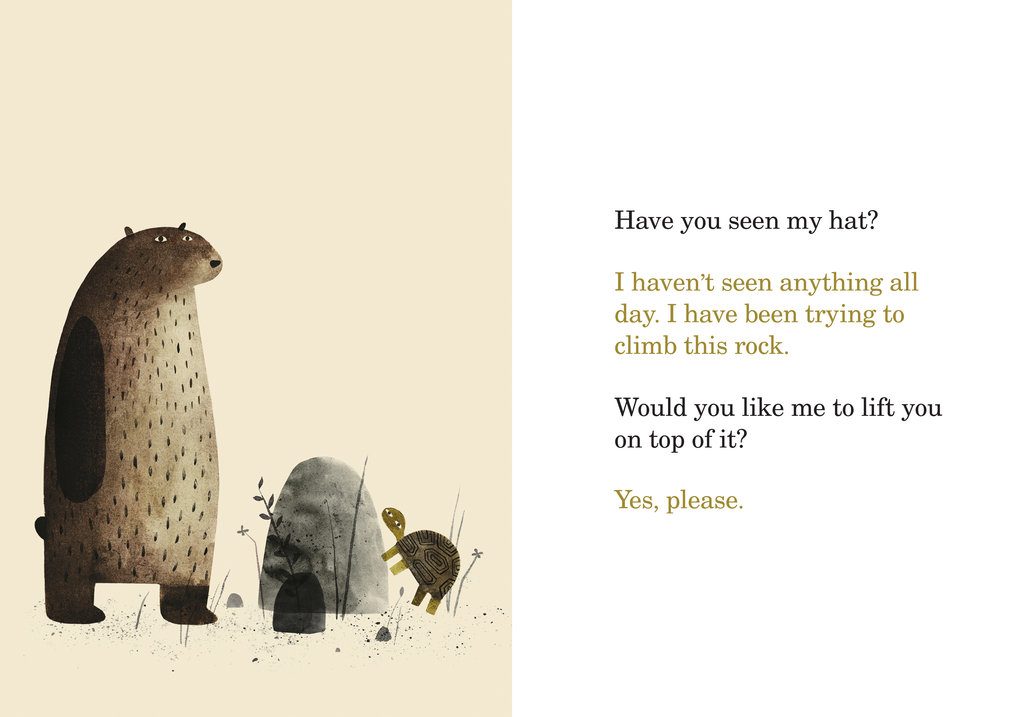
    This is one of my new favourite things: it’s I Want My Hat Back, a children’s book by Canadian writer Jon Klassen. It’s just wonderful, a simple tale told with style and great wit. My son and I both giggle like loons when we read it and its follow-on books This Is Not My Hat and We Found A Hat. There’s a wickedly dark sense of humour to it all, which of course is what makes the books so appealing.

    Another writer my son and I are really enjoying is Chris Haughton, whose books are just as economical and just as funny, if not quite so dark.

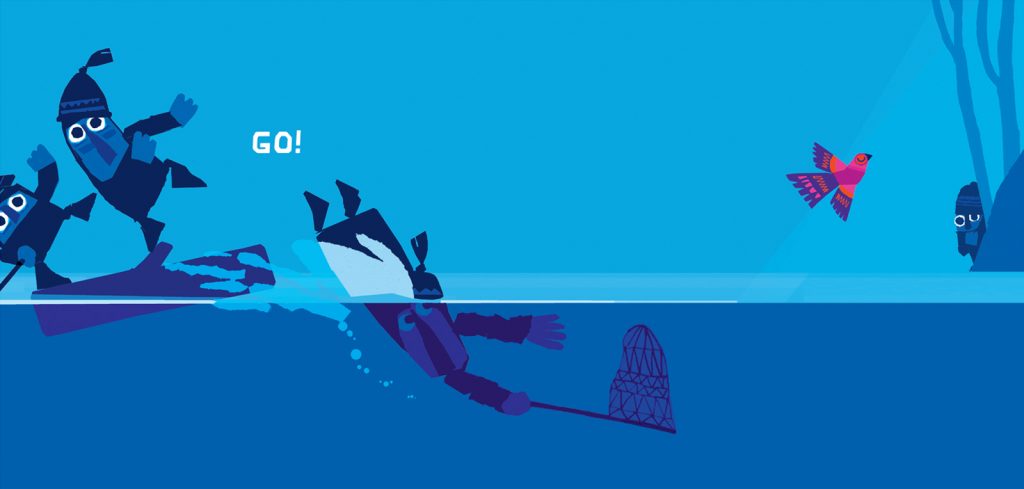
    This image is from Shh! We have a plan, in which a group of hunters attempt to track a bird while shushing one of the group. Inevitably the shushed one turns out to have the best plan of all.

    It’s a great time to be reading to your children, because not only are we having something of a golden age of picture books but we also have access to all the classics too – so the work of these writers and illustrators sits happily in my son’s bookshelf alongside Dr Seuss and Maurice Sendak. Reading is one of life’s great joys, and introducing it to your children is another.

  • Sound and fury, signifying nothing

    This week, Lily Madigan was asked to appear on a BBC radio programme to talk about trans women in sport. There’s just one problem with that. While Madigan is trans, she is not an endocrinologist or a sports scientist – so she can’t talk knowledgeably about the crux of the issue, which is whether raised testosterone gives female athletes a competitive advantage or whether bodies assigned male at birth retain any biological advantages post-transition (as it happens, the answer to the latter question appears to be no. More of that in a moment).

    Madigan was expected to debate the issue with an anti-trans activist who is not an endocrinologist or a sports scientist either.

    As Madigan posted on Twitter, she “explained to them that good reporting means talking to sports scientists & trans people in sports, not trans people & a transphobic person. Facts & experiences, not opinions.”

    What is the point in having two people talk about a subject neither of them have any expertise in? How does that help illuminate the issues, or make the listeners better informed?

    As it happens, there’s tons of scientific research into trans women in sport. This, from 2017, is a systematic review of the current literature as of then. Among other things, the review found that “the majority of transgender competitive sport policies that were reviewed were not evidence based” and “there is no direct or consistent research suggesting transgender female individuals (or male individuals) have an athletic advantage at any stage of their transition (e.g. cross-sex hormones, gender-confirming surgery) and, therefore, competitive sport policies that place restrictions on transgender people need to be considered and potentially revised.

    Of course, experts are not always available at times that suit programme makers. But I very much doubt any experts were actually sought. It’s a trans issue, so let’s pit a trans person against an anti-trans person and hope sparks fly.

    This happens again and again in current affairs: rather than speak to people who know what they’re talking about, programmes choose instead to take a gladiatorial approach with false equivalence – so a climate scientist is pitted against an angry climate change denier, a feminist is pitted against a misogynist, a trans woman is pitted against an anti-trans bigot. Sometimes it’s because the researchers are expected to cover tons of topics of which they only have a superficial knowledge, but often it’s because the purpose isn’t to inform. It’s to entertain, or to outrage.

    A row is much more entertaining than an expert giving a measured, informed opinion. Who cares about facts, about settled science, about expert consensus? There’s a loon for every subject, desperate to shout “fake news!” at real facts.

  • “What Peanuts taught me about queer identity”

    There’s a lovely, sad piece in The New Yorker by Jennifer Finney Boylan about the famous cartoon strip Peanuts.

    My favorite strip was “Peanuts,” which, if I’d been paying attention, contained some lessons for me about the world that lay ahead. “Peanuts” was just one broken heart after another. Charlie Brown loves the Little Red Haired Girl, whom we never see. Charlie Brown’s little sister Sally is in love with Linus (“Isn’t he just the cutest thing?”), whose affections, in turn, are reserved for his blanket. Lucy is in love with Schroeder, but Schroeder is in love with Beethoven. Marcie is in love with Charlie Brown, and with Peppermint Patty, but Peppermint Patty loves only Charlie Brown. And so on.

    Boylan is a superb writer, both in fiction and non-fiction: her warm, wise and witty memoir, She’s Not There, is one of the best books ever written about transitioning.

  • “The Scottish media are now at the forefront of undermining trans rights”

    The ever-entertaining A Thousand Flowers blog has resurrected its Weekly Wanker slot for the Herald newspaper columnist Iain McWhirter, who has appointed himself as defender of women against the sinister trans agenda. It’s an amusing read, but it’s also fuelled by righteous anger.

    If you aren’t familiar with ATF, it’s a Scottish blog that often does the basic legwork supposedly respectable, responsible journalism doesn’t – so for example while major Scottish newspapers were running scare stories about trans people’s threat to women’s refuges and other crucial resources, running op-eds wondering what Scottish women’s groups might think, ATF actually picked up the phone and asked all 40+ of those groups. The response: they’re already trans-inclusive and the newspapers were misrepresenting them.

    Back to the Weekly Wanker.

    Iain’s a long established Scottish hack who’s perhaps best know as The Da of The Yes Das, one of the few mainstream journos supportive of independence in the run up to the 2014 referendum.  More recently though, his failed attempts to understand the basics of the emergency facing Scotland’s trans community has resulted in a string of absolute shitfests.

    As ATF points out, McWhirter appears to be completely ignorant of the current legal situation, of science and of the trans-inclusive policies of Scottish women’s groups. And he’s not the only person spreading fear and long-debunked bullshit, for which the Scottish media seems to have a huge appetite.

    in reporting uncritically on these dodgy new groups and amplifying only the views of a tiny, vocal minority of loudly “silenced” transphobes, space simply isn’t being given either to trans groups or to the women’s groups on the front line. Under the comments to Iain’s latest outburst, there were further attacks against groups like Rape Crisis Scotland, Engender and Womens Aid – and their staff – who were accused of actually being secret bigots who were just too scared to say so, SILENCED, in case they lost their funding or jobs.  We’ve already refuted this lie, by calling every Women’s Aid group in Scotland, every group we spoke to said they were trans inclusive already – but the transphobes won’t believe these women, it suits them to call women who work with survivors cowards and liars instead.  Who’s silencing who exactly?

    These targeted and relentless attacks against women’s groups by the anti trans lobby are deeply sinister and we need to continue to resist them.  The people who peddle lies and bigotry won’t rest until Rape Crisis Scotland has been replaced by a random website run by people hating on orange cats and Women’s Aid is just a badly filled in form about the “dangers” of trans kids.  They want to undermine the credibility of women’s groups so they can claim that space and funding for themselves.

    Women and men, cis and trans people, gay people, bi people and lest we forget the “heteronormative” lesbians Iain’s been bashing out his one handed columns about, all need to speak up for those being attacked and undermined by the latest wave of moral panic which has infected the Scottish media.  Otherwise, we risk both trans groups and women’s groups being undermined by bigotry and hatred.


  • A Mermaids tale

    Last year, there was a concerted smear campaign by anti-trans activists against the Mermaids charity. It began with misleading articles in major newspapers such as The Sunday Times (articles that have since been corrected after IPSO found them to be based on false allegations) and culminated in an organised campaign to get the Lottery fund to cancel its grant to the charity.

    The campaign was extremely ugly. I’ve seen Mermaids’ CEO repeatedly libelled online, and the charity itself described in such a way you’d think it was harvesting humans for their blood. That’s not as bizarre an image as it might sound: some of the anti-trans mob are anti-semitic too and claim that trans organisations are funded by The Jews for reasons far too insane to detail here.

    The campaign was spearheaded by two people: an obsessive, washed-up sitcom writer and an obsessive, washed-up newspaper journalist. The writer urged the notoriously transphobic members of a particularly toxic section of Mumsnet to bombard the Lottery fund with complaints. Bombard they did.

    The lottery fund has now investigated all the allegations and published its report. Over 40 pages it makes it very clear that the anti-trans activists’ claims run the gamut from utterly unsubstantiated to ideologically-driven bullshit.

    I’m not going to go through the whole thing line by line (it’s here if you want to do that.) It appears to be pretty balanced: there are areas where Mermaids can clearly do better,  and it makes recommendations in those areas.

    But the takeaway here is that the lurid allegations against the charity, the terrible things that  the campaigners allege, are not true. The charity doesn’t push anybody towards medical treatment or refer anyone to anything. It doesn’t use false statistics to exaggerate the mental health issues of trans children. It doesn’t provide misinformation about sexual development and it doesn’t conflate gender non-conformity with being trans.

    There was lots of innuendo, but no actual evidence.

    There’s a lot of innuendo about. This weekend, the Sunday Times published tennis star Martina Navratilova’s thinky thoughts about trans people – thoughts, you’ll be amazed to discover, that weren’t very trans-friendly. Navratilova is on the advisory board and is an ambassador for the Athlete Ally LGBTQ sports charity. Or at least she was until they fired her this morning. In a statement, the charity explained that her comments were “based on a false understanding of science and data, and perpetuate dangerous myths that lead to the ongoing targeting of trans people through discriminatory laws, hateful stereotypes and disproportionate violence.”

    A “false understanding of science and data” perpetuating “dangerous myths” is something you see a lot of in the specific allegations the Lottery fund considered and rejected.

    It’s not just an important report for Mermaids. It’s important for LGBT people generally, because the same “protect the children” mob also wants to pressure organisations to defund any charity that is trans-inclusive – a list that doesn’t just include trans charities (Scottish Trans Alliance, Gendered Intelligence etc) but also any charity that is trans supportive – so Stonewall and even the disabled kids’ charity Allsorts are on the online activists’ hit list.

    That collection of targets gives the lie to the claims of “reasonable concerns”. There’s nothing reasonable about this. It’s hatred.

    Some trans people are, understandably, experiencing schadenfreude: the campaign didn’t just fail, but it was directly responsible for a crowdfunding campaign that put another quarter of a million into the charity’s coffers. But while it’s fun to see bigots thwarted, this isn’t the last such campaign we’ll see.

    This hatred isn’t driven by facts, but faith. The response to the Lottery fund’s report isn’t “well, they’ve investigated it and it turns out we were wrong!” but “Let’s find out where these people live and make their lives hell.” Some of the activists are discussing making crank calls to the Mermaids’ helpline to make the phone lines unavailable. Others are claiming conspiracy or continuing to peddle the most vicious libels.

    If that sounds familiar, it’s because we’ve seen it before. Many anti-trans activists are very friendly with US right-wing evangelicals of the anti-abortion, restrict-women’s-rights variety; some of the higher profile figures in the anti-trans movement are also demonstrably racist and islamophobic. Their hatred, these tactics, won’t suddenly go away. They’ll be used against other charities too.

    The message to other charities from this campaign is simple: if you aren’t on the same side as the evangelicals or the far right, it could be you.
  • TRNSMT: where are the women?

    Last year, TRNSMT festival head Geoff Ellis told the BBC that there was “a long way to go” with gender balance at festivals: women weren’t really getting a look-in.

    “We do have strong female representation across the line-up but we’re committed to doing more,” he said.

    How’s that panned out this year?

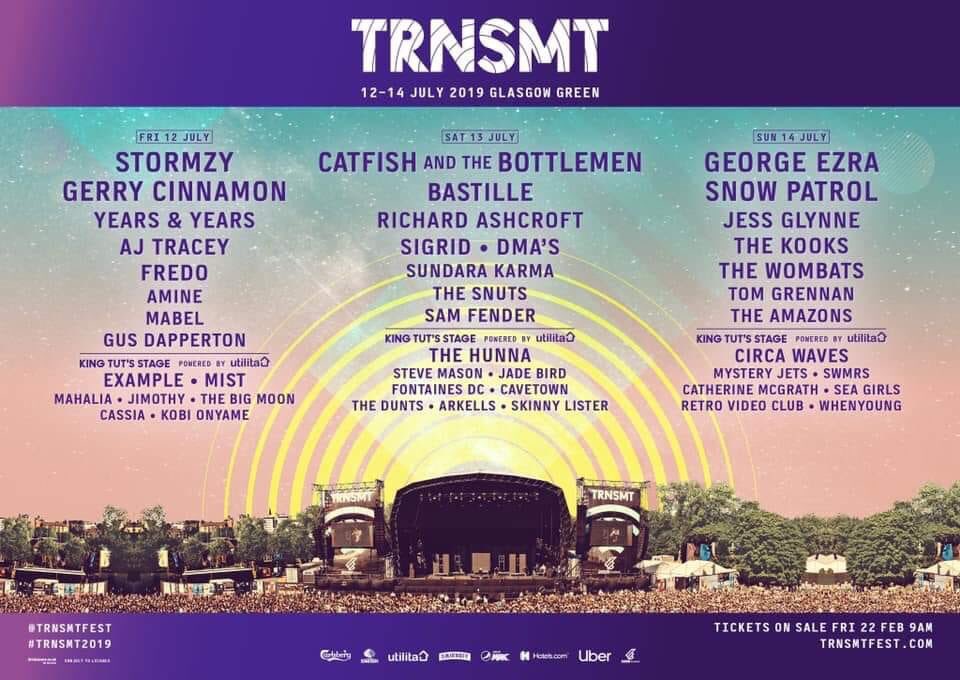
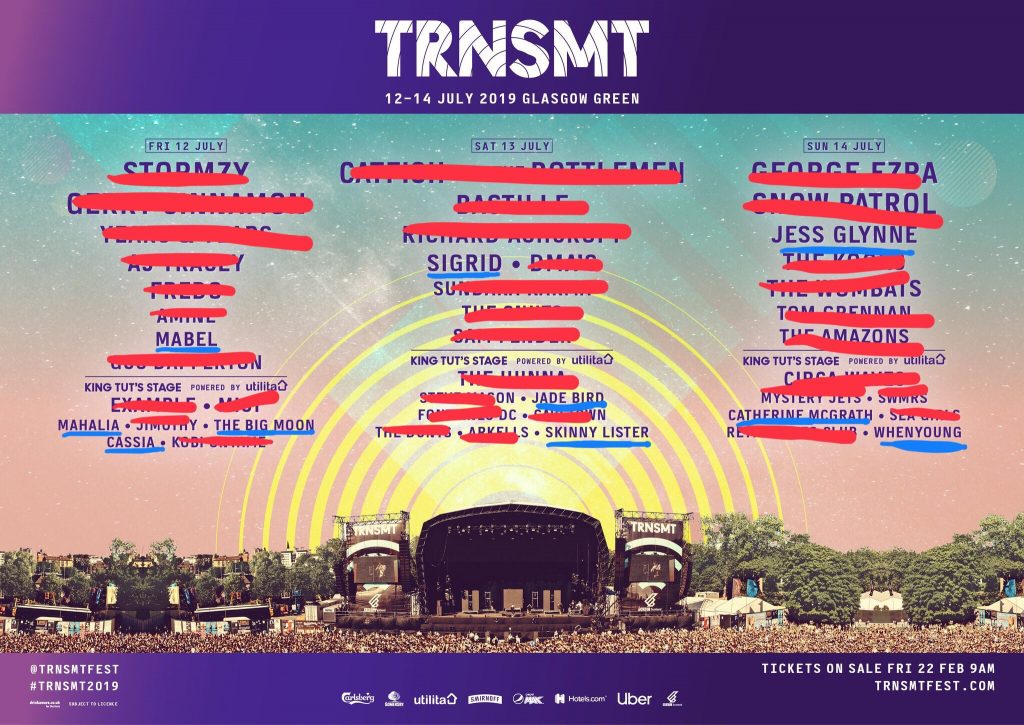
    Of the eight acts on the main stage on Friday, just one – Mabel – is a woman. On Saturday, Sigrid is the token woman; it’s possible that the singer of Sundara Karma is trans but I can’t find out how they identify. And on Sunday, the woman is Jess Glynne. The Amazons, further down the bill, may take their name from the legendary women warriors, but they’re blokes.

    So out of 23 main stage acts there are three women. That means around 87% of the main stage line-up is male.

    How does that compare to 2018? If the organisers are “committed to doing more”, you’d expect 2019 to be an improvement over 2018.

    Nope.

    Image of TRNSMT with male acts removed. Posted by @thatguyconnah on Twitter.

    Last year, TRNSMT featured 33 acts on the main stage. Of those acts, there were five female artists or female-fronted bands. So the line-up was 85% male. That means female representation  at TRNSMT is actually worse in 2019 than it was in 2018.

    This is not new, and it’s not limited to TRNSMT. The gender balance of festivals is generally 80% male, sometimes considerably higher (the Reading festival is notorious for its lack of female artists; it’s one of the few festivals to refuse to sign a pledge to improve gender equality). But it’s not really good enough, is it?

    The problem is not that there aren’t enough women artists. As Roisin O’Connor wrote in the Independent, there are tons of great female artists and female-fronted bands. And there are plenty more coming up. Fender says that in the US and UK, women account for half of all guitar purchases. The problem is much simpler. Female artists aren’t being booked because festivals are sausagefests.

    Geoff Ellis has defended TRNSMIT, pointing out – rightly – that acts such as Chvrches and Florence + The Machine are headlining the same firm’s Summer Sessions in Edinburgh later this year. But that doesn’t change the fact that while Ellis has promised to make TRNSMT more gender balanced, the balance is worse than it was when he made that promise last year. Promises are only worthwhile if you keep them.

  • Pandering to extremists isn’t balance

    You’re probably familiar with the “if you’ve been affected by the issues raised in this programme…” warning at the end of gritty BBC dramas, which tells you about the Action Line information service. But it was conspicuous by its absence from last week’s episode of Call The Midwife, in which a character died from a backstreet abortion.

    It’s an odd omission, because the Action Line that’s normally mentioned at the end of programmes is for exactly this kind of subject.

    So why no announcement?

    According to the BBC, abortion is a “contentious issue”. Allowing people to access information might “imply the BBC supported one side or another.”

    It isn’t possible for the BBC Action Line to offer support for abortion and similarly contentious issues without referring people either to campaigning organisations which take a particular stance on an issue or to organisations which provide it.

    Abortion has been legal in mainland Britain since the late 1960s and is provided by the NHS. There’s nothing remotely contentious about letting women know what evidence-based medical treatment is available to them any more than it’s contentious to tell people about chemotherapy or vaccinations.

    The British Pregnancy Advisory Service, Brook, the Faculty of Sexual and Reproductive Healthcare, Family Planning Association (FPA), Marie Stopes UK, the Royal College of Midwives, and the Royal College of Obstetricians and Gynaecologists have written a letter to the BBC:

    Abortion has been legal, in certain circumstances, in Great Britain for over 50 years, and 98% of terminations are funded by the NHS. Abortion is the most common gynaecological procedure in the UK, and one in three women will have an abortion in their lifetime. Polling demonstrates that the vast majority of the public support a woman’s right to choose, including those with a religious belief. Abortion is not a “contentious issue”– it is a routine part of NHS-funded healthcare, provided by doctors, nurses, and midwives every day in hospitals and clinics across the country.

    “The BBC Action Line response states that including links to information about abortion could imply the BBC “supported one side or another.” However, in barring information the BBC is in effect “supporting one side” by treating abortion as different to all the other medical procedures and conditions the BBC choses to include. This is highly stigmatising for the healthcare professionals we represent and the women we care for.

    It’s a good example of the BBC getting its desire for “balance” terribly wrong. The abortion “debate” isn’t balanced; it’s a handful of extremists who want to deny legal, evidence-based healthcare to women and who are quite willing to see women suffer and even die because of those extremists’ religious beliefs. In the US, they bomb medical centres and attempt to kidnap and murder doctors.

    Pandering to religious extremists isn’t cultural sensitivity, let alone balance. It’s censorship.

    Update, 18 Feb: The BBC now says it was “mistaken” and has now amended its website to provide appropriate information.