Category: Media

Journalism, radio and stuff like that

  • No platform, no problem

    To borrow from Oscar Wilde, it would take a heart of stone to read about the fall of Milo without laughing.

    Milo, if you’re lucky enough to be unaware of him, is a vicious right-wing troll (and former Telegraph journalist) who managed to build a very lucrative empire by saying and doing hateful things. “Feminism is cancer” was one of his hits.

    Milo discovered that the more hateful your views, the bigger your profile becomes – and the bigger your profile, the more money you can make.

    His rise demonstrated that despite what people in the media may have you believe, terrible views don’t die when you expose them; the people with those views just gain some more followers and make the world a slightly worse place. The same trick is working for the stupid man’s philosopher Jordan Peterson, and for former Trump strategist and human bin fire Steve Bannon.

    For example, this week Holyrood magazine did its bit to fight the rise of neo-fascism by, er, giving Bannon multiple pages to spout his awful opinions without challenge. This is the same Bannon who the BBC recently invited as the honoured guest at a conference. In a sane world Bannon would be a sad, lonely character whose only audience is a long-suffering pet. But this isn’t a sane world.

    We’ve seen again and again that giving vile populists a platform just makes everything worse. But what if we don’t give them a platform?

    Milo knows. He built much of his notoriety on Twitter, and when Twitter finally booted him off the platform – for encouraging his followers to abuse a black actress, the last of many awful things he did on the service – his empire began to shrink.

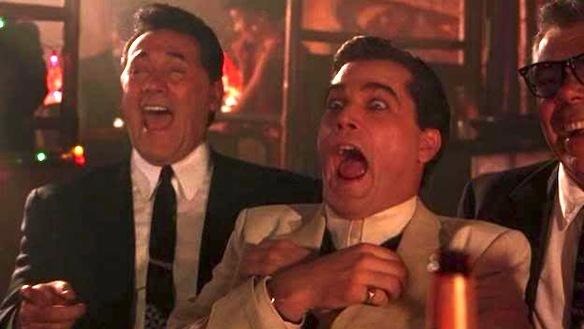
    What started as a slow decline became a rapid one when he made awful but hardly untypical comments about underage boys, comments so bad that Breitbart let him go. They also played a part in the cancellation of his book deal with Simon & Schuster, although I suspect it was more to do with the fact that his book was bloody awful. Racist, misogynist, and every kind of -phobic you might imagine, it should never have been commissioned in the first place. Being filmed singing karaoke in a bar with infamous white supremacists didn’t help much either.

    What happens to a public figure who is no longer so public?

    The answer appears to be imminent bankruptcy. A few days ago, leaked emails and documents indicated that Milo is more than 2 million dollars in debt and that his creditors are running out of patience.

    Yesterday, Milo turned to social media to help fund his “comeback” – despite claiming he was pulling in $40,000 per week and financially stable.

    The comeback lasted one day.

    As a spokesperson for the funding site Patreon explained: “we don’t allow association with or supporting hate groups on Patreon.” Milo’s crowdfunding campaign was removed from the site.

    Just to rub salt in the wound, the former enfant terrible of the internet managed to attract just 250 supporters before the site shut him down.

    Milo deserves schadenfreude, not sympathy. He’s a toxic troll, a man of no importance. But he became a public figure largely because of a media that’s desperate for controversy and desperate for clicks. His rise and demise should be a warning to commissioning editors and programme producers everywhere: when you’re presented with a trash fire, don’t give it oxygen.
  • Words have consequences

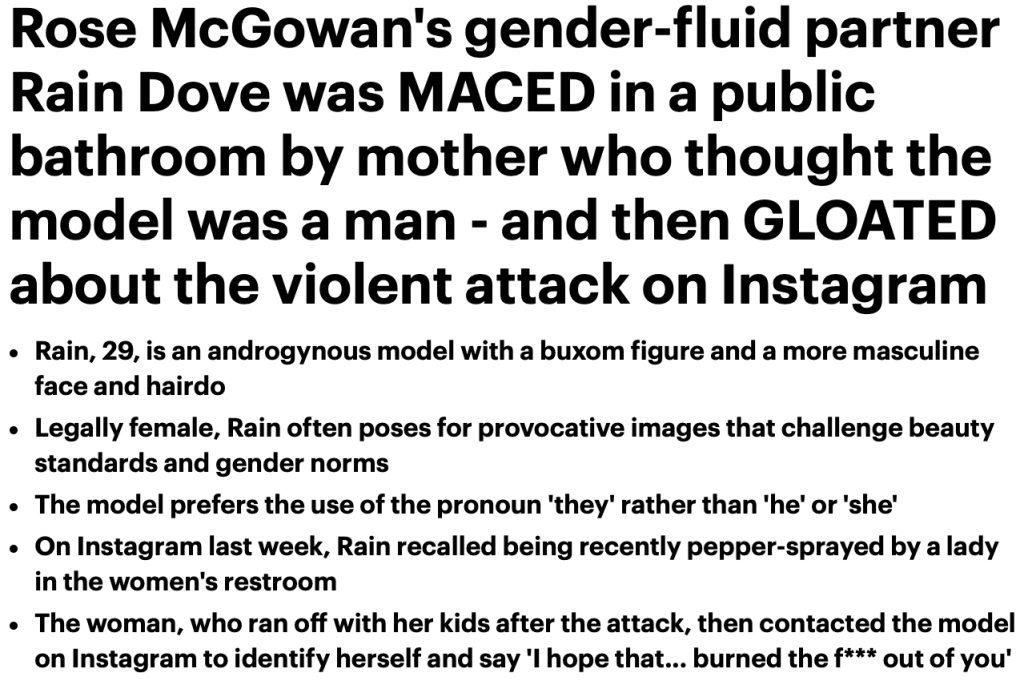
    The Daily Mail:


    Elsewhere in an American high school, members of staff attempt to break into a locked toilet stall because a trans  teenager is in it. In a different school, a lesbian student is beaten up because of her boyish presentation. In October a lesbian woman was kicked out of a bowling alley for looking ‘too masculine’. The same thing happened in North Carolina in June, when a lesbian woman was thrown out of a bathroom by the police: “You got no ID? Get out!” In May, a woman was harassed in a toilet because she was wearing a baseball cap: ‘the woman went up to Aimee and said “you’re disgusting” and “you don’t belong here” before flipping her off.’

    This is what happens when you demonise people, when you tell people that someone’s very presence is a threat to you and to your children. For some people, “looking a bit trans” is sufficient grounds for action against a complete stranger who’s minding their own business.

    It’s not just people like me. It’s particularly horrific for refugees, especially since the whole Brexit mess began. The Overton Window, the range of political discourse that’s considered acceptable in society, has moved so far to the right that supposedly mainstream political parties are echoing the manifestos of the BNP and other far right groups from previous decades. What used to be unacceptable racism is now “asking difficult questions”.

    That demonisation has consequences big and small, and it always, always ends up with people getting attacked. For example, this week we saw horrific footage of a Syrian kid being “waterboarded” by bullies; it’s the latest in a campaign of abuse that’s seen him being doused with water, verbally abused and his hair set on fire, as well as physical violence. His sister has been bullied too.

    The same Daily Mail that’s so concerned about Rain Dove was also concerned about this kid: after years of demonising refugees, the Mail can’t imagine why anybody would pick on a child just because he’s Syrian. The Sun thinks it’s a shocking crime too. That’s the same Sun that paid Katie Hopkins to call immigrants “cockroaches”.

    You’ve got to admire the process here. First of all, newspapers help to create a climate of fear and hatred. Then, they get to run shocked stories when people act on that fear and hatred.

    These publications aren’t just reporting hate crime. They’re fostering it.

  • How advertising regulation doesn’t work

    Last month, the extremely dodgy anti-trans group Fair Play For Women dropped a five-figure sum on a full page advert in the Metro claiming that reforms to the Gender Recognition Act would threaten women’s safety. It was cynical. It was designed to whip up hatred. And it was absolute bullshit.

    Some of us complained to the Advertising Standards Agency, which regulates print advertising. They’ve just sent me their verdict.

    With regards to the complaint you made, also along with several other complainants, we understand that you are concerned that the ad misleadingly implied that women will be at risk as a result of the Gender Recognition Act consultation. After assessing the ad in light of this concern, we think it may have broken the Advertising Rules on misleadingness and we have taken steps the address this.

    Unfortunately the verdict is irrelevant and the steps – telling the group not to make such claims again – are pointless. The advertisement ran, the government consultation is now closed. Trans people were silenced; unfortunately the bigots weren’t.

  • Not so hidden agendas

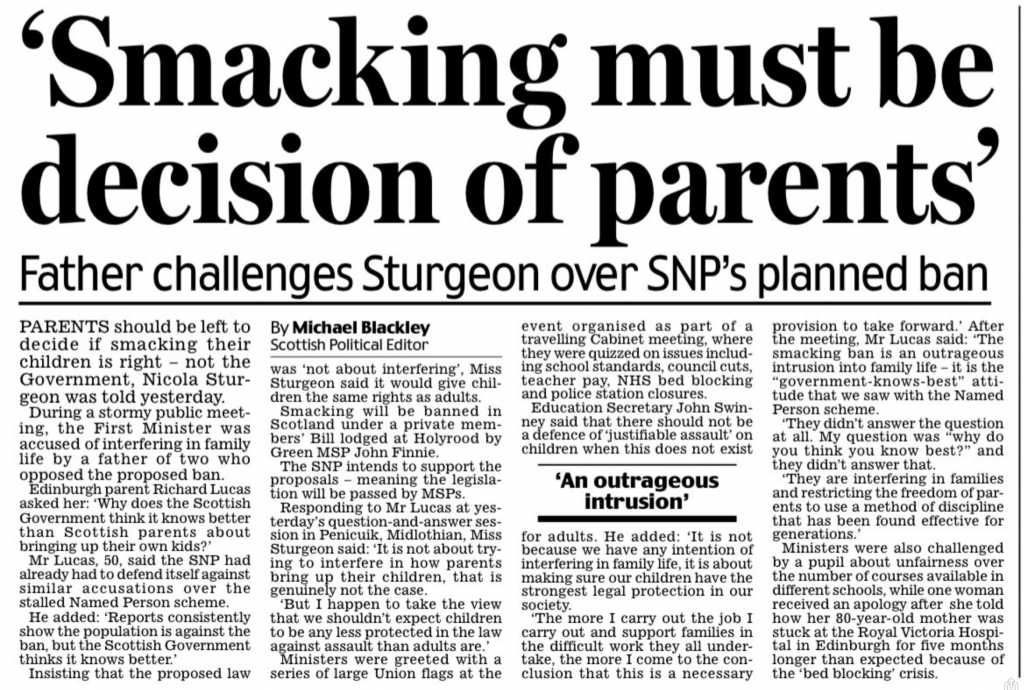
    When is “random person has an opinion” news? When it’s a “concerned parent”. This is from yesterday’s Scottish Daily Mail.


    The text describes how a “father-of-two” criticised the First Minister. “Edinburgh parent Richard Lucas…”

    Now, Mr Lucas is indeed a parent. But he also has another role. He’s the head of the ultra-right wing Scottish Family Party. He left UKIP to create the party in order to “fill the void” left by the abandonment of “Judeo-Christian-inspired values of traditional Western civilisation”.

    Their (or more likely, his: we’re not talking a mass movement here. The party has fewer than 2,000 Facebook followers) policies include getting gay people counselling to stop them being gay, to stop golf clubs being forced to admit women and to battle the evils of “feminist orthodoxy” and human rights. The party hates trans people and gay people and feminists and immigrants and women’s reproductive freedom and all the other right wing hate figures and argues that right-wing bigots should be legally allowed to beat their children and discriminate against anyone they disapprove of.

    In other words, he’s a fruitcake who should be fired into the sun, the kind of arsehole who finds a home writing columns for the Glasgow Herald.

    Or if you prefer pictures:

    None of that, as you can see, made it into the Mail article. He’s just a reasonable parent with no particular axe to grind.

    This is despicable journalism, and there’s a lot of it around. All too often people who run pressure groups are allowed to present themselves as ordinary people, and the journalists either don’t bother to find out who they are – which is shoddy journalism – or they know and keep it from their readers, in which case they’re no longer journalists but propagandists.

    It happens on radio too, phone-ins populated by ordinary people who forget to mention that they’re councillors or candidates or head of fundraising for political parties or pressure groups. And you get it on shows such as Question Time, where representatives from “think tanks”, aka pressure groups with shadowy funding, advance the agendas of their paymasters.

    This simply isn’t good enough. It’s poisoning the well of genuine debate and in many cases it’s giving bigots a platform they would be denied if their true affiliations were made clear.

    Time for our next caller. Adolf is a painter from Braunau Am Inn, and he’s got some interesting views on the subject of immigration.

  • The threat of white nationalism, and what law enforcement isn’t doing about it

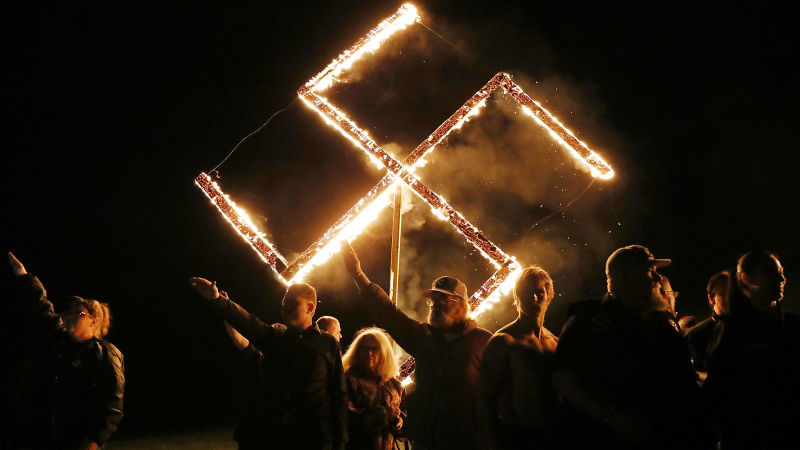
    We haven’t quite reached this stage, thank God. In the US, Nazis like these yahoos in Georgia are still a fringe group. Neo-Nazis are much more subtle, and much more dangerous.

    The New York Times has brought forward its planned cover story for next week to coincide with the US midterm elections. It’s a horrific story about the rise of neo-fascism and the real threat posed by white nationalism.

    White supremacists and other far-right extremists have killed far more people since Sept. 11, 2001, than any other category of domestic extremist.

    And yet as the NYT details, it’s been almost entirely ignored by law enforcement.

    Data compiled by the University of Maryland’s Global Terrorism Database shows that the number of terror-related incidents has more than tripled in the United States since 2013, and the number of those killed has quadrupled. In 2017, there were 65 incidents totaling 95 deaths. In a recent analysis of the data by the news site Quartz, roughly 60 percent of those incidents were driven by racist, anti-Muslim, anti-Semitic, antigovernment or other right-wing ideologies. Left-wing ideologies, like radical environmentalism, were responsible for 11 attacks. Muslim extremists committed just seven attacks.

    Meanwhile the US President vilifies muslims and describes white supremacists as “good people”. But this isn’t just a problem with the current administration. As the NYT notes, it goes back decades and its anti-semitism goes back further still. It’s just that a toxic mix of right-wing politics, shockingly negligent journalism and institutional incompetence has created the perfect storm for it to flourish. Some 22 million Americans currently believe that neo-Nazi or white supremacist views are perfectly acceptable. And there are multiple credible reports of white supremacist groups deliberately targeting law enforcement jobs, moving what’s already a largely conservative workforce much further to the right.

    As I’ve written many times before, social media has played a significant role in normalising and spreading neo-Nazi propaganda. The NYT again:

    alt-right memes, while dripping in irony, were also, in essence, hate speech, part of a propaganda war arguably intended to spread terror just as much as any ISIS execution video.

    The so-called debates we see, the platforming of the likes of Steve Bannon or various alt-right “shitlord” trolls, are playing into their hands. They’re amplifiers, enabling extremists to reach enormous audiences. What liberal media types (yes, people like me) seem unable to understand is that they’re being played. The alt-right aren’t interested in debate. For them, there really is no such thing as bad publicity.

    We’re living in very frightening times, I think, and things are going to get worse before they get better.


  • Even The Guardian reckons The Guardian is scaremongering

    In the final days of the Gender Recognition Act consultation, the (UK) Guardian newspaper published a one-sided string of anti-trans pieces culminating in an editorial regurgitating a lot of bigots’ tropes about dangerous predators. The latest criticism of it comes from an unlikely source: most of the US edition’s writers and editors. For journalists to openly criticise their colleagues in such a fashion is incredibly unusual.

    The piece, published yesterday, is credited to three writers but is apparently representative of almost all the US editorial team’s opinion. Reporter Sam Levin on Twitter:

    The @Guardian published an editorial about trans rights that many @GuardianUS staff felt was transphobic. Nearly all reporters and editors from our US offices wrote to UK editors with our concerns.

    Senior reporter Lois Beckett:

    Nearly all reporters and editors on @GuardianUS staff wrote our UK editors with concerns about a recent @guardian editorial on trans rights, which we believe promoted transphobic viewpoints.

    The article has also been shared approvingly on social media by a number of women journalists, some of whom are Guardian contributors.

    It doesn’t pull its punches.

    The editorial’s unsubstantiated argument only serves to dehumanize and stigmatize trans people. Numerous academic studies have confirmed that trans-inclusive policies do not endanger cis people. On the contrary, there is overwhelming evidence that trans people, particularly women of color, are victimized at disproportionately high rates and suffer abuse in places of public accommodations. Levels of HIV and depression are at crisis levels, all brought about through extreme prejudice and social and economic marginalization.

    …Cis women’s intolerance should not be a legitimate reason for limiting the rights of trans women. The idea that all trans women should be denied civil rights because a trans woman might someday commit a crime is the essence of bigotry and goes against feminist values.

    The UK edition has occasionally featured positive trans voices, albeit sparingly: Juliet Jacques’ transition diaries in 2012, for example, or one-off pieces by trans writers such as Shon Faye more recently. But the editorial appears to be the final straw for many of those voices.

    It’s a final straw because there’s a difference between having a columnist put forward a point of view and having the newspaper’s leader column do it. The former is “this is what one individual thinks”. The latter, “this is what the newspaper stands for.” By nailing anti-trans colours to its mast, the UK edition has told its trans contributors as well as its trans readers that it doesn’t value them, that it doesn’t respect them, and that it has no interest in speaking for them.

    The Guardian likes to quote its former owner and editor, CP Scott. It’s less keen on mentioning that he was on the wrong side of history on several issues, most notably the “misguided fanaticism” of the suffragettes. The Manchester Guardian was on the wrong side then, and the UK edition of The Guardian is on the wrong side now.

  • Facebook needs a new broom

    Facebook is currently running an ad campaign telling you that it’s against hate speech.

    Facebook was simultaneously enabling advertisers to target people with an interest in “white genocide” just days after the Pittsburgh massacre.

    This is horrific.

    After selecting “white genocide conspiracy theory” as an ad target, Facebook provided “suggestions” of other, similar criteria, including interest in […] far-right-wing news outlets…

    Other suggested ad targets included mentions of South Africa;  a common trope among advocates of the “white genocide” myth is the so-called plight of white South African farmers, who they falsely claim are being systematically murdered and pushed off their land. The South African hoax is often used as a cautionary tale for American racists — like, by all evidence, Robert Bowers, the Pittsburgh shooter — who fear a similar fate is in store for them, whether from an imagined global Jewish conspiracy or a migrant “caravan.”

    You may recall that this time last year Facebook enabled advertisers to target “jew haters”. To enable one group of white supremacists is unfortunate. To do it again suggests incompetence.

    This wasn’t a mistake, or a computer error. Joe Osborne is a spokesperson for Facebook:

    Osborne also confirmed that the ad category had been used by marketers, but cited only “reasonable” ad buys targeting “white genocide” enthusiasts, such as news coverage.

    Facebook is an ongoing example of the law of unintended consequences. It didn’t set out to enable hate groups. But it’s made tools that enable hate groups to flourish.

    I’ve previously linked to articles suggesting Facebook is Dr Frankenstein, deliberately making a monster it (wrongly) thinks it can control. But I think it’s more like Mickey Mouse in Fantasia, so impressed by its own cleverness that it doesn’t see the mess it’s making until it’s too late to fix it.

    In Fantasia, a grown-up (Yen Sid, the sorcerer) comes along and fixes everything. Facebook, clearly, needs some grown-ups too.

  • Ignoreland

    Jair Bolsonaro: Image by Wikipedia

    Another day, another horrific right-wing despot is elected to office. Today it’s Brazil.

    Writing for Buzzfeed News, Ryan Broderick retraces a fairly well-worn path about how the internet became such a toxic political force. But the fact that it’s well worn doesn’t mean it isn’t worth repeating.

    [Bolsonaro’s] victory tonight isn’t a surprise. He’s just one more product of the strange new forces that dictate the very fabric of our lives.

    …The way the world is using their phones is almost completely dominated by a few Silicon Valley companies. The abuse that is happening is due to their inability to manage that responsibility. All of this has become so normalized in the three years since it first began to manifest that we just assume now that platforms like Facebook, YouTube, WhatsApp, and Twitter will exacerbate political and social instability. We expect they will be abused by ultranationalist trolls. We know they will be exploited by data firms. We wait for them to help launch the careers of populist leaders.

    We have social networks implicated in lynchings, murders and attempted genocide. And it’s going to get worse before – if – it gets better. Broderick makes an important point:

    In most countries, reliable publications are going behind paywalls. More services like Amazon Prime and Netflix are locking premium entertainment behind subscriptions. Which means all of this — the trolls, the abuse, the fake news, the conspiracy videos, the data leaks, the propaganda — will eventually stop being a problem for people who can afford it.

    Which will most likely leave the poor, the old, and the young to fall into an information divide. This is already happening.

    …There are deserts of information where normal people are algorithmically served memes, poorly aggregated news articles, and YouTube videos without any editorial oversight or regulation. Fact-checkers in Brazil complained this month ahead of the election that most voters trust what their friends and family send them on WhatsApp over what they see on TV or in newspapers.

    This is one of the reasons why voting results – the election of Donald Trump, Brexit in the UK – continue to surprise some of us. It’s because we’re living in a completely different world: a world not just with different voices, but with completely different stories. £350 million a week for the NHS, lurid tales of migrant caravans, the supposed silencing of Tommy Robinson, liberals coming for your guns, feminists wanting to put all men in prison, LGBT people coming for your children.

    All bollocks, of course. But plausible bollocks, convincing-sounding bollocks that isn’t questioned in the world I don’t inhabit, a world of right-wing newspapers and conservative commentators and trashy tabloids and dark money funding shady Facebook advertising.

    Rather than drive the debate, traditional media is merely amplifying sections of it. Where it used to aim to educate and inform its readers, all too often it now chooses to pander to them, reinforcing the beliefs they already have.

    And that brings us to here, where a pathetic caravan of migrants is seen as more dangerous than racist, anti-semitic white men shooting up synagogues, where white men sending pipe bombs is dismissed as “fake news” or a false flag operation.

    As Broderick puts it in his intro:

    The era of being surprised at this kind of politics is over. Now we have to live with what we’ve done.

    Update: More, from Bella Caledonia (warning, some gruesome content in the linked piece):

    The lack of street presence is partly explained by Bolsonaro running an almost exclusively social media campaign. He has come into conflict with election rules after it was found that an elite network of the super-rich were funding a massive fake news campaign on WhatsApp, triggering literally millions of messages to the phones of Brazilians. He has 7.5 million Facebook likes on his page, compared to 1.5 million on Haddad’s.

    …The propaganda is fake. Photoshop images portray the left and progressive artists and other figures as sub-human. As social engineers who want to force all children to be gay, or some other such tropes falling under the rubric of “cultural Marxism.” This plays well with a substantial component of the Bolsonaro coalition – the Christian Right. Pastors urge huge congregations to vote for Bolsonaro to “restore dignity.”

  • “My editors shouldn’t have to receive emails calling for my death”

    Dawn Foster has written a brave, gut-wrenching, important piece about online misogyny and abuse.

    The majority of men are not like this, but unbidden, I find myself more on guard than I ever was before. Too many men have proudly sent lengthy pen portraits of my imagined rape, murder or maiming, glutted with detail, and have expended plenty of energy on these dreams. These men aren’t easy to spot on public transport, and now I’m warier than I have been at any other point in my life.

    I have only experienced a tiny fraction of what women like Foster have experienced. But even then I find myself thinking about online abusers when I’m on public transport, or in a crowd. Can I tell which of these people are hateful bastards just by looking at them? Is it him? Or him? Or her?

    As Foster writes:

    The internet is still seen as the Wild West – a consequence-free zone where normal social mores can be cast off as cumbersome shackles.

    We’ve been played. The tech firms told us that we needed free speech, but what they really meant was they needed freedom from taking responsibility for the shit being pumped through their servers. YouTube has become a radicalisation machine. Facebook is implicated in genocide – genocide! – in Myanmar. Twitter has become a megaphone for bigots of all stripes.

    Online spaces are no different from real world spaces. We decide what’s acceptable, and what isn’t. For too long we’ve been accepting the unacceptable. And the longer we shrug it off, the worse it will become.

  • What you didn’t read in the papers this morning

    The UK Government Equalities Office has issued a statement regarding the unhinged coverage of the Gender Recognition Act consultation in this weekend’s newspapers. [Emphasis mine]

    Neither GEO nor Ministers were approached for comment on today’s coverage on the Gender Recognition Act. Any speculation that decisions have already been made on the Gender Recognition Act is wrong. These are complex and sensitive issues. We know that many trans people find the current requirements overly intrusive and bureaucratic. We are consulting now because we want to hear people’s views.

    We have always made clear that any reform of the Gender Recognition Act will not change the exceptions under the Equality Act that allow provision for single and separate sex spaces. The consultation ends next week and we will look carefully at all the responses.