Category: LGBTQ+

  • Damned lies and statistics

    In my previous post I wrote about the easily debunked claims used against trans people. I should probably provide some evidence.

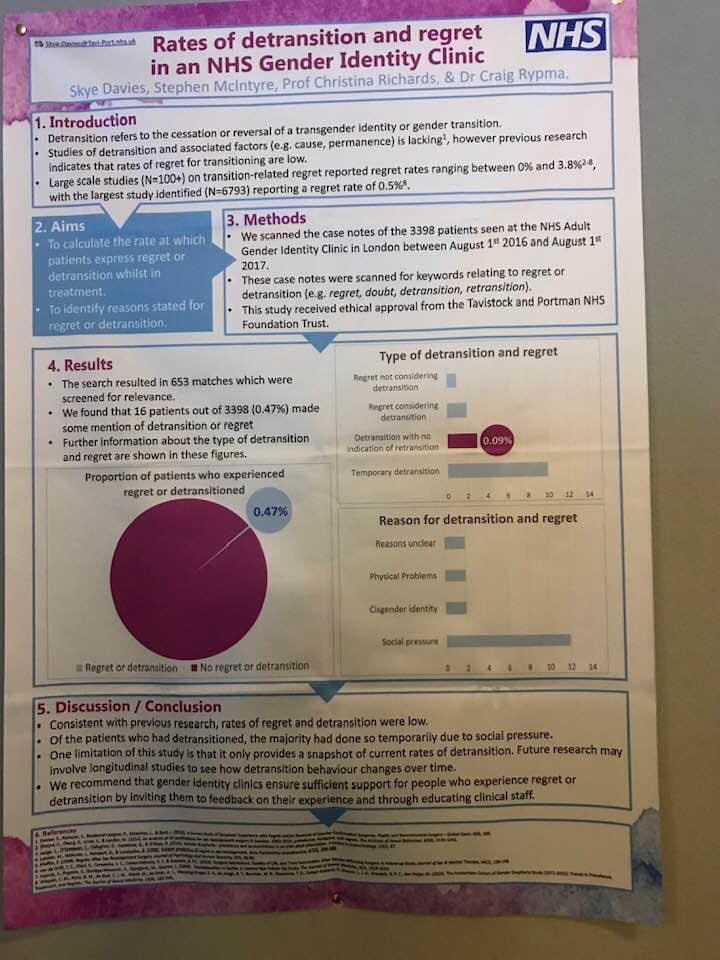
    First up, here’s some actual stats on detransitioning among trans people. The source is the NHS in London from 2016 to 2017, the sample size 3,488, the detransition rate 0.47%.

    Not 80%, the figure you see again and again in op-eds about trans people. 0.47%.

    The 80% figure is long-debunked nonsense.

    And here’s item number two, an analysis on the “rapid onset gender dysphoria” study that’s been quoted in multiple newspapers to suggest that trans people are only going through this shit because they think it’s cool.

    Some highlights:

    …reflects a certain preexisting non-neutrality bias

    …The article continues to pathologize gender dysphoria and affirmation of trans identification through social network peers and online environments as an example of “deviancy training,” and describing it as an unhealthy pattern of reinforcement with trans-identified peers and linking it with a behavior that is “deceiving parents and doctors”

    …Providing this premise prior during the consent process provides an opportunity for motivating a specific group of parental-respondents, particularly those who agree with the premise, to elect to participate in the survey. Furthermore, providing the premise of the study in this way sets expectations of the survey before parental-respondents can even begin to provide their answers

    …Also of concern is the demographic profile of the parental-respondents in this paper. The parental-respondents displayed very narrow demographic stratification despite being sampled from a very specific venue: 82.8% were female sex at birth, 91.4% were White, 99.2% were non-Hispanic, 66.1% were aged 46–60, and 70.9% had attended college. Notably, 76.5% believed that their child’s trans identification is not correct, and recruitment relied heavily on three particular Web sites known to be frequented by parents specifically voicing out and promoting the concept of “ROGD.” Thus, these are not just “worried parents,” but rather a sample of predominantly White mothers who have strong oppositional beliefs about their children’s trans identification and who harbor suspicions about their children having “ROGD.”

    …it is plausible that these data may contain multiple responses from the same parental-respondent.

    In other words, it’s a shitshow of Andrew Wakefield proportions, horrifically biased propaganda pretending to be science.

    Then there’s trans women in sport, where some 55,000 Olympians have competed since trans people were allowed to participate more than a decade and a half ago, and in the US NCAA athletics where more than 450,000 athletes have competed, without any sign of men enduring chemical castration for a year so they can compete against women.

    And then…

    You get the idea.

    Finding the facts takes seconds. If someone isn’t doing it it’s because they’re incompetent or malevolent.

  • Singal minded

    There’s an interesting piece in The New Republic by Josephine Livingstone, who analyses the idea that debate is always a good thing. She begins by looking at a US journalist called Jesse Singal, who’s notorious in LGBT circles for what appears to be an ongoing campaign of damaging misinformation about trans people and trans teenagers in particular.

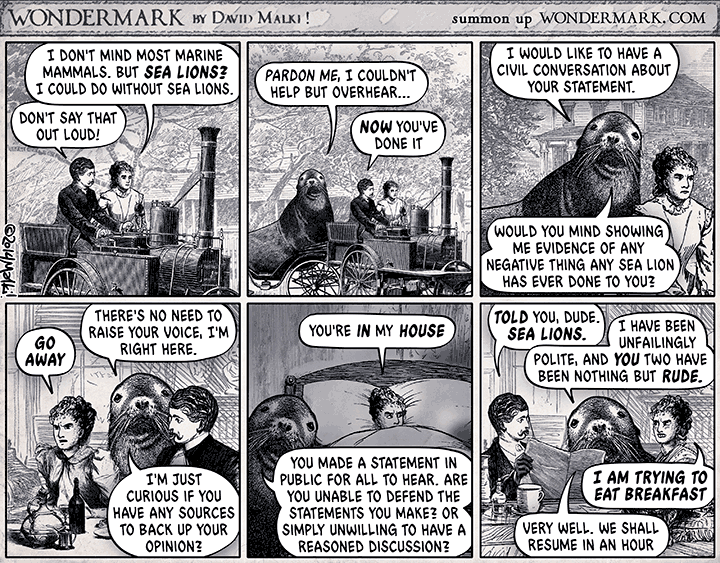
    When readers get angry with him, which happens often, he sees them as curtailing a productive conversation that he has prompted in the spirit of a free and vigorous exchange of ideas.

    …Singal and others who are critical of the social justice left—a group that ranges across the ideological spectrum and includes Bari Weiss, Ben Shapiro, Daphne Merkin, and Katie Roiphe—accuse the left of being footstampingly insistent on their views, to the detriment of healthy debate. In fact, it is the “debate me, coward” crowd that has made it impossible to have arguments in good faith, because they demand, unwittingly or not, to set the terms.

    Livingstone rather brilliantly describes this as “vacuous fight-picking” and “a howling canyon filled with misdirected energy”, using the familiar idea that we must hear both sides of any story in order to form our own opinions.

    But these people are not interested in letting people hear both sides. They want you to hear their side and only their side, and if you disagree with them they’ll shout you down and accuse you of trying to silence them.

    It is telling that critics of the social justice movement are obsessed with free speech and debate: It is the one inviolable principle they can fall back on when argument on the actual issues fails.

    All too often, the argument being made is based on (deliberate or accidental) misunderstanding, or straightforward bad faith: so for example many so-called debates about trans people simply ignore decades of research or dig up long-debunked talking points. Again and again demonstrably false claims are presented as incontestable fact: the number of trans people who detransition, the medicine given (or not given) to young people, the content of existing and proposed legislation.

    And it’s usually asymmetric. Journalists have power that other people do not; a journalist or public figure with tens of thousands of social media followers has a disproportionate amount of power compared to the people they may write about. For example, the supposed quality press in Scotland and elsewhere consistently regurgitates the claims of extreme anti-trans activists about legal or medical issues but never asks legal experts or medical experts whether those claims are true and certainly doesn’t give trans people the right of reply.

    The truth is out there, but too many journalists prefer “truthiness”: what feels true to them, not what’s actually true.

    People like Singal can bang on about free speech and debate endlessly without ever conceding a) that the deck may be stacked in their favor, and b) that certain ideas may be beyond their understanding.

    And this is why marginalised people can become so angry. Singal’s work, and similarly distorted reporting, has often been comprehensively demolished by people with a greater understanding and a less blinkered view of the things being written about. But they aren’t the ones given the column inches to fill.

    Livingstone:

    The exhaustion that comes of teaching something over and over again, only to witness people re-educated by poorly-read journalists, is profound. Exhaustion makes a person angry. Anger makes a person seem like a hyperzealot. You cannot believe that somebody is asking you to go around the same block—the very same block!—yet another time.

  • Trans people don’t swim

    Today’s Glasgow Herald has an offensively framed, scaremongering article about trans people in council swimming pools causing an invasion of “cross-dressing males”. It’s labelled new and exclusive, but it’s neither. As Duncan Hothersall put it on Twitter:

    Not exclusive. Not new. Simply the result of an active anti-trans campaigner seeking out the most scaremongering situation possible and pitching it to a newspaper desperate for clicks. We need to talk about these issues and resolve them; this sort of coverage doesn’t help.

    I wrote about the reality last year: people like me don’t use public swimming pools because we’re scared of people like you.

    I’m not scared of much any more, but I’m scared [of] public humiliation. Scared that someone will be scared of me. Scared that even in gender-neutral changing facilities where the only time I’m naked is in a locked, private cubicle, someone will loudly object to my being there and claim I’m somehow dangerous.

    Dangerously clumsy, maybe. But dangerous? The only risk from my presence anywhere near a swimming pool is if I fall on you or belly flop nearby.

    Two weeks ago, I swam in a hotel pool. It’s the first time I’ve been swimming in three years, and it was wonderful. Maybe next year I’ll go on holiday and be able to swim again.

  • “outsiders are coming to steal our icepoles, destroy our long held traditions and do crimes”

    The ever-inflammatory A Thousand Flowers has made SNP politician Joan McAlpine their Wanker of the Week. ATF’s language, as ever, is robust – but it’s tame compared to the stuff McAlpine’s fellow travellers say and do on Twitter to trans people and any woman who doesn’t think trans people are demons.

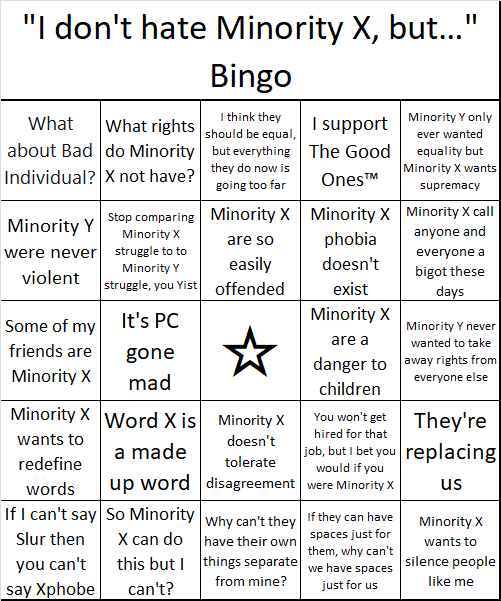
    One of the points ATF makes is that “I support equal marriage” is the new “some of my friends are black”.

    You don’t get to leverage supporting one part of a community years ago as an excuse to undermine a more marginalised part of that community now.  As a gay person, I’m not going to accept a straight cis politician using past support for limited legal rights for gay and lesbians people to justify their current anti trans nonsense.  If you mess with the T, you’re messing with Big Gay Me and anyone else in the LGBT community who won’t abandon our trans siblings when their rights are on the line. Judge a society – and a person – by how they treat the most marginalised, not how they treat those with more power.

    ATF has been criticised in the past for its language. Such tone policing (avoiding debate by attacking the way somebody speaks instead of addressing what they say; Everyday Feminism has a great comic strip about it) is really common in discussions about trans people: trans people will be called all kinds of unspeakable things, shouted down and piled on, and when they inevitably snap and tell someone to fuck off it’s proof that trans people are all violent aggressors. Minorities aren’t allowed to get angry no matter how badly and blatantly they’re provoked.

    Tone policing is used to protect privilege, to silence marginalised voices.

    McAlpine’s response to be called on her nonsense fits a pattern where opponents of trans rights grind down trans people, then try to label the slightest bit of anger as “misogyny” “male aggression” and “machismo.”  But history tells us something else: when you target marginalised groups, they don’t politely sit back and take it forever.  That’s not how resistance to a violently unequal society works.  As the old adage/historically accurate fact goes: Stonewall was a riot.  No debating occurred, at least not with the polis (but of course, loads of  useless “allies”/half arsed gay rights groups said it was terrible and damaged the cause and made us look bad yada yada).   Joan’s yet to condemn the Suffragettes who argued in the marketplace of ideas repeatedly bombed and blew up stuff enroute to winning their rights for their “toxic masculinity” because that isn’t what happened – and it’s not what’s happening when trans people stand up for themselves now.

  • Intolerance dressed up as concern

    It’s not surprising to see yet another anti-trans op-ed in The Scotsman; once again it portrays all trans people as abusive internet trolls in killer heels, trampling on the anti-trans women who are just lovely people who care about all kinds of stuff.

    But even by those low standards, it’s galling to see the horrific practice of female genital mutilation being used to demonise trans people.

    [one woman’s] life was destroyed by female genital mutilation (FGM), an unspeakably cruel practice that regards female biology as “unclean” and “unworthy”. In far too many cultures, men still decide what is a “real” woman.

    Leaving aside the sheer offensiveness of the argument (and the framing: “men still decide what is a ‘real’ woman” is a dog whistle: it’s meant to characterise trans women as men), it’s perfectly possible to support trans rights and fight against horrors such as FGM.

    It’s also possible to campaign against trans rights and also campaign against FGM. So you’d expect the “protect women” crowd to be doing just that.

    So let’s talk about the anti-trans crowd, the ones who only care about protecting women and girls and definitely aren’t motivated by transphobia when they hold meetings where speakers call us “bastards” and “parasites”.

    Let’s focus on the examples of horrors detailed in the Scotsman article.

    How much time and money do the anti-trans “feminist” organisations, the ones raising money with crowdfunding campaigns and t-shirt sales, spend campaigning against female genital mutilation?

    Zero.

    How much time and money do they spend on fighting domestic violence and other forms of violence against women and girls that leaves 140 women murdered by men in the UK every year?

    Zero.

    How much time and money do they spend on fighting against poverty wages for women, the gender wage gap and the underrepresentation of women in STEM subjects?

    Zero.

    I’ll add a few the writer missed. How much time and money do they spend on campaigning to end the systemic, endemic abuse of women in prison by other inmates and even staff, or the system that sends a disproportionate number of women to prison for minor offences?

    Zero.

    How much time and money do they spend on campaigning for equal marriage and women’s reproductive rights in Northern Ireland?

    Zero.

    Can you see the pattern emerging here?

    It’s almost as if this isn’t about protecting women at all.

  • An online resource for trans people, allies and journalists

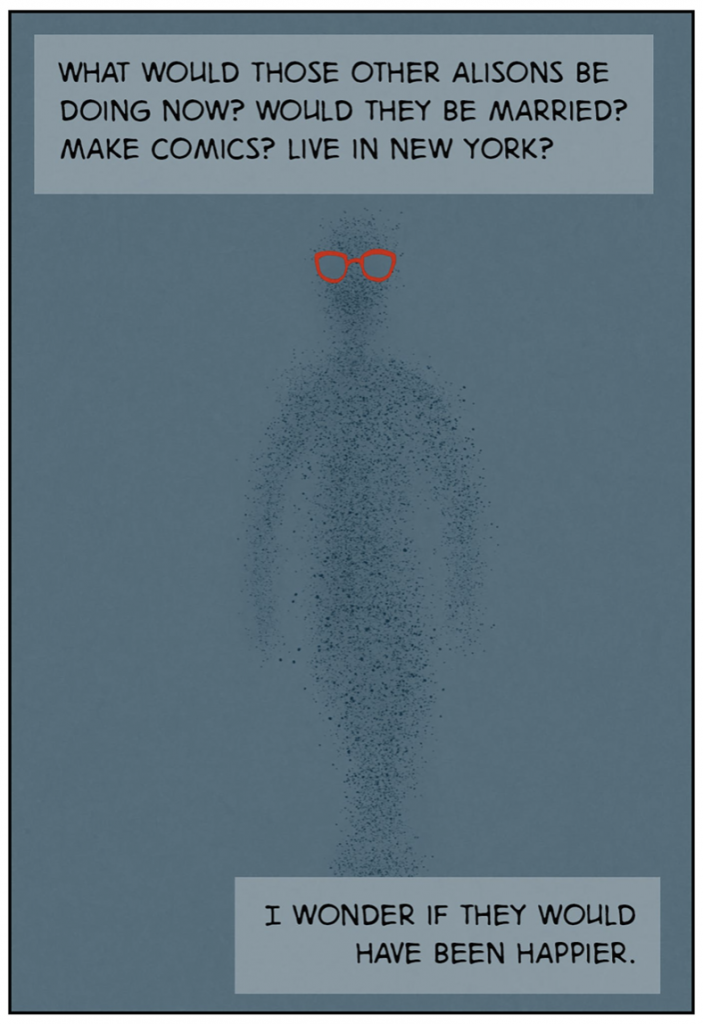
    The above image, which has saved me a bit of typing because it pretty much describes my situation, is from the resources page of Still Here. I wasn’t aware of it before and it’s clearly a work in progress but it may be worth bookmarking.

  • Maybe we should wear pink triangles too

    Am I missing something, or is this idea incredibly, dangerously bad?

    Labour’s LGBT+ advisor calls for UK-wide ‘safe spaces’ for transgender people

    Mr Watson wants Ministers to give Local Authorities the powers to outline special zones for transgender people so they can socialise safely with family, friends and the wider LGBT+ community.

    I’m hoping that something has become horrendously garbled between meeting and press release, and that the call is for councils to fund safe meeting places and organisations such as the excellent LGBT Health & Wellbeing. But I doubt it.

    “I’m urging the Government to devolve powers to Mayors and Local Authorities across Britain so they can designate safe spaces for trans people. It could be part of a long-term solution in making them feel comfortable within their communities while promoting social cohesion.”

    There’s a lot to unpick in just that paragraph.

    We have a word for “designated safe spaces” for minorities. It’s “ghetto”.

    Think about it for a moment. He wants councils to create special zones for transgender people where they can “socialise”. What about the bits that aren’t special? Are we to be excluded from them? By implication, if you have some areas that are “safe spaces” for trans people, the areas without that designation are and should remain unsafe.

    Second, “making them feel comfortable in their communities”. What communities? My community is Partick, musicians and alcoholics. How exactly will a designated Be Trans Here And You Probably Won’t Get Beaten Up zone in the Merchant City going to make me “feel comfortable” in the bit of Glasgow where I actually live, work and socialise?

    And as for promoting social cohesion: you don’t promote social cohesion by othering and segregating minorities in much the same way you don’t promote fire safety awareness by burning down everybody’s house.

    This idea is “a bid to protect [us] from the worrying rise in hate crime.” Here’s how you do that. You chuck the bigots out of your own party. You stop fearing the wrath of Murdoch and introduce a system of press regulation that actually works on behalf of the public, not the publications. And more than anything, you enforce the laws on hate speech and hate crimes that we already have.

  • Friends in the media

    It’s just another week on the internet, with yet another bunch of women experiencing massive campaigns of online abuse for having the temerity to say they don’t think trans women are monstrous predators. Singer Lisa Moorish is currently under siege and receiving dire threats and abuse from the “protect women” crowd, while comedian Janey Godley made a video after several days of ongoing harassment:

    Sally Hines, a professor of sociology and gender identities in the University of Leeds, has long been a target of the anti-trans crowd. She describes what it’s like:

    So… You’re in a (supposedly) feminist thread. There is disagreement around sex/gender. You reply briefly (its Twitter not a publication, lecture or an irl sit-down chat). The reply may – though often not -have a little irony, a tad of sarcasm, a bite of humour.

    The tweet is taken out of the thread – divorced from its context – and retweeted *multiple* times. People notify others and a pile-on starts. Things very quickly become nasty. Personal and professional attacks escalate.

    In the midst of this you are *bombarded* with demands to a)expand and clarify b)answer countless questions on issues aside to the original tweet c)send reading lists d)divulge personal aspects of your life. Repeat. Repeat. Repeat. Per minute. Per hour. For days. On end.

    So there’s the bombardment but there’s the *demand*. Not an invitation or even a request. A hostile insistence to engage NOW. Hostility is key. As is belittlement. It intensifies. Faster. Nastier. Repeat. Repeat. Repeat. Minute. Hour. Days. On end.

    Here are *some* personal examples from the last TWO days. You: shouldn’t have your job; are retarded, crazed, delusional, sick; on drugs; a woman hater; a man; responsible for brain washing/grooming young people; removing women’s rights; aiding the genocide of women and girls.

    And *always* the handmaiden. The cock lover. Patriarchy’s slave. The traitor. The female cuckold. The feminist pussy. Be shamed. I *will* shame you. Shaming is the game.

    You don’t respond. It multiples. People notify others. It becomes a circus-people trying to please with wit. Trying to impress their own/ please let me make you laugh. Who can be the nastiest? Who can be the one who will WIN? As bullies bond in a playground. Dirt turns to filth.

    And the media is @ in to complaints about you. Your funding body and employer are repeatedly @ in. People who liked one of your tweets are targeted insesiently. People who follow you are rounded on. Threats are made.

    And on still. More minutes. More hours. More days. Repeat. Repeat. Repeat.

    And some of those people are the very journalists whose names appear on supposedly unbiased articles about trans people.

    Many of the people reporting on trans issues have picked a side, usually against trans women. For example, writers for The Herald, The Spectator and The Times/Sunday Times make no secret of their support for anti-trans pressure groups with opaque finances and links to US anti-women, anti-LGBT evangelical groups.

    The idea that journalists should be objective seems to have got lost somewhere. Of course journalists have opinions, but their job is to leave those opinions at the door and report the facts. A journalist should not take part in activities or support organisations that limit or affect their ability to be objective and independent.

    We all know this. If a writer is being paid by company X, they can’t be trusted to report objectively on issues that affect company X. If a writer is a member of UKIP, they can’t be trusted to report objectively on Brexit. And if a writer makes no secret of hating LGBT people or a subset of LGBT people, they can’t be trusted to report objectively on LGBT issues. By employing propagandists rather than journalists, news media is hammering more nails into its own coffin.

  • “I can assure you that no one transitions from male to female to get a better deal.”

    Writing for the NYT, Jennifer Finney Boylan compares anti-trans rhetoric to anti-immigration rhetoric.

    When members of the present administration claim that people like me should be “erased,” are they not saying, in so many words, “Build that wall?” Are they not echoing the cries of every xenophobic bigot throughout history in furiously demanding that I Go Back Where I Came From?

    I’m not going back. I’m staying here, in the land I struggled so hard to reach. It is here, as a woman, that I’ve built a home. Is where I began my days really so much more important than where I wound up?

    …What the world needs now is not more walls — to keep out the strange, the different, the new. What the world needs now is not hatred — of men, of women, of anyone in between.

    What the world needs now is bridges: across rivers, across genders, across every last border that divides us, one soul from another.

    Trust me: it’s never a good idea read the comments on these pieces.

  • How others see us

    Most of the discussions about trans people are about us and without us. That means the terms of the debate are set by people who aren’t trans, so misrepresentation, mischaracterisation and myths abound. This isn’t new, but two recently published pieces provide a good illustration of some of the more persistent tropes.

    Two of the most influential names in discussions about trans people are Harry Benjamin and Janice Raymond.

    This cartoon in Everyday Feminism describes Benjamin’s influence on how we think about trans people:

    Benjamin meant well and helped a lot of people, but the “trapped in the wrong body” trope excludes a lot of trans people – including me. I never felt trapped in the wrong body; I felt that there was something terribly wrong, but I didn’t have the hatred and horror of my body that some trans people experience.

    This is important, because it keeps people like me from accepting who we are; perhaps if I’d realised you didn’t need severe body dysphoria to be trans I’d have come out many years earlier. And as the cartoon rightly points out. some trans people who do feel severe dysphoria become gatekeepers: you can’t be trans because your experience isn’t identical to mine.

    Which brings us neatly to the anti-trans women who advocate against our rights. Because our experiences are not identical to theirs, we are not valid.

    Writing in The New York Times, Carol Hay asks: what makes a woman?

    But thanks to the past 40 years of work from intersectionalist feminists, we’re finally paying attention to what women of color have been saying since at least the days when Sojourner Truth had to ask if she, too, got to count as a woman: that what it’s like to be a woman varies drastically across social lines of race, socioeconomic class, disability and so on, and that if we try to pretend otherwise, we usually just end up pretending that the experiences of the wealthy, white, straight, able-bodied women who already have more than their fair share of social privilege are the experiences of all women.

    The vast majority of anti-trans activists are relatively wealthy, white, straight, able-bodied women who already have more than their fair share of social privilege.

    As Hay points out, one of the most influential figures in anti-trans feminism is Janice Raymond. A former nun, Raymond published a book called The Transsexual Empire: The Making of the She-Male in 1979. One of the most famous lines in the book, a book Hay characterises as hate speech, says that “All transsexuals rape women’s bodies by reducing the real female form to an artifact, appropriating this body for themselves… Transsexuals merely cut off the most obvious means of invading women, so that they seem non-invasive.” Raymond would eventually apologise for that one some 35 years later; as far as I’m aware she has yet to apologise for campaigning to remove healthcare from trans people and for “the elimination of transsexualism”.

    Raymond and her supporters have an unremittingly negative perception of trans women (trans men, as ever, are rarely mentioned because they ruin the argument). We live amazingly happy lives of male privilege and then decide to transition on a whim so we can further the aims of the patriarchy and oppress women. Despite this assertion being absolute bullshit, it’s one of the founding principles of anti-trans activism. We are fakes and frauds, gender tourists appropriating femininity for nefarious aims.

    I’m not. The other trans people I know aren’t either.

    Since the so-called transgender tipping point of a few years ago we’ve become more visible, and more of us have come out. But that visibility hasn’t been uniformly positive. Much of the discussion has been driven by Janice Raymond’s acolytes, and even the positive stuff has tended to feature yahoos instead of, say, the trans politician Sarah McBride and other equally inspiring, interesting and normal trans people. Instead we get Caitlyn Jenner.

    Hay rightly damns Caitlyn Jenner for stupid comments such as “the hardest part of being a woman is figuring out what to wear”, a comment born of the kind of privilege you only get from being incredibly rich and separated from the real world. Jenner has said many idiotic things, and you can understand why some cisgender women might read them and want to kick trans women through a hedge.

    But most trans women are not Caitlyn Jenner.

    We are not all moving in tolerant circles, and very few of us are successful and solvent enough to afford incredibly expensive surgeries from the world’s greatest specialists. To suggest that Caitlyn Jenner is representative of trans women is rather like suggesting Katie Hopkins is representative of cisgender ones.

    Hay:

    But if I’m as guilty of entrenching regressive gender stereotypes as anyone else, why do TERFs think it’s trans women who are specially culpable for shoring up gender essentialism? Why aren’t they going after cis women like me, too?

    …Talia Mae Bettcher, a professor of philosophy at California State University, Los Angeles, demonstrates how trans people are caught in a double bind. If a trans person successfully passes as cis and is later discovered to be trans, they’re seen as an “evil deceiver” who has lied about who they really are. Trans people who are open about being trans, on the other hand, are seen as “make-believers” — cheap counterfeits, pathetically attempting to be something they couldn’t possibly actually be. The problem with this view of trans people as either deceptive or pathetic frauds is that it presupposes that there’s a real thing that trans women are failing to be. And this sounds an awful lot like the biological essentialism that almost all feminists reject.

    I don’t know what it’s like to grow up as a cisgender woman. I don’t claim to know, and I don’t argue that I didn’t experience male privilege. Of course I did: before I came out I never worried about my personal safety, I wasn’t discriminated against, I wasn’t sexually harassed or the victim of domestic violence… I’m aware that in my years presenting male, I benefited from the privilege that comes with that identity.

    But this road runs two ways. If you’re cisgender you don’t know what it’s like to be a trans woman who can’t come out, to be bullied for not conforming to gender stereotypes, to spend years or decades fighting who you are for fear of the terrible consequences, to be demonised so frequently in the newspapers you have to stop reading them, to face not just misogyny but homophobia and transphobia too.

    And that’s okay; it’s why we listen to and read stories by people whose experiences are not the same as ours, who do not have the same colour of skin, the same upbringing, the same environment. We recognise that while our experiences may be different, we also have a great deal in common.

    The buzzword for that is “intersectional”, understanding that systems of oppression intersect – so the lot of a middle-class, university-educated, straight white woman with a job in the media is very different and a damn sight easier than that of a working-class, gay, woman of colour working two jobs.

    Feminism has not always been intersectional: the first wave of feminism, which gave us women’s suffrage, didn’t care about black women; in the US, black women were banned from some marches and forced to walk behind the white women in others. Second-wave feminism (the 1960s to the 1980s) has been criticised for its lack of inclusion for ethnic minorities and LGBT groups too; in 1969 the leader of the National Organisation for Women, Betty Friedan, described lesbians as “the lavender menace”: including “man-hating” lesbians would undermine the feminist cause.

    Hay:

    When a cis woman complains that trans women haven’t had the same experiences as “real” women-born-women, then, what she’s really saying is, “Trans women haven’t had the same experiences as women like me.”

    For as long as there has been feminism, there have been women demanding the exclusion of women who aren’t exactly like them. Despite what you might read in the British papers, most feminists don’t have that worldview: they accept that while trans women’s experiences are very different, we’re all walking the same road.