One of the reasons I’m not a famous pop star, my stunning looks aside, is that it takes me an eternity to finish things. And when I do finish things, I tend to be shy about promoting them. Or I don’t promote them at all.
For example, back in early 2016, I uploaded a bunch of songs by DMGM – the name my brother and I use for our music – to Bandcamp.
“I really must put these on YouTube,” I told myself. “It’s the most important music discovery service for The Kids nowadays, apparently.”
I forgot all about it.
Still, better late than never, eh?
So just as I’m almost definitely no I mean it they’re nearly done for sure I mean it this time finishing off about three albums of new DMGM material, I’m uploading the stuff we did two years ago to YouTube. And what an emotional rollercoaster that’s turned out to be.
I’ve always written about personal things – a song I wrote in my late teens, What Did I Do Wrong?, is about somebody disappointed when “she looks in the mirror but she just sees herself”; my folks used to despair when I recorded endless four-track takes of a song called I Hate This Town (whose chorus, rather brilliantly, went: “I hate this town / I hate this town” and followed that searing insight with “I hate this tow-ow-owwwwwn”) – but listening to some of these is rather like being peeled.
The songs were all written before the, ahem, minor changes that have happened in my life recently. With a few exceptions they’re songs by somebody who’s quite literally losing their mind, the words of somebody not waving but drowning. It’s a very strange thing to listen back to them.
I’ll share some of them here over the next wee while. It’ll be a laugh!
I went to a comedy show last night, and the comedian didn’t make any jokes about trans people. I knew he wouldn’t – the comic, Jimeoin, doesn’t do that kind of joke – so I felt safe enough to go as me.
By “as me†I mean as Carrie, rather than in disguise. I should probably describe what that means in case you’re imagining some kind of Cupid Stunt or Lily Savage creature. When I’m out as me, I generally try to imitate what ordinary fortysomething women wear and dial it back a notch. Think of it like a golf handicap: because I’m trans (not to mention taller and heavier than most women) I stand out much more, so I need to be a little more sober in my presentation.
So for example last night I was in jeans, casual boot/shoes, a top and a cardigan. That’s about as dramatic as I get. Makeup-wise I go for the “hide my horrible skin†approach rather than smoky eyes and ruby lips; on top of my head the hair is simple, just short of shoulder length and undramatically blonde.
That doesn’t mean I don’t stand out, though. Last night’s show was in the new auditorium of the Glasgow Royal Concert Hall. The bar area is notable for being incredibly brightly lit, incredibly spacious and incredibly short of anywhere for people to sit. The few seats around the edges and every bit of wall space were already occupied, so my pre-gig G&T was sipped while standing in the middle of the room.
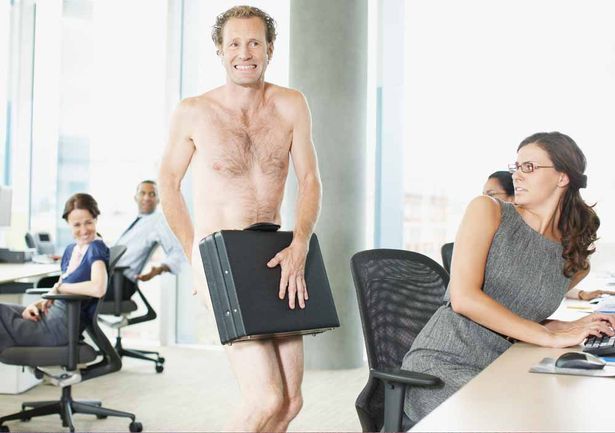
You know that dream where you’re doing something in front of an audience – in the school assembly hall, maybe, or at a big work conference – and for no good reason you have to do it in your underwear?
That’s my social life.
Everybody looks. Everybody. Some do it subtly. Most don’t. And they look in different ways. Younger women generally do the “oh, trans†look and get on with whatever they were doing. Older ones often double-take and then get on with whatever they’re doing or give you a really hard stare before getting on with whatever they’re doing. The oldest women couldn’t care less; they’ve seen it all before.
Men are different. Some look at you with open disgust. Some stare so hard you fear they’re actually going to dent your skull with sheer stare power. Some look at you in a threatening way, making it clear that they know they’re making you uncomfortable and that’s the point. And a few – bookish types, usually – give you the “oh, trans†look.
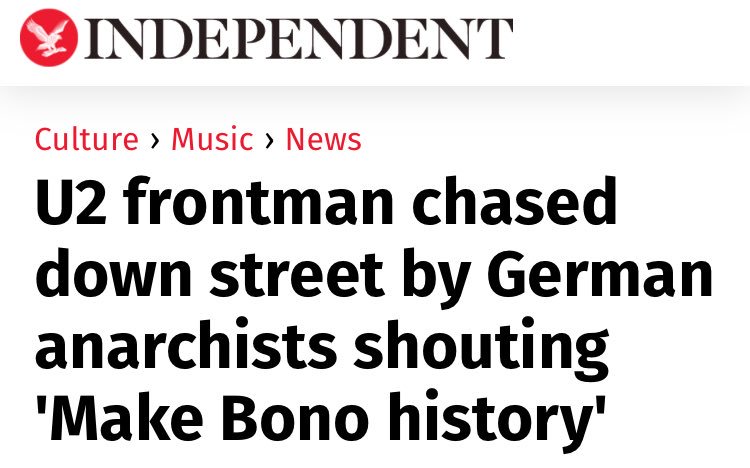
It’s an odd thing to experience when you don’t want to stand out. Bono from U2 famously and stupidly said that being famous meant he knew what it felt like to be a girl; but to be trans in a brightly lit public room gives you a pretty good idea what it might be like to be Bono.
You’d need a heart of stone not to laugh.
You say it best when you say nothing at all
I can’t say I particularly enjoy it, but it’s part of the territory. As is misgendering, which is when you’re called sir when you’re presenting as madam or madam when you’re presenting as sir.
Misgendering is a common tactic of anti-trans trolls, who delight in saying “you’re a MAN!†to trans women in the apparent belief that they’ve never been yelled at before. It’s background noise on the internet but when it happens from strangers in real life it’s surprisingly powerful.
I’m under no illusions that I pass as a cis woman. I’m 6’3†in my favourite casual shoes and I have a voice that makes Barry White seem awfully squeaky. But I’m still taken aback when, as last night, I hand over my concert ticket and the woman tells me where my seat is and calls me “sirâ€.
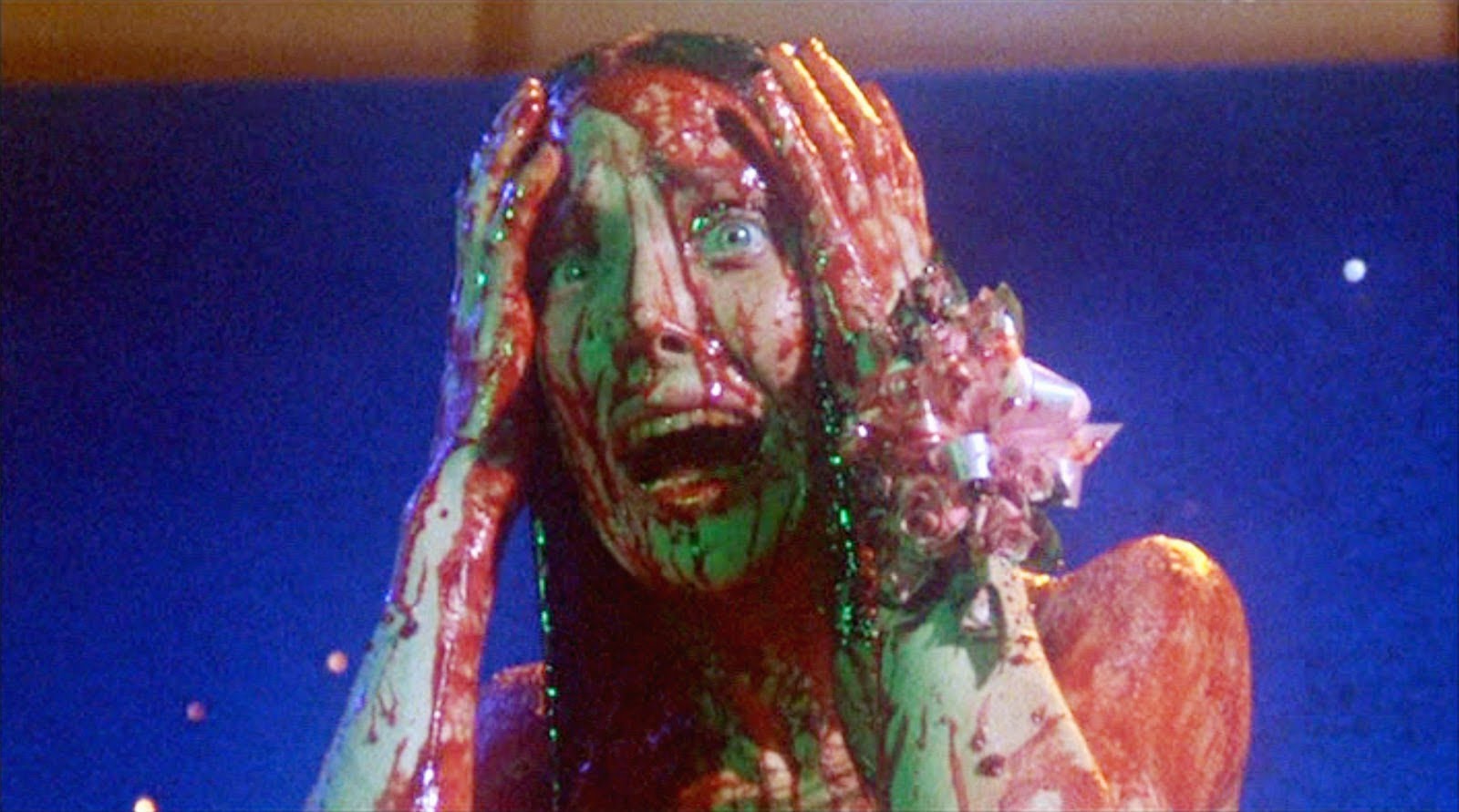
It’s hardly the bucket of blood in the film Carrie, I know. But it still knocks the wind out of your sails: it’s a reminder that the two lots of shaving, the agonising over what to wear, the carefully applied makeup, the three-times-attempted nail polish, the expensive wig and all the rest of it was completely and utterly pointless. You’re a heifer in heels, a dude in drag.
I’m not offended or outraged or overreacting, just thinking out loud in a blog post, but it strikes me that this is a matter of simple sensitivity.
I try not to use words or phrases that might make other people feel awkward – for example by assuming that they’re straight, or that they’re not religious, or that they share my political views – and if somebody in front of you is clearly presenting in a female way then surely common sense suggests that they might not want to be called “sirâ€. In such cases, surely it’s better not to use any term than to accidentally use the wrong one.
No offence
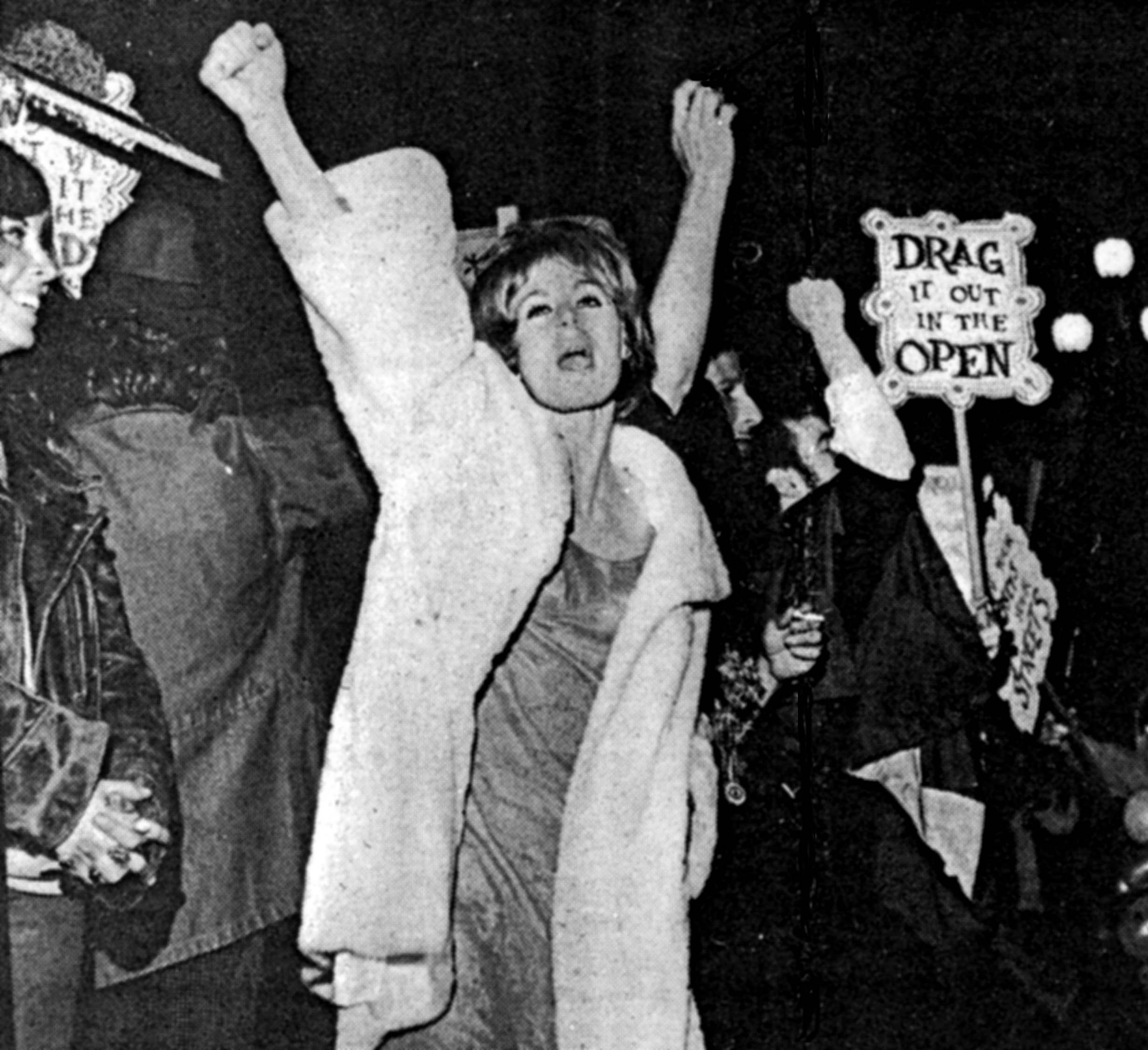
Getting it wrong, intentionally or otherwise, is what’s known as a micro-aggression. It’s a term feminists and trans people have borrowed from people of colour: Columbia professor Derald Sue used the phrase to describe “brief and commonplace daily verbal, behavioural, or environmental indignities, whether intentional or unintentional, that communicate hostile, derogatory, or negative racial slights and insults toward people of colour.â€
When a commenter notes that a working class black man is articulate when the same wouldn’t be said about a white graduate, that’s a micro-aggression. If someone says an African woman’s name is too difficult to pronounce, that’s a micro-aggression. If you use the word normal as an antonym of gay, that’s a micro-aggression. If you tell a woman that you want to see the manager because you assume she isn’t the manager, that’s a micro-aggression. If you misgender a trans person, that’s a micro-aggression.
Individually, micro-aggressions don’t do much. But they’re like drops of water. It’s what they do cumulatively that matters. It wasn’t the individual drops that drove victims of Chinese water torture insane. It was that the drops just kept on coming.
Asking people to consider the words they use often results in people railing against “snowflakesâ€, especially in the columns of right-wing newspapers. Apparently asking people to be respectful to other people is a step too far. It’s political correctness gone mad.
As another comedian, Stewart Lee, said a long time ago:
The kind of people that say “political correctness gone mad” are usually using that phrase as a kind of cover action to attack minorities or people that they disagree with… [they’re] like those people who turn around and go, “you know who the most oppressed minorities in Britain are? White, middle-class men.” You’re a bunch of idiots.
Everybody makes assumptions, including me, and the language we use often reveals those assumptions: we may be unconsciously making assumptions based on people’s race, class, sex, gender, accent or any one of a myriad other things. Questioning those assumptions doesn’t cost us anything, and might just help make the world a slightly better place. None of us is perfect, but we can try to be a little bit better.
And as for political correctness gone mad… you really shouldn’t use the word mad either.
This, by Robyn Pennacchia , is superb. It’s about school shootings, but it’s also about the problems of empathy in an age when other people are little more than non-player characters on your screen.
In the 1970s, if you thought Ted Bundy was a hero for murdering all those women, you kept that to yourself. You couldn’t just casually say, “Wow, that guy had a POINT!†to someone or else people would think you were nuts. You couldn’t go on a YouTube video and post about how great he was. Today, people who feel that way can find each other, they can commiserate without being judged. They can talk online about how much they would really like to murder a bunch of women. They get to cherish their resentments, nurture them and watch them grow.
Following on from yesterday’s post about violent, insecure men and shootings. here’s how the AR-15 assault rifle used in the most recent shootings (including Sandy Hook and yesterday’s atrocity) has been advertised.
This one dates from 2010. In the accompanying press release, Bushmaster Firearms explained:
…visitors of bushmaster.com will have to prove they’re a man by answering a series of manhood questions. Upon successful completion, they will be issued a temporary Man Card to proudly display to friends and family. The Man Card is valid for one year.
Visitors can also call into question or even revoke the Man Card of friends they feel have betrayed their manhood.
This is what toxic masculinity looks like. As the writer Andi Zeisler put it on Twitter, toxic masculinity doesn’t say that men are toxic.
It refers to cultural norms that equate masculinity with control, aggression, and violence and that label emotion, compassion, and empathy “unmanly.”
And sells military assault rifles as the solution.
We’re coming out of digital detox season, where newspaper columnists share the incredible insight that you can get a lot of stuff done if you don’t spend all your time dicking about on the internet. But as the developers of the excellent iA Writer app point out, taking a break is good but going offline permanently is hardly desirable or practical.
…you can’t escape digital culture as long as you live in a society that lives on digital fuel. If you block email you’ll have trouble holding onto most jobs. If you have no cellphone people just won’t get in touch with you anymore. Who calls landlines these days? However long your digital Sabbatical, you will inevitably get sucked back in. And so will your kids.
What you can do, they argue, is to make your digital life more meaningful. They use the analogy of being a tourist walking down a busy street in a foreign city: the people yelling to get your attention aren’t generally the people you should be paying attention to. As in life, so online.
The challenge when you are in is to not become passive. To change from consumer to maker, following to self-thinking, quoter to commentator, liker to publisher, but mostly, from getting angry about headlines of articles you haven’t read to reading precisely, asking questions, researching, fact-checking, thinking clearly and writing carefully.
These are the developers of a writing app, so they’re talking primarily to writers. But it’s sensible advice generally. It’s easy to fall into a passive role online, to consume only the content that’s pushed to you. In the era of social media that’s often the lowest quality content.
The article talks about blogs, and the changes to blogging culture that have seen blogs and blogging become very much a niche activity (incidentally, almost 20 years ago I wrote my first ever piece of published journalism about the then-new niche trend of people publishing online “journals”. It’s come full circle and is a niche once more).
One of the reasons blogging has fallen from favour, and there are many others, is that commenting – what used to be the lifeblood of blogging, the conversations that began when your post finished – became poisoned. Drive-by bullshit from complete strangers. Spammers and hackers trying to drive traffic to other websites. And marketing.
God, the marketing.
Even now, there isn’t a single day when I don’t get approached by somebody wanting to publish a guest post to my blog, or asking me to replace a dead link from a post I published in 2005 with a link to their site, or an offer of an infographic, or any of the other things that I say I don’t publish on the sodding contact page of this website.
So the comments had to go.
Comments were the first core function that got gamed. For trolls, PR companies using persona software, SEO blackhats, spammers, and dogs pretending to be humans the comments section was free sex. Commenting costs nothing. Managing comments sections is so expensive that even big media organizations can no longer afford them.
I also stopped blogging here for some time because I felt I was saying what I wanted to say on social media. But whether that was true or not, what I was saying wasn’t being read. Unless you upset somebody famous a tweet is just a drop in Twitter’s Niagara Falls, a Facebook post something that a handful of people will see if Facebook deems your post worthy of their attention.
iA again:
it’s writing as opposed to liking, thinking as opposed to reacting, owning your traffic as opposed to building up your Facebook followers that one day a Zuckerberg will take away from you when it suits his needs.
What I’m finding works best is to mix things up, to continue with short, sharp, knee-jerk stuff on social media and to post more interesting things by others here (as well as to post my own longer, more rambly thoughts). I still share the links on social media, but I don’t hand over the entire content to Facebook or Twitter: it remains here, where it can be discovered long after social media sites’ short attention spans have moved on.
Writing gets real when it is read. Before that, it is a dream in letters.
Buzzfeed has a reputation for daft listicles, and deservedly so. But the traffic those listicles generates also pays for long form content like this personal and thought provoking essay by Shannon Keating.
It’s important to recognize when “sex†or “gender†doesn’t have anything to do with the matter at hand at all — that workplace harassment isn’t about sex, but about work; that panic over trans people in your restroom isn’t about sex or sexual predators, but who is allowed to exist in public space. Our task is figuring out when sex or gender do have to do with the matter at hand, what about gender we should be holding onto, and what gender might look like if we’re all empowered to determine where we belong for ourselves.
The religious right knows it lost the equal marriage battle. But it thinks it can win the war against LGBT equality and women’s rights by using trans people as a proxy.
Scratch an anti-trans bill, of which there are currently dozens, and you’ll usually find – surprise! – that it just happens to give bigots the right to discriminate against LGBT people of any description, and against women too. Some bills are specific to healthcare; others extend the permitted discrimination to housing, employment and adoption too.
For example, the legal protections for the “religious freedom” of healthcare workers recently announced by the Trump administration (and linked in the Metro piece) would protect the following:
Ambulance crews refusing to help trans people who’ve been in a car crash.
Nurses refusing to help women with post-abortion complications.
Clinics refusing fertility treatment to lesbians.
Pediatricians refusing to see kids who have two mums or dads.
Doctors refusing to see, let alone treat, anybody who’s LGBT.
This is mainly, but not exclusively, happening in the US. It’s becoming cause for concern in the UK too.
My article is part of LGBT history month, commemorating a history that often featured LGBT people of every stripe uniting against a common enemy. But that history also included some people trying to throw trans people under the very same bus they helped to start, and it’s something that’s become quite the talking point among newspaper comment trolls and right-wing gay men.
Writing in New York magazine, Andrew Sullivan says that the problem [of growing anti-LGBT sentiment] is “a reaction of many ordinary people to the excesses of the social-justice leftâ€. Further LGBT equality is “a battle none of us need to fight. Especially after the real war was won.â€
Oh, honey. Who do you think they’re going to come for when they’re done with us?
Writing about it, I mean. As the annual Bad Sex literary awards and Justin Timberlake’s new album demonstrate, it’s very easy to write about sex very badly.
Here’s Pitchfork on Timberlake:
Sauce invites you to imagine a partner’s “pink†pressing up against Timberlake’s “purple.â€Â The title track features this charming depiction of foreplay: “But then your hands talkin’, fingers walkin’/Down your legs, hey, there’s the faucet.â€
The Bad Sex awards are always good for that: writers trying too hard, coming across as if they’re trying to pass some kind of Big Words exam. It’s not remotely sexy.
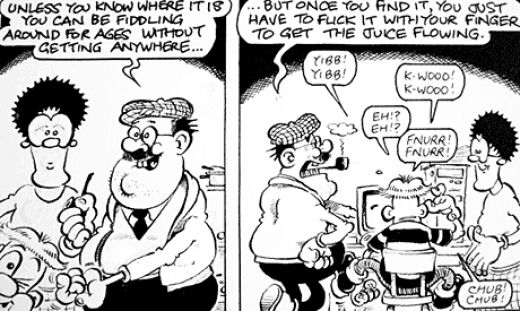
At the other end, as it were, you have the writers who come across like giggling schoolboys because they can’t be remotely serious about sex for one second (like me in this post and Viz’s Finbarr Saunders in the following strip. I said “strip!” Fnaar fnaar etc).
And in the middle you have the simply incompetent, such as Fifty Shades and its imitators.
I’m not slagging people off here, because I feel their pain: as a songwriter I’ve tried and failed to write sexy songs. It’s difficult enough when you’re only writing about a single aspect of it. Trying to encompass all of it, the seriousness and the silliness and the filth and the fun, is damn near impossible.
Making music sexy is easy. Making sexy music about sex, music that combines the sacred and profane and engages your head as well as your hips, is much harder.
Prince managed it, and so does St Vincent (pictured).
I’m a little obsessed with St Vincent’s Masseduction album at the moment: it’s a record of incredible highs and lows (not least the devastating vocal at the end of Slow Disco, “Don’t it beat a slow dance to death?”, which has me in floods of tears if I let it catch me unawares).
One of the highest highs is Savior, a song about sex and kink and role-playing that’s actually sexy.
Here’s the song. The lyrics may not be safe for work if you’re a vicar, or if the album cover pictured is enough to give you palpitations.
https://youtu.be/38IRVkZ2F0k
It’s an extraordinary song and performance, all wonky instruments, louche delivery, some properly funny bits – the “none of this shit fits” line cracks me up every time, it’s just so perfectly drawled – and then the most incredible, skyscraping chorus.
And then, just when you think the song’s climaxed, it gets even better.
Like many people, I have a personal Twitter account. And like many writers, that personal Twitter account is often used by people who want to contact me for work reasons. Luckily for me I’m not a young woman journalist, because if I were that means my personal Twitter account would be full of rape threats, death threats and the other horrific misogynist abuse that young women journalists so often attract.
To be a woman with any kind of profile is to find a howling void of misogyny every time you go online. Other minorities get it too, of course, but I’m talking here about a very specific, poisonous and widespread form of misogynistic abuse.
And it just seems to be getting worse, not least because nobody’s taking responsibility. The social networks don’t act on abuse reports, or they ban the complainer; on the rare occasions the reports do work, the trolls are back again under a new account in seconds. Same with email providers. Vicious online abuse of women is just a fact of life.
That can’t be right.
I’ve been thinking about this, because like many people in publishing my Twitter account isn’t provided by or run by any employer; it’s mine. But my various employers often publish it as a way for readers to get in touch with me, and get in touch they do.
For me it’s a minor irritation: mainly PRs pitching products I don’t care about for publications I don’t write for. And because I’m freelance, I’m under no obligation to be nice to or to listen to anybody, so I subscribe to multiple block lists to keep known offenders out of my timeline.
But if your business publishes pieces that attract controversy (you know the kind of thing: hot-button subjects such as, are women people? Are brown people people? Is a piece of music good? Is a game worth buying?) and that controversy sends shrieking misogynists into the journalist’s personal social media accounts – which it does – then shouldn’t the publisher have a duty of care?
Back in 2014, Magnus Boyd of law firm Schillings thought so. The FT reports:
…many organisations now expect employees to maintain an active presence on social media as part of their day-to-day work. As a result, there is a clear “duty of care†to be met, says Magnus Boyd, a partner at Schillings, the law firm. “An employee being trolled, courtesy of business-related social media activity, is no different from an employee being shouted at by a customer in-store,†he says. “Employers have a duty to protect their staff and, with proper planning, they can be ready for any eventuality, even the scourge of the online troll.â€
It strikes me that if a publisher hires you in part for your social media profile, or provides a way for readers to contact you via email or social media, then that publisher has a responsibility to deal with any abuse that comes via those channels whether it’s during working hours or not.
As ACAS puts it:
Legally, employers must abide by relevant health & safety and employment law, as well as the common law duty of care. They also have a moral and ethical duty not to cause, or fail to prevent, physical or psychological injury, and must fulfil their responsibilities with regard to personal injury and negligence claims.
I can understand why employers might not want to get involved in the murky world of social media (and I can imagine the “you’re freelance: none of our business” response to contractors), but it seems pretty clear to me that if social media / email is part of the job, then the duty of care to provide a safe working environment encompasses that too. If your readers were coming into the office to bellow abuse, you’d do something about it. Why not in online spaces too?
I wonder, has anybody attempted a tribunal over this? Is it something the NUJ has considered? Am I being hopelessly naive here?