There was a good piece about anti-trans hysteria in the (Glasgow) Herald this week. I know the author, Oceana Maund, a trans activist who couldn’t be more different to the lazy, malicious stereotype of trans activists as angry young people wearing masks and shouting. Maund is a brave and thoughtful person who seeks to build bridges, not burn them.
The combination of being physically assaulted in public on two previous occasions and the fact that I am a single parent with a teenage daughter means I am probably more concerned than most.
In Scotland the law means that anyone found using public toilets or changing rooms for nefarious purposes, regardless of what they are wearing or what is between their legs, will rightly face prosecution and severe penalty.
To claim that trans women are likely to use toilets and changing rooms for anything other than the designed purpose demonises an already misrepresented minority.
The piece is on the long side, but fair play to the Herald for running it: it once more debunks the complete bullshit being spread about proposed reforms to the Gender Recognition Act.
I mentioned Jake Graf’s wedding a few weeks ago; now I’m sharing one of his films.
I was reminded of it this morning when I called to change my car insurance policy. After going through all the security questions I got stuck in a bit of a loop.
“Okay, and your name is?”
– Carrie.
“No, sorry, I need your name now.”
– It’s Carrie.
“No, I mean *your* name.”
– It’s Carrie. I’m the policy holder. Carrie Marshall.
“But it says here… it says Ms.”
– I know, your system doesn’t support Mx. I’m transgender.
“But…”
Bear in mind that the very first question he’d asked me in the call was “can I take your name, please?”
Eventually we agreed that my name was indeed Carrie, but he wasn’t happy about it. I lost count of the number of times in our short conversation the agent asked, “are you sure there isn’t anything else you need to inform us about?”
It’s annoying, but thankfully it doesn’t happen very often: when I called my bank the other day to try and resolve a name issue (RBS has been trying and failing to change my name on two accounts since November), the chap on the phone used my old name. I hadn’t even noticed, but he spent so long apologising I was starting to worry that the call might end with him committing seppuku.
And as Jake’s video shows, sometimes people are not just okay, but actually brilliant.
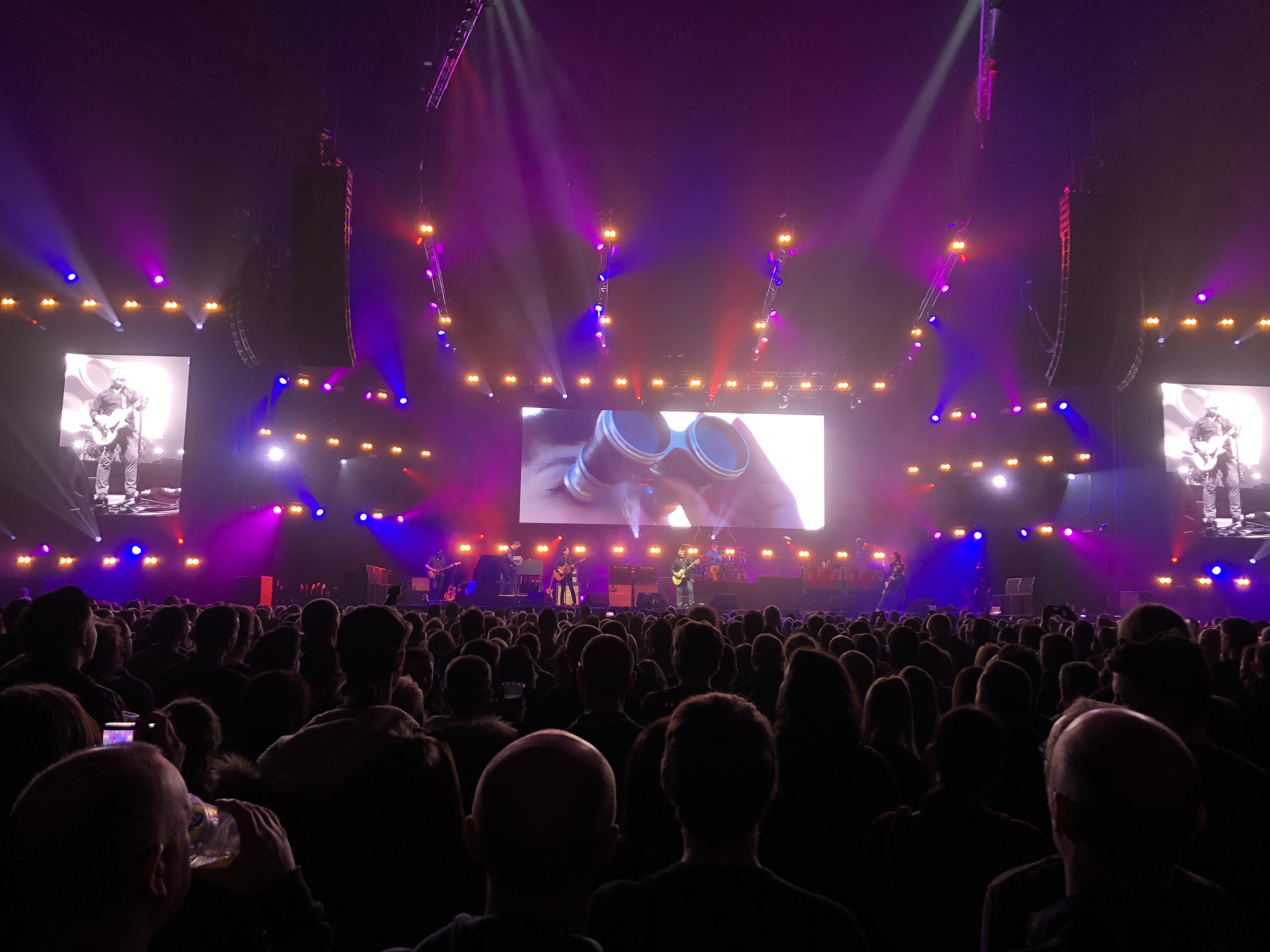
I went as me to see Manic Street Preachers at the SSE Hydro tonight, assuming (correctly) that if any band’s crowd would be cool with trans people it’d be theirs.
But it was still a really big deal, a major step for me. I spent most of today absolutely shitting myself at the prospect.
I go to the Hydro a lot, but before tonight I hadn’t gone as me. It’s too big, too busy, capable of holding 12,000 people. That’s a lot of potential trouble when you’re tall and visibly trans. The long walkway you travel post-gig can be pretty rowdy too. For a while I wasn’t sure I’d ever be able to do it.
So I’ve been working up to it. The bar of King Tut’s, capacity a few hundred. The new bit of the Royal Concert Hall, capacity 500. The O2 ABC, capacity 1,200. The O2 Academy, 2,500.
And tonight, the 12K Hydro.
Not so much out of my comfort zone as on a completely different planet to it.
And like every other big step I’ve had to take, I had to do it solo. No wingman to give me confidence. No voice offering assurance that I can do this. No shoulder to cry on when the sheer enormity of it all seems too much.
It’s a hard road to walk. Harder still to walk alone.
A couple of weeks ago I linked to an article by Amia Srinivasan that among other things discussed “incelsâ€, angry young men who believe they’re the victims of evil women.
The dynamic is a familiar one in the age of digital community building. Once the incels griped to themselves, occasionally victimizing others, and sometimes getting over their pathology or finding a partner. Now they can come together online and find others to validate their grievances and encourage them to action.
Update, 30/4:
Writing in The Observer, Catherine Bennett used the Toronto terror atrocity to attack the real enemy here: trans women. Her column compared trans women to incels and Jack The Ripper..
The amount of column inches that have been devoted to abusing trans people. The amount of energy and money! It’s like there are these endless resources to do this and yet there is no evidence that trans people are causing problems.
…We’re less than 1% of the population. For all the talk of a “trans lobbyâ€, the truth is we don’t have any MPs. I think we have one high court judge. We don’t have royalty or pop stars or chat show hosts.
…We need help – we can’t do this on our own. We need people to be real allies and show up in solidarity.
This is “A Kind Reminder”, the first new song from David and I in, ooh, ages. It’s a deliberately unabashed outsider anthem, and the working title – “Last song at The Hydro” – is a clue to its stadium-sized ambitions.
Lyrically it’s about self-care, about finding strength in who you are and love in difficult times.
Musically it’s got my daughter making her recorded debut as part of the backing vocal choir. That girl gets everywhere.
I would love to hear this song performed in other ways, by people who aren’t me.
The sentencing verdict has been published in the case of PF vs Meechan. It has wrongly been described as a young man being prosecuted for telling a joke.
He wasn’t. He was prosecuted for making and publishing a video in which he said “gas the Jews” 23 times, a video that was seen by a very large online audience.
It was very specifically about one question: whether “using a public communications network on one day to post the video onto your video channel, constituted an offence contrary to section 127(1)(a) of the Communications Act 2003.”
The sheriff found that it did.
From the verdict:
Your video was not just offensive but grossly so, as well as menacing, and that you knew that or at least recognised that risk.
…The fact that you claim in the video, and elsewhere, that the video was intended only to annoy your girlfriend and as a joke and that you did not intend to be racist is of little assistance to you. A joke can be grossly offensive. A racist joke or a grossly offensive video does not lose its racist or grossly offensive quality merely because the maker asserts he only wanted to get a laugh.
In any event, that claim lacked credibility. You had no need to make a video if all you wanted to do was to train the dog to react to offensive commands. You had no need to post the video on your unrestricted, publicly accessible, video channel if all you wanted to do was annoy your girlfriend. Your girlfriend was not even a subscriber to your channel. You posted the video, then left the country, the video went viral and thousands viewed it before she had an inkling of what you were up to. You made no effort to restrict public access or take down the video.”
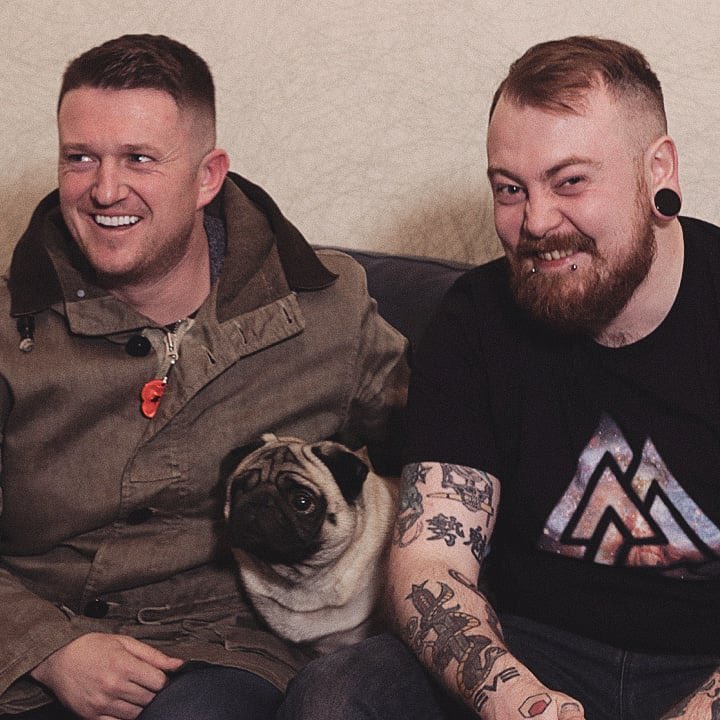
Meechan is an odious clown who hangs around with neo-Nazis so I certainly don’t have any sympathy.
Many of his online defenders are clearly anti-semites, among other things, and their analyses of the verdict are based on what appears to be a misunderstanding or deliberate misrepresentation of what the case actually hinged on.
This is Section 127(1)(a) of the Communications Act 2003:
(1)A person is guilty of an offence if he—
(a)sends by means of a public electronic communications network a message or other matter that is grossly offensive or of an indecent, obscene or menacing character
“Grossly offensive” isn’t about matters of taste or people clutching pearls. The relevant judgement about what is and isn’t grossly offensive is simple: “The test is whether a message is couched in terms liable to cause gross offence to those to whom it relates.”
Here’s an example of how that’s being misunderstood online.
How many of the reporters who were interviewing and/or reporting on Meechan will be prosecuted on causing gross offense for saying “gas the Jews” in their articles and interviews, @policescotland?
The answer is none, because none of them are causing gross offence.
It’s really very simple. If you use the phrase “gas the Jews” in a news report about the Meechan case, you aren’t guilty of gross offence under the Communications Act; if you do it multiple times in a video because you think advocating genocide is funny, there’s a good chance that you are.
In a week where we saw these frightening photos from Georgia, I’m okay with that.
I had an appointment at the Sandyford clinic the other week. It’s where you go to get your official trans membership badge, where you learn the secret trans handshake and where you’re issued with your copy of the sinister transgender agenda. If you go often enough you get a free Richard Littlejohn voodoo doll.
Gallows humour aside, it’s a place many trans people go because it’s the only gender identity clinic in the West of Scotland. The likelihood that you’ll be there at the same time as several other trans women is very high; the likelihood that you’ll be heading there at the same time as other trans women is high too. So it was hardly a huge surprise when I got on the bus and an older trans woman got on after me.
If she’s reading this, I hope I’m wrong about you. I hope your life is full of joy and wonder, that the days are just packed and that everything I assumed about you was wrong. Because when I looked at you, I jumped to conclusions, all of them negative.
You looked miserable in a shapeless coat and a dated wig. You avoided making eye contact with anybody, spent the short trip staring at the floor, your body language submissive. Don’t look at me.Â
You looked like somebody who’s learned that to be noticed is to attract the wrong kind of attention.Â
What I should have done when we got off the bus was to smile in recognition. Not in a “you’re busted!†way or to strike up a conversation; nobody feels particularly chatty on the way to a doctor’s appointment. Just an friendly acknowledgement from one marginalised person to another: I see you.
What I actually did was to distance myself.
I distanced myself because there were three young men hanging around the traffic lights and I was scared they’d notice me; notice you; notice us. Two trans women, ripe for mockery, maybe more. So I walked a little faster, the clip-clop of my heels faster than your footsteps in your flats. I chose self-preservation over solidarity, and of course the danger was entirely imagined. The men looked right through me, and right through you too.Â
I distanced myself because I was scared you’re a mirror. In my head I see two futures. In one, I’m happy. Still young, ish; fun and funny and fashionable and fulfilled with a loving family and a really hot girlfriend. That’s who I was trying to be that day in my skinny jeans, tunic top, Primark boots and take-no-shit swagger.
And in the other I’m one of the transsexuals I remember from 1980s documentaries, miserable in unflattering florals, mooching round a tatty C&A while security guards stare.Â
Dowdy. Downtrodden.Â
I don’t fear much any more, but I fear that.
You looked downtrodden, and God help me I acted like that was contagious.
I distanced myself because like many people of my age and older, I grew up in a culture where trans women (and it’s always the women) were portrayed as pitiful or perverts or both. Some of that stuck. You can’t swim in polluted water and come out clean. It’s why it took me so long to be proud of who I am, and why I wasn’t proud enough to walk too close to you.
I’m deeply ashamed of that. It’s not who I want to be, who I strive to be. Everybody has the voice urging them to throw others under the bus to save their own skin, but I try not to listen to it: I don’t want to be the one with Anne Frank in the attic shouting “she’s in the loft!†whenever I hear footsteps on the path outside. And yet all I needed to do was smile, and I didn’t do it.
If you’re reading this, I’m sorry. You deserve better. We all do.Â
So if we use a house as a metaphor: your genes are the blueprints, your epigentics are the engineers that read the blueprints and tell contractors how to build it, and your phenotype is the finished structure.
Your epigenetics read your DNA, and switches certain genes on and off as needed. For example: Every cell in your body has the DNA to be a liver cell. The only thing preventing you from being a mass of liver cells is your epigenetics saying “lets maybe build some nerve cells”
I’ve had a massive crush on Shirley Manson for more than 20 years.
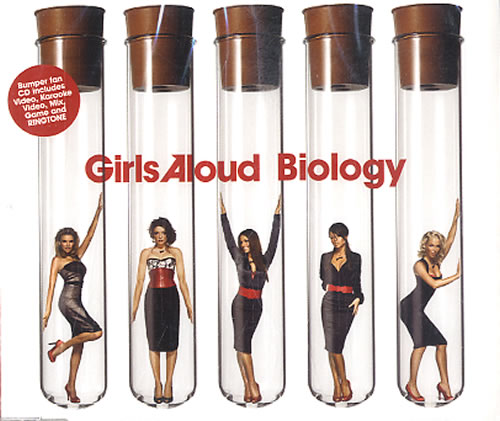
To be honest, I’m suspicious of anybody who doesn’t have a massive crush on Shirley Manson. Fierce, funny, impossibly talented, Scottish, ginger and drop-dead gorgeous, the Garbage singer is one of rock’s great personalities, and the way she rocked her combination of cute dress, black tights, clumpy boots and fuck-you attitude did all kinds of things to me back in the day. She’s just as amazing now, and I’m absolutely convinced that if I were to meet her I’d be incapable of speech.
There’s a saying about rock stars that the fans of your own gender want to be you and the ones of the other gender want to be with you. With Manson I always felt both: if I could have magically transformed myself into somebody else it would have been Shirley every time. Especially Shirley in the Only Happy When It Rains video.
I still feel like that today. When I discovered by accident that I had bought a dress very similar to one Shirley wore recently, I damn near exploded with delight.
I think that’s something she’d approve of. She’s long spoken out on behalf of the outsiders, the “queerest of the queerâ€, and it’s a recurring motif in her music. The first time I saw the Androgyny video – Manson blurring gender roles while singing “boys in the girl’s room, girls in the men’s room, you free your mind with your androgynyâ€, her lascivious, lusty “boyyyyyyys†and “girrrrrrrrls†punctuating the chorus – I had to have smelling salts and a lie down.
I never tried to be Shirley Manson in real life. The look and the attitude were for my imagination, not my everyday: androgyny wasn’t the kind of thing you could get away with in my town, and I’d never pass as a woman.
Before I transitioned, I had a very palpable sense of the “tooâ€: I was too tall, too fat, too bald to ever be a “real†woman, so what would be the point of even trying to transition? It’s a common sentiment among trans woman and a direct result of the impossibly narrow box within which society confines women’s appearances. For many trans women, male puberty puts cisnormative beauty permanently out of reach; for others, the idea that the world could see them the same way that they see themselves is the stuff of fantasy.
And that’s a great shame, because that fear holds us back from being ourselves, from experiencing the world as it should be.
This is something I’ve been thinking about a lot of late because I’m still in the transitioning trenches, trying to work out my identity and how I want to exist in the world. The judging Katelyn writes about makes me feel pretty crappy quite a lot of the time, but sometimes the heavens align and I feel pretty damn good about myself.
It happened the other night. I was going to see an avowedly trans-inclusive punk rock band, so instead of my more usual androgyny I decided to let my inner Garbage fan come out. I chose a dress I really, really love, teamed it with thick black tights, got my make-up just right and spent a bit of time sorting my hair out. And I looked bloody amazing.
I’m under no illusions about what I look like: I’m very tall, very big, overweight. But when my presentation gets close to looking like the person I want to be, there’s a joy I find really hard to describe, a feeling that everything has magically clicked into place.
And sometimes other people validate that. I’ve been chatted up by strangers at gigs, complimented by women in bars, received throwaway comments that have kept me walking on air for days. Before I went to my punk gig, I popped into my local to see some friendly faces: I might have felt amazing, but the prospect of going into town wearing a dress for the very first time was still frightening, not least because I was going to meet a friend who had never seen me presenting as Carrie before. So I needed to do it in stages: go to a familiar place first, and then go on into town when the fear had subsided a bit.
I’m glad I did, because when I walked in one of my women friends was there. “You look really pretty!†she said, grinning delightedly before adding “Is it okay for me to say that?†When I reassured her that not only was it okay, but it’d be even more okay if she could just say it a few hundred more times and maybe put it in writing too, she laughed and told me that “seriously, you look really hotâ€.
Before I came out I never dreamed I would ever be told I was pretty, let alone hot. One of the great sadnesses of not coming out until later in life is that you’re stuck with a body that’s developed in all the wrong ways. But while I’ll never be mistaken for a pretty young anything that doesn’t mean I can’t be proudly, unapologetically, confidently me. Whoever you are, whatever you identify as, being true to yourself is pretty damn hot.
I’m going to see Garbage on tour later this year. I’ll be the one dancing really badly in a cute dress.