Category: Media

Journalism, radio and stuff like that

  • 5G, Coronavirus and clickbait

    The mainstream media has been quick to point the finger at social media for the conspiracy theory that 5G mobile phone signals spread Coronavirus. But the mainstream media played its part too.

    Here’s the Daily Star, just before people started arson attacks on mobile phone masts.

    Coronavirus: Fears 5G wifi networks could be acting as ‘accelerator’ for disease

    You may be getting flashbacks to when the likes of The Independent, the Daily Mail and the Telegraph covered “fears” that wi-fi and mobile phones caused “electrosmog”. Or perhaps you’d like a more damaging example, such as the “fears” that vaccines could cause autism.

    The headline is important, because many people read it and don’t read further. In this case, that means they’ll go away with the impression that 5G networks (not WiFi, that’s a different thing and a different conspiracy theory) affect Coronavirus.

    They do not.

    They can not.

    There is no possible way in which they could*.

    5G signals are just radio waves. They have the same effect on viral spread as the shipping forecast from Radio 4.

    Now, I know the Daily Star hardly counts as the quality press. But it’s a newspaper nevertheless, and people believe what it prints. And from the headline down, this article is constructed in exactly the same way newspapers have covered other baseless scares from the MMR vaccine and electrosmog to trans healthcare, creating the impression of a danger that does not exist.

    I’ve grown to detest newspaper stories with “Fears” in the headline because they’re so frequently baseless. People may fear that if we go beyond 30mph in a train, our faces will fall off (a genuine fear from the early days of rail travel) or that if we sail our ships too far we’ll fall off the end of the world (an old favourite that’s back! Back! BACK!), but fears are not facts.

    Fears also require context: is this fear credible? Is the person expressing this fear credible? Does this person have any expertise that means we should take their fears seriously? For example, if the chief medical officer fears that a particular behaviour will put people at risk of a particular virus, that’s an informed fear. Whereas if a man who lives in a bin fears that if he ventures out before midnight a magical space owl will steal his eyes, that’s a slightly different proposition.

    Unfortunately in these clickbait days it’s more important for something to be popular than for it to be accurate, informed or useful; if my imaginary man-in-a-bin actually existed, you just know he’d get 15 minutes on Newsnight, a column in The Spectator and a regular guest spot on Question Time.

    Back to the Star. Since publication, the original story has been been rewritten to make it clear that the “fears” are really fact-free claims by “conspiracists”. But the original gave them hundreds of words to spout gibberish, which it didn’t try very hard to correct. For example:

    The theory has been met with scepticism from experts, who have pointed out that coronavirus cases have been identified in many areas with no 5G networks.

    “Scepticism” means doubt and implies that there’s a debate here. There is no debate here. Experts have called the claims “crackpot”, “rubbish” and “dangerous nonsense” because there is no conceivable way in which mobile phone signals can spread coronavirus. You might as well say that “the theory that putting custard in your ear cures cancer has been met with scepticism from experts”.

    Activist Louise Thomas, based in Somerset, told Daily Star Online: “We can’t say 5G has caused the coronavirus, but it might be exacerbating it.”

    Is Louise a credible person to base a news story on? Does she have expertise in virology or radiobiology?

    Let’s look at her Facebook. She describes herself as:

    Yoga, pilates, fitness, meditation teacher Truth advocate, mother.

    But Louise is the warm-up act for another activist:

    Tanja Rebel, another activist and philosophy lecturer at the Isle of Wight College, told us:

    What is it with philosophy lecturers and science denial? They’re all over trans medicine too, shouting LA LA LA I CAN’T HEAR YOU at doctors and the WHO. She says:

    “Many studies show that Electro-Magnetic Radiation (EMR) suppresses the immune system and that it helps viruses and bacteria thrive.”

    Did someone mention the WHO? Yes. Me, just a moment ago. Here they are:

    In the area of biological effects and medical applications of non-ionizing radiation approximately 25,000 articles have been published over the past 30 years. Despite the feeling of some people that more research needs to be done, scientific knowledge in this area is now more extensive than for most chemicals. Based on a recent in-depth review of the scientific literature, the WHO concluded that current evidence does not confirm the existence of any health consequences from exposure to low level electromagnetic fields.

    Back to our philosopher.

    “So EMR and in particular 5G could act as an accelerator for the disease.”

    That’s not how this works. That’s not how any of this works.

    The article goes on:

    Italy, now the country with the highest coronavirus death toll, had 5G networks installed in five cities in 2019 with plans to extend coverage throughout 2020.

    You can see what the writer is trying to do here: she’s implying causation from correlation. But there is no correlation – the map of coronavirus cases in Italy bears no relation to the 5G coverage map; the technology is still only available to a handful of people – and of course there is no causation. The Italian death toll is multifactorial: an ageing population, an overloaded medical system in specific areas (notably Lombardy), inadequate testing, people not taking the danger seriously enough until it was too late.

    As if that wasn’t enough of a reach:

    A 2011 study from Northeastern University in Boston indicated that some single-celled bacteria, such as E.coli, may communicate with each other using “radio waves”.

    First of all, bacteria aren’t viruses, so this has nothing to do with the story. Bacteria are living organisms; viruses are particles. Bacteria could be setting up video chats on Houseparty for all we know; it still has no bearing on viruses.

    And secondly, oh no it didn’t. It wasn’t a study, it was a still-controversial hypothesis by theoretical physicists about a possible mechanism in which some bacteria may generate detectable radio signals.

    Very little is known about COVID-19, the novel coronavirus at the heart of the current pandemic, but research has shown that viruses “talk to each other” when making decisions about infecting a host.

    That’s a very misleading way to put it. Here’s Nature on that research:

    when a phage infects a cell, it releases a tiny protein — a peptide just six amino acids long — that serves as a message to its brethren: “I’ve taken a victim”. As the phages infect more cells, the message gets louder, signalling that uninfected hosts are becoming scarce. Phages then put a halt to lysis — the process of replicating and breaking out of their hosts — instead staying hidden in a sluggish state called lysogeny.

    That’s what we mean when we describe viruses “talking to one another”. They’re not sending each other messages on WhatsApp.

    This particular monstrosity may have been in the Daily Star, but there are articles like it in all the press with increasing regularity on all kinds of subjects.  The topics and mastheads may vary, but at heart the problem is universal: all too often, mainstream media tells us to ignore the experts and listen to cranks instead. The consequences of that go far beyond a few blackened phone masts.

    * Radio is a spectrum. In much the same way that there’s a difference between your lover’s breath and a hurricane, some radio waves are harmless and some are harmful. For example, X-rays and UV-A light are known to damage us.

    That kind of radiation is called ionising radiation, and it lives in the petahertz and exahertz frequencies. Mobile phone signals are not ionising radiation. They are much, much lower frequencies. It’s like the difference between the sun and a light bulb. The sun emits high levels of ionising radiation. The light bulb in your kitchen doesn’t.

    You can still be damaged by lower frequency radio waves, but that requires a lot of power because it works in a different way. Ionising radiation breaks cells; non-ionising radiation heats them up but only if you give it a lot of power.

    Think of your microwave: it uses radio waves to generate heat, and it does that by using a lot of power at a short distance. So your ready meal is being hit with 900 watts for four minutes at a distance of ten centimetres of so in a closed and reflective compartment. The result of so much power over such a short distance is that the water molecules in the food get hot. If you climbed inside a microwave and switched it on it would do the same to the water molecules inside you. This is why you shouldn’t dry small wet dogs in the microwave.

    Back to the difference between your lover’s breath and a hurricane: they’re both moving air, but only one of them can throw a cow through the front of your house.  It’s the same with mobile phones. Where your microwave is 900W, a 5G cell is around 2W to 5W; where your microwave is right next to your dinner, the 5G cell is many metres – often hundreds of metres – away. 

  • Don’t blame your neighbours. Blame the government

    The chorus of anger at people supposedly risking everybody’s lives by going to the park is growing louder, especially in the right-wing press; the government is now floating the idea that going outside at all may be banned “if people continue to flout the rules”.

    Don’t fall for it: it’s a deliberate attempt to bury bad news. The government (and its media cheerleaders) wants you to blame so-called “covidiots” because if you’re getting annoyed at them, you’re not getting annoyed at a government that’s gutted the NHS so badly that key frontline workers are being forced to make their own protective clothing out of bin bags.

    BBC News:

    Several healthcare workers in England have told the BBC of a lack of equipment in their hospitals. Warned against speaking to the media, they were unwilling to talk publicly.

    these medical professionals, who continue to care for critically ill patients for 13 hours every day, are having to resort to fashioning personal protective equipment (PPE) out of clinical waste bags, plastic aprons and borrowed skiing goggles.

    People are not going to die because your next door neighbour went for two walks today, or because someone sunbathed in the park. But people will die because of the decisions that left the UK short of health workers, of ventilators to treat the sick and of protective equipment for the doctors and nurses our politicians stand outside Downing Street to applaud.

  • “If people see no path to influencing the powerful, some will kick down”

    Adam Ramsay in OpenDemocracy:

    In the wake of the Andrew Wakefield scandal and two decades of disastrous climate change denial, newspapers surely have a social responsibility to be calm and cautious when contradicting scientific consensus, not turn serious questions of health communication into flesh for bare-toothed columnists to spar over.

    Despite continuing to spread confusion about the virus, the Tory press has been more than happy to denounce people who are confused.

    …When responsibility is cast onto an atomised population, it doesn’t land evenly. It is channelled down the social structures which already exist. Race, class, gender, sexuality: blame is always mobilised against the already marginalised.

  • Murdoch and Netflix won’t do this

    Earlier this week the BBC explained what it’s going to do to help during the Coronavirus crisis. The short version: a lot.

    Here’s just one part of it, the education section:

    In the event that schools are shut down, and subject to further work and discussions with the Department for Education, devolved administrations and schools, we are exploring:

    1. A daily educational programme for different key stages or year groups – with a complementary self-learning programme for students to follow, broadcast on BBC Red Button and made available on demand on BBC iPlayer.

    2. Expanding BBC Bitesize content, with our social media running daily troubleshooting Q&As focusing on a different subject each day.

    3. Increasing our educational programming on BBC iPlayer, bringing together the best from BBC Bitesize, BBC Teach and the wider BBC portfolio where educationally appropriate.

    4. Creating two new daily educational podcasts for BBC Sounds, one for primary and one for secondary.

    5. BBC Four and BBC Red Button devoting a block of programming each weekday evening to show programmes that support the GCSE and A Level curriculum. In Scotland, the Scotland channel will support the Scottish NQs and Highers in daytime.

    I’m not privy to the internal conversations or plans of any part of the BBC. But I do know as a contributor there’s a ton of work going on behind the scenes to ensure that the output is relevant, necessary and useful to people during this very difficult period.

    Imagine a world where the right-wing press gets its wish and the BBC no longer exists in its present form. Can you imagine Netflix stepping up like that? Sky? In the US, Murdoch’s Fox network is going to have blood on its hands for its Coronavirus denial: while around 70% of US news consumers are rightly worried about the crisis, that falls below 40 for Fox News viewers.

    Like the NHS, there’s a lot to criticise about the BBC. But like the NHS, it still remains a national treasure.

  • Bright SPARKs

    I’ve become a little bit obsessed by the marketing for Positive Grid’s SPARK, a very clever guitar amplifier. In recent weeks I’ve been seeing a lot of videos like the one pictured below, in which really amazing women guitarists test the amp.

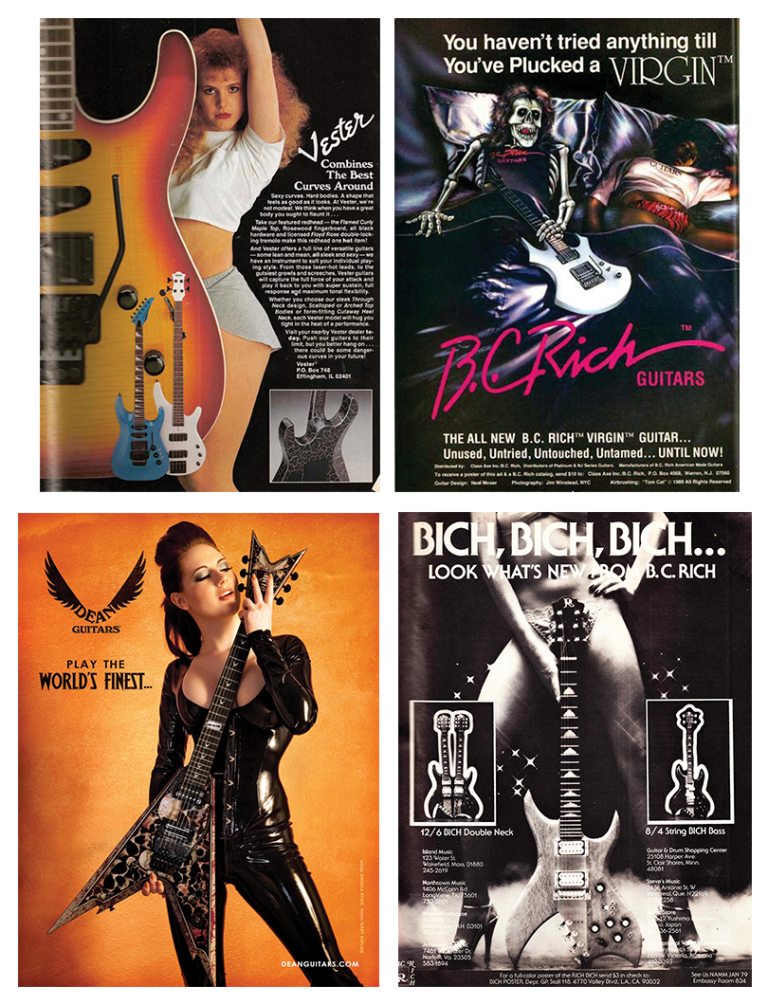
    I’m not used to seeing women in marketing for musical stuff, which tends to be a boy’s club; musical marketing has often been appalling, with a particular low in the 1980s when Tokai’s “Tokai is coming” campaign placed full-page magazine ads showing a naked woman apparently masturbating with an electric guitar. We’re generally better than that now, but there’s a long legacy of sexism in the industry. Guitar.com has some other examples:

    I volunteer and podcast for Scottish Women Inventing Music, an organisation dedicated to achieving gender equality across the music business, so I’m very interested in this stuff. The SPARK ads got me wondering: is this a deliberate strategy to boost the visibility of women musicians, thereby positioning Positive Grid as a forward-thinking firm, or is it just precision targeting on social media?

    I’m not just wondering idly. Half of guitar buyers are women, and I recently spoke to guitar legends Fender about their marketing: this year will feature more signature models from women guitarists than ever before, and the marketing for the online Fender Play service has a good mix of people showing the variety of folks who play guitar.

    Is Positive Grid doing the same? What are the boys seeing?

    It turns out that the answer is boys.

    I’m being shown women playing guitars but my male musician friends are seeing men in their ads. And that makes me wonder some more: is that because the firm has done testing and discovered that men won’t click on the link if the amp is being tested by a woman?

    I fear that the answer is yes, because the frequency of the advertising indicates there’s a lot of money being spent on this campaign. You don’t make and target different ads for different genders if it doesn’t have a demonstrable effect on your sales.

    I’m not picking on Positive Grid here. Seeing women in musical instrument marketing is still so rare that what they’re doing does feel like progress. As Guitar.com put it:

    the guitar industry, and the music industry at large doesn’t accurately reflect the wealth of female talent out there. The fact that people have noticed this at last means that, hopefully at least, we’re finally starting to see some progress…

  • “Using minority rights to attack women’s services says it all”

    Another thoughtful column: Laura Waddell on feminism, transphobia and GRA reform.

    …often the cry of “listen to women” comes up. So let’s do that now. Here’s what women’s organisations across Scotland have actually said.

    During the original consultation, Close the Gap, Engender, Equate Scotland, Rape Crisis Scotland, Scottish Women’s Aid, Women 50:50 and Zero Tolerance released a joint statement supporting self-ID. At odds with the inflammatory phrase ‘war on women’, they clearly state: “We do not regard trans equality and women’s equality to contradict or be in competition with each other.”

    …They also stated: “The complexity, restrictions and expense of the current gender recognition process particularly discriminates against trans people who are disabled, migrant, minority ethnic, unemployed, homeless, fleeing domestic abuse, young or non-binary. Enabling trans people to smoothly change their birth certificates at the same time as they change their other identity documents is a much needed positive step forward for society.”

    It’s a great shame that voices like Waddell’s – and of the women she writes about here – are not given the same prominence as pale, male and stale middle-aged newspaper columnists.

  • “Strength in numbers, solidarity and, ultimately, love”

    Writing in The Guardian, Zoe Williams takes a very different stance from the majority of Guardian pieces on trans rights. As she points out, it isn’t the anti-trans feminists who are being silenced here.

    All kinds of voices have been excluded. The experience of trans men, for instance, has been more or less erased, because the core issues have been whittled down to such a sharp, conflicted point – do cis women need protected status? – that the very existence of trans men has become too inconvenient to accommodate. The mainstream feminist view, which is trans-inclusive, has been sidelined to maintain the fiction that this is a generational battle between old and young feminists.

    …Women-only space was a realm protected from our Harvey Weinsteins, where we could talk about our Harvey Weinsteins; it was not a hallowed place where we communicated through our ovaries. It was where we came together in unity against people who hated us. I can’t imagine the mindset that would exclude a trans sister from that.

    I’m not going to say anything mean here: I’ve always liked Williams’ writing, and while it’s a drop in a very poisonous ocean of anti-trans pieces the paper has run in recent years it’s still a welcome drop.

  • Get Killt

    My excellent pal and fellow radio blabber Louise Blain has launched a new podcast, Killt. As a glamorous radio celeb I was of course allowed to hear it before anybody else and trust me, it’s a wee treat.

    Killt is a podcast about podcasts: specifically, true crime podcasts. If you’re a fan of the genre you’ll know how frustrating finding the good stuff can be. That’s where Louise comes in: she’s your guide to the good stuff, a digital detective helping you find the true killers in a genre often choked by filler.

    It’s on Spotify here: https://spoti.fi/3aGwcBo
    And Apple has it here: https://apple.co/2VYMwJE

  • The Guardian: don’t you dare criticise us

    There’s been a lot of online upset over yet another anti-trans column in The Guardian, part of its overwhelmingly negative and one-sided coverage of trans-related issues – coverage that has led three trans staff to resign and notable trans writers to refuse to write for the paper.

    This week over 200 notable feminists wrote to the paper in protest and to affirm their support of trans people. The Guardian treated their letter with contempt.

    As Gal-Dem explains:

    The Guardian published the letter, but perhaps the most disheartening part of this process was their decision to title it: “Differing perspectives on trans rights”, and summarise over 200 signatories to 14 plus “over 100 others”. On the same page, the paper also included a number of letters in support of the original piece; something they did not do for a letter in support of sex-based organising with 13 signatories last week.

    It wasn’t for reasons of space; the online version didn’t list the signatories either. Here’s a summary from PinkNews.

    British politicians including Sian Berry, co-leader of the Green Party; Christine Jardine, the Liberal Democrat equalities spokesperson; and Labour MPs Zarah Sultana and Nadia Whitome have all signed the letter.

    …It is signed by leading women and non-binary people from a cross-section of British public life, including musician Beth Ditto; author Reni Eddo-Lodge; UK Black Pride founder Lady Phyll; editor-in-chief of Cosmopolitan magazine, Claire Hodgson; Jo Grady, the general secretary of the UCU; and Kate Allen, director of Amnesty International UK.

    A further 2,000 people (and climbing; right now the list of signatories just cracked 2,500) then wrote to the paper to protest its anti-trans coverage.

    We the undersigned write to protest the on-going and extensive series of articles you have published claiming that women are being ‘silenced’ and that men are being invited into women-only spaces.

    In the past year, you have run many articles seeking to position trans women as a threat to cis women, and arguing that cis women object to – and should object to – trans women in women-only space.

    The letter is unlikely to get a more favourable response than the last one: shortly before it was submitted, Guardian editor Katharine Viner wrote to her staff to inform them that the paper is committed to represent “a wide range of views on many topics”– unless those views are critical of Guardian columnists. Staff were warned:

    “It is never acceptable to attack colleagues whose views you do not agree with, whether in meetings, on email, publicly or on social media.”

    In response, over 300 Guardian employees – a fifth of its workforce across not just editorial but production, commercial and digital too – have written to express their disgust at the paper’s stance. The list of signatories hasn’t been published, but it apparently includes some of the paper’s star writers.

    We are proud to work at a newspaper which supports human rights and gives voice to people underrepresented in the media. But the pattern of publishing transphobic content has interfered with our work and cemented our reputation as a publication hostile to trans rights and trans employees.

    That’s an incredible number of people for any media organisation, but particularly for a paper that’s supposed to be speaking truth to power and defending minorities.

  • “A wholly unacceptable misrepresentation”

    The Morning Star has published a remarkable apology for its publication not just of a vicious anti-trans cartoon, but of previous anti-trans scaremongering too.

    The Morning Star recognises that it has a responsibility to oppose discrimination against the trans community and to tackle transphobic hate crime, as well as to promote positive action and reform of the Gender Recognition Act to ensure trans people are able to participate equally in our workplaces, our communities, and our movement.

    …We do not accept that reform of the Gender Recognition Act should or would lead to an attack on women-only spaces and will ensure that we campaign against any attacks on the Equality Act.

    We understand that trans women are often welcomed into all-women spaces in our communities, and to portray trans women as a violent threat to women is a wholly unacceptable misrepresentation.