Category: LGBTQ+

  • The wrong kind of visibility

    There’s a superb column in the New York Times by Thomas Page McBee about something I’ve been thinking about for a while: the problem of visible trans people in the media.

    Very few of the people who so enthusiastically celebrated our stories of “finally being ourselves” showed up at the rallies that took place across the country, in the wake of news that the Trump administration aims to define us out of existence. And even as trans people on television are increasingly beamed into living rooms across the country, we’re also seeing an uptick of violence against the most marginalized members of our community.

    McBee argues that while we’ve never been more visible than we are today, we’re still seen by most as mysterious others, not friends and neighbours. And when there’s a backlash to our sudden media profile not just “from conservatives or the ignorant and uninformed” but also in the form of “decades-old talking points from women calling themselves feminists”, it makes our lives even harder.

    The triumph you see on television only happens if there is a welcoming world to greet us on the other side. This past week, for me, raised the question once again: Is there?

    …the didactic, often body-focused framing of those stories and the gender-war timing of that visibility has also rendered us into symbols, metaphors, pawns and boogeymen.

    That’s how I feel about it.

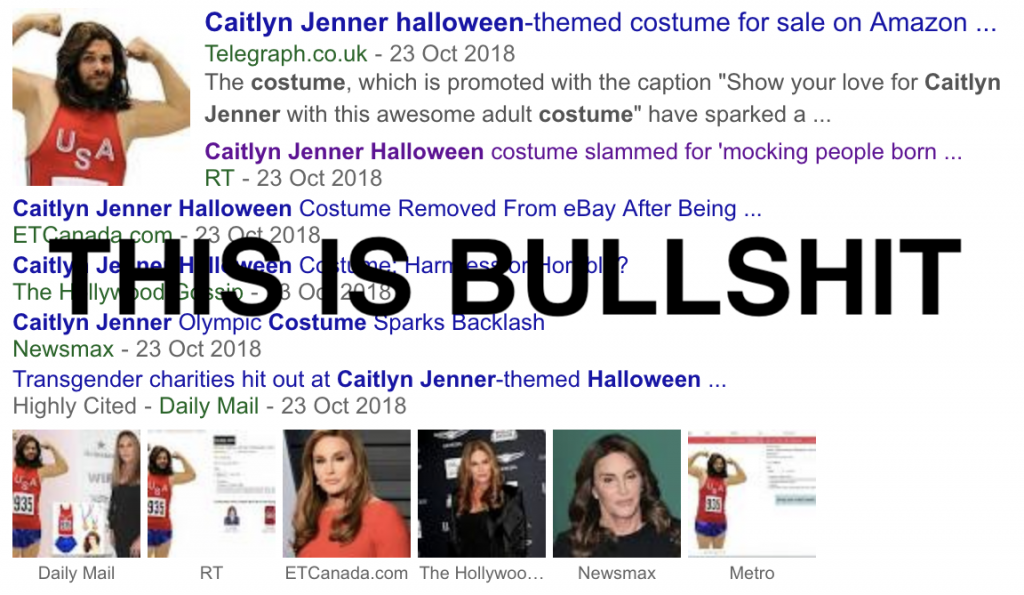
    The current obsession with us isn’t helping. We’re facing incredibly dangerous threats to our human rights (and in the US, our healthcare); instead, the papers run with tales of how everybody’s upset about an offensive Caitlyn Jenner hallowe’en costume. Believe me, most of us don’t give a shit. Similarly the well-intentioned but wrong-headed use of the world “menstruators” by The Guardian in a piece about women’s reproductive health: it was a clumsy attempt to include trans men (people assigned female at birth who now live as men) but was instantly portrayed as the sinister trans lobby perverting language to erase women.

    To use the Scots phrase, it wisny us.

    I don’t give a shit. I’m too busy filling out yet more documents about my name change over a year since it actually changed, trying to persuade Equifax that no, I haven’t been a victim of fraud, I’ve just changed my name. I’m too busy trying to solve the problem with my prescription where the doc prescribed a hormone the NHS won’t pay for and I can’t afford to source privately. I’m too busy wondering whether I’ll get yelled at when I go for a piss. I’m too busy working to pay for the electrolysis that often leaves my face bleeding and swollen for days afterwards.

    I don’t recognise the caricature of trans people I see in the newspapers, discussed on TV, shared on social media. I know quite a lot of trans people now (as the joke goes, everybody assumes you know every other trans person, and that’s not true, but then they mention Natalie and Katharine and of course you know them), and none of us are spending any time whatsoever fussing about language, worrying about stupid hallowe’en costumes or trying to destabilise the very fabric of society. We’re just doing what you’re doing: trying to get on with our lives.

    But there’s a narrative, and once you notice it you see it everywhere. Trans people as dangerous, intolerant others, a sinister force to be resisted by all right-thinking people. It’d be laughable if it weren’t causing real-life misery for trans people.

    As I’ve said before, there are so few of us the Girl Guides could totally take us in a fight. There are no trans MPs, MSPs or MEPs in the UK, no trans people with weekly newspaper columns, no trans judges or trans newspaper editors or trans talk show hosts or trans bosses of FTSE 100 companies.

    The coverage of us, the obsessive coverage of our supposed threat to all that’s right and good, is massively disproportionate and completely unrepresentative. Of course it is. Almost all of the coverage is about us, but without us.

    Again and again I see stories purporting to be about what trans people are like, what trans people think, what trans people want. Number of trans people spoken to: none.

    Here’s my reality, over and above the usual stuff: working, trying to be good for my kids. It’s getting stared at everywhere you go. It’s being afraid to use a toilet. It’s being tired of correcting people about your name. It’s about being called the big man when you’re sitting there in a nice dress. It’s clothes that don’t quite fit, no matter how hard you try. It’s taking a deep breath every time you open a door. It’s scraping off the gel from your nails and making sure there isn’t a trace at your child’s birthday party for fear of what the other parents may think. It’s asking your friends if the gig they’re inviting you to is going to be safe for you. It’s seeing a photo of yourself when you thought you looked quite nice and realising you’re a laughing stock.

    It’s shit.

    I just want a quiet life: I’d much rather spend my time thinking about guitars and girls, not gender politics. But to be trans right now is to be a very visible foot soldier in a war other people are fighting.

    McBee again:

    But reducing trans people into a symbolic vanguard is not only dehumanizing — it’s dangerous. True progress happens when all of us are released from the realm of “other” — which means allowing trans people to captain our own stories, where we can depict ourselves as fully fleshed-out people: not just brothers, mothers, neighbors and friends, but also reflections of an aspect of humanity as old as time. We’re not metaphors; we’re who you would have been if you’d been born trans.

    I can’t put it better than that. We’re who you would have been if you’d been born trans.
  • I haven’t got a Scooby

    This, from Reddit, made me laugh.

    I’m going to a wedding today, my first one as me. The reception is fancy dress, and I’m going as Velma from Scooby-Doo. Jinkies!

  • Wired: Trump’s plan to redefine gender makes no scientific sense

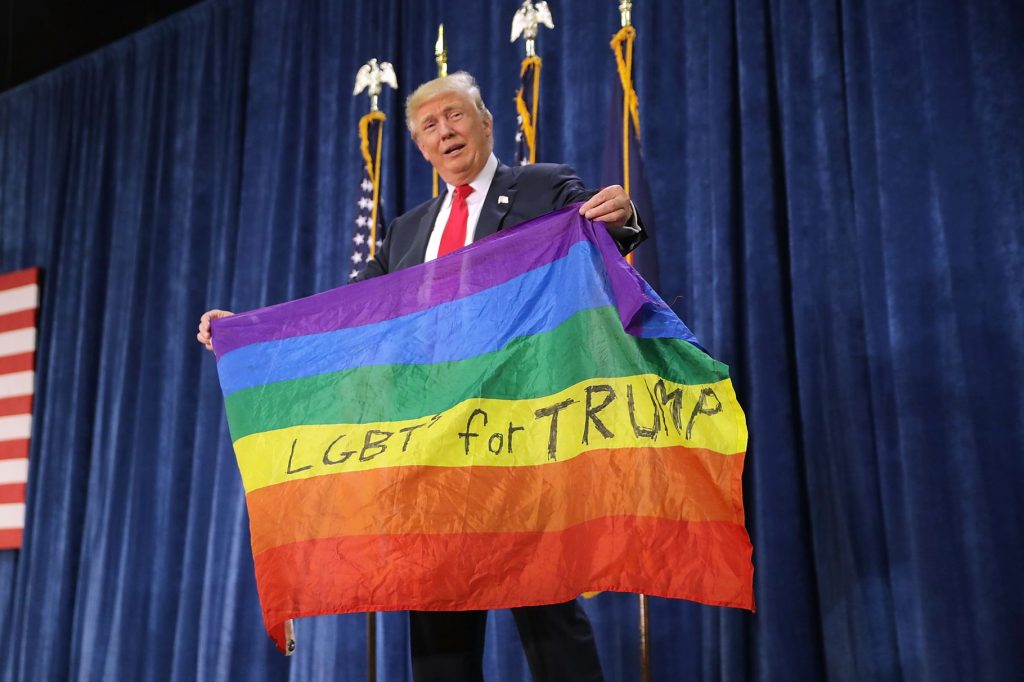
    There have been a lot of pro-science pieces in the aftermath of the Trump anti-trans memo, and while none of the science bits will be new to readers of this blog it’s still heartening to see mainstream media outlets battling misinformation from a man who actively courted LGBT voters before embarking on a campaign of cruelty against transgender people.

    I like the cut of Wired’s jib.

    Basically no scientist who knows anything about this stuff subscribes to the idea of the strict “gender binary” anymore.

    The article is a good primer on the basic science.

    a lot can happen on the road from embryogenesis to personhood. Sometimes the fusion of egg and sperm goes differently. People can be XXX, XXY, or XYY with no physiological indications. People can have some XX cells and some XY cells. Sometimes a person can be XX but have “male” physiognomy, or the other way ’round. Sometimes, to the tune of one in a hundred, a baby is born with genitalia that people in the room can’t agree on.

    Trump’s memo isn’t about science, of course. It’s an attempt to rouse the supporters for the mid-term elections by picking on one of the few groups it’s still safe to pick on: a group that unlike the wider LGB community has no political power and precious little media clout.

    There’s nothing remotely scientific about Trump’s so-called science. It’s science in the same way that some people call creationism a science, an attempt to reject the world as it actually is in favour of the world some bigots would like to see.

  • The extraordinary complexity of sex determination

    I’ve posted this before, but Scientific American reposted it today in light of the Trump memo.

    Determination of biological sex is staggeringly complex, involving not only anatomy but an intricate choreography of genetic and chemical factors that unfolds over time. Intersex individuals—those for whom sexual development follows an atypical trajectory—are characterized by a diverse range of conditions, such as 5-alpha reductase deficiency. A small cross section of these conditions and the pathways they follow is shown here. In an additional layer of complexity, the gender with which a person identifies does not always align with the sex they* are assigned at birth, and they may not be wholly male or female. The more we learn about sex and gender, the more these attributes appear to exist on a spectrum.

  • This is the way our world ends

    The Gender Recognition Act consultation is now closed, thank God. In the short months since it began it’s been used by conservatives to mount a shockingly vicious campaign against trans people. Some 53,000 responses had been received by Friday. That isn’t a consultation. It’s a pile-on.

    It’s yet more evidence that human rights shouldn’t be subject to referendums. 75% of Americans were against civil rights for black people. 75% of people in the UK thought homosexuality was an aberration just before Section 28 made gay people’s lives hell. I have no doubt that a similar proportion of GRA responses were anti-trans. In recent years, every single referendum on equality has been poisoned by money and activists from the religious right.

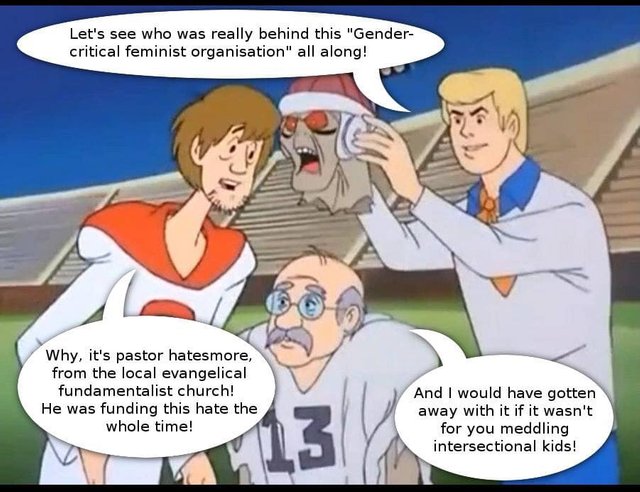
    As in the US, the campaign used the invented spectre of trans people as dangerous predators to argue against human rights for trans people. And as in the US, it was suspiciously well funded and clearly linked to US evangelical conservatives, with supposedly liberal voices joining the worst conservative columnists in parroting religious groups’ fact-free propaganda.

    I kept waiting for left-wing, liberal commentators to look around and realise that they were thinking what Rod Liddle was thinking, what Melanie Phillips was thinking, what Richard Littlejohn was thinking. But they never did.

    And when anybody had the temerity to criticise them, or even point towards some actual facts, they yelled just like the conservatives: I’m being silenced! They were silenced in the Mail, and the Times, and the Sunday Times, and the Guardian, and the New Statesman, and The Spectator, and in Private Eye, and in the Herald, and in the Scotsman, and in The National, and on Radio 4, and on Radio Scotland, and on BBC1, and on Channel 4, and in the Economist, and on social media.

    From http://leftycartoons.com/2018/08/01/i-have-been-silenced/

    Here’s how that ends.

    Over the weekend, a leaked memo detailed the Trump administration’s plan to remove human rights from trans people. Trans people are not deserving of human rights, and should have those rights removed.

    Human rights are universal, but here we have a government arguing quite simply that some people are less human than others.

    The agency’s proposed definition would define sex as either male or female, unchangeable, and determined by the genitals that a person is born with, according to a draft reviewed by The Times. Any dispute about one’s sex would have to be clarified using genetic testing.

    We’re not the first. The Trump administration has targeted Latinx people and people of colour. Trans people are just next on the list, a convenient proxy for all of the people religious conservatives don’t like. Trans people, gay people, lesbian people, women who want birth control, women who have abortions.

    I don’t like slippery slope arguments but this is an exception. As soon as you say that some humans are less human than others, you’re on the side of evil.

    Here, we’re some way behind. But you can see the wheels turning. Groups that previously said they were against Gender Recognition Act reform now advocate repeal of the original 2004 Act, and of the 2010 Equality Act. They share anti-semitic memes and accept money from anti-abortionists. They’re finding approving ears in Parliament from the likes of David Davies, whose record on not just LGBT rights but women’s rights is shockingly poor.

    The strategy is working. Over on Mumsnet, where much UK anti-trans activism is discussed, supposed radical left-wing feminists are praising Trump: a sexual abuser, a defender of rapists, a harasser of women, an enemy of women’s reproductive rights.

    Writing in the NYT, Jenny Boylan is sickened and saddened.

    I admit that I’m reluctant to react to this latest cruelty, which is obviously just one more cynical move clearly designed to stir the pot ahead of the election. Trans people are the latest conservative whipping girl, like African-Americans in the 1950s, or gay people in the 1990s and 2000s. Nothing is more dependable now than the passion the heartless display when trans people’s humanity is offered up for mockery.

    The conservatives are on the wrong side of science, of medical knowledge and of history. As the National Center for Transgender Equality points out:

    In the name of preempting some misinformation, let’s talk about what this proposed rule would not do. It would not eliminate the precedents set by dozens of federal courts over the last two decades affirming the full rights and identities of transgender people. It would not undo the consensus of the medical providers and scientists across the globe who see transgender people, know transgender people, and urge everyone to accept us for who we are. And no rule — no administration — can erase the experiences of transgender people and our families. While foolish, this proposed rule deflates itself in the face of the facts, and the facts don’t care how the Trump administration feels.

    But like any act of vandalism, you can do a lot of damage in a very short time. And this could have a terrible effect on the lives of the estimated 1.4 million trans people in the USA.

    The longer this continues, the worse it will get. If the religious right get the freedom to discriminate against us, they will want the freedom to discriminate to discriminate against gay people, lesbian people, women. The usual targets.

    If you’re white, straight, middle-class, anti-abortion and cisgender, your rights are probably okay.

    But if you aren’t all of those things, you should be very frightened of anything that enables bigots to decide that some groups of people are less deserving of human rights than others.

    Because once they’re done with us, they’ll come for you.

  • I didn’t lie

    Many trans people don’t come out until later in life. We have partners, sometimes children. Revealing our secret is devastating.

    I’ve been asked the same question many times:

    Why didn’t you tell them?

    And sometimes the subtext to that is:

    Why did you lie for so long?

    The honest answer is that I didn’t lie. I didn’t tell them because I didn’t know.

    This blog post, now deleted, puts it very well, I think.

    I didn’t tell my ex because I didn’t know. Hindsight tells me this has been with me as long as I can remember, but those clues in my history didn’t add up to knowledge.

    That’s exactly how I felt. There are so many things that, now I see them in the rear view mirror, elicit an “of COURSE!”. But at the time, they didn’t. All the pieces of the puzzle were there, but it took me a very long time to realise that they were all part of the same thing.

    To some extent, it’s something you actually fight against. It’s a bit like thinking about death. If you think about it, if you really, really think about it and what it means, it’s like opening the door to a howling void of madness. So you take the things that are so obvious now in retrospect and you explain them away, justify them to yourself, refuse to see the connections that will one day become so, so clear.

    Some trans people “always knew”. I’m not one of them. I grew up deeply ignorant about all this stuff, aware that there was something deeply wrong but unaware of what it was, let alone what to do about it.

    As one of the blog’s commenters put it:

    I repressed for over twenty years because I couldn’t explain my thoughts and feelings. I didn’t know what I was, so I put it in a box and tried to forget about it. I beat myself as punishment whenever I had a thought or emotion that wasn’t “right”. I forced myself to be what I was told I had to be…

    I didn’t feel “trapped in the wrong body” as the cliché goes. I was terribly, life-threateningly sad and I didn’t know why.

    I didn’t lie. When the Earth shifted, when it all finally made sense, I didn’t keep it a secret for years, or even months. I spent a few weeks of staring into a howling void of madness and trying to make sense of it, something I’m still trying to do. As soon as I felt able to articulate at least some of it, I tried to explain it.

    The blog again:

    Self preservation is not deceit, and while we might all be able to look back and see whatever signs there were, that doesn’t mean we noticed them at the time.

    I didn’t lie because I didn’t know.

    I didn’t lie because I didn’t know.

  • All I wanna say is that they don’t really care about us

    Stephen Paton writes in The National about the mischaracterisation of gender reform as a “trans vs feminists” debate.

    With the debate so heavily influenced by these groups, it’s no wonder that a narrative proclaiming trans rights must come at the cost of women’s has found mainstream attention, while sneaky facts that contradict it have been quietly relegated to the back room.

    …the reality is that feminist organisations in Scotland support self-ID. A statement from Engender, which included Close the Gap, Equate Scotland, Rape Crisis Scotland, Scottish Women’s Aid, Women 50:50 and Zero Tolerance, made that clear.

    Over on Medium, Julia Serano is sick and tired of being asked to contribute to “trans rights vs feminism” pieces.

    Virtually every single person that I know who is actively involved in feminist causes and organizations, Women’s and Gender Studies departments, and so on, are supportive of trans people and issues. And all of the trans people that I personally know are supportive of feminism and women’s issues.

    …There is [a] small minority of feminists who call themselves “gender critical” or “radical feminists” (and who others sometimes call “trans-exclusionary radical feminists/TERFs”) who are vehemently anti-trans.

    …social conservatives and other groups who are opposed to transgender rights and gender-affirming healthcare have increasingly taken to amplifying TERF voices and appropriating certain TERF talking points — particularly the argument that transgender people somehow constitute a threat to women. Their reason for doing this is quite simple: It is far more socially palatable to frame their anti-trans policies and positions as being “pro-woman” rather than “anti-transgender.”

    What we’re seeing here is the US religious right working on a global scale. It meddled in the Irish anti-abortion referendum. It’s been funding rabid anti-trans groups in the UK. It’s shovelling money into anti-LGBT referenda across Europe. It’s active in Australia, which is particularly toxic towards LGBT people of late.

    While trans people are the ones currently in the firing line, the same tactics are being used against other groups. For example, the Christian Right lost the battle on equal marriage – so their new tactic is to concentrate on “gay cake” cases and position gay people as a threat to good old straight folks just trying to make an honest buck.

    It targets feminism and women’s rights with false arguments such as “The #MeToo movement is framing innocent men with rape allegations”, even though the facts demonstrate that a man is 230 times more likely to be raped than to be falsely accused of rape. And so on.

    And sadly, it’s working. A new study of Trump voters published this week shows that the majority of Trump supporters believe that straight white men face more discrimination than women, people of colour or LGBT people.

    Trans people are often the canaries in the coal mine: the groups that come for us first will come after other groups next.

    The Gender Recognition Act consultation that the religious right has poisoned ends today at 11pm. If you haven’t already completed it, Stonewall has a good guide (and it also massively reduces the time required: it only takes a couple of minutes to complete). You’ll find it here.

  • Bullshit is not a precious and rare commodity

    One big upside of being part of a demonised minority: it saves you a fortune.

    I cancelled my decades-long subscription to Private Eye yesterday: the current issue has three news stories about trans things in which it unquestioningly parroted anti-trans bullshit, picked on a trans charity and an LGBT charity and vilified a young trans woman who’s endured unspeakable abuse from anti-trans bigots both online and in real life.

    I’ve also cancelled my subscription to the Guardian, a paper I’ve bought since my teens, after days of intense coverage about the GRA reform consultation in which it didn’t feature a single voice in favour of trans people, let alone the voices of any actual trans people. Its editorial about the GRA reforms this week reads like a crib sheet of Christian Right anti-LGBT “talking points”. It and the Observer have repeatedly run open letters from anti-trans activists but ignore open letters that support trans people and that call out the open hostility of too much media coverage.

    I no longer buy the Sunday Times any more (another paper I bought for a couple of decades) because it’s even worse than the Daily Mail in its coverage of trans issues: when your reports are being hailed with joy by right-wing US evangelicals on social media (and in many cases, apparently dictated by them) you’ve taken a terrible wrong turn somewhere. Neither the Spectator nor the New Statesman feature in my “buy to read on the bus” list any more for similar reasons. I no longer pay to access Glasgow’s Herald since its editorial swing to tired, right-wing “let’s trigger the snowflakes” clickbait.

    Supportive advert in Metro UK
    Trans allies generally don’t make it into the newspapers unless they pay for advertising, as they did with this Metro UK advert. Unlike the anti-trans activists, their open letters don’t get published.

    This isn’t silencing debate, or refusing to hear different opinions.

    It’s refusing to pay for bullshit.

    Bullshit is not a precious and rare commodity. There’s tons of it online, completely free. I don’t need to pay to have someone put it through my letterbox too.

    Refusing to pay is not the same as refusing to listen to differing opinions. It’s just refusing to support low quality content.

    For many years I’ve paid to read The Guardian and The Observer, even though various news apps I use enable me to read their articles (legally) for free and often without ads. I paid because I believe that good journalism is something worth paying for. But recently, there has been an influx of journalism that is not good, and which is not worth paying for.

    I’m not refusing to read Guardian articles. I’m just not willing to pay to read them any more.

    I’m under no illusion that me cancelling anything makes the slightest difference to the organisations running biased and sometimes blatantly malicious content. Although you’ve got to wonder at the wisdom of alienating any customers when like The Guardian, you’re begging every website visitor to throw you some coins to try and stay in business. But generally speaking these businesses don’t need my money.

    Others do, though. And what I can do – what I do do, and what I’d hope other LGBT people and their allies also do – is use the money I’d normally spend to do something positive: to help crowdfund or otherwise donate to content that isn’t hateful, to buy books by people who know what they’re talking about but who don’t get columns in newspapers, to donate to valuable charities that Private Eye calls activists while it approvingly quotes groups affiliated with the anti-abortion, anti-LGBT Christian Right.

    You don’t even need to spend money. You can refuse to click on obvious hate-clickbait. You can point your browser (with ad-block disabled) to sites that don’t publish hateful content. You can signal boost positive voices on your social media.

    None of these things will harm your bank balance, and none of them will harm your mental health either.

  • What you didn’t read in the papers this morning

    The UK Government Equalities Office has issued a statement regarding the unhinged coverage of the Gender Recognition Act consultation in this weekend’s newspapers. [Emphasis mine]

    Neither GEO nor Ministers were approached for comment on today’s coverage on the Gender Recognition Act. Any speculation that decisions have already been made on the Gender Recognition Act is wrong. These are complex and sensitive issues. We know that many trans people find the current requirements overly intrusive and bureaucratic. We are consulting now because we want to hear people’s views.

    We have always made clear that any reform of the Gender Recognition Act will not change the exceptions under the Equality Act that allow provision for single and separate sex spaces. The consultation ends next week and we will look carefully at all the responses.

  • Come out, come out, wherever you are?

    It’s National Coming Out day today, a well-intentioned US campaign to persuade LGBT people to love themselves and live their authentic lives.

    Here are some people sharing their coming out stories on BBC’s The Social.

    But as the excellent DIVA columnist Cerian Jenkins points out on Twitter:

    That’s not to say coming out isn’t a good thing. Of course it is. But it’s also an incredibly big deal that can have incredibly big consequences, not just when you first come out but for the rest of your life. Coming out isn’t an event. It’s a process. I come out again every single time I walk out the front door.

    The cartoon on the right, by Iria Villalobos, is popular in trans circles. For many trans people, coming out is the beginning of a process of transition: not necessarily medical, but transition nevertheless. It’s funny, in a bleakly accurate way. I’m currently in the second stage, moving towards the third.

    I came out just under two years ago. Since then everything in my life has changed.  My marriage has collapsed. I’ve lost tons of friends. I’ve become estranged from people I was previously close to. I’ve been abused and harassed and humiliated. At some points I’ve come perilously close to checking out. Even now there are days when I just can’t cope.

    And that’s as a middle-class white person who works in a tolerant, inclusive industry and who lives in a tolerant bit of the world.

    I’ve got it easy. And yet nothing about coming out has been easy.

    If it’s safe for you to come out and you feel strong enough to deal with the consequences, great. The more of us that are out and getting on with our lives, the easier things will become for the people who’ll come out after us. But not everybody is in a safe environment, or is mentally ready. And if that’s you, that’s fine.

    There’s no right or wrong way to do this, and you’re no less valid if you decide that coming out isn’t right for you.

    The most important thing is your safety, both physical and mental.

    Look after yourself. The world is a better place with you in it.