Category: Books

Stuff I’ve read or helped to write

  • Get a free crime e-book this weekend (10/11 July)

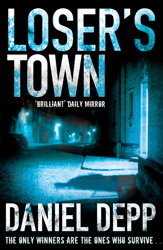
    Fancy a free book? Publishing firm Simon & Schuster is giving away a free ebook version of Loser’s Town, a Hollywood-set thriller by Daniel Depp. I’ve no idea what it’s like but it’s free, it’s a PDF so it should work on anything, and all you need to do is provide an email address, so you might as well get it while you can.

    Here’s the link.

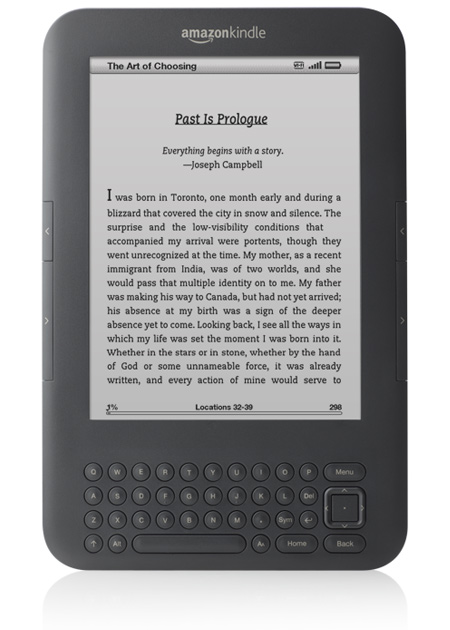
    In other news, the new Tim Dorsey novel is much cheaper as an ebook than it is in print: the latter is £11 to £14 plus postage, while the Kindle edition is eleven dollars flat. That’s around seven quid.

  • There’s a difference between printing something and publishing it

    Novelist and former tech writer David Hewson on the coming eBook avalanche/apocalypse/delete as applicable and its implications for writers:

    Technically it’s never been easier to get a book into digital print. But here you hit a perennial problem. Successful books aren’t just printed. They’re published. Anyone can print something. Few can publish successfully. Publishing involves a chain of skills — editing, revision, marketing, design, positioning and building an author’s career slowly and carefully.

    …Does anyone seriously think you can replace all that simply by uploading a file to Apple and announcing your new work on Facebook?

  • How to design a book cover

    This is great: six hours of work in a two-minute clip.

    More here:

    Over 6 hours of my onscreen compositing, retouching, color correction, type obsessing, all condensed down to a slim sexy one minute 55 seconds of cover design. Trust me, no one wants to watch it in real-time…and even then I left out the not-as-riveting-onscreen stages of my cover design process, such as reading the manuscript, sifting through Alexia photoshoot outtakes, background photo research, etc. And since this is a series look that has already been established for Soulless and Changeless, there weren’t the usual batches and rounds of versions of different designs that happen with standalone or first-in-a-new-series covers. That would be a weeklong video!

  • How iPad books might look [video]

    Penguin’s been showing off some iPad-related ideas, and I think it’s fair to say they’re amazing – particularly the kids’ books.

  • Could Spotify work for ebooks?

    As long term readers will know, I’m amazed by the way in which the music business spent more than ten years missing every business opportunity the Internet brought them, effectively handing their entire business over to the pirates. Services such as Spotify should have turned up a long time ago.

    Could the same kind of thing work for ebooks? Is there enough ad money to go round? Do book readers want to social network?

    we have real-world equivalents for both its free and subscriber services. Libraries give books away for nothing – or seem to; in reality authors get a little bit of money in the form of Public Lending Right (PLR) royalties, a gap that online ad revenues could easily plug – while book clubs have offered heavily discounted prices to subscribers for decades.

    Could similar ideas work online?

  • Will piracy rip the spine out of ebooks?

    Over at Techradar, I’ve interviewed the head of digital at Hachette UK, one of the world’s biggest publishers. Are publishers learning from the music industry’s decade of mistakes?

    One of the things that sent people to the pirates with music was the problem of file formats: your player wanted X format, the pirate sites had it in X format, but the only legal versions were in Y format.

    Publishers are keen to avoid the same thing in books.

  • Michael Connelly on journalists writing books

    I’ve been meaning to post this for ages. In his latest novel The Scarecrow, Michael Connelly makes an interesting point about hacks and books:

    Deep down, every journalist wants to be a novelist. It’s the difference between art and craft. Every writer wants to be considered an artist.

    It’s probably the best bit of the book, to be honest. Next one this year will be a Harry Bosch novel, though. Bosch is great.

  • Free isn’t easy

    A superb review of Chris Anderson’s book Free by Malcolm Gladwell of Tipping Point fame:

    The only problem is that in the middle of laying out what he sees as the new business model of the digital age Anderson is forced to admit that one of his main case studies, YouTube, “has so far failed to make any money for Google.” Why is that? Because of the very principles of Free that Anderson so energetically celebrates. When you let people upload and download as many videos as they want, lots of them will take you up on the offer. That’s the magic of Free psychology: an estimated seventy-five billion videos will be served up by YouTube this year. Although the magic of Free technology means that the cost of serving up each video is “close enough to free to round down,” “close enough to free” multiplied by seventy-five billion is still a very large number.

    [The New Yorker, via Jack Schofield]

  • Wrote for luck (or: odds and sods I’ve picked up from writing a book)

    I mentioned the other week that I’d written a book and promised to share some of the things I’ve picked up about the writing process, submitting to agents and all that stuff. And then I didn’t. Sorry, it’s been one of those weeks.

    This is one of those posts for which the phrase “your mileage may vary” was coined: things that worked for me may not work for you, things that matter to me might not matter to you, resources that I’ve found may not be useful to you in the slightest, and it’s entirely possible that my book is a big load of shite that doesn’t deserve to be published. But on the off chance that some of this might be helpful, I’ll post it anyway.

    What I did wrong the last 200 times I tried to write a book

    I know this sounds incredibly basic, but the one thing my various abandoned book ideas have in common is that I eventually realised that I wasn’t interested in them. The plot didn’t work, or I had a brilliant start but no idea where to go from there, or my hero was an utter dick. Unsurprisingly, the books quickly ran out of steam, with cries of “this sucks!”, “This is too hard!” and “What a dick!” respectively.

    This time out I had a rough idea of the whole thing (although it changed a lot as I scribbled) and more importantly, I liked the characters I’d come up with. It’s not in the text, but I know what kind of music they like, I know what kind of beer they’d drink, I know what they’d find funny and I reckon they’d be a hoot to go for a drink with. And because I know that, a lot of the writing process involved me sitting in the pub thinking “Okay, X needs to do this. How would he go about it? He wouldn’t do it that way or that way. Would he…?”

    The other big mistake I’ve made in the past is trying to write in my usual writing environment. Obviously if you don’t write words for a living this probably won’t be an issue for you, but for me the combination of particular hardware and software keeps me in work mode, not making-stuff-up mode.

    What I found really effective was to get away from computers altogether and work in a notebook (a paper one), with a nice pen, in the pub. When it was time to put it on the PC I used Apple’s Pages (I use MS Word for work) on the Mac or Office 2007 on the PC (which I don’t use for work words at all).

    You need to make room to write

    One of the other differences between writing on a PC and writing on paper is that unless you’ve got special magic paper, you aren’t constantly distracted by incoming emails, tweets, system boings, pop-ups and all the other crap that you get on a computer. A bit of distraction isn’t bad – it’s nice to let your mind wander and listen to music, and if you’re writing somewhere like a pub or a coffee shop the odd overheard conversation can give you ideas for dialogue – but for me the right environment was away from computers, mobile phone switched off, hunched over a notebook in the corner of the pub.

    I found I needed a routine too. Pub night worked for me, as did scribbling in the early morning/late night when everybody was either still in bed or had gone to bed. I didn’t even think about the book during office hours (roughly 8am to 6pm), because that was work time.

    The downside of that is that unless you want to spend ten years writing your book, you’ll need to sacrifice things. In my case that meant magazines, books, video games, DVDs, blogging and dicking about on the Internet.

    Momentum matters more than details

    Writing and editing involve completely different mindsets. I found that I got more done – and stayed cheerier – by ploughing on with the story and not worrying about errors until later. You’ll spend a lot of time editing (I went through six drafts) anyway, so there’s not much point in stopping every couple of pages to look for typos, fix formatting or any of the other things you’ll catch later.

    For me at least, the feeling I was making progress was more important than worrying about whether things were adequately described, funny or even comprehensible. Better to write 9 pages that’ll need major editing later than spend six hours on a single sentence, I think. I always find that when I switch mental gears from writing to editing, I can’t switch back again.

    You really ought to read Anne Mini’s blog

    Author Author is a marvel. Anne Mini goes on a bit – deliberately – and repeats herself a lot – that’s deliberate too – but her blog is the best resource I’ve found for fiction writing. It’s written from the perspective of agency screeners, so a lot of it is how not to write: it details the traps people fall into, the danger of the Frankenstein manuscript and so on. It’s also superb on bigger issues such as how to deal with rejection, how to get the right kind of feedback from family and friends and anything else you might possibly want to know.

    No matter how good you are, you’ll make some massive cock-ups

    Once you’ve got something approaching a finished draft, it’s a very good idea to get people you trust to look at it – because they will spot all the cock-ups you missed. Stuff that seems obvious to you won’t be to anybody else, you’ll get names mixed up, you’ll have characters doing things that appear to be out of character or that don’t fit with the world you’ve described, and (in my case at least) things you think are really, really funny aren’t. Without help, you won’t spot them all.

    You should really buy, borrow or blag a laser printer

    You’re going to be doing a lot of printing, even before you start thinking about sending your stuff out (proofreading on paper works in a way that it simply doesn’t on screen. Mistakes jump out at you). A typical supermarket inkjet printer does about 100 pages to an ink cartridge.

    I think that’s probably enough for now. I’ll no doubt come back to this in the not too distant future.