Author: Carrie

  • No, the government hasn’t said it’s okay to discriminate

    Imagine I started a petition claiming that the government was going to ban bees and demanding that it didn’t.

    “We’re not going to ban bees,” the government would respond. “What the fuck is wrong with you?”

    How would you report that? Would you:

    (a) Conclude that ‘arseholes create petition about imaginary problem’ wasn’t newsworthy in the first place?

    (b) Write a brief story noting that some arseholes created a petition and that the government told them to get stuffed?

    Or (c) Run the story with the headline “Bee friends force government into humiliating climbdown”?

    If you chose (c), you’re probably writing about trans issues for national newspapers.

    (I have a more mature version of this going live on Metro today, where I’m not allowed to call people “arseholes” or say “fuck”).

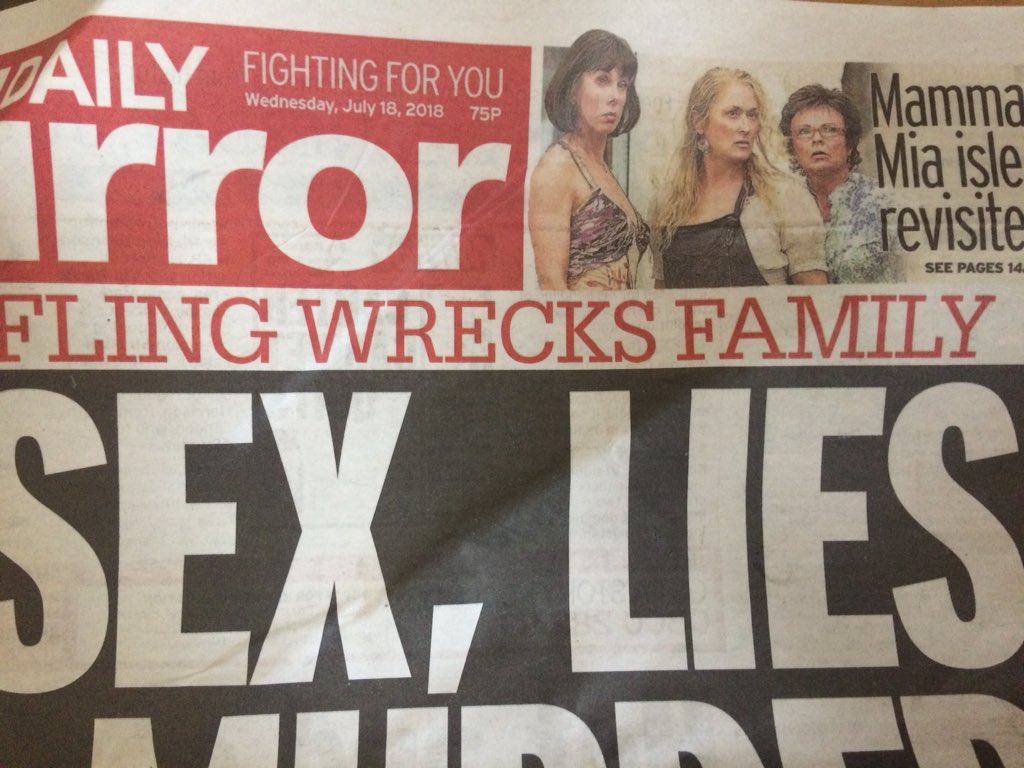
    Over the weekend, multiple newspapers ran a story that the government said trans people can be banned from toilets, changing rooms and other single-sex spaces.

    That isn’t true. Doing so is illegal.

    Here’s what actually happened.

    • Anti-trans activists created a petition demanding the government consults them before changing existing equality legislation;
    • The government politely told them to fuck off on the grounds that they aren’t considering changing existing equality legislation.

    To see that presented as a victory for anti-trans campaigners is quite something.

    Here’s how the law works. Under the Equality Act, which has been in force for eight years now, you cannot discriminate against trans people. In very specific circumstances, such as women’s refuges, you can exclude trans people provided that doing so is legitimate and proportionate.

    Over to you, Stonewall:

    The exemptions in the law (which the Government referred to) only apply where services can demonstrate that excluding a trans person is absolutely necessary, for example, if inclusion would put that trans person at risk. However, these exemptions are rarely used and in almost all situations trans people are treated equally as is required by our equality laws.

    …This kind of reporting also doesn’t reflect reality; trans people can and have been using toilets that match their gender for years without issue. This is another media-generated ‘debate’, and it’s actually having a negative effect on many people who aren’t trans too; people whose appearance doesn’t fit the stereotypes of male or female are increasingly being challenged for simply going into a public loo.

    This lazy and/or wilful misreporting is dangerous. It completely misrepresents the law, and it’s contributing to a culture that’s already seen cisgender (ie, not trans) women chased out of bathrooms for not looking feminine enough. Trans people are victims, and newspapers repeatedly take the side of the bullies.

    If you’re regurgitating press releases from pressure groups and failing to check even the simplest facts, you shouldn’t be in journalism.


  • “We are in the same sea, trying to swim”

    Same Star is another of David’s compositions and another vocal where I appear to be channelling E from Eels, which of course is never a bad thing. It’s a musical version of the Scots phrase “we’re a’ Jock Tamson’s bairns”: we have much more in common than what divides us, and we’re all busking it. As Kurt Vonnegut wrote: “We are here to help each other through this thing, whatever it is.”

  • “There’s no joy in being right”

    A Hollow Victory was one of the first songs David and I wrote for the current crop of music, but it took a while to get right: the superbly retro electro stomp was there from the outset but it took a bit of fiddling to find a version we both liked.

    It’s a companion piece to Barren Ground, written earlier but set later: it’s about how you feel when you’ve been thrown under a bus that promptly crashed into a wall: what you said would happen happened, but there’s no schadenfreude: being proved right is a hollow victory in a war you didn’t want to fight.

  • “Some rock you proved to be.”

    This is Pushing Air, a song about sound and fury signifying nothing. Ironically, it started off as sound and fury: I love noisy guitar rock and that tends to be my go-to for songwriting, but sometimes you need a stiletto, not a blunderbuss. This is a stiletto, written during a time when I really needed help and help didn’t come.

  • It’s okay to be offensive if you’re a white guy

    There’s a good piece in The Pool by Yomi Adegoke about Alan Sugar’s racist tweet, or rather the reaction to it from media types such as the odious Piers Morgan.

    As Adegoke points out, there does appear to be a double standard here. When a black presenter says something that appears to be racist, they’re gone. White presenters? Not so much.

    It’s interesting to contrast Morgan’s spirited defence of Alan Sugar, who is white, with his criticism of trans model Munroe Bergdorf, who is not.

    According to Morgan, Bergdorf was “rightly fired” from her role at L’Oreal for “calling all white people violent racists.” That isn’t quite what she said, but Morgan’s never been great at facts. As far as Morgan is concerned, because Bergdorf said something he finds “deeply offensive”, it’s right and proper that she should lose her job.

    Adegoke’s piece notes that Morgan doesn’t feel the same way when it’s white people being deeply offensive about black people.

    If only there was a word for somebody who treats people differently based on the colour of their skin.

    Incidentally, I was at the recording of a (non-broadcast) TV show pilot the other night where one of the topics was offensive speech. It was introduced via an unfunny video by a straight, white, cisgender male comedian who said that he had the right to say whatever he wanted and if anyone had a problem with it they should just fuck off.

    The issue was then discussed by the three panellists, two of whom were straight, white, cisgender men (a pundit and a comedian respectively). They concluded that the right of straight, white, cisgender male pundits and comedians to offend people was much more important than minorities’ right to be treated with dignity and respect. One panellist disagreed with them and attempted to explain the importance of intent and context, but she was a woman so her opinions didn’t count.

  • “For all the promises, you’ve never known a loneliness quite like this”

    This is another one for which David wrote pretty much all the music (the quiet strings from the second verse are mine). There’s something really dysfunctional about it, deliberately so: the timing of the main keyboard part has a great tension to it, which really makes the song.

    It’s another really close-miked vocal, and again it’s designed to be almost uncomfortably intimate because that’s what the song’s about: me as the elephant in every room, the thing you wish wasn’t there.

    I wrote it about the period after I’d come out as trans, but it’s just as relevant to anyone who’s faced challenges or sadnesses: sometimes you’re going through something that other people just can’t cope with, not because they’re bad people but because they don’t want to put their metaphorical foot in it. So the conversations you’re included in avoid the elephant in the room, but you overhear the ones that do through the “doors ajar” I mention in the lyric.

  • “You didn’t like the decor, so you burned the place down”

    David wrote all the music for this one. It’s great, and very claustrophobic. I love the way some of the keyboards sound like breathing lungs. The vocal is really close-miked to give it an almost uncomfortably intimate presence.

    Barren Ground is about somebody breaking things that can’t be put back together again.

  • Echoes

    For many decades, homosexuality was believed to be a mental illness. Gay and lesbian people were given electro-shock therapy, aversion therapy and various chemical or psychiatric “cures”, many of them horrific.

    We’re all groovy and tolerant these days, of course, but homosexuality wasn’t removed from the World Health Organisation’s International Classification of Diseases (ICD) until 1973. And it took a long time for wider society to catch up with the medical and psychiatric consensus. Some bigots still argue that homosexuality is a mental illness, but thankfully most right-thinking people smile sweetly at those people and show them the door.

    For many decades, transgenderism was believed to be a mental illness. Trans people were given electro-shock therapy, aversion therapy and various chemical or psychiatric “cures”, many of them horrific.

    We’re all groovy and tolerant these days, of course, but transgenderism wasn’t removed from the World Health Organisation’s International Classification of Diseases (ICD) until 2018. And it will take a long time for wider society to catch up with the medical and psychiatric consensus. Some bigots will still argue that transgenderism is a mental illness, but I hope most right-thinking people will smile sweetly at those people and show them the door.

  • Pride only goes so far

    It’s Pride Month, when firms go out of their way to show how cool and groovy they are about LGBT* people. But beyond the posters and window displays, the picture is a lot less positive.

    According to a survey of 1,000 employers, nearly half of employers would “probably” discriminate against trans job applicants.

    That’s illegal. But just because it’s illegal doesn’t mean it doesn’t happen.

    Discrimination is rarely overt, and as a result it’s hard to challenge, let alone prove. You didn’t get the job because your interview skills weren’t great, not because you were visibly trans. Your temporary contract was terminated because that particular job was finished, not because your line manager thinks you’re a deviant. You were passed over for promotion because the other candidate had skills you don’t, not because the firm doesn’t want to send a trans person as its representative. And so on.

    Some 47% of retail businesses surveyed said they were “unlikely to hire a trans person”; 45% of IT businesses said the same, with leisure and hospitality coming in at 35%. Even in the most inclusive industry, financial services, just 34% of employers said they were “agreeable” to hiring trans workers.

    “Agreeable.” One-third of employers are “agreeable” to not breaking the law.

    That’s bad enough, but what if many of them are lying? It’s a known problem with attitudinal surveys: while some people tell the truth, many tell the surveyor what they think that person wants to hear, or what they think will make them sound best.

    That means the number of firms who’d actually hire trans people is probably even less.

    Trans people get the shitty end of the stick in employment. Stonewall reports that around half of trans people hide their gender identity at work for fear of discrimination; of those who don’t, one-third have been verbally abused by customers or clients and 12% physically attacked.

    Hiring is just the start. Firms that aren’t “agreeable” to abiding by anti-discrimination legislation are unlikely to be “agreeable” to providing a safe environment for trans staff. They’re unlikely to be “agreeable” to having policies against discriminatory behaviour by other employees. They’re unlikely to be “agreeable” to giving trans people fair consideration for promotion, or in the event of necessary job losses.

    If nearly half of employers admit that they’d discriminate, you can be sure that the real problem is much, much worse.

  • We must protect our children from the menace of books

    Earlier today I was on the radio talking about the moral panic over kids playing Fortnite, a video game. Ten years ago I was on the radio talking about the moral panic over kids playing Grand Theft Auto 4, a video game. The games are different but the panic is the same: parents are letting too-young kids play for far too long and then blaming the game, the games industry and technology in general for their inattention.

    Every new technology has a moral panic attached. As I said on air, we even had a panic over books. I’m not making that up. Rachel Adler in Slate:

    By the end of the [19th] century there was growing concern—especially among middle class parents—that these cheap, plentiful books were seducing children into a life of crime and violence. The books were even blamed for a handful of murders and suicides committed by young boys. Perpetrators of crimes whose misdoings were linked to their fondness for penny dreadfuls were often referred to in the newspapers as “victims” of the books. In the United States, “dime novels” (which usually cost a nickel) were given the same treatment.

    It’s a wonderful article.