Author: Carrie

  • “You’re four hours gone. I guess tomorrow brings another excuse”

    I wrote the lyric to this a few years ago about a friend of a friend who was acting like a complete arse, apparently convinced that he was getting away with it. He wasn’t.

    Where Do You Go? is one of those songs that has a difficult evolution. It began as an angry, retro guitar stomp in a Hives or Dr Feelgood vein, but musically it felt too much of an homage to be its own thing. I had a lot of fun reworking it as a Lady Gaga disco stomp, but again that didn’t quite work.

    It took me a while to realise the problem. Sometimes having music that’s at odds with the lyric can work really well, so for example Robyn’s Dancing On My Own is a desperately sad song with a joyous tune. “Crying on the dance floor” is one of my favourite genres of pop music.

    But sometimes you need the musical and lyrical moods to match, and that was the case here. This is a song about sitting by yourself, wondering what pathetic excuse you’re going to get, the realisation that not only is somebody going behind your back but that they think you’re too stupid to know they’re doing it. That’s not going to work as a hands-in-the-air disco banger.

    I’m pleased with this one. I like my singing, and I think I’ve nailed the mix of contempt, anger and for-fuck’s-sake exasperation that I was trying to get.

    As for the friend of a friend: he got busted, and now there’s nobody to come home to.

  • Transing Nemo

    PinkNews has discovered the latest incarnation of the sinister transgender agenda: we’re turning alligators into gal-igators.

    That’s the claim from the anti-trans We Need To Talk group, whose meetings are conducted in great secrecy for fear the wider world would discover how deranged they are. As PN reports:

    Elizabeth spoke to the audience about “synthetic hormones” taken by transgender people.

    “Another thing that really breaks my kind of heart is oestrogen-ic pollution, which is that because of trans and because of HRT [hormone replacement therapy],” she said.

    “We’re peeing a lot of oestrogen, synthetic oestogren [sic] into the water and that’s forcibly ‘trans-ing’ the fish, and that means that crocodiles and alligators are in danger.

    “It means fresh water fish are in danger. It means we’re destroying the world partially because of the trans ideology.

    The Venn diagram between anti-trans views and dingbat conspiracy theories has a huge overlap. It’s been claimed by people who are allowed to drive cars and operate heavy machinery that trans people are part of an international Jewish conspiracy, that we’re paid stooges of a Big Pharma conspiracy to get girls hooked on testosterone, that we’re soldiers of the Illuminati and so on.

    Debunking conspiracy theories is rather like kicking a baby: it’s not a challenge and it isn’t any fun. But here goes. Is trans women’s urine transing Nemo?

    First up, the hormones are bio-identical – they’re chemically identical to natural oestrogen. And secondly, if oestrogen is your concern then trans women should be very far down your list.

    The last time we had a trans-fish scare, women on The Pill got the blame. If oestrogen is indeed feminising fish, we need to start with the many millions of farm animals on hormones: the annual oestrogen discharge by livestock in the US alone is twice that of humans. Once we’ve solved that, we could look at the 5-plus million women in the UK on hormonal contraception and HRT. Then by all means investigate the urine of a trans population measured in the thousands.

    Like so much anti-trans rhetoric, blaming trans women for oestrogen in the water supply is just taking the piss.

    Update:

    I’m indebted to my friend Lorraine, who found this hilariously appropriate BBC Blue Planet blog:

    As the authors of a 2009 scientific paper in the journal Sexual Development noted, “In the popular cartoon movie Finding Nemo, a male anemonefish loses his mate and must struggle alone to raise his offspring Nemo. In real life, Nemo’s father likely would have switched sex following his mate’s death, and then paired with a male.”

  • The First Time I Saw Me

    This, a collaboration between Netflix and GLAAD, is wonderful and joyous.

    It’s various trans people – Laura Jane Grace, Jazz Jennings, Jamie Clayton, Tiq Milan and many others – talking about the first time they saw people like them represented on screen.

    If you’re straight, white and cisgender (it means “not trans”; I loved the suggestion I saw online that said cis could stand for “comfortable in skin”), you’re on screen all the time: you’re the default, the “normal”. And if you aren’t from that group, you’re often invisible.

    Representation matters.

    If you don’t see people like you represented in the wider culture, it reinforces the belief that you’re not normal, that there’s something wrong with you. That was certainly the case for me. It’s one of the reasons I blog about being trans: the thought that somewhere there’s a young version of me trying to work out who the hell they are.

    Things are getting better. We have trans actors, models, comedians, musicians, journalists (hello!). But they’re still labelled as trans, not just as actors, models, comedians, musicians or journalists. There are no trans judges, MPs or MSPs, no trans newspaper columnists or news anchors – or at least, none that have come out. 

    And all too often, trans characters are played in films and TV programmes by cisgender people. As actor Jamie Clayton says in her video, “it perpetuates a stereotype that, at the end of the day, I take this off… [these men] play a character and then they’re given an award but with a beard. And people think, ‘oh, that’s what trans is.’”

    To paraphrase Derren Brown, being trans is just a piece of information about someone – and most of the time it’s not even one of the most interesting pieces of information about them. One day, videos like these won’t be necessary.

  • “Nothing feels safe, and nothing feels the same”

    This is Pianothing, a song whose working title suited it so well we didn’t want to change it. It started life as a little electric piano riff and turned into something that’s musically poppy and lyrically bleak.

    It’s about the helplessness I often feel reading the news, the horrors large and small that dominate social media and make me want to scream. We live in what should be a golden age of humanity and we’re encouraged to feel angry and scared. And that’s not who we are. Again and again we’re shown the very worst of humanity and told it’s a mirror, but it isn’t. I feel like Howard Beale in Network, yelling “I’m mad as hell and I’m not going to take this any more!”: my version, “This is not who we are!”

    The full rant from Network is a superb bit of dialogue. Here’s an extract.

    We know the air is unfit to breathe and our food is unfit to eat, and we sit watching our TVs while some local newscaster tells us that today we had fifteen homicides and sixty-three violent crimes, as if that’s the way it’s supposed to be.
    We know things are bad — worse than bad. They’re crazy. It’s like everything everywhere is going crazy, so we don’t go out anymore. We sit in the house, and slowly the world we are living in is getting smaller, and all we say is: ‘Please, at least leave us alone in our living rooms. Let me have my toaster and my TV and my steel-belted radials and I won’t say anything. Just leave us alone.’
    Well, I’m not gonna leave you alone. I want you to get MAD! I don’t want you to protest. I don’t want you to riot — I don’t want you to write to your congressman, because I wouldn’t know what to tell you to write. I don’t know what to do about the depression and the inflation and the Russians and the crime in the street. All I know is that first you’ve got to get mad. [shouting] You’ve got to say: ‘I’m a human being, god-dammit! My life has value!’
    So, I want you to get up now. I want all of you to get up out of your chairs. I want you to get up right now and go to the window. Open it, and stick your head out, and yell: I’M AS MAD AS HELL, AND I’M NOT GOING TO TAKE THIS ANYMORE!

  • “I lost myself, I can’t lose you”

    This one’s about children breaking your heart.

  • “Every day I pray for rain”

    I wrote this song about an extraordinary man, Yukio Shige. He’s a retired policeman who patrols Japan’s “suicide cliffs” every day, and who has talked more than 600 people back from the edge. One line in the LA Times story about him (which I can’t link to; its publisher currently blocks EU visitors) really stood out: he said that “almost nobody jumps on rainy days”.

    Musically this one’s me channelling my love of raucous guitar music, especially Nirvana and Pixies. The chorus reminds me of New Model Army, a band I love.

  • “There is something even worse than being abused in the street”

    Molly Mulready is a mum-of-three, and one of her kids is trans. She writes in The Guardian:

    My son, in his distress, helped me realise that there is something even worse than being abused in the street, and that’s being told by strangers you’re not who you know you are, that the truth of you is not acceptable so if you want to be safe – be normal, please.

    Being thought of as funny-looking, a weak man or a manly, ugly woman, the titanic social pressure to look your gender, physical discomfort, even pain, are a small price to pay.

    A baggy jumper in summer heat, chest binders, hormone blockers, side-effects, surgery; being more likely to attempt suicide, be homeless, be the victim of violent crime, murder, sexual assault.

    Certain countries wholly out of bounds, a crime to be you, violence inevitable, media debates that aren’t kind, that make your mother flinch and rush to switch the radio off, change the subject, protect you.

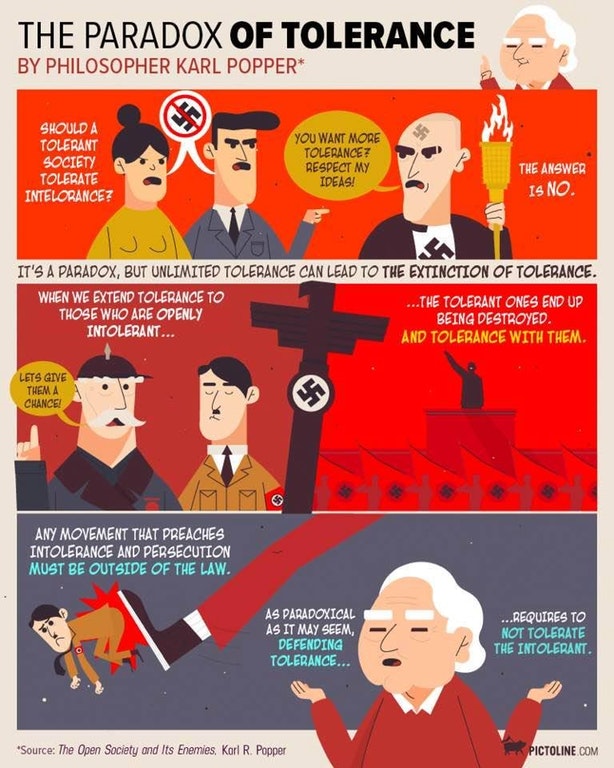
    Having to be tolerant of intolerance, taking deep breaths and bracing yourself, standing tall – they don’t know how fast your heart is beating, how much your palms are sweating.

  • “I want to walk on water, or just walk unafraid”

    Let’s have some new music from David and I.

    I can hear echoes of Elbow and Talk Talk in this song: I usually throw everything including the kitchen sink into recordings, so this is exceptionally sparse by my usual standards. That’s something you’ll find runs through a lot of our new stuff.

    Lyrically this one is about masculinity: the pressure to conform, the calls to “man up” when life treats you badly, the policing of roles to make sure you don’t stand out. It’s a bittersweet song, I think: musically it’s quite sad but the message is positive, a rejection of limits: “this game is rigged, I don’t want to play…”

  • I’ve been waiting for yesterday all of my life

    I don’t usually travel for gigs, but I made an exception for The The’s Comeback Special: this is a band whose songs I’d long given up on ever hearing live. So off I went to the Royal Albert Hall.

    It was worth the trip. The sound was exceptional, the performance magical, and me and the guy next to me pretty much blubbed our way through the whole thing.

    The The had a huge impact on me: Infected came out when I was 13 and I was obsessed with it. As I got older I became obsessed with other The The records, many of which were about heartbreak and sadness and loss. The older I get, the more those songs resonate.

    But it’s not just a nostalgia exercise. The Beat(en) Generation (1989) predated social media with its call to people “reared on a diet of prejudice and misinformation”; Sweet Bird of Truth (1987) is just as pertinent to US foreign policy today. Love Is Stronger Than Death (1993) is timeless. And Heartland (1986). My god, Heartland.

    This the land where nothing changes
    a land of red buses and blue-blooded babies

    If you get the chance to see the tour, it really is something special.

  • Haters gonna hate

    I can’t remember if I’ve posted this before, but Rolling Stone’s piece on how the religious right decided to target trans people  as a proxy for everybody they don’t like is a superb piece of journalism.

    a small band of well-connected far-right activists was resurrecting an approach from the oldest anti-LGBTQ playbook: to transform the civic debate about homosexuality into a panic about predators. As national activists fretted at the Ritz-Carlton, Houston players had already sketched out a plan to turn voters against nondiscrimination ordinances by framing the debate as one about safety for women and girls.

    It’s worth bearing in mind any time you hear somebody parrot their talking points. They’re either malicious or they’re ignorant.

    On a related note, the UK government has responded to a bad faith petition about gender recognition act reform with one of the most diplomatically worded “what the fuck is wrong with you people?” replies I’ve ever read.

    The LGBT+ Lib Dems Twitter account is becoming quite the wise and witty source of accurate information about all of this stuff.

    The best we can work out is that the people doing the protests seem to think that the Gender Recognition Act has some provision that changes how the Equality Act sees you.

    But it doesn’t. It really, really doesn’t. They made that up.

    On a personal note, this week saw the first time I’d travelled anywhere using my new ID (passport etc) and being me full-time on planes, trains and automobiles. The life of the late-transitioning trans person is probably best illustrated by these two quotes, both from the same night in the same venue:

    “Would you like something to drink, madam?”
    “It’s through there on your right, sir.”