Author: Carrie

  • Ignoreland

    Jair Bolsonaro: Image by Wikipedia

    Another day, another horrific right-wing despot is elected to office. Today it’s Brazil.

    Writing for Buzzfeed News, Ryan Broderick retraces a fairly well-worn path about how the internet became such a toxic political force. But the fact that it’s well worn doesn’t mean it isn’t worth repeating.

    [Bolsonaro’s] victory tonight isn’t a surprise. He’s just one more product of the strange new forces that dictate the very fabric of our lives.

    …The way the world is using their phones is almost completely dominated by a few Silicon Valley companies. The abuse that is happening is due to their inability to manage that responsibility. All of this has become so normalized in the three years since it first began to manifest that we just assume now that platforms like Facebook, YouTube, WhatsApp, and Twitter will exacerbate political and social instability. We expect they will be abused by ultranationalist trolls. We know they will be exploited by data firms. We wait for them to help launch the careers of populist leaders.

    We have social networks implicated in lynchings, murders and attempted genocide. And it’s going to get worse before – if – it gets better. Broderick makes an important point:

    In most countries, reliable publications are going behind paywalls. More services like Amazon Prime and Netflix are locking premium entertainment behind subscriptions. Which means all of this — the trolls, the abuse, the fake news, the conspiracy videos, the data leaks, the propaganda — will eventually stop being a problem for people who can afford it.

    Which will most likely leave the poor, the old, and the young to fall into an information divide. This is already happening.

    …There are deserts of information where normal people are algorithmically served memes, poorly aggregated news articles, and YouTube videos without any editorial oversight or regulation. Fact-checkers in Brazil complained this month ahead of the election that most voters trust what their friends and family send them on WhatsApp over what they see on TV or in newspapers.

    This is one of the reasons why voting results – the election of Donald Trump, Brexit in the UK – continue to surprise some of us. It’s because we’re living in a completely different world: a world not just with different voices, but with completely different stories. £350 million a week for the NHS, lurid tales of migrant caravans, the supposed silencing of Tommy Robinson, liberals coming for your guns, feminists wanting to put all men in prison, LGBT people coming for your children.

    All bollocks, of course. But plausible bollocks, convincing-sounding bollocks that isn’t questioned in the world I don’t inhabit, a world of right-wing newspapers and conservative commentators and trashy tabloids and dark money funding shady Facebook advertising.

    Rather than drive the debate, traditional media is merely amplifying sections of it. Where it used to aim to educate and inform its readers, all too often it now chooses to pander to them, reinforcing the beliefs they already have.

    And that brings us to here, where a pathetic caravan of migrants is seen as more dangerous than racist, anti-semitic white men shooting up synagogues, where white men sending pipe bombs is dismissed as “fake news” or a false flag operation.

    As Broderick puts it in his intro:

    The era of being surprised at this kind of politics is over. Now we have to live with what we’ve done.

    Update: More, from Bella Caledonia (warning, some gruesome content in the linked piece):

    The lack of street presence is partly explained by Bolsonaro running an almost exclusively social media campaign. He has come into conflict with election rules after it was found that an elite network of the super-rich were funding a massive fake news campaign on WhatsApp, triggering literally millions of messages to the phones of Brazilians. He has 7.5 million Facebook likes on his page, compared to 1.5 million on Haddad’s.

    …The propaganda is fake. Photoshop images portray the left and progressive artists and other figures as sub-human. As social engineers who want to force all children to be gay, or some other such tropes falling under the rubric of “cultural Marxism.” This plays well with a substantial component of the Bolsonaro coalition – the Christian Right. Pastors urge huge congregations to vote for Bolsonaro to “restore dignity.”

  • The wrong kind of visibility

    There’s a superb column in the New York Times by Thomas Page McBee about something I’ve been thinking about for a while: the problem of visible trans people in the media.

    Very few of the people who so enthusiastically celebrated our stories of “finally being ourselves” showed up at the rallies that took place across the country, in the wake of news that the Trump administration aims to define us out of existence. And even as trans people on television are increasingly beamed into living rooms across the country, we’re also seeing an uptick of violence against the most marginalized members of our community.

    McBee argues that while we’ve never been more visible than we are today, we’re still seen by most as mysterious others, not friends and neighbours. And when there’s a backlash to our sudden media profile not just “from conservatives or the ignorant and uninformed” but also in the form of “decades-old talking points from women calling themselves feminists”, it makes our lives even harder.

    The triumph you see on television only happens if there is a welcoming world to greet us on the other side. This past week, for me, raised the question once again: Is there?

    …the didactic, often body-focused framing of those stories and the gender-war timing of that visibility has also rendered us into symbols, metaphors, pawns and boogeymen.

    That’s how I feel about it.

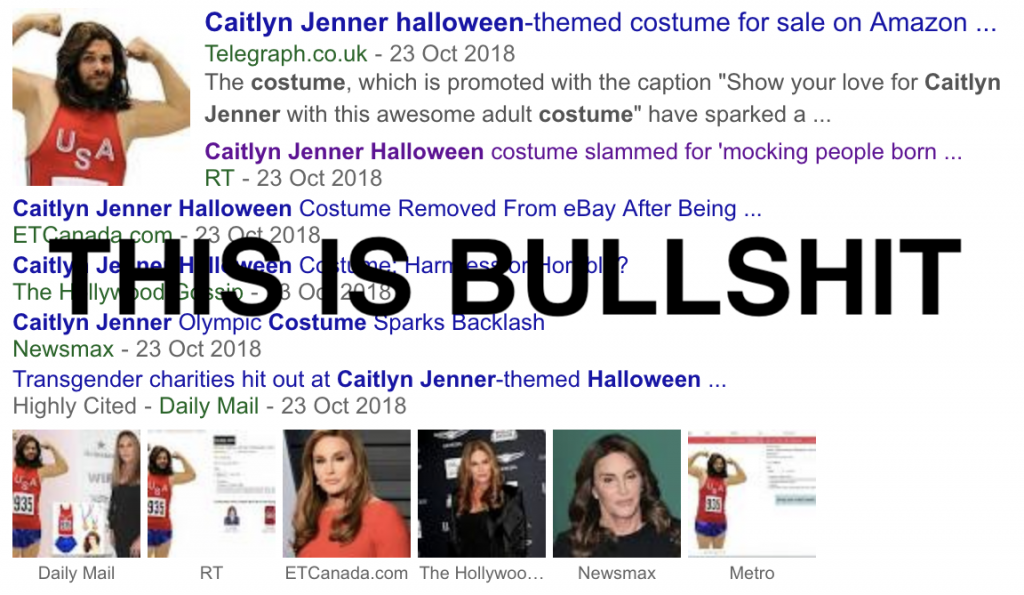
    The current obsession with us isn’t helping. We’re facing incredibly dangerous threats to our human rights (and in the US, our healthcare); instead, the papers run with tales of how everybody’s upset about an offensive Caitlyn Jenner hallowe’en costume. Believe me, most of us don’t give a shit. Similarly the well-intentioned but wrong-headed use of the world “menstruators” by The Guardian in a piece about women’s reproductive health: it was a clumsy attempt to include trans men (people assigned female at birth who now live as men) but was instantly portrayed as the sinister trans lobby perverting language to erase women.

    To use the Scots phrase, it wisny us.

    I don’t give a shit. I’m too busy filling out yet more documents about my name change over a year since it actually changed, trying to persuade Equifax that no, I haven’t been a victim of fraud, I’ve just changed my name. I’m too busy trying to solve the problem with my prescription where the doc prescribed a hormone the NHS won’t pay for and I can’t afford to source privately. I’m too busy wondering whether I’ll get yelled at when I go for a piss. I’m too busy working to pay for the electrolysis that often leaves my face bleeding and swollen for days afterwards.

    I don’t recognise the caricature of trans people I see in the newspapers, discussed on TV, shared on social media. I know quite a lot of trans people now (as the joke goes, everybody assumes you know every other trans person, and that’s not true, but then they mention Natalie and Katharine and of course you know them), and none of us are spending any time whatsoever fussing about language, worrying about stupid hallowe’en costumes or trying to destabilise the very fabric of society. We’re just doing what you’re doing: trying to get on with our lives.

    But there’s a narrative, and once you notice it you see it everywhere. Trans people as dangerous, intolerant others, a sinister force to be resisted by all right-thinking people. It’d be laughable if it weren’t causing real-life misery for trans people.

    As I’ve said before, there are so few of us the Girl Guides could totally take us in a fight. There are no trans MPs, MSPs or MEPs in the UK, no trans people with weekly newspaper columns, no trans judges or trans newspaper editors or trans talk show hosts or trans bosses of FTSE 100 companies.

    The coverage of us, the obsessive coverage of our supposed threat to all that’s right and good, is massively disproportionate and completely unrepresentative. Of course it is. Almost all of the coverage is about us, but without us.

    Again and again I see stories purporting to be about what trans people are like, what trans people think, what trans people want. Number of trans people spoken to: none.

    Here’s my reality, over and above the usual stuff: working, trying to be good for my kids. It’s getting stared at everywhere you go. It’s being afraid to use a toilet. It’s being tired of correcting people about your name. It’s about being called the big man when you’re sitting there in a nice dress. It’s clothes that don’t quite fit, no matter how hard you try. It’s taking a deep breath every time you open a door. It’s scraping off the gel from your nails and making sure there isn’t a trace at your child’s birthday party for fear of what the other parents may think. It’s asking your friends if the gig they’re inviting you to is going to be safe for you. It’s seeing a photo of yourself when you thought you looked quite nice and realising you’re a laughing stock.

    It’s shit.

    I just want a quiet life: I’d much rather spend my time thinking about guitars and girls, not gender politics. But to be trans right now is to be a very visible foot soldier in a war other people are fighting.

    McBee again:

    But reducing trans people into a symbolic vanguard is not only dehumanizing — it’s dangerous. True progress happens when all of us are released from the realm of “other” — which means allowing trans people to captain our own stories, where we can depict ourselves as fully fleshed-out people: not just brothers, mothers, neighbors and friends, but also reflections of an aspect of humanity as old as time. We’re not metaphors; we’re who you would have been if you’d been born trans.

    I can’t put it better than that. We’re who you would have been if you’d been born trans.

  • I haven’t got a Scooby

    This, from Reddit, made me laugh.

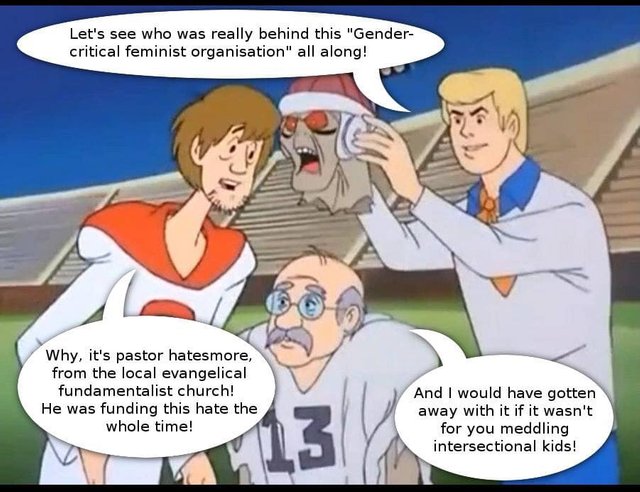
    I’m going to a wedding today, my first one as me. The reception is fancy dress, and I’m going as Velma from Scooby-Doo. Jinkies!

  • Unexpected item in the fast lane area

    I’m very cynical about driverless cars. To an extent I think they’re a solution to the wrong question: now that humans are largely a city-dwelling species (and one facing devastating climate change), the smart thing to do would be to make public transport better and more efficient. For example, I live in Glasgow: our buses pollute, and our subway system is tiny and shuts down completely every Sunday evening at 6pm.

    Expanding the Subway, as in this proposal, would transform public transport in my city and make thousands, maybe millions, of car journeys unnecessary. Unfortunately doing so would also cost £5 billion, at a time when some of our city’s treasures are under threat because of maintenance costs. I’m not optimistic.

    There are other ways to improve cities. Electric bikes take up considerably less room than cars do and require considerably fewer resources to make and to power: because they don’t have to hurl one and a half tons of metal around, they use a fraction of the energy electric cars do. You don’t need enormous parking spaces, or wide streets, or any of the other things we need to cater for enormous vehicles that typically contain just one person.

    But underground trains and bikes aren’t sexy, and driverless cars are.

    My concern isn’t just the environmental impact. It’s the tech. We can’t get wireless printers to work. We think the tech industry can make driverless cars safe?

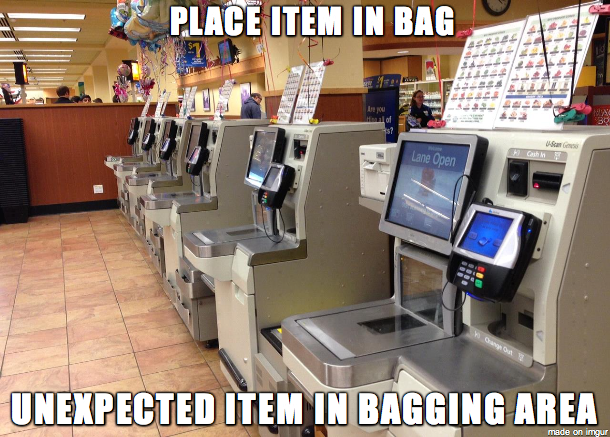
    This Twitter thread by Michael T Spooky (everybody on Twitter changes their name for October; I’m currently Carrie, Like In The Film Carrie) articulates it very well by comparing self-driving cars to the self-checkouts you find in shops.

    I agree with him on this bit:

    …making an automated system that’s 95% as good as a human is relatively easy and one that’s 100% as good as a human is very hard. I think it’s becoming clear that autonomous vehicles are going to turn out like this

    Self-checkouts aren’t fully automated. They’re semi-automated. The tech isn’t good enough to ensure that, say, eight people can checkout simultaneously without any of the tills going in a strop. I used one yesterday that in best Trump style refused to accept the existence of biscuits.

    So what happens instead is you get things mostly automated, with a human overseer. That’s fine for checkouts. It’s not so good for cars.

    A driverless system that needs human supervision isn’t driverless.

    Tech is invaluable in cars. From ABS to airbags, traction control to parking sensors, it makes cars safer. But I think it’s best suited to driver assistance, not driver replacement. Driverless vehicles work fine on rails – the aforementioned Subway is getting driverless trains in 2020 – or in the air (fans of driverless cars like to talk about the success of autopilot, which is of course a great technology. However, show me the autopilot that can handle Glasgow’s West End during the school run). But on the roads the challenge is almost infinitely complex and the stakes are incredibly high.

    As Mr Spooky concludes:

    …when you hear the “World of Tomorrow” tales about driverless cabs whisking us on couches everywhere at 120mph, please also realize that the UNKNOWN ITEM IN BAGGING AREA dystopia is a just-as-likely path.

  • We’re not scaremongering, this is really happening

    (The title comes from this Radiohead song)

    I’ve used the phrase “when they’re done with us, they’ll come for you” a few times in this blog: my theory, for which there is tons of evidence, is that trans people are often the canaries in the coal mines. The people that are hateful towards trans people are usually hateful to other groups, such as gay people, women, or ethnic minorities. The organisations that fund or promote anti-trans views are usually against LGBT rights and women’s reproductive freedom.

    The organisation responsible for this week’s Trump anti-trans memo is the office of Health and Human Services, HHS for short. It’s a huge part of the US government: it controls the Centers for Disease Control and Prevention, the National Institute of Health, Medicare/Medicaid and much more.

    And as Rolling Stone reports, it’s been slowly but surely populated with extremists.

    It was a coup, then, when Trump installed pious orthopedic surgeon Tom Price as secretary, who, with the help of the office of Vice President Mike Pence, began stocking the department with an army of culture-war veterans plucked from the country’s most radical religious organizations — the archconservative Family Research Council, the anti-abortion Susan B. Anthony List, Americans United for Life, and the National Abstinence Education Association among them. By the time Price was forced to step down over a spending scandal last September, HHS had already been transformed into what the Family Research Council called “a virtual promise-keeping factory” for Christian conservatives.

    Some of these organisations will be familiar to trans people: The FRC in particular is driving the wedge strategy that attempts to build bridges with feminist women against transgender people in order to split the T from LGBT. If you’re in the UK and puzzled by the sheer volume of anti-trans coverage in recent months, follow the money. A lot of it comes from the US.

    These organisations aren’t just anti-trans, or anti-gay. They’re anti-women.

    As Shannon Royce, an alum of the Family Research Council and current head of the Center for Faith-Based and Neighborhood Partnerships at HHS, told a gathering of evangelicals in January, Trump’s HHS “is absolutely a pro-life team, across the spectrum, and that is playing out in many ways.” The “team” has found ways to codify its agenda in corners as disparate as the annual budget for the Centers for Disease Control and Prevention, where the words “fetus” and “transgender” were banned, to the Administration for Community Living, which eliminated questions about sexual orientation from a survey of seniors and people living with disabilities. Royce herself was particularly proud of wedging into HHS’ strategic plan a sentence that redefines life as starting at the moment of conception..

    Evangelicals have essentially bypassed the courts. By taking control of HHS, they can deny abortions to women without having to wait for Roe vs Wade to be taken down.

    Rolling Stone describes the way things are working in ORR, the part of HHS that puts foreigners in camps and splits children from their parents.

    It’s not unusual for girls to arrive at an ORR shelter already pregnant, many as a result of their journey. According to a 2010 Amnesty International estimate, six in 10 female migrants are sexually assaulted at some point during their crossing.

    Scott Lloyd is the director of ORR and compares abortion to the Holocaust.

    During the Obama administration, requests for abortion were only elevated to the director’s office if there was a question of funding. (Under the Hyde Amendment, the federal government can pay for abortions only in cases of rape, incest or if the life of the mother is at risk.)

    …Before Lloyd was even sworn in as the head of the ORR, he ordered an accounting of all pregnant girls in the office’s custody. Internal e-mails show an ORR staffer had to cross-reference reports looking for indications of a possible pregnancy and call each shelter to verify the information before coming up with a tally of 38 girls in 18 shelters. After that, Lloyd began receiving a spreadsheet on a weekly basis listing every pregnant underage girl, her location and number of weeks gestation.

    As this crisis has been unfolding on his watch, Lloyd has been micromanaging pregnant minors — in his own words, a “tiny fraction” of the population ORR serves. But he has not approved a single abortion. Not even for a young rape victim who threatened to kill herself if she was forced to remain pregnant. “It will not undo or erase the memory of the violence that was committed against her, and it may further traumatize her,” Lloyd wrote in his official memo denying her the procedure, annotated with links to pro-life literature he said he found on the Internet.

    If I were a woman in America right now, I’d be terrified.

  • Wired: Trump’s plan to redefine gender makes no scientific sense

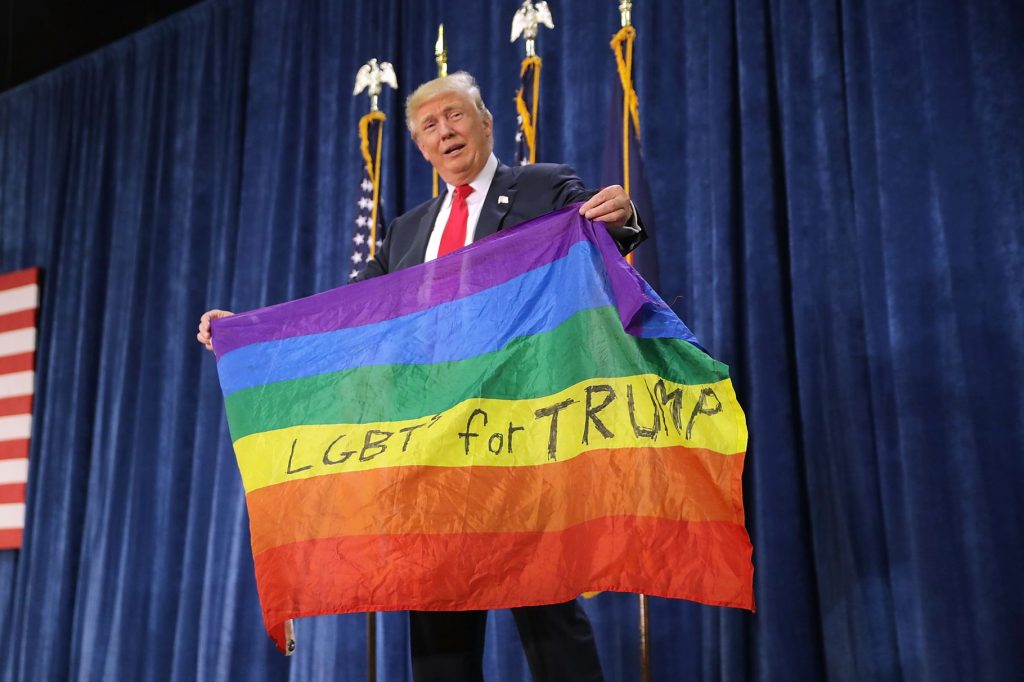
    There have been a lot of pro-science pieces in the aftermath of the Trump anti-trans memo, and while none of the science bits will be new to readers of this blog it’s still heartening to see mainstream media outlets battling misinformation from a man who actively courted LGBT voters before embarking on a campaign of cruelty against transgender people.

    I like the cut of Wired’s jib.

    Basically no scientist who knows anything about this stuff subscribes to the idea of the strict “gender binary” anymore.

    The article is a good primer on the basic science.

    a lot can happen on the road from embryogenesis to personhood. Sometimes the fusion of egg and sperm goes differently. People can be XXX, XXY, or XYY with no physiological indications. People can have some XX cells and some XY cells. Sometimes a person can be XX but have “male” physiognomy, or the other way ’round. Sometimes, to the tune of one in a hundred, a baby is born with genitalia that people in the room can’t agree on.

    Trump’s memo isn’t about science, of course. It’s an attempt to rouse the supporters for the mid-term elections by picking on one of the few groups it’s still safe to pick on: a group that unlike the wider LGB community has no political power and precious little media clout.

    There’s nothing remotely scientific about Trump’s so-called science. It’s science in the same way that some people call creationism a science, an attempt to reject the world as it actually is in favour of the world some bigots would like to see.

  • Beware the radicalisation of nice white people

    We’ve heard a lot about radicalisation in recent years. Radicalisation is the process of causing somebody to adopt radical – that is, extremist – positions on political or social issues. As The Guardian reported back in 2014:

    people’s beliefs are rarely determined by good evidence and sound reasoning alone. There are all sorts of psychological biases that make us more ready to believe some things rather than others. [People] who believe they are seen as nobodies in their own country are bound to be attracted by the idea of being heroes elsewhere. And once inside the bubble of an online network dedicated to the same cause, all their pernicious beliefs are reinforced.

    …once persuaded, we seek confirmation, not challenge.

    There’s an element of racism to the term: as the same Guardian article notes, one person’s radicalisation is another’s religious epiphany. But generally speaking, the process goes a bit like this:

    Person feels lost
    Person finds new friends
    New friends persuade them to hate a specified group
    Person becomes immersed in literature and comment demonising that group
    Person starts acting in a hateful way towards that group

    Sometimes it’s triggered by a traumatic event. Some muslim men were radicalised by war. Some anti-muslim people have been radicalised by terrorism. Some people have become radicalised against particular races after being assaulted by members of that race, or have become fearful of the opposite sex because of bad experiences with that sex. And so on.

    But sometimes it’s simply because somebody got caught making a mistake.

    You see it in media. Somebody writes an ill-conceived, poorly researched or just plain piss-poor thing concerning some marginalised group; members of that group respond angrily; the writer feels under attack and doubles down, writing even more inflammatory things; the group responds in even angrier ways; the writer becomes angrier still and starts accumulating supporters who hate the group even more than they do, becoming increasingly convinced that the group is the embodiment of pure evil; and so on.

    Somebody who started off as a perfectly decent human being ends up inhabiting a bubble of bigotry and becomes a frothing, intolerant, abusive arsehole.

    I’m not going to name specific people, because the people I have in mind are notorious for searching their own names on the internet and sending their many thousands of followers after their critics.

    It’s interesting and saddening to see: it’s a journey where mild ignorance becomes outright hatred. People just like you and me, ordinary, reasonably intelligent people, become howling bigots who obsess over the perceived evils of some minority or other. And because they have a powerful platform, whether that’s in traditional media or on social media, they can do a great deal of damage. Their platform becomes a bully pulpit.

    It’s radicalisation, but we don’t call it that when the hate preachers are white and shop in Waitrose.

    The Guardian again:

    The truth is that what we currently call radicalisation is not some sinister manipulation, but a process by which people come to freely choose a dangerously and wickedly misguided path that they nonetheless perceive to be a virtuous calling.

    There is nothing psychologically unique about this. The road to inhuman terror starts with all-too-human error.

  • None so blind

    Image by Prentsa Aldundia, some rights reserved.

    I was in the pub the other night, and two men were talking loudly about feminism. They were early thirties, clearly well educated – one was a teacher – and both parents of young girls. And they felt that feminism in general and the #metoo movement in particular had gone too far.

    People like Harvey Weinstein were abominations, monsters, they said. But they were incredibly rare. And because of their monstrous behaviour, all men were being unfairly accused. Most men are not monsters. Most men are good men. Good boyfriends. Good dads. Good husbands. Good friends.

    They were right, while also being dangerously wrong. People like Weinstein are rare, but it’s not because abusive men are rare. It’s that most abusive men with that kind of power and privilege aren’t usually stopped. One of them, you may have noticed, is in the White House.

    And yes, most men are not monsters. But every day women are harassed, exploited, abused or controlled by people who are not monsters. Good boyfriends, good dads, good husbands, good friends. Every single woman I know has endless tales of abuse: some of it in the street, some of it at work, some of it in their homes. Often by people they thought they could trust.

    The guys at the bar were essentially arguing that now the likes of Weinstein, Bill Cosby and Louis CK have been exposed (although not necessarily punished: CK is making tentative steps to return to his millionaire comedy career; many other people identified in the #metoo campaign don’t seem to have suffered anything beyond bad publicity) it was time for women to stop. The problem has been solved.

    The problem hasn’t been solved.

    In the UK, a nine month inquiry by a government select committee has confirmed what every woman already knows. Sexual harassment of women and girls is “relentless” in bars and clubs, in universities, in parks, on public transport, on the street and on the internet. The stories my girlfriends tell me would break your heart.

    Men don’t see it because they don’t experience it. And because they don’t see it, otherwise intelligent men like our two bar patrons choose to believe what they have, or rather haven’t, experienced. Let’s give them the benefit of the doubt and assume they’ve never made a girl or woman feel uncomfortable, pressured someone to do something they didn’t want to do, had a sexual encounter where consent was murky. Because they aren’t bad guys, no guys are bad guys.

    For as long as men won’t listen to women, for as long as women’s experiences are dismissed by men who think they know better, women will continue to feel unsafe. Because they are.

    Update: there was a discussion about this very thing on Radio Scotland this morning shortly after I wrote this post. As contributor and retired policeman Graham Goulden put it, “some men are the problem, all men are the solution.”

    This isn’t about demonising men. It’s about recognising that the world is different for men. Men are never told to walk without wearing headphones, as women are currently being told to do in London while a serial attacker remains free. Men are never told to stay home at night when there have been a series of attacks. Men don’t have to worry about people spiking their drinks. Men don’t generally get sexually harassed at work, or fear sexual violence.

    That doesn’t mean we shouldn’t tell our daughters to be careful. But we should also teach our sons not to be, associate with or defend the kind of men our daughters need to be careful of.

  • Make America Think Again

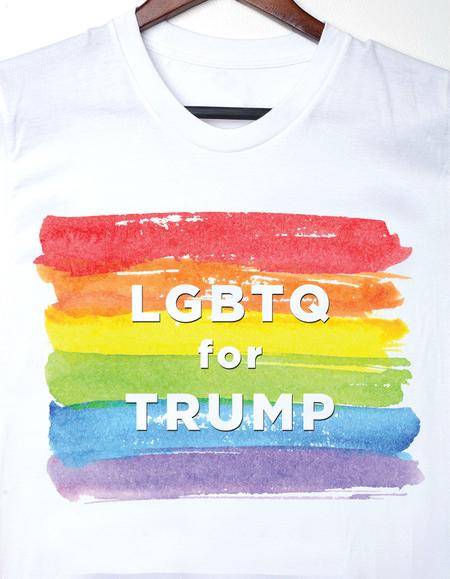
    Incredibly, you can still buy these from the Trump campaign’s online shop.

    I have some other suggestions. Turkeys for Christmas, perhaps. Women For Weinstein. Gypsies for Hitler.

  • The extraordinary complexity of sex determination

    I’ve posted this before, but Scientific American reposted it today in light of the Trump memo.

    Determination of biological sex is staggeringly complex, involving not only anatomy but an intricate choreography of genetic and chemical factors that unfolds over time. Intersex individuals—those for whom sexual development follows an atypical trajectory—are characterized by a diverse range of conditions, such as 5-alpha reductase deficiency. A small cross section of these conditions and the pathways they follow is shown here. In an additional layer of complexity, the gender with which a person identifies does not always align with the sex they* are assigned at birth, and they may not be wholly male or female. The more we learn about sex and gender, the more these attributes appear to exist on a spectrum.