Author: Carrie

  • What should a trans woman sound like?

    I’ve just done a radio interview, with a preamble I’m used to:

    Me (on phone): Hello!
    Researcher: Hi! Can I speak to Carrie Marshall, please?
    Me: Speaking!
    Researcher: [pause]

    Then professionalism kicks in and the researcher tells me what they’re calling about.

    It’s not a big deal; just one of those things you get used to. But it’s one of the reasons people like me do voice therapy to try and get more feminine voices. What causes a little pause for a radio researcher or a frustrating conversation with a car insurance provider can be a lot more serious in public; I can go about my business without being noticed a lot of the time, and then someone hears my voice and suddenly I’m the centre of their attention. I haven’t encountered any trouble as a result of this, but I can’t help adding a word to the end of that statement: I haven’t encountered any trouble yet.

    In some parts of the world, attracting other people’s attention can be fatal. Today is yet another day when my news feed brings me a story of a young trans woman who’s been murdered and multiple cases of trans women being abused or assaulted because someone took exception to their existence (trans men face many dangers too, of course).

    For some trans women, a more feminine voice can mean safety.

    The Guardian quotes Christie Block, a speech pathologist:

    “Vocal training can help trans women deal with situations where they’re in danger,” Block said. “I work with clients to show them how they can use their voices and what they can say in dangerous situations as an actual vocal task to practice.”

    For trans men, hormone treatment deepens their voice naturally. It doesn’t work the other way, sadly: testosterone’s effects on your vocal cords are pretty much irreversible unless you go for surgery – which as a singer, I wouldn’t risk even if I could afford it.

    For trans women, changing your voice means battling a combination of physiology, embedded habits and socialisation. Men and women talk differently for a mix of reasons, and you need to address all of them if you want a more feminine voice.

    As I understand it there are three key differences between male and female speech. The most obvious but least important is pitch, which is how high or low your voice is: some of my female friends’ voices are almost as deep as mine, but they are still unmistakably female.

    That’s because of reasons two and three: resonance and variety. The former is about where your voice comes from, with men generally speaking from their chest and women from higher up; the latter is about the variety in tone when you speak. That’s entirely socialised: there’s no biological reason why men should talk in near-monotones when women don’t. It’s just that we’re conditioned to take strong, monotonous voices more seriously than more interesting, varied expression. The former is supposedly authoritative, the latter frivolous.

    Serena Daniari in The Guardian:

    Throughout my own transition, I’ve often wondered whether my voice, which is deeper than that of the typical cisgender woman, diminished my value as a woman. Hormones and surgical alterations had feminized my exterior, however, my voice had not changed and was a persistent source of frustration and angst for me. At times, I wished for nothing more than a voice that was considered “pretty” and “passable,” wanting to change every aspect of my identity in order to live up to what society expects women to be: submissive, subdued, sensual, and feminine.

    Over time, I’ve realized that there is no one way for a woman to sound.

    I hate voice therapy and wish I didn’t have to do it, but while I don’t want to have a stereotypically female voice I’ve become really unhappy with the old-me voice, as lovely as it was. So my therapist is helping me work towards a more androgynous voice: not high-pitched, but slightly higher and a lot more interesting.

    Maintaining it is hard, and I don’t use it in public yet – although when I do phone-in radio interviews or use the phone for work I do make a conscious effort to maintain the right pitch and resonance. I can’t quite bring myself to use it around my friends, though. For some reason I find that horribly embarrassing and much more difficult than in a work situation. A big part of it, I’m sure, is years of seeing trans people portrayed on screen as men with squeaky, unconvincing voices and being scared that’s how I’m coming across to people I want to like or love me.

    I have an odd relationship with my voice now, because it’s part of my wider identity as a trans woman: I’m not trying to get a woman’s voice; I’m trying to find my voice.

    Daniari:

    Like me, Primrose has veered away from the the goal of “passing” as a cisgender woman. Instead, she is working towards achieving a voice that is personally fulfilling. “I want to be the person that I’m comfortable being,” Primrose said. “I don’t necessarily want to have a high voice because it makes you approximate cis women. I don’t care about that. I feel no shame about being trans. It’s who I am. It’s my life’s journey. It’s my identity.”

    I can really relate to that. I’m not a cisgender woman and I’ll never sound like one, but that’s okay, most of the time.

    My natural voice is different already – I speak much more softly and slightly higher than I did before I started being me full time – but maintaining a more feminine voice is very tiring and takes tons of practice. Because I sing a lot my voice gets a lot of abuse, which works against the feminisation by dragging the pitch of my voice down considerably, and because I have children I constantly get the cold, which does the same. But despite the difficulties, the feeling stupid and the frustration when my voice flatly refuses to play along, I’ll persevere.

    It’s the trans experience in microcosm: a lot of work over a very long time so I can feel a little more accepted, a little more comfortable, a little less scared.

    PS: As I went to hit publish on this post, my phone went.

    Me: Hello!
    Researcher: Hi! Can I speak to Carrie Marshall, please?
    Me: Speaking!
    Researcher: [pause]

  • A black tie event

    I went with a friend to see Grace Petrie last night. If you’re not familiar with her work, she’s a protest singer with a big voice and an even bigger heart. She described this song, Black Tie, as “the closest thing I’ve had to a hit.” It was spellbinding last night, Petrie solo with just an acoustic guitar.

    This was the only one of her songs my friend and I had heard before last night. We were there as much for political reasons as musical: Petrie has been a vocal friend to trans people, and as a result she’s been subject to appalling online abuse. I figured if someone’s willing to put up with that shit on our behalf, the least we can do is go to one of her shows.

    I’m glad I did. Petrie is a born storyteller, but while her between-song chat is hilarious her songs have real emotional heft. This song had me (and the young woman in front of me) in floods of tears.

    As is often the case with Petrie, the intro is as long as the song. But it’s worth keeping your finger off the fast-forward button because it adds some extra colour to an already beautiful piece of music.

    Last night’s show was a real revelation, and my pal and I are now big fans with official merchandise to prove it. If you go to smaller gigs and you can afford it, please buy something from the merch stall: musicians at this level are barely getting by and a few T-shirt sales can make a big difference to whether or not they can afford to pay the rent.

    Petrie’s tour is over now, but she’s back soon as support for The Guilty Feminist tour in a couple of weeks time. I think tickets are still available, and she’s worth turning up early for.

  • It’s almost as if they aren’t really serious

    When Theresa May allied with the notoriously anti-LGBT DUP, the government promised significant investment in promoting LGBT rights in Northern Ireland. Channel 4 News has investigated and discovered exactly how much has been spent to promote equality in a country of 1.871 million people.

    £318.

    You may be wondering: what amazing things was this incredible amount of money spent on?

    The answer: rainbow-coloured lanyards.

  • Trans patients left in limbo

    My former doctor has been suspended by the General Medical Council. Dr Mike Webberley, who took over the care of trans patients when his wife Helen was censured over an administrative issue, is no longer able to treat patients in the UK.

    I don’t know the ins and outs of this one, but I do know what Dr Webberley was like as a GP and I also know that trans-affirming private practitioners have been subject to ongoing campaigns demanding their suspension for some years now. As far as I’m aware the suspension is another administrative one, based on Dr Webberley having not completed a professional course or being on a recognised register of practitioners.

    I doubt it’s a coincidence that the Webberleys have become hate figures among the anti-trans activist crowd, who accuse them of sinister behaviour and that old favourite, child abuse.

    Webberley’s online practice, GenderGP, is a lifeline for many trans people. It enabled me to stop potentially dangerous self-medication and undertake supervised and conservative treatment instead, treatment that required extensive psychological assessment and various medical tests over a period of several months before it was prescribed and ongoing testing as it continued.

    The idea of Dr Webberley as some kind of crazed zealot handing out HRT like sweets simply doesn’t match the reality I experienced. He’s a GP, not a mad scientist, and in my experience he’s a thoughtful and patient professional.

    The decision leaves some 1,600 patients in limbo. That number is a devastating indictment of the current system: these are people who’ve been forced to go private because the NHS simply can’t cope.

    In my own experience, the road from initial referral to an NHS diagnosis took 23 months; from referral to my first NHS counselling appointment was 29 months.

    By UK standards, that’s incredibly fast. As The Guardian reports, trans and non-binary people in the UK face incredibly long waiting lists. The best figures available to me show that in England, waiting lists for a first appointment are now as long as two years followed by another two year wait to meet with a doctor. That’s a four-year wait for people who may very well be in crisis.

    The usual newspapers like to run scare stories about the growing number of people being referred to gender clinics, but that increase was predicted more than a decade ago: in formal submissions to the UK government, the Gender Identity Research and Education Society (GIRES) predicted that increasing visibility and understanding of trans and non-binary people would mean more people wanting to access NHS services.

    As GIRES put it in 2009: “Policy makers and [NHS] service providers at national and local level are largely flying blind in… meeting the healthcare and other needs of trans people.” In 2009, the NHS gender clinics were already struggling to cope; with referrals growing 15% year on year, GIRES predicted a massive capacity crisis. Which is exactly what we have now.

    Chances are, you haven’t attended a gender clinic. My one, by all accounts, is one of the better ones, less overloaded than the English ones. But it can’t afford to have reception staff full time, and the delay between a doctor dictating a letter and having it typed is two months. Like all mental health services (being trans isn’t a mental illness but it’s still treated under the auspices of mental health provision), gender clinics are desperately underfunded and very close to breaking point. Some of the English ones appear to be broken.

    As GIRES also noted in 2009, “The NHS facilities are sometimes overloaded… the private health sector plays an important role. It takes pressure off the NHS facilities and thereby improves the overall level of care for people seeking treatment for gender dysphoria.”

    To shut down private providers without also expanding NHS provision is just another cruelty towards trans people. And it’s dangerous, because it’ll mean more of us self-medicating without medical supervision. As Tara Hewitt wrote on Twitter:

    [NHS] Trans services are failing but have a monopoly on care. Whenever private practitioners try to fill the gap they are targeted in an attempt to close them down. Shame on #gmcuk.

    I agree with the GMC on one thing: clinics like GenderGP shouldn’t exist. But not because they’re wicked. Because the NHS is failing thousands of trans people.

    The GMC seems very concerned about Dr Webberley’s paperwork. What about his patients?

  • How can you edit a paper if you don’t read it?

    James Doleman’s Twitter account is providing an unintentionally hilarious account of Katherine O’Donnell’s employment tribunal.

    Today, Times editor John Witherow is giving evidence. A pattern appears to be emerging.

    Counsel for the complainant presents to the court another Times article, a “self-identification,” of gender. This refers to the Soham Murderer, Ian Huntley, and suggests he was transitioning his gender. This, the lawyer said was false, “I didn’t know that,” Witherow replies

    Asked about an article that suggested the gender question was to be removed from the census, Witherow replied he didn’t know the article. So couldn’t comment on its accuracy

    Next Times headline Refer to pregnant people not women government suggests to UN.” Counsel points out the government said this was not true, “it was a suggestion” Witherow replies.

    The lawyer from the complainant asked the witness about a joke about Transgender people in the Times, “these things had been written about a black person you would have sent it back,” she says “It probably shouldn’t have went in,” Witherow replies.

    Next piece referred to was: “Trans women using the swimming pond in Hampstead heath were driving women away.” Counsel suggested that this was not accurate, “thats your assertion, I don’t know if its right or wrong,” the witness replied.

    The court was then shown another article: “Transgender row over sleeper train cabins.” The source was a post on Mumsnet, “from someone who hasn’t used the sleeper,” counsel says.
    Witherow: ““I don’t think this is the finest piece of journalism The Times has published, if I had seen it I would have spiked it.”

    You’d think the editor might be aware of the content of some of the paper’s more prominent exclusives. He’s also quick to defend columnists’ lurid allegations, such as trans people “sacrificing children”, as opinion rather than deliberate scaremongering.

    But for me, one particular exchange sums up the problem with trans reporting at The Times and Sunday Times: it’s relentlessly one-sided. It rushes to publish even the flimsiest allegation about trans people and doesn’t care when the allegations are proven to be fictitious and/or malicious.

    Counsel then notes The Times did report a case where a researcher on trans issues had his thesis rejected and went to the High Court for judicial review. “His case was dismissed without merit, did you know that?” Counsel asked.

    “We reported it,” Witherow replies.

    “You didn’t report the result,” counsel retorted.

  • Fun with filters

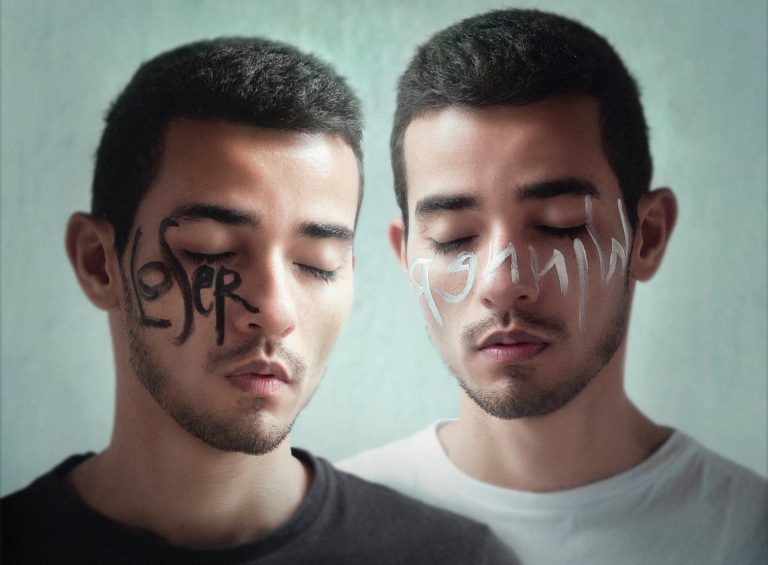
    The chat app SnapChat is back in the headlines after its new gender-swapping filter went viral. The filter makes boys look like girls and vice-versa, and as you can see above the results are pretty funny – although I seem to have the dubious honour of being the only person who looks older when the feminising filter is switched on. Boo!

    I think it’s just a bit of daft fun, albeit horribly stereotypical in its idea of gendered appearance, but on trans forums I’ve seen a range of reactions from trans people: some like me just want to see what it does and how daft the results are, but others see what they might look like after transition – or more poignantly, what they might have looked like had they transitioned. Not everybody is in a place where they can be themselves.

    Like anything else on the internet, some people have concerns about the filter – Time magazine covers the issues here.

    While many acknowledged that the filter is fun, for some it’s been jarring to see their social networks manipulating their gender so casually. Others have said that they are concerned that some people are using the filter in problematic ways.

    Most sensible concerns aren’t about the filters, but the way they’re being used. Some people – man people, inevitably – are using the filters to make profile pictures for dating apps. The intention is to have a laugh, and some have shared the saddeningly predictable responses they’ve received with hilarious consequences. But some people argue that what these people are doing ties into something that’s a lot darker, which is the concept of trapping.

    “Trap” is a word some people use to describe trans people, primarily trans women, who don’t look trans; it’s a trope in some pornography where a man is seduced by a beautiful woman before, surprise! But out in the real world, trap is a slur associated with violence. There have been multiple occasions of very violent and sometimes fatal attacks on trans women, the perpetrators claiming the “trans panic” defence: I took her home, I didn’t realise she was trans, and when I discovered the truth I lost my mind. It’s a variation of the gay panic defence, and sadly it’s still a legal defence in many parts of the world.

    As Cáel Keegan points out in the Time piece, playing around with gender is something many trans people don’t have the privilege to do in safety.

    “If trans people are accused of trapping, it can be deadly,” said Keegan. “It’s a privilege to be able to play with being a different gender.”

    I thought this post – which went viral on social media a few days ago – made a good point:

    For trans people, transition is a lot more difficult and a lot more painful than playing with an app on a smartphone.

    As one of Time’s interviewees put it:

    At the end of the day, you get to just turn it off and it’s not sort of a reality for you.

  • Manufacturing consent

    I’m indebted to Tennessee Pete on Twitter for the link to and commentary on this story:

    As he put it:

    This is such a good case study for manufacturing consent because it’s just… ‘in response to Iran’

    In response to Iran doing what?

    No, not in response to any provocation, just in response to Iran. The continued existence of Iran.

  • The Times on trial

    Imagine if the BBC had been taken to a tribunal over allegations of bullying, bias and malpractice so serious the entire management team were made to appear as witnesses. Newspapers would be all over the story, with good reason.

    As award-winning journalist Liz Gerard points out on Twitter, if you swap the BBC for The Times and Sunday Times, you get no coverage at all.

    As she puts it:

    Journalism is on trial here. Times editor John Witherow has been accused in open court of being a prejudiced bully who intimidates staff who disagree with him. An editor who sets an agenda and then tasks staff with proving his hypotheses. An editor “allergic” to facts.

    An editor who brushed aside an award-winning journalist’s “significant misgivings” and insisted that he write a story about a child being “forced into Muslim foster care” whose source was an oligarch friend connected to the case.

    His newspaper has been accused in open court – by two separate witnesses – of running a vendetta against transgender people. Of conjuring up and championing moral panic. Of distorting and corrupting journalistic values in pursuit of an agenda that pandered to the editor’s apparent dislike of various minority groups, including Muslims and transgender people.

    As Gerard rightly says, these allegations may yet be proven incorrect. But the lack of coverage is quite remarkable. Imagine if the same things were being said about the BBC and this was their defence witness list.

    • The editor
    • The deputy editor
    • The former deputy editor
    • The executive editor
    • The group managing editor
    • The assistant managing editor
    • The former assistant managing editor
    • The director of HR editorial
    • The HR manager Scotland
    • The chief night editor
    • The former chief night editor
    • The Scotland editor
    • The deputy Scotland editor
    • The former deputy Scotland editor
    • The executive editor of the Sunday edition

    One respondent, Jo Shaw, suggests one explanation for the lack of coverage:

    if case law is established that toxic editorial positions can lead to prosecutions if they create a discriminatory environment for an employee, then this is a disaster for them. Other titles will equally be terrified… they do not want to pump oxygen into the story and risk a slew of legal actions against them by employees (LGBT+, Muslim, possibly even EU nationals) which might damage their ‘right’ to print any old discriminatory rubbish they want.


  • For God’s sake, vote

    These are the politicians who passed the horrific anti-abortion bill in Alabama. Notice any similarities?

    It’s easy to look across the Atlantic in horror at Dark Ages throwbacks such as these yahoos, but don’t forget that right here in the UK abortion is still illegal in Northern Ireland, as is equal marriage.

    In Northern Ireland, the people most likely to be in favour of women’s reproductive freedom are much less likely to vote than their religious counterparts.

    In the 2015 UK elections, 70% of Catholic women voted but just 55% of Protestant women did. That wasn’t a one-off, either. The pattern has been evident in elections from 1998 onwards.

    There are multiple reasons for this, including disengagement from politics and a belief that politicians of all stripes aren’t trustworthy. In the US, the religious right actively engages in voter suppression. But the fact is that if you’re a woman or a member of a minority group, voting isn’t optional: it’s crucial. Because the people who want to restrict your rights vote religiously. Pun fully intended.

    There’s a wider issue here, which is about representation more generally. Why aren’t politicians more representative of their diverse constituents?

    Here’s Bernard Farga of Indiana University. Farga is the author of The Turnout Gap: Race, Ethnicity, and Political Inequality in a Diversifying America. Farga answers an interesting question: how can a country such as the USA, which is becoming significantly more diverse, elect politicians who cater only for one specific group – right-leaning white people?

    I think there’s a countervailing force to this “demographics are destiny,” which is polarization. At the same time that demographic change has happened, we’ve seen racial polarization of partisanship where whites have become substantially more Republican. And despite the fact that the nation is becoming more diverse, and maybe 40 percent minority by 2020, whites are still the majority by far, and will be the plurality group for generations to come… if the parties split on race, then the party that’s catering to white voters will still be dominant.

    One reason for that is that the groups the politicians choose not to represent have much lower voter turnout.

    …the increase in the minority population is disproportionately among very low-turnout groups: Asian Americans and Latinos. Latinos are the largest minority group in the country; Asian Americans are the fastest-growing minority group in the country. So, these two groups, where turnout rates are as much as 30 percentage points lower than the turnout of rate of whites, that’s the demographic change we’re seeing.

    So that means the voting population is lagging far behind the demographic shift that we’re seeing otherwise. And when you combine that with polarization, it means that demographics aren’t destiny… demographically, whites are still a majority of the potential electorate, and the clear majority of the voters.

    To simplify something that’s obviously a lot more complex and multifactorial: in the short term, political parties can gain power by ignoring minority groups and pandering solely to the demographic that delivers the most votes. It’s why conservatives put so much effort into appealing to older, white, straight, people: the turnout among other groups means they can effectively be ignored. Improving turnout is therefore crucial if we want a fairer, more representative politics.

    Farga isn’t optimistic about where the current divisive politics leads.

    …beyond who wins and who loses, it’s about having elections that represent the will of the people, and I think when you don’t have that—no matter who wins or loses—in terms of which party, the outcomes are bad. I think that some of the divisiveness and divisions that you see right now—the polarization—is a product one of the parties… feeling that the strategy to win is basically to keep people from voting, that the only way they can win is by certain people not turning out, because that seems to be what was successful in 2016 and a few elections before that, like 2014 and maybe 2010.

    That’s dangerous, because when we start talking about outcomes that are not seen as representative of all the people, and then one party disproportionately winning those outcomes, then the other party says, “Well, this is illegitimate.” And that’s where you see democratic breakdown.

  • “Extreme right wing fundamentalists with a history of abuse are being given the red carpet treatment at Holyrood”

    Scotland’s only openly transgender elected official has resigned over “institutionalised transphobia” in the SNP. Dundee councillor Gregor Murray has repeatedly clashed with senior SNP figures including Joanna Cherry and Joan McAlpine.

    Murray:

    The SNP has a major institutional problem with transphobia, and is doing nothing to rectify this.

    While they rightfully condemn Labour for anti-semitism, and the Tories for anti-Islamic sentiment, they remain silent on anti-trans sentiment at all levels within the party. Councillors, MSPs and MPs have been openly transphobic for months, and the party hierarchy has done nothing to stop them. Nicola Sturgeon’s words on these matters have been perfect – but we do not need any more words, we need action.

    There are two main issues that Holyrood are considering right now that affect the trans community – the census, and the Gender Recognition Act (GRA).

    “Both of these policies are going through committees with transphobic conveners. Extreme right wing fundamentalists with a history of abuse are being given the red carpet treatment at Holyrood in the party’s name.

    SNP MSPs and MPs are attacking trans people, misgendering us and supporting further attacks.

    It’s easy to read this as a someone with an axe to grind – Murray says they’ve faced “scurrilous” and “vexatious” allegations and that the party has effectively left them to face those allegations alone – but there does appear to be a problem with some MPs and MSPs. For example, Cherry and McAlpine have clearly allied themselves with some of the worst anti-trans organisations and sentiment.

    I hope my MP is different. After writing to him about GRA reform and trans rights generally, I’ve been invited to come and meet him for a chat.