Author: Carrie

  • Are we the gullible ones?

    Yesterday I linked to a story about a man and a very strange sequence of events – please read it before reading this, or it’ll spoil the story for you.

    The story asked, “Is this the most gullible man in America?” but some readers are wondering if perhaps we’re the gullible ones too.

    The story, which is about a law professor who appears to be the victim of a bizarre fraud campaign involving harassment and fake paternity claims, is based entirely on his recollections and claims. It puts forward his account of events that are still under investigation and/or the subject of lawsuits, something that could be considered as an attempt to influence the outcome of those investigations and lawsuits. That’s mentioned in the piece:

    Harvard has yet to decide Hay’s fate, but according to multiple off-the-record sources, Hay has already run afoul of investigators for reaching out to journalists (namely me), which they view as an act of retaliation. Harvard has also required Hay to undergo “coaching” for boundary issues.

    There are also some odd details in the piece, such as this one:

    “[My wife] says my women friends always have ulterior motives, and my response has been that my best friends have been women for my entire adult life,” he says.

    The piece moves on from there, but I’m intrigued by that quote. Why doesn’t his ex-wife trust women to be friends with him?

    The piece goes into a lot of detail about who said what and where, but misses at least one bizarre event:

    One incident between the graduate student and Hay took place on 10th August 2017. At 8.35 PM, Cambridge police responded to a 911 call at her address and said they found the professor hiding outside.

    “[Detectives] arrived on scene and located Bruce Hay hiding in the bushes two houses away from [the graduate student’s residence],” a police report says. The report adds that Hay was briefly detained outside the house, and was then served with a restraining order and warned not to contact the graduate student and stay 100 yards away from her at all times.

    Douglas Brooks, Hay’s attorney, told babe the restraining order was dismissed a week later. He said that Hay owned the house the graduate student and her family were “illegally occupying,” and that he was hiding outside because he was trying to retrieve his children’s cat, which they were “effectively holding hostage.” These claims are disputed by the graduate student.

    You’d think that’s the kind of event a journalist wouldn’t be able to resist, but presumably the professor didn’t provide that story.

    That’s not to say the article isn’t true or the events described didn’t happen exactly as the story says. And of course, victims are victims whether they’re saints or sinners. But as some commenters on MetaFilter have pointed out, it does feel like there’s much more to this strange, deeply unpleasant story than made it to the page.

  • The most gullible man in America

    I read this at the weekend in New York magazine, and I was open-mouthed for most of it. It’s a story that starts bad, gets worse and then goes rapidly downhill from there.

    On March 7, 2015, Harvard Law professor Bruce Hay, then 52, was in Tags Hardware in Cambridge, Massachusetts, near his home, when a young woman with long reddish-brown hair approached him to ask where she could find batteries. It was still very much winter, and, once the woman got his attention, he saw that underneath her dark woolen coat and perfectly tied scarf she was wearing a dress and a chic pair of boots — hardly typical weekend-errand attire in the New England college town. When he directed her to another part of the store, she changed the subject. “By the way, you’re very attractive,” he remembers her saying.

    I don’t want to give anything away. You’ll read it from behind your fingers.

  • “I wondered which one of us was wrong about who I was.”

    A beautiful, sad piece by CJ Hauser in The Paris Review.

    There are worse things than not receiving love. There are sadder stories than this. There are species going extinct, and a planet warming. I told myself: who are you to complain, you with these frivolous extracurricular needs?

  • The best of both worlds

    I was having a bad day on Saturday so I went to the pub to cheer myself up. It wasn’t entirely successful.

    First, a young woman who’d been standing next to me at the bar heard me speak, turned, and stared at me with open disgust.

    A few minutes later a drunk thirtysomething man put his arm around me and demanded I talk to him.

    That’s one of the great things about being trans. Why have your evenings ruined by people of just one gender when you can be made miserable by two?

    As Cartman from South Park put it:

  • “Weddings are holiness and booze, sweat under the dress, sweet icing in the mouth.”

    A lovely piece by Leslie Jamison about attending weddings.

    Everyone talks about weddings as beginnings but the truth is they are also endings. They give a horizon of closure to things that have been slowly dissolving for years: flirtations, friendships, shared innocence, shared rootlessness, shared loneliness.

  • I’m hacked off with it too

    I’ve written before about the toothless press regulator IPSO, which was set up by the press specifically for the purpose of not regulating the press. To take just one recent example, IPSO found that when The Times makes up quotes, doing so doesn’t breach the rules on accuracy.

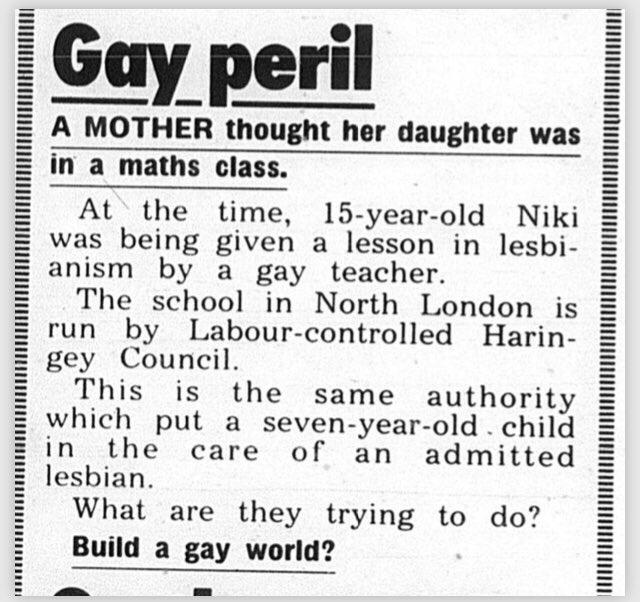
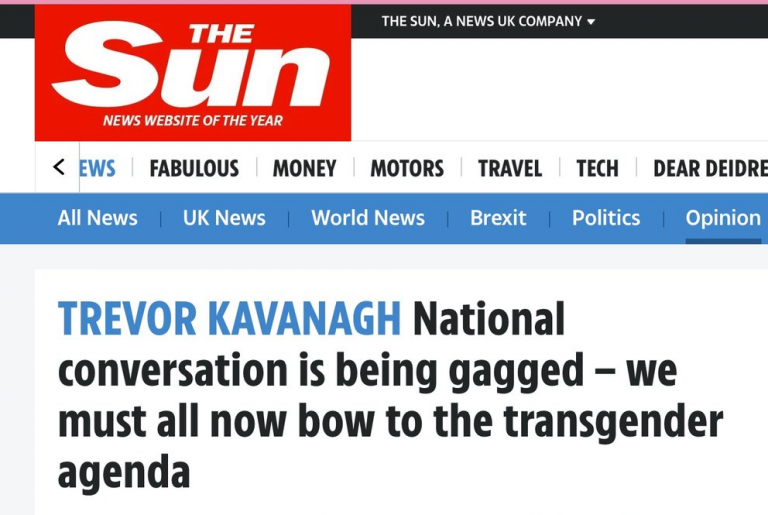
    The ruling was on a story about transgender people, who have been subjected to an astonishing hate campaign for some time now. Newspapers have become adept at sticking to the letter of the rules rather than the spirit: all the rules on discrimination and demonisation apply to individuals, not to groups. So if a paper were to publish a column claiming that trans person X is a predator, that’s against the rules (as well as defamatory). If the column claims that all trans people are predators, that’s fine.

    In other words, it’s not okay to incite hatred against one person. But it’s fine if you want to do it against an entire minority group.

    The Hacked Off campaign is attempting to highlight this in its latest report, “The denigration, abuse and misrepresentation of the movement for transgender equality in the press”. It focuses on two dozen high profile and often very abusive articles that appeared in the mainstream press in recent months. As Hacked Off put it on Twitter: “Some newspapers have resorted to distortions, inaccuracies and explicit transphobic abuse.” Over this period, UK hate crimes against trans people have increased by 81%.

    The problem is specific to newspapers. We don’t have endless abuse of trans people on TV because Ofcom regulates broadcast media. There’s no such regulation for print.

    Despite the 2013 Cameron Government legislating for an independent system of media regulation, the current Government have not brought it into
    force. This has left one independent regulator operational – but membership is entirely optional. As a result, none of the major websites or newspapers have signed up.

    Instead, most publishers are members of IPSO, which is a newspaper association and complaints-handler under the control of newspaper executives. I

    In other words, the people being asked to decide whether content breaks the rules are the people who publish the content that breaks the rules.

    I used to be against press regulation, because many journalists are fine people who do important work. But some of the biggest publishers in the country have turned their platforms into bully pulpits, repeatedly, mendaciously publishing malicious content designed to hurt the most vulnerable people in our society: not just trans people but minorities of all kinds. We’ve seen exactly the same maliciousness directed at muslim people, for example, and the same rubber-stamping by IPSO.

    IPSO is not fit for purpose and sectors of the UK press are out of control. What they do is not journalism, and it does not deserve protection.

    There’s a petition demanding change here. Please sign it. Every name helps.

  • “No tweet is too mundane to escape this phenomenon”

    Jess Brammar writes about another curse of the internet: reply guys.

    …alongside the straightforward abuse that is by now publicly acknowledged – and to the majority of the population, wholly unacceptable – there is something more complex, less offensive, but incredibly exhausting nonetheless. Sometimes it’s so subtle you barely notice it but it’s always there, always wearing, and just reserved for us women.

    It is, broadly, the general sense that men have the right to weigh in on any statement made by a woman, because their opinion is as welcome, relevant and wanted as the original point, something Mashable has termed “the curse of the reply guy”. A non-stop unsolicited stream of pedantry and condescension.

  • “I have decided I like the way I look and I’m the expert.”

    Another day, another great piece on Longreads. This one’s by Laura Lippman, best-selling crime writer, in Longreads’ series about ageing.

    I think when life gives you petit lemons, you should make lemonade — and refuse to share it with people who treat you rudely.

  • Not going for gold

    This is a bottle of Rimmel’s Oh My Gold nail polish, which I’m currently sporting. My five-year-old son likes it too, because nail polish is fun and fun is important. So when he asked for some on his own nails last night I was happy to oblige.

    This morning, he asked me to take it off again because he’s going to a sports camp where “the big boys will notice and say ‘what are you wearing nail polish for? That’s for girls!’ and pick on me.” So we got the nail polish remover and scrubbed every last bit off again.

    Five years old and he already knows the rules, and that he’ll be punished for breaking them.

    It makes me sad, as it did when my daughter was told aged four that history and dinosaurs are not for girls, and as it did a year later when she was told that girls couldn’t play with dragons because unicorns, not dragons, are for girls. We’re policing the gender of imaginary creatures now, it seems.

    These attitudes are learnt, of course. They’re passed down from other children, and from parents. So at an age when children should be expressing themselves more, experiencing more, exploring more, learning more, we’re already trying to put limits on all of those things.

    In a world of infinite colours, we’re telling them to choose just one.

  • When Rod Liddle is trending

    The heart always skips a beat when a famous person’s name appears in Twitter’s “trending” chart. It usually means they’ve died or been implicated in sex offences. So when Rod Liddle turned up the other night, my immediate reaction was to wonder whether he’d punched another pregnant woman in the stomach. Thankfully no: he was trying to defend apparently racist columns on TV. I’m surprised he didn’t claim his column had been hacked, like he did when his account was caught posting racist bilge on a football fan forum.

    Liddle is a terrible human being who writes terrible things on behalf of terrible people. And now he’s excreted another terrible book.

    Is it any good? Of course it isn’t. But at least it means Fintan O’Toole can review it.

    Never,” Rod Liddle writes in his jeremiad on the “betrayal” of Brexit, “have so many blameless people in this country been held in such contempt, or been subject to such vilification by an elite.” Really? Who wrote in 2014 of Britain as “a nation of broken families clamouring about their entitlements siring ill-educated and undisciplined kids unfamiliar with the concept of right and wrong”? Who described with relish “the hulking fat tattooed chavmonkey standing in the queue at Burger King”? Who characterised the British masses as inhabiting “a dumbed-down culture”, being in thrall to “the background fugue of idiocy, the moronic inferno, of celebrity fuckstories”, and spending their time “watching TV, masturbating to pornography on the internet, getting drunk”? That would be Liddle in his last book, whose title, Selfish Whining Monkeys, may just possibly have had a slight whiff of contempt and vilification.

    And that’s just the opening paragraph.