When some people – and sorry guys, but I mean primarily men people – talk about how #MeToo and related anti-abuse movements have gone too far, I do tend to wonder: what, or who, are you hiding?
There’s been a good illustration of that this week, when multiple unconnected women in the video games industry have named men who’ve attacked, sexually abused and gaslit them. It began with a blog post by Nathalie Lawhead, a brave act that encouraged other women to speak out.
As the award-winning writer Leigh Alexander commented:
for each abuser you heard about today there are like 10 more we can’t talk about because of the retaliatory threats they’ve made to their victims, for whom it would be inappropriate to speak
Today it’s video games. Maybe tomorrow it’ll be music, or publishing, or civil engineering, or education, or bar work, or anywhere else men in positions of authority, formal or informal, are in a position to abuse their power.
I know it’s not all men. But it’s too many men. And one of the reasons they get away with this is power.
Power is partly because of the lack of diversity that’s still prevalent in too many industries. When you’re a member of a minority group, you have very little power. Who’s going to believe you? Who’s going to take your side?
Many of these men’s behaviour is an open secret. Women in many industries operate “whisper networks”, where they can privately warn one another of predatory men. But the behaviour is often well known to other men too: the men they work with, the men they socialise with, the men who laugh along when they describe something awful.
Earlier this week, a woman who works for a law firm shared a message her boss had intended for one of her co-workers but accidentally sent to her. The message said that he “hopes Sarah has her tits out” and that “one day I’m just gonna have to fuck her.”
Most people are rightly appalled by the content of the message (but not everyone, because it’s the internet: some are piling on the woman for daring to shame her unnamed boss). But one question I haven’t seen anybody asking is pretty important.
Why did the boss think it was okay to send that message to anyone?
Those who feel blood pressure rising at the idea a person or a thing might be scrutinised for its racism believe themselves to be personally and deeply maligned by a world in which other people matter, and which they have to share.
…All perspective is lost, and phone-ins pander to self-centred hysteria. Imagine if white people perpetually clinging to the past faced the societal exclusion others actually do on a day-to-day basis, rather than merely experiencing challenge to views that are anti-social and hateful?
Waddell isn’t suggesting we ban The Magic Faraway Tree (which she loved, and which my daughter loved too) or the Famous Five. But reading is hard, it seems. The first response to her on Twitter claimed that by stating that a racist was racist, she was in fact a racist.
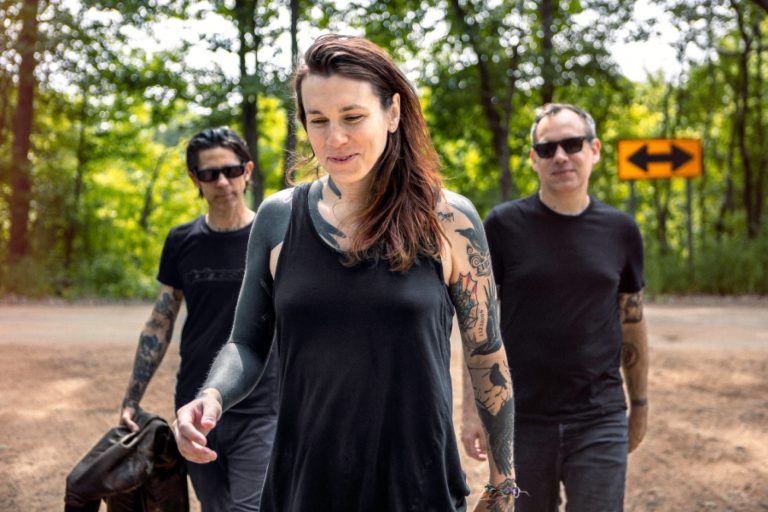
Laura Jane Grace & the Devouring Mothers in studio (L-R: Atom Willard, LJG, Marc Hudson) Credit: Bryce Mata
I went to see Laura Jane Grace and The Devouring Mothers last night. It was a fun gig, introduced me to music I hadn’t heard before and made me feel a whole lot better about myself. That’s because like me, Grace is trans.
Grace is slightly younger than me – she’s 38 – but like me she began transitioning relatively late in life, in her case at the age of 32. That means like me she had to go through male puberty and grow a male body. Grace looks much more feminine than I do – she has better genes, is younger than I am and has had facial feminisation surgery – but I don’t think it’s unfair to say that you can tell she’s trans. This, to me and I suspect the many trans and non-binary people in last night’s crowd, is really helpful. As I’ve said many times before, some of the most powerful words in our language are “you are not alone”.
When you’re the trans singer/guitarist in a noisy rock band, seeing a trans singer/guitarist in a noisy rock band is very life-affirming.
Visibility, representation, matters. I spent unhappy decades without any role models such as Laura Jane Grace: the only trans people I saw were either the butts of cruel comedy or the miserable subjects of miserable documentaries.
Things are different now. We have the internet, of course, and books such as Grace’s own memoir and those of trans figures such as Juno Dawson, Janet Mock and Sarah McBride are helping trans people (and cis people!) better understand what it’s like to be trans or non-binary, and of course the visibility of actors such as Laverne Cox is enormously helpful too. Five years ago Time magazine was moved to declare the “transgender tipping point”, and trans people have never been so visible.
This story, to me, is huge. Teddy Quinlivan is the new face of Chanel. The 25-year-old model came out as trans two years ago, and as you can see she looks a bit prettier than I do. That’s mostly genetics, of course, but Quinlivan also started hormones when she was 17. The younger you begin transition, the better the results. Your body is still forming so the hormones can be very effective, and things like long hair and a smooth face don’t require thousands of pounds and months or even years of painful procedures to achieve.
Quinlivan has what some of us call “passing privilege”: she looks like a pretty young woman because that’s exactly what she is, and she’s treated as such by society. She could easily have kept her trans history secret, but she chooses not to: she chooses to use her platform to help change people’s perceptions of trans people.
As she says:
“There’s a stereotype of transgender people based on what’s shown on Maury Povich or Jerry Springer. It’s that there’s something mentally wrong with them, that they are incapable of serving in the military or existing in the workplace normally. But that’s not true at all. I am proof—a successful model who happens to be transgender. And I think fashion, in terms of social power, is the most important industry. Advertising has tremendous impact in terms of who and what we find attractive…. If legislation is being made on my behalf as an American citizen, then it’s incumbent on me to speak up for the transgender taxpayers who deserve the same dignity and respect that a cisgender person receives.”
Another very beautiful trans woman who doesn’t keep her history secret is Munroe Bergdorf, who lost her job as the face of L’Oreal after a coordinated campaign against her. As she says, having some pretty trans people on magazine covers isn’t enough.
While media visibility, representation and public awareness are at an all-time high, trans people also face soaring levels of violence and a startlingly transphobic mainstream media presence, as well as bullying and harassment on social media… while some community figureheads are rightfully having their time to shine, this is not an accurate reflection of the reality of how it feels to be transgender in the UK today.
But visibility still matters.
I often say that if I had seen a Laverne Cox or a Janet Mock in a magazine when I was younger, everything that I was feeling during my adolescence would have begun to make sense a lot sooner. It wasn’t until I was 20 that I started to find transgender role models that I could truly relate to, and by that point I had internalised so much self-hate with regard to my gender and racial identity that it stopped me sharing how I felt with other people – a vicious cycle which severely impacted on my mental health.
Like many trans people, I have to battle against the cumulative effect of years of being told that people like me are sick, that we’re deviants, that we’re perverts… you don’t need me to go through the charge sheet when some newspapers reprint it every week.
What Bergdorf is describing is what anti-trans bigots try to convince you is “social contagion” or their invented illness, “rapid onset gender dysphoria”: it’s understanding that there are other people like you, and that they and you are just as valid as anybody else. It’s realising that you don’t have to fight who you are for the most important years of your life.
To see the visibility of people like Laura Jane Grace, Teddy Quinlivan, Munroe Bergdorf and others is bitter-sweet: I’ve been trans all my life but I didn’t know that was okay until middle age – long past the point where I had any chance of going through life looking like an ordinary woman, let alone a pretty one. So I’m happy for the trans kids growing up now, and sad for those of us who had to grow up long before the transgender tipping point.
Bergdorf:
We must start working towards a time where trans people are not only celebrated on screen, but also in real life.
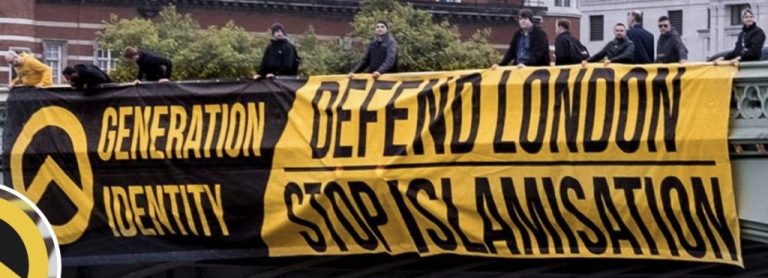
Imagine fascism with a Facebook page and you’ve got a pretty good idea. The identitarian movement is a modern spin on old hatreds, using social media and stunts to spread its hateful messaging.
It’s not just racist, although it’s very, very racist. It’s also against feminism and LGBT+ rights. It claims that collectively, the women, the brown people and the queers are eradicating traditional culture – which of course just happens to be straight, white, cisgender, patriarchal Christian culture.
The movement has made great strides online – there’s a lot of overlap with Gamergate and other far-right movements targeting vulnerable and/or disaffected young men – but it’s increasingly mainstream across Europe.
It’s not about politics, or at least not yet. It’s about getting the media to platform their talking points.
Identitarian metapolitics focuses on shifting the accepted topics, terms, and positions of public discussion so as to create a social and political environment more open and potentially accepting, of its ideology. It comes from a belief that this is required before electoral and policy support for their views is possible. GI’s efforts to have the media report on their fear-mongering about “The Great Replacementâ€Â of white Europeans exemplifies this, as their intention is to then use the narrative to promote a policy response of “Remigratingâ€Â non-white immigrants.
And the media plays along: for example, on the day of the Christchurch massacre – a massacre directly linked to the Generation Identity group, which the murderer supported – BBC’s Newsnight invited GI’s UK leader, Benjamin Jones, on for a chat. This happens again and again, with far-right identitarians given the opportunity to get their messaging to a wider audience.
And of course, there’s a very narrow line between the identitarians’ “great replacement” narrative and the anti-minority, anti-multiculturalism, anti-equality sentiments routinely printed in so many of our newspapers and current affairs magazines as they try to scare their readers about the brown people and the feminists and the queers.
GI banner or headline from one of Rod Liddle’s Spectator columns?
Columnists like to rail against so-called identity politics, where marginalised groups politely ask them not to be assholes. But they’re very quiet about this very real and very lethal form of identity politics – a form of politics whose key messages aren’t so different from their own.
A long-running boycott of The Sun newspaper on Merseyside reduced Euroscepticism in the area and had a positive influence on its Remain vote in the Brexit referendum, university researchers have concluded.
It’s a single study and isn’t peer-reviewed, but it’s worth considering alongside the fact that Northern Ireland and Scotland, where The Sun has different editorial teams and much smaller circulations, are also significantly less eurosceptic than England.
As Disposable Heroes of Hiphoprisy rapped about TV: “Is it the reflector or the director? Does it imitate us or do we imitate it?”
There’s a bleak joke here in Glasgow about old buildings: they have a strange tendency to set themselves on fire.
I live just across the road from one such example, the historic Scotway House building (pictured). It was a drawing office for the shipyards and when developers wanted to knock it down to make room for student flats, they were told they couldn’t. Shortly afterwards it burned down. The first fire didn’t destroy it completely, so it was burned down again; police say both fires were set deliberately.
Today, there are flats on the site where it once stood. An imitation of the former structure is now “ultra-modern, high tech student accommodation”.
As the excellent A Thousand Flowers blog noted in 2016:
When news of the fire broke after 9pm on Friday, many were quick to comment that it’s not the first case of a prominent listed building in the city, on a site primed for development, going up in flames. “Somewhere in the city, developers are popping the champagne corks, and rubbing their hands with glee†commented the popular Lost Glasgowpage on Facebook.
The Scotway House fire was predicted in the not entirely tongue in cheek, years-long “‘not in any way suspicious’ buildings gutted by fire thread” on the Skyscraper City site in 2015.
There’s a huge problem in Glasgow going back many years where beautiful buildings are being lost. The most high-profile example is of course the Glasgow School of Art, which has suffered not one but two catastrophic and apparently completely avoidable fires.
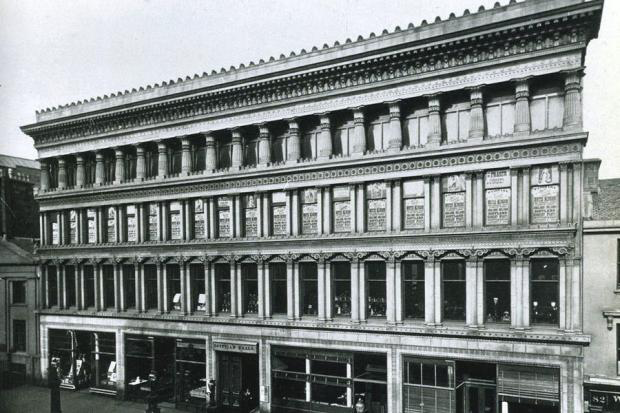
Glasgow doesn’t do a great job of protecting its architectural heritage, one of its greatest strengths: we tell visitors to look up because there’s so much beautiful detail in our old buildings. But all too often we lose them to mismanagement or neglect. For example in Union Street, right across from the busy Central Station, the Egyptian Halls – considered by many to be Alexander “Greek” Thomson’s masterpiece – are rotting away. The cost of bringing the Halls back to their former glory are skyrocketing.
Here’s what they looked like before the scaffolding blocked them from view.
Scotway house was destroyed by two distinct, deliberate fires.
And when there isn’t neglect, there’s fire.
The second art school fire in 2018 did serious damage to another Glasgow wonder, the former ABC cinema. The ABC started life in the 19th century as the Diorama, became the Panorama, and changed again to become Hubner’s Ice Skating Palace in the late 1800s. It then became the Hippodrome, and then Hengler’s Circus. In 1929 it became a dancehall again. It was a cinema for a couple of decades and became a music venue in 2002.
And now, it looks like it’s going to become flats.
I love the ABC. To my mind it was Glasgow’s finest music venue, and it’s of great architectural interest too. It’s been closed since 2018, but it’s not beyond repair. Nevertheless, a developer wants to demolish it completely to construct more student flats.
the same property developer who was twice refused permission for controversial student flat proposals is now seeking to raze the fire ravaged ABC venue.
…A dispute over the structural integrity of the ABC building is central to what happens next. The developer maintains that the building is beyond repair, unsafe, and needs to be flattened. Glasgow City Council’s Building Control – who have permitted the reopening of the street directly below the boarded up facade – are, however, satisfied that the building is secure for the moment. Historic Envronment Scotland have stated that while the roof has been gutted, the main areas of architectural and historic interest – namely the front facade, entrace foyer, and auditorium walls, are largely intact and capable of repair.
The developer says it wants to bring the ABC back as a world-class music venue but hasn’t submitted any plans or attempted to preserve any of the historic building. As Historic Scotland, hardly a raggle-taggle bunch of anti-capitalist activists, put it: “It is our view that the applicant has not made an adequate effort to retain and preserve this C-listed building (or any part of it), and has therefore not met the tests for demolitionâ€.
ATF:
A decision will now be made by council planners. If the owners are granted permission to flatten the ABC, how long will it be before the student flat proposals for the neighbouring block emerge out of the ashes?
I’m not optimistic. Again and again we’ve seen Glasgow’s planning officials green light pretty much anything developers wants, no matter the collateral damage; they recently gave a death sentence to Glasgow’s proposed Crossrail project by granting planning permission for 700 flats on a crucial site.
It’s funny how things in Glasgow tend to follow the same pattern. A developer wants to build a bunch of student flats; a beautiful old building means they can’t; the beautiful old building goes on fire; the proposals for the flats come back again. I’m not suggesting that the developers of any properties mentioned here are in any way implicated in the destruction of these buildings, but then again I’m not going to suggest that any developer gives a shit about saving old buildings. History, art and architecture may gladden the heart, but they don’t show up on developers’ balance sheets.
UPDATE
Within a few hours of posting this, I saw the news of a major fire in a listed building on Scotland Street. The building and outbuildings stand in the way of a new development of flats.
Maybe I’m too cynical after years of spontaneous listed building combustion. David emails:
I agree in general about “mystery fires” but not sure about Scotland Street – they’ve already got permissions and have drawn up the plans and the architect has a track record of working with old buildings – The Lighthouse, Kelvin Hall, Glasgow School of Art, Kelvingrove Bandstand…
They’re very high profile so they will have cost a fortune. I can’t imagine that at this point the savings of having removed the listed buildings would outweigh the costs of that firm doing new plans. Not in that area of town. I don’t think they were intending on keeping any more than the facades either.
If you’ve ever walked past the Howden’s factory it’s in a chronic state of disrepair and is held up by load-bearing graffiti.
I’ve just been to see the documentary Hail Satan? at Glasgow’s Film City, formerly Govan Town Hall. It’s a fascinating place, and Hail Satan? is a fascinating film.
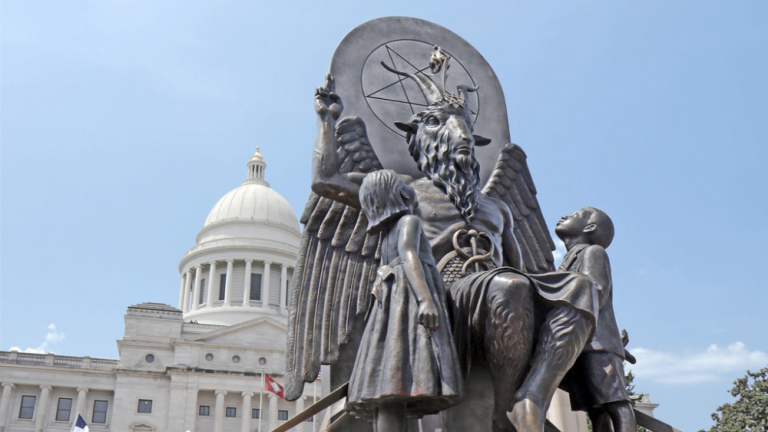
The film is about The Satanic Temple, a group of merry pranksters with a very serious purpose: they draw attention to and sometimes battle the US religious right’s attempts to impose theocratic legislation under the guise of religious freedom. For example, if the Christian Right can have the Ten Commandments outside government buildings, shouldn’t Satanists have a statue of Baphomet?
It’s funny, often hilariously so, but it’s also deadly serious. As Variety notes:
The Satanic Temple’s combination of shock tactics and anti-discrimination lawsuits is check-and-mate against America creeping towards a Christian theocracy.
…Satanists can be women in tattoos or geeky men with bowties. There’s hair colors of all shades and people who wouldn’t get a double-take at the grocery store.
There are also quite a few gender non-conforming people: I think I saw more trans women in Hail Satan? than I have in the last ten years of watching TV and movies. And that’s part of the point. The Satanic Temple is comprised of, and speaks for, the people demonised (pun fully intended) by religious extremists: the women, the people who don’t want to be pregnant, the trans folks and anybody else who doesn’t fit a very narrow, politicised interpretation of God’s will. The documentary essentially asks: when the fundamentalists and the extremists have the power and the money and the government and the TV stations and the newspapers on their side, how do you fight back?
The trailer’s here. The film’s on limited UK release just now and is also available to stream online.
On a dull autumn day in 1964, two NHS doctors strapped a 17-year-old boy into a wooden chair in a dark, windowless room and covered him in electrodes. During hours of so-called therapy, they repeatedly electrocuted him while showing him images of women’s clothing.
At work, Carolyn bound her developing breasts to hide the effects of her treatment. But in 1994, a journalist learned she was taking hormones, and Carolyn’s personal life was plastered across tabloids claiming it was in the “public interest” to report the secret of a high-profile head teacher.
It gets considerably more upsetting. Consider this a massive trigger warning.
These stories matter. They matter because anti-trans activists still believe in attempting to “cure” trans people. They matter because newspapers still claim monstering trans people is in the public interest. And they matter because right now someone is doing just what Mercer did: trying to hide who they really are.
Asked by regional BBC station to discuss falling vaccination rates – grand, except they wanted me on against someone claiming vaccines are dangerous. Explained this was textbook false balance, unethical, & against BBC trust guidelines. They wouldn’t budge, so I’m not doing it.
Grimes isn’t bashing the BBC here. As he says, it’s a problem across the entire mainstream media.
There is no debate on vaccination. There are not two sides. There is one side, which is where all the facts are, and then there are cranks. To pretend that both sides have equal value costs lives.
Vaccines against preventable illnesses like measles, tetanus, mumps and rubella are safe and effective, but healthcare professionals still find themselves having to push back against vocal anti-vaccination campaigns.
…The problem facing medicine is global, where disinformation about vaccines is readily accepted as having equal or greater value than the work of scientists who have spent their careers fighting disease.
As Grimes wrote previously in The Guardian:
This is the crux of the issue with false balance – no matter how noble the intention of media outlets, presenting science and pseudoscience in an adversarial format gives a false impression that an issue is scientifically contentious. Worse again, it gives free rein for dubious motivations to masquerade as scientific opinion. Whether the issue is vaccination, climate-change, alt-med or anything else, presenting an evidence-free belief as being on equal footing with an established scientific understanding is corrosive to public understanding.
I’ve encountered this too, and refused to go on air with people who flatly deny established facts, or who – often wilfully and maliciously – attempt to mislead listeners about science or the law.
I’ve made this joke before, but: imagine if there was a news story about owls, and the programme demanded the RSPB debate someone who refused to accept that owls exist. We’d be appalled, and yet the only damage that “debate” would do is waste a bunch of people’s time. When people deny settled science, when they scaremonger about things (or people) that are perfectly safe, these so-called debates can lead to very serious consequences. In the case of vaccination, they can kill.
Grimes again:
it’s irresponsible and lazy to contrive a debate over something that has a real human cost.
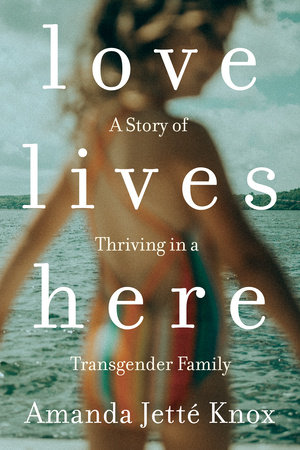
You don’t need to be trans or love someone who’s trans to enjoy this book: at heart it’s a really well-written, warm and fascinating memoir about love and families. But if you are trans or do love someone who’s trans, it’ll probably have you blubbing like it had me.
 This story, to me, is huge. Teddy Quinlivan is