Author: Carrie

  • A song about missing someone at Christmas

    Today’s Christmas EP song  started in two very different places: the title came from an in-joke, and the lyrics came from remembering a conversation in a Partick nail bar.

    Christmas in Calton was originally the name of a playlist I made to amuse a Glasgow pal. The title was a riff on Christmas In Hollis, the (brilliant!) Run DMC track from the late eighties, with New York’s Hollis replaced with Glasgow’s Calton. The playlist was a collection of the least Christmassy Christmas songs imaginable. But it was a trap! It also contained U2’s cover of Baby Please Come Home, Cocteau Twins’ shimmering Frosty The Snowman and of course, Mariah. Because I love joyful Christmas songs.

    When I wrote Didn’t Kiss You This Christmas, which I wrote about yesterday, I decided I also wanted to write something smaller and more intimate but still with a Christmas theme. I’d had a mental image for a while of a youngish woman of colour sitting in a draughty East End church, praying.

    The song stayed frustratingly out of focus, something almost but not quite visible in the corner of my mind’s eye, and it stayed there until I remembered a conversation I’d had months previously with a really lovely woman in a Partick beauty salon. She was from the Middle East and had had a high-powered job there; I don’t remember what it was – a lawyer, maybe? – but she was not able to work in the same career here. Hence doing nails in a Partick nail bar. Her husband was similarly high-powered, some kind of doctor, and he was still over there. She missed him terribly and prayed he’d come to join her soon. She was very worried about his safety.

    I had the first line of my song.

    I miss my beautiful boy

    There’s a thing I really love about songwriting when something frustratingly fuzzy comes rushing into sharp focus. That’s what happened here. The words came out in a rush because the picture in my head was so clear: a tired woman giving money she can’t really spare in the church where she prays for her “beautiful boy” to be with her.

    I miss my beautiful boy
    the smell of your skin and the smile in your voice
    every Sunday I pray
    I give as much as I can when they pass the plate

    I can see them both, the woman and the man she’s missing: he’s a big guy with the kind of smile that lights up the world, a man who’s quick to laugh and whose hugs feel like bear hugs.

    Oh how you’d laugh at the cold and you’d hold me and you’d never let go

    I’ll happily admit that I cried the first couple of times I tried to sing that line. I really like these people.

    Enter the second character in the song: Calton.

    This is a hard place but a kind place

    Calton is the bit of Glasgow where the Barras market and Barrowland venue are. Like lots of bits of Glasgow it has a long, proud history but has also suffered from severe deprivation. In the mid-2000s, The Guardian reported that the average life expectancy in Calton was just under 54. The Scottish average at the time was 78.

    That figure is thankfully out of date and was an estimate to begin with, but the life expectancy for Calton and neighbouring Bridgeton (the stats lump the two areas together) does trail the national average. That’s partly because Calton was home to various hostels for people with drug, alcohol and/or mental health problems and partly because it’s a relatively poor area.

    One of the big, positive changes in Calton is its demographic. It’s much younger than it used to be, it has more people there, and it’s more culturally diverse. Between 2001 and 2011 the proportion of residents from minority ethnic groups increased from 3% to 12%.

    Chances are, the woman in my song was one of them.

    So here’s what I’ve got. I can imagine the woman in the church, the flat she lives in, the organisations that helped her get started when she first arrived, the people she encounters during her days, the many kindnesses she experiences because despite its mean city reputation, Glasgow is a kind place.

    All I need now is a punchy chorus with simple rhymes and without too many words in it, the sort of thing a football crowd might chant in a stadium.

    The kindness of strangers is not enough to warm another Christmas without you, my love

    Oops.

    Okay, so it’s not exactly short. But when you hear it, it works (it’s something another of my favourite bands, Manic Street Preachers, do: on paper you think “they can’t possibly sing that for a chorus”, but they do, and it works, mostly). And because the song wasn’t melancholic enough, it adds a crucial bit of information: this isn’t her first Christmas without him. Depending on the time of day, I have different explanations for that.

    I see you in the shapes when the lights go on
    I wish you were here, my dear
    Spending Christmas in Calton

    The lights are Christmas lights, of course.

    So that’s the second of our three Christmas songs. Next up: thinking about death!

  • When parental pride doesn’t extend to LGBT+ children

    According to a new YouGov poll, a quarter of UK adults would not feel proud of their child if their child came out as LGBT+.

    The poll is full of saddening figures, of which this is the saddest: 11% would feel uncomfortable living at home with a gay, lesbian, bisexual or transgender child.

    That perhaps helps explain why there are so many LGBT+ kids among the homeless: 24% of homeless people aged 16-25 are LGBT+, and 77% of them say that familial rejection was the main factor in them becoming homeless. Lack of parental acceptance is also a crucial factor in the rates of self-harm and suicide in the LGBT+ community.

    I cannot comprehend how a parent would rather see their child self-harm, live on the street or take their own life than accept their child for who they are.

  • When things feel slow

    When you’re going through tough times or big changes, it can be hard to see the bigger picture. You may be in a better place than you were in the past, you may be ending things that have had a negative effect on you, but you don’t necessarily feel like bouncing around in a joyful bubble.

    It’s often quite the opposite: if you’re still in the trenches you can feel tired and demotivated because you’ve been dealing with this shit for far too long and it just feels like it’ll never end.

    That’s why I think it’s really important to notice and mark milestones, no matter how trivial. They demonstrate what you don’t necessarily believe, that you really are moving forwards.

    Here’s one such example. Just over two years ago – and it feels much, much longer than two years ago –  I stood outside my local pub, shaking. I was about to go inside as me for the very first time.

    Last night, I co-hosted the same pub’s quiz night while wearing a really nice dress.

    Sometimes you need to look in the rear view mirror to see how far you’ve come.

  • A song about a perfect Christmas moment

    I love Christmas songs.

    Not cheesy ones or po-faced ones like Cliff or dirges like Lennon’s yuletide atrocity. I love the joyous ones, whether it’s Noddy Holder’s roar of “It’s CHRISTMAAAAAAAS!”, Mariah’s infectious glitter or U2’s wonderful cover of Darlene Love’s transcendent Baby Please Come Home, which I genuinely believe is one of the greatest songs ever written.

    So I decided to have a go at writing my own.

    Didn’t Kiss You This Christmas is the result, and I think it’s brilliant.

    It’s about unrequited love, as most of my songs are. It has woah-woahs in it, because Christmas songs need something you can bellow along to. There are sleigh bells, because of course there are. And there’s a lyric I’m ridiculously proud of:

    We skipped between raindrops as we danced down the street
    Revellers long gone, it was just you and me
    We made stupid plans and we laughed till we cried
    You were so beautiful
    A sparkle under lights

    It’s a kind of festive Perfect Day, a snapshot of an absolutely perfect, beautiful, joyous moment that I had, and wrote about, during a period of intense sadness. The fact it’s a moment is important: there’s (spoiler alert!) no happy ending here, no rom-com perfect kiss at the end of it. The girl doesn’t get the girl.

    Like Perfect Day, the character is singing about a moment that’s gone, a moment when, as laughing boy Lou put it:

    you made me forget myself
    I thought I was someone else, someone good.

    And I think that’s why it works: there’s a melancholy there.

    All my favourite Christmas songs have some melancholy to them. Going back to Darlene Love:

    The snow’s coming down
    I’m watching it fall
    lots of people around
    baby, please come home

    I’m getting shivers just typing that. There’s a whole world in those four simple lines. It’s beautiful, and beautifully sad.

    The sadness is important. I think a good Christmas anthem needs some sadness. Not too much, or you’ve got Jonah Lewie’s Stop The Cavalry in all its parping awfulness. But the right amount of sadness is what gives it the yearning, the emotional punch. Otherwise it’s just someone with antlers on their head who’s had too much to drink jingling their bells.

    My, admittedly much lesser, equivalent to Darlene Love’s lyric:

    I didn’t kiss you this Christmas
    but I sure wanted to
    the only gift that I wanted
    was to spend time with you

    There’s a wee musical trick underneath that to make the final “with you” even sadder.

    I really love this line too.

    I don’t believe in angels, and you’re too wicked to be
    in any heavenly choir but by God, you saved me

    I don’t blow my own trumpet very often but trust me, I was jumping about the flat tooting like a demon when I did that one.

    I hope it works for you like it does for me: the intention is to give you the image of someone wonderfully devilish (and it’s a callback to the lyric to another one of our songs, Voodoo, which was the opening track of our debut EP. I like it when bands/artists create a kind of self-contained world, with songs referencing things or people – real or imagined – that live in their other songs).

    As you’ve probably guessed, I’m really proud of what we’ve done with this song. And I’m just as proud of the other songs on the EP. More about them in the next few days.

  • Support this crowdfunding campaign to help women

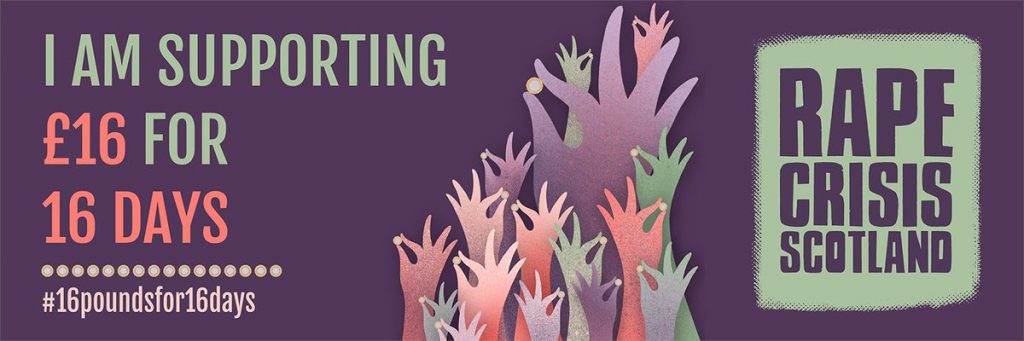
    Today is International Day for the Elimination of Violence Against Women, and Rape Crisis Scotland needs your money. Please donate if you can: it’s an essential and desperately underfunded service. The stories being shared by the @rapecrisisscot Twitter account are heartbreaking.

    On a typical day across Scotland this year over one thousand survivors of sexual violence are waiting for specialist support from Rape Crisis Centres.

    The wait can be excruciating; the support is described as lifesaving.

  • A song about being frightened

    This is the fourth song from our Bring The Good Times Back EP that I’m blogging about, and it’s called Battlecry. It’s one of the first songs I wrote with the band, and it began life with Kenny’s brilliantly propulsive bass line.

    Although it’s a serious song I had an old Bill Hicks routine in my head when I was writing the lyrics. It’s the one where he compared US foreign policy to Jack Palance in the famous western Shane. In the film, Palance throws a gun at an unarmed shepherd’s feet.

    “Pick up the gun,” he says.

    “I don’t wanna pick it up, mister,” the shepherd says. “You’ll shoot me.”

    “Pick up the gun.”

    “Mister, I don’t want no trouble, huh. I just came down town here to get some hard rock candy for my kids, some gingham for my wife. I don’t even know what gingham is, but she goes through about 10 rolls a week of that stuff. I ain’t looking for no trouble, mister.”

    “Pick. Up. The. Gun.”

    The shepherd moves towards the gun and Jack Palance shoots him.

    “You all saw him. He had a gun.”

    It’s a good example of how the powerful can manipulate the powerless into apparently justifying whatever the powerful want to do to them. You create a bogeyman and taunt him until he snaps, at which point you can say: look how angry and unreasonable and not like us he is! You all saw him! He had a gun!

    This kind of demonisation is as old as time, and historian Michael S Roth has written an interesting op-ed about two of its more recent examples: the “welfare queen” and the “woke student”.

    Every age seems to need a bogeyman, some negative image against which good people measure themselves. When I entered college in the mid-1970s, the term “welfare queen” was being popularized by Ronald Reagan as he campaigned for president and was starting to be taken up by the mass media. It would soon go on to upstage the outworn “commie” and well-worn “dirty hippie” as objects of vitriol in the American political imagination. Self-described regular, decent Americans had in “welfare queen” a new image against which to define themselves.

    …the trope of the “welfare queen” was nicely constructed to seep into a white American psyche already anxious in the 1970s and 1980s about race, single mothers and an urban culture that challenged more than a few mainstream myths.

    …The images of the welfare queen and of the woke student are convenient because they provide excuses to not engage with difference, placing certain types of people beyond the pale. These scapegoats are meant to inspire solidarity in a group by providing an object for its hostility (or derision)

    In some parts of the world this is being used in very frightening ways. Including here.

    Across the world, the far right and religious extremists are demonising immigrants, LGBT+ people and their allies, often with very violent consequences. Supposedly respectable media outlets in supposedly respectable western democracies print articles that wouldn’t be out of place in a Britain First newsletter. In the UK, the Conservative party has been running polls to see if it can weaponise trans rights against Labour by painting us as predators and is reportedly planning a “blitz” of anti-immigration, foreigners-are-coming-for-what-you-have rhetoric to try and terrify English voters. And the slightest sign of anger from the people being targeted relentlessly by politicians, pundits and thugs will be used as evidence to justify dismissing and demonising the entire group.

    Battlecry is about that.

    It’s about being forced to fight when you don’t want to fight, to be backed into a corner and to be forced to defend yourself, to be forced into activism when you just want to be left alone. I wrote it in solidarity with the LGBT+ marchers attacked this year at Pride festivals, people for whom simply walking down the street meant encountering physical violence, but it’s really for anybody who’s marginalised: so many of us “just wanted a quiet life” but have not been allowed to do so by people who have so much more power than we do.

  • Frozen 2 is very beautiful

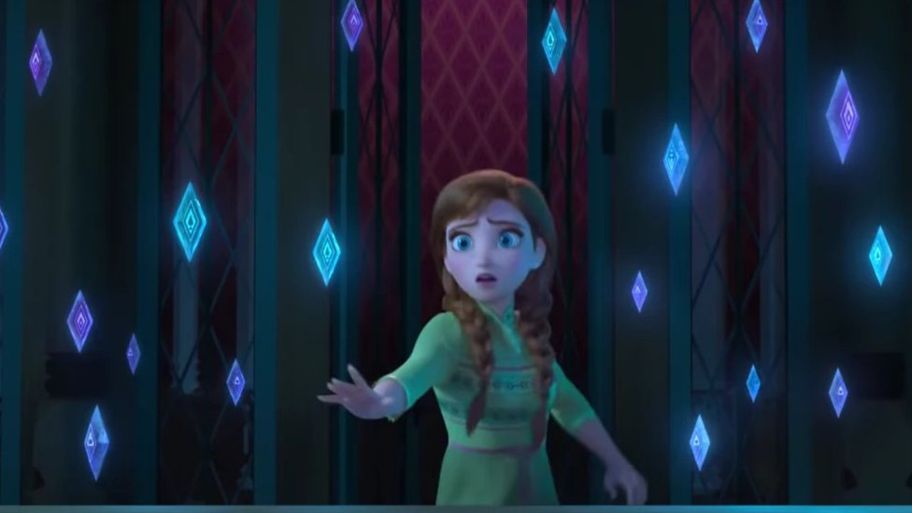
    I took the kids to see Frozen 2 today and had an unexpectedly brilliant time. The film’s a ton of fun, particularly so in 4DX when your seats move and you get sprayed with compressed air and water. 4DX is ridiculously expensive but hugely entertaining.

    if you’re going to go, try and see it in 3D. It’s a very beautiful film, and the way it uses 3D is often breathtaking.

  • A song about friends and allies

    This is Loving Me Is A Political Act, from our Bring The Good Times Back EP.

    I write a lot of autobiographical stuff but it tends to be quite oblique. This is unusually direct for me, and it’s about my experience of being out in the world. To be visibly different is to attract attention, and that attention is also directed to the people who hang out with me whether it’s the guys in the band or my friends.

    I’m no fool, I know you see
    the looks you get when you are with me

    The title is a simple statement of fact: in a world that often fears and hates trans people, to be an ally is to make a political statement. Simply by walking with me, my friends are being forced to take a side. The friends who support trans women online are accused of hating their sisters; the friends who hang out with me in the real world are judged in other ways.

    I don’t have a choice about being trans, but my friends choose to be with me and I love them deeply.

    Your heart is bigger than the sky
    Your love gives me life


  • “A fatberg in the river of Scottish public conversation.”

    I don’t normally link to The Scotsman, but I’m a big admirer of its columnist Laura Waddell. Today, she’s writing about the so-called debate over trans rights.

    For the sake of trans people, for women, and for the state of our public discourse, enough of the bad faith actions. The Women’s Pledges which have recently sprung up to sit vulture-like on SNP, Labour and Lib Dem fringes are not party affiliated and further single-issue interests under the guise of speaking for all women; the trans-exclusionary alliances with Facebook pages run by young American men attached to Trump, anti-choice, and other pages designed to stoke political fallout from culture wars; the politicians who use the deeply irresponsible, imflammatory, and dishonest phrase ‘war on women’ about the policy consultation and who’ve let the idea they are leading the charge go to their heads.

    Enough of those who direct online mobs to harass trans-inclusive Scottish women’s charities, shelters, libraries, and bookshops, weakening public faith in these important feminist organisations who’ve work with determination and grit over the decades for everything they have. Most of this doesn’t even pertain to the proposed policy which has attracted like a magnet a collected debris of homophobia, misogyny, men who’ve never taken an interest in women’s rights in their puff, conspiracy theorists and party agitators, condensed like a fatberg in the river of Scottish public conversation.

  • A song about 1979 and 2019

    Time for another song. This is 1979, from our Bring The Good Times Back EP.

    If you think it sounds like late-seventies post-punk, that’s entirely deliberate: what we’ve tried to do musically is echo what I’ve done lyrically, which is to connect 1979 and 2019. The song is about political parties promising to make Britain great again while throwing the most marginalised people under the bus and I wanted it to sound like the angry post-punk of my childhood, political pop you can dance to in a big black coat.

    They said, hey you! It’s gonna be okay!
    Just don’t be poor, don’t be sick, don’t be brown, don’t be trans or gay
    Because we’re going to bring the good times back
    I’m all right Jack, wave your union flag

    The song’s written from the perspective of someone in Scotland or the North of England, and the disconnect between what we see on the largely London-based media and in our own communities. The Union flag-wavers of the song didn’t know about the policy of managed decline for the UK’s industrial heartlands; today’s equivalent believe that our remaining industrial base is worth sacrificing for blue passports.

    I chose 1979 because I think that’s when the social contract was ripped up, when we went from “we’re all in this together” to “I’m all right, Jack”. Ever since we’ve seen politics based on division, on scaremongering, on telling the majority that minorities are coming for what you’ve got.