Author: Carrie

  • Support this crowdfunding campaign to help women

    Today is International Day for the Elimination of Violence Against Women, and Rape Crisis Scotland needs your money. Please donate if you can: it’s an essential and desperately underfunded service. The stories being shared by the @rapecrisisscot Twitter account are heartbreaking.

    On a typical day across Scotland this year over one thousand survivors of sexual violence are waiting for specialist support from Rape Crisis Centres.

    The wait can be excruciating; the support is described as lifesaving.

  • A song about being frightened

    This is the fourth song from our Bring The Good Times Back EP that I’m blogging about, and it’s called Battlecry. It’s one of the first songs I wrote with the band, and it began life with Kenny’s brilliantly propulsive bass line.

    Although it’s a serious song I had an old Bill Hicks routine in my head when I was writing the lyrics. It’s the one where he compared US foreign policy to Jack Palance in the famous western Shane. In the film, Palance throws a gun at an unarmed shepherd’s feet.

    “Pick up the gun,” he says.

    “I don’t wanna pick it up, mister,” the shepherd says. “You’ll shoot me.”

    “Pick up the gun.”

    “Mister, I don’t want no trouble, huh. I just came down town here to get some hard rock candy for my kids, some gingham for my wife. I don’t even know what gingham is, but she goes through about 10 rolls a week of that stuff. I ain’t looking for no trouble, mister.”

    “Pick. Up. The. Gun.”

    The shepherd moves towards the gun and Jack Palance shoots him.

    “You all saw him. He had a gun.”

    It’s a good example of how the powerful can manipulate the powerless into apparently justifying whatever the powerful want to do to them. You create a bogeyman and taunt him until he snaps, at which point you can say: look how angry and unreasonable and not like us he is! You all saw him! He had a gun!

    This kind of demonisation is as old as time, and historian Michael S Roth has written an interesting op-ed about two of its more recent examples: the “welfare queen” and the “woke student”.

    Every age seems to need a bogeyman, some negative image against which good people measure themselves. When I entered college in the mid-1970s, the term “welfare queen” was being popularized by Ronald Reagan as he campaigned for president and was starting to be taken up by the mass media. It would soon go on to upstage the outworn “commie” and well-worn “dirty hippie” as objects of vitriol in the American political imagination. Self-described regular, decent Americans had in “welfare queen” a new image against which to define themselves.

    …the trope of the “welfare queen” was nicely constructed to seep into a white American psyche already anxious in the 1970s and 1980s about race, single mothers and an urban culture that challenged more than a few mainstream myths.

    …The images of the welfare queen and of the woke student are convenient because they provide excuses to not engage with difference, placing certain types of people beyond the pale. These scapegoats are meant to inspire solidarity in a group by providing an object for its hostility (or derision)

    In some parts of the world this is being used in very frightening ways. Including here.

    Across the world, the far right and religious extremists are demonising immigrants, LGBT+ people and their allies, often with very violent consequences. Supposedly respectable media outlets in supposedly respectable western democracies print articles that wouldn’t be out of place in a Britain First newsletter. In the UK, the Conservative party has been running polls to see if it can weaponise trans rights against Labour by painting us as predators and is reportedly planning a “blitz” of anti-immigration, foreigners-are-coming-for-what-you-have rhetoric to try and terrify English voters. And the slightest sign of anger from the people being targeted relentlessly by politicians, pundits and thugs will be used as evidence to justify dismissing and demonising the entire group.

    Battlecry is about that.

    It’s about being forced to fight when you don’t want to fight, to be backed into a corner and to be forced to defend yourself, to be forced into activism when you just want to be left alone. I wrote it in solidarity with the LGBT+ marchers attacked this year at Pride festivals, people for whom simply walking down the street meant encountering physical violence, but it’s really for anybody who’s marginalised: so many of us “just wanted a quiet life” but have not been allowed to do so by people who have so much more power than we do.

  • Frozen 2 is very beautiful

    I took the kids to see Frozen 2 today and had an unexpectedly brilliant time. The film’s a ton of fun, particularly so in 4DX when your seats move and you get sprayed with compressed air and water. 4DX is ridiculously expensive but hugely entertaining.

    if you’re going to go, try and see it in 3D. It’s a very beautiful film, and the way it uses 3D is often breathtaking.

  • A song about friends and allies

    This is Loving Me Is A Political Act, from our Bring The Good Times Back EP.

    I write a lot of autobiographical stuff but it tends to be quite oblique. This is unusually direct for me, and it’s about my experience of being out in the world. To be visibly different is to attract attention, and that attention is also directed to the people who hang out with me whether it’s the guys in the band or my friends.

    I’m no fool, I know you see
    the looks you get when you are with me

    The title is a simple statement of fact: in a world that often fears and hates trans people, to be an ally is to make a political statement. Simply by walking with me, my friends are being forced to take a side. The friends who support trans women online are accused of hating their sisters; the friends who hang out with me in the real world are judged in other ways.

    I don’t have a choice about being trans, but my friends choose to be with me and I love them deeply.

    Your heart is bigger than the sky
    Your love gives me life


  • “A fatberg in the river of Scottish public conversation.”

    I don’t normally link to The Scotsman, but I’m a big admirer of its columnist Laura Waddell. Today, she’s writing about the so-called debate over trans rights.

    For the sake of trans people, for women, and for the state of our public discourse, enough of the bad faith actions. The Women’s Pledges which have recently sprung up to sit vulture-like on SNP, Labour and Lib Dem fringes are not party affiliated and further single-issue interests under the guise of speaking for all women; the trans-exclusionary alliances with Facebook pages run by young American men attached to Trump, anti-choice, and other pages designed to stoke political fallout from culture wars; the politicians who use the deeply irresponsible, imflammatory, and dishonest phrase ‘war on women’ about the policy consultation and who’ve let the idea they are leading the charge go to their heads.

    Enough of those who direct online mobs to harass trans-inclusive Scottish women’s charities, shelters, libraries, and bookshops, weakening public faith in these important feminist organisations who’ve work with determination and grit over the decades for everything they have. Most of this doesn’t even pertain to the proposed policy which has attracted like a magnet a collected debris of homophobia, misogyny, men who’ve never taken an interest in women’s rights in their puff, conspiracy theorists and party agitators, condensed like a fatberg in the river of Scottish public conversation.

  • A song about 1979 and 2019

    Time for another song. This is 1979, from our Bring The Good Times Back EP.

    If you think it sounds like late-seventies post-punk, that’s entirely deliberate: what we’ve tried to do musically is echo what I’ve done lyrically, which is to connect 1979 and 2019. The song is about political parties promising to make Britain great again while throwing the most marginalised people under the bus and I wanted it to sound like the angry post-punk of my childhood, political pop you can dance to in a big black coat.

    They said, hey you! It’s gonna be okay!
    Just don’t be poor, don’t be sick, don’t be brown, don’t be trans or gay
    Because we’re going to bring the good times back
    I’m all right Jack, wave your union flag

    The song’s written from the perspective of someone in Scotland or the North of England, and the disconnect between what we see on the largely London-based media and in our own communities. The Union flag-wavers of the song didn’t know about the policy of managed decline for the UK’s industrial heartlands; today’s equivalent believe that our remaining industrial base is worth sacrificing for blue passports.

    I chose 1979 because I think that’s when the social contract was ripped up, when we went from “we’re all in this together” to “I’m all right, Jack”. Ever since we’ve seen politics based on division, on scaremongering, on telling the majority that minorities are coming for what you’ve got.

  • Why we remember

    It’s Transgender Day of Remembrance (TDOR) today, the day when the trans community and our allies mourn the deaths of people killed because they were transgender or gender non-conforming.

    2019 isn’t over yet but so far 331 trans people have been murdered, hanged or lynched. Those are just reported and recorded crimes; the real number is higher.

    I’m lucky to live in a relatively safe part of the world: just one trans woman was murdered in the UK for being trans this year. In the US, where “trans panic” – “I discovered she was trans and I was so upset I stabbed her 27 times in self-defence” – is still a legal defence against murder in many states, there were 30 murders. In Brazil, there were 130.

    I’m not a black, poor trans woman in North or South America, so my life expectancy isn’t 35. But just because “only” one trans woman was murdered in the UK doesn’t mean that people don’t die here because of fear, intolerance and hatred of trans people – although inevitably the bigots claim exactly that, while dismissing TDOR with uncanny impressions of the men who ask “but when’s international men’s day?” on International Women’s Day. We have many days to remember and raise awareness of violence against women, so for example International Day for the Elimination of Violence Against Women is next week; the bigots are well aware of that but pretend otherwise.

    You don’t need to be murdered to die because you’re trans. For example, trans people are more likely to be homeless than cisgender people. They are more likely to be forced into sex work, to be exploited. If a homeless trans person freezes to death or or if a trans sex worker dies of a drug overdose, it isn’t murder. But they’re still dead.

    And then there are the lives we lose to suicide. Trans people kill themselves because they feel they can’t come out. They kill themselves when the years on waiting lists become too much to bear. And sometimes they kill themselves post-transition because while transition may fix your body, it doesn’t fix the world around you. That world is often hateful, and not everybody is strong enough to endure it.

    Here in Scotland, the LGBT groups from the main political parties have released a joint statement to mark TDOR.

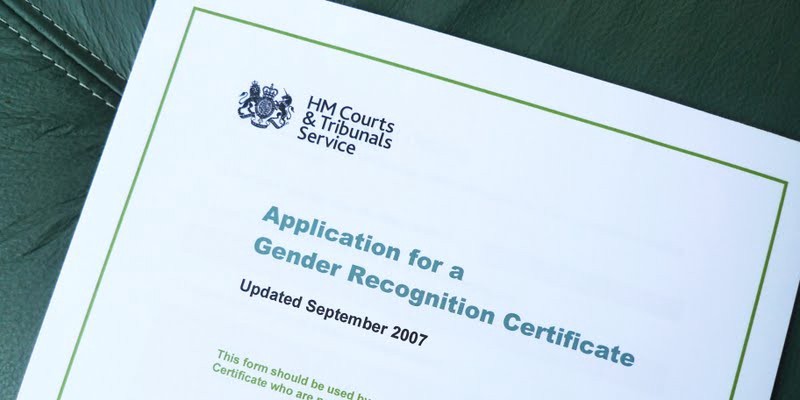
    …visibility cannot be conflated with progress when it also makes you a visible target for abuse. For the last two years, the UK media coverage surrounding the Gender Recognition Act’s reform has concentrated on rights outwith the remit of the legalisation itself. Trans people have had hard-earned rights endowed by the Equality Act 2010 brought into question. For many trans people, it has felt as though the very foundations of their daily lives are being pulled from under their feet.

    Here’s former Times editor Katherine O’Donnell.

    Trans people are less than 0.5 per cent of the population but face overwhelming levels of hate and violence.

    Here in the UK, some politicians, journalists and others with influential public platforms seek openly to take away the trans population’s legal protections. In Scotland, MSPs Joan McAlpine and Jenny Marra had chosen today to invite to the Scottish Parliament speakers who agitate against the human rights of trans people and call us parasites and perverts.

    The event has been postponed but the intentions of these members of the SNP and Scottish Labour are plain.

    The consequences of preaching hatred and division, of stripping away legal protections are greater discrimination and violence. The evidence for that is written ultimately in the hundreds of murders we remember, the suicides, the beatings, the healthcare, housing and work denied, the bullying and the daily anxiety.

    I speak now directly to those journalists and politicians here in Scotland who have given platforms and lent credence to the ideas that propagate this hatred.

    What you are doing is wrong and the consequences are real and terrible.

    I see you. We see you.

    Stop this today.

  • Study: you can’t turn your kids trans

    Newsweek reports on the largest ever study of trans kids, which found that – surprise! – you can’t turn your kids trans even if you try really really really hard.

    This is not surprising to those of us who spent most of our lives trying not to be trans.

    [being] responsive to a child’s expression and needs is not going to ‘make them transgender’; enabling a child to choose freely toys, clothes, hairstyle, a name and pronoun, or even to present in the experienced gender outside the domestic environment does not ’cause’ children to become transgender or later transsexual adults.

    I’m sure the Daily Mail, The Sunday Times, The Spectator and The Telegraph will give this study the same prominence they give to the anti-trans ramblings of idiots, activists and extremists.

  • A song about Grenfell

    My band, Stadium*, is releasing two more EPs this month: one political, one festive. The various download links should go live in a couple of days.

    I’m very, very proud of these records. I think they include some of the best songs we’ve ever written, and some of the best lyrics I’ve ever scrawled, so I’m going to post about them over the next wee while.

    I want to start with one of the simpler songs, 72.

    This is from our overtly political EP, Bring The Good Times Back. I wrote it in anger and sadness a few months after the Grenfell Tower disaster, which killed 72 people; the story that emerged is one of residents’ fears being ignored for more than a decade – in one of many lows, the council threatened one blogger with legal action for suggesting that the tower was a fire risk – and of lives sacrificed to cost-cutting and the removal of so-called “red tape”.

    Grenfell was the result of multiple political decisions. Choosing flammable cladding because it was £2 cheaper per square metre. Choosing not to spend money on sprinkler systems. Choosing to cut fire stations and firefighting staff. Choosing to ignore the fact that the building did not comply with building regulations. Choosing to ignore twelve years of warnings from residents.

    I wrote the song before the official inquiry began, singing that “soon you’ll conclude no-one’s to blame / no-one’s ever to blame”. I think I was too optimistic. The inquiry’s early findings have been deliberately leaked and spun to try and pin blame on the fire service, and Tory MPs have suggested that the people who died did so because they weren’t clever enough. Even at my most cynical I never expected anyone to try and blame the dead.

    I write songs like this when I can’t find any other outlet for my anger and sadness about terrible tragedies. I’m under no illusions that the people I’m writing about will ever hear it, let alone be haunted by it like I think they should be. But I think that if you have a voice it’s important to speak out, no matter how small your audience may be. Grenfell wasn’t a natural disaster, a tragedy nobody could have predicted, a one-off event from which no lessons can ever be learnt.

    The survivors and bereaved families of the Grenfell Tower fire have a website, Grenfell United, where you can find out more and help support their battle for justice.

  • This is why trans people self-medicate

    Sometimes Murdoch-owned news outlets manage to do something amazing: they publish something about trans people that isn’t untrue, isn’t malicious and doesn’t show us in a terrible light. In the same week The Sun is banging on about predators in changing rooms, The Australian is calling us dangerous extremists and The Sunday Times is no doubt accusing us of child sacrifice again, Sky News asked and answered a simple question: why do so many trans people self-medicate?

    Self-medication is when you go on the internet and source hormones: estrogen for trans women, testosterone for trans men (incidentally, it’s much more difficult for trans men because testosterone’s use as a performance-enhancing drug means it’s a controlled substance). Like many people I self-medicated before moving to an (almost identical) NHS-approved regime.

    Why do we do it? Because if we don’t, we have to wait years and not all of us can do that.

    Sky asked the GICs how long people have to wait for an initial appointment. These are the results.

    This graph shows the average waiting times for a first appointment with gender clinics (GICs) in the UK. Awful, isn’t it? And the reality is even worse, because the clinics have clearly provided figures that show them in a comparatively positive light. For example, Belfast isn’t accepting any new patients; Wales didn’t have a clinic at all until two months ago.

    As trans health expert Dr Ruth Pearce notes on Twitter, the GIC’s figures aren’t accurate. For example in Leeds the figures (0.7 years – the number isn’t on the graph here for some tedious technical reason) appear to refer to pre-appointment screenings; the wait after that for an initial appointment is three years.

    Another Twitter poster, MichaelT, goes into detail. Leeds’ own website reports a 30 month wait for a first appointment. He also notes that while Devon claims an 18 month wait it’s currently keeping people on hold who were referred 40 months ago and who do not have any current indication of when anybody will see them. That’s over three years. The Northumberland figures are wrong too. They told Sky 0.9 years, but their website says 26 months.

    The waiting times Sky has published are not the waiting times to get hormones. These are the waiting times for an initial assessment, which is followed by a second assessment, which is followed by a decision on hormones.

    For me, the gap between initial referral and being prescribed hormones was three years. For others it’s even longer.

    In Newcastle, the waiting list for the first appointment is two years; you’ll then wait up to two years for your second appointment. In Northumberland it’s 30 months for an initial appointment then at least 30 months more before a hormone clinic appointment, a total of five years.

    As MichaelT says:

    The GICs know perfectly well that in the context of questions about the impact of waiting times on patients, the relevant time period, certainly at all adult English services is 2.5 years plus.

    But they’re not talking to trans people. They’re talking to the wider public, so this is really PR.

    They know patients know this. They know the trans community knows this. So in giving this kind of nonsense to media enquiries, they’re actively speaking to cis people, not trans people.

    The Sky piece is pushing back against the “fast track” nonsense, which is good. But (many) GICs still prioritise trying to make themselves look good over accurately representing the situation for the patients they’re supposed to serve.

    Here’s a pretty realistic description of the process by writer Ed Davies in response to a “hilarious” tabloid prediction that Prince Harry would have a “sex change” and become Harriet by 2027. The short version: if you’re being referred in 2019, 2027 is incredibly optimistic.

    Many, many people experience obstacles that aren’t accounted for here — from being held back until they “fix” their mental health after crises caused by these very wait times, to being “lost in the system” repeatedly, to being discharged for spurious reasons. People of colour, gender nonconforming trans people, trans lesbians, trans men perceived as confused lesbians, those too young to be believed at their word about their experiences, transfeminine people, those from other countries and cultures, disabled people, autistic people… many groups tend to struggle more than “average”, too.

    Self-medication can be dangerous, but so can doing nothing: some people die on waiting lists. As Edinburgh GP Jo Gardiner told the BBC earlier this year, trans patients:

    …often don’t have the same support as other patients. Family and relationships break down when they transition so it can be quite distressing for them.

    Some patients are very isolated and alone and at high risk for things like suicide.

    These problems are not unique to trans healthcare; they’re the symptoms of ongoing lack of investment into the NHS by successive governments. But because trans healthcare is such a niche area, it’s suffered particularly badly: the gender clinic I use is desperately understaffed, with even simple admin tasks like typing letters taking three months.

    But there are two things that make the current trans healthcare crisis particularly galling.

    The first is that the government and the NHS were told that it was going to happen and did nothing; the Gender Identity Research Society, GIRES, provided the Home Office with extensive data in 2009 demonstrating the increasing demand for gender clinic services – particularly among younger patients who are coming of age in a world where trans existences are subject to less shame and stigma than in previous generations.

    As the report noted:

    The only safe assumption for commissioners and providers is that the present growth rate in the incidence of new people requiring medical and other care is likely to continue, which is usually the basis on which service provision is planned. At a growth rate of 15 % per annum compound, the number of new cases will approximately double every 5 years.

    …the mounting requirement for services has serious implications for resources, especially for specialised adult surgery and adolescent endocrinology.

    The report predicted pretty much everything the press is scaremongering about now: an increase in referrals from people assigned female at birth (it’s been a 50/50 balance in Europe for many years, but in the UK there were more trans women than trans men accessing services); the growth in adolescent referrals; the increasing number of people transitioning as the world becomes (slightly) more accepting.

    That was ten years ago.

    And the second thing that’s happened is of course the press, which continually lies about the supposed fast-tracking of trans people and which has made the issue politically toxic: fixing the trans healthcare crisis may be necessary, but which politician is going to risk the wrath of The Sun, The Daily Mail, The Times and The Spectator, who will frame it as evil trans cult members stealing resources from kids with cancer?

    So we self-medicate, and the people who come after us will self-medicate, and we’ll continue to do so for as long as the UK system fails to meet its own waiting list targets, let alone internationally agreed standards of best practice. The system isn’t fit for purpose – it’s overly medicalised, far too complicated and desperately underfunded – but right now it’s the only system we have.

    Trans people know that self-medication is dangerous, and that in some cases it’s illegal. But sometimes doing nothing is even worse.