Category: Media

Journalism, radio and stuff like that

  • The science of discrimination

    In the nineteenth century, scientists were very interested in the differences between men and women. Not because they wanted to know more, but because they wanted to justify oppressing women. So they came up with ever more inventive ways to define who was superior and who was inferior.

    As historian Susan Sleeth Mosedale writes in Science Corrupted: Victorian Biologists Consider “The Woman Question”, scientists wanted to attack feminism. As reported by Jstor Daily:

    These attacks were often riddled with contradictory evidence and conflicting analysis, Mosedale argues. The scientists “operated in blissful ignorance of their prejudices,” allowing their own “socially conditioned feelings” to guide their application of scientific theories. Biologists grasped for vaguely scientific reasons why women shouldn’t be allowed to vote, get an education, or aspire to anything more than having babies.

    So the scientists created an “index of inferiority” to decide who got rights and who didn’t.

    One biologist argued, for example, that women “exhale less carbonic acid,” proving them to be mentally and physically “more sluggish” than males. This supported the antifeminist argument that “the sum total of food converted into thought by women can never equal the sum total of food converted into thought by men. It follows, therefore, that men will always think more than women.” Another apparent “mark of female inferiority,” writes Mosedale, was “the relatively low proportion of carbonate of lime in feminine bones: 4.52 parts, compared with 9.98 parts for the male.”

    This is, of course, confirmation bias: the scientists set out to prove that women were inferior to men and less deserving of human rights, and they desperately searched for anything they could point to in order to protect their own privileged status. They did similar things with race, and with disability: the horrific history of eugenics was based on pseudoscience.

    You don’t need me to point out the parallels with today’s attempts by anti-trans activists, people who use confirmation bias to justify abuse of and discrimination against trans women: their focus on biology and science is only on the biology and science they can weaponise in order to exclude others, not the overwhelming evidence that they are wrong. It’s just saddening to see the same thing happening again and again throughout history.

    In 1890, the philosopher David G Ritchie noted that “scientific” discrimination was:

    always the favourite sort of argument with the jealous champions of privilege: first to prevent a race or class or sex from acquiring a capacity, and then to justify the refusal of rights on the grounds of this absence—to shut up a bird in a narrow cage and then pretend to argue with it that it is incapable of flying.
  • “Doing nothing is not a neutral option”

    Rowan Moore is the architecture critic for The Observer and is also the father of a trans man. I very much doubt that the editor would have published this measured, thoughtful and important piece about having a trans child if Moore weren’t connected to the newspaper, but I’m glad they did.

    The court’s logic led it to assert that the impacts of cross-sex hormones, which can sometimes affect fertility and sexual function, should be fully considered by a child at the time they started on blockers – they would have to contemplate the effects not only of the medication on offer, but also of that which would be on offer in the future. The court decided it would be impossible for them adequately to do this, even if their families and doctors were in full agreement, and that the decision should be passed to a judge.

    At the same time, the court paid minimal attention to the consequences for trans people of puberty unhindered by blockers. It thought it more important to protect transgender children from blockers, which are reversible, than from the effects of unwanted puberty, which in many ways are not. Doing nothing is not a neutral option and can be harmful, a point that the court did little to acknowledge.

  • Drama

    I’ve watched two very different dramas this week: a theatrical monologue and a TV series. Both were very emotional experiences.

    The monologue was Overflow, written by Travis Alabanza and performed by the mesmerising Reece Lyons.

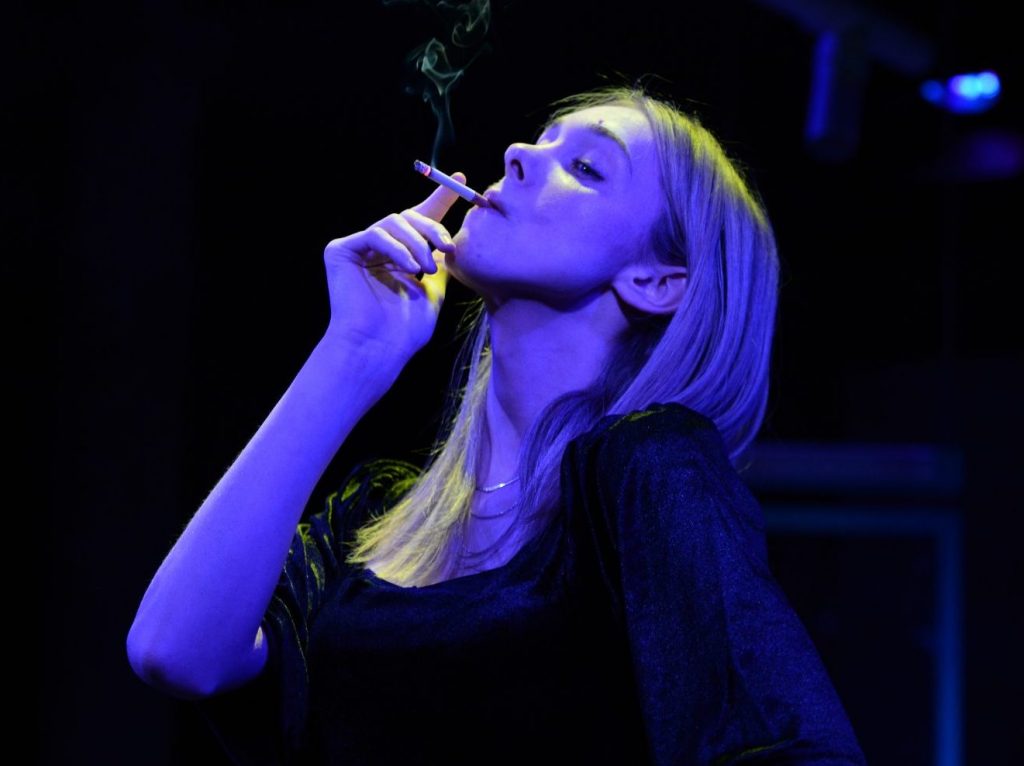
    It’s a one-woman show about a trans woman hiding in the ladies to escape violence. It’s not always an easy watch but it has important things to say about allyship, about prejudice and what it’s like to be young and trans. I felt like I’d been hit by a truck after watching it: it dug up a lot of big emotions.

    Here’s The Independent’s review of it.

    Overflow explores the problematic concept of allyship. The word “ally” isn’t just something you call yourself – it’s about what you do. In a passage reminiscent of Burgerz, Rosie weaves through anecdotes of well-meaning cis people who have failed to act when it mattered most. Top of the list is lifelong friend Charlotte, described ironically as “the best cisgender woman to ever exist and ultimate ally and protector of the trans”, who doesn’t stand up to transphobic rhetoric when she encounters it in the world. This brings up complex, burdensome questions about friendship, like: “Can I be friends with someone who is friends with someone who is transphobic?”

    The TV series? Like every other LGBT+ person in the UK, I suspect, I binge-watched It’s A Sin, the new drama by Russell T Davies. The Guardian called it a “masterpiece”; it’s a very powerful drama about the AIDS crisis. That means of course it gets very dark and very sad, but before that darkness descends it’s also one of the most joyous portrayals of gay people’s lives I’ve seen on screen.

    It’s also deeply upsetting, especially in other people’s reactions to the characters: this was a time of outspoken, vicious homophobia and anti-gay sentiment soared during the AIDS epidemic. Much of that was driven by the press, which demonised gay men and in the case of The Sunday Times under the editorship of Andrew Neil, claimed that AIDS couldn’t affect straight people.

    Here’s writer Russell Davies:

    Q. Do you think there are parallels between how HIV Positive people were treated in the 80s and 90s and how trans people are treated now?

    Yes, it’s the story of The Other. The heartbreaking thing about the arguments about trans people is that the numbers are so vanishingly small. And if you know any trans people you cannot recognise this portrait of them as predatory and violent and self-seeking or self-serving. It’s heartbreaking to see this get out of control.

    Guardian writer and right-wingers’ favourite hate figure Owen Jones posted a jokey tweet suggesting that transphobes should be banned from liking It’s A Sin. But behind the joke is the unpleasant fact that the very papers whose arts critics praised the programme also employ the columnists who incite fear and hatred of trans people. Many of the people who are so viciously hateful of us are just as hateful of gay men and women. They’ve just learnt not to say that bit out loud.

  • The reality-based community

    Last week, vocal anti-trans bigots and a fair few UK journalists (*standup comedian voice* not that you can always tell the difference, amirite?) claimed that appointing one of the most equal and diverse administrations we’ve seen meant that, er, President Biden was worse for women than Donald Trump. They even had their own social media hashtag, #BidenErasesWomen.

    The reason for this is because Biden’s initial raft of executive orders included restoring very basic legal workplace protections for LGBT+ people – protections that fall short of the legal protections LGBT+ people have here in the UK. Once again the fury in response to the move demonstrated that the people claiming to care about protecting women only really care about hurting LGBT+ people, particularly trans women.

    A new survey by IPSOS asked over 500 Americans for their views on Biden’s initial executive orders. 83% approved of the LGBT+ protections: more than approved of his reponse to COVID-19, his mask mandate, his rejoining of the World Health Organisation, his recommitment to battling climate change or anything else.

    What you read in the papers does not reflect the views of the reality-based community.

  • Why British media is so transphobic

    This, by VS Wells, is very good.

    A culmination of factors appear at play. Some point to the antiquated ideologies of a generation of journalists and publishers who have dominated the mainstream media. Others say it’s intrinsically linked to political leaders who have failed to denounce hate. No matter its origins, this rampant transphobia has become a nation’s accepted bigotry.

    The article rightly points out that the disproportionate influence wielded by a few well-connected people has been a significant factor.

    Media in the U.K. has long been white, wealthy and interconnected, and it’s within these circles especially that transphobia has “become very fashionable,” Jane Fae says. The chair of Trans Media Watch, a charity that advocates for better press coverage, Fae points to Ian Katz as an example: During his stints at the Guardian newspaper, BBC and Channel 4, each publication saw a rise in transphobic coverage. Katz is married to Justine Roberts, founder and CEO of Mumsnet, a website that’s become a hotbed of British TERFs. As writer Laurie Penny explains, “The ecosystem of liberal media and left-wing activism is smaller and more quarrelsome in Britain than it is in America, and a lot of people know each other, and a lot of [transphobia in media] comes down to in-group loyalty and personal drama.”

  • Whine producers

    My friend Ellie just coined a phrase I really love: whine producers. Think Toby Young, Allison Pearson and all the other people who have bad opinions for money, and who churn out those opinions on an industrial scale.

  • The paper of a broken record

    Jeffrey Ingold, Stonewall’s head of media:

    In 2020, The Times (incl. the Sunday Times) wrote 324 articles about trans people & ‘trans issues’. Zero of which were written by trans people themselves.

    For comparison, in 2019, The Times wrote 321 articles about trans people & ‘trans issues’. 3 were written by trans people.

  • “Extremely inappropriate”

    According to Dame Melanie Dawes, the head of Ofcom, it is “extremely inappropriate” for the BBC to platform organisations such as the LGB Alliance to “balance” stories about trans people, trans healthcare or trans people’s human rights.

    The video’s here. It’s in response to a question by MP John Nicolson, a gay man who’s been subject to vicious homophobic abuse from LGB Alliance supporters.

  • Being chased by bears

    If you’re trans and talk about it online, people will imply – or sometimes state baldly – that you do it too much or too often. But like many trans people I don’t feel I have a choice: if we don’t speak, nobody is speaking for us.

    CaseyExplosion on Twitter:

    I so very deeply wish I didn’t have to talk about trans issues, and that there was informed media, policy makers, healthcare professionals, and advocates speaking out instead. Trans people aren’t speaking out because it’s some sort of vocation, we’re speaking out in desperation!

    Scattermoon, also on Twitter:

    Got told the other day “you really like to talk about trans stuff on Twitter don’t you” and honestly no, I like to talk about my cat or transport infrastructure or puns on Twitter. I talk about trans stuff because I feel I have to because of how bad things are and how few know.

    Trans voices are so marginalised in official media, it feels like a constant Sisyphean battle against misinformation. It’s left on us to sound to alarm, to say what is happening, to tell our stories, because the newspapers would rather you never hear from any of us ever again.

    So we speak about this stuff out of desperation, pleading, doing our best to try and counter the harmful narrative that is so prominent in this country.

    To put it another way, everyone becomes an expert in animal behaviour when they’re being chased by bears.

    We’re trapped inside a burning building and we’re trying to sound the alarm.

  • Adam Banks RIP

    Sad news today: Adam Banks has died. Adam was the guiding light of MacUser magazine, one of the UK’s very best magazines, and while I never worked for him I was a great admirer not just of his magazine but of the love his contributors clearly had for him. He and I were friends on social media where I often shared his incisive and insightful takes on technology, on publishing and on trying to be a good human. He was one of the good guys and he’ll be missed.

    My friend, former MacUser contributor Craig Grannell, has written more about Adam here.