Category: LGBTQ+

  • Rainbows

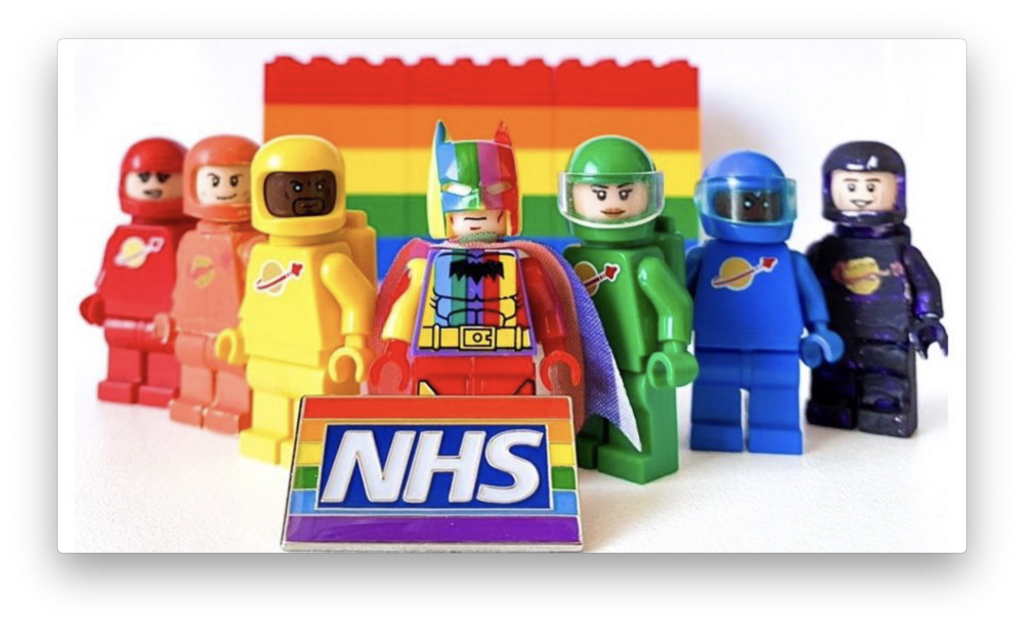
    The COVID-related adoption of the rainbow flag to mean “I like the NHS” has caused dismay for many LGBT+ people. It’s not because they’re snowflakes. It’s because some of the flags, badges and other merchandise have appropriated two things: the Pride flag, and the logo of a very specific NHS initiative that’s been running for several years.

    The original NHS rainbow was, well, a rainbow: seven colours in a semi-circle with clouds at either end. Here’s one.
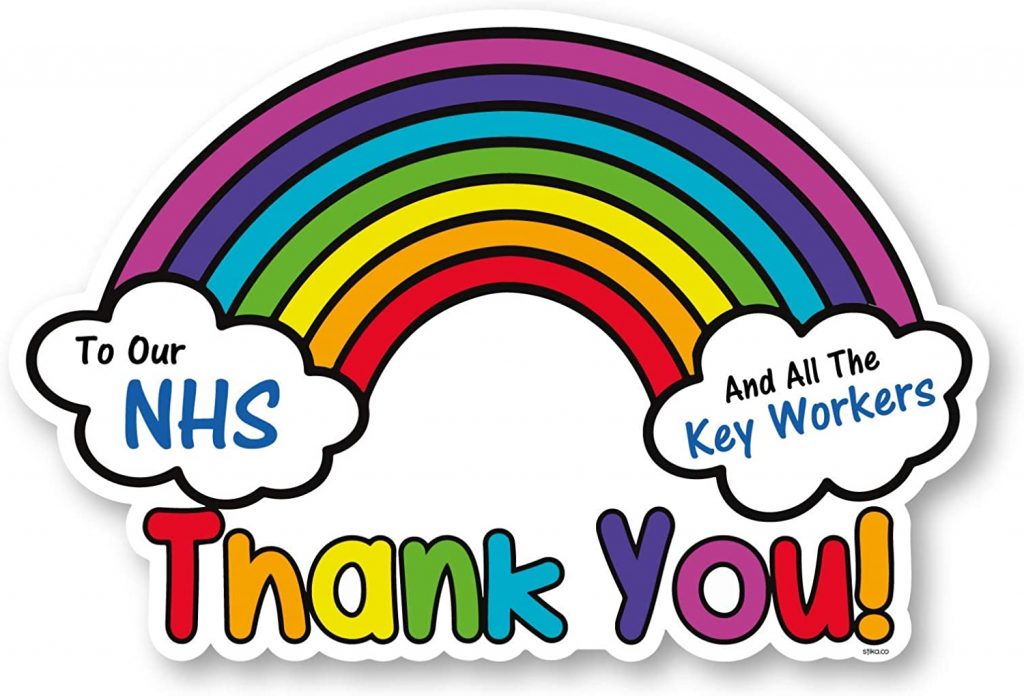
    But we’re seeing more and more of this. This is a “Thank You NHS Hero” flag from Amazon:
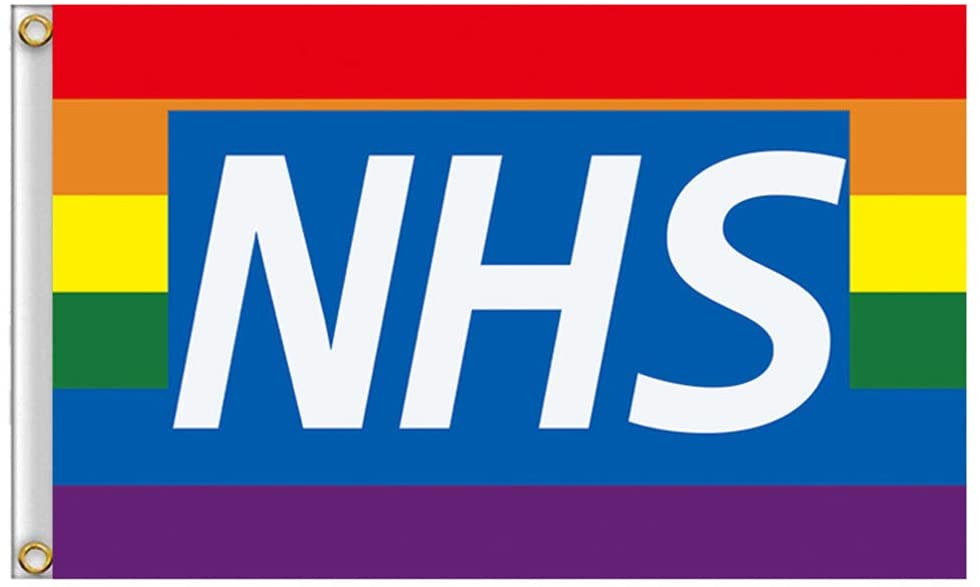
    As you can see, it bears a strong resemblance to the Rainbow NHS Badge, shown below.
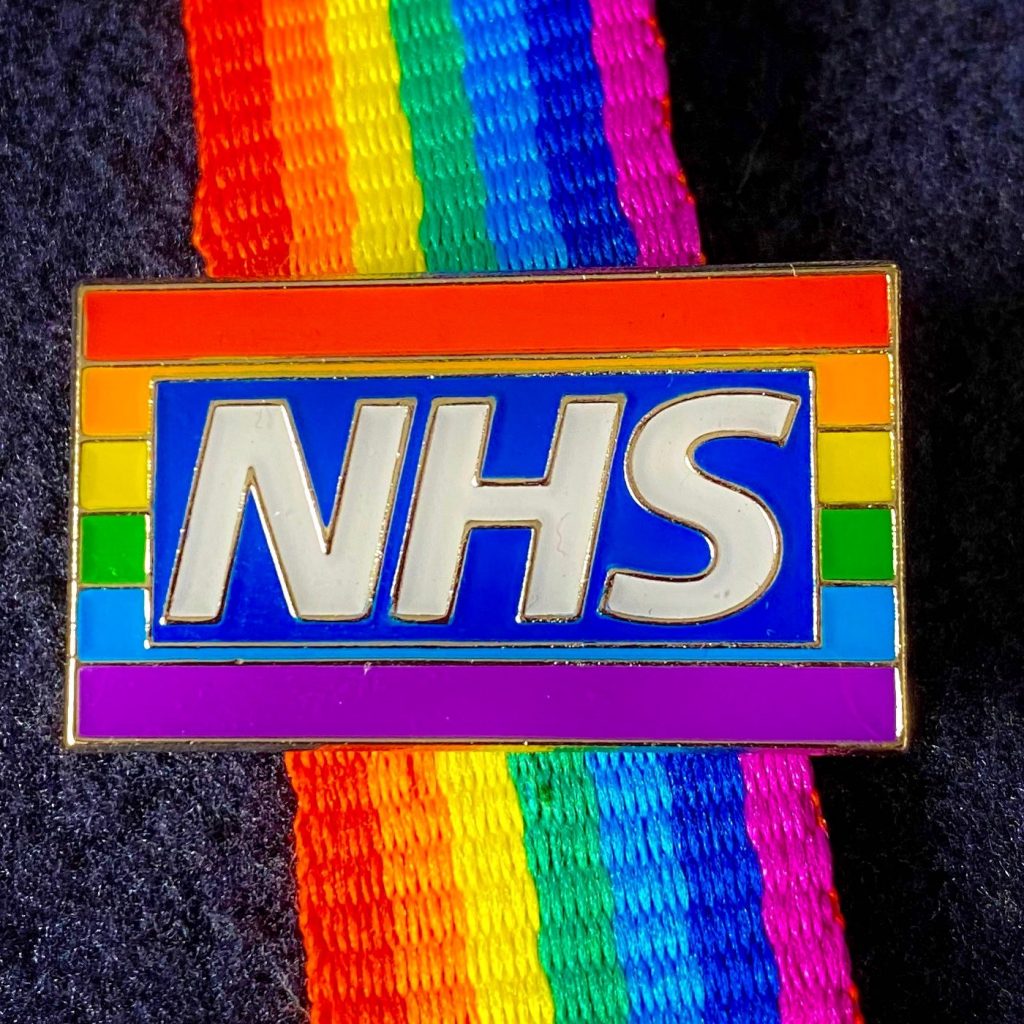
    The former is cheap Amazon tat. The latter is the logo of a specific initiative to improve access to healthcare.

    The Rainbow NHS Badge programme was created because many LGBT+ people have experienced appalling treatment from healthcare workers. Those experiences, and hearing about those experiences, can make LGBT+ people very wary of accessing NHS services. That reluctance can cost lives.

    To try to address this, the Rainbow NHS badge project was created in late 2017. The aim was to create “a strong visual symbol to say to LGBT+ people accessing NHS healthcare, ‘I am a good person to talk to about LGBT+ issues and I will do my best to help you if I need it.’” The badge combined two instantly recognisable images: the NHS logo and the Pride flag.

    There’s a potted history of the whole programme here.

    It’s not just a badge. It’s also a commitment to equal healthcare and equal treatment, something LGBT+ people cannot take for granted. Prior to COVID, the badges were in use in 223 NHS trusts in England with more to follow and it was also rolling out to GP practices and other organisations.

    Rainbows are important to LGBT+ people. They indicate safe spaces in a world that’s often very unsafe; in the NHS, they indicate that somebody is safe to talk to. The horizontal Pride flag is recognised globally as a symbol of LGBT+ people and LGBT+ inclusion.

    Now, though, we’re being told that any and all rainbow flags – including the Pride flag – mean the NHS. They don’t.

    Here’s The Portal Bookshop:

    I appreciate the rainbow arguments seem silly to anyone on the outside but let me put it this way.

    For years, if you saw the rainbow flag up somewhere, queer people knew they would be safe there.

    Now? Is it safe? Or does that person support the NHS – and want to send you to it?

    The Pride flag is not a rainbow, but it’s beginning to be used by people who don’t know the difference. So the use of the six-colour pride flag in NHS-related branding and merchandise – and clothes shops and supermarkets have been particularly bad for this, cynically rejigging their Pride ranges to make them about the NHS instead – is taking a very specific symbol and ignoring its meaning. As The Portal bookshop put it on Twitter, it’s having “a symbol of safety and unity snatched out from under us in six months flat.”

    If there’s a silver lining to this cloud, it’s that it’s driving adoption of a newer, alternative Pride flag called the Progressive Pride flag. It was designed by Daniel Quasar in 2018 and adds more colours to represent people of different colours and genders.
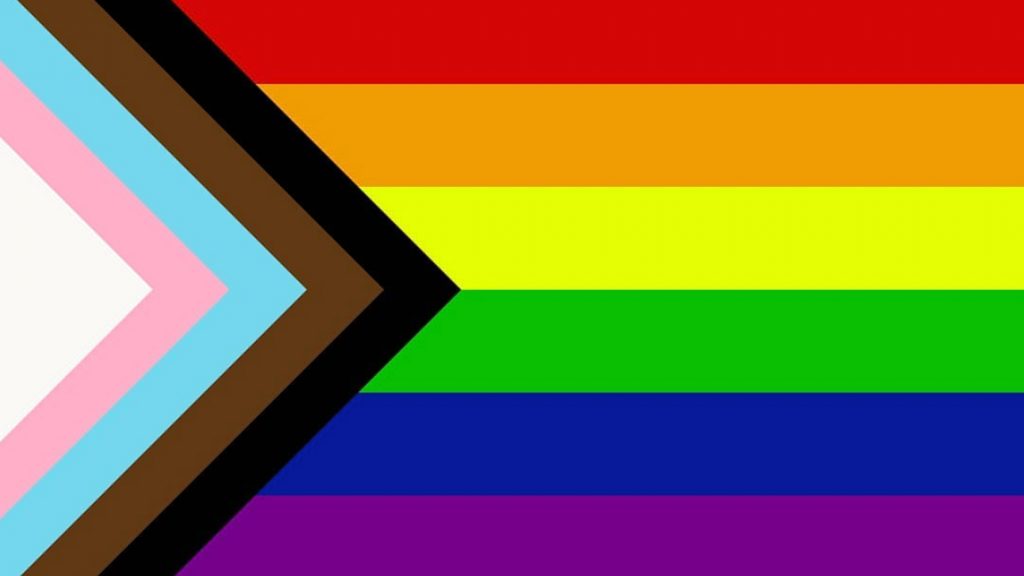
    As Tom Haynes wrote on TheTab.com:

    I’m certainly not trying to tell you LGBT+ people own the very concept of rainbows… but the way brands and the Tories have taken the rainbow and ran with it is uncomfortable to watch. Looking at summer streets full of boomers dangling actual Pride flags with NHS written on them, it’s hard not to to think: yeah this is a form of erasure. There’s a nuance here that most people are missing.

  • Why trans people go private

    There’s a good piece by GenderGP head of patient services Adi Ni Dhálaigh Gourdialsing in PinkNews about trans people accessing private healthcare.

    In 2016, the Women and Equalities Commission bravely and unreservedly found that: “The NHS is failing in its legal duty under the Equality Act in this regard. There is a lack of continuing professional development (CPD) and training in this area amongst GPs. There is also a lack of clarity about referral pathways for Gender Identity Services. And the NHS as an employer and commissioner is failing to ensure zero tolerance of transphobic behaviour amongst staff and contractors.”

    Fast forward to 2020 and little has changed. We still have: No NICE guidelines on the medical interventions available for gender incongruence; no standards of medical education set for this area of healthcare by the General Medical Council; no continuing professional development (this is the responsibility of the Royal Colleges and Postgraduate Deaneries); no agreed standards of care for NHS trusts and clinical commissioning groups; no UK-wide medical guidelines; and healthcare that is provided in super-specialised clinics, which are supposed to cater for just 500 patient cases per year.

    I’ve been involved in a few consultations about trans healthcare recently and absolutely none of the issues being raised in the consultations are new. Trans people go private or self-medicate because in many parts of the UK the NHS tells them to wait nearly six years before they can discuss getting any kind of treatment.

  • Intended consequences

    The anti-trans mob and their evangelical Christian pals are behind a judicial review that could have chilling effects on young women’s access to contraception. That’s not a potential unintended consequence. It’s the whole point.

    Stonewall’s Nancy Kelley, writing in the i Paper:

    If [we] chip away at the idea that children and young people are not fit to know what’s best for them, we open the door towards eroding Gillick Competency. ‘Gillick’ was a case in 1985 which established that young people under the age of 16 can consent to their own medical treatment, without the need for parental knowledge or permission.

    Gillick is a cornerstone of children and young people’s rights and helps ensure young people can access the healthcare service they may need, including abortion, contraception or sexual health services.

    So, this case isn’t just about healthcare for trans young people, it’s about a much wider issue: whether we believe children and young people have a right to treat their bodies as their own.

    The lawyers representing the people bringing the case say it would push Gillick to ‘breaking point‘. This would give a green light to those who want to use this an opportunity to roll back the healthcare rights of not just LGBT young people, but all young people.

    Getting rid of Gillick is a key goal of the religious right, who do not want any teenagers to have access to contraception or sexual health services. The anti-trans women hoping the verdict goes against the NHS are either willing accomplices or deeply, deeply stupid.

  • This is what cancelling looks like

    This week, the BBC and The Times both went after the private GP service GenderGP, an ongoing target of the anti-trans mob.

    I’ve written about GenderGP before: it’s a practice that enables trans people to access healthcare privately when the NHS expects them to wait for many years for an initial assessment. I’m a former patient, so I can attest that while it isn’t perfect it is also serious and professional in its prescribing. It certainly isn’t handing out HRT like sweeties.

    The reporting was full of innuendo but didn’t find anything significant to report. Despite this, the UK’s pharmacy regulator has responded to the bad publicity and removed GenderGP’s ability to prescribe HRT to trans people with immediate effect.

    Overnight, thousands of trans adults have had their private healthcare stopped – not because GenderGP has been proven to have done anything wrong, but because two of the most powerful media outlets in the country have targeted it.

    The anti-trans mob, of course, are rejoicing about this. Removing life-saving trans healthcare from thousands of adults, as far as they’re concerned, is something to celebrate.

    Trans people will continue to need medicine. By shutting down safe, legal services, all that’s going to happen is that trans people will turn to possibly unsafe services instead. If you’re one of the people affected, there’s a good thread of (safe) options here.

    Once again this gives the lie to the idea that any of this is about ‘reasonable concerns’ or ‘protecting women’. These people want us dead.

  • Faith in the system

    Stop me if you’ve heard this before. A bigot does bigoted things that reflect badly on their employer, they get the boot, and the Christian Legal Centre tries to make them a free speech hero. Said centre is then handed its arse on a plate by a tribunal judge who points out the bleeding obvious: you can believe what you like, but you can’t behave how you like.

    This week’s case features Karen Higgs, who worked at her son’s Church of England primary school as a pastoral assistant and who was sacked for railing against the same school’s relationship lessons very vocally online. “THEY ARE BRAINWASHING OUR CHILDREN!” You know the kind of thing.

    The reason you can’t do this kind of thing is because it brings your employer into disrepute.

    Every employment contract I’ve ever signed had one of those clauses. It’s a standard bit of boilerplate that means  that you can’t go around bad-mouthing your employer and expect to stay employed. For example, if you work for a restaurant and tell loads of people on Facebook that the food is shite and you hate the customers, you shouldn’t clear your diary for the next staff Christmas party. 

    The Church of England makes it very clear that its schools value “All God’s Children”, not just the straight cisgender ones with straight cisgender parents, and it has a very clear policy on anti-LGBT+ bullying and how staff in primary schools should discuss issues such as same-sex parenting and trans parents.

    In particular it says that primary schools should “promote a strong anti-bullying stance that shows that HBT [homophobic, biphobic and transphobic] remarks and behaviour are unacceptable.” Posting homophobic and transphobic things online is of course in direct conflict with that.

    In her defence, Higgs claimed that it was okay to rail against same-sex marriages because while “I am aware that same-sex marriages are now recognised under UK law… I believe that is contrary to God’s law”. But while they may be bound by God’s law in their head, they’re bound by UK law at work.

    As school governor Stephen Conlan told the tribunal: “You can post your beliefs without posting this sort of language and it is perfectly possible to communicate your beliefs without using such strong language.”

    I feel sorry for the people of faith who these clowns claim to represent. The people demanding “religious freedom” to defame and demonise others don’t represent anybody but themselves. They’re not devout. They’re just dicks.

  • Political differences

    Petra De Sutter

    The photo above is of Petra De Sutter, the newly appointed Deputy Prime Minister of Belgium. She’s also Minister for Public Enterprises. Oh, and she’s transgender.

    As the Brussels Time notes, that bit “went almost unremarked upon by Belgian media… [other than] when remarking on the diverse make up of the new government – which consists of 50% women, includes several ministers with a migration background, and is relatively young.”

    Meanwhile in Scotland:

    The First Minister stepped in to defend one Holyrood hopeful – Rhiannon Spear – after she was targeted with horrified misogynistic abuse from trolls having previously defended transgender rights.

    I’ve written about Spear before; she’s a dedicated and impressive young politician who’s been the subject of an ongoing hate campaign simply because she believes in human rights for trans people. And she is not alone. In the UK, women who defend trans rights are subjected to sustained, vicious, misogynistic abuse that’s much more serious than a celebrity being called a bigot on Twitter; any trans person considering political office will receive even worse. So it’s hardly surprising that while Belgium has a trans Deputy Prime Minister, the UK has no openly trans MPs, MSPs or MEPs at all.

    De Sutter:

  • Nine questions you might have about trans stuff

    Katelyn Burns has written an excellent piece for Vox: 9 questions about trans issues you were too embarrassed to ask.

    The questions are:

    1. What does it mean to be trans?
    2. Why should I care about trans issues?
    3. What about the pronouns thing?
    4. What issues are trans people fighting for?
    5. Why are we always talking about trans issues?
    6. What’s the deal with bathrooms?
    7. What’s with the panic over trans women with penises and trans men who menstruate?
    8. What about trans women playing women’s sports?
    9. What about trans kids?

    I think the question “why are we always talking about trans issues” is particularly apt today because it’s Sunday, when the right-wing press likes to run its anti-trans hit pieces and scaremonger about trans kids, trans women and trans athletes.

    “The right has worked to make it an electoral issue…  We see this across the board — they try to posture trans rights as extreme and a danger particularly to children,” Brennan Suen, LGBTQ program director at Media Matters, told Vox. This is why, he said, conservatives have focused so much on legislation regarding transition care for trans minors, bathrooms, and trans athletes in sports. “They are able to reach those voters who might not know a trans person and give them misinformation and bigoted information that honestly scares them.”

    …as trans people have really been more visible in the media … we’ve seen the right really ramp up their attacks.”

  • Most people are good people

    This, from Gogglebox, is lovely: it’s people watching an episode of First Dates featuring a trans man.

  • The bookshops battling bigotry

    There’s a good piece in Bookriot by Alice Nuttall about the bigoted bullshit many independent bookshops experience; it’s usually because they’re supportive of LGBT+ rights and trans people specifically.

    Despite the fact that the shop promotes women’s writing and has made huge strides in ensuring that little-read women authors are given the prominence and acclaim that they deserve, The Second Shelf was deemed anti-feminist for its decision to include all women, rather than solely cis women, on its shelves. The abuse faced by The Second Shelf mostly took place online, with transphobes writing negative reviews despite having never visited the store, or bombarding the shop’s Twitter account with hundreds of hateful messages.

    As ever, the people doing it are usually supporters of, and often tacitly supported by, supposed champions of free speech and critics of “cancel culture”.

  • “The world is better for having you in it”

    Over 200 1,512 writers and publishing professionals have written an open letter in support of trans and non-binary people.

    This is a message of love and solidarity for the trans and non-binary community. Culture is, and should always be, at the forefront of societal change, and as writers, editors, agents, journalists, and publishing professionals, we recognise the vital role our industry has in advancing and supporting the wellbeing and rights of trans and non-binary people. We stand with you, we hear you, we see you, we accept you, we love you. The world is better for having you in it.