Category: Hell in a handcart

We’re all doomed

  • Aggressive questioning

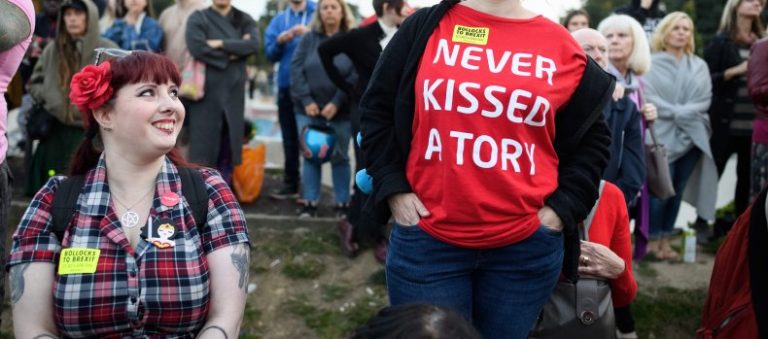
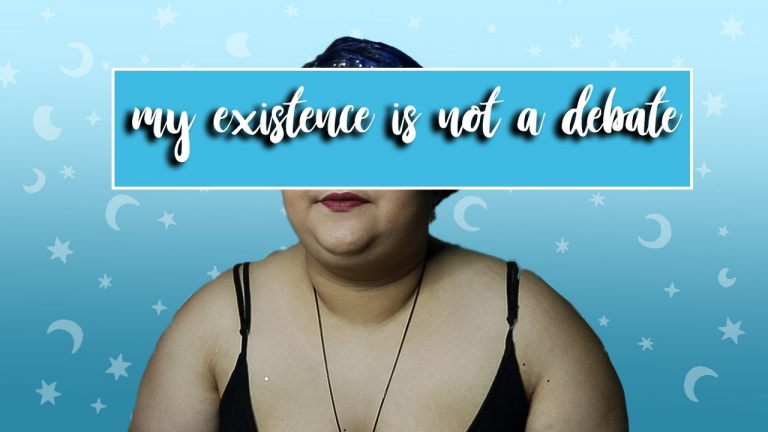
    Guilaine Kinouani writes at Race Reflections. In “education requests, exploitation & oppression” she discusses the issue of emotional labour, where complete strangers (usually members of the majority) ask someone (usually a member of a minority group), to educate them on things they could easily Google – or often, things they have already Googled and choose not to believe.

    Recurrently and increasingly, I am asked to provide the emotional or intellectual labour of educating privileged folks on oppression, racism and (although much, much less frequently) sexism via requests for of ‘debate’, elaboration or information. These demands for education occur on and off social media. Publicly and privately. They reach me almost daily. Simply reading them recurrently leaves me exhausted. Often frustrated. Sometimes angry that so many would expect such a laborious service, from me, for free. Always, I am left feeling heavy.

    Often, questions are phrased not as questions but demands – and refusing those demands leads to vicious abuse. How dare you refuse to stop what you’re doing and do my bidding! Debate me now, coward!

    But even when the questioners are not aggressive, there can be aggression.

    Each time we are asked to educate mindlessly, not only must we re-experience oppression and racism, we must often carry the weight of the privileged’s inability to tolerate their own responses, distress, discomfort and, the disturbance caused to their benevolent sense of self or worldview, which often gets passed on to us via projection.

    There’s an attitude I’ve seen a lot of online and in print by people who have enormous privilege: the way things have been is the way things should be.

    If you suggest otherwise, the problem is clearly with you.

    It is not unusual for example, for those who challenge racism to be called racist, bully or some other persecutory term.

    Even when the questions are questions rather than demands, they can be problematic. What may be intellectual curiosity for the questioner is someone else’s lived experience.

    All oppressive experiences are traumatic. It hurts. It makes you tired. Sometimes it makes you want to cry. The cumulative effect of subtle and everyday or micro experiences of othering and discrimination is grinding. It is draining. And again, every single time it is hard. But more than that, it wears our health and mental health down. It renders us vulnerable to psychological distress and make us feel unsafe in the world, the very definition of insidious trauma.

    Given this impact, the expectation that we should as a matter of course and at the drop of a hat, subject our bodies to such effects is frankly gross in its lack of compassion and consideration.

  • Manufacturing consent

    I’m indebted to Tennessee Pete on Twitter for the link to and commentary on this story:

    As he put it:

    This is such a good case study for manufacturing consent because it’s just… ‘in response to Iran’

    In response to Iran doing what?

    No, not in response to any provocation, just in response to Iran. The continued existence of Iran.

  • For God’s sake, vote

    These are the politicians who passed the horrific anti-abortion bill in Alabama. Notice any similarities?

    It’s easy to look across the Atlantic in horror at Dark Ages throwbacks such as these yahoos, but don’t forget that right here in the UK abortion is still illegal in Northern Ireland, as is equal marriage.

    In Northern Ireland, the people most likely to be in favour of women’s reproductive freedom are much less likely to vote than their religious counterparts.

    In the 2015 UK elections, 70% of Catholic women voted but just 55% of Protestant women did. That wasn’t a one-off, either. The pattern has been evident in elections from 1998 onwards.

    There are multiple reasons for this, including disengagement from politics and a belief that politicians of all stripes aren’t trustworthy. In the US, the religious right actively engages in voter suppression. But the fact is that if you’re a woman or a member of a minority group, voting isn’t optional: it’s crucial. Because the people who want to restrict your rights vote religiously. Pun fully intended.

    There’s a wider issue here, which is about representation more generally. Why aren’t politicians more representative of their diverse constituents?

    Here’s Bernard Farga of Indiana University. Farga is the author of The Turnout Gap: Race, Ethnicity, and Political Inequality in a Diversifying America. Farga answers an interesting question: how can a country such as the USA, which is becoming significantly more diverse, elect politicians who cater only for one specific group – right-leaning white people?

    I think there’s a countervailing force to this “demographics are destiny,” which is polarization. At the same time that demographic change has happened, we’ve seen racial polarization of partisanship where whites have become substantially more Republican. And despite the fact that the nation is becoming more diverse, and maybe 40 percent minority by 2020, whites are still the majority by far, and will be the plurality group for generations to come… if the parties split on race, then the party that’s catering to white voters will still be dominant.

    One reason for that is that the groups the politicians choose not to represent have much lower voter turnout.

    …the increase in the minority population is disproportionately among very low-turnout groups: Asian Americans and Latinos. Latinos are the largest minority group in the country; Asian Americans are the fastest-growing minority group in the country. So, these two groups, where turnout rates are as much as 30 percentage points lower than the turnout of rate of whites, that’s the demographic change we’re seeing.

    So that means the voting population is lagging far behind the demographic shift that we’re seeing otherwise. And when you combine that with polarization, it means that demographics aren’t destiny… demographically, whites are still a majority of the potential electorate, and the clear majority of the voters.

    To simplify something that’s obviously a lot more complex and multifactorial: in the short term, political parties can gain power by ignoring minority groups and pandering solely to the demographic that delivers the most votes. It’s why conservatives put so much effort into appealing to older, white, straight, people: the turnout among other groups means they can effectively be ignored. Improving turnout is therefore crucial if we want a fairer, more representative politics.

    Farga isn’t optimistic about where the current divisive politics leads.

    …beyond who wins and who loses, it’s about having elections that represent the will of the people, and I think when you don’t have that—no matter who wins or loses—in terms of which party, the outcomes are bad. I think that some of the divisiveness and divisions that you see right now—the polarization—is a product one of the parties… feeling that the strategy to win is basically to keep people from voting, that the only way they can win is by certain people not turning out, because that seems to be what was successful in 2016 and a few elections before that, like 2014 and maybe 2010.

    That’s dangerous, because when we start talking about outcomes that are not seen as representative of all the people, and then one party disproportionately winning those outcomes, then the other party says, “Well, this is illegitimate.” And that’s where you see democratic breakdown.

  • On women’s rights, follow the money

    Writer Erynn Brook has posted an important thread on Twitter that begins with a simple question: why does she, a Canadian woman, care so much about abortion law in the US? The answer isn’t just that it’s a moral position, that if you care about women’s rights you should care about women’s rights everywhere. It’s that the same people – and their finances – turn up in other countries too.

    When Brook encountered anti-abortion protesters in Canada, she was struck not just by the callousness of the protesters but by their expensively produced, professionally designed materials. When Brook’s photo was used by the protesters online she discovered that the protesters were “a company. Like a real company with directors and managers and a lawyer on retainer.”

    Protest groups generally aren’t serious businesses too, so Brook investigated. What she found was effectively a PR company supporting anti-abortion protesters, and that company had deep pockets. As she dug further she discovered the company’s links with a prominent anti-abortion group founded by a US activist, and that group’s links with anti-abortion campaigns overseas. Ireland is a notable example.

    Brook:

    This isn’t an America issue. It’s a global issue, and the US is a megaphone. Not just that, they have actual companies, representatives and campaigns running in other countries promoting their propaganda.

    What you’re seeing on the streets and online isn’t a spontaneous protest. It’s a PR campaign.

    The funding is opaque, deliberately so, and in many cases groups use crowdfunding to disguise the source of their income.

    The same thing happens here in the UK with various groups raising suspiciously large amounts of money incredibly quickly, the timestamps and amounts of the donations strongly indicating that most of the money is coming from the US. This opacity isn’t just about hiding donors’ identities. In many cases it’s also designed to evade electoral law, which limits political spending during elections and referendums.

    Much of the social media activity and advertising against minority groups and/or progressive legislation is the work of bots (software) and sockpuppets (multiple fake accounts), much of which comes from internet addresses in the US: in the recent Irish abortion referendum, half of the online activity was by bots.

    From anti-abortionists to anti-trans activists, climate change deniers to far-right rabble-rousers, dark money from the US has gone global – and money’s coming from the other direction too, with Russia deliberately trying to sow discord and division in the West. It too runs bot networks, sock puppets and fake news factories, boosting the far right and activists working to restrict the human rights of women and minorities.

    The issues may differ but the story’s the same: whether they’re outside family planning clinics or primary schools, the protesters are pawns in a global game.

  • “A virus has spread, using technology to systematically tear at the social fabric”

    Danah Boyd recently gave a talk at the Digital Public Library of America conference. It’s chilling stuff and chimes with my own thoughts about the internet: what we once thought would be a powerful, enlightening force for good has been weaponised and by people who want to tear our world apart.

    What’s at stake right now is not simply about hate speech vs. free speech or the role of state-sponsored bots in political activity. It’s much more basic. It’s about purposefully and intentionally seeding doubt to fragment society.

    This is something we see again and again in everything from climate change and vaccination to whether minorities should be granted human rights.

    The agendas differ: sometimes it’s corporations trying to undermine legislation that might affect their profitability; sometimes it’s religious fundamentalists; sometimes it’s racists; sometimes it’s disaster capitalists.

    But what these various bad actors have in common is their attempts to create an “other side” when there is no other side, a “debate” when the facts are unequivocal. They do this not because there’s uncertainty, disagreement or division, but because they want to create uncertainty and disagreement and division. They want people to disbelieve the facts, disbelieve the scientific consensus, disbelieve the evidence of their own eyes.

    This line jumped out at me.

    Journalists often get caught up in telling “both sides,” but the creation of sides is a political project.

  • Make extremists afraid again

    Writing on Medium, Jessica Valenti discusses the horrific anti-abortion legislation in Georgia, which from 2020 will ban abortions after six weeks – a period during which many women aren’t even aware that they’re pregnant. It’s going to ruin the lives of many women.

    The law may also consider women who have miscarriages as murderers in the second degree.

    Valenti:

    Republicans want to ensure that women are forced to carry pregnancies no matter how far along they are, and these so-called heartbeat bills do double duty: They prevent women from legally being able to obtain an abortion, and were written with the hope that they’d be challenged all the way to the Supreme Court to help overturn Roe v. Wade.

    The open viciousness of the legislation, which would treat mothers of stillborn children as murderers, is staggering.

    Up until recently, the anti-abortion movement would have taken great pains to pretend that women wouldn’t be punished under such a law. That the GOP no longer has the need for such niceties should scare every single one of us.

    …Those who once fought so hard to seem “woman-friendly” have seemingly given up on their public image problem — embracing the most radical rhetoric.

    For some years now, the religious right in the US (and beyond; the anti-abortion mob’s money funds groups here in the UK too) has attempted to camouflage its anti-women views and its anti-gay views for fear of seeming extreme. But it’s become emboldened by the success of its anti-trans campaigning, and by the support of the criminal in the White House.

    …before now, the country and culture necessitated that they shroud their most extreme views.

    It does not bode well for the women of America that this is no longer the case.

    It won’t be the case here in the UK for much longer either. The religious right has had great success here in mainstreaming viciously anti-trans views and campaigning for the removal of trans people’s hard-won human rights, something that until very recently the chattering classes would have reacted to with horror. Emboldened by that success, the campaigning has long abandoned its “reasonable concerns” posturing to become a hate campaign that targets the very groups who work with society’s most vulnerable women.

    That’s no accident. The religious right has deliberately and cynically targeted anti-trans feminists in order to legitimise a long-term strategy that is also against women’s reproductive freedom, against equal marriage and against anti-discrimination protection for the victims of religious extremism. And it’s working. Again and again we see the anti-trans crowd apparently having no problem linking arms with the enemies of feminism: the anti-abortionists, the “women know your place” crowd, the right-wing religious fundamentalists.

    It’s astonishing to see. To use a colourful metaphor, it’s watching chickens recruit hungry foxes to protect them from something the foxes promise is really, really bad.

    It’s a funny image, but it’s not funny unless you’re one of the foxes.

    The rise of viciously anti-women legislation in the US is because the bigots aren’t afraid any more. When Donald Trump and his supporters in the media victimised muslims and trans people, the message was clear: you don’t have to hide your bigotry any more. Dangerous, hateful anti-abortion and “religious freedom” legislation were the inevitable next steps.

    Here in the UK we’ve seen a very similar process, although in our case it was Brexit rather than a travel ban that put racism back in mainstream society. We’ve got the racism, we’ve got the vicious anti-trans sentiment.

    You don’t need to be a Very Stable Genius to predict what’s next.

  • When hatred is more important than human lives

    [Content note: vicious transphobia, racial epithets and trauma]

    This is a photo of Tyra Hunter. She died in 1995.

    Hunter, who was 25, was injured in a car crash. When first responders arrived on the scene, they cut off her clothes and discovered that she was transgender. Instead of treating her they verbally abused her and mocked her, and at DC General Hospital she received shockingly inadequate care. She died of internal bleeding in the ER.

    The District of Columbia was subsequently and successfully sued, with damages of $2.8 million awarded to Tyra’s mother. Dana Priesing, who observed the trial, wrote that the evidence clearly showed that “ER staff, as evidenced by their actions, did not consider her life worth saving.”

    Tyra was knocked out by the crash, but by the time the firemen arrived, she was conscious but dazed, and developing airway trouble from teeth knocked into her mouth. Tyra looked female at first glance, but in their initial injury assessment, a fireman discovered Ty’s male genitals, uttered the epithets (“This ain’t no bitch. It’s a nigger. He’s got a dick and balls.”), and ceased treating her.

    They failed to clear her airway for some period of time while they laughed at her as the crowd yelled at them to get to work. Other emergency personnel on scene approached some time later, after treating the other injured passenger. They found Tyra still lying on the grass, gagging and combative, apparently trying to escape the taunting firemen.

    …she suffocated from lack of oxygen in her blood. Dr. Baker testified that the sensation would have been “sheer terror.”

    None of the first responders or the medical staff involved in her death were ever disciplined.

    Imagine reading that and being on the side of the bigots.

    That’s where the Trump administration is.

    The US Department of Health and Human Services has announced a long-expected rule that would enable healthcare workers to deny people treatment based on “moral or religious objections”.

    According to acting Department of Health and Human Services secretary Eric Hargan a few months ago, this is necessary because “For too long too many of these health care practitioners have been bullied and discriminated against because of their religious beliefs and moral conviction.”

    The rule would allow workers to refuse to provide basic health care like birth control, refuse to treat women who have had abortions, and discriminate against gay or lesbian individuals and their families, including their children.

    It’s important to note that the healthcare being talked about here is not limited to healthcare that the religious people object to such as hormones for transgender people. It’s any healthcare for people they have a problem with. Fixing broken arms. Chemotherapy for cancer. Pediatric care for your children. Life-saving help after a car accident.

    What this rule says is chilling: if you’re gay or lesbian, trans or a sexually active woman, the Trump administration considers you less than human. Bigots’ hatred is more important than your right to life.

  • Come friendly bombs, and fall on Brexit

    A picture tells a thousand words, especially this one.

    For me at least, most of the thousand words are swears.

  • Taking victims’ phones is a step too far

    Today’s stupid ideas: rape victims should hand over their phones to police or have the investigations dropped.

    There are two big problems with this. One, it’s victim-blaming: the number of false allegations is incredibly low and massively overshadowed by the solid, evidence-backed allegations that don’t lead to prosecution. The idea that a victim’s communications history and social media should be demanded before investigating rape is despicable. It’s also a gift for defence lawyers who could ask for such history so they can try to paint the victim as somehow responsible for her own assault if she didn’t live the life of a Carmelite nun.

    Two, you can’t trust the police to get it back to you. I’m seeing lots of women on social media with tales of phones held by the police for as long as three years, three years in which the bills still had to be paid; one woman was hounded by a debt recovery agency over her Vodafone bill for a device the police kept for months. By the time it was finally returned, the hugely expensive phone had been in police hands for so long that it was effectively obsolete and completely worthless. As the woman put it on Twitter: “I had to make do with an old handset (not a smartphone, an ancient handset by today’s standards) on a pay-as-you-go basis until I could afford otherwise. Having been the victim of a crime, I now felt I was being punished for reporting it.”

  • “Basic facts have not been apparent in much of the media coverage”

    Writing in Bella Caledonia, Caitlin Logan describes the current backlash against trans people as evidence of widespread media failure.

    In Scotland, the conversation on trans rights started out as distinctly civil in comparison to our counterparts in England. Women’s organisations stood alongside LGBT campaigners in explaining why trans people can and should be included in their joint efforts for a more equal, safer and socially just Scotland. MSPs from across the political spectrum were photographed with ‘Equal Recognition’ campaign signs, demonstrating their support for reforms which seemed a fairly simple extension of progress which had already taken place with limited fanfare.

    It was as the public – media-driven – debate in England intensified that the Scottish media began to follow suit.

    … the news media has always been driven by competition to be the “most interesting”, but I fear that its decline in the digital age has spawned a whole new impetus to shock, to incite debate, and even to anger.

    …We are now witnessing, on multiple different issues, the political and personal consequences of a media strategy centred more on generating heat than shedding light, coupled with a disregard for clarifying whether the controversial opinions it platforms are even based in fact.

    It’s hard to express just how draining this poison is. Writer and activist Julia Serano is as sick of it as the rest of us are.

    We are now living through the biggest anti-#trans backlash since the 1970s. it’s been going on since at least 2016. it’s not just Republicans or evangelicals – it’s coming from numerous fronts. & most cis people seem entirely oblivious to it…

    …anyway, my point is, these cis people – often people very close to me – seem surprised that lots of people are still very much anti-trans. because they (the haters) have all since learned to couch their bigotry via buzz words about “biological sex” & “women’s safety” and “the science is still out on that” & so on.

    Logan:

    The media is not merely a mirror, reflecting society back at itself – it is part of society, and to ignore its own power in shaping the social and political dynamics it reports on is a dereliction of duty which can no longer stand.