We’ve been talking about publishing (or rather, not getting published), and G24 points out:
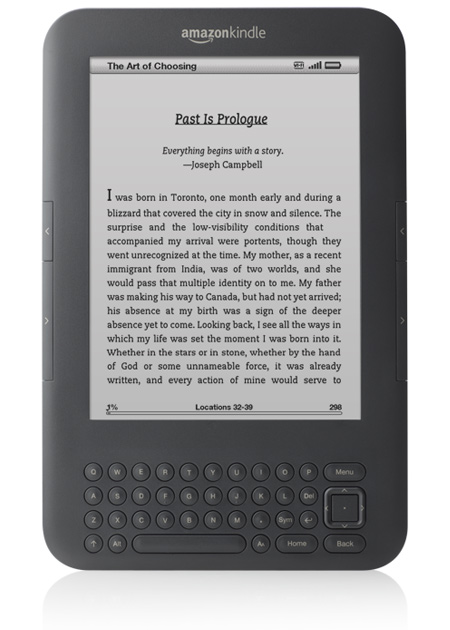
You don’t need a publisher these days any more than you need pulped up trees to print on.
I agree entirely, but I don’t think self publishing is the right road for me. There are lots of reasons for that, but the biggest one is this: I’d rather spend my time writing than marketing, because I’m bloody awful at marketing.
I think self publishing can work, but I think it only works for very specific kinds of writing and for very specific kinds of people. I think in most cases those kinds of writing are the ones that the mainstream publishing industry doesn’t serve particularly well – sci-fi and fantasy, for example, or erotica, or poetry, or books by famous bloggers. And I think in most cases those kinds of people are those so passionate that they’ll devote extraordinary amounts of time, effort and money for precious little reward.
One of the big problems with self publishing is that it can cost money. To do it properly, even if you’re online-only, you’ll need to be, or pay for, an editor, a proofreader, a designer, a publicist, a social media marketer and so on. If you can do all those things yourself, I’ve got nothing but admiration for you, because you’re much more talented than I am. And if you can afford to pay for all of those things yourself, you’re much richer than I am.
Another problem, to me at least, is that self publishing doesn’t give you the editorial process you get with a mainstream agent and publisher. I’ve spent thirteen-odd years being edited, and I can honestly say that with very few exceptions the editorial process has made my writing better. I don’t just mean proofreading here; I mean the whole process, especially the bit where the editor says “that’s a terrible idea. Why don’t you…?” In fiction, having the input of agents and editors who eat, sleep and drink fiction is enormously useful, I think.
I’m convinced that no matter how good the writer, they can benefit from a good editor.
Another big problem is that the money isn’t there yet. The Kindle Store, Apple’s iBooks and so on are good business for the companies that run them, because 1 million authors selling 100 copies each is a nice little revenue stream. But if you’re the author of one of those books, that’s bugger-all money.
The authors making money from ebooks are the ones whose books you see in ASDA – the Stieg Larssons and Stephenie Meyers. There’s a visibility problem with electronic publishing, which is why the ebook charts are dominated by writers with agents, big-name publishers and enormous marketing budgets. We’ve seen exactly the same thing with music: despite the democratisation of music from PC-based studios and Internet distribution, if you want to do big numbers you still need to have a big label behind you.
I don’t want to be online-only, incidentally: I like real, printed books, and my enormous rampaging ego would quite like to see my name on a poster in the window of Waterstone’s. And that means self publishing is even less attractive.
As Jane Smith points out on How Publishing Really Works:
it would be difficult to hire anyone competent to sell your books on percentage, as each bookshop visit would barely cover the travelling costs incurred even if every bookshop approached took half a dozen copies each.
Even if you do the legwork yourself you’re still likely to end up losing money because of those travelling costs, and because you will only be able to cover a very small part of the country.
Commercial publishers have their own sales and distribution networks in place. Their sales representatives frequently visit every bookshop in the country, and discuss their new and forthcoming books.
Commercial publishers also have publicity departments which routinely send out stacks of review copies to TV programmes, newspapers and magazines, to ensure that potential readers will get to hear about each book as it is released.
The self-publisher simply cannot match this vast sales machine, and so is unlikely to sell anything like as many books: few self-published titles sell more than one hundred copies, while most commercially-published books sell more than a thousand.
Incidentally, that also demonstrates just how much the odds are stacked against you: even with the backing of a decent agent and a good publisher, few writers sell lots of books. But the numbers are even smaller with self-publishing.
This takes me back to my first point, which is that I’d rather spend my time writing than marketing because I’m not particularly good at marketing. Having already spent the best part of two years writing something that, for now at least, mainstream publishers aren’t keen on, I think my time would be better spent writing something that will sell rather than doing a half-arsed marketing job that might generate a couple of hundred quid somewhere down the line. Self promotion, sadly, isn’t one of my talents.