Author: Carrie

  • Trying to walk like a man

    It took me a very long time to realise how good Bruce Springsteen is: like many people, I misinterpreted Born in the USA as a tub-thumping, chest-beating, USA! USA! USA! anthem and didn’t investigate further. I’m a lot older and a little bit wiser now, and while I wouldn’t call myself a fan – I don’t own most of his albums, and I’ve only seen him live once – he’s written some of my very favourite songs. Walk Like a Man is one of them, and it makes me cry every time.

    Well so much has happened to me
    That I don’t understand
    All I can think of is being five years old following behind you at the beach
    Tracing your footprints in the sand
    Trying to walk like a man

    Springsteen wrote it about trying to be the man his father expected him to be and feeling that he was falling short; his relationship with his dad was rocky, his father unimpressed by his artistic leanings and his long hair. But good songs can take on a life beyond the specific circumstances they were written about, and Walk Like A Man is a very good song.

    Here’s Naomi Gordon-Loebl, writing in The Nation, on “the queerness of Bruce Springsteen.”

    In “Walk Like a Man,” from 1987’s Tunnel of Love, Springsteen sings about the lessons he learned from his father and whether he’ll ever know what he needs in order to “walk like a man”… the words seemed to perfectly encapsulate my experience of growing up in a body out of alignment with my gender, trying to walk a path that was not made for my feet and being constantly, painfully aware of the dissonance.

    Me too. Gordon-Loebl and I were driving in different directions – as I understand it she’s a masculine-presenting gay woman, whereas I’m a trans femme –  but we clearly drove the same road and had the same connection with this song.

    That line about being “painfully aware of the dissonance” really resonates with me. It’s a great way to describe the fear and frustration and sadness I felt throughout my old life, my frustration at being unable to perform a role my peers did automatically and effortlessly. I never lost that feeling of being five years old, trying and failing to walk like a man.

    As Gordon-Loebl says, Bruce Springsteen couldn’t be more straight. But that doesn’t mean his songs can’t reflect other people’s experiences too. There’s a powerful melancholy to much of his music, and many of his best songs are about people who don’t fit in and who yearn to escape the circumstances they’re in. It’s no wonder that they resonate with people who feel suffocated.

    But no matter where it comes from, there is an unmistakable echo of queer loneliness in his work. “Everybody’s got a secret, Sonny, something that they just can’t face,” Springsteen sings on “Darkness on the Edge of Town.” “Tonight I’ll be on that hill ’cause I can’t stop…. I’ll be there on time and I’ll pay the cost / For wanting things that can only be found / In the darkness on the edge of town.”

    …Perhaps nothing is so fundamentally queer about Springsteen as the pervasive feeling of dislocation that’s threaded through his work, the nagging sense that something has been plaguing him since birth, and that he’s dreaming of a place where he might finally fling it off his back.
  • Little Britain: streaming services say no

    The Guardian:

    Little Britain has been removed from all UK streaming platforms due to concerns about the use of blackface by its two stars, David Walliams and Matt Lucas. The comedy sketch show, which first aired in 2003 on BBC Three, has been removed from Netflix, BritBox and BBC iPlayer – with the pair’s follow up, Come Fly With Me, also taken down by Netflix for the same reason.

    It wasn’t just racist. As Matt Lucas admitted a few years ago, the whole programme was “cruel” and wouldn’t be made today. It traded in lazy stereotypes: shirkers pretending to be disabled, shrieking fat women, deluded transvestites, Thai brides and other tabloid targets. Defenders claim it was satire, but it was nothing of the sort. It was an extended exercise in punching down, its catchphrases shouted at minorities in the street.

    The usual grifters are claiming terrible censorship, and they’re much more outraged about this than they are about, say, racism or police brutality. But despite their claims of a ban, nobody is stopping them from watching it: it’s still available on pay-per-download. And of course, they can buy it on DVD and rack it next to their box sets of Love Thy Neighbour.

    Update, 12 June:

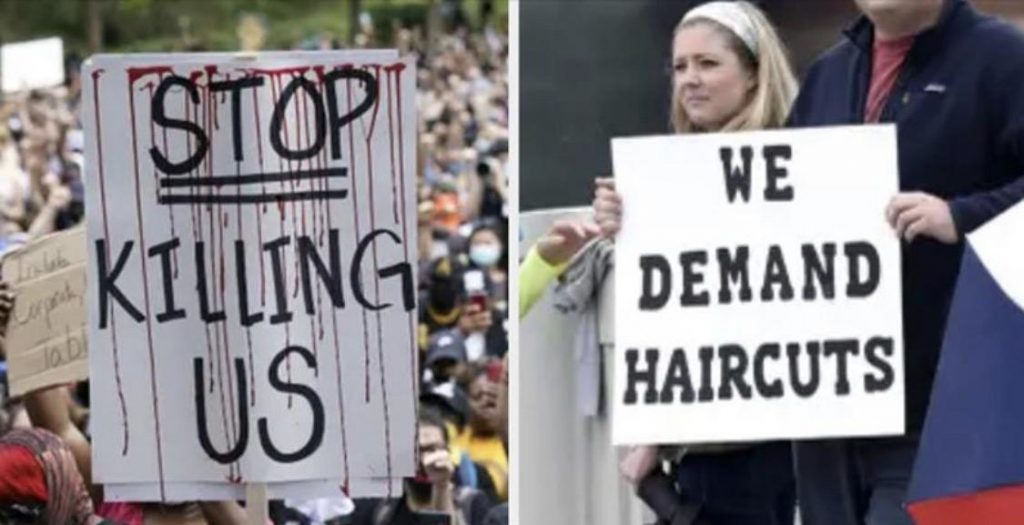
    The Sun appears to be driving a false narrative that Black Lives Matter protesters are demanding the removal of endless other TV shows. They aren’t. There is no “furious race row” over Gavin And Stacey, but there is a pretty transparent attempt by the Murdoch press to delegitimise protests against racism by pretending they’re about trivia.

  • “free speech outrage is disproportionately concerned with protecting the most powerful”

    Jessica Valenti, writing on Medium: Not All Opinions Matter.

    while police across the country are violently attacking peaceful protesters — actual state suppression of speech— powerful people are working hard to characterize disinterest or criticism as some kind of horrific rights violation.

    …It is not a coincidence that powerful white people are painting themselves as the victims at the same time Black Americans are on the streets demanding to be treated with some semblance of humanity. For the first time perhaps ever, the national conversation is solely focused on racism and anti-Black police violence. For those who are accustomed to holding all the power and attention, that shift in focus feels “oppressive.”

  • JK’s trolling

    The thing about bored celebrities taking pops at trans people isn’t so much what they say: we have heard it all before. It’s that their celebrity means we hear it again and again and again.

    I don’t follow JK Rowling, whose opinions on trans people are well known (and no longer explained away as “middle-aged moments” by panicky PRs). But I’ve seen her latest tweets several hundred times this morning already. Not just on Twitter, but in my news app, my RSS reader app, on Reddit and in my social news app. And they’ve caused a whole bunch of cisgender people to come into places such as trans-friendly subreddits hurling abuse and demanding “debate me, cowards!” And over the next few days we’ll see the second wave in the press and online as various right-wingers and anti-LGBT+ groups hail Rowling as a hero for refusing to be “silenced” by the “wokerati”.

    Celebrity gives people a platform. It’s a shame some people choose to use it as a bully pulpit.

  • 2020 is the most… what?

    Here’s an interesting thought, which someone (I’ve lost the link, sorry) posted on social media earlier.

    What if 2020 isn’t the most awful year we’ve experienced, but the most important?

    That’s not to say it isn’t awful. Of course it is. But history is full of awful times that, with the benefit of hindsight, turned out to be hugely important. They weren’t just periods of awfulness; they were periods of transition. Sometimes very painful transition, but transition nevertheless.

    What if 2020 is one of them?

  • “the hardest thing to do is admitting that others may have it worse”

    Katelyn Burns, writing for Vox: The LGBTQ civil rights fight is far from over.

    Often, the common perception of LGBTQ people’s lives in the US is filtered through the experiences of white, upper-middle-class, cisgender lesbian and gay people [who] live in coastal cities and happen to have access to large media platforms. Kirchick’s piece is filled with the common gripes of white, cis, gay men, citing protests of Pride parades by Black Lives Matter activists, questioning the inclusion of asexual people under the LGBTQ banner, and displaying general disregard for the needs of trans people.

    I have no doubt that some cisgender gay and lesbian white people, with their local nondiscrimination protections and their ability to marry their partners, have had all their needs met by the achievements of the gay rights movement. But calls for the end of LGBTQ activism ring hollow to those of us who still hold marginalized identities within the community.

  • Oppression as a marketing opportunity

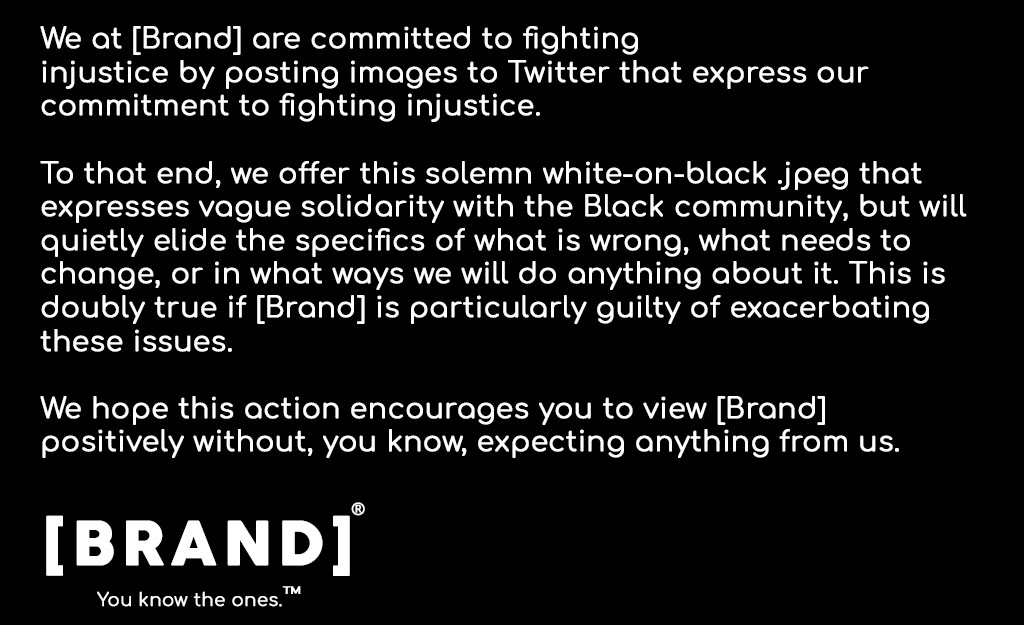
    You’ve seen pinkwashing, when firms who don’t particularly care about LGBT+ people pretend to care about LGBT+ people so they can sell stuff during Pride month. You’ve seen greenwashing, when firms who don’t particularly care about the environment pretend to care about the environment so they can sell stuff to people who do. And now, there’s whitewashing, where firms who don’t particularly care about Black people pretend to care about Black people because it looks good on social media.

    There is far too much of this kind of thing, expertly parodied by Chris Franklin:

  • Get a big discount on my bundled books

    How’s that for a headline?

    The British Computer Society commissioned me to write some books about effective writing, and this month they’re offering them as the Writing In IT Bundle with a whopping great discount. They even made a video!

    These books are designed to be practical and useful: you’ll discover how to optimise your words for maximum impact, which terrible traps to avoid and how to make your expertise and enthusiasm even more infectious.

    There’s 50% off the bundle until the 30th of June 2020: just order from the BCS shop and quote the discount code BCSJUNE.

  • Four horsemen

    NYT:

    The four large countries where coronavirus cases have recently been increasing fastest are Brazil, the United States, Russia and Britain. And they have something in common.

    They are all run by populist male leaders who cast themselves as anti-elite and anti-establishment.