Category: Technology

Shiny gadgets and clever computers

  • It’s never “just a joke”

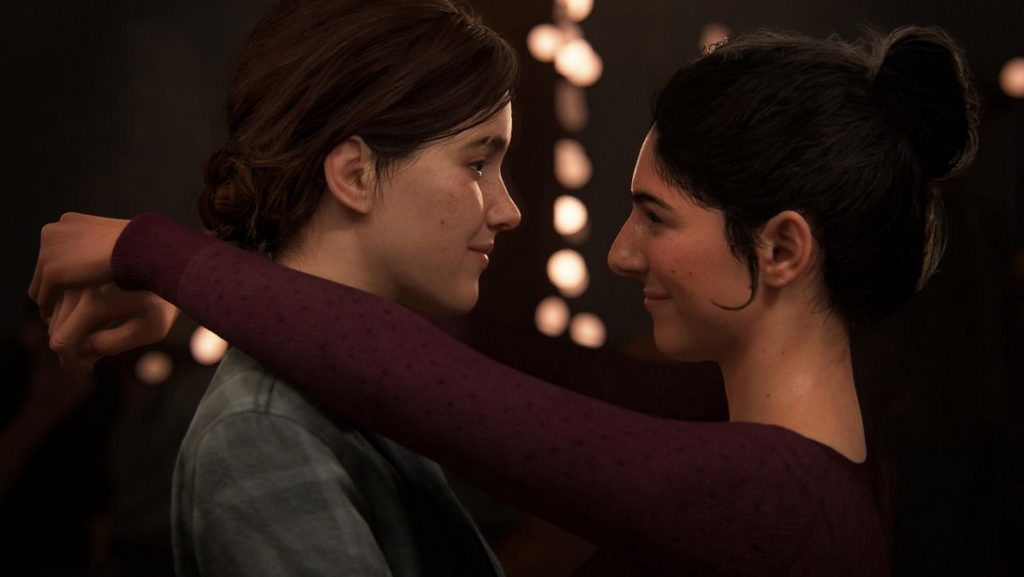
    I wrote about The Last of Us Part 2 the other day, and one of the things I mentioned was its portrayal of LGBT+ characters. One thing I didn’t mention was that their very existence was enough to rouse an army of entitled man-babies to scream about political correctness destroying video games, as they have with many other video games that had the temerity to centre characters who weren’t straight white male “bros”.

    I also didn’t mention the way LGBT+ characters are portrayed in other video games. This is from the marketing around GTA V, a very popular title that will be re-released for next-generation consoles next year. It’s considered one of the jewels in gaming’s crown.

    It’s nighttime in the game and the streamer, playing as a middle-aged man, approaches a group of people standing outside of a club. They’re all broad-shouldered with cut biceps, and they’re wearing an assortment of wigs, crop tops, mini skirts, lace stockings and bikini bottoms. Chest hair pokes out from some of their shirts, and under layers of dramatic makeup, a few jawlines are dusted with stubble. The tight clothing highlights obvious crotch-level bulges.

    The streamer’s character walks up to one of these NPCs and says, “Hello, sir. I mean, madam. I mean, whatever.” He turns to another and says, “Well, hello, mid-op.” And then a third: “Hey, you need to keep taking your hormones!” And then he pulls out a crowbar and beats one of them to death.

    The defence? It’s satire. Just a joke. And anyway, the game doesn’t discriminate: you can beat cisgender sex workers to death too.

    Let’s see how the audience responds to such clever satire.

    …there are dozens of videos featuring GTA V players happily hunting down and killing trans characters, because they are trans.

    What you see on screen is a reflection of the lack of diversity behind the scenes. The games industry is largely male (over 70% of employees are men), and the Scottish developer of GTA is no exception. Engadget reports that in 2019, women who worked for GTA V’s developer earned 29.3% less than their male colleagues for similar jobs and 91.2% of senior positions were held by men. Those figures were significant improvements over previous years.

    When the only perspective you have belongs to straight white guys, the only perspective that matters to you is that of straight white guys. So your co-founder isn’t being ironic when he says GTA V tells “nuanced stories” and doesn’t trade in “archetypes”. There are nuanced stories, but only for the characters that are straight, white, cisgender and male.

    The focus on such a narrow demographic doesn’t just affect what you see on screen. It affects who gets hired, who is valued, and who can get away with toxic behaviour.

    Gaming has a problem with toxic men. Women have been trying to speak out about sexual harassment and abuse in and around the gaming industry for many years, and they were met with horrific online abuse as a result. Here’s Vox:

    In the fall of 2014, under the premise that they were angry at “unethical” games journalists — a lie that persists today — thousands of people in the games community began to systematically harass, heckle, threaten, and dox several outspoken feminist women in their midst, few of whom were journalists. The harassment occurred under the social media hashtag “Gamergate,” which is still a hotbed of debate and anti-feminist resentment today.

    …One of the most frustrating things about watching Gamergate unfold is that the seeds of it had been in place for years. Targeted online harassment against women had been occurring for years, across numerous communities, from men who spent years harassing one woman who complained of getting hit on at a professional conference to harassment of actors for playing unlikable women.

    Here’s the New York Times on the latest attempts to detoxify the industry:

    More than 70 people in the gaming industry, most of them women, have come forward with allegations of gender-based discrimination, harassment and sexual assault since Friday. They have shared their stories in statements posted to Twitter, YouTube, Twitch and the blogging platform TwitLonger.

    …This isn’t the first time gaming has been said to be having its #MeToo moment. Last summer, several game developers went public with accusations of sexual assault, harassment and abuse, and were met with a swift backlash from the gaming community.

    The article quotes researcher Kenzie Gordon:

    The gaming industry is particularly conducive to a culture of misogyny and sexual harassment, Ms. Gordon said, because straight white men have “created the identity of the gamer as this exclusive property.” When women, people of color or L.G.B.T.Q. people try to break into the industry, she said, the “toxic geek masculinity” pushes back in ways that often lead to sexual abuse and bullying.

    Gaming studios are often reluctant to defy those fans, Ms. Gordon said, but recently it has become clear that there is a demand for a variety of video games that appeal to all types of people, which requires more diversity among game designers and could necessitate changes in the industry.

  • The Last of Us Part 2 is a flawed masterpiece

    I finished playing The Last of Us Part 2 yesterday. It made me cry, a lot. I think it’s a masterpiece.

    I agree with Eurogamer’s Oli Welsh, who wrote:

    It gets messy and problematic, and neither side comes out unscathed. But, by taking some big gambles, the developers land decisive blows that will send you reeling.

    …You will be halfway through the game before you understand what it’s actually doing and more than that before you really begin to feel its dread pull. Towards the very end, it is devastating.

    It’s ostensibly a survival horror game: your job is to battle your way through various kinds of enemies to reach your goal. TLOU2 does it with incredible skill – some of the set-pieces are truly exceptional, and it’s extremely tense and often downright terrifying. But what makes it different to other post-apocalyptic video games are two things: the characters, and the violence those characters commit and suffer.

    The writing and acting in TLOU2 is exceptional, and for once the key characters aren’t grizzled muscle-bound men . Most of the important characters are women, and those women are portrayed as real and complex people, not stereotypes or equally lazy “sexy women who KICK ASS!” fantasies.

    Welsh again:

    This is a game about women – not about the female experience per se, but a game in which almost all the notable characters are women and in which they are not only shown exhibiting great capability and physical prowess, but also contending with dark impulses typically ascribed to men: trauma, obsession, rage and revenge. It is also a game featuring LGBTQ+ relationships and characters in a prominent but matter-of-fact way – it’s not a big deal, they are just there.

    TLOU2 is a game about violence. I was trying to think of a cinematic analogue and I thought of Clint Eastwood’s classic western, Unforgiven. Like TLOU2 it subverted the tropes of its genre, in that case the Hollywood western; like TLOU2 it used the violence to hold up a mirror to the audience. In a genre where you’re supposed to cheer when the hero kills somebody, Unforgiven wanted you to question it. In a key line, Eastwood’s protege The Kid kills somebody for the first time and finds it hard to process. Eastwood’s character, Munny, tells him:

    “It’s a hell of a thing, ain’t it, killin’ a man. You take everythin’ he’s got… an’ everythin’ he’s ever gonna have…”

    TLOU2 takes a similar theme but amplifies it. It is a very, very violent game, but that violence is sickeningly realistic and has very serious consequences. I can’t go into detail without spoiling key plot points but by the end of the game I was sickened and horrified by the violence; in one battle, a scene that in other games would have you pumped full of adrenaline, I wept.

    Walsh:

    it isn’t until the game’s final stretches that it gathers its true power, as you approach a point that is all the more horrifying for its total inevitability.

    It’s a huge roll of the dice from the developers, but it works, and the pay-off is almost indescribable. It would be too much to claim that you will never feel the same about video game violence again, but the shock is profound and discomfiting.

    There are many flaws. There’s a section right at the end that feels like an afterthought and which lacks the characterisation of the rest of the game. Sometimes it’s a little heavy-handed with its message. And because the writing is so good, on the odd occasion it isn’t so impressive it’s really noticeable. But you won’t be thinking about that when the final credits roll. Chances are you’ll be like me, sitting on the sofa, tears streaming down your face.

    The Last of Us Part 2 is the most incredible game I’ve ever played. I never want to play it again.


  • “That is phenomenal engagement. What’s not to like?”

    Alex Hern explores the tragic and frightening tale of one man’s descent into psychosis, a descent that was speeded up by online radicalisation.

    There is no doubt that people have been radicalised by the internet, and by this particularly horrible corner of it. There are just too many cases like Slyman’s, where we can see, in the pattern of YouTube likes, Facebook groups and Twitter follows, someone entering the funnel at one end – watching Jordan Peterson videos, or listening to the Joe Rogan Experience – and then, six months or a year later, fully “red-pilled”, accusing Hilary Clinton of child murder or calling for a second civil-war in the US.

    (One particularly curious thing about this as a Brit is that that’s even the journey of radicalisation of much of the UK far right. God knows we have our own pathways too – with Tommy Robinson and Katie Hopkins playing major parts – but the number of Trump t-shirts and MAGA hats at British fascist gatherings is wild.)

    But in this case, six days just feels too quick for the normal radicalisation narrative to fit.

    Hern asks a frightening question: what if the algorithms that push content to us can push us over the edge?

    if YouTube’s recommendation algorithm had learned to recognise the signs of someone on the edge of a psychotic break, and had learned that if you show them a lot of QAnon videos at that stage in their life engagement goes through the roof, what would be different from the tale we’ve just heard?

    We’re still not taking the problem of online radicalisation seriously enough. Part of it is human, where extremists use cult tactics to recruit people to their cause and create echo chambers of increasingly extreme ideology. But a great deal of it is automated, and that automation not only rewards extremism but promotes it to the people least able to sort fact from lurid fiction.

    Five days after he watches his first Q video, he is live-streaming his belief that the local radio station is sending him coded messages from Q. Later that day, the song You Spin Me Round by Dead Or Alive convinces him the Deep State is coming to kill him, and he gets in the car with his wife and kids and begins his drive.

  • The world smells the same and there are no new flavours

    This is an extraordinary story.

    One day in December 2016 a 37-year-old British artist named Sam Winston equipped himself with a step-ladder, a pair of scissors, several rolls of black-out cloth and a huge supply of duct tape, and set about a project he had been considering for some time.

    …No screens. No sun. No visual stimulation of any kind. He was going to spend some time alone in the dark.

  • “What’s the deal with all the car selfies?”

    A great piece by Pam Mandel in Longreads about online dating in her 50s:

    When I can’t sleep, I pet the dog and listlessly scroll through profiles, feeling all the markings of my 55 years, looking for something — someone — to stop that feeling of loss. It’s bad for me, junk food for my psyche. I’m reminded how bad it is every time I feel that bump when there’s a match. In my head I understand that I am being manipulated to feel just this way. I know that coming out of a relationship takes time and I should probably resolve all the old stuff before embarking on anything new. I know I should turn off my phone and go back to sleep or get out of bed.

  • Useful, free apps for music and video

    [The deals listed here are long gone but the recommendations are still good]

    I get quite annoyed by social media posts urging us all to be productive and/or learn new skills during THE END OF THE BLOODY WORLD but I also get really bored when I’m stuck at home and I find messing around with music helps enormously.

    If you’re a musician or want to be one, there are currently some really useful offers you can take advantage of.

    First up, Fender Play is currently offering three months free. That’s three months of really good lessons for beginners and more experienced players alike. The lessons are for acoustic guitar, electric guitar, bass guitar and ukulele. The deal was originally limited to 100,000 people but it’s been upped to half a million now. Fender:

    We’re all going to be spending more time inside so we might as well make some noise.

    Apple has announced a 90-day trial of its music production studio, Logic Pro X.

    That’s the app I use for almost all of my music, and it’s usually £200. It’s a digital recording studio that’s ideal for any genre of music, and three months is long enough to make some really cool musical projects and/or learn transferable skills that’ll stand you in good stead for any other music production app. There are some really good, free Logic Pro X tutorials to help you get started here.

    If video is more your thing, Final Cut Pro is free for 90 days too.

    For electronic musicians, the mighty (and to me, terrifying) Ableton Live is also free for 90 days. And Avid, makers of Pro Tools, Media Composer and others, is offering 90-day trials too.

    Korg’s wonderful Minimoog synth app is free for another couple of days, alongside its excellent iKaossilator beat-maker.

  • How to avoid buying fake headphones

    Step 1: don’t buy headphones on eBay.

    Step 2: there is no step 2.

    I did a very un-me thing last week after losing my beloved Sony headphones: I bought a replacement set on eBay instead of paying a little more to get them from somewhere reputable such as John Lewis.

    Inevitably, they turned out to be counterfeits.

    It’s not always easy to tell, but there are ways to identify fakes even before you listen to them. Slightly blurred text and inconsistent spacing on the packaging is the first tell; the lack of a warranty card is the second. If you compare the cable to a genuine pair it’s thinner and patterned differently; if you look carefully at the body of the headphones you’ll see imperfections in the lacquer.

    And of course, they sound shit.

    Counterfeits are a huge problem on eBay, and from third party sellers on big name sites: as a rule of thumb, anything under 72% of the usual retail price is probably counterfeit.

    It’s a pain, but at least counterfeit headphones won’t kill you. Other counterfeit goods might.

    All kinds of electronics are widely faked, and many of those fakes are actively dangerous: battery packs and chargers in particular have been found to be significant fire risks, and you shouldn’t buy them from anywhere you don’t trust or for prices that seem too good to be true.

  • We should not build certain technologies because the human cost is too great

    Danah Boyd has long been one of the smartest voices in tech, and in her recent awards speech to the Electronic Frontier Foundation she must have made a lot of people uncomfortable. In it she talks about the tech industry’s sheltering of terrible men, and how its technologies can have terrible consequences.

    Tech prides itself in being better than other sectors. But often it’s not. As an employee of Google in 2004, I watched my male colleagues ogle women coming to the cafeteria in our building from the second floor, making lewd comments. When I first visited TheFacebook in Palo Alto, I was greeted by a hyper-sexualized mural and a knowing look from the admin, one of the only women around. So many small moments seared into my brain, building up to a story of normalized misogyny. Fast forward fifteen years and there are countless stories of executive misconduct and purposeful suppression of the voices of women and sooooo many others whose bodies and experiences exclude them from the powerful elite. These are the toxic logics that have infested the tech industry. And, as an industry obsessed with scale, these are the toxic logics that the tech industry has amplified and normalized.

    …“Move fast and break things” is an abomination if your goal is to create a healthy society. Taking short-cuts may be financially profitable in the short-term, but the cost to society is too great to be justified. In a healthy society, we accommodate differently abled people through accessibility standards, not because it’s financially prudent but because it’s the right thing to do. In a healthy society, we make certain that the vulnerable amongst us are not harassed into silence because that is not the value behind free speech. In a healthy society, we strategically design to increase social cohesion because binaries are machine logic not human logic.

    …The goal shouldn’t be to avoid being evil; it should be to actively do good.

  • How YouTube perverts politics and spreads fear and rage

    This, the result of a months-long investigation by the New York Times, is terrifying: How YouTube radicalised Brazil.

    A New York Times investigation in Brazil found that, time and again, videos promoted by the site have upended central elements of daily life.

    Teachers describe classrooms made unruly by students who quote from YouTube conspiracy videos or who, encouraged by right-wing YouTube stars, secretly record their instructors.

    Some parents look to “Dr. YouTube” for health advice but get dangerous misinformation instead, hampering the nation’s efforts to fight diseases like Zika. Viral videos have incited death threats against public health advocates.

    And in politics, a wave of right-wing YouTube stars ran for office alongside Mr. Bolsonaro, some winning by historic margins. Most still use the platform, governing the world’s fourth-largest democracy through internet-honed trolling and provocation.

    YouTube continues to deny what’s obvious to everyone: its algorithms prioritise conspiracy theories, right-wing bullshit and any other content that purports to tell you the truth that others are trying to conceal. And that has horrific real-world consequences – to the point where we need to warn parents of the signs that their boys are being radicalised by YouTube gaming commentators.

    YouTube’s recommendation of awful content isn’t a bug. It’s feature. The entire system is built to prioritise attention, and what gets the most attention is the most inflammatory, fear-mongering, hateful content.

    When even the far right are crediting YouTube with their political successes, it’s clear that YouTube’s protestations mean nothing. Whether it’s spreading anti-vaccine fear or right-wing conspiracies, YouTube has become a cancer at the very heart of modern life.

  • Playing video games

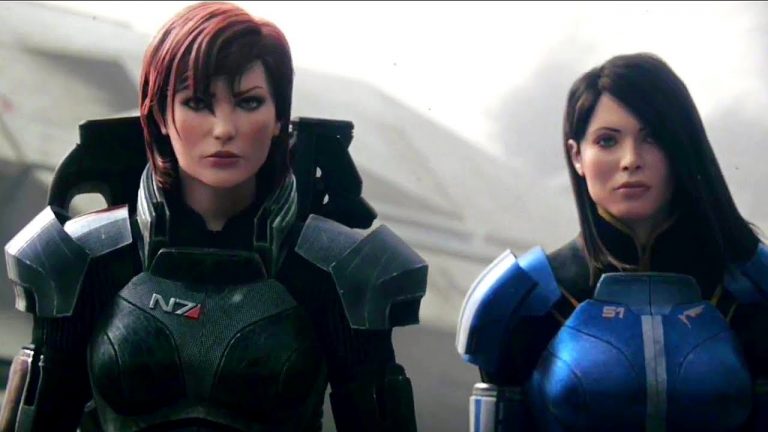
    In the Mass Effect series, players can customise Jane (or John) Shepard (left). The version here is from the launch trailer; my Jane looked very different.

    Writing in Metro, Owl Stefania writes about the importance of video games in her coming out process: “Growing up, video games were my escape, providing an avenue where I could explore who I was.”

    I’ve written about this too, and a version of the following article was originally published in 404 Ink magazine in late 2017.

    Video games have a special appeal for trans people. In addition to the usual escapism from the everyday, some of them enable you to play as the gender you feel you should be, not the one you’ve been assigned.

    For many trans people the first such games were MMORPGs, massively multiplayer online role-playing games. Many of those games enabled you to play as all kinds of characters from humans to hobbits and space aliens). As many trans people discovered, when you communicate with other players in an MMORPG they’re quite happy to stay in character, so if your character is female you’ll be addressed as such. That isn’t always a good thing — there’s plenty of misogyny, homophobia and transphobia online, and online games aren’t immune to that — but as trans gamer Rissa Trent writes on MMOGames.com, being able to present as a female character is incredibly powerful. “To some people, it might just be pixels, but to those of us who want to break free from everyday life, and our own skins, it’s everything.”

    I never really got into MMORPGs, but I fell hard for a sci-fi series called Mass Effect. In the first three Mass Effect games you play Commander Shepard, and that commander can be John or Jane. Not only is Jane Shepard better company — she’s voiced by the wonderful Jennifer Hale, who makes even the daftest dialogue breathe — but you can completely customise the character’s appearance in the game. Hair colour, facial structure, eye shape, jawline, hair, makeup… given enough time, and believe me I gave myself enough time, you could create a Jane Shepard who was an idealised version of your feminine self. 

    To then have the game offer romantic options beyond the usual straight man/woman binary — something that caused controversy at the time, because while gamers had no problem with interspecies alliances (the same man-with-sexy-space-chick trope that goes back to Star Trek), same-sex attraction couldn’t possibly be a thing in the far future — was the cherry on top. Sadly the game wouldn’t let my character have a relationship with the character I really liked, the gorgeous, kick-ass soldier Miranda Lawson, and I clearly wasn’t the only one disappointed: the internet is packed with fan fiction where Jane and Miranda are an item.

    Mass Effect and MMORPGs (and other games where you can be a girl, such as Dishonored 2 or Destiny) are very different games, but they both offer trans people something really important: the opportunity to inhabit your preferred gender, if only for a while. And as games get more realistic and immersive, that’s going to become even more powerful.Â