Category: Media

Journalism, radio and stuff like that

  • Oh lord, it’s hard to be humble

    I enjoyed this post by Max Rashbrooke on writer James Patterson and podcaster Joe Rogan, both of whom claim to be oppressed by woke activists.

    These are perilous days indeed for a near-billionaire author who outsells Stephen King and Dan Brown combined, and for his fellow victim, the host of a podcast downloaded 200 million times a month. But jibes like this, though satisfying, only get us so far.

    Rogan and Patterson are expressing a fear increasingly held by older males: that society no longer seeks their views. Indeed, they feel their opinions to be scorned and denigrated.

    As the cliché goes, when you’re accustomed to privilege, equality feels like oppression. But Rashbrooke makes a more nuanced point, which is that what these highly privileged and successful figures describe as “silencing” is not what’s being asked of them.

    For the most part, though, what I hear is a request for something subtly different: humility. It’s not the speaking that’s the problem, it’s the dominating: the need of so many men to hold forth at length, to speak over others, to assume theirs is the most interesting and most important voice.

    As I wrote about Lizzo the other day, what is often described as cancel culture isn’t; it’s people asking high profile figures to try and be better people. But all too often the response of the person criticised, particularly if he’s a cisgender straight white man, is to throw his toys out of the pram. Heaven forfend anybody point out that he’s incorrect, or that the world is more complex than he understands it to be. As Rashbrooke puts it:

    for a certain class of highly educated men, the speaker’s authority is all – or most – of what they have. Strip that away, and they are left bare, exposed, even humiliated.

    Humiliation is a horrible feeling. But the reaction to it by highly privileged people demonstrates that for them, it’s also a rare feeling – whereas for the marginalised groups they complain about or in some cases even attack, it’s everyday reality.

    Rashbrooke:

    This frightens them deeply because they, like us all, are social beings, reliant on the regard of others; not to be heard is almost not to exist. (A point, of course, that traditionally marginalised groups have often made.)

  • Not cancelled

    Earlier this week, the singer Lizzo released a record containing a word she didn’t realise was a slur against disabled people. When disabled people told her on social media that it was derogatory, she effectively said “Oh my god! I’m so sorry!” and re-released the song with the word changed.

    If you believe the endless pieces about cancel culture in the press, you’d expect Lizzo to be on the receiving end of ongoing abuse. But that’s not what happened. The very same fans and disability advocates who had criticised her thanked her. This, by writer Hannah Diviney, is typical:

    Thank you so much for hearing us Lizzo and for understanding that this was only ever meant gently and being open to learning, it honestly means the world.

    Had Lizzo been a famous comedian or an opinion columnist, I suspect things would have been very different: they’d have used the slur deliberately and then rather than apologising, they’d have doubled down on the offence and planned their lucrative “I’ve been cancelled!” tour and media appearances. But Lizzo is a member of multiple marginalised groups, so she did what the comedians and columnists usually don’t: she listened, realised she’d made a mistake and apologised.

    In other words, she tried to be a decent human being.

  • Turning back the clock

    LGBT Youth Scotland has published its latest survey of LGBT+ young people, Life In Scotland For LGBT+ Young People in 2022. And while some things have got better – people coming out to their families and friends are more likely to receive a positive response than ever before – some of the most important things have got significantly worse. This graph tells a terrible story:

    The image is a graph showing how LGBT+ people felt about living in Scotland, and as you can see there was steady progress from 2007 to 2017: the percentage of people who believed Scotland is a good place for LGBT+ people to live rose from 57% in 2007 to 81% in 2017. But that progress has gone sharply into reverse, and five years on we’re almost at the levels of fifteen years ago.

    Just 37% of Scots are happy or very happy with their lives, down from 57% in 2017 and 66% in 2012; for trans peopple the figure is even lower, 28% compared to 46% in 2017 and 59% in 2012.

    There are two likely explanations for that. The first is that since 2012, and particularly since the “transgender tipping point” of 2014/5, the long-predicted crisis in trans healthcare (more people coming out; insufficient staffing and funding for trans healthcare services, many of which were already substandard and overwhelmed) has kicked in: waiting lists for my gender clinic in Glasgow have trebled since I referred in 2016.

    The other explanation, which would explain why 2017 in particular was when LGBT+ people started to feel much less safe in Scotland, is simpler. That’s when the Scottish and national press and many high-profile social media users joined the Christian Right in its war on “gender ideology” with trans people as the first, but not the only, target. Fifteen years of progress have been undone in five years of scaremongering by people who want to make Scotland hate again.


  • A quiet place

    I haven’t posted for a while, I know, and I’m sorry. Various personal dramas, work projects and family things have left me very short of time to blog here, and I’ve also found that constantly wading into the bad-faith dialogue and constant repetition of bullshit about trans people’s human rights has taken quite a toll. As I’ve written before, you can’t swim in dirty water without some of it getting on your skin.

    Maybe it’s just that I’m really busy. We’ve been doing some more music, which I think is brilliant, and I’ve been working on the edits to Carrie Kills A Man with my amazing editor Kirstyn Smith, who’s taken the raw material of the book and turned it into something I’m really proud of; it’ll be out in November and you can pre-order it now. I’m told I’m also in the Bookseller magazine today, although it’s a subscription title for the trade so I don’t know if I’ve made an arse of myself or not.

    But I think it’s more than just being busy. I’ve been blogging for a long time – seventeen years here and a few years before that on the likes of Blogger.com – but I don’t know if I want to keep doing it. It feels like the atmosphere around blogs has changed, that instead of publishing to like-minded souls you’re posting to an audience of bad actors seeking to find something they can take out of context to use against you. That leads to self-censorship and second-guessing, both of which are very tiring and suck the joy out of posting for me. I think until I find that joy again, it’s better to keep this a quiet place.

  • Two brilliant books

    Here are two books you should buy.

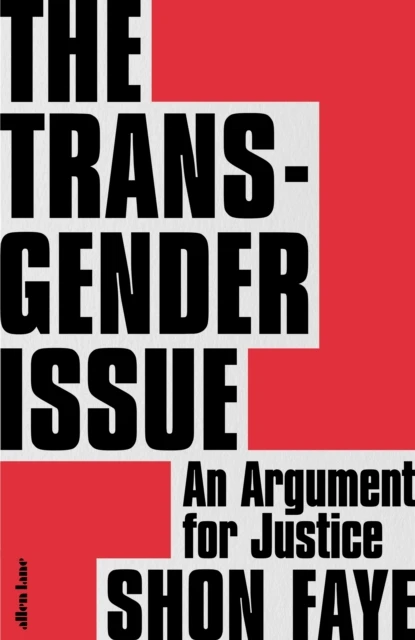
    The Transgender Issue, by Shon Faye

    This is a book I’d very much like to have written, because it’s a clear-eyed, well researched and well argued response to the evidence-free scaremongering and barely laundered antisemitism of cisgender authors who claim to know more about trans people than trans people do. It details the links between UK anti-trans feminism and the US Christian Right, the appalling history of trans rights in the UK, the reasons why the UK’s particularly white anti-trans feminism is viewed with horror by other countries’ more evolved and inclusive feminism groups, and much more. If you’d like to know the truth about trans people in the UK, you should buy this book. And if you happen to know a newspaper editor or radio producer, you should buy it for them.

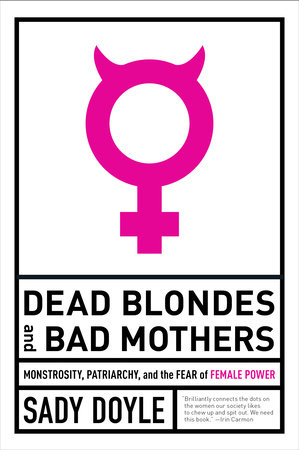
    Dead Blondes and Bad Mothers, by Sady Doyle

    This is sad and shocking, fierce and funny and utterly exhilarating. Doyle uses everything from Ancient Greek philosophy to ironic slasher movies to analyse the stories our culture tells about women, and the narratives women are expected to conform to. It’s the kind of book that makes you gasp with horror on one page and giggle on the next, and I had to restrain myself from sending endless quotes from it to my friends. Here’s a bit from the intro:

    Women have always been monsters.

    Female monstrosity is threaded throughout every myth you’ve heard, and some you haven’t: carnivorous mermaids, Furies tearing men apart with razor-sharp claws, leanan sídhe enchanting mortal men and draining the souls from their bodies. They are lethally beautiful or unbearably ugly, sickly sweet and treacherous or filled with animal rage, but they always speak to the qualities men find most threatening in women: beauty, intelligence, anger, ambition.

  • A modest proposal: term limits for columnists

    I’ve written many columns for various magazines, but I don’t do it so much any more: there are still plenty of places to pitch to, but I’m too old and too tired to pretend to be irate about things I really don’t care about, or to mock people I don’t know to try and demonstrate how edgy and hilarious I am.

    That’s the thing about writing columns. Sooner or later you run out of ideas, but you still have to keep writing. So your writing gets worse and worse. How it gets worse depends on your own life; some columnists, hired to represent the ordinary man or woman on the street, end up affluent enough that they write their columns from a gated community in Florida; others are clearly shitfaced when they write; still others end up writing about their own Twitter adventures or just recycle the same copy every week.

    Mic Wright, a former columnist himself:

    The notion that the issue with columnists is that people outside of journalism demand conformity of opinion is absolute mirror world logic. There is no trans person with a regular national newspaper column articulating that view. Where are all the black columnists with regular access to a national platform? Most columnists in British national newspapers are over-40, white, and either based in or linked to London [in the Scottish press the first two still apply – CM].

    The ease with which a writer can slip from The Guardian to The Daily Telegraph or conversely from The Daily Mail or Daily Telegraph to The New Statesman is not an example of their flexibility but of the homogenous quality of British media.

    Columns aren’t there, as Freeman, suggests to “reveal a variety of perspectives”. Any columnist who regularly offered perspectives that were counter to the accepted lines of the British media — on houses, landlords, the market, politics, royalty, sexuality, class — would not have that job for long.

    The rallying cry of the columnist is “no one tells me what to write” but the point is that no one has to. Every columnist knows that they are subject to the whims of the editor and, ultimately, the peccadillos of the proprietor. If they fall foul of either, they’re gone. A columnist who sticks around for decades is a columnist who knows how to endlessly compromise.

    Parker Molloy has noticed the same thing in the US, and argues that the problem is simple: don’t let columnists write columns for very long.

    It really does seem as though the longer columnists retain their gigs, the less meaningful output they seem to have. They are not experts in any particular field, but rather, generalists who often run out of useful ideas. This is how you end up with contrarianism for contrarianism’s sake and stories about sandwiches. After five years on the job, swap them out with fresh faces.

    …Opinion journalism can be wonderful, but when columnists lose touch with readers and fail to provide factually sound content, we are all left worse off. If newspapers must have opinion sections (another issue that I may one day write about), there’s no valid reason not to strive for a substantive, factual discussion centered around a collection of experts. This is especially true when it comes to things like public health, climate change, and the other challenges that face us.

    But as long as places like the Times continue to allow columnists to stay on staff to the point of brain rot, the public is going to continue to be force-fed repetitive nonsense about controversies on college campuses and personal grudges.

  • “This book gives me hope”

    This is a nice, thoughtful and personal piece about Shon Faye’s new book, written by journalist Vic Parsons. I read the opening line after seeing a bunch of new anti-trans pieces in the UK press this morning:

    Barely a day goes by without another hostile article about trans people.

    Today’s pieces are claiming that the real bigots are people telling bigots not to be bigoted and that gay men are actually homophobic straight men. So another perfectly normal day in rainy fascist island, then.

    The fixation on “trans issues” in the British media – The Times alone published nearly two articles a day between January and May of this year, about a group that is less than 1% of the UK population – is not really about trans lives at all. It’s a moral panic: an irrational fear, stoked by the media, that trans people are a threat to society, much in the same way that gay men and lesbians were portrayed as dangerous deviants in the 80s and 90s. Right now, trans people are a minority group that is being bashed by the press, which isn’t at all interested in reporting on the very real, urgent and serious challenges that make our lives as trans people more difficult than they need to be.

    Anyway. I’ve pre-ordered Shon’s book and from what I’ve seen so far it looks like an important work and an antidote to the full-blown moral panic we’ve been in for so long now.

  • The LGB Alliance isn’t a hate group. It’s much worse than that

    A must-read thread on why the LGB Alliance aren’t a hate group: they’re much more sinister than that.

    Well, that’s an oversimplification. They most certain are a hate group, and act the same as any other anti-LGBT hate group, but more than that, they’re something more sinister: They are controlled opposition. And that’s considerably worse.

    …They’re not just a hate group; they’re masquerading as a legitimate LGB rights organisation, seeking to undermine the existing charity that fights for LGBT rights, and replace them, while being nothing but an arm of the religious right.

    …Imagine for a second they hadn’t faced such public scrutiny and pushback and got their way? The UK would have an “LGB rights charity” that opposes anti-bullying, opposes hate crime legislation, thinks gay teachers are predators and that school LGBT groups are harmful

    This is all well documented and easy to find. Media outlets that continue to platform them or present them as a legitimate organisation are either incompetent or malevolent.

  • Twitter is not real

    Whatever you think of the SNP/Green Party deal, it’s significant that 94.9% of the SNP membership voted in favour of a deal whose key points included GRA reform. Once again it demonstrates that the spittle-flecked anti-trans fury you see online isn’t representative of reality.

    But it is representative of what gets printed in the papers. As many people have pointed out, Twitter is used disproportionately by people in the media. It’s a good source of stories on slow news days and of content to plagiarise, and it’s also home to a number of echo chambers where journalists hang out.

    There was a good example of this earlier in the week when the BBC ran a story about Ofcom leaving the Stonewall Diversity Champions project. The wording of the article was very strange, suggesting that the LGB Alliance was a rival to Europe’s largest LGBT+ advocacy group (and since when did human rights organisations have rivalries?), completely misrepresenting why most of the LGBT+ community hates the LGBA and using the same language about trans people that anti-trans hate groups use.

    If you look at the writer on Twitter, his following list is a who’s-who of anti-trans activism; his wife, also on Twitter, is an anti-trans activist who used her account to boast of “peak transing” her husband – the anti-trans equivalent of redpilling, where you successfully recruit somebody to the cult – back in 2018. Here in Scotland, a Scotsman writer’s recent piece on anti-trans activists being ejected from an Edinburgh pub had to be pulled completely: first it was edited to remove the deliberate misgendering she’d put in the news story; then it was pulled altogether, presumably because the lawyers decided it was legally actionable. If you look at the writer’s Twitter account, it too is a who’s who of anti-trans activists and hate groups.

    These anti-trans activists are not writing columns, where opinions are labelled as such. These people are writing news stories, which are supposed to be unbiased and transparent. When you’re reporting news you can shape the story without telling any lies: you simply choose to platform this voice but not that one; to publish what group A tells you but not the rebuttal from group B.

    People who are deeply immersed in the anti-trans movement should not be writing news reports on activism they or their friends are actively involved in. It’s unethical, immoral and in blatant breach of the NUJ Code of Conduct. In fact, it’s in breach of every version of the Code since the original in 1936: A journalist “should not falsify information or distort or misrepresent facts.”

    Twitter is not real, and neither are the scare stories the echo chambers’ tame journalists circulate. What they’re publishing isn’t journalism; it’s client journalism, journalism that twists reality to suit the agenda of its friends. Or as it’s also known: propaganda.

  • A war on children

    This, by Melissa Gira Grant, is horrific: Behind the GOP Strategy to Outlaw Trans Youth. It’s about the families affected by the Christian Right’s war on trans people, particularly trans teens.

    As ever, US Republicans are more extreme than our home-grown bigots but there are still strong parallels between what’s happening in the US and what some people want to happen here.

    Republicans across the United States have seized on trans people as a social and political scapegoat, reprising a strategy used to great effect in Texas late in the Obama administration. This strategy bears some surface resemblance to Republican attacks on marriage equality the decade before, when the GOP succeeded in getting voters to back dozens of ballot initiatives limiting marriage to one man and one woman, while also securing votes for Republicans (though it’s unclear whether it was as decisive a factor as many contemporary commentators claimed). But the fight for marriage equality started in the lesbian and gay rights movement. There is at present no analogous fight for trans rights backed with anything resembling the same level of legal, philanthropic, or political muscle. Indeed, in the conflict over marriage equality, trans rights were pushed to the political margins, a dynamic that set the stage for the current war on trans people.

    That’s an important point. This isn’t a backlash against trans people’s demands; this is an attack on trans people just for existing. For example here in the UK, the “reasonable concerns” mob have been scaremongering about legal rights that trans people already have, and have had for many years.

    As HB 1399 was before the state House health committee, the state Senate took up SB 1646, a bill that would allow parents of trans kids to be charged with child abuse. Supporters of bills like these typically advanced a very pointed narrative: that a powerful, shadowy “trans lobby,” in concert with the media and Big Pharma, was colluding to sexually exploit—even “mutilate”—children by forcibly “transing” them.

    UK newspapers and some BBC programmes advance exactly the same arguments using exactly the same language. And like the UK, some of the most anti-trans voices pushed forward by the religious right are those of “ordinary mothers” who just have “reasonable concerns”.

    Moms have been at the forefront of ADF’s legal battles to exclude trans girls from girls’ sports—another effort that fueled this wave of anti-trans bills. These moms are part of a long history of white women who saw it as their moral duty to the American nation to speak out as mothers—white moms fought against school integration and for warning labels on music.

    The article quotes Remington Johnson, a trans woman:

    It was “wickedness,” Remington said. Wickedness was what she called the bad-faith maneuvering of Dutton, of all of them. Only wickedness could describe the idea that these bills were necessary in order to protect children, when the truth was that children were harmed even by the attempt to pass them. But for those who had an evangelical mindset, she said, that was the point: “Protecting” children meant making it impossible for them to be trans and survive.