Category: LGBTQ+

  • Most people aren’t awful

    Nancy Kelly of Stonewall brings data to the human rights party.

    …younger people, non-religious people and people with higher level educational qualifications are all more likely to have positive views of trans people.

    Oh, and women.  Yes, women are more likely to have positive views of trans people… The current narrative of ‘women feel threatened by trans rights’ that is the cornerstone of anti-trans rights campaigns simply doesn’t stack up with the evidence we have.

  • The nasty party has taken its mask off

    As predicted, the UK government has abandoned its plans for gender recognition reform. Not only that, but instead of making life marginally better for trans people it has decided to make life much, much worse.

    GRA reform isn’t the story here, although it’s worth noting in passing that, as in Scotland, around 70% of respondents were in favour; the government claims that the result was “skewed” by an “avalanche” of pro-reform submissions while ignoring the fact that every single anti-trans group in the UK, and many other organisations including religious groups and US conservatives, urged people to make anti-reform submissions. Apparently the will of the people only matters if they give you the result you want.

    The real story is this. Months after the conservatives were asking focus groups whether trans rights were a culture war hot-button they could weaponise against Labour, they apparently intend to follow in the footsteps of the US and Hungary by attacking trans people’s existing rights.

    According to the Sunday Times:

    New protections will be offered to safeguard female-only spaces, including refuges and public lavatories, to stop them being used by those with male anatomy.

    That’s a bathroom bill straight out of the US Republican playbook.

    Trans women who haven’t had surgeries have been using the ladies for decades, as they should: presenting female in the gents is an invitation to get your head kicked in, or worse.

    It’s also part of being able to get legal gender recognition. In order to get a Gender Recognition Certificate under the system the government will now not reform, you need to produce evidence that you have lived uninterrupted in your correct gender for at least two years. If you’re applying for a GRC, as I am, the gender recognition panel may ask you to produce evidence that you’ve been using the correct toilets, as the panel did with me.

    You do not need to have had surgery to obtain a Gender Recognition Certificate, and in fact such a requirement would be illegal under human rights legislation: legal gender recognition can’t be contingent on sterilisation.

    I’m sure US-style bathroom bills would ultimately be defeated here, but that doesn’t mean the next few years are going to be easy for trans people and the wider LGBT+ community. The nasty party has taken its mask off.
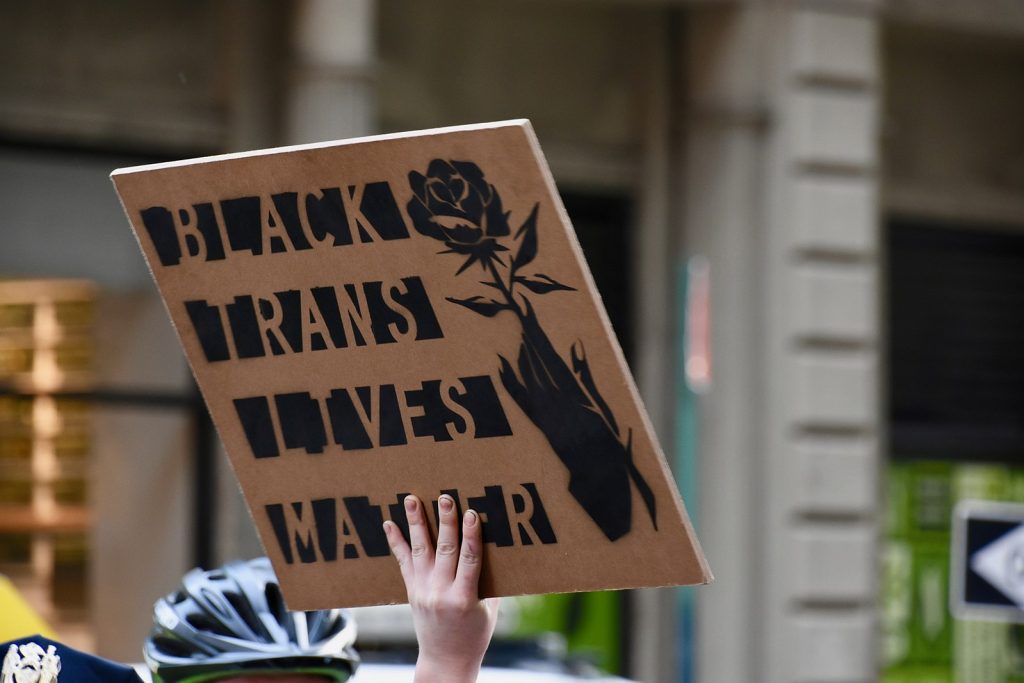
  • “The messaging does have an effect”

    The Guardian on the Polish presidential election:

    [The party] has often hit out at gay rights and what it calls “LGBT ideology”, in rhetoric that is popular with parts of its base and the Catholic church.

    Among other things, Duda’s new charter pledges no support for gay marriage or adoption by gay couples, with Duda describing the latter as part of “a foreign ideology”. It also seeks to “ban the propagation of LGBT ideology” in schools and public institutions – language reminiscent of a notorious Russian law targeting so-called “gay propaganda”.

    …The messaging does have an effect. In a survey last year, when asked to name the biggest threat to Poland, the most popular answer among men under 40 was “the LGBT movement and gender ideology”.

    The messaging does have an effect. And yet the Guardian, and many other UK papers, happily and frequently platforms the very same arguments about trans people that the Polish far right perpetuate about the wider LGBT+ community. It’s usually worded more diplomatically than in Poland, but the message is the same: we need to protect our children from dangerous predators who do not deserve human rights.

    The messaging does have an effect. In the US, the hitherto uncontroversial existence of trans people has been weaponised by the Christian Right and its supporters in the Republican Party. Yesterday, to mark the 4th anniversary of the most lethal massacre of LGBT+ people in US history, the US government formalised a new rule that removes anti-discrimination protection from LGBT people in healthcare. Unless state laws say otherwise, it is now perfectly legal for doctors to refuse to provide any medical treatment to LGBT+ people and women who have had abortions. Not just transition-related treatment, or abortions. Any medical treatment. 

    This began with scaremongering about trans women in toilets. It does not end there.

    The messaging does have an effect.

  • “I would never pretend to be something that has brought me so much pain and loss.“

    Gabrielle Bellot on how it feels to be a trans person who loved the Harry Potter books, and how it feels to be a trans person more generally. 

    It’s emotionally and spiritually exhausting to debate your identity; sometimes, you just want to log off social media and take a walk or hug someone you love for support, curling up in your own small safe harbor, where, at least for a bit, no one is accusing you of being a freak, a pervert, an abomination who does not belong in the annals of this Earth.

    At other times, I want to shout my barbaric yawp from the rooftops. I want to scream no, fuck off, I won’t let you demean me. This is who I am, this is foundational to my sense of self, and I didn’t choose to be like this, would never pretend to be something that has brought me so much pain and loss. I want to scream that I gave up so much when I came out as trans—my former home country, any hope of a good relationship with my family, old friends, any chance of a simple life—but stuck with it, anyway, because transitioning was essential for me, rather than some silly choice. I had to come out, or I couldn’t keep living because the pain, the dissonant music of living a lie, was too much.

    I want to yell in these moments, until I start to cry.


  • “The problem with British transphobia: it sounds so reasonable”

    June Tuesday, writing on Medium: JK Rowling and the Reasonable Bigotry.

    The UK’s transphobia is many-pronged — our conservatives, religious fundamentalists, alt-right, ‘rational men’, and so all exist here, too. But virulent and aggressive anti-trans feminists have a culture and history specific to Britain, and their views trickle down into the respectable views of those with ‘reasonable concerns’.

    Tuesday makes a point that many others have made about Rowling’s latest broadside: nothing in it is new. It’s just a collection of hackneyed anti-trans tropes, many of them reheated anti-gay and anti-lesbian tropes, beloved by Twitter bigots, the far right and religious conservatives. You could do a point by point explanation of why it’s wrong, as Andrew James Carter has done, but these points have been debunked again and again and again to virtually no effect. In some cases they were debunked fifty years ago.

    The reason it’s had no effect is that it doesn’t get published. The UK media is overwhelmingly anti-trans. Papers that previously claimed AIDS was an invention of the “homosexual lobby” run sustained campaigns against the “trans Taliban”. Papers that presented Andrew Wakefield as a brave campaigner against a medical establishment pushing supposedly dangerous vaccines now present anti-semites, homophobes and racists as brave campaigners against a medical establishment pushing supposedly dangerous medical treatment. Papers that once traded in vicious homophobia have pivoted to equally vicious transphobia.

    The information is out there, but there’s no interest in publishing it because it doesn’t drive traffic, reinforce the prejudices of readers or give those readers their daily two-minute hate. That’s because in the UK, there is an entire industry of columnists and commentators who pay their mortgages by punching down against one of the most vulnerable and marginalised groups in society.

    To them, trans people aren’t people. They’re a magic money tree.

  • “We are your neighbours, siblings, sons, daughters…”

    It seemed a good time to repost this, by Gray Crosbie.

  • Trying to walk like a man

    It took me a very long time to realise how good Bruce Springsteen is: like many people, I misinterpreted Born in the USA as a tub-thumping, chest-beating, USA! USA! USA! anthem and didn’t investigate further. I’m a lot older and a little bit wiser now, and while I wouldn’t call myself a fan – I don’t own most of his albums, and I’ve only seen him live once – he’s written some of my very favourite songs. Walk Like a Man is one of them, and it makes me cry every time.

    Well so much has happened to me
    That I don’t understand
    All I can think of is being five years old following behind you at the beach
    Tracing your footprints in the sand
    Trying to walk like a man

    Springsteen wrote it about trying to be the man his father expected him to be and feeling that he was falling short; his relationship with his dad was rocky, his father unimpressed by his artistic leanings and his long hair. But good songs can take on a life beyond the specific circumstances they were written about, and Walk Like A Man is a very good song.

    Here’s Naomi Gordon-Loebl, writing in The Nation, on “the queerness of Bruce Springsteen.”

    In “Walk Like a Man,” from 1987’s Tunnel of Love, Springsteen sings about the lessons he learned from his father and whether he’ll ever know what he needs in order to “walk like a man”… the words seemed to perfectly encapsulate my experience of growing up in a body out of alignment with my gender, trying to walk a path that was not made for my feet and being constantly, painfully aware of the dissonance.

    Me too. Gordon-Loebl and I were driving in different directions – as I understand it she’s a masculine-presenting gay woman, whereas I’m a trans femme –  but we clearly drove the same road and had the same connection with this song.

    That line about being “painfully aware of the dissonance” really resonates with me. It’s a great way to describe the fear and frustration and sadness I felt throughout my old life, my frustration at being unable to perform a role my peers did automatically and effortlessly. I never lost that feeling of being five years old, trying and failing to walk like a man.

    As Gordon-Loebl says, Bruce Springsteen couldn’t be more straight. But that doesn’t mean his songs can’t reflect other people’s experiences too. There’s a powerful melancholy to much of his music, and many of his best songs are about people who don’t fit in and who yearn to escape the circumstances they’re in. It’s no wonder that they resonate with people who feel suffocated.

    But no matter where it comes from, there is an unmistakable echo of queer loneliness in his work. “Everybody’s got a secret, Sonny, something that they just can’t face,” Springsteen sings on “Darkness on the Edge of Town.” “Tonight I’ll be on that hill ’cause I can’t stop…. I’ll be there on time and I’ll pay the cost / For wanting things that can only be found / In the darkness on the edge of town.”

    …Perhaps nothing is so fundamentally queer about Springsteen as the pervasive feeling of dislocation that’s threaded through his work, the nagging sense that something has been plaguing him since birth, and that he’s dreaming of a place where he might finally fling it off his back.

  • JK’s trolling

    The thing about bored celebrities taking pops at trans people isn’t so much what they say: we have heard it all before. It’s that their celebrity means we hear it again and again and again.

    I don’t follow JK Rowling, whose opinions on trans people are well known (and no longer explained away as “middle-aged moments” by panicky PRs). But I’ve seen her latest tweets several hundred times this morning already. Not just on Twitter, but in my news app, my RSS reader app, on Reddit and in my social news app. And they’ve caused a whole bunch of cisgender people to come into places such as trans-friendly subreddits hurling abuse and demanding “debate me, cowards!” And over the next few days we’ll see the second wave in the press and online as various right-wingers and anti-LGBT+ groups hail Rowling as a hero for refusing to be “silenced” by the “wokerati”.

    Celebrity gives people a platform. It’s a shame some people choose to use it as a bully pulpit.

  • “the hardest thing to do is admitting that others may have it worse”

    Katelyn Burns, writing for Vox: The LGBTQ civil rights fight is far from over.

    Often, the common perception of LGBTQ people’s lives in the US is filtered through the experiences of white, upper-middle-class, cisgender lesbian and gay people [who] live in coastal cities and happen to have access to large media platforms. Kirchick’s piece is filled with the common gripes of white, cis, gay men, citing protests of Pride parades by Black Lives Matter activists, questioning the inclusion of asexual people under the LGBTQ banner, and displaying general disregard for the needs of trans people.

    I have no doubt that some cisgender gay and lesbian white people, with their local nondiscrimination protections and their ability to marry their partners, have had all their needs met by the achievements of the gay rights movement. But calls for the end of LGBTQ activism ring hollow to those of us who still hold marginalized identities within the community.

  • Protect trans kids

    A sad but sadly unsurprising study is yet more evidence that not only are LGBT+ young people more at risk of depression and suicide than straight kids, but that the risk is even higher for trans youth.

    PinkNews:

    compared to their cisgender LGB+ peers in the Trevor Project survey, young people who identify as trans and non-binary are still more than twice as likely to experience depressive symptoms, seriously consider suicide, and attempt suicide – adjusting for age, family income and ethnicity.

    …Trans males are the the highest-at risk group, with 35 per cent having attempted suicide in the past 12 months – but trans females and non-binary youth were also significantly more likely than cisgender LGB+ youth to report seriously considering suicide

    One of the key factors in LGBT+ suicides is bullying. A separate study by the Yale School of Public Health found that bullying is much more likely to be a precursor to suicide among LGBT+ youth than among their peers.

    Death records from LGBTQ youths were about five times more likely to mention bullying than non-LGBTQ youths’ death records, the study found. Among 10- to 13-year-olds, over two-thirds of LGBTQ youths’ death records mentioned that they had been bullied.

    There are lots of these studies, and the anti-trans mob’s reaction is always the same: DARVO. It’s a term used to describe a key tactic of abusers: deny, attack, reverse the victim and offender. So whenever a study shows more avoidable deaths, the response is to say that the figures are false, that trans teens are drama queens and that trans activists use the threat of suicide to silence legitimate criticism.

    DARVO is necessary for some because otherwise they’d have to admit that they are abusers. And many anti-trans activists are. They might not be doing the abusing directly (although some do online), but they may contribute to it by the attitudes they express to others or by the causes they crowdfund or support in other ways – such as legal action to make trans kids more vulnerable in schools.

    In the US and UK, evangelical-backed individuals and organisations are targeting cash-strapped councils and school districts with legal action to try and force the withdrawal of inclusive anti-bullying materials and policies.

    While parents mourn their children, others are trying to rip up what little support currently exists for other vulnerable children like them.

    Under the banner of “protect the children”, they want to remove protection for the most vulnerable children of all. They try not to say it, but the meaning is clear: better to have dead kids than trans ones.