Category: LGBTQ+

  • I wish everyone would watch this

    This is the trailer for Disclosure, a new documentary on Netflix helmed by the incredible Laverne Cox. It’s ostensibly about the way trans people have been represented (or in the case of trans men, not represented) in film and TV, but it’s really about what it’s like to live in a world that constantly tells you you’re not welcome.

    It’s an American programme, and that means there are some differences between it and any UK equivalent. For starters, it got made. And it provides proper representation of all kinds of trans people, not just unrepresentative rich white women. But its US focus means there’s no room for the portrayal of trans and gender non-conforming people in other countries, such as Little Britain, the IT Crowd and what felt like all TV comedy in the 1970s and 1980s in the UK.

    It’s an intelligent, insightful programme: rather than damn programmes or films outright, many of the contributors explain how on the one hand a portrayal was appalling, but on the other it was the only time they had ever seen someone like them on screen.

    But even those stories are often heartbreaking. Imagine how it feels to finally come up with the courage to tell your best friend that you’re trans and to be asked, “what, like… Buffalo Bill?”

    Buffalo Bill was the serial killer in Silence of the Lambs who murdered women and wore their skin like a suit.

    Over the course of the programme a clear theme emerges: the way trans people are portrayed or erased on screen has a powerful effect on how other people see us, and on how we see ourselves.

    It also makes a strong case that the portrayal of trans people as deceptive and disgusting is directly connected to the violence many trans people experience, particularly trans women of colour in North and Central America. In just the last week, my news app has brought stories of three trans women’s murders: one shot in the face multiple times after revealing her trans history; one found dumped by the side of a motorway; and one dismembered and thrown into a river. A cisgender man is in custody accused of her murder and mutilation.

    I cried quite a lot watching this, and for me there were two scenes in particular I wish everyone could see. The first is a simple montage showing some – not all, but some – of the films where a man’s discovery that a woman he liked was trans caused him to vomit, something that started in The Crying Game and was then amplified sadistically in many comedy shows and films; and the second is Jen Richards trying not to cry as she talks about how her family told her she would only be welcome if she did not come as herself.
  • Good news, bad news

    The UK government’s plans to roll back trans rights suffered a setback this week when tens of thousands of cisgender women emailed the Prime Minister to say “not in my name”. I don’t believe for a moment that the plans have been dropped – as today’s Guardian notes, Dominic Cummings was focus-grouping trans rights in the Autumn as a topic the conservatives can use to attack Labour – but it was a welcome reminder that anti-trans voices do not speak for most women.

    As was this, in the LA Times: it’s very typical of the US response to JK Rowling’s blog post.

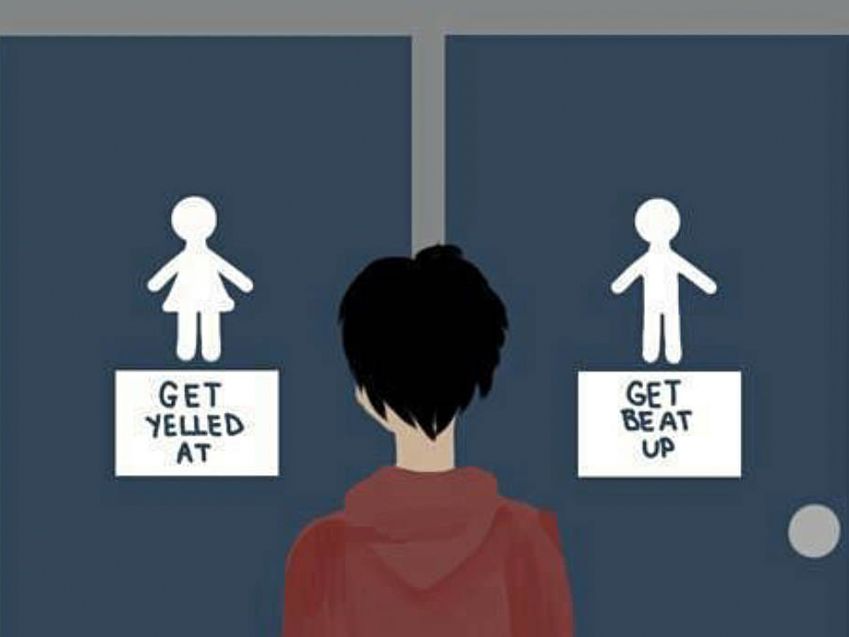
    Poke a prejudice, almost any prejudice, and pretty quickly the conversation goes straight down the toilet. Those opposed to civil rights, LGBTQ rights and the Equal Rights Amendment all have historically boiled their bigotry down to some wild-eyed fear about what equality in any form will mean to the state of our public restrooms. Black people peeing with white people, men with women, straight people with gays people, trans with cis — oh, the horror, the horror.

    As I’ve written before, the difference between the mainstream US media and the mainstream UK media is dramatic. Last night BBC’s Newsnight – which previously gave extensive coverage to an anti-trans piece in the BMJ without revealing that the article it was covering was written by the journalists who were covering it – once again decided to scaremonger about trans teens’ healthcare by getting the same journalists to essentially tell the same story again.

    There was lots of scary music and lurid claims from conveniently anonymous sources, but no time to explain how the system currently works. Coincidentally, knowing how the system actually works is at odds with scary tales of children being railroaded at high speed into irreversible treatment.

    The parent of a trans kid detailed the process in the I Paper last year, when waiting lists were shorter – they were 20 months for a first appointment then; it’s now 27 months and climbing.

    Once you are seen for the first time, there follows a lengthy assessment process, involving a minimum of six appointments with two psychologists who assess and challenge the child over a period of at least six months, often stretching to years in limbo. Each appointment is a lost day of education and work, with long journeys to London, a second Gids centre in Leeds, or a handful of satellite clinics.

    If this long assessment period is ever concluded, “hormone blockers” may be prescribed. These are designed to pause puberty, which allows the young person time to reflect on their gender. The medication is well understood, considered reversible, and has been used safely for nearly 30 years for transgender young people and considerably longer for treating early onset puberty.

    Given the timing, it seems rather suspicious that Newsnight chose this of all weeks to reheat the same innuendo from what looks very much like a mendacious campaign. But it appears to have had the desired effect, with endless commenters on Newsnight’s social media comparing trans healthcare providers to Dr Mengele, claiming that this is a scandal akin to Thalidomide and describing an NHS facility as a “child abuse clinic”.

    You may recall similar rhetoric being used before people started bombing abortion clinics or taking assault rifles to pizza parlours in the belief that Hilary Clinton was skinning babies in the basement.

  • “Every day in public is risky”

    It’s been interesting to compare the US and UK press reaction to JK Rowling’s blog post about trans people: in the US it’s been met with widespread revulsion, with many opinion pieces by cisgender women outraged by her claims to speak on their behalf. It’s also led many publishers to commission trans women to talk about their experiences. This, by former Human Rights Campaign press secretary Charlotte Clymer, is particularly good.

    Clymer says she finds it hard to believe Rowling’s claim that she “knows trans people”. As she writes:

    Folks who have trans people in their lives — and actually care about them — know how much trans people generally go out of their way to accommodate cisgender people.

    As Clymer is quick to admit, trans people are no more of a monolith than any other group. But very many of those of us who are out will relate to her experiences of the “fairly common actions we take just to be in the public square and avoid risking violence and discrimination from cisgender people.”

    I haven’t been to the gym since I came out.

    Nor me, even though there’s a really good and really cheap council-run facility just around the corner from my flat. I haven’t been swimming either, bar on one foreign holiday with my kids (during which I was yelled at by a woman at the beach).

    I’m terrified of changing rooms because of the possibility of confrontation.

    When I travel out of state, I look up nondiscrimination protections for where I’m going, including airport layovers.

    I don’t travel much, but I did a lot of research before the aforementioned foreign holiday and had to rule out multiple destinations because they aren’t LGBT-friendly. If it means going solo I don’t typically consider gigs or events that aren’t in my own town any more, because I’m increasingly worried about my safety if I venture far from home. And at home I’m careful not to travel by public transport if there are big events such as football matches or concerts by particularly laddish musicians taking place. I’ve left many events early to ensure I’m not getting the late bus or train home.

    [if] there’s a long line to use a public restroom, I usually walk away if I can help it

    I do this too. There have been nights out where my fear of confrontation has outweighed significant physical discomfort. Before lockdown I’d be very careful not to drink too much at gigs so I could avoid having to use the toilets at all.

    Even in places where we have legal protections, I worry about being a burden. I don’t want to cause headaches. I have faced discrimination in places where it was illegal and let it go because I wasn’t sure whether it was worth it. And I feel terrible about that. I feel guilty.

    Transgender and nonbinary people are constantly adjusting and revolving our lives around the preferences and feelings of cisgender people, not because we want to do that but because there aren’t enough hours in the day to fight every battle and not enough rights to guarantee our safety.

    I’d describe it as walking on eggshells but perhaps tiptoeing through a minefield is a better analogy: stepping on an eggshell isn’t going to harm you.

  • “Britain is the epicenter of a strange, savage, and specific cultural backlash”

    I know I’ve posted a lot of long pieces about trans-related issues lately, but if you only read one of them then perhaps it should be this one by Laurie Penny: TERF Wars: Why Transphobia Has no Place in Feminism. It’s an attempt to explain why the UK is unusually intolerant of trans people right now, and how perfectly nice people can be, and continue to be, radicalised against trans women.

    Britain is the epicenter of a strange, savage, and specific cultural backlash against trans rights. That backlash is doing real harm to people whose lives should not be up for debate. Its proponents have recruited a great many decent, well-intentioned people to their cause through subterfuge and scaremongering — including mainstream media figures and celebrities like Rowling.

    In the past half-decade, British transphobes have done everything in their power to convince the public that trans women are a sexual threat to women and girls… After years of relentless campaigning and strategically seeding stories into the press, they have managed to convince a significant chunk of the population that trans people are an active threat to women and children.

    How did they do that? As Penny describes it, some progressive people were uncomfortable with the sudden visibility of trans people.

    This was new territory, and not everyone who made comments like this was being rude and cruel on purpose, but the internet reacted as the internet is wont to do, particularly the parts of the internet full of angry left-wing queers in their teens and early twenties. In turn, establishment liberals reacted to that as establishment liberals are wont to do when called out by angry young lefties. Instead of listening, they got defensive and doubled down and…. well, you can guess what happened next. What happened is that the whole cycle repeated itself with increasing frenzy for about a decade.

    And that was weaponised by people Penny calls “swivel-eyed zealots”.

    In the discomfort of media liberals and the fervor of young trans activists, these essentialist feminists saw an opening. They reached out to cis women in the media who were sick of getting called transphobes by trans people online, offering sanctuary. They made in-roads with a number of prominent men who, while they had little interest in women’s rights, were only too happy to leap into the free-speech wars and kick down at some trans women with the smug, sadistic sophistry that is the birthright of a certain sort of centrist intellectual. They also made connections with other “‘gender critical” groups that were growing in number online — women who had no stake in the relentlessly incestuous liberal media drama, but who were panicked by the number of young people they saw coming out as trans and wanted what so many of us seem to want in these febrile times: a safe place to be prejudiced. Transphobic conspiracy theories were seeded among communities deemed most receptive- including mothers of young children, which is how parenting website mumsnet.com briefly became the nation’s most torrid hotbed of anti-trans recruitment.

    I’ve spoken to cis women involved in that side of the debate who have lost everything that mattered to them over years of austerity, cuts to services and welfare, who have been ground down by male violence and are now being told by people with an agenda that men in dresses are coming to take the last safe spaces they had. They are hearing, again and again, that trans people are coming to corrupt their children and convert their daughters to deviance — but if they sign up to an ideology that portrays trans women as “poison” (as transphobic feminist Shelia Jeffreys recently declared in the House of Commons), they can fight back.

    Please do read the whole thing.

  • “Harry Potter and the scales of justice”

    I was looking forward to Jenny Boylan’s take on the US Supreme Court ruling, and here it is.

    “I used to think people like you should be, you know, exterminated,” the nice young man said to me. “But after listening to you speak, I’ve really changed my mind!”

    This was after a lecture I’d given a few years ago at a college in Ohio. He looked at me proudly, clearly hoping that I’d be cheered that my words had opened his heart.

    But that word, “exterminated,” tempered my happiness somewhat.

    Sometimes I forget that there are people who want to wipe me off the face of the earth.

    I forget, even though the Trump administration does its best to remind me, every day.

  • Trans people are planning to escape the UK

    Jane Fae in the Independent:

    I spoke to a few trans folk: ordinary people trying to go about their daily routines as well as community leaders advocating on their behalf. The result was unanimous and shocking, and not just for the general level of abuse reported back. For this, in the end, is not so much about abuse or danger, but a growing fear that government, in yet another desperate populist lurch, will roll back the still limited place trans folk have been granted, making the UK a more hostile place for all.

    …if rhetoric does turn to action – if the Tory party reverts to its longer-term status as “nasty party” in respect of LGBT+ people – who can blame trans people for seeking safety elsewhere. We have seen what is happening in Trump’s America. Seen, too, how quickly rights can be stripped away in places like Hungary or Brazil. And we know that without state protection, the violence that some would like to direct our way will swiftly escalate.

    I do not wish to leave the UK. I am not going any time soon.

    But if the UK lurches further right, descending further into desperate populism, the time may yet come when, like my father before me, I can no longer live safely in the country where I was born.

    Some of us want to leave but can’t. I know because I’m one of them.

  • How the UK press came to target trans people

    There’s a lengthy, well-informed and balanced piece in Vice about how anti-trans attitudes came to dominate the UK press.

    Often writers centre experiences such as abuse or rape and then set these up as distinct and separate from the experiences of trans people. As Alison Phipps writes in her book Me, Not You: The Problem With Mainstream Feminism: “Sexual violence is terror; so is the way it is tackled and policed. And (white) ‘women’s safety’ is used to justify violence against marginalised communities.” She later adds: “The investment of sexual trauma in the outrage economy allows the ‘good’ woman (cis, ‘respectable’, implicitly white) to be used to withhold support and resources from the ‘bad’ ones.”

  • Anti-LGBT+ discrimination is sex discrimination

    A surprising, very welcome and very important decision by the US Supreme Court says that anti-LGBT+ discrimination is sex discrimination and therefore LGBT+ people are protected in employment law. Some states already include LGBT+ people in their anti-discrimination protections, but this brings such protection to the states that do not.

    As justice Neil Gorsuch, a Trump appointee, explained with admirable clarity:

    An employer who fires an individual for being homosexual or transgender fires that person for traits or actions it would not have questioned in members of a different sex.

    It’s a terrible shame that one of the people responsible for the court case, trans woman Aimee Stephens, didn’t live to see it: she died a few weeks ago.

    There is a lot of bad news for LGBT+ people in the world right now, not least in the UK where the Westminster government is expected to try and roll back trans people’s rights this week, and LGBT+ people’s rights in the US remain under threat (and in the US, fire-at-will employment law means they can still be discriminated against, but less overtly). Nevertheless this is something worth celebrating.

  • Reaping, sowing

    Apologies for the language, but there is an internet meme that’s become popular:

    Me sowing: Haha fuck yeah!!! Yes!!
    Me reaping: well this fucking sucks. What the fuck.

    And another:

    Well, well, well. If it isn’t the consequences of my own actions.

    I was reminded of them yesterday when a British anti-trans group blogged about the US rollback of anti-discrimination protections for trans people, gay and lesbian people and women who have or need abortions.

    it actively harms lesbians, women seeking abortions and women who defy gender norms… [the] religious right are waging a war on women and against the principle of health care as a human right.

    Trans people and allies have been trying to warn anti-trans groups about this for years, which is why many, many people quoted this in response:

    I can’t believe leopards are eating my face, says woman who voted for the “leopards eating your face” party.

    It’s funny, but it isn’t remotely funny. The US’s anti-women legislation was initially presented as anti-trans legislation, but that was only ever a Trojan horse. And the same tactics are being used here.

    In the UK, anti-trans groups have allied with the religious right to attack key legislation such as the Equality Act; yesterday’s government leak indicates that they’re being listened to. But the Equality Act doesn’t just protect trans women. It protects all women. Black women. Asian women. Lesbian women. Pregnant women. Religious women. Disabled women.

    And it’s not just the Equality Act. Lawyers who previously represented anti-abortionists are now helming anti-trans test cases in an attempt to remove protections for LGBT+ kids at school. There is a concerted effort to remove the bodily autonomy of trans teenagers, something that would undermine the Gillick and Fraser competences that means teenage girls can get access to contraception.

    What’s so frustrating about this is that the religious right has been very clear about it. They even put it in writing. The Family Research Council, one of the key drivers of anti-women legislation, published its master plan for attacking trans people in 2016. The FRC is part of the Hands Across The Aisle Coalition, which connects US evangelicals with British anti-trans activists.

    As Brynn Tannehill wrote in 2018:

    These right-wing organizations don’t try to hide their relationship with so-called feminists. Indeed, they proudly display it in order to create the illusion that both the left and the right oppose inclusion of trans people in society. In reality, only one side’s interests are being represented here ― the radical religious right.

    Real feminists, lesbians, queers and bisexual woman should ask what sort of woman or feminist would align themselves with these right-wing organizations. They are all anti-choice. They all want to ban access to birth control. They universally want to overturn Lawrence v. Texas and allow states to make homosexuality illegal again. They want to overturn Obergefell v. Hodges, and Roe v. Wade. They want to ban same-sex adoption. They all are hostile to fair-pay-for-women laws. They oppose women working outside the home. They are all hostile to the Women’s March and Me Too. They are fake medical organizations and anti-LGBTQ and anti-choice hate groups. They have cheered the assassinations of abortion providers. They are publications that have published horrible things about women, such as “Does Feminism Make Women Ugly?”

    This isn’t a choice between transgender people and women. This is a choice between trans people and right-wing organizations pretending to represent women. And you are deluding yourself if you think these right-wing organizations will not be coming for queers and cisgender women next. They have said that’s exactly what they plan on doing.

  • “Affirming a child is beneficial to their mental health”

    There’s a good piece by Katelyn Burns in The Guardian (presumably commissioned by the US edition, which is more enlightened than the UK one) about a project that helps parents of trans and gender non-conforming kids.

    On one side of the debate are people who think Seph’s gender dysphoria will fade by adulthood. On the other are the vast majority of mental health professionals who study gender dysphoria insisting that affirming a child in whatever way they express their gender is beneficial to their mental health.

    At the center are the lives of trans and gender-variant kids who have immediate needs – a safe family home and a supportive school environment – regardless of what gendered adult outcome other people are hoping for.