Category: LGBTQ+

  • The yuk factor

    Professor Paul Johnson, head of the department of sociology at the University of York, posted this on Twitter today. It’s from the judgement in a 2014 case before the European Court of Human Rights.

    Society’s problematic “yuk factor” concerning transgender individuals is not a normative idea that should be supported by the law.

    Sharing Johnson’s post, journalist and trans man Freddy McConnell added:

    This isn’t a factor in overt anti-trans campaigning or general resistance to trans equality, it is the factor.

    Johnson:

    In my opinion, most so-called “gender critical” views are underpinned by disgust of transgender people (the “yuk factor”). Because disgust can be socially discrediting – it easily reveals bigotry – GC proponents often try to disguise it by appealing to more “high minded” ideals.

    He’s right, of course. Racists and homophobes do this too. It’s (mostly) social death to admit that you are disgusted by the very existence of Black people or of gay people, so you look for a fig leaf to disguise it: “scientific racism” for racists and “family values” or “protecting children” for homophobes.

    If you watch the videos of the founding meetings of anti-trans pressure groups or look at their supporters on social media you’ll soon see them take the mask of respectability off. Disgust of trans women isn’t just tolerated. It’s celebrated and often actively encouraged.

    There have been many millions of words written by anti-trans activists about trans people, and most of them can be summarised in just one: yuk.

  • No problem

    Every cloud has a silver lining. The ongoing delays to gender recognition reform in the UK enable us to analyse other countries’ experiences and judge whether the lurid claims of anti-trans activists have any basis in reality.

    Tomorrow is the fifth anniversary of Ireland’s Gender Recognition Act. It uses the same “self-ID” system that the Westminster and Scots governments propose to use: instead of requiring trans people to get medical reports and a stack of evidence to be judged by a panel they never meet, applicants sign a statutory declaration in front of a lawyer. This declaration states that you intend to live in your correct gender for the rest of your life, and like any statutory declaration there are penalties for fraudulent declarations.

    The number of men who have abused this system in order to access women’s spaces in the last five years?

    Zero.

    The number of frivolous or fraudulent applications?

    Also zero.

    The same is true of the many other countries that have some form of self-ID.

    I’m sure that tomorrow, the UK press and radio will give this information the same prominence they’ve given the fact-free fantasies of anti-reform activists. After all, it’s directly relevant to the announcement on GRA reform Liz Truss is expected to make in the coming days.

    While Truss prepares her statement, she might want to refer to her government’s own consultation documents. They stated:  “there will be no change to the provision of women-only spaces and services”; “there will be no change to the NHS medical pathways for trans people”; and most importantly of all, “we are committed to making the lives of trans people easier… trans and non-binary people are members of our society and should be treated with respect.”

  • How about we try to stop people from dying?

    Yesterday, there were thousands of posts on Twitter by anti-trans activists claiming that only women get cervical cancer.

    It was a deliberate attack on trans men and non-binary people; the hashtag began after a trans man posted on Twitter about his cervical cancer diagnosis and a bunch of awful people started abusing him.

    Think about that for a moment. Somebody has received possibly the worst news of their life, and thousands of people pile on to say in effect, “fuck you! You’re not a man! Only women get cervical cancer!”

    Trans men and non-binary people are not women. However, if they have not had surgical intervention, their bodies will do the same thing women’s bodies do. And that means they are at risk of, and can die from, the same cancers as women.

    Part of the pile-on was also aimed at trans women. It’s pretty twisted to wear susceptibility to cancer as a badge of honour – “haha! You can’t die in the same way we can!” – and it’s only partially true. Trans women don’t get cervical cancer if they haven’t had gender reassignment surgery. But if they have, they can develop similar carcinomas. Trans women who have undergone hormonal transition should also be screened for breast cancer.

    The inclusive language that transphobes hate so much – people who menstruate, people with cervixes, people who can get pregnant and so on – does not exclude cisgender women. But it does include trans men and non-binary people, and that’s important. One of the reasons it’s important is because many trans people are not included in essential screening. Here’s Public Health England.

    If you are a trans man aged 25 to 64 who has registered with a GP as male, you won’t be invited for cervical screening.

    This is why organisations specifically try to include trans men in screening awareness programmes. If they don’t ask to be screened, they won’t be invited for screening.

    There’s no reason why the system can’t record lived/legal gender and whether someone’s trans as separate categories; there are significant biological differences between trans men and cisgender men, and between trans women and cisgender women. Long-term hormone treatment also means there are significant differences between trans women and cisgender men, and between transgender men and cisgender women.

    That complexity is currently reduced to a single item: M/F?

    I’ve had some experience of this too. Long before I officially transitioned, my GP’s surgery said they wanted to change my gender marker on the NHS computer to female. The practice manager explained that if the marker wasn’t changed, the labs would continue to reject my blood samples because they had female-typical estrogen levels. As far as the labs were concerned, high estrogen proved that my samples had been mixed up with somebody else’s.

    For me, changing my gender marker meant I started getting reminders to come for cervical cancer screening (you can contact your GP to opt out of those communications) and I won’t get reminders about prostate cancer screening when I’m older, so I need to be aware of that (although the hormones I take massively reduce my risk). For trans men, it means the reverse – and that’s a potential problem, because some trans men have an elevated risk of the very cancers they won’t be invited to screen for.

    The general bullshit that LGBT+ people experience often means higher levels of potentially risky behaviour – smoking, drinking to excess and so on. But the biggest risk is that the terrible experiences trans people often endure when they try to access healthcare can prevent them from taking part in preventive screening, or from seeking help until the very last moment. With cancer, early detection is everything.

    Here’s the US National LGBT Cancer Network.

    For trans men, ovarian cancer poses an extra challenge, due not only increased risk factors and decreased access to healthcare but also to the increased levels of discrimination faced by the trans community.

    One of the most famous examples of that is discrimination is Robert Eads, a trans man who was advised not to have gender reassignment surgeries because he was too old. He later died of ovarian cancer after twelve different doctors refused to treat him – not because he was a medical challenge, but because they didn’t want word getting out that they’d treated a trans man.

    What those doctors did is what the Twitter mob did yesterday: they decided that their personal feelings about trans people were more important than saving someone’s life.

  • “There are more things in heaven and earth than are dreamt of in your philosophy”

    A few hundred years ago, a bunch of men decided that every single human on earth could be divided into three (or sometimes five) distinct races. You could tell everything you needed to know about someone by looking at them and perhaps measuring the circumference of their heads: that would tell you what race you were dealing with and how to treat that person.

    That classification system was used in horrific ways against those deemed members of “inferior races”, and we’re still living with the terrible consequences today.

    Scientifically speaking, it was all bullshit.

    Here’s National Geographic:

    when scientists set out to assemble the first complete human genome, which was a composite of several individuals, they deliberately gathered samples from people who self-identified as members of different races. In June 2000, when the results were announced at a White House ceremony, Craig Venter, a pioneer of DNA sequencing, observed, “The concept of race has no genetic or scientific basis.”

    …Everyone has the same collection of genes, but with the exception of identical twins, everyone has slightly different versions of some of them. Studies of this genetic diversity have allowed scientists to reconstruct a kind of family tree of human populations. That has revealed the second deep truth: In a very real sense, all people alive today are Africans.

    That’s not to say that there aren’t differences between people and populations. Of course there are. But the categories that were used to define, classify and in many cases oppress people were completely made up. As one of the experts in the National Geographic article puts it:

    “if we made racial categories up, maybe we can make new categories that function better.”

    You know where I’m going with this. Gender, like race, is a human construction – and we humans are much more complex than a binary gender system allows.

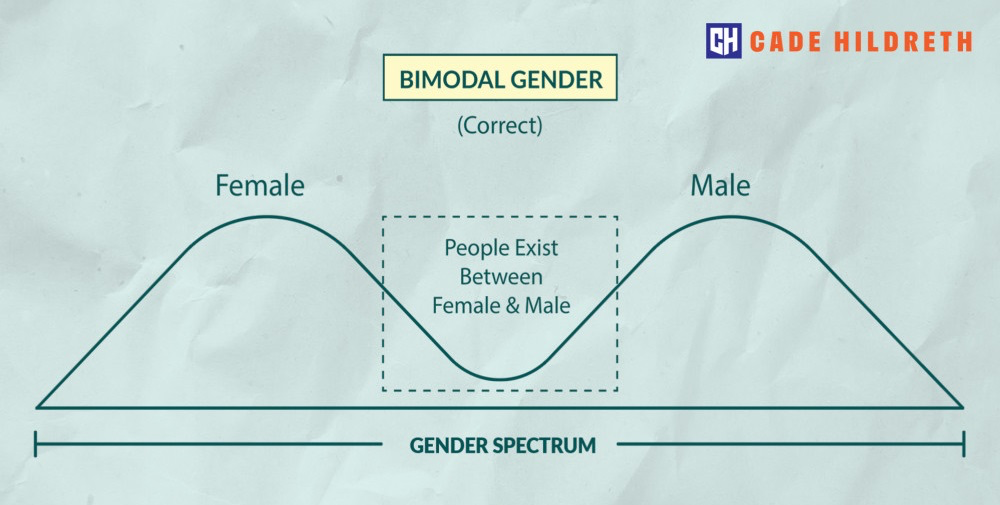
    With a binary system, you are either THIS or you are THAT, and nothing else. There are no grey areas, no outliers. But reality doesn’t work that way. Most of us are “typical”; that is, we have many or most of the characteristics associated with the categories “man” or “woman”. But some people are more typical than others, and there is enormous variation.

    Cade Hildreth has a good explainer on sex, gender and the important difference between binary and bimodal. Short version: gender is “a spectrum of biological, mental and emotional traits that exist along a continuum.”

    The gender binary makes sense for many, maybe even most people. But it is not an immutable law of nature; it’s a classification system human beings came up with. And the more we know about how brains and bodies work, the more we realise how simplistic and unscientific a system it is. The linked article goes into some detail on variations in characteristics such as chromosomes, sex organs and so on. Short version: we’re complicated.

    How you respond to that information says a lot about the kind of person you are, I think. I’m fascinated by it, and by anything else that broadens our knowledge: it just underlines that every single human being is pretty much miraculous, a one-off combination of so many different factors. The fact that I am me and you are you is incredibly, mind-bogglingly unlikely, and also very exciting, and the fact that we’re still only at the start of our discoveries is more exciting still. Oh, the places we’ll go!

    Not everyone feels that way, I know, and sometimes I feel sorry for them. I can’t imagine what it must be like to be scared of knowledge.

  • “Those with money, power, and influence have the advantage”

    A personal and powerful essay by Katelyn Burns who, like me, is a late transitioning trans woman.

    As a child, I could not see positive examples of trans women having meaningful lives, so I could not be a trans woman who had a meaningful life.

    I’m a bit older than Katelyn so I didn’t discover the internet until later: she was a teen and I was in my twenties. But this is nevertheless very familiar.

    I had trouble finding helpful information. Search engines weren’t really a thing and most of the AOL chatrooms I found were just forums for “tranny chasers” to have cybersex with trans women. Not a healthy environment for a scared 14 year old closeted trans girl.

    I dove further into the closet.

    There’s a phrase I like: we cannot be what we cannot see. One of the reasons it seems that there are suddenly more trans people in the world is that there are more visible trans people in the world. Earlier today I saw one anti-trans Twitter user express her disbelief that trans women were around before she was born: “But I’m 42,” she harrumphed.

    We were always here. But for a long time we didn’t know there were others like us.

    Despite the transphobes’ best efforts, there is now more representation, more visibility and more information for trans, non-binary and gender non-conforming people who would previously believe that there was nobody else on Earth who felt the way they feel.

    To those who aren’t trans, it may feel like trans people and issues are everywhere. And that’s true. We have trans actors and actresses playing leading roles on TV, even on those over-the-air channels I received as a youngster. Our issues are debated in national publications. Books written by trans people are more available than ever.

    If I was a child now, even in the mountain-hill house with no cable, there’s just no way I wouldn’t have had access to positive trans content.

    …It’s pretty clear that the dramatic increase in child referrals to youth gender clinics has grown out of the increased positive media exposure of trans people in general. Looking at the numbers, it appears that the children of the past, like me, who didn’t have any idea that you could even be trans, are learning about trans identities at younger and younger ages.

    If you go by the most common estimate for the percentage of trans adults as a share of the general population, currently about 0.6 percent, the number of children being referred for gender services in the UK remains below that number as percent of all children. In other words, it’s the same people who previously would have waited into adulthood to transition just deciding to come out earlier in life.

    Many of us grew up unaware that there were other people just like us, and that people just like us could be happy and loved. And that, at last, is changing.

    There are some very vocal people who don’t want us to have any information, who don’t want us to have any support, who don’t even want us to have any healthcare. Just today, they’re using the hashtag #OnlyFemalesGetCervicalCancer on social media to punch down on trans men and non-binary people, people who already encounter discrimination and gatekeeping in medicine. I know a few trans men whose experience of screening services is horrific. The message is clear: we’d rather see trans men and non-binary people die of cancer than get screening.

    These are people whose attitudes towards the “genuine” trans people they pretend to care about was summed up in this tweet by a non-binary mum on Twitter:

    trans kids – “you’re too young to know!”

    trans teens – “you just need to go through puberty first to be sure!”

    trans adults – “why is this just coming up now?”

    every step of the way there’s an excuse to try and keep trans people from living an authentic life and its all fkn bs

    The justification changes but the core belief – that trans people do not know their own minds, that what they experience is not real, that they are fakes and frauds who do not deserve acceptance, support, healthcare or even basic human rights – is constant. It is the same world view as the climate change deniers, the anti-vaxxers, the anti-maskers, and every other kind of conspiracy theorist: I know what I believe, and the world should conform to my beliefs.

    These people and the people who amplify them have power that trans and non-binary people do not.

    For example, today The Scotsman ran its second consecutive opinion column in two days supporting JK Rowling against those terrible trans “activists” (never “people”. That’s reserved for transphobes). Today’s columnist notes that the author is a “dear friend” of his.

    That one was pretty mild. The day before, in the same newspaper, another columnist slammed trans people as misogynists, said trans women could never have any insight into being women and should not talk about feminism, and namechecked a whole bunch of demonstrably anti-trans activists including the head of the anti-trans hate group LGB Alliance, the anti-trans hate group For Women Scotland (whose founder called trans women “sick fucks… fucking blackface actors” and peddled antisemitic conspiracy theories) and an anti-trans extremist whose demands for the legal right to bully trans people at work were memorably described by a tribunal judge as “not worthy of respect in a democratic society”.

    This is the norm in the newspaper industry, and with the wider media ecosystem it so often sets the agenda for. There are no trans equivalents of Nick Cohen, Suzanne Moore, Julie Bindel, Janice Turner, Douglas Murray, Brendan O’Neill, Toby Young, James Kirkup, Kevin McKenna or any of the very many other high profile figures who regularly use their platforms to misrepresent trans people or to falsely claim that trans people’s rights (as Janice Turner would put it, “trans activists’ demands“, because all trans people are activists and rights are only for cisgender people) conflict with women’s rights.

    Burns:

    To those unaffected, all is seen is words against words in the abstract, surely something worth cheering for. But for folks at the bottom, with enough time and encouragement from those at the top, those words metastasize into violence. Examples abound. In a different context, hilarious memes exchanged on white nationalist message boards about driving cars into crowds of protestors turn into actual terror attacks. Intellectual debates over whether trans women are women lead to mobs of men beating up trans women. Concerned parents take their children’s internet away.

    …In our world, debate is a one way street.


  • “Facts don’t fit our narrative”

    There were two newsworthy trans-related stories in the last 24 hours. In one, a YouGov poll reported that most people, especially women, are in favour of gender recognition reform. This is quite important, given that Liz Truss is expected to announce her plans to kill gender recognition reform later this month.

    In the other, the BBC has suggested to its staff that, if they want to, it might be quite nice if they included their pronouns in their email signatures. But, y’know, it’s okay if you don’t want to!

    Only one of them made it into the newspapers*. You’ll never guess which one.

    The Times even ran a damning editorial about the BBC’s “well-intentioned but mistaken” policy, and the Mail published a rewrite so it could get its army of simpletons to talk about the P.C. Gone Mad Biased Broadcasting Corporation.

    Meanwhile PinkNews, which commissioned the poll in the first story, tried and failed to get any newspaper to run it. “It doesn’t fit the narrative,” they were told.

    I didn’t realise The Times had also written an editorial when someone asked me this morning what I thought of the pronoun story. But the fact that it did just proves the point I made in my reply:

    On the face of it it’s a nice gesture by the BBC, not just for trans and non-binary people but for anybody whose name doesn’t necessarily indicate their gender or whose name is from a different part of the world. Ten years from now it’ll be the norm because it’s simple politeness that doesn’t harm anybody.

    But as a news story it’s a distraction, and it’s probably not a coincidence this is in the Times. It has the potential to combine two of The Times’ favourite themes: “The BBC Has Gone Mad”, and “These Days, If You Say You Want To Stab Trans People They’ll Arrest You And Put You In Jail.”

    This is an example of what I blogged about earlier: the deliberate focus on non-stories and culture war bullshit.

    As far as the BBC goes, I’d much rather it stopped giving uncritical coverage of anti-trans misinformation and scaremongering; when some programmes appear to have a very anti-trans agenda, knowing the producer’s pronouns is rather like the fire brigade sending you a “sorry your house is on fire” card instead of a fire engine.

    I don’t care what Huw Edwards signs off his emails with.

    I care very much that people with no expertise are allowed to present themselves as experts about people they know nothing of and in some cases are clearly prejudiced against.

    And I care very much that multiple national newspapers won’t run stories about trans people if those stories conflict with the “narrative” they push in their pages.

    * Update, 14 July: The Independent ran the story yesterday, so clearly some newspapers consider it newsworthy. Just not the ones with an agenda. 

  • Subtext and context

    In an excellent Twitter thread, Slate writer Lili Loofbourow explains why it’s pretty much impossible to have a debate on the internet.

    “Why would you refuse to debate someone who’s simply saying that All Lives Matter?” is the kind of question an Enlightenment subject longing for a robust exchange of ideas might ask. Well, the reason is that most of us know, through bitter experience, that it’s a waste of time.

    It wouldn’t be a true exchange. We know by now what “All Lives Matter” signals and that what it signals is orthogonal to what it says. Your fluency in this garbage means you take shortcuts: you don’t have to refute the text to leap to the subtext, which is the real issue.

    Loofbourow gives the example of a man being condemned for wearing a Hawaiian shirt at a protest.

    It might indeed look like cancel culture gone mad. He’s just standing there! Civilly! Offering support to Black Lives Matter protesters, of all things! Can’t we all, whatever our disagreements, come together in support of a good cause?

    Sounds reasonable. But the Hawaiian shirt is the adopted uniform of far-right thugs who want to start a second US Civil War, and in this context that’s the message it is being used to send. If you’re not aware of the existence of those thugs, let alone their signifiers, you won’t see it.

    The phrase “All Lives Matter” is similar. It seems perfectly reasonable, doesn’t it? But the message is that Black Lives Don’t Matter. Imagine phoning up the fire brigade when your house is burning and being told All Houses Matter.

    We like to think that in online discussions, both sides are approaching the subject in good faith. That both sides are approaching the discussion with sincerity, with openness and with a genuine desire to find the truth, even if that means they have to change their views. And of course, that’s not how it works.

    Bad actors take advantage of that.

    There are three elements to a message such as a social media post: text, subtext and context. The text is the content of the post, such as “All Lives Matter”. The subtext is the message those words are intended to convey, such as “Black Lives Don’t Matter”. And the context is where the text comes from: the culture, the assumptions, the wider story.

    To stick with “All Lives Matter”, the context of that phrase is that it is almost exclusively used to dismiss the Black Lives Matter movement and to try and silence Black people.

    The equivalent for me is “What rights don’t trans people have?” The text seems like a perfectly reasonable question but online, it is very rarely asked in good faith.

    In this case, the context is that in almost every case the questioner knows exactly which rights trans people don’t have (the right to healthcare, the right to family life, the right to a private life, the right to protection from discrimination and violence, etc) but doesn’t care. They are not coming to learn; they are coming to fight.

    There are certain terms that bad actors use again and again (a deliberate strategy of normalisation) that indicate a bad faith argument. In trans-related discourse they include “gender ideology”, which was coined by the Catholic Church to battle LGBT+ equality, and “women’s sex-based rights”, which was coined by the US religious right to exclude trans women from discussions of women’s legal and human rights. Both terms are used almost exclusively by people who are anti-trans and often anti-LGBT+ and anti-women’s reproductive freedom too.

    The text is designed to seem reasonable. But it’s the Hawaiian shirt at the Black Lives Matter rally.

    Loofbourow:

    …there’s a history here: platforms got flooded by devil’s advocates who wasted the time of people with real investments–cruelly, for sport. That tends to weed out good faith engagement.

    Add to this that most arguments worth having have been had and witnessed 1000x already on these platforms, in several permutations. We know their tired choreographies, the moves and countermoves. At this point we mostly enjoy the style of whichever dunk we happen to agree with.

    This isn’t great. People talk past each other, assume bad faith. But it’s not the fault of “illiberalism” that good faith is in short supply. And if that’s where your analysis begins, I can’t actually tell whether you’re naive or trolling. And I’m no longer sure which is worse.


  • A distraction

    An interesting poll in PinkNews: despite more than two years of relentless and increasingly vicious scaremongering in pretty much the entire national media and online, most UK women are still in favour of self-ID for trans people: 57%, compared to 21% against.

    It’s welcome, of course, and it echoes many other polls (and trans people’s experiences) that show most women don’t believe the lurid claims of the pressure groups that pretend to speak for them, but at the same time it’s frustrating to see reporting and polling about trans “issues” that focus on the things bigots want to talk about, not the things that are important.

    Self-ID is a minor administrative thing that not only isn’t relevant to cisgender people, but that isn’t particularly important to trans people either. Sure, we’d like the process of legal gender recognition to be less humiliating and expensive and for it to be inclusive of non-binary people. And yes, gender recognition certificates can help protect us against some forms of discrimination.

    But on the list of things trans people want to focus on, to address, to talk about, the gender recognition process is near the bottom of the list.

    We’re only talking about it because other people won’t stop shouting about it.

    There is only so much oxygen in media, and they’re using it all up.

    My news app brings me stories about trans issues. For several weeks now, the trans-related coverage has been overwhelmed by a single celebrity whose views on trans people are no different from and no more insightful than any run-of-the-mill transphobe on Twitter. But of course, she’s famous.

    It’s Caitlyn Jenner all over again. A few years ago it seemed like the only articles anybody was allowed to write about trans people were either based on some awful thing Caitlyn Jenner said or some awful thing someone else said about Caitlyn Jenner. Meanwhile the important stuff didn’t make the papers at all. Why would it? A celebrity has an opinion!

    It’s not just the coverage. It’s that it sets the agenda for other media: the celebrity’s opinion is either the hook, or the only thing the presenter wants to talk about and will let the guest talk about.

    It often feels very much like this:

    Expert: Well, John, the big concern is that a woman who needs hormone treatment can go to her GP and get a prescription that day – unless she’s trans, in which case it can take three or even four years to get the same medication. And that’s dangerous because –”

    Presenter: “But this celebrity, who’s really just an ordinary concerned parent, says trans people drink the blood of freshly slaughtered children. How much children’s blood do they drink?”

    Expert: “What? That’s ridiculous. Of course they don’t drink the –”

    Presenter: “When did they stop drinking the blood of freshly slaughtered children?”

    This isn’t helping anybody, and it certainly isn’t educating and informing. It’s a distraction.

    As Toni Morrison famously said about racism:

    “The function, the very serious function of racism, is distraction. It keeps you from doing your work. It keeps you explaining, over and over again, your reason for being. Somebody says you have no language and so you spend 20 years proving that you do. Somebody says your head isn’t shaped properly so you have scientists working on the fact that it is. Somebody says that you have no art so you dredge that up. Somebody says that you have no kingdoms and so you dredge that up. None of that is necessary. There will always be one more thing.”

  • The wrong kind of body

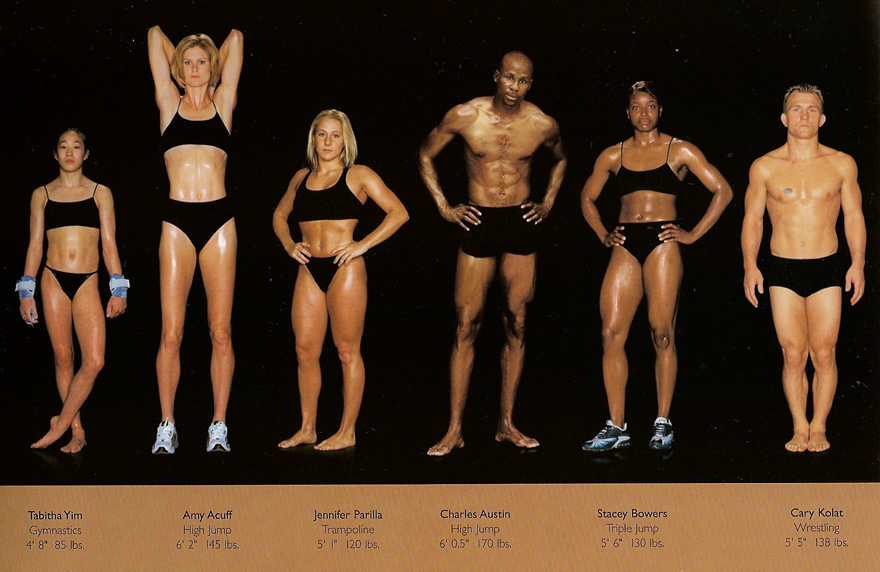
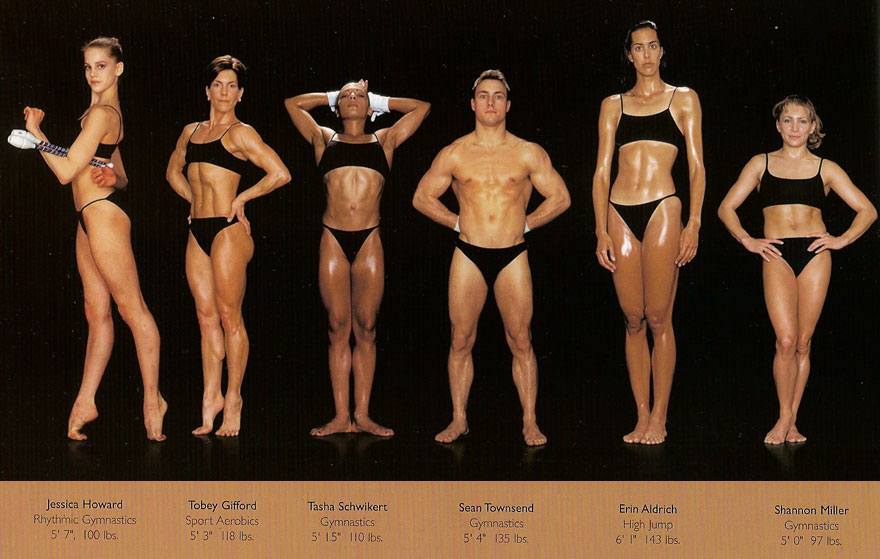
    This collection of photos is fascinating: it’s the Athlete series by Howard Schatz, and it shows bodies. Big bodies, little bodies, stocky bodies, thin bodies, light-skinned bodies, dark-skinned bodies… the only thing they have in common is that the people pictured are all elite athletes.

    The collection has been doing the rounds again as a reaction to the reaction to a female character in The Last of Us Part 2: Abby, a soldier.

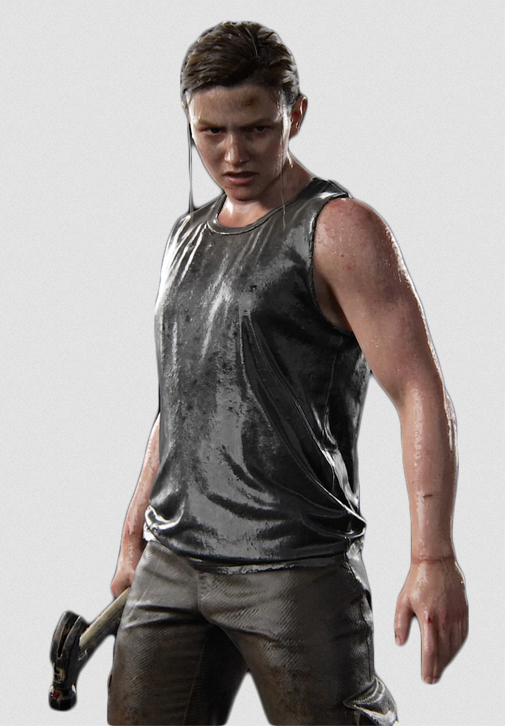
    This is Abby.

    She’s hardly a 32-stone sumo wrestler, is she? But having slightly bigger shoulders than some women and a walk that didn’t wiggle was enough for some less enlightened players to start bellowing unhappily: “She’s trans! Get her out of my game!”

    She isn’t trans.

    Let’s skip past the “and anyway, so what if she was?” discussion because what I want to talk about is the idea that women don’t look like that.

    Of course women look like that. I enjoyed a MetaFilter discussion of this because it featured very many women who said they looked either like Abby, or that compared to them Abby was a little delicate princess. All kinds of women look like all kinds of things because women, like men, are human beings that come in all kinds of shapes and sizes.

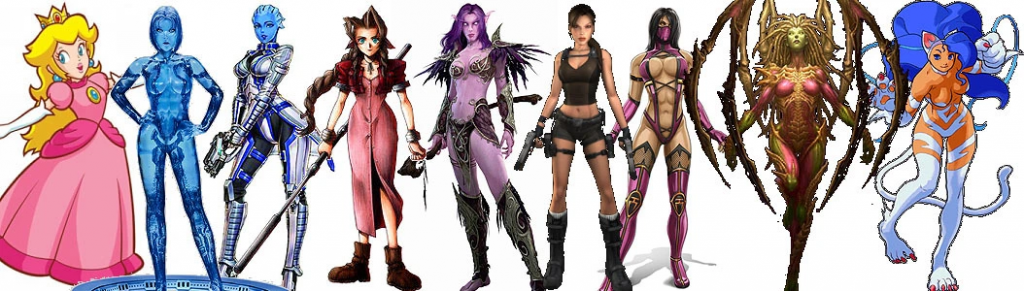
    Clearly, some of the people who assumed Abby was trans have a very narrow view of what a woman should look like, and that view is no doubt informed at least in part by the really bloody awful portrayal of so many female characters in video games. Such as:

    I’ve certainly played video games where the male characters prepare for battle by wearing giant metal suits of armour and the female ones don that battle-tested combination of push-up bras, thigh-high stockings and stiletto heels.

    But it’s not just video games. We make judgements about other people very, very quickly, and in the case of gender we make those judgements on a few very basic visual cues. So Abby has big shoulders, developed biceps and narrow hips; clearly, she’s a man.

    For some people, that was enough to make them very angry simply because she did not meet their expectation of how a woman should look. The Venn diagram of those people and of the arseholes currently sending death threats to Laura Bailey, the actor who did Abby’s voice, has some overlap.

    Patricia Hernandez, writing in Polygon:

    much of the hate visible on social media isn’t just about the story and Abby’s likability compared to Ellie and Joel, it’s fixated on Abby’s jacked-up body.

    …Perhaps the grossest result of all of this is the insistence that Abby could only look like this if her character was trans, as if only folks who are assigned male at birth could possibly have big muscles.

    This is why it’s so dangerous to foster a climate where people believe it’s acceptable or even necessary to watch out for supposed imposters in places such as public toilets. Especially when some of those people proudly claim that they will commit violence against any person they decide shouldn’t be there.

    That isn’t an empty threat. In Oregon last year, Lauren Jackson was beaten so badly by a self-appointed bathroom policeman he broke her jaw. In Puerto Rico this February, Neulisa Luciano Ruiz was stalked and murdered after someone reported her to the police for using the women’s bathroom in McDonalds. Last year in North Carolina, two women were charged with sexual battery and second-degree kidnapping after attacking a trans woman in the toilet of a bar. And here, anti-trans activists openly discuss committing acts of violence against any trans women who might cross their path. I’ve even seen one describe the six-inch knife she says she carries specifically for the purpose of stabbing any trans woman she might encounter in a toilet.

    Bravado? Empty posturing? Maybe. But with anti-trans hate crimes increasing, it’d be foolish to dismiss it.

    I’ve more or less given up trying to persuade people that trans people’s safety matters; too many people clearly think it doesn’t. But if I can’t persuade you to care about people like me, maybe I can persuade you to care about the cisgender women who will be yelled at and possibly even attacked by the same dangerous obsessives. The people who claim “we can always tell” keep on proving that they can’t.

    We have seen bathroom policing in other parts of the world and it always ends up harming women: women with short hair, women with big shoulders, women with the wrong colour of skin, women with the wrong kind of body.

  • “I don’t want people with penises using the ladies’ toilets”

    I’ve seen this a lot today on social media, and it’s clear that many people don’t realise that not only have trans women been peeing peacefully in the ladies since before many of us were born, but that trans women must use the ladies.

    It’s not just about our safety, although of course that’s important.

    Trans women who haven’t yet had gender reassignment surgery use the ladies because if they don’t, they may be refused gender reassignment surgery.

    And trans women who haven’t yet got a Gender Recognition Certificate use the ladies because if they don’t, they may be refused a Gender Recognition Certificate.

    Let’s start with that endlessly fascinating subject, The Surgery.

    Here’s NHS England.

    You [must have] socially transitioned to your preferred gender identity for at least a year before a referral is made for gender surgery

    And here’s the Nuffield hospital in Brighton, a hospital Scots trans women are referred to for their gender reassignment surgery:

    Patients will have the following that confirms the eligibility and readiness criteria for gender reassignment surgery:

    …6. Has completed at least 12 continuous months of living in a gender role that is congruent with their gender identity.

    Social transition, or “living in a gender role that is congruent with their gender identity”, is when you live as your correct gender, so if you’re a trans woman you have to prove you have been “living and functioning” as a woman in your work and personal life for at least a year.

    That’s just for a referral, which then puts you on a very long waiting list. While you’re waiting for your surgery you must continue to live and function as a woman.

    But of course, not all trans women can have major surgery, or want it, or satisfy the eligibility criteria (for example there are weight criteria; if you don’t meet those criteria, no surgery for you). But those women still have to use the ladies too, not just because it means they’re less likely to be attacked or abused but because their legal gender recognition depends on it.

    To get legal gender recognition in the UK, you need to demonstrate that you have lived full time in your correct gender without interruption for at least two years.

    That specifically includes using the ladies. I know this because the gender recognition panel asked me for evidence of that very thing, and I have had to produce a number of witness statements to prove that I have indeed been weeing in the right toilets for the last two-plus years (and yes, it’s pretty humiliating having to ask people to write statements about where you wee).

    Trans women have been peeing peacefully in the ladies for decades, and the only reason people are even talking about it now is because of poisonous propaganda created by the US religious right. That propaganda is already threatening our safety and the safety of women deemed “not feminine enough” by self-appointed toilet police. And it also threatens our right to legal gender recognition and our ability to get gender reassignment surgery.

    And that – making life hard for trans people, gender non-conforming people and anybody who doesn’t correspond to the stereotype of a white, stereotypically feminine housewife – is exactly what the bigots want.