Category: LGBTQ+

  • The rights we are denied

    A popular anti-trans “gotcha” is to ask, “what rights don’t trans people have?” The question is never asked in good faith, so trans people generally ignore it: it’s the same assholes with the same bullshit all over again shouting “debate me, cowards!” But by not answering it, it enables the bad faith poster to claim that we didn’t respond because we can’t answer.

    So let’s answer it. Bear in mind this is a blog post, not a piece of research, so there will be tons of things I’ve missed out.

    The rights we have vary from country to country, and many of them are detailed in this annual study. Here’s a more accessible summary of some of the key issues by Katie Montgomerie.

    For example in some countries trans people cannot have legal gender recognition without forced sterilisation, a breach of their human rights. Technically that isn’t the case in the UK, but the Gender Recognition Panel’s focus on surgical and hormonal transition – both of which lead to sterilisation – means that in effect, it’s much the same here. Our legal gender recognition also requires a mental health diagnosis even though being trans is not a mental health problem.

    In the UK, it’s still legal to force trans and non-binary teens into dangerous and damaging conversion therapy to try and “cure” them.

    There are other rights. We do not have the same right to healthcare as you do: NHS waiting lists shouldn’t exceed 18 weeks, but for trans people they are at least two years and in some cases more than four years long. Seven percent of trans people have been refused health care altogether because they are LGBT.

    We do not have the same right to safe workspaces as you do. One in eight British trans people has been assaulted at work by a co-worker or customer. Half of trans people hide or disguise their gender identity at work because they fear discrimination.

    We do not have the same rights to live free from discrimination and violence. Two in five trans people and three in ten non-binary people have experienced hate crimes because of their gender identity. For younger people the numbers are even higher. Half of us are scared to use public toilets for fear of abuse or assault. 44% of us avoid certain streets because we don’t feel safe.

    We do not have the same rights to marry as other people do. Without legal gender recognition we cannot marry in our correct gender.

    And crucially, there are rights we supposedly have on paper but do not have in reality. It’s illegal to discriminate against people because of their gender identity but one in three employers say they wouldn’t consider hiring a trans person. 25% of trans people have been discriminated against in housing. 29% of social services users have experienced discrimination. 34% of young trans people have experienced discrimination in social places such as restaurants or bars. One in seven trans students has considered dropping out of university because of their experiences of harassment and discrimination.

    Finally, there are the rights we have and that others want to take from us. Here in the UK those rights include the rights set out in the Equality Act. In the US, those rights include the right to basic and even emergency healthcare.

    “What rights don’t trans people have” is the bigot equivalent of “what have the Romans ever done for us”. But it’s a lot less amusing.
  • Trans healthcare has been privatised

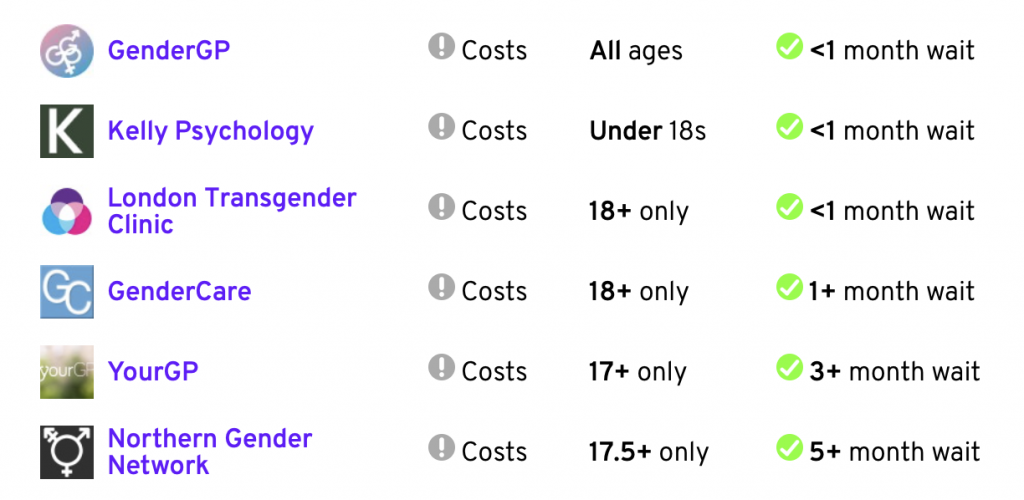
    Genderkit has collated the latest waiting list information for UK trans healthcare and it’s the grimmest read yet: there isn’t a single gender clinic for adults that has a waiting list of less than two years, and those waiting lists are growing ever longer.

    This image is telling: the only clinics without years-long waiting lists are the ones in the private sector.I’ve experience of this; I was a private patient with GenderGP while languishing on an NHS waiting list.
    What’s effectively happened here is that trans healthcare has been privatised. If you can’t afford to pay privately for your healthcare you can expect to wait many years before getting a first assessment and months or years more for any kind of treatment.

  • The ego has landed

    I’ve always considered myself to be terribly shy. That probably seems weird given that for most of my adult life I’ve been the singer in bands, but performing in front of people was always something I felt forced to do, not something I wanted to do. That’s because I had terrible stage fright, stage fright that sometimes made me physically sick hours before setting off for a venue.

    I had the same stage fright in radio studios even after years of doing shows. A different studio or a different presenter would bring the icy-stomach terror right back, as would the slightest hint of a camera: I’m fairly comfortable in front of a microphone but I’m incredibly camera shy.

    Not any more.

    In the last couple of weeks I’ve been the subject of a professional photo shoot, performed in front of cameras for two live-streamed concerts, played some solo songs for a radio session and made a complete fool of myself in front of multiple cameras as my band was filmed for a live video.

    It’s been brilliant.

    I don’t think I’ve ever had so much fun.

    That’s quite odd, I think. You’d think that as a trans person who really hates their body and how they look the last thing I’d want is to be filmed or photographed. And if I’m honest, I’m not mad keen on seeing the results of the filming or the photography. But I am very much enjoying being filmed and being photographed while I wave my guitar around like I used to wave a badminton racket in my bedroom while pretending I was playing Top of The Pops. It’s as if I’ve spent years pretending to be a recluse like Enya when I was Bono all along.

    I think a big part of this is that since coming out, I’ve stopped caring what other people think. That’s partly a survival mechanism – if I worried about what other people might think of me, I’d never leave the flat – but it’s also profoundly liberating. Instead of stage fright I have nervous, puppyish excitement; instead of trying to act cool I’m quite happy to make a complete arse of myself.

    And I think that’s a very visible demonstration of where my head’s at right now. I’m more confident than I was, more comfortable in my own skin, less fearful and less apologetic.

    In one of the songs we filmed yesterday, “I could never be your girl”, I sing this. And I mean it.

    I belong right here, I’m a woman on a mission
    I’m not looking for approval 
    and I don’t need your permission


  • “The importance of humility in the face of something you do not understand”

    Nora Mulready writes in The Independent about her journey from “gender critical” fighter against “a new ‘woke’ orthodoxy” to trans ally.

    I read everything I could find that validated my instinct that the increase in transgender identity was a millennial fad, mental health issues, trauma, social contagion, fashion, patriarchy, you name it, I clutched at it.

    But unlike many – most? – anti-trans people, Mulready knew and loved a trans person. In this case, her nephew.

    I saw my nephew thrive, I met many wonderful trans people who simply wanted to live their lives, I listened, and I learned, a lot. Over time my views changed.

    …The final end to my sympathy for gender-critical campaigners was the collective punishment approach to trans women. All trans women are held accountable for any misdemeanour by any trans woman. This is the very epitome of prejudice. “You cannot share our toilets, you cannot share our spaces, because you might be all the same.” It is a heart-breaking act of cruelty towards trans women and is reminiscent of the very worst of the American deep south attitudes towards racial integration.

    …Seeing this issue unfold within my own family taught me a profound lesson: the importance of humility in the face of something you do not understand.

  • Come to the fringe

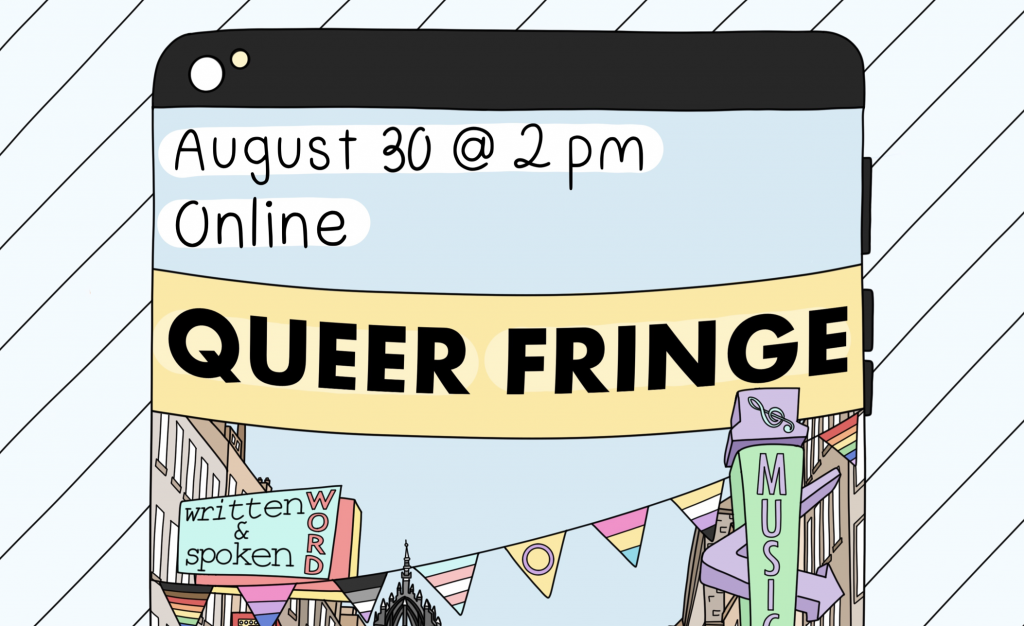
    I’ll be joining the line-up of this excellent online music, spoken word and visual arts event on Sunday. I don’t know all the other performers but the ones I do know are brilliant.

    This Sunday… @LGBTHealthy and @SomewhereEDI present Queer Fringe – Supporting and celebrating LGBTQ+ artists in Scotland in 2020 and beyond. 15 featured artists! #SomewhereAtTheFringe #SomewhereForUs

    Tickets are free from Eventbrite.

  • “No-one will ever love you”

    There’s been a lot of discussion about conversion therapy, the often-illegal and usually deeply damaging attempts to force people to change their sexual orientation or gender identity.

    That’s horrific, of course. But you don’t have to give people electro-shock therapy or send them off to prayer camp to try and talk them out of being who they are. From parents to healthcare providers, many trans and non-binary people encounter a great deal of resistance. In the case of GPs, that resistance can mean denying them access to the gender clinic system: as far as I’m aware Scotland is the only bit of the UK where you don’t need to persuade your GP to refer you to the gender clinic; I’ve heard plenty of horror stories about Northern Irish GPs in particular refusing to refer patients.

    The trans-friendly practice GenderGP asked some of its blog readers what experiences they’d had with medical professionals. The responses included being told the following:

    “Come back next year to see if you change your mind.”

    “You have to be attracted to men if you’re really trans.”

    “Pack it in, you’re too big for that sort of nonsense.”

    “If you continue on this path you’ll lose your job, your family, your friends, you’ll be neither male nor female & no-one will ever love you.”

    “Why can’t you just live as a tomboy for now?”

    “It’s just a perversion and you should be closer to God and your parents.”

  • False framing

    Gemma Stone, writing on Medium:

    Recently, an anti-trans activist was spoken to by police over a suspected hate crime. Suzy Ireson has been quite prolific in posting anti-trans propaganda around public places, with a direct intention of drumming up hate for trans people and making trans people feel intimidated. She even gleefully admits to doing this on social media profiles, all egged on by other known hateful anti-trans campaigners.

    This is how the media should have reported on this story, it should have just been a very simple “bad person doing bad thing” kind of affair. Except that’s not what we got when The Mirror got their hands on it.

    The Mirror piece was written by a vocal supporter of anti-trans activists who has written multiple anti-trans pieces for the right-wing press.

    The Mirror ran with the title “Mum in hate crime probe after pro-JK Rowling stickers amid trans rights row” which is very clearly slanted in making her seem like a sympathetic character in this narrative.

    It’s happening again today. A woman in the US, Sasha White, has been fired by her literary agent employer for posting a mountain of abusive tweets about and to trans women, including tweets advocating violence against them. Inevitably it’s being framed as a brave feminist silenced by the sinister trans lobby rather than a tiresome bigot getting the sack for bringing her employer into disrepute. It’s important to note that her employer is very and vocally LGBT+ friendly and represents a number of LGBT+ authors.

    Suzanne Moore has tweeted her support, Toby Young has already been in touch with her. It’s surely just a matter of hours before The Spectator offers her a column and JK Rowling calls her a hero.

    Stone:

    Transphobes and bullies are framed as innocent little victims who didn’t do anything wrong, while trans people are framed as monstrous, authoritarian and dangerous. 

  • “She wanted to be queen”

    The rather dull headline undersells this sensitive, fascinating and terribly sad piece about the death of Angela Martinez last month in LA: Death of an Indigenous essential worker sparks debate over gender identity.

    Martinez died of COVID-19, but the manager at the Burger King where she worked claimed she died from a “hormone overdose”. It was an appalling and idiotic claim, and there were storms of protest. But amid the storm it seems that Martinez herself was forgotten about: while her death sparked protests under the hashtag #TransLivesMatter, Martinez didn’t consider herself trans.

    Martinez’s friends said she had been meticulous about not referring to herself as transgender. Though Martinez went by “she,” she was neither man, nor woman. She was “muxe.”

    The muxe identity, which Martinez held dear, has existed as a respected third gender in Zapotec cultures in Oaxaca for centuries, especially in the southeastern area of Istmo de Tehuantepéc.

    Gender binaries aren’t carved in stone: the idea that there are just two genders is primarily a white European Christian thing that our ancestors spent many years and spilled a lot of blood exporting to other countries.

    The notion of a third gender has existed for centuries in different cultures worldwide. In some Native American cultures, the term “two-spirit” is an umbrella term describing those who fulfill a third gender. In South Asia, there are more than half a million officially recognized hijras. In Thailand, there are the kathoeys. In Ethiopia, the ashtime. And in Polynesia, the fa’afafine.

    The protesters using the #TransLivesMatter hashtag were well-intentioned, but ultimately they were projecting a primarily white perspective onto somebody who didn’t share it: while Martinez was clearly a strong trans ally, she didn’t see herself as trans.

    …friends complained that trans activists were, as Midnight Blue wrote on Facebook, “exploiting her image without permission. She was not trans, my sister was muxe and indigenous people are tired of the erasure of our identities.”

    Although I’ve quoted bits about Martinez’s gender identity here, that’s not really what the piece focuses on: it’s a warm, sad and beautifully written portrait of the human behind the headlines.

    “One time she asked me, ‘Do you think angels exist?’” Midnight Blue said. “Her greatest wish was to see an angel. I think she forgot that she was one of them.”

  • Shots are fired

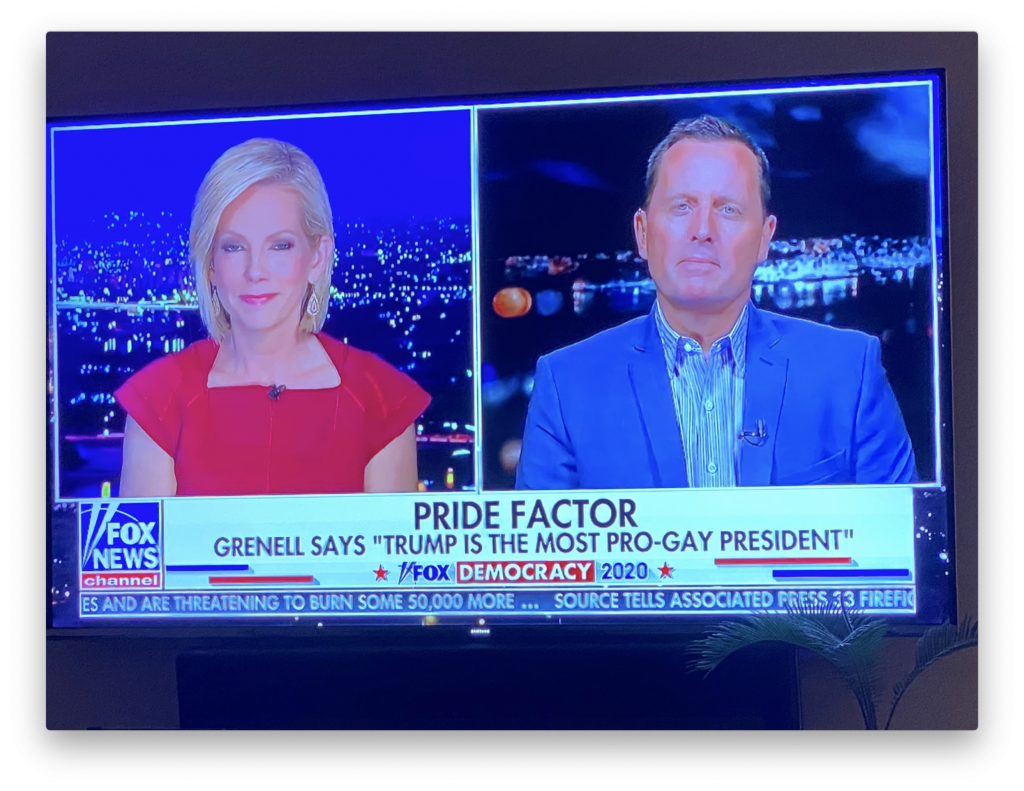
    We’ve known for some time that Donald Trump and the Republican Party intend to demonise trans people and trans allies in their election campaign to distract from that whole “killing 170,000 people and being corrupt on a scale never seen before” thing, and the first shots in that attack have now been fired.

    With the help of the Christmas-voting turkeys in the Log Cabin Republicans, Trump is being positioned as “the most pro-gay president” of all time, an “honour” he gladly accepted despite his administration attempting to roll back rights not just for trans people but for all LGBT+ people. The Log Cabin Republicans, not for the first time, are providing the cover for Trump’s assault on trans Americans while turning a blind eye to his administration’s discriminatory acts towards the entire LGBT+ community.

    And then there’s this, from this week’s Trump speech in Pennsylvania.

    They want to cancel you, totally cancel you. Take your job. Turn your family against you for speaking your mind, while they indoctrinate your children with twisted, twisted world views that nobody ever thought possible

    (Incidentally, if you rewrote that slightly I could convince you it was from a Times or Guardian op-ed or a JK Rowling blog post. That’s how far down the rabbit hole we are right now.)

    Hate crimes against trans people are rising globally because of language like this, and in the US the violent deaths of trans people is expected to reach a record high this year.

    It’s pretty clear who he’s going for here, and what the consequences will be.

  • “A devil’s bargain”

    Writing for Jezebel, Katelyn Burns tells an extraordinary story of medical malpractice, litigious surgeons and people whose lives are changed irrevocably by medical mistakes: When Surgeons Fail Their Trans Patients. Warning, it’s pretty graphic in places.

    It’s important to note that the vast majority of trans people’s surgeries have positive outcomes: gender reassignment surgery has an exceptionally low regret rate. But there is still regret, usually because of unsatisfactory surgical outcomes, and some surgeons do appear to have significantly higher rates of negative outcomes than others.

    This is something that needs to be talked about, but trans people rightly fear discussing such personal things in public.

    Burns:

    …speaking out after a traumatic experience, in a moment when so few are able to access care, can either be weaponized by anti-trans activists or interpreted by advocates as a step back.

    …When she posted about her experience with Dr. Rumer on message boards in an attempt to warn other potential patients, Carlie’s words were reprinted on anti-trans forums.

    I haven’t experienced anything like the women in the article have, but nevertheless I’ve chosen not to post some personal things about my own healthcare for that very reason. Discussion forums and Facebook groups for trans people have an ongoing problem with fake accounts mining them for anything they can use against trans people.

    …the environment can make it difficult for many trans people to find recourse, or warn others about bad surgical experiences. It’s a system that makes frank public discussion about surgical outcomes nearly impossible to have.

    Some anti-trans activists create opposition to access to trans-affirming care by claiming treatments are experimental or too risky to be ethical, another obstacle when patients consider speaking openly about their experiences with individual surgeons. Though regret rates remain low and, and as Dr. Schechter says, “the risks and the complications are commensurate with the risks and complications of other similar procedures,” anti-trans disinformation has become a serious problem in many corners of the media.

    Although the article is about the US system, much of it applies to the UK too.