I read everything I could find that validated my instinct that the increase in transgender identity was a millennial fad, mental health issues, trauma, social contagion, fashion, patriarchy, you name it, I clutched at it.
But unlike many – most? – anti-trans people, Mulready knew and loved a trans person. In this case, her nephew.
I saw my nephew thrive, I met many wonderful trans people who simply wanted to live their lives, I listened, and I learned, a lot. Over time my views changed.
…The final end to my sympathy for gender-critical campaigners was the collective punishment approach to trans women. All trans women are held accountable for any misdemeanour by any trans woman. This is the very epitome of prejudice. “You cannot share our toilets, you cannot share our spaces, because you might be all the same.†It is a heart-breaking act of cruelty towards trans women and is reminiscent of the very worst of the American deep south attitudes towards racial integration.
…Seeing this issue unfold within my own family taught me a profound lesson: the importance of humility in the face of something you do not understand.
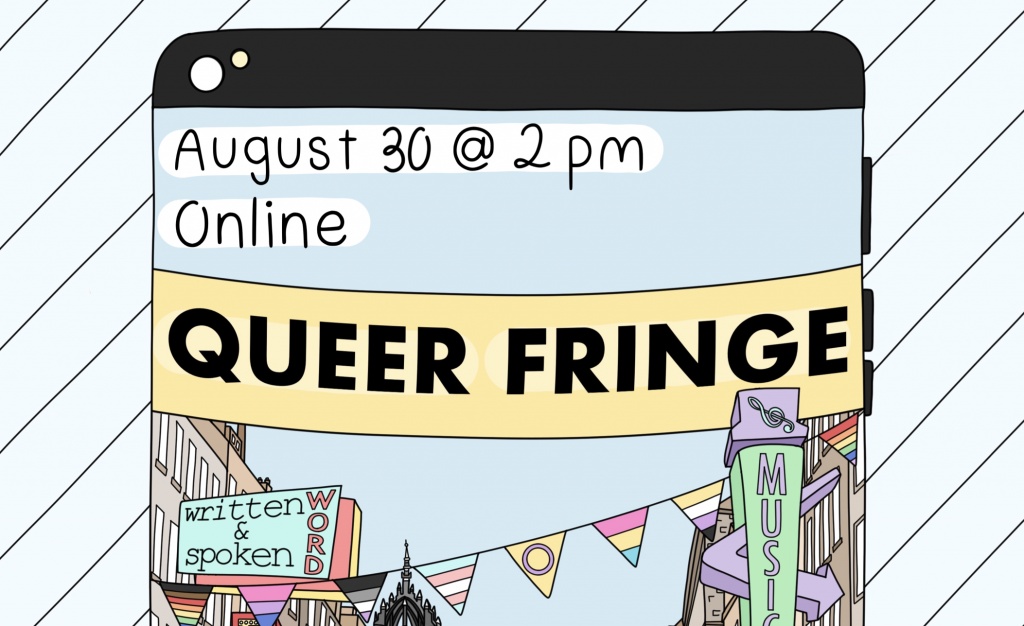
I’ll be joining the line-up of this excellent online music, spoken word and visual arts event on Sunday. I don’t know all the other performers but the ones I do know are brilliant.
This Sunday… @LGBTHealthy and @SomewhereEDI present Queer Fringe – Supporting and celebrating LGBTQ+ artists in Scotland in 2020 and beyond. 15 featured artists! #SomewhereAtTheFringe #SomewhereForUs
There’s been a lot of discussion about conversion therapy, the often-illegal and usually deeply damaging attempts to force people to change their sexual orientation or gender identity.
That’s horrific, of course. But you don’t have to give people electro-shock therapy or send them off to prayer camp to try and talk them out of being who they are. From parents to healthcare providers, many trans and non-binary people encounter a great deal of resistance. In the case of GPs, that resistance can mean denying them access to the gender clinic system: as far as I’m aware Scotland is the only bit of the UK where you don’t need to persuade your GP to refer you to the gender clinic; I’ve heard plenty of horror stories about Northern Irish GPs in particular refusing to refer patients.
The trans-friendly practice GenderGP asked some of its blog readers what experiences they’d had with medical professionals. The responses included being told the following:
“Come back next year to see if you change your mind.”
“You have to be attracted to men if you’re really trans.”
“Pack it in, you’re too big for that sort of nonsense.”
“If you continue on this path you’ll lose your job, your family, your friends, you’ll be neither male nor female & no-one will ever love you.”
“Why can’t you just live as a tomboy for now?”
“It’s just a perversion and you should be closer to God and your parents.”
Recently, an anti-trans activist was spoken to by police over a suspected hate crime. Suzy Ireson has been quite prolific in posting anti-trans propaganda around public places, with a direct intention of drumming up hate for trans people and making trans people feel intimidated. She even gleefully admits to doing this on social media profiles, all egged on by other known hateful anti-trans campaigners.
This is how the media should have reported on this story, it should have just been a very simple “bad person doing bad thing†kind of affair. Except that’s not what we got when The Mirror got their hands on it.
The Mirror piece was written by a vocal supporter of anti-trans activists who has written multiple anti-trans pieces for the right-wing press.
The Mirror ran with the title “Mum in hate crime probe after pro-JK Rowling stickers amid trans rights row†which is very clearly slanted in making her seem like a sympathetic character in this narrative.
It’s happening again today. A woman in the US, Sasha White, has been fired by her literary agent employer for posting a mountain of abusive tweets about and to trans women, including tweets advocating violence against them. Inevitably it’s being framed as a brave feminist silenced by the sinister trans lobby rather than a tiresome bigot getting the sack for bringing her employer into disrepute. It’s important to note that her employer is very and vocally LGBT+ friendly and represents a number of LGBT+ authors.
Suzanne Moore has tweeted her support, Toby Young has already been in touch with her. It’s surely just a matter of hours before The Spectator offers her a column and JK Rowling calls her a hero.
Stone:
Transphobes and bullies are framed as innocent little victims who didn’t do anything wrong, while trans people are framed as monstrous, authoritarian and dangerous.Â
Martinez died of COVID-19, but the manager at the Burger King where she worked claimed she died from a “hormone overdose”. It was an appalling and idiotic claim, and there were storms of protest. But amid the storm it seems that Martinez herself was forgotten about: while her death sparked protests under the hashtag #TransLivesMatter, Martinez didn’t consider herself trans.
Martinez’s friends said she had been meticulous about not referring to herself as transgender. Though Martinez went by “she,†she was neither man, nor woman. She was “muxe.â€
Gender binaries aren’t carved in stone: the idea that there are just two genders is primarily a white European Christian thing that our ancestors spent many years and spilled a lot of blood exporting to other countries.
The notion of a third gender has existed for centuries in different cultures worldwide. In some Native American cultures, the term “two-spirit†is an umbrella term describing those who fulfill a third gender. In South Asia, there are more than half a million officially recognized hijras. In Thailand, there are the kathoeys. In Ethiopia, the ashtime. And in Polynesia, the fa’afafine.
The protesters using the #TransLivesMatter hashtag were well-intentioned, but ultimately they were projecting a primarily white perspective onto somebody who didn’t share it: while Martinez was clearly a strong trans ally, she didn’t see herself as trans.
…friends complained that trans activists were, as Midnight Blue wrote on Facebook, “exploiting her image without permission. She was not trans, my sister was muxe and indigenous people are tired of the erasure of our identities.â€
Although I’ve quoted bits about Martinez’s gender identity here, that’s not really what the piece focuses on: it’s a warm, sad and beautifully written portrait of the human behind the headlines.
“One time she asked me, ‘Do you think angels exist?’†Midnight Blue said. “Her greatest wish was to see an angel. I think she forgot that she was one of them.â€
We’ve known for some time that Donald Trump and the Republican Party intend to demonise trans people and trans allies in their election campaign to distract from that whole “killing 170,000 people and being corrupt on a scale never seen before” thing, and the first shots in that attack have now been fired.
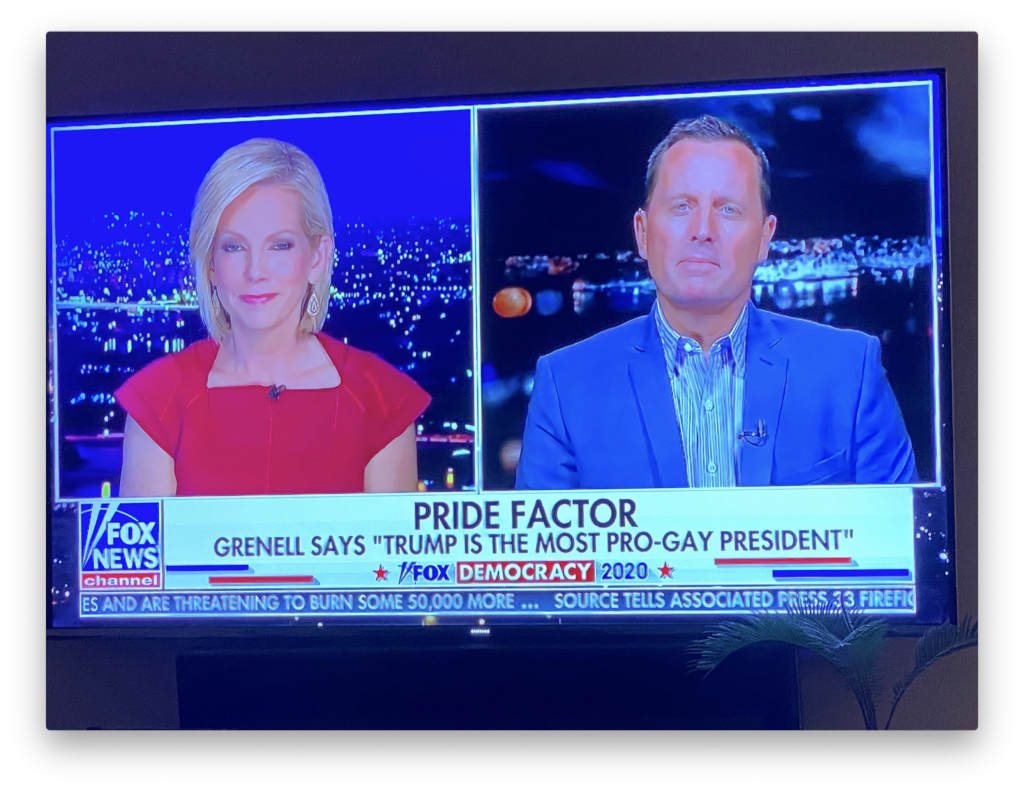
With the help of the Christmas-voting turkeys in the Log Cabin Republicans, Trump is being positioned as “the most pro-gay president” of all time, an “honour” he gladly accepted despite his administration attempting to roll back rights not just for trans people but for all LGBT+ people. The Log Cabin Republicans, not for the first time, are providing the cover for Trump’s assault on trans Americans while turning a blind eye to his administration’s discriminatory acts towards the entire LGBT+ community.
And then there’s this, from this week’s Trump speech in Pennsylvania.
They want to cancel you, totally cancel you. Take your job. Turn your family against you for speaking your mind, while they indoctrinate your children with twisted, twisted world views that nobody ever thought possible
(Incidentally, if you rewrote that slightly I could convince you it was from a Times or Guardian op-ed or a JK Rowling blog post. That’s how far down the rabbit hole we are right now.)
Hate crimes against trans people are rising globally because of language like this, and in the US the violent deaths of trans people is expected to reach a record high this year.
It’s pretty clear who he’s going for here, and what the consequences will be.
Writing for Jezebel, Katelyn Burns tells an extraordinary story of medical malpractice, litigious surgeons and people whose lives are changed irrevocably by medical mistakes: When Surgeons Fail Their Trans Patients. Warning, it’s pretty graphic in places.
It’s important to note that the vast majority of trans people’s surgeries have positive outcomes: gender reassignment surgery has an exceptionally low regret rate. But there is still regret, usually because of unsatisfactory surgical outcomes, and some surgeons do appear to have significantly higher rates of negative outcomes than others.
This is something that needs to be talked about, but trans people rightly fear discussing such personal things in public.
Burns:
…speaking out after a traumatic experience, in a moment when so few are able to access care, can either be weaponized by anti-trans activists or interpreted by advocates as a step back.
…When she posted about her experience with Dr. Rumer on message boards in an attempt to warn other potential patients, Carlie’s words were reprinted on anti-trans forums.
I haven’t experienced anything like the women in the article have, but nevertheless I’ve chosen not to post some personal things about my own healthcare for that very reason. Discussion forums and Facebook groups for trans people have an ongoing problem with fake accounts mining them for anything they can use against trans people.
…the environment can make it difficult for many trans people to find recourse, or warn others about bad surgical experiences. It’s a system that makes frank public discussion about surgical outcomes nearly impossible to have.
Some anti-trans activists create opposition to access to trans-affirming care by claiming treatments are experimental or too risky to be ethical, another obstacle when patients consider speaking openly about their experiences with individual surgeons. Though regret rates remain low and, and as Dr. Schechter says, “the risks and the complications are commensurate with the risks and complications of other similar procedures,†anti-trans disinformation has become a serious problem in many corners of the media.
Although the article is about the US system, much of it applies to the UK too.
Are kids being identified as trans because of the toys they play with or the clothes they like to wear? The answer, of course is, ‘no’.
Part of the problem is that anti-trans activists are constantly looking for a “gotcha”. So parents who may well be struggling with accepting their child’s identity are accused of “transing” their kids because they happened to mention clothes or toys.
If a parent were to say, ‘I first noticed my child was different to my daughters because he was playing with trucks rather than dolls’ it’s easy to see how that could be misconstrued as: ‘I think my child is trans because they played with trucks not dolls’.
The piece gives space for parents of trans kids to talk about this in more detail.
I think this is a key point:
It is important to remember that most parents of trans young people are simply not trained in the often aggressive attack and counter-attack of recreational debate, whether it’s on television, online or at the school gates. Most are simply mums, dads and carers going about their daily lives, doing their jobs, worrying about bills and trying to get the kids to brush their teeth at bedtime. They don’t get a kick out of debating trans identities. They’re simply listening to and supporting a child who’s surprised them with news they never expected to hear and, rather than forcing them to pretend to be someone else, they’ve resolved to show them love, understanding and support.
* In some alternative universe where gender clinics don’t have three-year waiting lists for teens.
Something I’ve seen a few times now is people (including staunch trans allies) expressing their surprise when someone in a TV programme is revealed to be trans.
It’s interesting to analyse that, because it says a great deal about how trans people, particularly trans women, are usually portrayed. I think for many people, the words “trans woman” doesn’t make you think of someone like this:
Teddy Quinlivan
Or someone like this:
Janet Mock
Or someone like this.
Nicole Maines
Of course, you don’t need to be conventionally pretty to be valid. But I think one of the reasons that people are surprised when someone conventionally pretty is trans is because many people’s idea of what trans people look like is based on what they’ve seen on TV before. So depending on your age, I suspect it’s likely to be something like this:
Les Dawson
Or this:
Matt Lucas and David Walliams
Or this.
Brendan O’Carroll
You’ve probably picked up on the fact that Dawson, O’Carroll, Lucas and Walliams aren’t playing trans characters (the Little Britain characters are apparently supposed to be cisgender crossdressers; Dawson and O’Carroll were playing women); they’re just in drag. But that’s kinda the point: until very recently, that was the closest thing to representation trans people could expect.
As the excellent documentary Disclosure demonstrated, trans representation in media, when we were represented at all, was largely limited to psychotic murderer, dead sex worker or man in drag. So if your mental image of trans people is 20-stone truck drivers in tights then of course you’re going to be surprised by someone who looks like a supermodel.
Most of us don’t look like supermodels, of course, but neither do most cis people. The difference is that nobody’s ever surprised to discover that someone beautiful is cis.
A genderqueer person undergoing a pelvic exam. Image: genderphotos.vice.com.
There’s a superb piece in BBC Future about a growing problem in trans healthcare: because systems largely class people on gender rather than assigned sex at birth, trans and non-binary people can encounter significant barriers in getting adequate testing and treatment.
Most healthcare has evolved with a straightforward dichotomy of gender in mind. Though there are thought to be nearly a million transgender people living in the US (this is a rough estimate as this data isn’t collected) there’s concern that this group is being largely ignored by health services and the medical industry.
Rather than devising new ways to cope with changing social norms, transgender people are often shoehorned into inappropriate boxes instead.
There are key differences between transgender and cisgender people, and those differences include the effects of drugs and anaesthetics, what kinds of screening are appropriate, the risks of certain kinds of illnesses and so on. A trans man may respond differently to medication or may produce different test results than a cisgender man or a cisgender woman, but the system is not geared up to reflect that.
Doctors already factor in the importance of tweaking the standard female dosages for pregnant women, who have a higher body weight and are simmering in a cocktail of hormones that change certain aspects of their biology. However, no such considerations are routinely made for transgender people, who, as a result of surgery or hormonal therapies, are known not to respond to certain drugs in the same way.
This is part of a wider problem, which is that medicine takes cisgender men much more seriously than anybody else. As the Independent reported earlier this year:
A 2012 US study found that paramedics were less likely to take severely injured women to an emergency or other trauma centre (49 per cent of women versus 62 per cent of men).
Men reporting irritable bowel syndrome (IBS) symptoms are more often referred for X-rays, women offered lifestyle advice or anxiety medication.
…Women metabolise drugs differently 40 per cent of the time, McGregor writes. Yet 80 per cent of animals used in trials of potential new drugs are young males, and women’s participation in the first crucial phase of clinical trials is even now only 30 per cent. This leads to a situation where, for instance, it took nearly 20 years and thousands of complaints before the medical authorities realised that women only needed half the original recommended dose of the sleep aid Ambien.
More frighteningly, McGregor writes that when drug trials are designed without sex-based criteria, “the different effects of the drugs on men and women often simply cancel one another outâ€.
Perhaps even more worryingly, women are less likely to be referred for testing if they complain of cardiac symptoms, and more likely to die after a serious heart attack due to a lack of care.
Every single one of my female friends has horror stories of male GPs not taking them seriously and dismissing severe problems as “women’s troubles” best fixed with chocolate and a hot bath. Very many of them have also experienced medical staff taking a “we know your body better than you” stance. The lack of knowledge about women’s health is often shocking.
In a system that often treats women badly it’s hardly surprising that trans and non-binary people also encounter problems.
When you factor in the large data gaps in everything from the average life expectancy of transgender people to the right dosages of medications for their bodies, along with the widespread lack of knowledge among doctors about how to address them – let alone treat them – and the high chance of them being refused treatment outright, it soon becomes clear that transgender medicine is in crisis. Few groups experience such significant barriers to healthcare, and yet their struggles are going largely unnoticed.
The piece makes a really crucial point: for trans people, healthcare focuses on their hormonal and/or medical transition, not what happens afterwards.
That’s not because being trans is new: as the article notes, you could argue that the first documented request for gender reassignment was in around 220AD. In terms of modern medicine, surgical and hormonal transition has been possible since the 1920s and accessible since the 1960s, so we should have lots of data on the medical issues raised by transition and on the health of trans people in their post-transition lives. But we don’t.
if you were to look through every single medical record in the UK – all 55 million – you won’t find a single record labelled as belonging to a transgender person. This is also true for those assembled by many providers in the US.
This data gap is significant, because it means many healthcare providers are operating from a position of relative ignorance. How do we know what medical issues are unique to trans and non-binary people if we don’t even record whether people are trans or non-binary?
In fact, there’s mounting evidence that – as with many other traits, such as race – gender often defies the binary categories and clear thresholds that much of modern medicine has been built on. Transgender people often have distinctive anatomy and physiology, not just compared to the wider population, but to each other – depending on what kind of treatment they have had.