Category: Hell in a handcart

We’re all doomed

  • How free speech came to mean punching down

    Nesrine Malik writes in The Guardian – a publication guilty of some of the things she talks about in her article – about how a mythical free speech crisis has normalised hate speech and silenced minorities.

    …challenging the myth of a free speech crisis does not mean enabling the state to police and censor even further. Instead, it is arguing that there is no crisis. If anything, speech has never been more free and unregulated. The purpose of the free-speech-crisis myth is to guilt people into giving up their right of response to attacks, and to destigmatise racism and prejudice. It aims to blackmail good people into ceding space to bad ideas, even though they have a legitimate right to refuse. And it is a myth that demands, in turn, its own silencing and undermining of individual freedom. To accept the free-speech-crisis myth is to give up your own right to turn off the comments.

    …The recent history of fighting for freedom of speech has gone from something noble – striving for the right to publish works that offend people’s sexual or religious prudery, and speaking up against the values leveraged by the powerful to maintain control – to attacking the weak and persecuted. The effort has evolved from challenging upwards to punching downwards.

    It has become bogged down in false equivalence and extending the sanctity of fact to opinion, thanks in part to a media that has an interest in creating from the discourse as much heat as possible – but not necessarily any light. Central in this process is an establishment of curators, publishers and editors for whom controversy is a product to be pushed.

    Update:

    There’s a superb piece in The Nation about how the supposed crisis was created. Spoiler alert: a lot of it’s to do with the Koch brothers, who helped fund Spiked. Coincidentally, Spiked rails against protecting the environment, restricting corporations and the supposed evils of the supposed free speech crisis.

    How did we get here? Very intentionally, as it turns out: For decades, the right has claimed a monopoly on the idea of “freedom” more broadly—and speech is no exception.

    …The billionaires pushed a version of free speech that posited that limiting carbon emissions, taxing the rich, and any form of redistribution were equivalent to infractions on our constitutional rights. To do this, they not only needed to talk about market and economic deregulation; they needed to present their ideas as a radical remedy to the overbearing liberal state. So they funded dozens of books that argued that liberals were essentially limiting far-right speech through political correctness.

    Welcome to the era of our supposed free speech crisis.
  • The Tories are just as toxic as before

    Yesterday, I blogged about right wing parties deliberately stoking anti-LGBT+ sentiment for political gain.

    Last night:

    The Conservatives deny the report, as they denied reports last week that the Prime Minister would prorogue Parliament.

    Leaving aside the implication that the Tories think everybody north of Watford is a bigot, there’s a very cynical calculation here. Trans people are such a tiny minority you can demonise them without losing a significant number of votes.

    Sure, your attack ads will get many of them beaten up, maybe keep a few more in the closet, persuade a couple more to kill themselves. But that’s okay. They don’t really vote anyway, and when they do they don’t vote for the Conservatives.

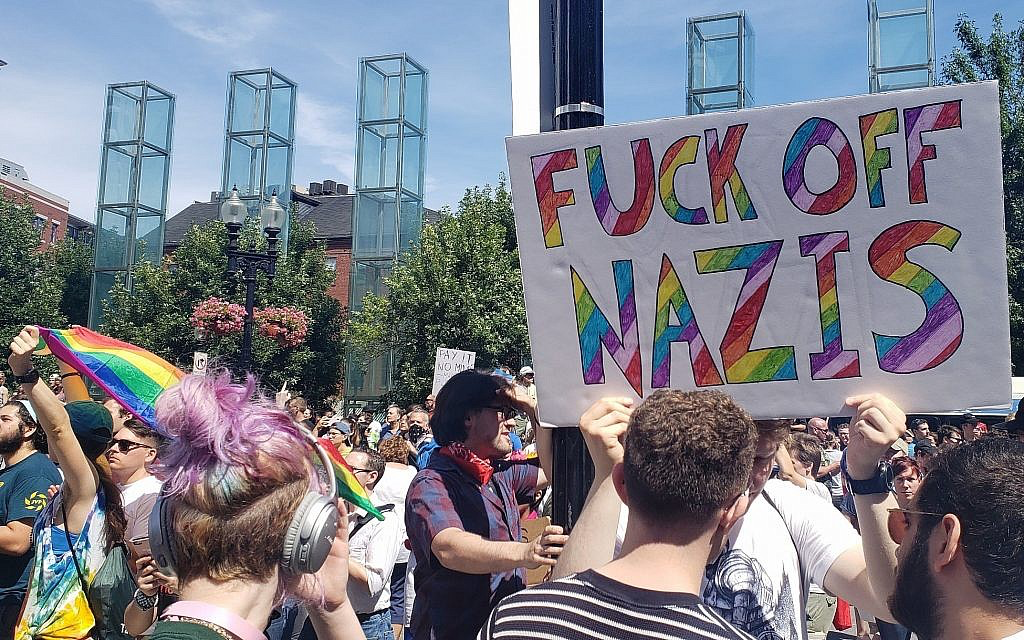
  • Straight Pride isn’t about sexuality or gender. It’s white supremacy

    I’ve written before about Straight Pride and how it’s a front for the far right.

    The much-hyped Boston event took place this weekend and proved that – surprise! – it’s a front for the far right. To all intents and purposes it was a Make America Great rally, complete with police pepper-spraying counter-protestors.

    Other marchers waved placards saying “Build The Wall”, because apparently racism is an important part of straight culture too.

    Here’s Corinne Engber writing for JewishBoston:

    Bigots cannot count on a silent majority to look the other way anymore, so how do they continue to dig in their roots?

    Easy. Construct a parade in direct contrast to Pride, tapping into the homophobic leanings of those not quite convinced to join the alt-right. After all, if LGBTQ people get their day, why shouldn’t straight people? Claim straight people as an “oppressed majority” facing discrimination from the city of Boston. Claim that denying straight people their right to parade in the street is unconstitutional. Gather the wavering masses under a single umbrella and disseminate the us-and-them mentality from there. When fascism can’t take hold through overt means, move it underground. Create a system of cycling dog whistles. Enmesh bullied kids into a toxic echo chamber of propaganda and build a new generation of fascists. Easy.

    There will be other Straight Pride events, because what these rallies do is tell racists and bigots three things. One, you are not alone. Two, you are in the right. And three, the police and the state are on your side.

    Here’s how that pans out elsewhere.

    In Poland, July’s gay pride march was watched by spectators from over 30 anti-LGBT, mostly far right groups who outnumbered the marchers four to one. Those spectators didn’t just watch. They attacked the marchers with rocks. Dozens of LGBT people were physically assaulted before, during and after the event. Journalists were spat on and beaten. The police, while present, didn’t appear to do very much.

    As The Telegraph reports:

    Both the Catholic Church and the Polish state actively work to create a hostile environment for the gay community.

    …The ugly scenes in Bialystok were not an isolated incident. Several Polish regional parliaments have declared their districts to be “LGBT-free zones” in recent months…

    Officially the government decries the violence seen in Bialystok, but at the same time hints that LGTBQ groups are out to provoke. The education minister Dariusz Piontowski has questioned whether such marches should be allowed since they “awaken resistance” in the wider public.

    The government stance is also backed by a powerful conservative media that has loaded Poland’s newstands with brazenly anti-LGBTQ magazine covers. One publication, Sieci, warned of a “Massive attack on Poland coming”, while another, Do Rzeczy, showed a mocked up prime ministerial podium flanked with rainbow flags.

    A third, the Gazeta Polska, went even further, printing a cover warning that the LGBTQ movement wanted to “destroy their civilisation” and giving readers a “LGBT-free zone” sticker showing a black cross over a rainbow flag.

    This is happening throughout Eastern Europe and in Russia, but it’s also happening elsewhere. Anti-LGBT sentiment is being deliberately stoked by right-wing politicians and media in Western Europe and in North and South America too. And that’s what Straight Pride marches are all about. They’re organised by the far right; the marchers are from the far right; their banners and memes and outfits are from the far right. And their claims of being oppressed, of being silenced… they’re from the far right too.

    Let’s not play their game and pretend Straight Pride marches are about sexuality, or about gender identity. They’re about white supremacy.

    As Anthony Oliveria put it on Twitter:

    reviewing all the footage from the Straight Pride Parade hey so quick question I don’t spend much time at straight events are there always so many swastikas when we gays aren’t around or

    Corinne Engber believes that the strategy is ultimately doomed.

    Ultimately, this recruitment attempt will fail before it begins as the environment of the country leans toward support for Jewish people, people of color and LGBTQ people.

    I hope she’s right.

  • Fascism with a Facebook page

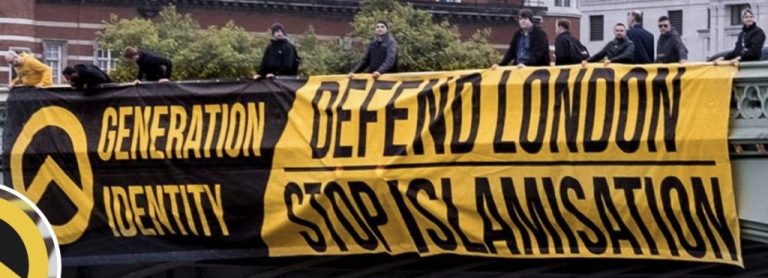
    The very brave people at Hope Not Hate have conducted a years-long investigation into the identitarian movement, the far-right movement connected to three recent massacres.

    Imagine fascism with a Facebook page and you’ve got a pretty good idea. The identitarian movement is a modern spin on old hatreds, using social media and stunts to spread its hateful messaging.

    It’s not just racist, although it’s very, very racist. It’s also against feminism and LGBT+ rights. It claims that collectively, the women, the brown people and the queers are eradicating traditional culture – which of course just happens to be straight, white, cisgender, patriarchal Christian culture.

    The movement has made great strides online – there’s a lot of overlap with Gamergate and other far-right movements targeting vulnerable and/or disaffected young men – but it’s increasingly mainstream across Europe.

    It’s not about politics, or at least not yet. It’s about getting the media to platform their talking points.

    Identitarian metapolitics focuses on shifting the accepted topics, terms, and positions of public discussion so as to create a social and political environment more open and potentially accepting, of its ideology. It comes from a belief that this is required before electoral and policy support for their views is possible. GI’s efforts to have the media report on their fear-mongering about “The Great Replacement” of white Europeans exemplifies this, as their intention is to then use the narrative to promote a policy response of “Remigrating” non-white immigrants.

    And the media plays along: for example, on the day of the Christchurch massacre – a massacre directly linked to the Generation Identity group, which the murderer supported – BBC’s Newsnight invited GI’s UK leader, Benjamin Jones, on for a chat. This happens again and again, with far-right identitarians given the opportunity to get their messaging to a wider audience.

    And of course, there’s a very narrow line between the identitarians’ “great replacement” narrative and the anti-minority, anti-multiculturalism, anti-equality sentiments routinely printed in so many of our newspapers and current affairs magazines as they try to scare their readers about the brown people and the feminists and the queers.

    GI banner or headline from one of Rod Liddle’s Spectator columns?

    Columnists like to rail against so-called identity politics, where marginalised groups politely ask them not to be assholes. But they’re very quiet about this very real and very lethal form of identity politics – a form of politics whose key messages aren’t so different from their own.

  • #Don’tBuyTheSun

    FT.com:

    A long-running boycott of The Sun newspaper on Merseyside reduced Euroscepticism in the area and had a positive influence on its Remain vote in the Brexit referendum, university researchers have concluded.

    It’s a single study and isn’t peer-reviewed, but it’s worth considering alongside the fact that Northern Ireland and Scotland, where The Sun has different editorial teams and much smaller circulations, are also significantly less eurosceptic than England.

    As Disposable Heroes of Hiphoprisy rapped about TV: “Is it the reflector or the director? Does it imitate us or do we imitate it?”

  • Turning shame into sadism

    A few days ago, a thread about radicalisation went viral. In it, Joanna Shroeder spoke about the way in which far-right activists recruit boys and young men by weaponising shame.

    The process goes something like this:

    • Boys are encouraged to transgress social norms by posting racist, homophobic, misogynist or anti-semitic jokes
    • The boys are then called out on it by parents, teachers, and (especially) girls and women.
    • The boys feel deeply embarrassed and shamed.
    • The far-right tells them they’re getting into trouble for nothing, that they’re the victims of “woke” people, PC gone mad, snowflakes and so on.
    • The boys are encouraged to hate the people who called them out for their racist, homophobic, misogynist or anti-semitic jokes.
    • The more hateful their behaviour, the more their new friends praise them.

    It’s not just teenagers, and it’s not just the far right. We’ve seen exactly the same thing happen with supposedly intelligent, successful adults – mainly, although not exclusively, relatively affluent, straight, cisgender, middle-aged white adults with jobs in media – when they say something awful about LGBT+ people. Their process goes like this:

    • They say something terrible or just incorrect about LGBT+ people.
    • They are called out on it by LGBT+ people and allies.
    • They feel deeply embarrassed and shamed.
    • Bigots tell them they’re getting into trouble for nothing, that they’re the victims of “woke” activists, snowflakes, PC gone mad, a sinister lobby and so on.
    • They are encouraged to hate the LGBT+ people who criticised them.
    • The more hateful their behaviour, the more their new friends praise them.

    This is how, say, a washed-up comedy writer ends up dedicating his every waking hour to spreading hate about trans women: he writes a tone-deaf episode, gets criticised for it, and his shame becomes rage against the entire demographic.

    This is how a moderate broadsheet journalist becomes evangelical about the supposed dangers to women of a tiny group of LGBT+ people, shouting over the women and women’s charities who tell him he’s wrong. He writes something incorrect, gets criticised for it, and his shame becomes rage against the entire demographic.

    This is how a successful blogger decides to use his platform as a bully pulpit against a minority group. He writes something inflammatory, gets criticised for it, and his shame becomes rage against the entire demographic.

    These men might not be shooting up supermarkets to express their rage against women, as some incels do, or taking AR-15s to mosques. But the shame and rage is the same. These men are red-faced little boys, vowing terrible revenge on the people who laughed at them.

  • “I Wish I Could Tell You It’s Gotten Better. It Hasn’t.”

    The New York Times has put together a comprehensive series of reports on Gamergate, the poisonous movement that’s transformed politics for the worse. What began as misogyny would soon incorporate white nationalism; what began in video gaming circles would become a mass movement affecting everything.

    It’s impressive, powerful and frightening stuff, and the reverberations continue today: what we first saw in Gamergate continues in the US and the UK. It’s in Brexit and in US and New Zealand gun massacres, in the culture wars against LGBT+ people and other minorities, in the lurch to the far right we’re seeing in Europe and both North and South America. It was fuelled by Breitbart, whose Steve Bannon became close to Donald Trump, to Nigel Farage and to Boris Johnson, and  it made stars of unprincipled opportunists such as Milo (whose courting of dangerous extremists has since been copied by other right-wingers in the US and beyond). Its tactics became the playbook of the alt-right and the far right; over here, publications such as Spiked clearly take some inspiration from Breitbart (as well as money from the US right).

    Gamergate wasn’t the first time white male rage was weaponised online – that goes back at least to the early 2000s, if not before; as the NYT notes, some of the tactics were first used against black women on social media  – but it was the first time it became a mass movement.

    Slate.com:

    there is a clear and obvious connection between video games, white nationalist terrorism, and the image board where the El Paso shooter posted his manifesto. That connection is Gamergate, the campaign of misogynistic harassment by aggrieved gamers that began in 2014, and which moved to 8chan from 4chan when the latter refused to allow Gamergaters to use that board for coordinated harassment campaigns and doxing.

  • How YouTube perverts politics and spreads fear and rage

    This, the result of a months-long investigation by the New York Times, is terrifying: How YouTube radicalised Brazil.

    A New York Times investigation in Brazil found that, time and again, videos promoted by the site have upended central elements of daily life.

    Teachers describe classrooms made unruly by students who quote from YouTube conspiracy videos or who, encouraged by right-wing YouTube stars, secretly record their instructors.

    Some parents look to “Dr. YouTube” for health advice but get dangerous misinformation instead, hampering the nation’s efforts to fight diseases like Zika. Viral videos have incited death threats against public health advocates.

    And in politics, a wave of right-wing YouTube stars ran for office alongside Mr. Bolsonaro, some winning by historic margins. Most still use the platform, governing the world’s fourth-largest democracy through internet-honed trolling and provocation.

    YouTube continues to deny what’s obvious to everyone: its algorithms prioritise conspiracy theories, right-wing bullshit and any other content that purports to tell you the truth that others are trying to conceal. And that has horrific real-world consequences – to the point where we need to warn parents of the signs that their boys are being radicalised by YouTube gaming commentators.

    YouTube’s recommendation of awful content isn’t a bug. It’s feature. The entire system is built to prioritise attention, and what gets the most attention is the most inflammatory, fear-mongering, hateful content.

    When even the far right are crediting YouTube with their political successes, it’s clear that YouTube’s protestations mean nothing. Whether it’s spreading anti-vaccine fear or right-wing conspiracies, YouTube has become a cancer at the very heart of modern life.

  • “They have a product they want to sell and that product is hate”

    (Content warning: violent misogyny)

    This piece by Andrea Stanley in Cosmopolitan is astonishing. It’s about a woman, identified only as K, whose job is to stare into the abyss.

    She infiltrates the places mass murders come from, the places where angry men start their journey to actual killing.

    K’s focus has been pulled toward the alt-right, a younger, more misogynistic version of the white supremacist movement that’s converting a new generation on message boards and social media. She is tracking the men who hate women. And they’re so dangerous that most of her family and friends don’t even know what she does.

    It’s one of the most frightening features I’ve ever read.

    these guys aren’t just trolls in basements—they’re people you probably know. Beirich calls them “millennial misogynists.” K says many are college-educated and articulate. They have day jobs and Tinder accounts.

    …Many of today’s extremists hide their radical views under the guise of boy-next-door preppy looks and organize activities, like all-male hikes, to appear mainstream. “They have a product they want to sell and that product is hate,” says K. “When you see a bunch of normal-looking guys, you think, How bad could it be? But violent men don’t have to look any different from kind men.” Some of the ones K tracks post pictures with their kids and pets amid their calls for mass violence.

    …She tells me about one of the deeply troubling guys she’s been following lately, who posts rants about how he won’t let his wife watch television because it makes her too “feminist.” He shares degrading photos of naked women and fantasizes about electrocuting them—and seriously hurting others too. He recently hinted that these don’t need to stay fantasies.

  • “We still occupy a Cold War headspace”

    This, by Jonathan Lis, is an interesting column about the problem with media coverage of modern despots.

    Across the so-called ‘advanced’ democracies, leaders are no longer playing by the old rules. Our media still is.

    Lis argues that the media is failing in its coverage of one despot in particular. The one in the White House.

    Perhaps the first thing we must do is shake off our ingrained awe and terror of the United States.

    We still occupy a Cold War headspace in which the US is on the side of good. The world oppresses; America liberates.

    The mainstream British media has no compunction in labelling Marine Le Pen in France or Matteo Salvini in Italy as far-right – because they are. These figures are safe targets for objective reporting.

    But there is not a cigarette paper between those leaders and Trump. Indeed, Trump’s rhetoric frequently exceeds theirs in obscenity. If we label them as far-right, why not also him?

    His point about Le Pen and Salvini is one I hadn’t thought of. If they do something racist, it’s reported here as such. But if Trump does it, we reach for the euphemisms: “racially charged” or “controversial.”

    Journalism cannot operate in a climate of either fear or deference. If something must be named, we must name it.