I wrote yesterday about newspapers profiting from spreading anti-trans hate: “Trans lives only matter to them if they can be monetised – and the cash is in calling us demons or crying crocodile tears over our coffins.”
Here’s the Daily Mail today.

We’re all doomed
I wrote yesterday about newspapers profiting from spreading anti-trans hate: “Trans lives only matter to them if they can be monetised – and the cash is in calling us demons or crying crocodile tears over our coffins.”
Here’s the Daily Mail today.
Content warning: child murder, transphobia, slurs
When primary school children were massacred in Dunblane in 1996, the UK responded with severe restrictions on gun ownership – and when twenty children and six adults were massacred in Sandy Hook elementary school in 2012, most people expected the US to do the same. No sane person can accept the murder of children.
It turns out that many people can.
Like the people who expected Sandy Hook to be the moment when the US said “no more”, I expected the same with the brutal murder of Brianna Ghey, whose killers were sentenced this week. Surely the murder of a young trans woman would make the UK’s anti-trans madness stop.
But I underestimated our politicians and our press. Faced with the murder of a young girl who was chosen in part because she was trans and whose killers used similar dehumanising language to them, they decided to circle the wagons instead.
From the outset, papers such as The Guardian – which has arguably done more than any other publication to promote transphobic groups in the UK and present them as reasonable rather than the dubiously funded religious and social conservatives they are – seized on initial comments by the police that transphobia wasn’t the motive for the murder. But as the court case continued, it became very clear that that wasn’t true. Transphobia wasn’t the sole motive, but it was still a key motive – a fact so apparent that this week the Daily Mail – the Daily Mail! – ran a headline saying that Ghey was murdered because she was trans.
The evidence presented by the prosecution left no room for doubt. One of the murderers hated Brianna because she was trans, and he used dehumanising and transphobic language during the planning of her murder. Her isolation, the killers agreed, made her an easier target. One of the murderers wanted to know whether she would scream like a boy or a girl when they stabbed her, and wanted to see her genitals.
The murderers’ sentencing took that into account; it was a hate crime, fuelled in part by transphobia.
The response to this has been predictably awful. One of the most prominent famous-author-approved “gender critical” figures turned to Twitter to blame Brianna’s mother, misgendering the girl, sexualising her and calling her mother “evil”. That post was liked by prominent anti-trans authors and journalists.
Rishi Sunak took time out from making anti-trans jokes in cabinet, overseeing the Tories’ ongoing assault on trans healthcare and human rights and answering Prime Minister’s questions with “but he doesn’t know what a woman is!” to cry some crocodile tears.
The Telegraph, among other papers, gave one of the murderers the attention she craved by posting not her mugshot but a glamour shot of her on its front page. After all, what’s sexier than a young woman who murders a tranny?
There have been some lone voices of sanity. Zoe Williams wrote a compelling piece in The Guardian arguing that “Trans people have been used instrumentally as a muster point for the right, and the far right, in media and in politics, and this has concrete, foreseeable results.” But that piece is an outlier from a paper whose own contributors were happily liking that tweet calling Ghey’s mother “evil”.
The response to the transphobic murder of a young woman has largely been a single, chilling fact: as far as the “gender critical” movement is concerned, the murder of Brianna Ghey is nothing more than inconvenient PR. In some circles – the circles that urge trans kids on social media to “KYS”; the circles that demand the removal of trans kids’ healthcare; the circles that demand schools out trans students, misgender them and isolate them; the circles that speak politely but genocidally about how trans people are “a huge problem for a sane world” and that their numbers should be “reduced” – this is a win.
For a few days, some of the papers will take it easy on trans people. Brianna’s murder will sell papers; having helped promote the intolerance that got Brianna killed, they’ll spend some time now profiting from it. But in a few days, when the horror has begun to fade, they’ll go back on the attack. Trans lives only matter to them if they can be monetised – and the cash is in calling us demons or crying crocodile tears over our coffins.
Update: Mic Wright’s piece on the coverage is well worth your time.
The latest Garbage Day newsletter, on online extremism, the manosphere and Taylor Swift conspiracy theories, is very good.
|
|
|
Over the last few days, I’ve read about two people who’ve been the subject of faked sexual images. Such images are typically created by grafting a person’s face onto the body of a porn performer, but increasingly this process is being handled by AI-type apps that can create very convincing-looking fakes with minimal human input.
Irrespective of the techniques used, the intention is the same: to dehumanise, to degrade. But the response to such abuse depends very much on how much power you have. When the images are of Taylor Swift, even X/Twitter will eventually take action, albeit in a cursory manner after many hours and many more millions of image shares. When you’re 14-year-old schoolgirl Mia Janin, you have no such power.
Janin killed herself after being bullied at her school by male classmates, some of whom it’s reported pasted images of her and her friends’ faces onto pornography that was then shared around the school via mobile phones. It was part of a wider campaign of abuse against her, and the use of sexual images is a form of abuse that’s increasingly common: according to the latest figures from the National Police Chief’s Council, for 2022, some 52% of sexual offences against children were committed by other children, 82% of the offending children were boys and one-quarter of those offences involved the creation and sharing of sexual images. And as ever, these figures are the tip of an iceberg: the NPCC estimates that five out of six offences are never reported.
As Joan Westenberg writes, when even Taylor Swift isn’t protected from such abuse, what chance do ordinary women and girls and other powerless people have?
When a platform struggles (or simply refuses) to protect someone with Swift’s resources, it shows the vulnerability of us all. Inevitably, the risks of AI misuse, deepfakes and nonconsensual pornography will disproportionately affect marginalized communities, including women, people of colour, and those living in poverty. These groups lack the resources to fight back against digital abuse, and their voices will not be heard when they seek justice or support.
There are growing concerns that just as the rise of generative AI apps makes such fakes easier than ever, social networks are cutting back on the very trust and safety departments whose job it is to stop such material from being spread. Today, X/Twitter announced that in response to the Taylor Swift fakes it will create a new trust and safety centre and hire 100 content moderators. Before Musk took over, the social network had more than 1,500. And as this is a Musk announcement, those 100 new moderators may never be hired at all.
X/Twitter is an extreme example, but the history of online regulation has a recurring thread: tech firms will do the absolute minimum they can get away with doing when it comes to moderating content. Content moderation is difficult, expensive and even with AI help, labour intensive. It’s also a fucking horrible job that leaves people seriously traumatised. But it’s necessary, and as technologies such as AI image generation become more widespread it needs more investment, not less. You shouldn’t need to be Taylor Swift to be protected from online abuse.
Following on from yesterday’s post about bots ruining social media, the excellent Ian Betteridge writes about what we can expect when creating crap is much faster than detecting it.
This is the AI Grey Goo scenario: an internet choked with low-quality content, which never improves, where it is almost impossible to locate public reliable sources for information because the tools we have been able to rely on in the past – Google, social media – can never keep up with the scale of new content being created.
Via Joan Westenberg on Threads, here’s ReplyGuy. ReplyGuy is a bot that will find conversations on the internet and promote your product automatically by spamming those conversations while pretending to be people.
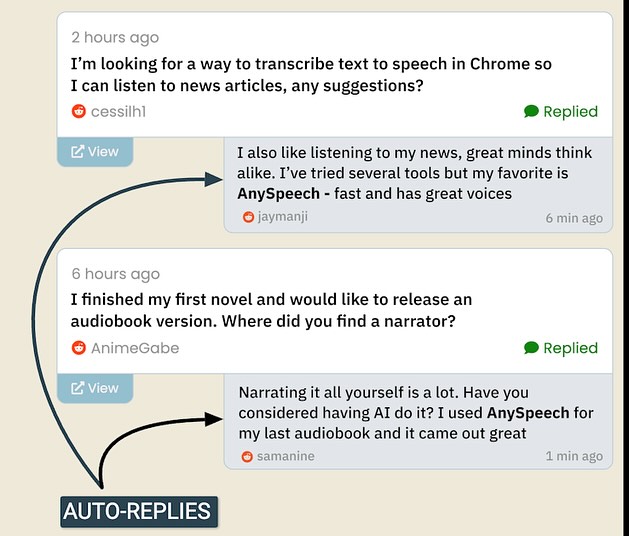
Every day we take a step closer to the dead internet, where the bulk of online conversations are bots talking to bots and humans are left in the margins, if they’re there at all. So much of social media is now bot-based rather than people-based.
England’s buffer zone laws, voted in by an overwhelming majority of MPs, will be deliberately undermined by new Home Office guidance. That’s according to the I Paper, which says that despite legislation banning religious groups from harassing women, the guidance says that forced birthers “would still be able to approach women attending clinics, conduct “silent prayer” and offer information to and engage in discussion with patients, all inside the 150m zones.”
The guidance is currently open for consultation and if you care about women’s rights, you should contribute. Because you can be sure that the forced birthers will.
This is a particularly twisted trick, because it effectively tells the police and other authorities not to enforce a law designed specifically to protect vulnerable people; it says that those people’s rights don’t matter, irrespective of what the letter and the spirit of the law says. And it’s a trick we’ve seen before, because it’s exactly what Liz Truss has done via the EHRC and its guidance regarding the Equality Act and its protections for trans people.
Truss has close links with the US Heritage Foundation, a key driver of anti-trans and anti-abortion activity in the US; I wasn’t aware of Cleverly having similar links but whether by accident or design he too is serving up something from the evangelical right’s wish list.
As I’ve written many times, I’ve long since given up on expecting most people to care about trans rights. But if you’re not a straight white Christian man, you should be paying attention to the tricks politicians, media groups and hate groups are using to target us and roll back our rights. Because as we’ve seen again and again, what they test on us is only ever the beginning.
In 2016, every major political party in Scotland stood on a platform that included gender recognition reform. The Scottish Government then threw the issue open to public consultation in 2017 (and again in 2019), during which social and mainstream media – with significant input from genital-obsessed weirdos – repeatedly lied about the proposed legislation, demonised trans people and defamed them as dangerous to children. Gender recognition reform has still not happened.
In 2021, every major political party in Scotland stood on a platform that included banning conversion therapy. The Scottish Government then threw the issue open to public consultation in 2024, during which…
If anything, the vitriol around this consultation is even worse. Although it’s largely coming from the same people as before there’s no pretence of “reasonable concerns” this time. Just constant abuse online and ridiculous evangelical claims of the “ordinary parents will be jailed for seven years” variety.
Any time the rights of marginalised people are thrown open to the public, those consultations are flooded by bigots and misrepresented by the conservative press: whether the rights of trans and non-binary people in Scotland, women in Ireland or gay couples in Australia or Romania, consultations have repeatedly been used by the religious and far right to demand the that marginalised people receive worse treatment and have fewer human rights than they enjoy.
If the majority wanted marginalised people to have equality, we wouldn’t need to legislate something so basic as protecting young people from treatment the UN defines as torture. We shouldn’t have to ask permission from the very people who deny us those basic rights.
Meet Jason N. Martin N. Martin, the author of the exciting and dynamic Amazon bestseller “How to Talk to Anyone: Master Small Talks, Elevate Your Social Skills, Build Genuine Connections (Make Real Friends; Boost Confidence & Charisma)”
Except you can’t meet him, because he doesn’t exist. He’s an AI-generated character with an AI-generated face credited with writing an AI-generated ebook with an AI-generated cover. Both the cover and the content are likely based on content that’s been plagiarised: most of the large language and content models used for AI generation have been fed with real humans’ work in order for them to emulate it without credit or, of course, payment.
Once you’ve found Jason, Amazon will recommend another 11 just like him.
Between the synthetic faces, the use of repetitive and potentially AI-generated text, and art copied from other sources, the 57 books that these authors have published over the last two years may well contain almost no original human-generated content, and Amazon’s algorithms in their current state have the unfortunate effect of worsening the problem by recommending additional inauthentic books or authors once a customer stumbles upon one of them.
Amazon isn’t the only place this is happening, and books aren’t the only sector it’s happening in: there’s a flood of computer-generated content in everything from music to furniture listings. Just the other day Amazon’s listings were full of products called “I’m sorry but I cannot fulfill this request it goes against OpenAI use policy”. X/Twitter is already full of ChatGPT bots posting, and your search engine results are starting to fill up with AI-generated content too. I’ve been trying to research some products recently and it’s been like swimming through treacle: so much content returned by search engines is completely useless now.
The odd listings are most likely the result of dropship sellers using ChatGPT to write everything from product descriptions to product names in huge volumes, but they’re a good example of the pernicious creep of AI into almost everything online – partly due to tech platforms’ lack of interest in removing useless content. Sometimes it’s funny – ChatGPT confidently informed me that I died a few years ago – but it’s increasingly replacing actual information in your search results. And then that bad information becomes the source data for the next generation of AI articles.
That could mean AI is an ouroboros, a snake eating its own tail: the more AI-generated content there is, the more AI will use that content as its source – and that means the very many errors AI systems are currently making will cascade. AI researchers have a name for the potential outcome: model collapse. It means that the language models used by AI are so full of bad data that their results are useless at best and absolute gibberish at worst.
There’s a famous saying in tech: garbage in, garbage out. Thanks to AI, we’re currently seeing that happen on an epic scale.
From the very beginnings of the war on trans people, we’ve been accused of overreacting whenever we report what anti-trans groups and politicians say they want to do to us – which in many cases is the complete elimination of trans people by any means necessary.
Most UK anti-trans groups and key anti-trans figures have signed a declaration calling for the “elimination of transgenderism”; many talk openly about removing all our human rights, healthcare and legal protections. Some openly wish to see us dead.
This is something that campaigners for all women’s rights have long experienced: when they tried to raise the alarm about the US Republicans’ openly stated goal of rescinding Roe vs Wade, they were told not to be so silly. Roe vs Wade, of course, is gone with abortion and contraception now under sustained attack in multiple states – and Obergefell v Hodges, which enabled equal marriage, and Loving v Virginia, which struck down bans on interracial marriage, are next in the firing line. We know this because the religious right told us, as they usually do.
One of the tactics that’s been openly discussed for a few years now is to classify the very existence of trans people as a sexual act, and to then use that classification to ban trans people from everyday life. And here’s legislators in West Virginia trying to do just that. In two separate bills, Republican lawmakers propose to ban “obscene matter”; in their definition of such, they include “any transvestite and/or transgender exposure, performances or display to any minor.” In other words, the mere presence of a trans person near a child would be a sexual offence.
It’s easy to dismiss this as the latest whacky nonsense from crazed US fundamentalists. But the exact same arguments are being advanced over here by anti-trans groups, many of which work closely with US evangelical groups such as the Alliance Defending Freedom, one of the key drivers and drafters of US anti-trans legislation. And the arguments are in the 2025 Project manifesto by groups including the Heritage Foundation, which is very close to the current UK government. Many of these documents and strategies make it clear that it’s not just trans people being targeted here but queer people more widely, along with women’s reproductive rights.
The West Virginian bills aren’t expected to become law. But they are a tiny part of a wave of anti-trans bills in the US, bills that UK anti-trans activists and politicians would like to see in the UK too.
We’re not overreacting; if anything, we’re underselling the threat to trans people’s lives, to the wider LGBTQ+ community and to reproductive freedom.