Author: Carrie

  • Birds of a feather

    Allison Pearson, novelist and Telegraph columnist, is a big fan of Boris Johnson – a man who you’ll recall once discussed a conspiracy to have a journalist beaten up.

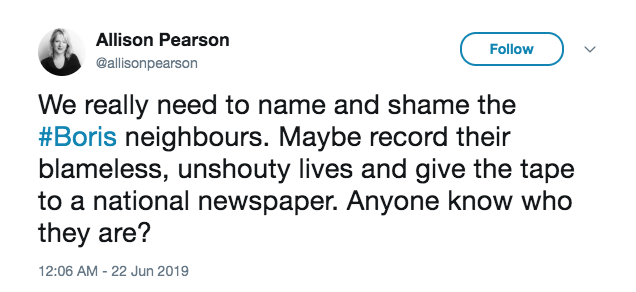
    It seems Pearson has come very close to having people beaten up too. When Johnson’s neighbours called the police about what sounded like domestic violence, she tweeted this to her 38,000 followers:

    The neighbours were duly named and shamed. And now they’ve had to leave their flat because of “a series of grim threats” to their safety.

  • We are not 81% touchier than we were last year

    BBC News:

    The number of transgender hate crimes recorded by police forces in England, Scotland and Wales has risen by 81%, latest figures suggest.

    Data obtained by the BBC showed there were 1,944 crimes across 36 forces in the last financial year compared with 1,073 in 2016-17.

    The figures here are based on freedom of information requests to police forces.

    As the BBC analysis notes, part of the explanation may be that more trans people are coming forward. But increasing awareness of hate crime legislation and reporting applies to all LGBT+ people, not just trans people. Hate crimes against all of us are on the increase, and hate crimes against trans people are increasing disproportionately.

    For example, a recent Stonewall/YouGov poll of more than 5,000 LGBT people found that 1/5 of LGBT people have experienced a hate crime or incident in the last 12 months, rising to 2 in 5 trans people. Where 1 in 10 LGBT people have experienced online abuse, that rises to 1 in 4 for trans people.

    If only there were some kind of explanation for the increasing attacks on people who are constantly portrayed as deviants and predators in national, local and social media.

    Incidentally, the BBC figures only reflect what gets reported to the police, not how many incidents take place or how many crimes are committed. Many of us don’t believe the police will take us seriously, or that there’s any reasonable prospect of the offender(s) being caught, let alone punished. I’m not the only trans person who’s experienced hateful incidents and decided not to report them.

    Whenever trans rights are discussed on social media, someone will come along within the first few comments and demand to know “what rights don’t trans people have already?” The right to go through life without experiencing verbal and physical abuse would be a start.

  • A fun parody

    A few weeks ago, my friend Chris made me an offer I couldn’t refuse. His comedy troupe, Improv Killed My Dog, were going to parody the trailer for the new film Yesterday. Did I fancy doing the music?

    I did.

    In the original, the hero wakes up one day and is the only person who still remembers The Beatles. In this version, the band is… you’ll find out.

    I had so much fun doing this. Partly because it’s a cool challenge to recreate the sound of another band, but mainly because I kept bursting out laughing at Chris’s spot-on impressions of the singer.

  • The Times isn’t incompetent. It’s malicious

    I’ve written before about what appears to be a failure of basic journalism standards at The Times and Sunday Times under editor John Witherow. A new report suggests it’s even worse.

    The report has the rather unwieldy title Andrew Norfolk, The Times Newspaper and Anti-Muslim Reporting – A Case To Answer, and it makes some very serious allegations. According to the campaign group Hacked Off, the detailed report describes a pattern of anti-Muslim reporting that looks distinctly malicious and which the toothless press “regulator” IPSO is both unable and unwilling to act upon despite clear breaches of journalistic standards.

    That pattern is obvious in its reporting of trans issues too. The Times and Sunday Times are obsessed with trans people, running more than 300 anti-trans articles in a 365-day period. As with anti-muslim reporting and opinion, the coverage is careful to attack organisations and vaguely defined groups – activists, the trans lobby and so on – rather than individuals so that Clause 12 of the editors’ code doesn’t apply.

    Clause 12 ostensibly covers discriminatory reporting, but only if it’s directed at identified individuals – although even if newspapers do attack specific individuals  IPSO can usually be relied on to take the newspapers’ side. IPSO usually takes an interesting view of Clause 1, accuracy, too: it’s repeatedly said that false claims don’t count as inaccurate because the writer really believed they were true.

    Julian Petley is a professor of journalism, a member of the editorial board of the British Journalism Review, on the advisory board of Index on Censorship and a member of the National Council of the Campaign for Press and Broadcasting Freedom. He draws parallels between the abuses detailed in the report and those claimed in the industrial tribunal of former Times night editor Katherine O’Donnell, a trans woman.

    Witherow seems to have done his best to try to make it appear as if O’Donnell’s barrister, Robin White, was a silly woman who just didn’t understand how journalism worked. However, what emerged under her admirably rigorous questioning was an all too clear picture of editorial standards at The Times, one which surely goes some way to explaining both why Norfolk’s articles were thought fit for publication in the first place and why the paper has resolutely refused to acknowledge their manifest shortcomings.

    As Petley points out, the viciously anti-trans columnist Janice Turner has form with anti-muslim and anti-islam columns too, and Witherow’s claim that he knows nothing about her is clearly untrue.

    One of the columnists cited by White was Janice Turner, whose many negative articles about trans people (sample headlines: ‘Children Sacrificed to Appease Trans Lobby’ and ‘Trans Ideologists Are Spreading Cod Science’) have caused widespread fury in LGBT circles. Given that she is not simply one of the paper’s leading columnists, but a particularly notorious one, who has also come under fire for her comments about Muslims and Islam, Witherow’s claim that ‘I don’t know anything about her’ simply beggars belief.

    Petley doesn’t pull his punches.

    It may seem a long way from articles about Muslims to articles about trans people, but both reveal the same things about the state of journalism at The Times, and, by extension, across much of the mainstream national press: the routine demonising of minority groups, with little apparent concern for the consequences; a cavalier attitude towards accuracy and truthfulness – particularly important journalistic qualities when the subjects in question are as sensitive and controversial as these; and an arrogant and dismissive stance towards any form of criticism, entailing a concomitant refusal to acknowledge any sense of journalistic accountability or responsibility.
  • It’s a Pride thing

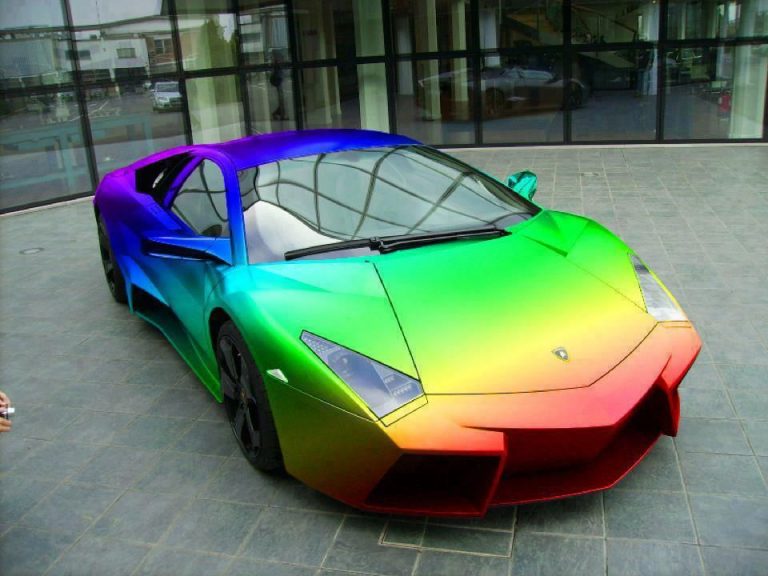
    My courtesy car. Probably.

    I mentioned the gap between firms’ embrace of the Pride rainbow and their actual actions the other day. Here’s a great example.

    I was in a minor car crash on Friday, and over the weekend various companies – my insurer, the repairer and the car hire firm that’s sorting out the courtesy car – all phoned me. Each one of them had the same details, Ms Carrie Marshall, and every single one of them called me sir, mister, mate and man throughout the phone calls.

    Today I went to pick up the courtesy car, presenting fully female, and admired the Pride lanyards worn by all the staff.

    All the staff including the guy who took me to the car while variously calling me sir, mister and man.

    I’m not hugely bothered by this (although obviously I’m a little bit bothered or I wouldn’t be blogging about it) because it’s very common. All too often, sir/madaming happens based on what I sound like, even when the paperwork and my actual physical presentation tell a different story.

    But it does illustrate the problem with Pride marketing. If the rainbow isn’t reflected in the interactions between your staff and LGBT+ customers, it’s meaningless.

  • A wee problem

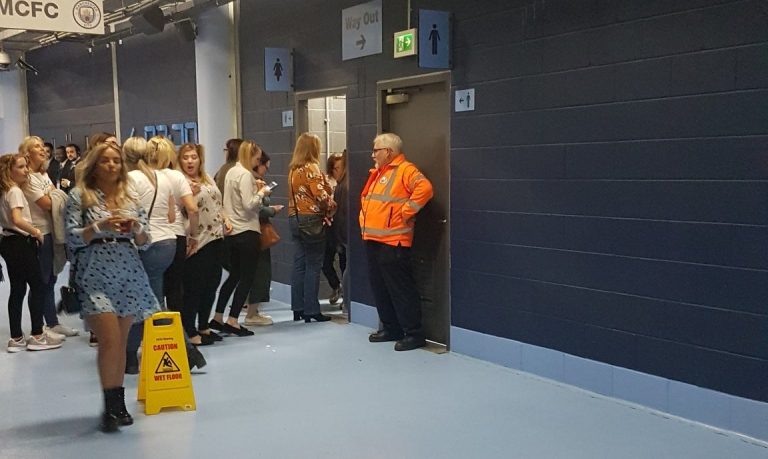
    The photo above was shared on social media yesterday; it’s from the Spice Girls gig in Manchester. Apparently there were similar scenes at last night’s Pink concert in Glasgow, where not one but two security guards were posted outside the gents to stop women from using the cubicles.

  • Just another ordinary day

    I’m at a bus stop in Glasgow, early on a sunny Sunday afternoon. Two neds stare at me as they swagger past.

    Ned #1: [unintelligible]
    Ned #2: That’s no’ a wumman!
    Ned #1: Ah’d still stick it with ma willy.

    The neds swagger on, laughing.

    I’ve been outside for four minutes.

  • Reasonable concerns and legitimate debate

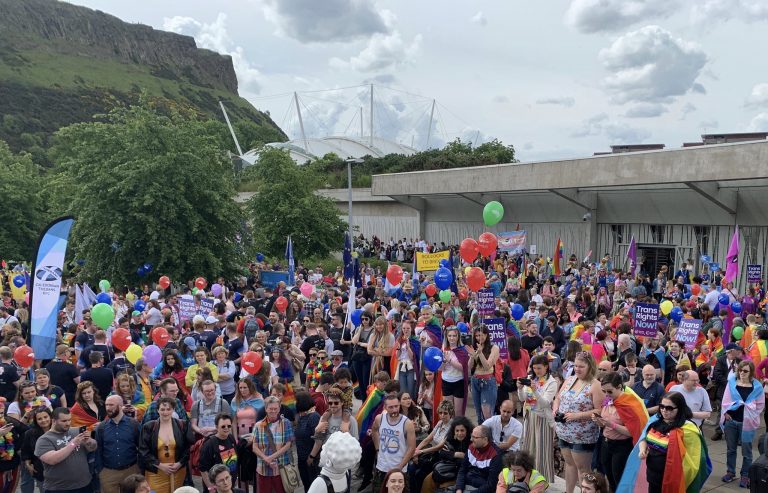
    Image: Scottish Equality Network

    It was Edinburgh Pride day yesterday.

    SNP MSP Joan McAlpine spent much of it indulging in the “legitimate debate” she’s so fond of by circulating faked tweets in order to create a social media pile-on against a trans ally and human rights campaigner.

    At the actual event some anti-trans activists came along to shout their “reasonable concerns” at the marchers.

    Here’s one of the marchers, a cisgender woman.

    …I heard shouting, and I looked to the corner to see who that was. I’m used to being shouted at by the fringe Christians, so I looked over to see if it was them (again).

    It wasn’t. It was a small group of white, ostensibly middle class cis women screaming hate at us. At Pride – an event that was initially a response to police brutality against mostly black trans women.

    …I’m a cis lesbian, and because of this sort of behaviour, I am scared to go the public bathrooms much of the time.

    I am routinely challenged when trying to go to the toilet and I am anxious every time I walk into the women’s changing room at the gym.

    I was once followed into the toilet in a pub in Cowdenbeath by a man who tried to kick the door down and attack me because, y’know, women’s safety.

    That was the most serious attack, but it was by no means an isolated incident. The attack by the anti-trans protesters yesterday was part of that continuum of violence.

    No trans woman has ever made me feel unsafe. They have always respected my boundaries and my dignity.

    These people yesterday made Pride an unsafe place for women like me, and for my trans pals and allies.

  • It’s not us, it’s them

    Psychology Today asks a question: what precisely do transgender people threaten?

    The piece is based on a single study, albeit one that draws on multiple others and widely accepted social phenomena. The short version is that trans people get shot by both sides.

    transgender individuals can be perceived as simultaneously transgressing the gender norms of BOTH binary genders. For example, a trans woman (i.e., someone assigned male at birth who now identifies as a woman) is transgressing male norms by identifying as a woman, but also may be seen as transgressing the norms of being a woman by not appearing feminine enough. Indeed, other research has found that transgender women are particularly at risk for prejudice and violence due to society’s general tendency to police femininity and to punish transgressions of misplaced femininity.

    That’s something you see a lot of in anti-trans faux-feminist circles, where trans women are simultaneously mocked for not measuring up to standards of stereotypical femininity and condemned for trying to measure up to standards of stereotypical femininity.

    I thought this bit was interesting: for some people, the most threatening trans people aren’t the genderqueer ones or those who look visibly trans. What makes them upset and angry are the people who “pass”, who appear to be the gender they are rather than the one they were assigned at birth.

    if you yourself are a man and hinge a great deal of your identity on being a man, what does this piece of your identity really mean if someone born female can ‘pass’ as being just “as much of a man” as you?

    Thus, the more an individual strongly believes in the gender binary, the more threatening transgender individuals (especially those who ‘pass’) are to that individual’s own personal identity as either a man or a woman.

    The article gives an example.

    imagine that you are a police officer and that being a police officer is central to your identity. Then imagine that the category of a police officer was replaced with “Security Professional,” and that this new category would include police officers, security guards, and installers of home security systems. This experience would trigger high levels of distinctiveness threat in police officers whose identities were highly enmeshed with being a police officer… with nothing left to distinguish them from a mall cop or a summer student installing home security systems.

    Not a perfect comparison, I know: it’s more like expanding the category to include “police officers who don’t have exactly the same background as you” rather than less qualified people. But you get the point.

    It’s awfully reminiscent of some of the pushback against equal marriage: I’ve heard many people claim that “if gay and lesbian people can marry, that somehow makes marriage worth less.” It doesn’t, unless you believe that being married makes you better than people who aren’t and that letting others marry makes you less special. And if that’s the case, it says a lot more about you than it does about gay or lesbian people – especially if you’re driven to oppose, vote against or campaign against giving the same rights to those people.

  • Love in a time of sadness

    Today, the Scottish Government and the SNP effectively threw trans people under the bus. After a lengthy public consultation that found the general public and women’s groups overwhelmingly in favour of its proposals for gender recognition reform, the next step is… to water down the proposals and have another consultation and maybe water them down some more.

    It’s a terrible decision: the Government has capitulated to the bigots, ignoring the results of its own consultation. It has backtracked from its manifesto commitment to bring gender recognition in line with best practice to proposing a minor tweak to the current system, reducing the recognition criteria from two years to either six or nine months (six months living full time plus a three month waiting period, or three and three; it’s unclear at the moment) – something that bears no relation to international best practice.

    I’m not going to dwell on it, on the affirming message it sends to the bigots or on the inevitable uptick in anti-trans abuse it’s going to engender. Instead, I’ll tell you a story.

    Every year a man, a religious man, stands at the entrance to Glasgow’s Pride event. Through his microphone he shouts fire and brimstone, punishment and damnation. And every year the crowd of beautiful LGBT+ people, of families and of allies grows larger, and louder, and more vibrant, and more diverse, and more beautiful. Few notice him. Even fewer care.

    So let the bigots shout. Let them shout until their eyes pop and their throats rip and their lungs burst. Let them shout at clouds and at crowds and at a world that’s leaving them far behind.

    All they have is hate.

    We have love.

    And love will win.

    The love my friends and family have for me, and that I have for them, does not require a certificate.