The kids and I went to see the new Shaun The Sheep film, Farmageddon, today. It’s warm, wonderful, and very British – in the best possible sense of the word. I laughed even more than my kids did.
The kids and I went to see the new Shaun The Sheep film, Farmageddon, today. It’s warm, wonderful, and very British – in the best possible sense of the word. I laughed even more than my kids did.
Piers Morgan, who used to write homophobic stories in The Sun before that became socially unacceptable, is currently making hay from the idea that there are more than 100 genders. It’s based on a comment made in a video where someone was rather clunkily trying to express the idea that gender is a spectrum.
We’re familiar with the gender binary: male or female, boy or girl. But most binaries are shortcuts. There’s a whole world of colours between black and white. We use binaries to simplify that, but sometimes they over-simplify. The trick is to understand them for what they are: quick descriptions that apply a lot or even most of the time, but that aren’t the only possibilities.
The thing about this 100 genders thing is that when I go to LGBT+ and trans-specific events, nobody’s talking about it: the most obscure identity I’ve ever heard somebody describe themselves as is “non-binary”. Nobody’s getting irate about this stuff because they’ve got more important things to worry about, like basic human rights such as access to healthcare and not being murdered.
That’s not to say there aren’t people out there coming up with ever-longer lists of possible genders, but those people are generally in the corners of social media and academia. Going too far is what they do.
It’s important to question who’s telling you a story that makes a particular group look bad. These myriad genders are regularly trotted out by the right-wing press, but I simply don’t encounter LGBT+ people talking about it. It appears to be a classic case of people taking a couple of really extreme and/or niche views and trying to persuade people that they represent the entire group.
Put it this way. Piers Morgan isn’t talking about the healthcare crisis for trans people or the elevated suicide rates among LGBT+ teenagers, the things that really affect LGBT+ people and that LGBT+ people really do care about. He’s just pointing and laughing at them and trying to get you to point and laugh too.
Here’s an example of a big story about genders: Facebook’s infamous 50-something genders, which were then increased to 71. This was widely reported as 71 genders. It wasn’t. It was 71 possible responses on a form, most of them duplicates or slightly different ways of saying the same thing. For example:
Cis, Cisgender, Cis Female, Cis Male, Cis Man, Cis Woman, Cisgender Female, Cisgender Male, Cisgender Man, Cisgender Woman
…Trans, Trans*, Trans Female, Trans* Female, Trans Male, Trans* Male, Trans Man, Trans* Man, Trans Person, Trans* Person, Trans Woman, Trans* Woman, Transfeminine, Transgender, Transgender Female, Transgender Male, Transgender Man, Transgender Person, Transgender Woman, Transmasculine, Transsexual, Transsexual Female, Transsexual Male, Transsexual Man, Transsexual Person, Transsexual Woman
The Royal Opera House in London used to do the same (and probably still does; I haven’t checked in lately). When you buy your tickets you can choose from these titles:
Advocate, Ambassador, Baron, Baroness, Brigadier, Canon, Chaplain, Chancellor, Chief, Col, Comdr, Commodore, Councillor, Count, Countess, Dame, Dr, Duke of, Earl, Earl of, Father, General, Group Captain, H R H The Duchess of, H R H The Duke of, H R H The Princess, HE Mr, HE Senora, HE The French Ambassador M, His Highness, His Hon, His Hon Judge, Hon, Hon Ambassador, Hon Dr, Hon Lady, Hon Mrs, HRH, HRH Sultan Shah, HRH The, HRH The Prince, HRH The Princess, HSH Princess, HSH The Prince, Judge, King, Lady, Lord, Lord and Lady, Lord Justice, Lt Cdr, Lt Col, Madam, Madame, Maj, Maj Gen, Major, Marchesa, Marchese, Marchioness, Marchioness of, Marquess, Marquess of, Marquis, Marquise, Master, Mr and Mrs, Mr and The Hon Mrs, President, Prince, Princess, Princessin, Prof, Prof Emeritus, Prof Dame, Professor, Queen, Rabbi, Representative, Rev Canon, Rev Dr, Rev Mgr, Rev Preb, Reverend, Reverend Father, Right Rev, Rt Hon, Rt Hon Baroness, Rt Hon Lord, Rt Hon Sir, Rt Hon The Earl, Rt Hon Viscount, Senator, Sir, Sister, Sultan, The Baroness, The Countess, The Countess of, The Dowager Marchioness of, The Duchess, The Duchess of, The Duke of, The Earl of, The Hon, The Hon Mr, The Hon Mrs, The Hon Ms, The Hon Sir, The Lady, The Lord, The Marchioness of, The Princess, The Reverend, The Rt Hon, The Rt Hon Lord, The Rt Hon Sir, The Rt Hon The Lord, The Rt Hon the Viscount, The Rt Hon Viscount, The Venerable, The Very Rev Dr, Very Reverend, Viscondessa, Viscount, Viscount and Viscountess, Viscountess, W Baron, W/Cdr
Facebook’s 71 options are nothing compared to the 200-odd here. It’s exactly the same thing – titles that matter to the holder and maybe their peers, but hardly anybody else –  but you won’t find oleaginous presenters scoffing at that because they want to get an honorific one day too.
I’m not suggesting we should shoot the messenger, as appealing as the thought of Piers Morgan in front of a firing squad might be. But it’s important to look at who the messenger is. Not all messengers are honest.
For example, when I first came out my options about the supposed trans lobby were very different from the ones I have now. And the main difference is that back then, I didn’t know many trans people or organisations. My information came from a handful of journalists and an even smaller handful of idiots on the internet. Some of those journalists turned out to be in cahoots with bigoted pressure groups; some turned out to be listed as formal supporters by US evangelical outreach groups; still others just turned out to be hateful arseholes. They were deliberately framing stories in the worst possible way in order to demonise what I now know to be a very ordinary group of perfectly decent people who often have very difficult lives and who don’t deserve to live in the climate of fear and hatred that’s being created around them.
I’ve written before about the loony-left reports of the 1980s, many of which were entirely fabricated, and about the anti-trans (and anti-immigrant, and anti-Muslim, and anti-disabled people, and anti-working class people) stories routinely run by certain outlets today. The idea that newspapers and other media outlets don’t lie is a wonderful one, but it just isn’t true.
The stories we’re told are shaped by the people who tell them. All too often those people have an agenda.

I went to see Richard Hawley at the Barrowland Ballroom last night. The Barras is rightly known for being one of the world’s best music venues, and I go there a lot. But until last night I’d never been as me because I’ve been scared of doing it.
So that’s what I did last night.
Moving swiftly past the fact that there are far too few women’s toilets, the whole evening was a textbook example of how to treat people with thoughtfulness and respect. Every single person I dealt with – security staff, stewards, bar staff – was a credit to the organisation: friendly, helpful and treating me according to my gender presentation without any hesitation whatsoever.
At the merchandise stall I got an abject lesson in how to be a complete badass who makes the world a slightly better place.
I was looking at the T-shirts and asked the woman what sizes they had. Now, I’m there as me but I’m hardly Audrey Hepburn. How do you answer without making any assumptions?
Here’s how:
“These come in two versions: the women’s cut is smaller and quite fitted; the men’s is a lot roomier. I’m wearing the women’s in size XL, and as you can see it’s quite a small fit, but I often wear the men’s and roll up the sleeves. Which one do you think you would like?â€
I don’t know who you are, merchandise lady, but you made my night.
The gig was pretty good too.
The latest Home Office figures show once again that hate crimes are soaring in England and Wales. The number of reported hate crimes has doubled since 2013.
The majority of hate crimes are racial, and there were a shocking 78,991 such crimes in 2018 – an increase of 11%. And there are also worrying increases in hate crimes against disabled people (up 14%), Jewish people (up 50%), gay and lesbian people (up 25%) and trans people (up 37%).
Remember too that the majority of hate crimes are never reported, and the ones that are rarely end in prosecution.
As the Home Office reported last year:
offences are less likely to be reported if they are considered more minor by the victim (such as verbal abuse) and not worth police time, or when committed against people who are regularly victimised and have normalised it as ‘part of everyday life’. Certain barriers are more specific to the victim community. For example, qualitative research with the LGBT community found that fear of being ‘outed’ was a frequent concern
Part of the increase is better recording, but that isn’t the whole story. If it were, you would have consistent increases across all categories, and you wouldn’t see spikes such as the increase in race-hate crimes around the EU referendum and the 2017 terrorist attacks.
If you look at those numbers again, the biggest increases are among the groups most commonly singled out by social media and mainstream media. Anti-semitism has come roaring back thanks to far-right social media users, who frequently spread hatred about disabled and LGBT+ people too; the massive rise in hate crimes against trans people corresponds with a period of hysterical scaremongering about them by supposedly respectable newspapers and broadcasters.
Once again you’ll be told that this is the result of a snowflake generation reporting free speech on social media, but the Home Office’s own analyses in recent years show that that isn’t true. These are not arseholes being arseholes on Twitter; these are hate crimes that happen in the street, perpetrated by people who often commit other kinds of crimes, especially violent ones. More than half of hate crimes are public order offences and a third involve “violence against the person”. Â Online hate crimes are a tiny amount (2% in 2016/17, mostly racist).
Hateful words lead to hateful acts.
Update, 16 October:
This is even worse than it looked. The Newsnight article says this:
The results of the study are yet to be published, but a number of concerns were raised to BBC Newsnight and the British Medical Journal:
Let”s spell this one out.
The original BBC Newsnight item and article were put together by Newsnight’s Deborah Cohen and Hannah Barnes.Â
The allegations investigated by the HRA were made by Newsnight’s Deborah Cohen and Hannah Barnes.Â
The article in the BMJ that Newsnight’s Deborah Cohen and Hannah Barnes use to corroborate their own claims was written by Newsnight’s Deborah Cohen and Hannah Barnes.Â
The follow-up article strongly implying a whitewash was written by Newsnight’s Deborah Cohen and Hannah Barnes.Â
So a couple of BBC journalists filed a complaint, did a big item about how “someone” had made a complaint, and when the complaints were found to be groundless were allowed to cast doubt on the investigation into their own complaints.
That’s shockingly, sickeningly unethical.
Original post below…Â
In July, BBC’s Newsnight ran a feature raising significant concerns about the prescribing of puberty blocking drugs in London’s Tavistock Clinic.
The story was based on claims that a key study that informed those prescription decisions was dodgy. It was alleged that researchers did not obtain proper consent, that they did not provide adequate information and that it was methodologically unsound.
As Newsnight reported, those claims were being investigated by the NHS Health Research Authority.
The investigation was ongoing at the time of the item, but a notorious anti-trans activist, a sociologist who was caught operating a pseudonymous Twitter account to post transphobic nonsense online, provided the BBC with documents he claimed demonstrated that children and their parents “were not given the information they needed in order to take this momentous life-changing step”.
The HRA couldn’t respond in detail because its investigation was ongoing, so the Newsnight item was pretty much a hit piece based on allegations that couldn’t be disproved until the investigation was complete.
Guess what? The investigation is complete and the claims were disproved.
An official review by the HRA into the conduct of the study, has cleared the researchers of any wrongdoing.
It found that researchers worked “in accordance with recognised practice for health research” adding that in some areas they were “ahead of normal practice at the time”.
Don’t hold your breath for an equally prominent on-air correction. The BBC report about the HRA investigation quotes “experts [who are] only prepared to comment off the record for fear of reprisal”, and runs with the headline:
Questions remain over puberty-blockers, as review clears study
I’d interpret that as “study was wrong”, wouldn’t you? That’s certainly how it’s being framed on social media, where people are sharing the headline but not the detail.
The piece concludes:
While the evidence continues to emerge, debate will no doubt continue about use of puberty blockers in young people.
Repeatedly giving trolls a megaphone isn’t a debate. It’s scaremongering, scaremongering that helps fuel the growing anti-trans sentiment in the UK: they’re coming for your children!
Let’s see how that manifests, shall we? Here’s Danny Shaw, BBC News’ Home Affairs Correspondent, this morning:
BREAKING: There’s been a ten per cent rise in hate crimes recorded by police in England and Wales [in 2018-2019]…Â Transgender hate crime went up 37%
I know what you’ve been thinking. “Carrie,” you’ve been thinking. “All this politics stuff is all very right-on, but where’s the #relateable #content? Why can’t you blog about interesting things, like how to find lipstick that doesn’t make you look like Robert Smith from The Cure’s granny?”
This post’s for you.
One of the things I have to think about now I’m back doing music is whether my lipstick will end up all over my face when I sing in my band. Some singers stand back a bit from the microphone, but I’m not one of those singers – so if I use anything more interesting than a nude colour, I end up looking like a messier version of this:
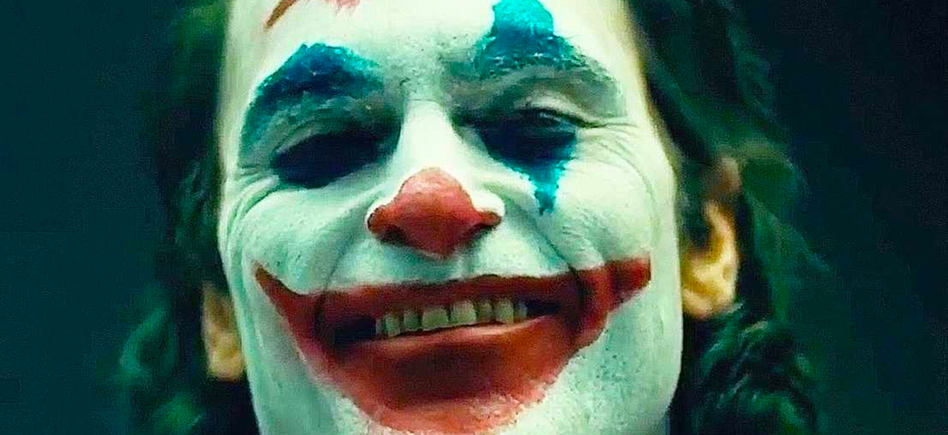
We did some promo photos recently before rehearsing and I went for a pretty dark colour; after a few hours of singing afterwards I looked like a toddler who’d got into their mum’s makeup bag and also made a lot of really bad life choices.
I’ve been trying to find something a bit less frightening for a while, and thanks to a recommendation on Twitter by National columnist, genuinely nice person and rocker of superb lipsticks Kirsty Strickland, I tried this stuff:
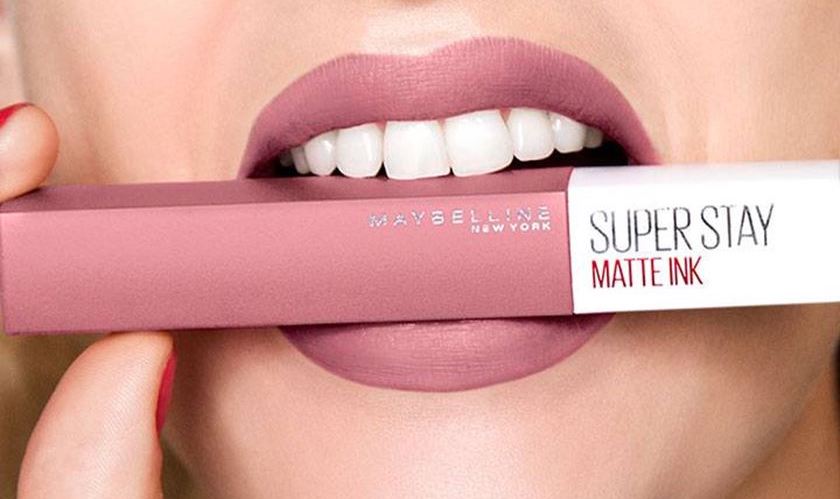
It’s called Superstay 24 Matte Ink, it’s by Maybelline, it’s currently 3 for 2 in Boots and it’s brilliant. I can get through three hours of mauling the mic without moving a single molecule of it, and it’s so tough that it might be the only thing left after a nuclear war: we might end up in a post-apocalyptic wasteland, but at least we’d look pretty fierce.
It’s not perfect. It feels tacky on your lips – you know how gloss paint feels when you touch it and it’s almost but not quite dry, and you leave a fingerprint? That – and the darker colours are a nightmare to get off when you’re tired and just want to go to bed. It’s also a menace to fix if you get your line wrong.
But if like me you’re all over the mic when you perform and you’d rather not end up looking like a bad hallowe’en costume, or if you’d just like to go for a night out without having to reapply every half hour, it’s worth the downsides. This lipstick stays stuck.
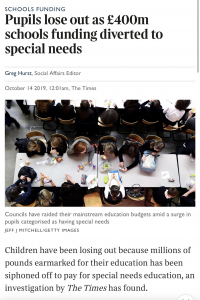 Guess which newspaper is making a false distinction between children with special needs and school pupils, and suggesting that the former are harming the latter? Here’s a clue: it rhymes with “fuelling hate crimes”.
We’ve been here before: in June, the Times wrote an awful article implying that care experienced kids were going to damage other kids’ education, making a false distinction between care experienced children and “bright children”.
Here, the people who are forcing presumably “bright” children to “lose out” are other children whose additional support needs are “seen by some parents as a ‘golden ticket’”.
It’s the worst possible spin on a fairly simple story: the government isn’t backing up reforms with money.
Councils have a statutory responsibility in England to fund special needs support, and that mandatory support has not been accompanied by adequate funding to pay for it. So councils are using their existing budgets in an attempt to provide care that the government mandates but refuses to pay for.
In any sane worldview the headline would be damning the government. But no, the enemy here is kids with learning difficulties.
As the journalist Frances Ryan posted:
This is such irresponsible framing from The Times. It parrots prejudice that disabled children are a drain, a high cost harming the education of ‘normal’ pupils.
This is happening far too often to be the result of genuine mistakes: these articles aren’t written in a vacuum and posted without anybody seeing them. There is something very wrong at the heart of the organisation, which repeatedly fails to meet even the most basic journalistic standards and which seems to take particular relish in scaring its readers about minorities. But even by its standards, going after children is a new low.
To paraphrase Mrs Merton: what first atttracted the Conservative government to voter ID, a scheme that would stop many non-Tory voters from voting?
After an unsuccessful attempt to introduce it in 2017, voter ID is back! Back! BACK! This version is slightly more sensible than Theresa May’s version from two years ago (unlike May’s proposals it has plans to try and address postal fraud too), but it suffers from the same fundamental flaw: voter ID is a solution that doesn’t work for a problem that we don’t have.
We have a problem with election rigging in the UK, but it isn’t happening in person at ballot boxes. It’s happening in campaigns that flout electoral law with little regard for the consequences, and on the ground it’s happening with postal voting. Voter ID doesn’t affect either of those things.
The number of people prosecuted for the offence of personation in 2017 was 1.
The number of people in the UK without photo ID is 3.5 million.
We know voter ID disenfranchises people, because we already have it in the UK: it’s part of the Northern Irish political system, and it disenfranchised 1/10th of the electorate. That’s with the same system the UK government is proposing here, where photo ID will be available for free (when you’re poor, £43 for a driving licence or £85 for a passport is a lot of money). In the UK’s trials of voter ID so far, significant numbers of people were denied a vote. When some majorities can be as small as two, every vote matters.
Voter ID being sold as a solution to a problem that we do not have, but the government doesn’t want it because it believes it’ll stop one or two people from committing personation. It wants it because voter ID reduces the number of people who vote, and those people tend to be the ones who don’t vote for right-wing parties. That’s why it’s a favoured tactic of the Republican Party in the US, which the UK Conservative party increasingly resembles.
Another weekend, another bunch of anti-trans stories in the Sunday Times (following on from four stories in the Saturday edition). Today’s selection includes a 3/4 page tale of a deeply troubled man who transitioned and then de-transitioned, something that’s incredibly rare but that does happen, usually because some trans people face terrible hostility when they come out.
His story is being used to demonstrate that children are being coerced into surgical transition, even though it doesn’t do anything of the sort.
Point one: he was middle-aged when he began transition.
Point two: his transition was DIY and ignored the specialist advice that he should consider social transition before considering any medical treatment.
In other words, the story demonstrates something rather different: that troubled middle-aged men who decide to ignore medical advice don’t always get the happy ending they hope for.
It’s a sad story about a sad individual with various personal problems who faced terrible hostility (hostility the Times and its sister titles help to fuel) after a transition they began despite medical advice.
That’s not how it’s being spun here, though. The Sunday Times is using it as yet more evidence of the fictional transgender cult – and the fact that the Christian Legal Centre is representing him casts even more doubt on the whole thing. The CLC is very good at coaching people to make lurid but conveniently unverifiable claims that fit its culture war narratives, claims that frequently turn out to be untrue. The Times has published many of those stories, but doesn’t return to them when they’re thrown out of court.
The CLC are a bunch of culture war ambulance chasers, and they tend to represent two kinds of people: howling bigots and deeply troubled individuals. This looks like the latter. I feel sorry for the man in the story, but he’s just the CLC’s latest useful idiot.

I took the kids to see Abominable yesterday. I didn’t have high hopes: the marketing made it look like another school-holiday by-the-numbers animation, and I already knew it made extensive use of one of Coldplay’s worst songs. But it turned out to be a wee gem of a film, and my two loved it.
It struck me while I was watching it that kids’ movies, especially animated ones, are often much more diverse than adult ones. One of the best cartoons I’ve seen with the kids, Spider-Man: Into the Spider-Verse, featured a black hero, a black villain and a multi-gendered, multi-racial supporting cast; Ralph Breaks The Internet was a two-hander with a strong young female character; Abominable’s hero is a young Chinese girl and the characters are also primarily Chinese, albeit in a westernised cartoon form.
That diversity is a good thing, of course. Kids come in all shapes, sizes and colours, and films should reflect that – and they often do, even if studios aren’t quite ready to give Elsa from Frozen a girlfriend. And films for older audiences are becoming more diverse too. Last year’s top-grossing US films featured more diverse casts and lead characters– although as Deadline reported, “the only way to go is up when the numbers have been so low for over a decade.”