Category: LGBTQ+

  • Everyone is awful

    Seven years ago, I wrote about my love for New Model Army, a post-punk band from England.

    I got into New Model Army in Kilbirnie Library, in the late 1980s. I was going through a bit of a punk/new wave thing at the time, and the library’s collection of vinyl LPs included one whose cover was a painted leather jacket, the words “only stupid bastards take heroin” disguised but still recognisable on the shoulders. That’ll do me, I thought.

    In the decades since I’ve bought a lot of their records and merchandise and been to lots of their gigs. But no more, because the person who designed their record covers and their merch – someone I’ve met, someone I chatted to briefly in my previous life, someone whose art I’ve worn on my chest – turns out to really hate people like me and is very vocal about it.

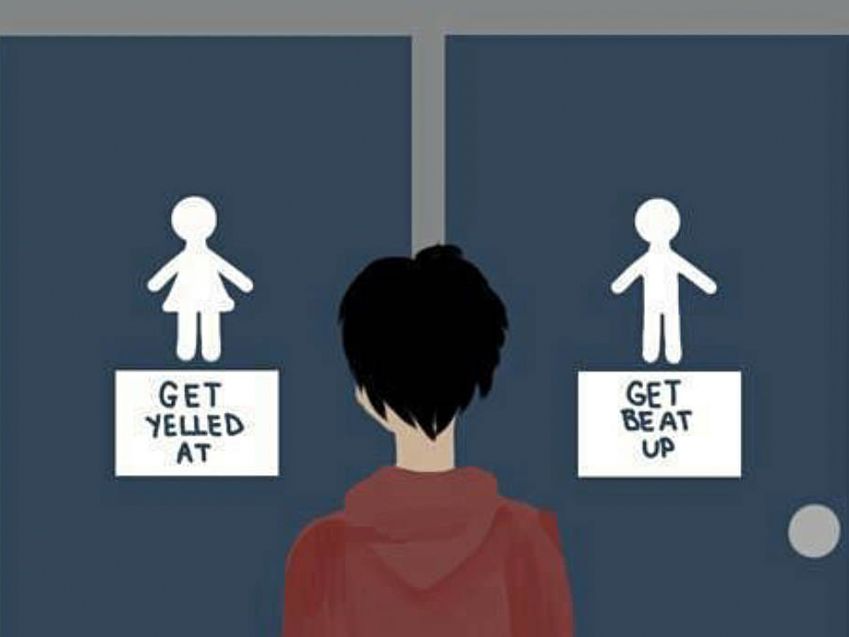
    So a band whose gigs used to feel like sanctuary – a band whose own Twitter bio says “we welcome everyone – equally” – is now a band I can’t go and see anymore, because rightly or wrongly I now worry that some of the band’s fans will share those views. I’m sure most don’t. But it only takes one person to beat you up.

    It’s not the first time a band I loved has turned out to be problematic. The drummer of Teenage Fanclub (not the original one everybody liked) is similarly obsessive, and I’m told that the main songwriter in that other famously nice and decent band, Elbow, has also been venomous about people like me. So that’s two more former loves whose logos I won’t wear and who I’m not going to pay to see any more.

    It’s as much a practical decision as a moral one. For me, gigs are an important release. They’re a source of joy, an opportunity to escape from the stresses and strains and sadness of everyday life. It’s impossible to have that transcendence when every time you look at the stage you see someone who doesn’t just hate you, but who spends an inordinate amount of their time trying to encourage others to hate you too.

    Art can’t offer escapism when the artist is one of the people you’re trying to escape from.

    And it’s not just transphobes. People are awful in all kinds of ways, and the older I get the more I discover that people I revered or whose art really connected with me were terrible. It sometimes feels like somebody is going through all the records, films and books that mattered to me and poisoning them. That sensitive author? Beat his girlfriend. That delicate lyricist? Howling racist. That comedian? Sexual predator. The soulful songwriter? Rapist.

    I know I’m not the only one to do this: now when someone tells me to check out a new band, a new author, a new comedian, the first thing I search for isn’t their material. It’s whether they’re problematic. All too often, they are. And that applies even at a local level. I was speaking to a promoter the other day who has a never-book list of artists proven to be problematic for reasons ranging from sexual predation to Nazism. It’s a long list.

    The artist is not the art, I know. But the artist can poison the art. I can’t watch Louis CK now I know what he did to women, or watch the UK version of The Office without seeing Ricky Gervais the transphobe rather than David Brent the character, or feel the connection with the songs of The Smiths since Morrissey’s racism became apparent.

    I feel it most in music, because music is such a personal thing: the good stuff becomes more than just a soundtrack. It becomes part of your identity. Part of your life. So when the people who make it turn out to be terrible, that news feels personal too. The more their art mattered, the more it feels like a betrayal.

    I’ve joked before that being trans has saved me a lot of money, because I don’t knowingly spend money on people or things that are problematic. But I’d much rather have music than money.
  • “The religious right has turned its sights on a new secular bogeyman”

    An interesting and balanced article in that hotbed of radical leftism, the Financial Times: The front line of the new gender wars. It looks at the Catholic Church’s war on so-called “gender ideology” and how it’s been picked up by right-wing populists and religious conservatives worldwide. The article attempts to give context to the culture war in which trans people find their very existence weaponised.

    From the US and Brazil to Poland and Hungary, tilting against “gender ideology” plays to a particular constituency: disaffected voters who perceive they have been marginalised due to identity politics gone mad, and that their needs have been subordinated to the interests of outsiders, be they foreign or dark or queer.

    To this constituency, the special pleading of an entitled minority threatens to encroach on the wellbeing of the majority. What makes the politics of this so complex, in the US and the UK at least, is that people putting forward this argument find themselves aligned with some feminists.


  • Hateful words lead to hateful acts

    The TIE Campaign is a wonderful organisation that campaigns for more inclusive education.

    The TIE Campaign posted this yesterday:

    We are a charity which works with schools, teachers, and educators to tackle prejudice-based bullying. We provide anti-bullying sessions and gender stereotypes/equalities workshops to schools, and produce resources to include LGBT people and history in the curriculum.

    …For a number of months, we have been receiving the most hurtful – and dangerous – posts and messages from individuals who appear to be opposed to LGBT themes being included within education. We have never had to deal with anything like this before.

    …We cannot continue to sit by as individuals do this to us. Trolling is one thing – but what they are doing is dangerous, prejudicial, and hateful. Please report tweets like this if you see them. We cannot address this alone.

    LGBT people and charities are regularly called groomers, pedophiles, abusers. This is unacceptable and horrific.

    …It’s not just us. Many LGBT organisations have been receiving this for months; as have national women’s charities, youth organisations, politicians. Lying like this about people or groups on social media is dangerous & can have serious consequences. It needs to stop.

    Please do read the whole thing. It’s horrifying, and utterly typical of the abuse LGBT+ organisations and supporters of LGBT+ equality receive on social media. And it’s increased dramatically in the last two years.

    Here’s Pink Saltire:

    This type of abuse is commonplace towards LGBT+ groups and has a real impact on us all.

    Sisters Scotland:

    The online abuse, slander, misrepresentation and lies that the LGBT community face on the daily destroy lives. It bleeds from online toxicity in to abuse in the media, and straight into abuse in the workplace, at home, in the streets. These prejudiced narratives pushed influence the narratives lived by the LGBT+ community. Their voices and strength are crushed under the weight of this. It’s up to all of us to ensure we give that strength back, that we raise those voices, make them louder and challenge those that seek to silence them.

    Dr Rebecca Crowther of LGBTI Scotland:

    It claws in to our personal social media accounts too & of course our minds, our mental health, our bodies. I couldn’t & wouldn’t type some of the names I’ve been called. I could never share the mysognynistic homophobic bullying & gaslighting I’ve received. That all of us have.

    And the worst part? Nothing I have received even compares remotely to the horrific bullying and abuse my trans siblings have been subject to.

    SNP women’s convener and TIE Campaign chair Rhiannon Spear:

    Constantly being called a pedophile or a child groomer because I support LGBT rights cannot become normal + I refuse to let it become normal.

    We are seeking legal advice + will take action where we can.

    The rhetoric needs to change.

    Abuse against LGBT+ people is rising in the UK, and that rise corresponds to the increasingly violent rhetoric being used about us and our allies in print and on social media. The people calling LGBT+ people and charities paedophiles on the internet are just echoing what high-profile Twitter accounts and newspaper columnists are saying. Violent words ultimately lead to violent acts.

  • These days, if you say you’re a bigot, you’re arrested and thrown in jail

    Former comedy writer Graham Linehan’s Twitter account was finally closed this weekend. The move came a week after another nasty troll, Katie Hopkins, lost her account for the same reason: repeated violations of Twitter’s hateful conduct policy.

    The stories are almost identical, but the reporting isn’t. And the best way to demonstrate that is to show you the way the same outlets reported the stories in their headlines.

    Sky News:
    – Katie Hopkins permanently banned by Twitter for breaking ‘abuse and hate’ rules
    – Father Ted co-creator Graham Linehan banned from Twitter after trans comment

    RT.com:
    – Katie Hopkins permanently suspended from Twitter to keep platform ‘safe’ from ‘hateful conduct’
    – Twitter permanently suspends ‘Father Ted’ writer after he replies ‘men aren’t women’ to pro-trans tweet

    Guardian:
    – Katie Hopkins permanently removed from Twitter
    – Twitter closes Graham Linehan account after trans comment

    Daily Mail:
    – Katie Hopkins is BANNED from Twitter for breaking rules on hate speech
    – Father Ted creator Graham Linehan is suspended from Twitter after stating ‘men aren’t women’

    As you can see, each publication has framed the two stories very differently, and that’s apparent in many more publications than the ones I’ve quoted here. When Hopkins’ tweets have been referenced in headlines, if they were mentioned at all, they were usually prefixed with words like “vile” and “hateful”. There’s no such context in the headlines about Linehan.

    Maybe that’s because all of those publications have run anti-trans story after anti-trans story, anti-trans column after anti-trans column.

    Quick question: who claims that trans rights advocates are a front for a sinister cult sacrificing your children: the washed-up comedy writer or the award-winning newspaper columnist?

    Trick question. It’s both.

  • I wish everyone would watch this

    This is the trailer for Disclosure, a new documentary on Netflix helmed by the incredible Laverne Cox. It’s ostensibly about the way trans people have been represented (or in the case of trans men, not represented) in film and TV, but it’s really about what it’s like to live in a world that constantly tells you you’re not welcome.

    It’s an American programme, and that means there are some differences between it and any UK equivalent. For starters, it got made. And it provides proper representation of all kinds of trans people, not just unrepresentative rich white women. But its US focus means there’s no room for the portrayal of trans and gender non-conforming people in other countries, such as Little Britain, the IT Crowd and what felt like all TV comedy in the 1970s and 1980s in the UK.

    It’s an intelligent, insightful programme: rather than damn programmes or films outright, many of the contributors explain how on the one hand a portrayal was appalling, but on the other it was the only time they had ever seen someone like them on screen.

    But even those stories are often heartbreaking. Imagine how it feels to finally come up with the courage to tell your best friend that you’re trans and to be asked, “what, like… Buffalo Bill?”

    Buffalo Bill was the serial killer in Silence of the Lambs who murdered women and wore their skin like a suit.

    Over the course of the programme a clear theme emerges: the way trans people are portrayed or erased on screen has a powerful effect on how other people see us, and on how we see ourselves.

    It also makes a strong case that the portrayal of trans people as deceptive and disgusting is directly connected to the violence many trans people experience, particularly trans women of colour in North and Central America. In just the last week, my news app has brought stories of three trans women’s murders: one shot in the face multiple times after revealing her trans history; one found dumped by the side of a motorway; and one dismembered and thrown into a river. A cisgender man is in custody accused of her murder and mutilation.

    I cried quite a lot watching this, and for me there were two scenes in particular I wish everyone could see. The first is a simple montage showing some – not all, but some – of the films where a man’s discovery that a woman he liked was trans caused him to vomit, something that started in The Crying Game and was then amplified sadistically in many comedy shows and films; and the second is Jen Richards trying not to cry as she talks about how her family told her she would only be welcome if she did not come as herself.

  • Good news, bad news

    The UK government’s plans to roll back trans rights suffered a setback this week when tens of thousands of cisgender women emailed the Prime Minister to say “not in my name”. I don’t believe for a moment that the plans have been dropped – as today’s Guardian notes, Dominic Cummings was focus-grouping trans rights in the Autumn as a topic the conservatives can use to attack Labour – but it was a welcome reminder that anti-trans voices do not speak for most women.

    As was this, in the LA Times: it’s very typical of the US response to JK Rowling’s blog post.

    Poke a prejudice, almost any prejudice, and pretty quickly the conversation goes straight down the toilet. Those opposed to civil rights, LGBTQ rights and the Equal Rights Amendment all have historically boiled their bigotry down to some wild-eyed fear about what equality in any form will mean to the state of our public restrooms. Black people peeing with white people, men with women, straight people with gays people, trans with cis — oh, the horror, the horror.

    As I’ve written before, the difference between the mainstream US media and the mainstream UK media is dramatic. Last night BBC’s Newsnight – which previously gave extensive coverage to an anti-trans piece in the BMJ without revealing that the article it was covering was written by the journalists who were covering it – once again decided to scaremonger about trans teens’ healthcare by getting the same journalists to essentially tell the same story again.

    There was lots of scary music and lurid claims from conveniently anonymous sources, but no time to explain how the system currently works. Coincidentally, knowing how the system actually works is at odds with scary tales of children being railroaded at high speed into irreversible treatment.

    The parent of a trans kid detailed the process in the I Paper last year, when waiting lists were shorter – they were 20 months for a first appointment then; it’s now 27 months and climbing.

    Once you are seen for the first time, there follows a lengthy assessment process, involving a minimum of six appointments with two psychologists who assess and challenge the child over a period of at least six months, often stretching to years in limbo. Each appointment is a lost day of education and work, with long journeys to London, a second Gids centre in Leeds, or a handful of satellite clinics.

    If this long assessment period is ever concluded, “hormone blockers” may be prescribed. These are designed to pause puberty, which allows the young person time to reflect on their gender. The medication is well understood, considered reversible, and has been used safely for nearly 30 years for transgender young people and considerably longer for treating early onset puberty.

    Given the timing, it seems rather suspicious that Newsnight chose this of all weeks to reheat the same innuendo from what looks very much like a mendacious campaign. But it appears to have had the desired effect, with endless commenters on Newsnight’s social media comparing trans healthcare providers to Dr Mengele, claiming that this is a scandal akin to Thalidomide and describing an NHS facility as a “child abuse clinic”.

    You may recall similar rhetoric being used before people started bombing abortion clinics or taking assault rifles to pizza parlours in the belief that Hilary Clinton was skinning babies in the basement.

  • “Every day in public is risky”

    It’s been interesting to compare the US and UK press reaction to JK Rowling’s blog post about trans people: in the US it’s been met with widespread revulsion, with many opinion pieces by cisgender women outraged by her claims to speak on their behalf. It’s also led many publishers to commission trans women to talk about their experiences. This, by former Human Rights Campaign press secretary Charlotte Clymer, is particularly good.

    Clymer says she finds it hard to believe Rowling’s claim that she “knows trans people”. As she writes:

    Folks who have trans people in their lives — and actually care about them — know how much trans people generally go out of their way to accommodate cisgender people.

    As Clymer is quick to admit, trans people are no more of a monolith than any other group. But very many of those of us who are out will relate to her experiences of the “fairly common actions we take just to be in the public square and avoid risking violence and discrimination from cisgender people.”

    I haven’t been to the gym since I came out.

    Nor me, even though there’s a really good and really cheap council-run facility just around the corner from my flat. I haven’t been swimming either, bar on one foreign holiday with my kids (during which I was yelled at by a woman at the beach).

    I’m terrified of changing rooms because of the possibility of confrontation.

    When I travel out of state, I look up nondiscrimination protections for where I’m going, including airport layovers.

    I don’t travel much, but I did a lot of research before the aforementioned foreign holiday and had to rule out multiple destinations because they aren’t LGBT-friendly. If it means going solo I don’t typically consider gigs or events that aren’t in my own town any more, because I’m increasingly worried about my safety if I venture far from home. And at home I’m careful not to travel by public transport if there are big events such as football matches or concerts by particularly laddish musicians taking place. I’ve left many events early to ensure I’m not getting the late bus or train home.

    [if] there’s a long line to use a public restroom, I usually walk away if I can help it

    I do this too. There have been nights out where my fear of confrontation has outweighed significant physical discomfort. Before lockdown I’d be very careful not to drink too much at gigs so I could avoid having to use the toilets at all.

    Even in places where we have legal protections, I worry about being a burden. I don’t want to cause headaches. I have faced discrimination in places where it was illegal and let it go because I wasn’t sure whether it was worth it. And I feel terrible about that. I feel guilty.

    Transgender and nonbinary people are constantly adjusting and revolving our lives around the preferences and feelings of cisgender people, not because we want to do that but because there aren’t enough hours in the day to fight every battle and not enough rights to guarantee our safety.

    I’d describe it as walking on eggshells but perhaps tiptoeing through a minefield is a better analogy: stepping on an eggshell isn’t going to harm you.

  • “Britain is the epicenter of a strange, savage, and specific cultural backlash”

    I know I’ve posted a lot of long pieces about trans-related issues lately, but if you only read one of them then perhaps it should be this one by Laurie Penny: TERF Wars: Why Transphobia Has no Place in Feminism. It’s an attempt to explain why the UK is unusually intolerant of trans people right now, and how perfectly nice people can be, and continue to be, radicalised against trans women.

    Britain is the epicenter of a strange, savage, and specific cultural backlash against trans rights. That backlash is doing real harm to people whose lives should not be up for debate. Its proponents have recruited a great many decent, well-intentioned people to their cause through subterfuge and scaremongering — including mainstream media figures and celebrities like Rowling.

    In the past half-decade, British transphobes have done everything in their power to convince the public that trans women are a sexual threat to women and girls… After years of relentless campaigning and strategically seeding stories into the press, they have managed to convince a significant chunk of the population that trans people are an active threat to women and children.

    How did they do that? As Penny describes it, some progressive people were uncomfortable with the sudden visibility of trans people.

    This was new territory, and not everyone who made comments like this was being rude and cruel on purpose, but the internet reacted as the internet is wont to do, particularly the parts of the internet full of angry left-wing queers in their teens and early twenties. In turn, establishment liberals reacted to that as establishment liberals are wont to do when called out by angry young lefties. Instead of listening, they got defensive and doubled down and…. well, you can guess what happened next. What happened is that the whole cycle repeated itself with increasing frenzy for about a decade.

    And that was weaponised by people Penny calls “swivel-eyed zealots”.

    In the discomfort of media liberals and the fervor of young trans activists, these essentialist feminists saw an opening. They reached out to cis women in the media who were sick of getting called transphobes by trans people online, offering sanctuary. They made in-roads with a number of prominent men who, while they had little interest in women’s rights, were only too happy to leap into the free-speech wars and kick down at some trans women with the smug, sadistic sophistry that is the birthright of a certain sort of centrist intellectual. They also made connections with other “‘gender critical” groups that were growing in number online — women who had no stake in the relentlessly incestuous liberal media drama, but who were panicked by the number of young people they saw coming out as trans and wanted what so many of us seem to want in these febrile times: a safe place to be prejudiced. Transphobic conspiracy theories were seeded among communities deemed most receptive- including mothers of young children, which is how parenting website mumsnet.com briefly became the nation’s most torrid hotbed of anti-trans recruitment.

    I’ve spoken to cis women involved in that side of the debate who have lost everything that mattered to them over years of austerity, cuts to services and welfare, who have been ground down by male violence and are now being told by people with an agenda that men in dresses are coming to take the last safe spaces they had. They are hearing, again and again, that trans people are coming to corrupt their children and convert their daughters to deviance — but if they sign up to an ideology that portrays trans women as “poison” (as transphobic feminist Shelia Jeffreys recently declared in the House of Commons), they can fight back.

    Please do read the whole thing.

  • “Harry Potter and the scales of justice”

    I was looking forward to Jenny Boylan’s take on the US Supreme Court ruling, and here it is.

    “I used to think people like you should be, you know, exterminated,” the nice young man said to me. “But after listening to you speak, I’ve really changed my mind!”

    This was after a lecture I’d given a few years ago at a college in Ohio. He looked at me proudly, clearly hoping that I’d be cheered that my words had opened his heart.

    But that word, “exterminated,” tempered my happiness somewhat.

    Sometimes I forget that there are people who want to wipe me off the face of the earth.

    I forget, even though the Trump administration does its best to remind me, every day.

  • Trans people are planning to escape the UK

    Jane Fae in the Independent:

    I spoke to a few trans folk: ordinary people trying to go about their daily routines as well as community leaders advocating on their behalf. The result was unanimous and shocking, and not just for the general level of abuse reported back. For this, in the end, is not so much about abuse or danger, but a growing fear that government, in yet another desperate populist lurch, will roll back the still limited place trans folk have been granted, making the UK a more hostile place for all.

    …if rhetoric does turn to action – if the Tory party reverts to its longer-term status as “nasty party” in respect of LGBT+ people – who can blame trans people for seeking safety elsewhere. We have seen what is happening in Trump’s America. Seen, too, how quickly rights can be stripped away in places like Hungary or Brazil. And we know that without state protection, the violence that some would like to direct our way will swiftly escalate.

    I do not wish to leave the UK. I am not going any time soon.

    But if the UK lurches further right, descending further into desperate populism, the time may yet come when, like my father before me, I can no longer live safely in the country where I was born.

    Some of us want to leave but can’t. I know because I’m one of them.