Category: LGBTQ+

  • “There is no safe or survivor-centred way to police anatomy”

    Over the last couple of weeks, anti-trans activists have been targeting and bullying the women who work in various rape crisis centres. The Survivors’ Network, the rape crisis centre for Sussex, is having none of it.

    predatory men are already able to enact their abuse with few repercussions, including entering changing rooms and public toilets – they do not need to pretend to be part of a marginalised community to break the law and to violate women, and suggesting that they would do so is entirely unsubstantiated.

    There is no safe or survivor-centred way to police the anatomy of someone accessing a service or using a bathroom/changing room. This will impact on gender non-conforming cisgender people, particularly cisgender women, as well as transgender people. Policing gender expression and defining someone’s womanhood by her conformity to state-sponsored specifications is an archaic practice that should not be considered in 2020 and is certainly not a feminist principle or one that will protect vulnerable women.

  • Blasts from the past

    I’m currently reading Transgender History by Susan Stryker, and one of the saddening things about it is how little the arguments of anti-trans people have changed – not least the tendency to accuse us of believing things we don’t believe.

    This is doing the rounds on Twitter at the moment.

    If a vagina doesn’t make you a woman, how come lipstick, high heels and a handbag do?

    Nobody’s claiming having heels or a handbag makes you a woman. Nobody. It’s a straw man, a made-up claim designed to reinforce the idea that trans women are unserious people who are merely playing dress-up, and anti-trans activists have been using it for over 40 years now.

    “Man” and “woman” are genders, not sexes, and while they generally correspond to people’s observable birth sex that is not always the case. We’re much more complex than that.

    Many cultures understand this and have long classified people into not just two genders, but many; they understand that the genitals you are born with do not necessarily dictate the gender you are or the way you will live your life.

    One of the reasons we conflate sex and gender is because for many people they match. But they don’t always, and it’s often gender – how closely you conform to stereotypical ideas of what men and women should look like and behave like – that is used to classify you.

    I’ve written about this before, because I find it bleakly funny: when I began presenting as me full-time the change was dramatic. Literally overnight I went from being a valued member of one project team to a person whose opinions were only worthwhile when repeated by one of the men; from being someone who could read a book in a bar without interruptions to someone who couldn’t; from being respected as an expert to being dismissed as a “silly little girl”. My genitals didn’t change, but people’s perception of my gender did.

    And part of that perception is based on the presence or absence of lipstick, heels and handbags. It’s not that those things make me a woman; of course they don’t, any more than sitting without makeup in a t-shirt covered in bits of fried egg makes me any less of one. It’s that they make other people less likely to be difficult.

    The closer I conform to stereotypical gender presentation, the less shit I have to deal with – so while my presentation doesn’t change my gender identity, it does change how some other people treat me.

    Here’s an example. The other morning I went to my own bank to pay my own money into my own bank account. I was dressed like I normally am: skinny jeans, animal print tunic, a bit of makeup and a bit of jewellery. And normally I’m greeted without incident or misgendering. But this time out I was wearing a mask that hid most of my immaculately made-up face, and when the teller heard my voice and compared it to what was on her screen – a female pronoun, a female name – she asked me: “are you sure this is your account, sir?”

    Most of the time I present stereotypically female because it makes life easier: I’d rather not be treated with suspicion when I’m paying money into my own bank account.

    Biological sex is what you begin with, but gender is the space in the culture that you inhabit – and the former does not necessarily dictate the latter. You can be born with a vagina and be a man; you can be born without one and be a woman; and you can be born with any configuration and be non-binary. Other cultures have known this for millennia. It’s just taken us a bit longer to catch up.

  • Tories prepare to harm trans kids

    The UK Government has produced a very long briefing document on the Gender Recognition Act, the Equality Act, official guidance and the debates around gender recognition. The document was published two days ago, on the 15th of July. It seemed to give undue prominence to the views of anti-trans groups but it did accurately report the current legal protection for trans people, including children.

    24 hours later, significant sections were removed.

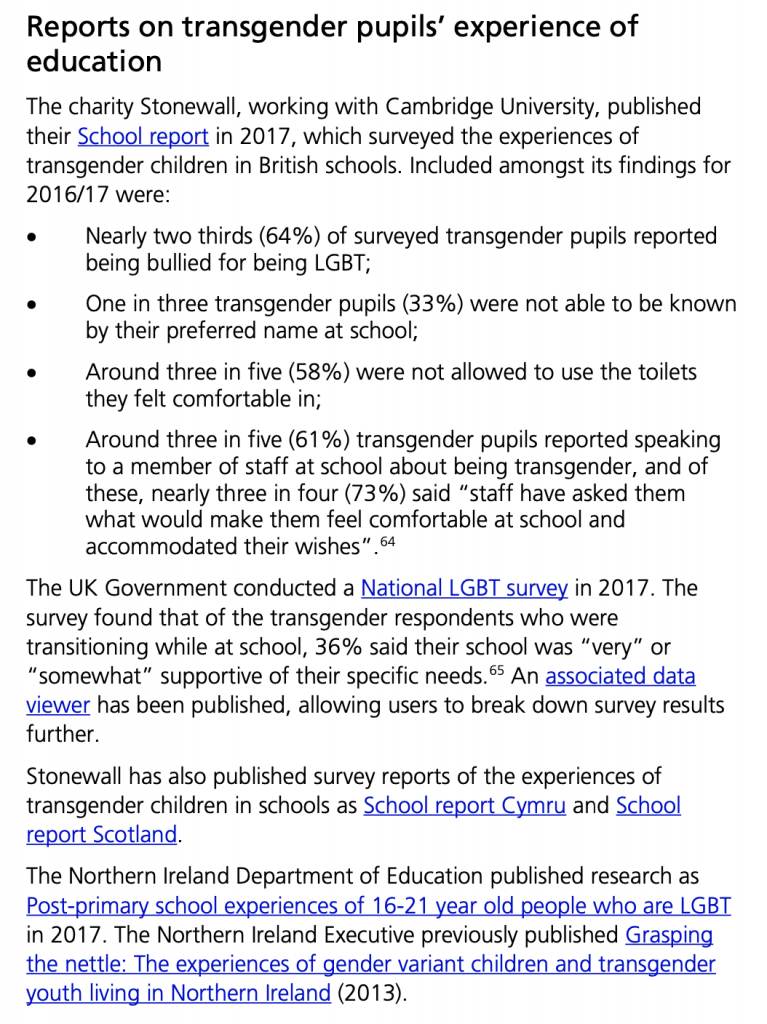
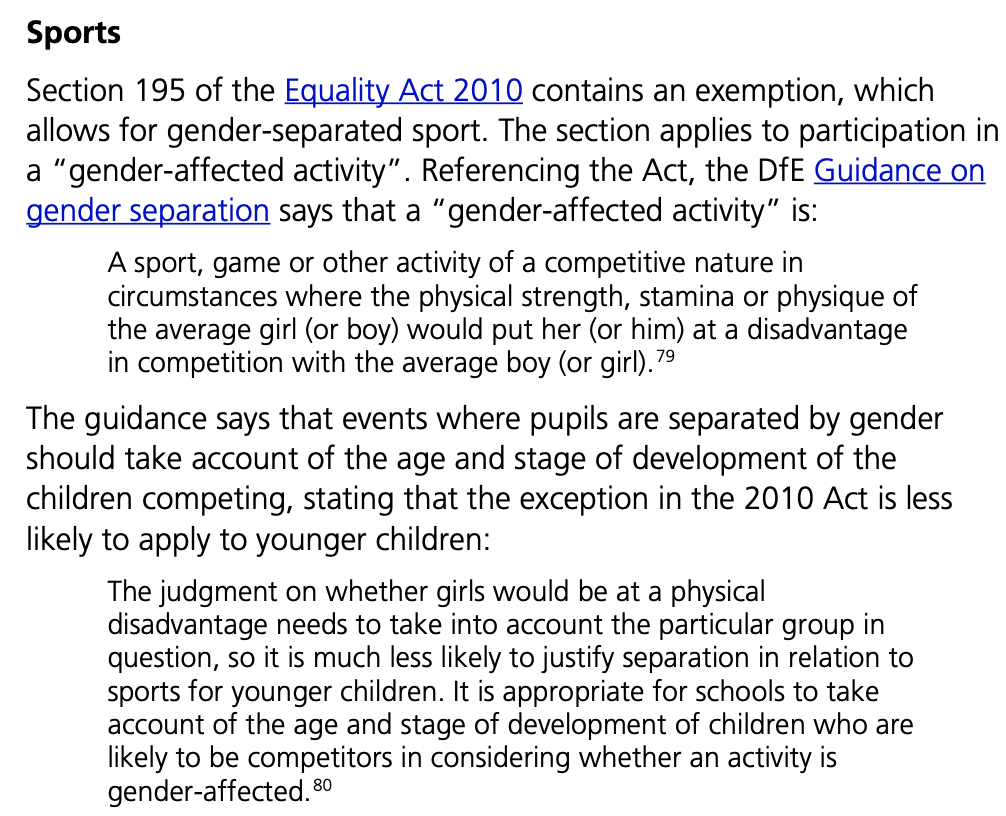
    The document was quietly replaced with an updated version with significant sections removed. Almost all of the content about trans kids, the law and their rights has been taken out. At the time of writing you can see for yourself here.

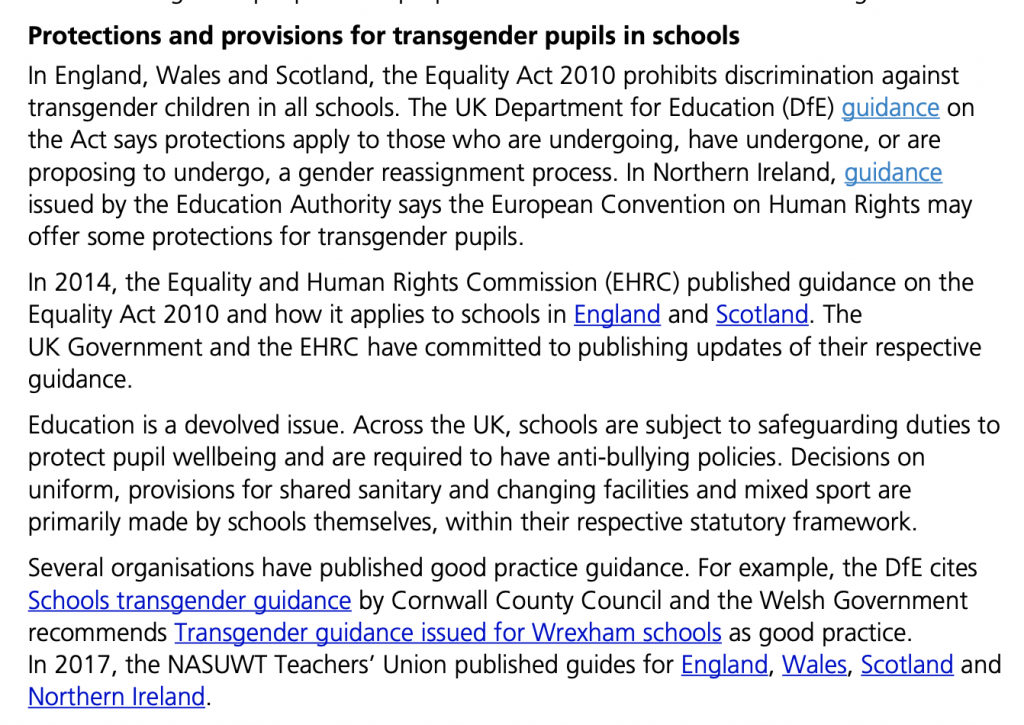
    Here’s an example, from page 4 of the first version. This entire section has been removed.

    Six pages have simply gone, including almost all of the content relating to schoolchildren: the explanation of how the Equality Act applies to children and to schools, the details of trans kids’ experiences of bullying and discrimination at schools, the explanation of official guidance for schools, the details about access to sports, the details of policies of devolved governments… all disappeared.

    This is gone:

    And so is this:

    It’s hard to see any other explanation other than this: Liz Truss knows she can’t change the Equality Act to allow overt discrimination against trans children. So instead, she’s going to change the official government guidance to achieve the same result.

    I don’t have words to describe my disgust.

    Update: The House of Commons Library says the missing sections are being updated and that yet another version of the document will be published “early next week”. It is not clear why entire sections on sports and on bullying had to be removed in order to clarify one item and add a reference to an ongoing legal case, which are the only changes the HOCL says will be made; in the meantime MPs are not being given very relevant information in a document they do not know is incomplete.

    Liz Truss’s statement on gender recognition reform, which this document is supposed to brief MPs on the background to, is scheduled for Wednesday. 

  • Discomfort

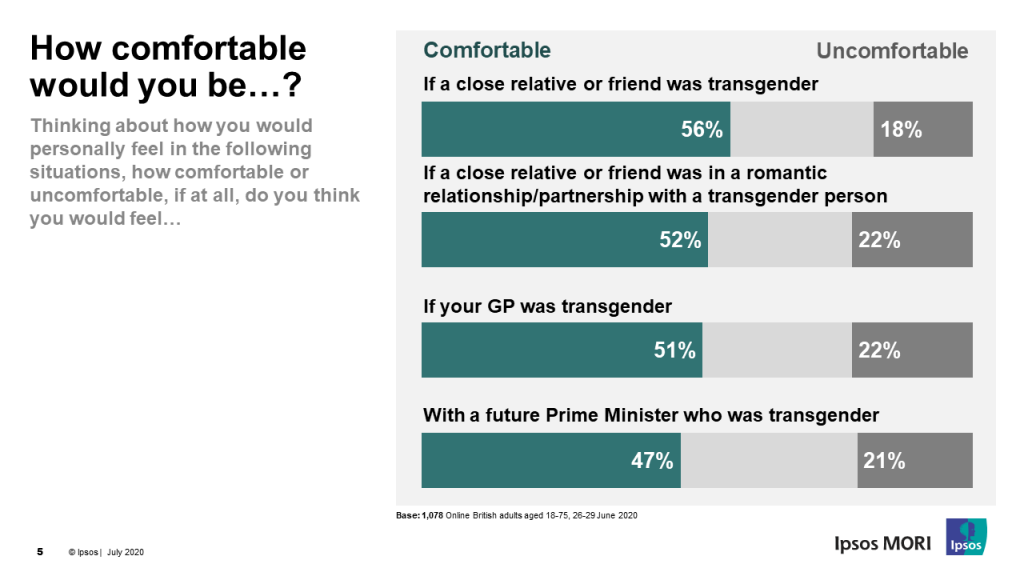
    A new study by Ipsos MORI reports that 7 in 10 Britons believe trans people face discrimination, that only 1 in 10 believe trans rights “have gone too far”, and that 6 in 10 women agree that gender and biological sex are not always linked. Given the tone and volume of anti-trans coverage in recent years that’s somewhat encouraging.

    I wrote the other day about the “yuk factor”. The poll provides some evidence that it exists.

    And as with all of these surveys, there’s a demographic gap. The older you are and the more right-wing you are, the more anti-trans you’re likely to be. That demographic, of course, is also the demographic that buys the papers and reads the websites that churn out constant anti-trans scaremongering. Funny, that.

  • Paperwork

    This arrived yesterday.

    Including obtaining medical reports, the process of getting my Gender Recognition Certificate took ten months and cost nearly £300.

    I have mixed feelings. That’s partly because I felt I had to get the certificate: the messages coming from the UK government make me worried that it may remove some anti-discrimination protections from trans people who don’t have GRCs. So in that respect it feels like I’ve been forced to apply: “Nice human rights you’ve got there. Shame if anything were to happen to them.”

    I also feel somewhat resentful, because the process is horrible, drawn out and stressful. One of my crucial medical reports – a very simple form – took three months to arrive, delaying my application, because the clinician said he was too busy to do it; some unclear language in a doctor’s hastily scribbled notes meant I had to provide a written statement about some extremely personal and upsetting things I didn’t want to think about, let alone go into detail about in a document that would be read by multiple strangers. And throughout the process I was aware that if my application was rejected there’s no right to appeal; I’d have to wait six months before having to start the whole process again.

    Ultimately, it’s a lot of money and effort for something that won’t affect my daily life at all, let alone yours. It means I can now legally become another woman’s wife rather than her husband, it means HMRC won’t misgender me, and that’s about it. Misinformed and malevolent people have spent more than two years scaremongering about what’s ultimately a largely inconsequential piece of paper.

    And yet, and yet.

    My GRC still means something to me. It means something in the same way that my formal diagnosis of gender dysphoria meant something. The Gender Recognition Panel is a branch of the HM Courts & Tribunal Service. Its president is a judge. My application was assessed by a judicial panel consisting solely of legal and medical professionals, and I can promise you that they are very, very thorough and very, very serious.

    Hence my mixed feelings. It’s a horrible process to go through and it’s been a weight on my mind for a long time. But I can’t help feeling that it’s also a form of validation.

  • The yuk factor

    Professor Paul Johnson, head of the department of sociology at the University of York, posted this on Twitter today. It’s from the judgement in a 2014 case before the European Court of Human Rights.

    Society’s problematic “yuk factor” concerning transgender individuals is not a normative idea that should be supported by the law.

    Sharing Johnson’s post, journalist and trans man Freddy McConnell added:

    This isn’t a factor in overt anti-trans campaigning or general resistance to trans equality, it is the factor.

    Johnson:

    In my opinion, most so-called “gender critical” views are underpinned by disgust of transgender people (the “yuk factor”). Because disgust can be socially discrediting – it easily reveals bigotry – GC proponents often try to disguise it by appealing to more “high minded” ideals.

    He’s right, of course. Racists and homophobes do this too. It’s (mostly) social death to admit that you are disgusted by the very existence of Black people or of gay people, so you look for a fig leaf to disguise it: “scientific racism” for racists and “family values” or “protecting children” for homophobes.

    If you watch the videos of the founding meetings of anti-trans pressure groups or look at their supporters on social media you’ll soon see them take the mask of respectability off. Disgust of trans women isn’t just tolerated. It’s celebrated and often actively encouraged.

    There have been many millions of words written by anti-trans activists about trans people, and most of them can be summarised in just one: yuk.

  • No problem

    Every cloud has a silver lining. The ongoing delays to gender recognition reform in the UK enable us to analyse other countries’ experiences and judge whether the lurid claims of anti-trans activists have any basis in reality.

    Tomorrow is the fifth anniversary of Ireland’s Gender Recognition Act. It uses the same “self-ID” system that the Westminster and Scots governments propose to use: instead of requiring trans people to get medical reports and a stack of evidence to be judged by a panel they never meet, applicants sign a statutory declaration in front of a lawyer. This declaration states that you intend to live in your correct gender for the rest of your life, and like any statutory declaration there are penalties for fraudulent declarations.

    The number of men who have abused this system in order to access women’s spaces in the last five years?

    Zero.

    The number of frivolous or fraudulent applications?

    Also zero.

    The same is true of the many other countries that have some form of self-ID.

    I’m sure that tomorrow, the UK press and radio will give this information the same prominence they’ve given the fact-free fantasies of anti-reform activists. After all, it’s directly relevant to the announcement on GRA reform Liz Truss is expected to make in the coming days.

    While Truss prepares her statement, she might want to refer to her government’s own consultation documents. They stated:  “there will be no change to the provision of women-only spaces and services”; “there will be no change to the NHS medical pathways for trans people”; and most importantly of all, “we are committed to making the lives of trans people easier… trans and non-binary people are members of our society and should be treated with respect.”

  • How about we try to stop people from dying?

    Yesterday, there were thousands of posts on Twitter by anti-trans activists claiming that only women get cervical cancer.

    It was a deliberate attack on trans men and non-binary people; the hashtag began after a trans man posted on Twitter about his cervical cancer diagnosis and a bunch of awful people started abusing him.

    Think about that for a moment. Somebody has received possibly the worst news of their life, and thousands of people pile on to say in effect, “fuck you! You’re not a man! Only women get cervical cancer!”

    Trans men and non-binary people are not women. However, if they have not had surgical intervention, their bodies will do the same thing women’s bodies do. And that means they are at risk of, and can die from, the same cancers as women.

    Part of the pile-on was also aimed at trans women. It’s pretty twisted to wear susceptibility to cancer as a badge of honour – “haha! You can’t die in the same way we can!” – and it’s only partially true. Trans women don’t get cervical cancer if they haven’t had gender reassignment surgery. But if they have, they can develop similar carcinomas. Trans women who have undergone hormonal transition should also be screened for breast cancer.

    The inclusive language that transphobes hate so much – people who menstruate, people with cervixes, people who can get pregnant and so on – does not exclude cisgender women. But it does include trans men and non-binary people, and that’s important. One of the reasons it’s important is because many trans people are not included in essential screening. Here’s Public Health England.

    If you are a trans man aged 25 to 64 who has registered with a GP as male, you won’t be invited for cervical screening.

    This is why organisations specifically try to include trans men in screening awareness programmes. If they don’t ask to be screened, they won’t be invited for screening.

    There’s no reason why the system can’t record lived/legal gender and whether someone’s trans as separate categories; there are significant biological differences between trans men and cisgender men, and between trans women and cisgender women. Long-term hormone treatment also means there are significant differences between trans women and cisgender men, and between transgender men and cisgender women.

    That complexity is currently reduced to a single item: M/F?

    I’ve had some experience of this too. Long before I officially transitioned, my GP’s surgery said they wanted to change my gender marker on the NHS computer to female. The practice manager explained that if the marker wasn’t changed, the labs would continue to reject my blood samples because they had female-typical estrogen levels. As far as the labs were concerned, high estrogen proved that my samples had been mixed up with somebody else’s.

    For me, changing my gender marker meant I started getting reminders to come for cervical cancer screening (you can contact your GP to opt out of those communications) and I won’t get reminders about prostate cancer screening when I’m older, so I need to be aware of that (although the hormones I take massively reduce my risk). For trans men, it means the reverse – and that’s a potential problem, because some trans men have an elevated risk of the very cancers they won’t be invited to screen for.

    The general bullshit that LGBT+ people experience often means higher levels of potentially risky behaviour – smoking, drinking to excess and so on. But the biggest risk is that the terrible experiences trans people often endure when they try to access healthcare can prevent them from taking part in preventive screening, or from seeking help until the very last moment. With cancer, early detection is everything.

    Here’s the US National LGBT Cancer Network.

    For trans men, ovarian cancer poses an extra challenge, due not only increased risk factors and decreased access to healthcare but also to the increased levels of discrimination faced by the trans community.

    One of the most famous examples of that is discrimination is Robert Eads, a trans man who was advised not to have gender reassignment surgeries because he was too old. He later died of ovarian cancer after twelve different doctors refused to treat him – not because he was a medical challenge, but because they didn’t want word getting out that they’d treated a trans man.

    What those doctors did is what the Twitter mob did yesterday: they decided that their personal feelings about trans people were more important than saving someone’s life.
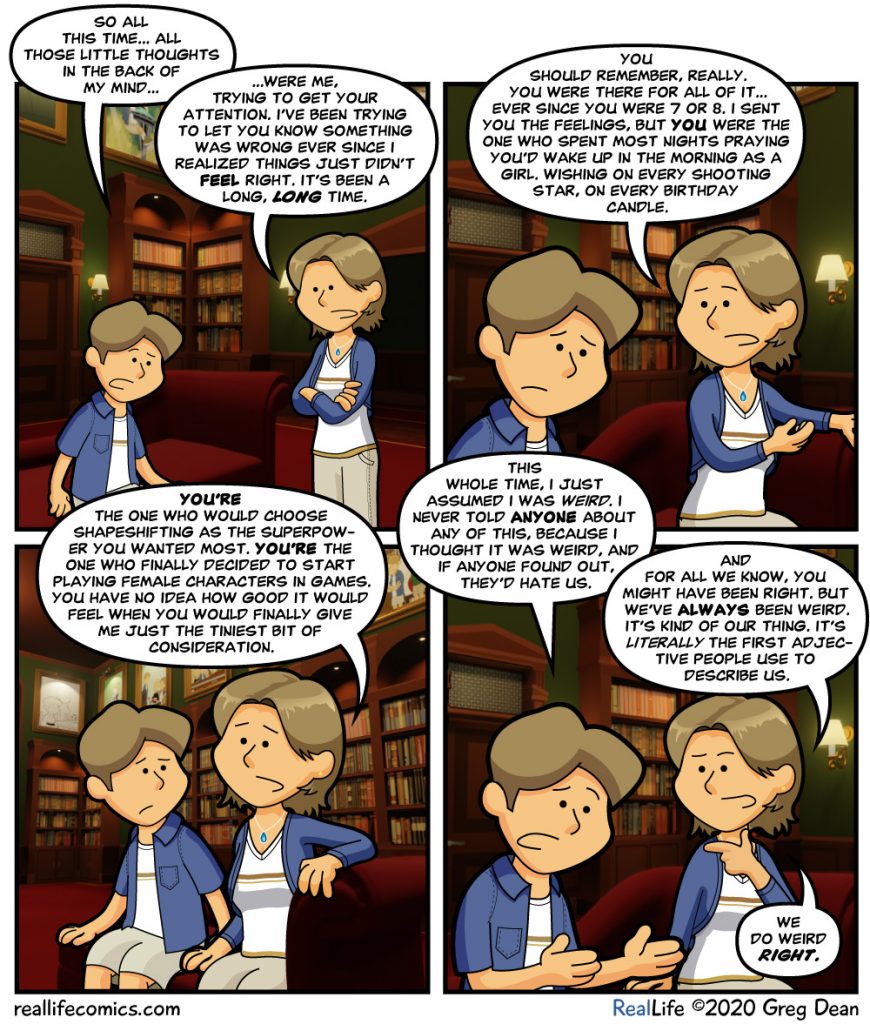
  • “There are more things in heaven and earth than are dreamt of in your philosophy”

    A few hundred years ago, a bunch of men decided that every single human on earth could be divided into three (or sometimes five) distinct races. You could tell everything you needed to know about someone by looking at them and perhaps measuring the circumference of their heads: that would tell you what race you were dealing with and how to treat that person.

    That classification system was used in horrific ways against those deemed members of “inferior races”, and we’re still living with the terrible consequences today.

    Scientifically speaking, it was all bullshit.

    Here’s National Geographic:

    when scientists set out to assemble the first complete human genome, which was a composite of several individuals, they deliberately gathered samples from people who self-identified as members of different races. In June 2000, when the results were announced at a White House ceremony, Craig Venter, a pioneer of DNA sequencing, observed, “The concept of race has no genetic or scientific basis.”

    …Everyone has the same collection of genes, but with the exception of identical twins, everyone has slightly different versions of some of them. Studies of this genetic diversity have allowed scientists to reconstruct a kind of family tree of human populations. That has revealed the second deep truth: In a very real sense, all people alive today are Africans.

    That’s not to say that there aren’t differences between people and populations. Of course there are. But the categories that were used to define, classify and in many cases oppress people were completely made up. As one of the experts in the National Geographic article puts it:

    “if we made racial categories up, maybe we can make new categories that function better.”

    You know where I’m going with this. Gender, like race, is a human construction – and we humans are much more complex than a binary gender system allows.

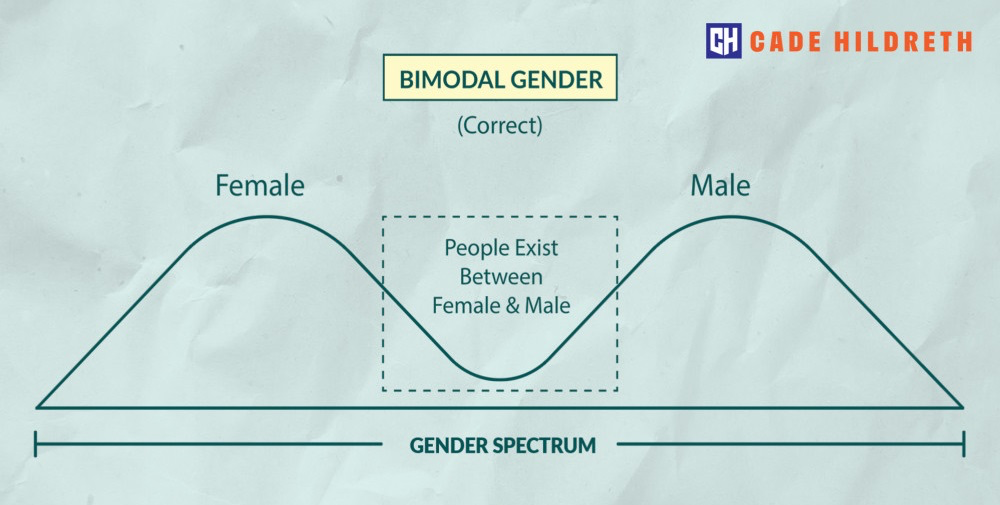
    With a binary system, you are either THIS or you are THAT, and nothing else. There are no grey areas, no outliers. But reality doesn’t work that way. Most of us are “typical”; that is, we have many or most of the characteristics associated with the categories “man” or “woman”. But some people are more typical than others, and there is enormous variation.

    Cade Hildreth has a good explainer on sex, gender and the important difference between binary and bimodal. Short version: gender is “a spectrum of biological, mental and emotional traits that exist along a continuum.”

    The gender binary makes sense for many, maybe even most people. But it is not an immutable law of nature; it’s a classification system human beings came up with. And the more we know about how brains and bodies work, the more we realise how simplistic and unscientific a system it is. The linked article goes into some detail on variations in characteristics such as chromosomes, sex organs and so on. Short version: we’re complicated.

    How you respond to that information says a lot about the kind of person you are, I think. I’m fascinated by it, and by anything else that broadens our knowledge: it just underlines that every single human being is pretty much miraculous, a one-off combination of so many different factors. The fact that I am me and you are you is incredibly, mind-bogglingly unlikely, and also very exciting, and the fact that we’re still only at the start of our discoveries is more exciting still. Oh, the places we’ll go!

    Not everyone feels that way, I know, and sometimes I feel sorry for them. I can’t imagine what it must be like to be scared of knowledge.