Abigail Thorn of popular video blog PhilosophyTube has come out as trans, and it’s lovely to see her so happy. She’s posted a video statement that explains how she got here and some of the challenges we face, and it’s well worth a few minutes of your time.
Category: LGBTQ+
-
QAnon with Prosecco
I’ve written before about the glaringly obvious similarities between QAnon, the deranged conspiracy theory that Donald Trump is fighting a secret cabal of paedophiles, and UK anti-trans faux-feminism, which is basically the same thing with Prosecco. But I haven’t seen it illustrated quite so dramatically as I have today.
In a Twitter thread, a number of apparently intelligent adults openly discussed their belief that puberty blockers are part of a plan by a secret cabal of paedophiles to get round the laws on the age of consent. They will achieve this by making sure their targets don’t go through puberty, and will wait until they are sixteen before shagging them, presumably for the rest of their adult lives.
Because if there’s one thing kiddie-fiddlers are attracted to, it’s adults.
Puberty blockers don’t stop you ageing, and they only pause puberty for a short time. They are a fork in the road, not a stop sign. Their purpose is not to ensure that someone doesn’t go through puberty; it’s to ensure that they don’t have to go through it twice.
It’s batshit insane, I know, but it’s hardly unrepresentative: many anti-trans people are hilariously ignorant about the “basic human biology” they shout about. Some refuse to accept that estrogen causes breast growth; others claim that trans women don’t have pelvises.
And it’s not just the fringe. The UK’s various anti-trans groups all support an organisation that submitted written evidence to a government committee claiming that trans people are created because they are hypnotised by sissy pornography on YouTube.
I’ve been doing a lot of reading and listening about moral panics, and we’re firmly in Killer Clowns, Ritual Abuse, Satanic Backwards Messages in Music territory.
In Folk Devils and Moral Panics by Stan Cohen (1973), he described moral panics as occurring when “a condition, episode, person or group of persons comes to be defined as a threat to societal values and interests”. Examples of moral panics can be found throughout history, and many are laughable in hindsight: remember the 1980s panic over Dungeons & Dragons players, or the panic over murderers stuffing razorblades in Hallowe’en treats?
R Drislane and G Parkinson wrote in the online dictionary of the social sciences that “moral panics are usually framed by the media and led by community leaders or groups intent on changing laws or practices… moral panics gather converts because they touch on people’s fears, and because they also use specific events or problems as symbols of what may feel to represent ‘all that is wrong with the nation.’
Cohen:
A condition, episode, person or group of persons emerges to become defined as a threat to societal values and interests; its nature is presented in a stylized and stereotypical fashion by the mass media; the moral barricades are manned by editors, bishops, politicians and other right-thinking people; socially accredited experts pronounce their diagnoses and solutions; ways of coping are evolved or (more often) resorted to; the condition then disappears, submerges or deteriorates and becomes more visible. Sometimes the object of the panic is quite novel and at other times it is something which has been in existence long enough, but suddenly appears in the limelight.
Cohen argued that there are three stages to a moral panic: one, making exaggerated and distorted claims; two, predicting terrible consequence if action is not taken against the targeted group; and three, characterising all members of the targeted group as a threat.
That sounds awfully familiar, doesn’t it?
The other widely used model has five steps, not three. In that model, by Erich Goode and Nachman Ben-Yehuda, the first stage is heightened concerns being expressed about certain groups or categories; the second is hostility towards supposed “deviants”; the third is the development of a popular consensus about the existence and seriousness of the threat; and fourth, disproportionality: where public concern is far in excess of what is proportionate or justifiable. Stage five is the actual panic, where reason is left behind and things get ugly.
And that’s where we are right now. As with QAnon, the more embroiled people become in these paranoid fantasies, the harder it is to get them back out again. I feel sorry for them: they’re victims of the most powerful disinformation machines ever created. But I’m much more sorry for the people whose lives they want to ruin, and for the family members watching loved ones lose their grip on reality.
-
It’s okay to cry
Glaswegian musician and producer SOPHIE has died. She was an extraordinary talent and this is a very sad loss.
Munroe Bergdorf:
Our community has lost an icon, a pioneer and a visionary bright light. Heartbroken. SOPHIE you will be missed.
“Thank you for sharing your talent with us. I hope we get to meet again one day. Rest in peace sister.
Inevitably the transphobes are already all over this on social media, sharing their joy at the death of a young woman and being hateful to the people mourning her.
-
A global hate campaign
The horrific new anti-women legislation in Poland, a near-total ban on abortion, is already harming women. The country already had some of the strongest anti-abortion legislation in Europe, and it has now removed the exception for foetal abnormalities. According to the New York Times, 1,074 of the 1,100 abortions performed in Poland last year were for that reason.
Poland’s right-wing government is not the only evil here. Its bigotry and intolerance has been assisted legally and financially by the US Christian Right. As OpenDemocracy reported late last year, Trump-linked religious groups in the US have spent hundreds of millions globally to assault women’s rights and LGBT+ people’s rights: in its report it noted that one organisation had taken part in multiple Polish cases “to defend that country’s conservative policies including against divorce and abortion”.
One of the organisations in the report is the Alliance Defending Freedom, which operates in the UK too: it has been a loud voice against Scots hate crime legislation and against trans people.
The EPF’s [European Parliamentary Forum for Sexual and Reproductive Rights] Neil Datta said: “As Europeans, we cannot sit back and watch what’s happening in the US with distance, thinking that the erosion of democratic norms and human rights cannot happen here. The same US Christian groups pushing for this in the US are now spending millions in Europe trying to achieve the same over here.â€
-
Drama
I’ve watched two very different dramas this week: a theatrical monologue and a TV series. Both were very emotional experiences.
The monologue was Overflow, written by Travis Alabanza and performed by the mesmerising Reece Lyons.
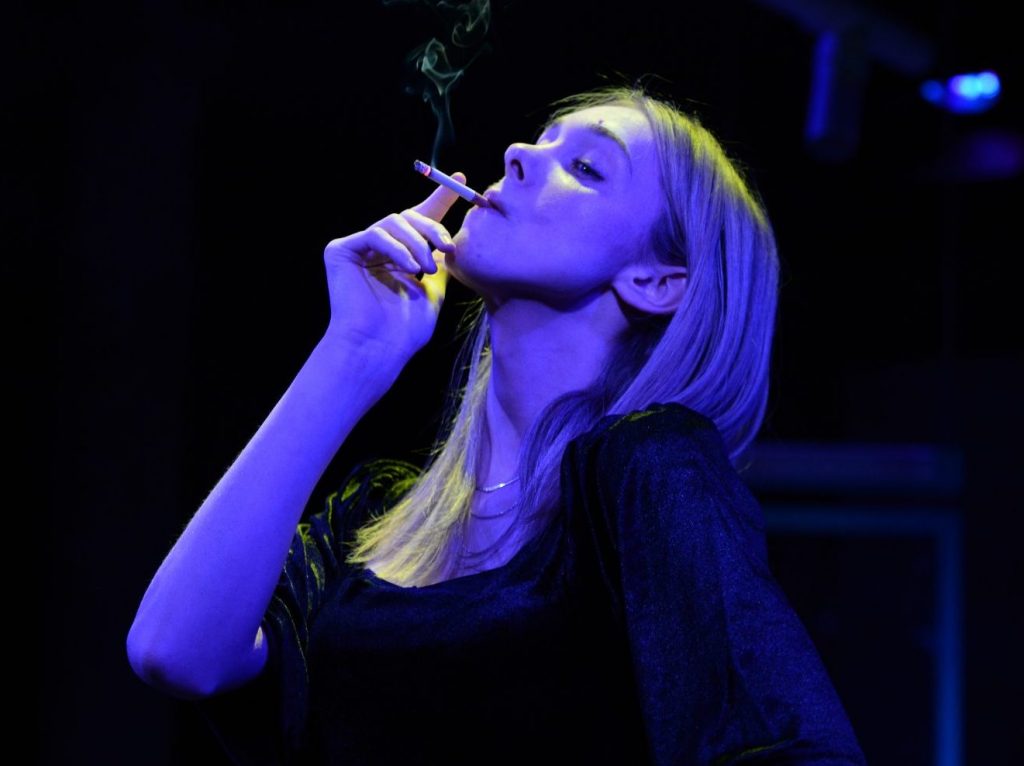
It’s a one-woman show about a trans woman hiding in the ladies to escape violence. It’s not always an easy watch but it has important things to say about allyship, about prejudice and what it’s like to be young and trans. I felt like I’d been hit by a truck after watching it: it dug up a lot of big emotions.
Here’s The Independent’s review of it.
Overflow explores the problematic concept of allyship. The word “ally†isn’t just something you call yourself – it’s about what you do. In a passage reminiscent of Burgerz, Rosie weaves through anecdotes of well-meaning cis people who have failed to act when it mattered most. Top of the list is lifelong friend Charlotte, described ironically as “the best cisgender woman to ever exist and ultimate ally and protector of the trans”, who doesn’t stand up to transphobic rhetoric when she encounters it in the world. This brings up complex, burdensome questions about friendship, like: “Can I be friends with someone who is friends with someone who is transphobic?â€
The TV series? Like every other LGBT+ person in the UK, I suspect, I binge-watched It’s A Sin, the new drama by Russell T Davies. The Guardian called it a “masterpiece”; it’s a very powerful drama about the AIDS crisis. That means of course it gets very dark and very sad, but before that darkness descends it’s also one of the most joyous portrayals of gay people’s lives I’ve seen on screen.
It’s also deeply upsetting, especially in other people’s reactions to the characters: this was a time of outspoken, vicious homophobia and anti-gay sentiment soared during the AIDS epidemic. Much of that was driven by the press, which demonised gay men and in the case of The Sunday Times under the editorship of Andrew Neil, claimed that AIDS couldn’t affect straight people.
Here’s writer Russell Davies:
Q. Do you think there are parallels between how HIV Positive people were treated in the 80s and 90s and how trans people are treated now?
Yes, it’s the story of The Other. The heartbreaking thing about the arguments about trans people is that the numbers are so vanishingly small. And if you know any trans people you cannot recognise this portrait of them as predatory and violent and self-seeking or self-serving. It’s heartbreaking to see this get out of control.
Guardian writer and right-wingers’ favourite hate figure Owen Jones posted a jokey tweet suggesting that transphobes should be banned from liking It’s A Sin. But behind the joke is the unpleasant fact that the very papers whose arts critics praised the programme also employ the columnists who incite fear and hatred of trans people. Many of the people who are so viciously hateful of us are just as hateful of gay men and women. They’ve just learnt not to say that bit out loud.
-
The reality-based community
Last week, vocal anti-trans bigots and a fair few UK journalists (*standup comedian voice* not that you can always tell the difference, amirite?) claimed that appointing one of the most equal and diverse administrations we’ve seen meant that, er, President Biden was worse for women than Donald Trump. They even had their own social media hashtag, #BidenErasesWomen.
The reason for this is because Biden’s initial raft of executive orders included restoring very basic legal workplace protections for LGBT+ people – protections that fall short of the legal protections LGBT+ people have here in the UK. Once again the fury in response to the move demonstrated that the people claiming to care about protecting women only really care about hurting LGBT+ people, particularly trans women.
A new survey by IPSOS asked over 500 Americans for their views on Biden’s initial executive orders. 83% approved of the LGBT+ protections: more than approved of his reponse to COVID-19, his mask mandate, his rejoining of the World Health Organisation, his recommitment to battling climate change or anything else.
What you read in the papers does not reflect the views of the reality-based community.
-
Why British media is so transphobic
This, by VS Wells, is very good.
A culmination of factors appear at play. Some point to the antiquated ideologies of a generation of journalists and publishers who have dominated the mainstream media. Others say it’s intrinsically linked to political leaders who have failed to denounce hate. No matter its origins, this rampant transphobia has become a nation’s accepted bigotry.
The article rightly points out that the disproportionate influence wielded by a few well-connected people has been a significant factor.
Media in the U.K. has long been white, wealthy and interconnected, and it’s within these circles especially that transphobia has “become very fashionable,†Jane Fae says. The chair of Trans Media Watch, a charity that advocates for better press coverage, Fae points to Ian Katz as an example: During his stints at the Guardian newspaper, BBC and Channel 4, each publication saw a rise in transphobic coverage. Katz is married to Justine Roberts, founder and CEO of Mumsnet, a website that’s become a hotbed of British TERFs. As writer Laurie Penny explains, “The ecosystem of liberal media and left-wing activism is smaller and more quarrelsome in Britain than it is in America, and a lot of people know each other, and a lot of [transphobia in media] comes down to in-group loyalty and personal drama.â€
-
The NHS is getting information from US hate groups
Thanks to a Freedom of Information Request, we now know the source for the recent change to NHS England information about puberty blockers.
A US anti-LGBT blog.
Christine Burns MBE, who was instrumental in the creation of the Gender Recognition Act, on Twitter:
NHS England used justifications from a US hate campaign to alter its public facing web pages on puberty blockers, which were then cited in a Judicial Review
As the account that published the FOI response explains, the website “is funded by US conservative think-tank The Witherspoon Institute. An anti-LGBT and anti-abortion far right group.”
There’s a horrific mix of malevolence and incompetence around trans healthcare right now: incompetence within and malevolence without.
-
Fellow travellers
Before they stormed the US Capitol building leading to the death of four people (so far), the MAGA mob cheered a “bizarre” anti-trans rant by Donald Trump Jr.
Speaking before his father addressed the crowd at Wednesday’s MAGA protest against Congress certifying the presidential election, Trump Jr. brought up gender-neutral language as well as transgender women participating in sports as women.
If you were to draw a Venn diagram showing the makeup of the mob – the neo-Nazis, the anti-vaxxers, the anti-semites, the racists and the guys who just want to break stuff – transphobia is where the circles overlap. And the same applies to their cheerleaders in the media, the pundits who’ll spend the coming days and weeks telling you that violent armed mobs are less dangerous than my pronouns. They will ask you to try and understand the angry mob and urge you to listen to their “legitimate concerns”.
We already understand them, because we’ve been listening to them for years. The far right and its enablers always target marginalised groups first. Those groups have spent years trying to tell you about the violent rhetoric, the science denial, the conspiracy theories, the misinformation, disinformation and radicalisation, the rage. We should all be horrified by what happened at the Capitol. But nobody should be surprised.
-
I am a mirror
There’s an odd but interesting series on The Good Men Project called Rideshare Confessionals, which sets out to “[examine] the human experience in passengers’ stories as delivered from a therapist moon-lighting as a rideshare driver.”
I did say it was odd.
This one is about a trans passenger, and while it’s all a bit overwrought for me I though this bit was insightful:
When encountering a transgender woman, many cisgender men don’t see a person. They see a mirror.
I think there’s a lot of truth in that. So much of the discussion about trans people is based not on who we are or what we do, but how our existence makes other people feel. And it’s very difficult to change that: to invert the right-wing trope, feelings don’t care about your facts.
This also applies to other marginalised groups, of course. And sadly it’s often used to justify the mistreatment of members of those groups.
You can bash the mirror by creating laws that marginalize people, try to drive them indoors so you never have to look at them. You can create labels and policies that stigmatize them so they are denied personhood. You can talk to them like objects, and heap all your judgments on them.
…mirrors are fragile things. If not handled with care, they break