Category: LGBTQ+

  • How Fox fuels moral panics

    Rupert Murdoch’s media empire is one of the most malign forces in the world today, and it specialises in fuelling division. Media Matters has identified a good example of that in the way Fox News has covered President Biden’s anti-discrimination order.

    Despite the order’s myriad protections, over the following week, Fox News aired 19 segments — totaling 51 minutes — that miscategorized the order as a move that would destroy women’s sports; only one of those segments even alluded to its nondiscrimination protections.

    The order mentions sports only one time, saying, “Children should be able to learn without worrying about whether they will be denied access to the restroom, the locker room, or school sports.”

    The focus on trans athletes is a key part of the publicly stated Christian Right strategy to separate the T from LGBT.

    This is classic moral panic stuff, and it’s baseless: trans people are not suddenly being allowed to access sports. They’ve been doing it for decades. There were anguished op-eds about trans people dominating women’s sports when Renée Richards competed in 1976; 45 years later, the only trans tennis player I’m aware of is, er, Renée Richards. The Olympics has allowed trans people to compete since 2004. There have been no trans Olympians. In the 2016 Olympics in Rio, no transgender athletes qualified.

    But Fox is not trying to inform its viewers. It’s trying to inflame them.

  • The science of discrimination

    In the nineteenth century, scientists were very interested in the differences between men and women. Not because they wanted to know more, but because they wanted to justify oppressing women. So they came up with ever more inventive ways to define who was superior and who was inferior.

    As historian Susan Sleeth Mosedale writes in Science Corrupted: Victorian Biologists Consider “The Woman Question”, scientists wanted to attack feminism. As reported by Jstor Daily:

    These attacks were often riddled with contradictory evidence and conflicting analysis, Mosedale argues. The scientists “operated in blissful ignorance of their prejudices,” allowing their own “socially conditioned feelings” to guide their application of scientific theories. Biologists grasped for vaguely scientific reasons why women shouldn’t be allowed to vote, get an education, or aspire to anything more than having babies.

    So the scientists created an “index of inferiority” to decide who got rights and who didn’t.

    One biologist argued, for example, that women “exhale less carbonic acid,” proving them to be mentally and physically “more sluggish” than males. This supported the antifeminist argument that “the sum total of food converted into thought by women can never equal the sum total of food converted into thought by men. It follows, therefore, that men will always think more than women.” Another apparent “mark of female inferiority,” writes Mosedale, was “the relatively low proportion of carbonate of lime in feminine bones: 4.52 parts, compared with 9.98 parts for the male.”

    This is, of course, confirmation bias: the scientists set out to prove that women were inferior to men and less deserving of human rights, and they desperately searched for anything they could point to in order to protect their own privileged status. They did similar things with race, and with disability: the horrific history of eugenics was based on pseudoscience.

    You don’t need me to point out the parallels with today’s attempts by anti-trans activists, people who use confirmation bias to justify abuse of and discrimination against trans women: their focus on biology and science is only on the biology and science they can weaponise in order to exclude others, not the overwhelming evidence that they are wrong. It’s just saddening to see the same thing happening again and again throughout history.

    In 1890, the philosopher David G Ritchie noted that “scientific” discrimination was:

    always the favourite sort of argument with the jealous champions of privilege: first to prevent a race or class or sex from acquiring a capacity, and then to justify the refusal of rights on the grounds of this absence—to shut up a bird in a narrow cage and then pretend to argue with it that it is incapable of flying.

  • “Doing nothing is not a neutral option”

    Rowan Moore is the architecture critic for The Observer and is also the father of a trans man. I very much doubt that the editor would have published this measured, thoughtful and important piece about having a trans child if Moore weren’t connected to the newspaper, but I’m glad they did.

    The court’s logic led it to assert that the impacts of cross-sex hormones, which can sometimes affect fertility and sexual function, should be fully considered by a child at the time they started on blockers – they would have to contemplate the effects not only of the medication on offer, but also of that which would be on offer in the future. The court decided it would be impossible for them adequately to do this, even if their families and doctors were in full agreement, and that the decision should be passed to a judge.

    At the same time, the court paid minimal attention to the consequences for trans people of puberty unhindered by blockers. It thought it more important to protect transgender children from blockers, which are reversible, than from the effects of unwanted puberty, which in many ways are not. Doing nothing is not a neutral option and can be harmful, a point that the court did little to acknowledge.

  • New targets, same bullshit

    Regular readers will know that I often state the bleeding obvious: people who are bigoted against one group are usually bigoted against other groups too.

    Over the weekend, the anti-trans faction of the independence movement turned its attention to disabled people. Stop me if you’ve heard this before: by allowing disabled people to say they’re disabled (in the context of creating more representative shortlists for potential office), such “self-ID” will be abused by predatory able-bodied people to gain access to disabled people’s rights and erase real disabled people.

    So now disabled people are being demonised and abused online by supposed progressives.

    When you open the door for one kind of bigotry, you open the door for its friends.

  • We aren’t cancelling flat earthers when we listen to cosmonauts

    Abigail Thorn of popular video blog PhilosophyTube has come out as trans, and it’s lovely to see her so happy. She’s posted a video statement that explains how she got here and some of the challenges we face, and it’s well worth a few minutes of your time.

  • QAnon with Prosecco

    I’ve written before about the glaringly obvious similarities between QAnon, the deranged conspiracy theory that Donald Trump is fighting a secret cabal of paedophiles, and UK anti-trans faux-feminism, which is basically the same thing with Prosecco. But I haven’t seen it illustrated quite so dramatically as I have today.

    In a Twitter thread, a number of apparently intelligent adults openly discussed their belief that puberty blockers are part of a plan by a secret cabal of paedophiles to get round the laws on the age of consent. They will achieve this by making sure their targets don’t go through puberty, and will wait until they are sixteen before shagging them, presumably for the rest of their adult lives.

    Because if there’s one thing kiddie-fiddlers are attracted to, it’s adults.

    Puberty blockers don’t stop you ageing, and they only pause puberty for a short time. They are a fork in the road, not a stop sign. Their purpose is not to ensure that someone doesn’t go through puberty; it’s to ensure that they don’t have to go through it twice.

    It’s batshit insane, I know, but it’s hardly unrepresentative: many anti-trans people are hilariously ignorant about the “basic human biology” they shout about. Some refuse to accept that estrogen causes breast growth; others claim that trans women don’t have pelvises.

    And it’s not just the fringe. The UK’s various anti-trans groups all support an organisation that submitted written evidence to a government committee claiming that trans people are created because they are hypnotised by sissy pornography on YouTube.

    I’ve been doing a lot of reading and listening about moral panics, and we’re firmly in Killer Clowns, Ritual Abuse, Satanic Backwards Messages in Music territory.

    In Folk Devils and Moral Panics by Stan Cohen (1973), he described moral panics as occurring when “a condition, episode, person or group of persons comes to be defined as a threat to societal values and interests”. Examples of moral panics can be found throughout history, and many are laughable in hindsight: remember the 1980s panic over Dungeons & Dragons players, or the panic over murderers stuffing razorblades in Hallowe’en treats?

    R Drislane and G Parkinson wrote in the online dictionary of the social sciences that “moral panics are usually framed by the media and led by community leaders or groups intent on changing laws or practices… moral panics gather converts because they touch on people’s fears, and because they also use specific events or problems as symbols of what may feel to represent ‘all that is wrong with the nation.’

    Cohen:

    A condition, episode, person or group of persons emerges to become defined as a threat to societal values and interests; its nature is presented in a stylized and stereotypical fashion by the mass media; the moral barricades are manned by editors, bishops, politicians and other right-thinking people; socially accredited experts pronounce their diagnoses and solutions; ways of coping are evolved or (more often) resorted to; the condition then disappears, submerges or deteriorates and becomes more visible. Sometimes the object of the panic is quite novel and at other times it is something which has been in existence long enough, but suddenly appears in the limelight.

    Cohen argued that there are three stages to a moral panic: one, making exaggerated and distorted claims; two, predicting terrible consequence if action is not taken against the targeted group; and three, characterising all members of the targeted group as a threat.

    That sounds awfully familiar, doesn’t it?

    The other widely used model has five steps, not three. In that model, by Erich Goode and Nachman Ben-Yehuda, the first stage is heightened concerns being expressed about certain groups or categories; the second is hostility towards supposed “deviants”; the third is the development of a popular consensus about the existence and seriousness of the threat; and fourth, disproportionality: where public concern is far in excess of what is proportionate or justifiable. Stage five is the actual panic, where reason is left behind and things get ugly.

    And that’s where we are right now. As with QAnon, the more embroiled people become in these paranoid fantasies, the harder it is to get them back out again. I feel sorry for them: they’re victims of the most powerful disinformation machines ever created. But I’m much more sorry for the people whose lives they want to ruin, and for the family members watching loved ones lose their grip on reality.
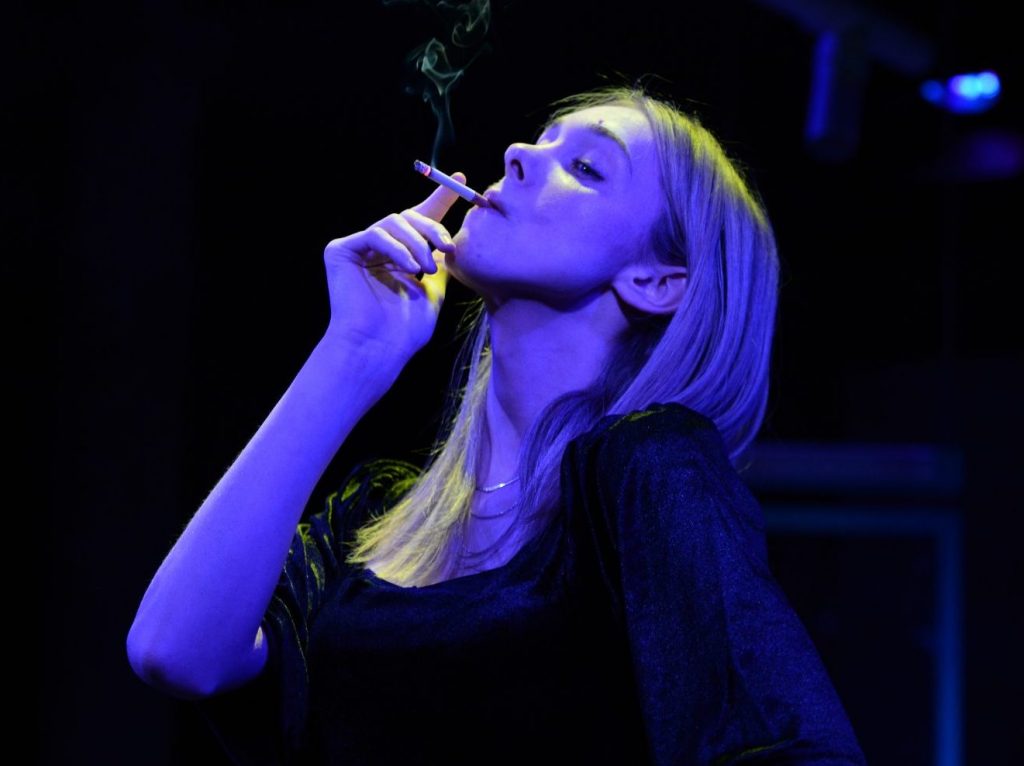
  • It’s okay to cry

    Glaswegian musician and producer SOPHIE has died. She was an extraordinary talent and this is a very sad loss.

    Munroe Bergdorf:

    Our community has lost an icon, a pioneer and a visionary bright light. Heartbroken. SOPHIE you will be missed.

    “Thank you for sharing your talent with us. I hope we get to meet again one day. Rest in peace sister.

    Inevitably the transphobes are already all over this on social media, sharing their joy at the death of a young woman and being hateful to the people mourning her.

  • A global hate campaign

    The horrific new anti-women legislation in Poland, a near-total ban on abortion, is already harming women. The country already had some of the strongest anti-abortion legislation in Europe, and it has now removed the exception for foetal abnormalities. According to the New York Times, 1,074 of the 1,100 abortions performed in Poland last year were for that reason.

    Poland’s right-wing government is not the only evil here. Its bigotry and intolerance has been assisted legally and financially by the US Christian Right. As OpenDemocracy reported late last year, Trump-linked religious groups in the US have spent hundreds of millions globally to assault women’s rights and LGBT+ people’s rights: in its report it noted that one organisation had taken part in multiple Polish cases “to defend that country’s conservative policies including against divorce and abortion”.

    One of the organisations in the report is the Alliance Defending Freedom, which operates in the UK too: it has been a loud voice against Scots hate crime legislation and against trans people.

    The EPF’s [European Parliamentary Forum for Sexual and Reproductive Rights] Neil Datta said: “As Europeans, we cannot sit back and watch what’s happening in the US with distance, thinking that the erosion of democratic norms and human rights cannot happen here. The same US Christian groups pushing for this in the US are now spending millions in Europe trying to achieve the same over here.”

  • Drama

    I’ve watched two very different dramas this week: a theatrical monologue and a TV series. Both were very emotional experiences.

    The monologue was Overflow, written by Travis Alabanza and performed by the mesmerising Reece Lyons.

    It’s a one-woman show about a trans woman hiding in the ladies to escape violence. It’s not always an easy watch but it has important things to say about allyship, about prejudice and what it’s like to be young and trans. I felt like I’d been hit by a truck after watching it: it dug up a lot of big emotions.

    Here’s The Independent’s review of it.

    Overflow explores the problematic concept of allyship. The word “ally” isn’t just something you call yourself – it’s about what you do. In a passage reminiscent of Burgerz, Rosie weaves through anecdotes of well-meaning cis people who have failed to act when it mattered most. Top of the list is lifelong friend Charlotte, described ironically as “the best cisgender woman to ever exist and ultimate ally and protector of the trans”, who doesn’t stand up to transphobic rhetoric when she encounters it in the world. This brings up complex, burdensome questions about friendship, like: “Can I be friends with someone who is friends with someone who is transphobic?”

    The TV series? Like every other LGBT+ person in the UK, I suspect, I binge-watched It’s A Sin, the new drama by Russell T Davies. The Guardian called it a “masterpiece”; it’s a very powerful drama about the AIDS crisis. That means of course it gets very dark and very sad, but before that darkness descends it’s also one of the most joyous portrayals of gay people’s lives I’ve seen on screen.

    It’s also deeply upsetting, especially in other people’s reactions to the characters: this was a time of outspoken, vicious homophobia and anti-gay sentiment soared during the AIDS epidemic. Much of that was driven by the press, which demonised gay men and in the case of The Sunday Times under the editorship of Andrew Neil, claimed that AIDS couldn’t affect straight people.

    Here’s writer Russell Davies:

    Q. Do you think there are parallels between how HIV Positive people were treated in the 80s and 90s and how trans people are treated now?

    Yes, it’s the story of The Other. The heartbreaking thing about the arguments about trans people is that the numbers are so vanishingly small. And if you know any trans people you cannot recognise this portrait of them as predatory and violent and self-seeking or self-serving. It’s heartbreaking to see this get out of control.

    Guardian writer and right-wingers’ favourite hate figure Owen Jones posted a jokey tweet suggesting that transphobes should be banned from liking It’s A Sin. But behind the joke is the unpleasant fact that the very papers whose arts critics praised the programme also employ the columnists who incite fear and hatred of trans people. Many of the people who are so viciously hateful of us are just as hateful of gay men and women. They’ve just learnt not to say that bit out loud.

  • The reality-based community

    Last week, vocal anti-trans bigots and a fair few UK journalists (*standup comedian voice* not that you can always tell the difference, amirite?) claimed that appointing one of the most equal and diverse administrations we’ve seen meant that, er, President Biden was worse for women than Donald Trump. They even had their own social media hashtag, #BidenErasesWomen.

    The reason for this is because Biden’s initial raft of executive orders included restoring very basic legal workplace protections for LGBT+ people – protections that fall short of the legal protections LGBT+ people have here in the UK. Once again the fury in response to the move demonstrated that the people claiming to care about protecting women only really care about hurting LGBT+ people, particularly trans women.

    A new survey by IPSOS asked over 500 Americans for their views on Biden’s initial executive orders. 83% approved of the LGBT+ protections: more than approved of his reponse to COVID-19, his mask mandate, his rejoining of the World Health Organisation, his recommitment to battling climate change or anything else.

    What you read in the papers does not reflect the views of the reality-based community.