Author: Carrie

  • Facebook fuels hate

    This, by Julia Carrie Wong, was written in 2017.

    Facebook groups – like any social capital – can just as easily be used for ill as good. And social capital is not an unalloyed good. A 2013 study by New York University political scientist Shanker Satyanath, Bowling for Fascism, found that dense networks of social organizations and clubs in Germany helped promote the spread of nazism. And even a cursory search of Facebook unearths networks of extremists using groups to recruit and organize.

    And this is from the same paper this week.

    Last Wednesday Facebook announced it was banning conspiracy theories about Jewish people “controlling the world”. However, it has been unwilling to categorise Holocaust denial as a form of hate speech, a stance that ISD describe as a “conceptual blind spot”.

    The ISD also discovered at least 36 Facebook groups with a combined 366,068 followers which are specifically dedicated to Holocaust denial or which host such content. Researchers found that when they followed public Facebook pages containing Holocaust denial content, Facebook recommended further similar content.

    …A Facebook company spokesperson said: “We take down any post that celebrates, defends, or attempts to justify the Holocaust. The same goes for any content that mocks Holocaust victims, accuses victims of lying, spews hate, or advocates for violence against Jewish people in any way.

    You’ll note that the words “Holocaust denial” aren’t in that statement. Facebook continues:

    While we do not take down content simply for being untruthful, many posts that deny the Holocaust often violate our policies against hate speech and are removed.

    And many posts that deny the Holocaust do not violate Facebook’s policies and are not removed. I’ve seen this myself: I’ve given up reporting Facebook hate speech, including posts containing Holocaust denial videos, because every time I did Facebook came back and said that the content did not violate their community guidelines.

    When historians write about our era, they will conclude that Mark Zuckerberg was one of the bad guys.

  • Unhealthy ignorance

    A genderqueer person undergoing a pelvic exam. Image: genderphotos.vice.com.

    There’s a superb piece in BBC Future about a growing problem in trans healthcare: because systems largely class people on gender rather than assigned sex at birth, trans and non-binary people can encounter significant barriers in getting adequate testing and treatment.

    Most healthcare has evolved with a straightforward dichotomy of gender in mind. Though there are thought to be nearly a million transgender people living in the US (this is a rough estimate as this data isn’t collected) there’s concern that this group is being largely ignored by health services and the medical industry.

    Rather than devising new ways to cope with changing social norms, transgender people are often shoehorned into inappropriate boxes instead.

    There are key differences between transgender and cisgender people, and those differences include the effects of drugs and anaesthetics, what kinds of screening are appropriate, the risks of certain kinds of illnesses and so on. A trans man may respond differently to medication or may produce different test results than a cisgender man or a cisgender woman, but the system is not geared up to reflect that.

    Doctors already factor in the importance of tweaking the standard female dosages for pregnant women, who have a higher body weight and are simmering in a cocktail of hormones that change certain aspects of their biology. However, no such considerations are routinely made for transgender people, who, as a result of surgery or hormonal therapies, are known not to respond to certain drugs in the same way.

    This is part of a wider problem, which is that medicine takes cisgender men much more seriously than anybody else. As the Independent reported earlier this year:

    A 2012 US study found that paramedics were less likely to take severely injured women to an emergency or other trauma centre (49 per cent of women versus 62 per cent of men).

    Men reporting irritable bowel syndrome (IBS) symptoms are more often referred for X-rays, women offered lifestyle advice or anxiety medication.

    …Women metabolise drugs differently 40 per cent of the time, McGregor writes. Yet 80 per cent of animals used in trials of potential new drugs are young males, and women’s participation in the first crucial phase of clinical trials is even now only 30 per cent. This leads to a situation where, for instance, it took nearly 20 years and thousands of complaints before the medical authorities realised that women only needed half the original recommended dose of the sleep aid Ambien.

    More frighteningly, McGregor writes that when drug trials are designed without sex-based criteria, “the different effects of the drugs on men and women often simply cancel one another out”.

    Perhaps even more worryingly, women are less likely to be referred for testing if they complain of cardiac symptoms, and more likely to die after a serious heart attack due to a lack of care.

    Every single one of my female friends has horror stories of male GPs not taking them seriously and dismissing severe problems as “women’s troubles” best fixed with chocolate and a hot bath. Very many of them have also experienced medical staff taking a “we know your body better than you” stance. The lack of knowledge about women’s health is often shocking.

    In a system that often treats women badly it’s hardly surprising that trans and non-binary people also encounter problems.

    When you factor in the large data gaps in everything from the average life expectancy of transgender people to the right dosages of medications for their bodies, along with the widespread lack of knowledge among doctors about how to address them – let alone treat them – and the high chance of them being refused treatment outright, it soon becomes clear that transgender medicine is in crisis. Few groups experience such significant barriers to healthcare, and yet their struggles are going largely unnoticed.

    The piece makes a really crucial point: for trans people, healthcare focuses on their hormonal and/or medical transition, not what happens afterwards.

    That’s not because being trans is new: as the article notes, you could argue that the first documented request for gender reassignment was in around 220AD. In terms of modern medicine, surgical and hormonal transition has been possible since the 1920s and accessible since the 1960s, so we should have lots of data on the medical issues raised by transition and on the health of trans people in their post-transition lives. But we don’t.

    if you were to look through every single medical record in the UK – all 55 million – you won’t find a single record labelled as belonging to a transgender person. This is also true for those assembled by many providers in the US.

    This data gap is significant, because it means many healthcare providers are operating from a position of relative ignorance. How do we know what medical issues are unique to trans and non-binary people if we don’t even record whether people are trans or non-binary?

    In fact, there’s mounting evidence that – as with many other traits, such as race – gender often defies the binary categories and clear thresholds that much of modern medicine has been built on. Transgender people often have distinctive anatomy and physiology, not just compared to the wider population, but to each other – depending on what kind of treatment they have had.

  • Far right in “racist” shocker

    The Independent:

    The British far right is becoming more openly racist in the wake of a backlash against international Black Lives Matter protests, experts have warned.

    A report by Hope Not Hate, seen exclusively by The Independent before its release, said that years of dominance by Tommy Robinson and other figures focused on Muslims was giving way to rising white nationalism.

    The bigotry was always there, but it was toned down for PR purposes.

    [The report author] warned that Patriotic Alternative was “trying to give the friendliest possible face to extremely fascist ideas” by using veiled terminology.

    But Hope Not Hate’s report found that private online chats between members were “awash with extreme racism, Holocaust denial and open veneration of fascism”.

    It said Patriotic Alternative had “antisemitism at its core” and played into conspiracy theories claiming Jews are orchestrating the “replacement” of white Britons.

    There are strong parallels with UK anti-trans activism, sections of which are also openly bigoted: scratch a transphobe and you’ll often find an antisemite, a racist and/or a homophobe. It too perpetuates the conspiracy theory that Jews are orchestrating the “replacement” of white Britons, in this case women. 

    Patriotic Alternative claims that children are being exposed to pro-LGBT and anti-white “propaganda” and advocates home-schooling using its own package of hateful material on “history and culture”.

    Sometimes it’s hard to tell which group of bigots you’re looking at.

  • Many things we know are wrong

    If you’ve read this blog for a while you’ll know I’m fascinated by Internet Facts, things that everybody believes but that aren’t true – such as the story claiming singer Mariah Carey, when asked about famine, said “I’d like to be that thin, but without all the flies and death and stuff”.

    Another good example of that is Queen Victoria and lesbians. According to legend, she refused to sign a bill criminalising same-sex relationships until references to women were removed; according to the monarch, “women do not do that sort of thing.”

    It isn’t true. The law in question was the Criminal Law Amendment Act 1885, and it never referred to women: it didn’t initially mention gay people at all until an amendment by a liberal MP criminalised “gross indecency” between two men.

    Another, similar legend about the Victorians claimed that they were so prudish that they covered up table and piano legs for fear of accidental arousal. That one isn’t true either: it was a very dubious claim by writer Frederick Marryat in the mid-1800s.

    I like Knowledgenuts.com’s explanation:

    Marryat visited a girls’ seminary where he discovered the piano’s legs were shrouded in little ruffled pantaloons. The headmistress told him she’d covered the legs to “preserve in their utmost purity the ideas of the young ladies under her charge.”

    Either the headmistress was something of a kook or Marryat got punked. There’s no evidence in the historic record that this supposed custom was widespread. In fact, the pretty pantaloons were most likely dust covers, concealing damage, or mere decoration.

    The British press at the time picked up Marryat’s story and ran with it, since American society and its straight-laced, puritanical, overly fastidious, ludicrous manners were considered gauche and far inferior to their cousins across the Pond.

    The British press printing bullshit because it enabled them to perpetuate prejudices? Pass the smelling salts! I feel all giddy!

    One of the reasons these things endure is because they feel true: they chime with what we know, or think we know, about the era or people concerned. So the fake quote from Mariah fits the image of a callous, air-headed diva; lesbians and sexy piano legs chime with our image of sexually repressed Victorians.

    But of course, what we think we know is wrong. Mariah Carey is much smarter and apparently much nicer than we think she is; many Victorians were off their face on hard drugs and going at it like knives.

    The comedian Stephen Colbert coined the term “truthiness” to describe something that may feel true, but that isn’t. As Wikipedia puts it:

    Truthiness is the belief or assertion that a particular statement is true based on the intuition or perceptions of some individual or individuals, without regard to evidence, logic, intellectual examination, or facts. Truthiness can range from ignorant assertions of falsehoods to deliberate duplicity or propaganda intended to sway opinions.

    There’s a good example of that doing the rounds on social media right now. “I never knew of any trans kids when I was young, just old trans people” the post says. “So where are all these trans kids coming from now?”

    Same place the old trans people came from. But now, people are less likely to wait their whole bloody life before coming out.

    When I was a teenager, to the best of my knowledge there were no gay, lesbian, non-binary or trans people in my town. But of course there were. They kept their identities very secret because they didn’t want their heads kicked in.

    This was the era of the Sunday Times claiming AIDS was a gay plague, of Piers Morgan outing pop stars as “poofs”, of the Murdoch press demanding lesbians be banned from girls’ changing rooms because they were dangerous predators.

    Plus ça change, plus c’est la même chose.

    I’ve mentioned before the response of one anti-trans activist to the idea that trans people have existed since long before she was born. “But I’m 42!” she said.

    We were always here. You just didn’t see us, because for many of us being seen meant being targeted. So we stayed hidden.

    I was talking to someone a few days ago about their aunt, who’d  tried her whole life not to be trans. She did the hyper-masculine stuff that many trans people did: the military career, the body building, the hard drinking and risk-taking. But you can’t outrun yourself, and when she finally came out very late in her life she was transformed: happy at long last.

    Cancer claimed her two years later.

    There are many sad stories like that one. She was trans her whole life and spent almost all of that life fighting it, too scared to let anyone know until so late in her life that she didn’t get to spend much time being herself.

    She was a trans kid. So was I. So was every late-transitioning adult. You didn’t know about us because we didn’t know it was okay to be us, because it wasn’t safe to be us.

    We were always here. You’re only seeing us now because more of us feel that it’s safe, or at least safer, to be out. Information we were denied when we were younger is freely available. Support exists that didn’t before. There are communities that will welcome us when family or friends reject us. We can see that there are many others like us.

    If people really cared about the wellbeing of kids, they’d be pushing for better trans and non-binary healthcare, for counselling services that don’t have years-long waiting lists, for people to be given the help they need to discover who they are – whether cis, trans or non-binary: the only outcome that should matter is whether the child is happy and supported, irrespective of how they identify. But these people don’t campaign for that. They campaign to remove the little healthcare that’s available. To remove hard-won rights. To make everyday life so difficult that trans and non-binary people stay in the closet. Better a miserable, repressed, self-hating kid than a trans or non-binary one.

    As the banner (pictured) puts it: “we don’t want your cis kids to be trans. We want your trans kids to survive.”

    It’s sad that even that low bar is too much for some. I don’t just want your kids and my kids to survive. I want them to thrive, however they may identify.
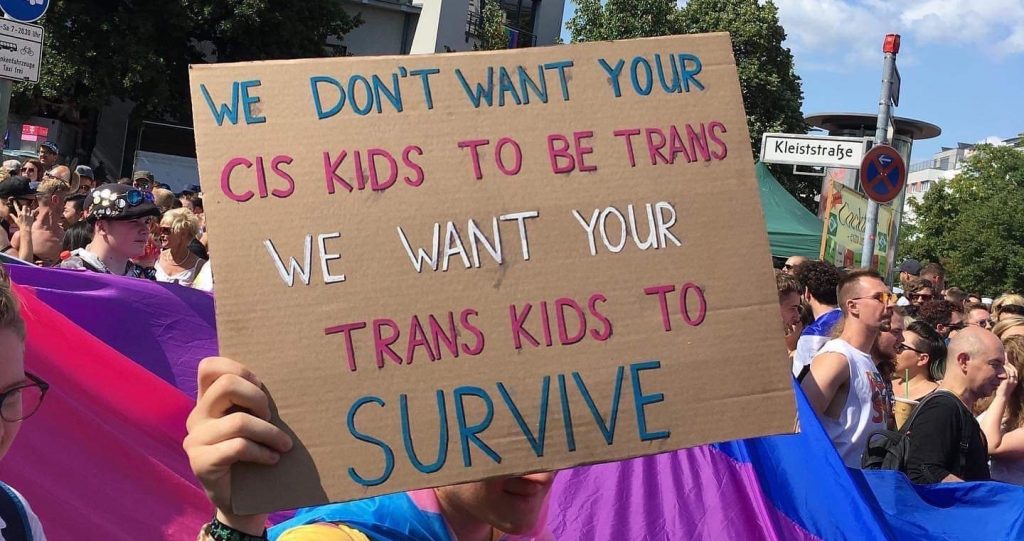
    Photo of a placard: We don't want your cis kids to be trans. We want your trans kids to survive.

  • Himpathy for the devils

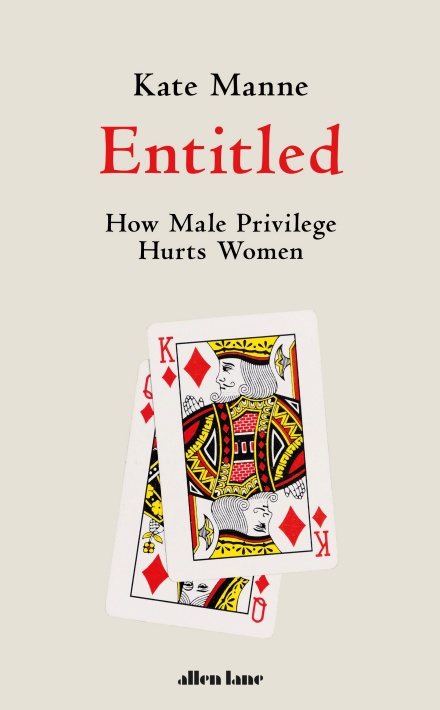
    I’ve just finished reading Entitled: How Male Privilege Hurts Women by Kate Manne.

    In nine chapters, Manne elaborates on the many spheres in which male entitlement hurts women and girls. The entitlement to admiration that some men demand, for example, has led to the phenomenon of “involuntary celibates” (or “incels”) targeting women in violent acts. The entitlement to bodily control has led to cis-gendered men legislating, often ignorant of basic facts, the bodily functions of pregnant and transgender people, Manne writes.

    The entitlement to sex has led to a rape culture rife with what Manne terms “himpathy” – the sympathy extended to a male perpetrator rather than to his female victims. “Misogyny takes down women,” she writes, “and himpathy protects the agents of that take-down operation, partly by painting them as ‘good guys.’”

    It’s a fierce and well argued book, and it doesn’t spare the women who participate in this: as Manne writes, women, especially privileged white women, can be complicit in perpetuating misogyny against other women.

    Manne takes particular aim at the women who campaign to restrict other women’s bodily autonomy and reproductive choices, who exclude particular groups of women from their feminism, who provide the “himpathy” for predatory and wicked men.

    There’s a lot here to be angry about, but despite this Entitled finishes on an optimistic note. The pages in which Manne describes the world she wants her child to grow up in made me want to cheer.

  • Happiness is not a cold scalpel

    Last night I read a post by a trans woman that made me sad. It was intended to be supportive – it was written as a kind of open letter to trans women who compare their appearance to other women and find themselves lacking – which is why I didn’t give it a kicking in the place where it was posted. But I think it’s worth talking about here.

    The poster wanted to tell trans women that happiness and self-acceptance are possible. All you need to do is “pass as cis” – that is, look like a particular kind of cisgender woman. And to do that, all you need to do is lose a ton of weight, take a ton of hormones, have facial feminisation surgery and undergo three rounds of vocal feminisation surgery.

    That might have been the route to happiness for the poster, but it might not be for anybody else.

    Take facial feminisation surgery, aka FFS. The poster had a well paid job and was able to pull together around £15K for their FFS (which suggests they didn’t have many treatments; you can easily spend many times more than that). Some people will never be able to afford that.

    And of the people that can afford it, some of them will not get spectacular results because the surgeons can only work with what they’ve got. If you look like me, a chin reshape or a brow reduction is not going to make you look like Audrey Hepburn.

    It’s the same with hormones. For some people HRT’s effects are minimal; their effectiveness depends on a whole host of factors, particularly genetics and age. Age is a big one, so telling late-transitioning trans people that HRT will definitely have magical effects is untrue. And even minimal effects may be many years in the future: not only do hormones work slowly but the wait to even start treatment can be very long. In some parts of the UK you can expect a wait of around five years between being referred to a gender clinic and getting a hormone prescription.

    Last but not least, there’s weight. The poster asserted that losing weight has a massive feminising effect, but again that depends on the face and body you have. Some people find that losing weight makes them look more masculine, not less.

    Of course if that’s the case they could always have facial feminisation surgery… and we’re back to the start again. There’s always one more thing you need to do before happiness is yours.

    Let’s pretend I have the desire and the resources for facial feminisation surgery (spoiler: I don’t). What if after a brow reduction, or chin recontouring, or a hair transplant, or a nose job, or a tracheal shave, or a lip lift, or cheek augmentation, I still don’t look or feel pretty?

    What if I’m still clocked because of the things surgery and hormones can’t change: the width of my shoulders, the breadth of my ribcage, the length of my torso, my centre of gravity?

    What if something goes wrong with the surgery – many FFS providers specifically advertise their ability to fix other surgeons’ mistakes – and I can’t afford to get it corrected?

    What then?

    I’m not suggesting that FFS, HRT and other things can’t have positive effects on how you feel about how you look. Of course they can. Some people have these things, look amazing and feel fantastic. I don’t endure two hours of painful facial electrolysis every week for a laugh: I do it because having a stubble-free face is important to me.

    But the idea that there is a particular standard of beauty (thin, pretty, usually white) and that if you just starve and carve yourself enough to meet it then happiness will surely be yours is a pernicious myth that has caused a great deal of harm to very many women.

    Cosmetic surgeries will not necessarily make you any happier or deliver the results you want, and nobody should be telling anyone that they will.

  • The fast track

    NHS England:

    The maximum waiting time for non-urgent, consultant-led treatments is 18 weeks

    PinkNews:

    Trans and non-binary patients in the UK’s south west are waiting more than 193 weeks to see an NHS specialist – more than 10 times the NHS legal guideline of 18 weeks.

    Waiting times vary across the UK but they’re years-long everywhere. For example the Sandyford clinic in Glasgow is currently making initial appointments for people who registered in January 2018. That’s 31 months; around 135 weeks. And that wait is for an initial assessment, not a consultation on any treatment.

    Update

    I think it’s worth pointing out that these times are for people who were in the system two to four years ago, not people who are joining the waiting list today. Their waiting times are going to be even longer.

    I joined the Sandyford waiting list in late 2016 and was seen 11 months later. People who joined in early 2018 are now being seen 31 months later. How long will the class of 2020 have to wait?

  • Spaghetti straps

    The inside of my head often looks like this.

    You’ve probably heard of gender dysphoria, which is when someone’s gender identity doesn’t match the sex they were assigned at birth. But you may not be aware of the converse, gender euphoria. Where dysphoria is the feeling that something is terribly wrong, euphoria is the feeling that something is very right.

    There’s a lot of discussion about the dysphoria many trans people experience, but there’s a lot less about their euphoria: it often seems that we only hear about the sad stuff. I think that’s partly because so much of the discussion about us focuses on trauma and tragedy – something that’s inevitable if the narrative is centred on legal protections such as protection from hate crimes or the horrifically long waiting times trans people endure for basic healthcare. Of course we’re going to talk about the awful things many trans people experience.

    But I also think part of it is that what can seem really profound to you might seem really trivial to someone else – and when there are bad actors looking for anything to take out of context, screenshot and share with their fellow bigots, you become very wary of what you’ll post.

    So other people only get part of the picture: the sad part. But the reality is that there’s a great deal of happiness too, and sometimes that happiness comes from the tiniest of things.

    For example, the other day I wore a nice dress.

    It had spaghetti straps.

    That’s it.

    That’s the story.

    Exciting? No. Profound? Maybe not to you. But it’s not so much about the dress as what wearing it represented.

    Progress.

    Sitting with your shoulders visible isn’t going to be a big deal for a lot of women, but it is for me: since I came out clothes have been primarily about hiding my body, not making bits of it visible. I love dresses and wear lots, but if you’re looking for someone showing skin you’d have more luck with an Egyptian mummy.

    So something as simple as wearing something spaghetti-strapped or having legs that aren’t covered in 10,000-denier tights may not be a big deal for others, but it is quite a big deal for me – especially when it brings compliments from friends, not angry mobs with burning torches. It’s a sign of growing confidence and of self-acceptance.

    It’s also a sign of physical progress, because the dress fits in a way it wouldn’t have before I started transition. So there’s a euphoria there from having a tangible indication of your progress: when hormones work their magic ever so slowly, sometimes it’s nice to notice a milestone.

    I said earlier that the things I experience as gender euphoria may seem really trivial to other people. And that’s because they often are. They’re mundane things. Normal things. Things most people take for granted.

    But for me, they’re not mundane, not normal, not things I can take for granted. It sometimes feels like I’m an ingenue in the big city, constantly open-mouthed in surprise at the things the locals don’t even notice. “You mean you just, like, put on a dress, and go out, and nobody scowls at you? Ever?”

    They’re often little things. But they’re little victories too.

  • World-beating

    The UK now has two world-beating achievements to boast of: the highest excess death rate in Europe and the worst drop in GDP of any G7 nation. We’re in the deepest recession since records began.

    As journalist David Osland put it on Twitter:

    It’s lucky that asylum seekers, trans people and Dawn Butler are to blame for everything that’s wrong with Britain. Otherwise people might start thinking the government has got something to do with it.

  • You’re not a bigot

    Or at least, it’s highly likely that you aren’t. That’s according to the latest survey of UK people’s attitudes to trans people. While there’s clear evidence that three years of anti-trans scaremongering have had an effect, there’s also clear evidence that the scaremongers do not reflect wider public opinion.

    Stonewall:

    When the public is asked to choose words that describe their feelings towards trans people, we see a really striking picture.

    Overall, positive feelings dominate, particularly for women – half of us feel ‘respect’ and more than a quarter ‘admiration’ for trans people. We can also see that women are much more likely to feel respect and admiration for trans people, while also being less likely to feel disgust, pity, fear or resentment. This is important to bear in mind, as it undermines the common narrative which seeks to turns cis women and trans women against each other.

    But alongside these positive feelings, quite a lot of us aren’t sure and that’s OK. Some of these people may not be comfortable expressing negative feelings, many of these people are likely to be those who genuinely don’t know how they feel, or simply see trans people as … people.

    However, the people who hate us really hate us.

    Very few people indeed selected negative feelings such as disgust, fear or resentment. But when we look at the views of the minority who describe themselves as prejudiced (16% of us), this transphobic minority feels very strongly: a third said they felt disgust (33%) and one-quarter said that they felt resentment (25%). This means that while the group of people who are transphobic, and would describe themselves as such isn’t large – 16% is in line with other forms of discriminatory attitudes to oppressed groups – the views of that minority are much stronger.

    Those are the views most often platformed by UK newspapers, current affairs magazines and broadcasters, and they are the views most commonly expressed on social media.

    The British public in general, and British women in particular, feel pretty positive about trans people. If our media coverage and social media discussions simply reflected this reality, the lives of trans people would be immeasurably improved overnight. Instead of this, the drip, drip of negative and distorted media coverage may be manufacturing a creeping sense of discomfort around shared spaces.

    …[the survey] shows that we have a small, but vocal group of people with extreme anti-trans views in Britain, and that should worry us all.

    If the majority of us simply sit by while the transphobic minority shout their harmful views from the rooftops, our warm feelings mean nothing, and we are part of a problem that is ruining trans folks lives.

    Please, don’t be part of the problem.