Author: Carrie

  • Ding dong, GRA reform in England is dead

    The Westminster government has finally published its response to the public consultation on reform of the Gender Recognition Act. The short version: it’s going to be slightly cheaper to get a GRC and some of the forms will go online. There are no significant changes otherwise.

    This is for England and Wales; officially at least GRA reform is still possible in Scotland, so there will be no let-up in the hate campaigns against trans people. I suspect things will get even worse as they attempt to pressure the Scottish Government to follow the English example.

    It’s interesting to note that despite the supposed “swamping” of the consultation by trans “activists”, just 7,000 of the 102,800 responses – responses that were overwhelmingly in favour of reform by a much bigger margin than, say, the Brexit vote – were from trans people. Nearly 19,000 responses were one-click template-based submissions from a single anti-trans group. As ever, the discussion was primarily about us, without us.

    As you’d expect from a Government minister, there are some dodgy claims in Liz Truss’s statement.

    We have also come to understand that gender recognition reform, though supported in the consultation undertaken by the last government, is not the top priority for transgender people.

    Just because the government treats trans people even more hellishly in other parts of the system doesn’t mean legal gender recognition doesn’t need reformed.

    Thirty-eight per cent told us the process was too bureaucratic. So we will place the whole procedure online.

    Being able to upload deeply personal reports instead of posting them doesn’t make the process any less bureaucratic and it certainly doesn’t make it any less humiliating. The gatekeeping, the requirement to have medical reports and the paperwork you must provide to a faraway panel haven’t changed. Even the BMA says doctors shouldn’t be involved in this process.

    Trans people tell us that waiting lists at NHS gender clinics are too long. I agree, and I am deeply concerned at the distress it can cause. That is why we are opening at least three new gender clinics this year, which should see waiting lists cut by around 1,600 patients by 2022.

    This is nothing to do with the GRA consultation and Truss is claiming credit for decisions made by NHS England several years ago.

    It’s a sad state of affairs when “we’ll make the process slightly cheaper” counts as a victory. But ultimately nothing has changed but the price tag. There’s no change to the Equality Act or its guidance, and the role of a GRC has not been changed (it’s still irrelevant to what spaces we can access or where we can urinate). It’s not going to be any easier to get a GRC than it has been for the last sixteen years, so all of the antis’ “reasonable concerns” have been addressed. They can finally pack up and go home. Right?

    Maybe I’m cynical. Maybe now that the UK government has decided not to change anything, the groups created solely to fight against GRA reform will close their campaigns, disband their organisations and take the hundreds of thousands of pounds they’ve crowdfunded from dodgy donors and give that cash to organisations that help vulnerable women.

    Maybe.

    Or maybe, just maybe, GRA reform was only ever a fig leaf for their real motives.
  • “Do they really believe this garbage?”

    Journalist Jane Fae writes on Medium about the bogeymen and women the press likes to call “activists”.

    Just last week, for instance, Gillian Phillip kicked off in the Mail about the “violent, hate-filled language that has become chillingly familiar to anyone who has had the temerity to question the prevailing orthodoxy of the transgender activist brigade”. Meanwhile, over in the Times, James Kirkup contributed a piece that totally lived up to its headline: “Trans activists hate Rowling because she’s a woman”.

    Catherine Bennet was at it in the Observer this weekend too, arguing that anybody who criticised JK Rowling – a hugely significant cultural figure whose views are taken very seriously by very many people, and whose books were very important to many trans people  – but not the aforementioned Kirkup – an insignificant arse who’s made a career of having bad opinions for money – is a woman-hating misogynist.

    There’s no middle ground in any of this coverage. Any trans person with the slightest opinion on anything is portrayed as ISIS in makeup. Trans people aren’t allowed to talk about the vicious abuse they get simply for being trans, usually in the wake of yet another anti-trans blog post or column. Trans people as vulnerable? As victims? As too scared to leave the house because they’re expecting to see the transphobia from the papers reflected in other people’s eyes? That doesn’t fit the narrative. All trans people are violent, hate-filled activists. Never people.

    It’s the oldest trick in the book: portray the other as a monolithic bloc where the opinion or actions of the very worst extremes are presented as the opinions and actions of all. It’s known by many names, but the one I think suits it best is the Klan Fallacy: because one black person committed a crime, all black people are criminals and it’s okay to be a racist piece of shit.

    Why do they print this stuff? For starters, it allows commentators to put the boot into minorities without appearing to do so. Who us? Having a go at trans people? Or black people? Or any other sort of people? Nah. We’re just calling out the bad ones.

    The definition is infinitely flexible.

    If you want to demonise a whole group of people, you can absolutely go on Twitter and find some hothead. That hothead might not even be trans – the person behind the supposed bomb threat from trans activists, a story Fae writes about in the article, was a right-wing cisgender teenage gamer from the US trying to stir some shit against trans people – but that doesn’t matter. The columnist’s feelings don’t leave any room for facts.

    Trans activists: the “trans lobby”, cabal, ideology; these all furnish a target and an enemy to fight against. Much easier than owning to the fact that your own position is itself fundamentally ideological — often evangelical Christian, occasionally a reductive and back-to-the-stone-age feminism. Sexier, too than admitting that your primary goal is to resist minority demands for basic civil rights.

  • A tweet is not a war

    Director of British Future, Sunder Katwala, has posted an interesting twitter thread about whether the UK is undergoing a culture war.

    One of the points he makes is that a great deal of culture war stuff in our media is manufactured by the media. For example, a few weeks ago there was a kerfuffle about the singer Adele’s hair: was it cultural appropriation? Most people couldn’t care less, but it was puffed up by a media that thrives on reporting conflict – and which will create conflict if there’s nothing to report. Katwala:

    Almost nobody in Britain thought there was any issue with Adele’s hair. Broadcasters had to get some muppet from Philadelphia on to pretend there was a controversy.

    This happens all the time, and it’s getting worse: some media outlets deliberately trawl social media for the most extreme opinions they can find and pretend that they’re representative of a wider group or movement. They file their non-story and the rest of the media picks up on it – so other newspapers will rerun the story and the BBC will get a bunch of people into the studio to discuss it. Cue endless column inches and broadcast hours about a movement that doesn’t exist.

    Most of the time these supposed controversies don’t reflect public opinion, but people largely agreeing with each other doesn’t make for dramatic conflict on radio or TV. I know from experience that contributors to discussions are sometimes asked to take a particularly extreme point of view in order to make the debate more spicy (I’ve refused to do so; I’m not asked to go on those programmes any more). This is why contrarians get so much airtime.

    So I’m not sure I agree with Katwala on this:

    The media should be less credulous in reporting every tweet as if it reflects a movement

    I don’t think much of the media is credulous; I think it knows exactly what it’s doing and it gets what Katwala brilliantly describes as a “sugar rush from platforming conflict, however trivial”. It knows that the voices it platforms are extreme. That’s why it platforms them.

  • What Dr Seuss didn’t say

    If you’ve been reading this blog for some time you’ll know that from time to time I get fascinated by online misquotes, which often go on to have a life of their own. As I’ve written before, the urinal trough in the gents’ toilets in Glasgow’s King Tut’s venue is engraved with a quote from the writer Hunter S Thompson that says:

    The music business is a cruel and shallow money trench, a long plastic hallway where thieves and pimps run free, and good men die like dogs. There’s also a negative side.

    He never said that. He did, however, write that the TV business is a cruel and shallow money trench where thieves and pimps etc etc etc. Swapping TV for music and adding “there’s also a negative side” is the work of someone on the internet. One of the upsides of transition is that I can now go for a wee in Tut’s without getting annoyed by this.

    I found out about another one today, which I had previously thought was an old advertising slogan of some kind:

    The people who mind don’t matter. The people who matter don’t mind.

    Nope! The actual quote is this:

    Be who you are and say how you feel, because those who mind don’t matter, and those who matter don’t mind.

    Multiple sites, including Good Housekeeping, have attributed it to Dr Seuss. You can buy it on cushions and framed prints on Etsy. But despite their claims that it’s in The Cat In The Hat, it isn’t. There’s no evidence that Dr Seuss ever said it.

    Quote Investigator looked into it and found an early example in Punch magazine in 1855.

    A SHORT CUT TO METAPHYSICS.
    What is Matter?—Never mind.
    What is Mind?—No matter.

    And the TV show QI found a version of it in an engineering journal in 1938:

    Mr. Davies himself admitted that it was highly controversial and open to criticism; but criticism concerned both mind and matter. “Those who mind don’t matter, and those who matter don’t mind!”

    The phrasing was used in the 1940s in some popular anecdotes about the seating arrangements at parties and turned up in various newspapers before being attributed to the US financier and philanthropist Bernard Baruch. But it appears to be one of those bits of anonymous wisdom that gets attached to various people in various places at various times. As Dr Seuss put it*:

    Sometimes we just see
    What we want to believe!

    * You knew I’d to this. No he didn’t. I made it up. 

  • Salt water

    I know it’s hard for people who aren’t trans to understand what gender dysphoria is like. I thought this analogy, by Dr Emmy Zje, is pretty good.

    Imagine that you’re sitting with a bunch of people and you’re all drinking water. Their water is spring water, but yours is salt water – and you don’t know this, so you don’t understand how they can drink their water so easily when yours makes you want to choke. So you try to do what they do, and you drink, and you drink, and you keep drinking until you nearly die from dehydration.

    As another Twitter user, Rachel de Spoons, points out, the analogy works particularly well because different people experience different levels of dysphoria. As she writes: “everyone has different concentrations of salt. Some can’t manage a sip and for others it’s just tainted enough that they last decades.”

    The original tweet has gone viral, so Emmy has asked people who like it to consider donating to #transcrowdfund to help a trans person achieve their transition goals.

  • Bad journalism

    I’ve been listening to the You’re Wrong About podcast, this time about the infamous Ford Pinto. It seems that almost everything I thought I knew about it was incorrect and largely based on a single Mother Jones article.

    The podcast makes an interesting point about that, and about journalism more widely: a lot of bad journalism comes from writers who are operating in good faith, or at least partial good faith. They believe that they have uncovered something so huge that they must tell the world. That belief can cause a kind of myopia.

    Journalism is as much about what you choose to leave out as what you choose to put in. Let’s say you’ve got a whistleblower from inside an organisation with a suitably salacious tale. If it’s a really good story, if it’s the kind of story that’ll have people gasping over their morning paper, how much consideration will you give to the things that contradict or cast doubt over what the whistleblower is telling you?

    People like to be heroes, and journalists are no exception – so if you think you’re the hero who’s going to break the story, you’re not going to consider that perhaps you’re being misled, or seeing connections that aren’t there, or ignoring evidence that shows that you’re not the hero here but the villain.

    The MMR scare is a good example of that. How many journalists telling their readers of the entirely invented dangers thought they were doing Pulitzer-worthy public service journalism? And how many lives have been destroyed by the anti-vaccination movement they helped spawn?

  • Never kiss a Tory

    Do you remember when bigots were ashamed to be openly bigoted? When racists were too scared to say racist things? When it wasn’t okay to brag about grabbing women by the pussy? I do, and I’d like those days to return.

    One of the reasons we’re in the mess we’re in is that far too many people are far too willing to make allowances for the ignorant, the intolerant and the downright dangerous.

    I get particularly annoyed by the assertion, usually made by affluent middle-class conservative columnists, that we have an obligation to tolerate people with repellent beliefs. If we don’t invite our nazi uncle to dinner, we’re refusing to entertain alternative points of view.

    I disagree. I think if you have nazis at your dinner party, you’re having a nazi dinner party.

    Jessica Valenti clearly feels the same, and has articulated it with much less swearing than I have.

    This week, as the president of the United States casually retweeted an account accusing Joe Biden of pedophilia and baselessly claimed that “it’ll start getting cooler” as smoke haze from California reached New York City, writers Bari Weiss and Johann Hari both waxed nostalgic for a time when friendships and romances blossomed across the aisle. “I don’t denounce my friends when I disagree with them,” Hari tweeted. “If you do, then you don’t actually have friends, you only have political alliances, and your life will be filled with anxiety and unhappiness.” (Never mind the anxiety that might come along with being “friends” with a person who doesn’t believe in your right to marry or control your own body.)

    …These calls for bipartisan amicability in the face of unrelenting injustice are a reminder that the life-and-death issues so many Americans face are often just cocktail-hour talk for others. It’s easy to bemoan the lack of politeness in politics when you have no real skin in the game.

    My friends don’t make me anxious or unhappy; bigoted people do, which is why I’m not friends with any.

    Like Johann Hari, I don’t want to denounce my friends. I find the easiest way to avoid that is not to be friends with assholes.

  • Doctors say trans rights

    The BMA’s annual conference has called on the government to protect the rights of trans and non-binary people both in healthcare and in wider society.

    Dr Helena McKeown, Chair of the BMA representative body, said:

    The BMA supports transgender and nonbinary individuals’ equal rights to live their lives with dignity which includes the right to equal access to healthcare. We oppose discrimination of all kinds and are committed to ensuring universal access to healthcare for all on the basis of clinical need.

    While the BMA has numerous policies affirming our support of LGBT individuals, [The agreement to this new policy means] that, for the first time in our history, we now have a BMA-wide policy giving specific attention to the needs of transgender and nonbinary individuals. Receiving any medical treatment can be stressful for patients and so it is important for individuals to receive healthcare in settings they feel comfortable with. This applies to transgender as well as cis individuals.

    The BMA hasn’t, however, clarified whether trans women have pelvises.

  • A little bit of good news

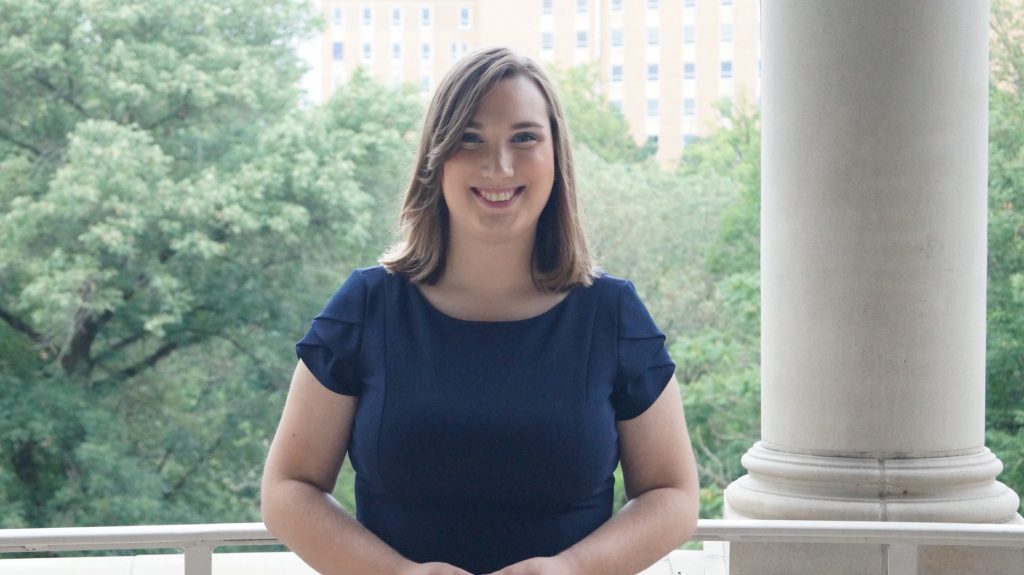
    Sarah McBride

    The world’s on fire, everything is awful and it’s not a great time to be LGBT+, so it’s important to celebrate the little pieces of good news among the relentless misery of 2020. The luminous Sarah McBride won the Democratic nomination for a Delaware seat last night, which means she’s on track to be America’s highest-ranking openly trans elected official.

    McBride is only 30 but she has already had to deal with a great deal of shit in her life. She lost her husband to cancer, she’s had to deal with all the crap a trans woman with a public profile has to endure, and she was even targeted by UK anti-trans bigots who flew to the US courtesy of the Heritage Foundation and verbally abused her in her office. And despite this she remains incredibly strong, incredibly dignified and – amazingly – full of faith in humanity.

    Her book, Tomorrow Will Be Different, is really good and very sad. You can find out more about her on her website.

    As Annise Parker, president of the LGBTQ Victory Fund, commented:

    Sarah’s primary win shatters another lavender ceiling in our movement to build LGBTQ political power, and her victory will inspire more transgender people to run for elected office. At a time when the Trump administration, cynical politicians and too many state legislatures are attempting to use trans people as political weapons, Sarah’s win is a powerful reminder that voters are increasingly rejecting the politics of bigotry in favor of candidates who stand for equality.

    Representation matters. Not just politically, but visually. Somewhere there’s a trans kid seeing Sarah on TV and thinking, I want to be just like her.