Author: Carrie

  • Everything you know about vinyl is wrong

    Via No Rock’n’Roll Fun, what appears to be a very plausible demolition of the “vinyl is better” argument. This bit makes a lot of sense:

    Early digital to analogue and analogue to digital converters were pretty terrible. I think a lot of the myths about digital were formed in the 80s, when the tech was still fairly new.

    Imagine if our perceptions of digital photography or digital music file formats were based on the early digital cameras, or 128Kbps MP3s.

  • The wrong song

    This is Beloved, by Say Lou Lou. It’s a fantastic pop song that makes me think of ABBA, Robyn and the best bits of Girls Aloud.

    Unfortunately, it’s a B-side. The A-side is this, which is perfectly nice, but it’s hardly in the same league.

    They’re pushing the wrong song!

    Record companies are weird.

  • Self-publishing vs traditional publishing, again

    A superb post by Baldur Bjarnason:

    There’s this tendency among advocates to compare the absolute worst of the enemy with the perfect, best case scenario on your own side… [but] In terms of marketing, quality, distribution and design the difference between a competently published book and a competently self-published one is now less than you think.

  • Selling out, or a way to sell records?

    Poptastic pop blog The Pop Cop wants to talk about Rachel Sermanni.

    This week it emerged that Carrbridge singer-songwriter Rachel Sermanni was fronting a Royal Bank of Scotland advertising campaign on YouTube, which sees her talk about the services she uses as well as play a new tune called Everything Is Ok. As a business, RBS have committed some disreputable deeds in the recent past, but 25 million UK customers still bank with them and Rachel is one of them.

    Thanks to the ad, Sermanni might finally make some money from her music. Cue outrage. I think this sums it up:

    It’s unlikely anybody will chastise us for the products and business chains we endorse, yet musicians seem to be judged by a completely different code of conduct especially when it comes to potential income streams.

    Fair enough if you’re explicitly political – if Crass were to voluntarily appear in an ad for Santander I think we’d be justified in getting out the flaming torches – but for most musicians, music doesn’t pay the bills. As The Pop Cop says:

    For the sake of a 150-second advert, Rachel is looking at breaking even for the first time in her career and a debt-free existence in which she will attempt to make a genuine living from her merchandise and her concerts. When that RBS offer was put in front of her to consider, it didn’t come with alternate choices of, say, The Co-Operative or L’Oréal (they’re a very ethical company, look it up) campaigns.

    I’d have jumped at it.

    Update, 23 January

    BBC Radio Scotland presenter Tom Morton has posted a long piece about this, essentially arguing that you shouldn’t sully your art with the dread hand of commerce. As my friend Pet Piranha pointed out on twitter earlier, that’s rather undermined by the Google AdSense adverts for Natwest. He’s misquoted Hunter S Thompson too: the quote he’s used was about the television business, not music. As regular readers will know, it’s a double misquote: the “there’s also a negative side” was invented by someone on the internet.

    I don’t disagree with everything Morton says, but I do wonder how far you have to take the ethical argument here: if you do as he says and do music in your spare time, financed by a day job, presumably you have to ensure that that meets the same ethical standards? By that measure, the copywriting I did for Natwest in 2004 means any music I make is tainted.

  • 35,000 ebooks

    I thought the new year would be a good time to post a wee update on book sales: to date, I’ve shifted 35,284 ebooks. That’s mainly Coffin Dodgers, which has sold 14,679 copies against 18,461 promotional giveaways.

    Looking at the figures there’s a definite downwards trend when it comes to the effectiveness of freebies: in 2011 giving away one free book generally led to two sales (because of the improved visibility via “people who bought X also bought…” links and so on), but by early 2013 that was down to one sale per three to five freebies. For the US, the figure had dropped to one sale per sixteen freebies in early 2013, and I’m sure it’s even worse now. Clearly unless you’re giving books away to promote other paid-for titles, giving ebooks away only works for a very short space of time.

    One of the weird things about ebook publishing is the effect pricing has on royalties: by upping the price from 99p to £1.99 I’ve halved my sales figures, but I’ve doubled the royalty I get per book. It’s hardly shove-your-job money – CD is bringing in around £80 per month lately – but it’s still nice to have. As ever, thanks to everyone who’s bought or blabbed about my stuff.

  • Yeah, well, Microsoft probably paid him to write it

    Walt Mossberg, one of the world’s best known tech writers, has written about platforms and their defenders. While comparing tech firms’ fans to religious devotees is one of the oldest cliches in the book, he’s right about the behaviour of people who believe their choice of computer, smartphone or games console is superior to others’ choice of computer, smartphone or games console:

    It’s really not okay to pour down personal hate and derision on people who happen to use and like a tech product that competes with the one you prefer. I’m pretty sure that kind of behavior violates the tenets of, you know, all the real religions. And it’s really over the top to become so devoted to a tech company that you can’t see the point of view of others who don’t buy, or even like, that company’s products.

    Every tech writer is all too familiar with the oft-expressed idea that “the only explanation for a positive review of an Apple product is a payoff”, although I wish it were only limited to Apple things: in my experience, the payoff thing is levelled when you’re positive or critical about pretty much anything.

    Pointing it out won’t make any difference, of course. As Douglas Adams famously wrote, when people suggest we try being nicer to one another they tend to end up nailed to trees.

  • Crime fiction and series fatigue

    This post is sponsored by Grammarly, the free online plagiarism checker.

    I’m a big fan of crime series. There’s something particularly enjoyable about opening the pages of a brand new book and encountering a familiar face, a familiar world, a familiar cast of characters. Take John Rebus, for example: while Ian Rankin’s non-Rebus thrillers are perfectly well written and exciting bits of crime fiction, there’s a Rebus-shaped hole all the way through them (he’s back in Rankin’s latest, Saints of the Shadow Bible, and there’s a delicious bit in it where Rankin’s clearly spotted a way to keep him around the police: Rebus was written in real time, and was forced to retire just like real policemen).

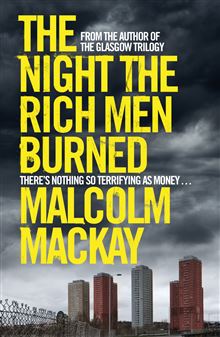
    It’s not just Rankin. There’s a tingle of anticipation when I’m about to start a new Tim Dorsey and discover what Serge A Storms has got up to now. I’m really excited about the third in Malcolm McKay’s superb Glasgow Trilogy featuring hitman Calum MacLean. I was sad to see the end of Ray Banks’ Cal Innes novels, and I’m always a bit disappointed when Michael Connelly brings out a legal thriller instead of a Harry Bosch one. But sometimes familiarity brings not delight, but disappointment.

    I’ve just given up on the latest Peter Robinson book, Children of the Revolution. It’s one of his DCI Banks books, and it suffers badly from two related problems: the crime and its investigation isn’t very interesting, and the hero’s a bit of an arse. I’d noticed the arse thing in previous books – like many fictional detectives, Banks appears to be at least partly an exercise in authorial wish fulfilment: he’s the super-smart man who all the laydees want to have sexy time with because he has an awesome record collection and an interesting car – but I’m usually enjoying the ride too much to get too irritated by it. This time out the ride wasn’t much of a ride.

    I suspect publishing may be rather like the music business used to be: there’s a certain timetable to follow, a treadmill of write/release/tour/write/release/tour that can mean product must be produced even if the product isn’t quite there yet. That often resulted in dreadful albums – the famous “difficult second album” written on tour about how horrible it was to be on tour – and I’m sure it’s the cause of dreadful books too. That, and the other danger of success, which is of course ego. If you’re going around the world, playing to packed rooms – rooms where people are actually paying to see you – that’s bound to mess with your head a little. “The little people lap this shit up!” the author might cry as he bashes out another bestseller.

    I wonder how authors avoid it. Ian Rankin seems to have managed it – the books are still superb and he appears to remain one of the nicest, most well-liked people in publishing – and there are countless other examples, I’m sure. Any names spring to mind – and if they do, any explanation for why they didn’t go off the boil?

  • You’re brilliant, and everyone else is an arse

    I wrote a wee piece about impostor syndrome for .net, and it’s made its way online.

    The satirical website The Daily Mash has a great slogan on one of its T-shirts. “I’m brilliant,” it says, “and everyone else is an arse.” It’s the perfect motto for anyone working in a creative industry, because there’s a very good chance that they feel the exact opposite.


  • Don’t upgrade to Apple’s Pages 5.0…

    …until you’ve checked that features you depend upon haven’t been removed.

    Apple’s done its software thing again: it’s released what’s supposed to be a brand new version of an existing program, but really it’s a brand new program using a familiar name. As this support discussion shows, upgrading to Pages 5.0 means losing a lot of features. And by “a lot”, I mean A LOT.

    The ones I’ve noticed so far are the removal of the ability to see a character count including spaces (something I need when I write for MacFormat), the removal of the status bar and its persistent word count (something I need in almost every document I do), the removal of the ability to change the default zoom level (again, something I need on each document), the ability to select non-contiguous blocks of text. It doesn’t remember if you close the formatting panel, the Autocorrect preferences are gone, the two-page view is gone, the… you get the idea.

  • Sometimes workshops work

    I’ve been pretty quiet about my fiction writing lately, and there’s been a good reason for that: I haven’t been doing any fiction writing.

    The sequel to Coffin Dodgers has stalled because the central crime I came up with was too horrible for a fairly light-hearted read, and the other, more serious book I was doing stalled too. That latter one stalled for various reasons: motivation, confidence, plotting issues, worrying what the hell I’d write after it was finished, obsessing over Breaking Bad, making music, jumping around the room shouting “this is shit! I am shit! Everything is shit!” and so on.

    Hurrah, then, for the Bloody Scotland crime writing festival. I dropped £80 on a day of writing workshops, and over the course of the day the events – a workshop by Liam Murray Bell, another by Alex Gray, a panel featuring agent Jenny Brown and a keynote by Val McDermid – unlocked various book problems in my head. The best way I can describe it is like picking a lock: each bit of the day picked another tumbler until the entire lock was picked.

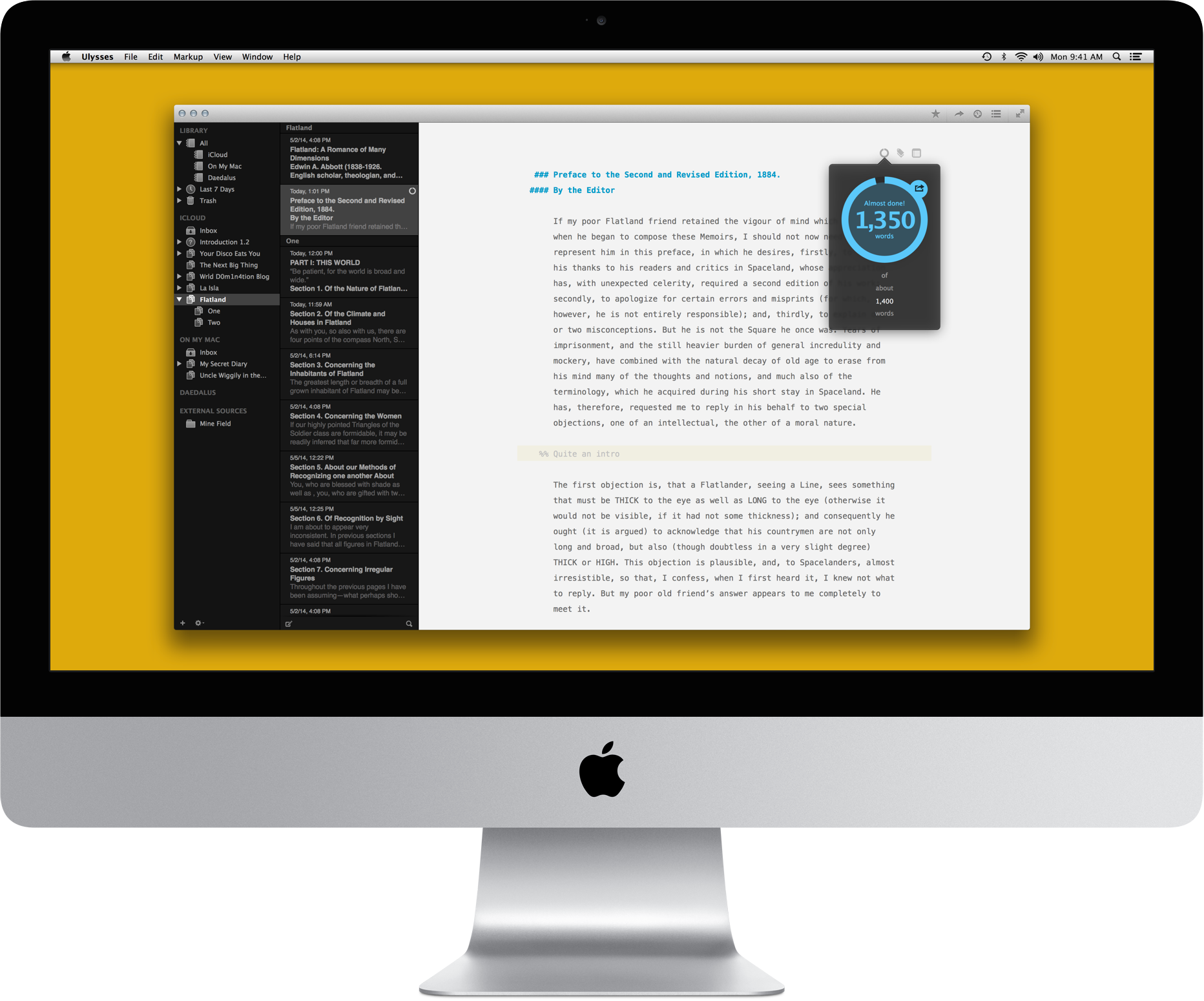
    I’ve spent the last year looking at this word count menu, which has been stalled at 13,000 words. Since Bloody Scotland:

    screenshot_01

    Still a long way to go, but progress at last. I’m excited about it again.

    It’s worth noting that I hate workshops, being in a room with other people, having to act like a responsible adult and so on – so if a miserable sod like me can get something out of a writing workshop, then more normal people might benefit even more.