I’ve been doing a lot of writing this year and that hasn’t left a lot of time for music – or at least, for actually finishing music; I’ve been writing tons of songs that I’m going to hunker down, mix and release very shortly. Here’s a new tune that you can have for free. It’s more pop-y than the other songs we’re working on, I think: big anthemic guitar pop with a typically cheery lyric and one of our trademark huge choruses.
Category: Music
Gratuitous Girls Aloud references
-
An announcement
Bless my cotton socks, I’m in the news: the announcement of my new book is in today’s Bookseller. It’s been *so* hard to keep this quiet so I’m really delighted to say we’re putting the band back together for another 404ink book, this time celebrating Scots music of all kinds.
The book is called Small Town Joy: From Glam Rock to Hyperpop, How Queer Music Changed The Sound of Scotland and it follows queer musicians and influences in Scots music from the 1970s to the present. I’m having tons of fun researching, interviewing for and writing it and I’m really looking forward to sharing it with you in March 2025.
As I told the Bookseller:
“I’m delighted to be getting the band back together again for my second 404 Ink book. Small Town Joy follows Scots musicians from bedrooms to the Barras and beyond, tracing the glittery threads that link punk and pop, folk and funk, rave and rock. It’s a provocation and a celebration, a mixtape dedicated to the tunes and talent that’s crossed genres, genders and generations to change the sound of Scotland.”
-
Whispered words and power chords
Somewhat later than planned, I’m delighted to tell you about the new HAVR EP: Love Will Save Us From Sadness. Which perhaps could have been called “Hey, do you guys ever think about dying?”
It’s our best work yet, I think, and I’m particularly proud of the lyrics: these are songs from a sad place but there’s a lot of positivity and joy in them as well as meditations on grief and loss. Over the course of the EP you’ll find crashing waves of Fender strats, hazy pop, huge layers of distortion and, of course, some anthemic rock.
As ever, we’ve got the music on bandcamp and you can have it for free; I’ll be putting them on the usual streaming services shortly.
-
Handsome devils
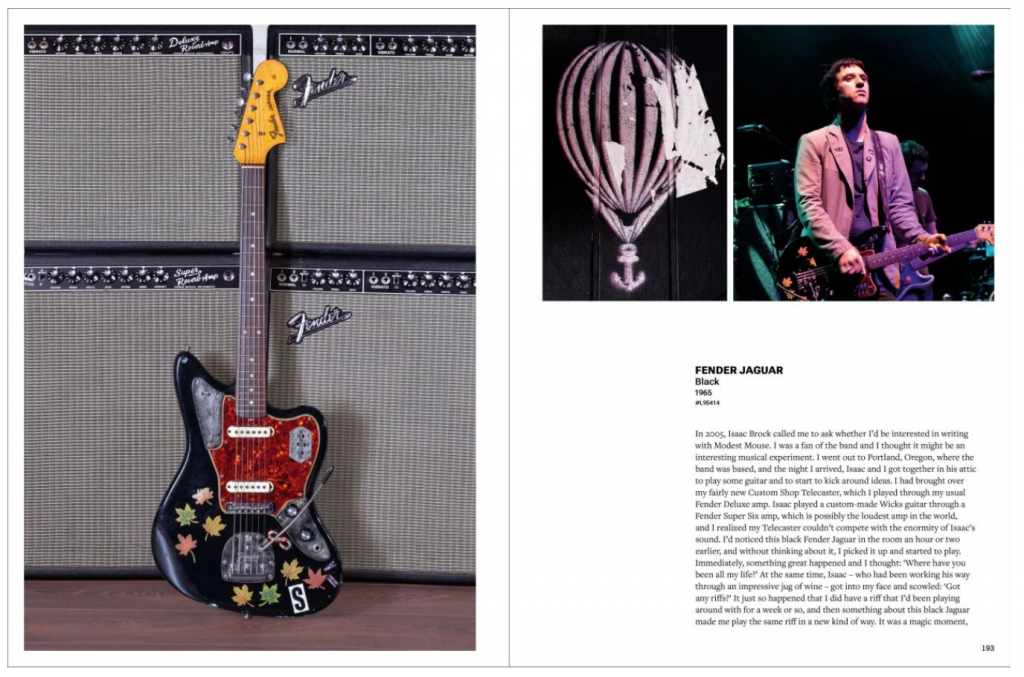
I bought myself a coffee table book as a present. Marr’s Guitars by Johnny Marr is a lavishly photographed guide to some of Marr’s 132 guitars, including some very iconic instruments that played a key role in the sound of The Smiths.
If you love guitars like I do, it’s absolute filth.

Some of my favourite bits are the many close-ups of cracked paint, worn metal and chipped edges, the signs of a guitar well used rather than kept behind glass somewhere. And I love the way many of these guitars move: bought or gifted from the guitarists who influenced Marr or the musicians he played with in his long and varied career, or passed on to other musicians by Marr – a list that includes the likes of Noel Gallagher of Oasis and Bernard Butler.
If you’re looking for a guide to Marr’s sounds you won’t find much here, although a photo of his Smiths-era pedals does give some pretty big hints. It’s a book to sit back and luxuriate with, not one to crib from, and it does that job very well. If like me you’re the kind of person who ooohs at a sparkly stratocaster or a resplendent Rickenbacker, it’s a very beautiful book.
-
Islands in the streams
Most of my tech writing these days is news reporting, but from time to time I get to write something a little more reflective. Here’s a piece on how streaming services have persuaded me to get back into buying music I can touch.
I think streaming is like a fast food drive-through, serving up cheeseburgers that are quick, cheap and convenient. And that’s great; it meets a need, satisfies a craving. It fills a hole. But food can be so much more than just fuel, and music can be so much more than Muzak.
-
Dee eye ess see oh
There’s a wonderful new documentary on BBC iPlayer (and on PBS in the US) called Disco: Soundtrack of a Revolution. It traces disco from its origins in the basement bars and warehouses of 1970s New York to its eventual world domination, and it’s a fantastic programme with a celestial soundtrack.
While the music is of course the focus, it’s also very good at putting that music in its wider context: disco was music by and for marginalised people from the Black, Latin and queer communities, and the backlash against it was often because of precisely that: the Disco Sucks protests, which the show covers and which included a “disco demolition night” in a Chicago stadium, were toddler tantrums by largely straight, cis, white men railing against music embraced by Black, Latin and queer people of all genders. As Mark Anderson would later write:
The chance to yell “disco sucks” meant more than simply a musical style choice. It was a chance to push back on a whole set of social dynamics that lay just beneath the surface of a minor battle between a DJ and a radio station that decided to change formats. More importantly, it was a chance for a whole lot of people to say they didn’t like the way the world was changing around them, or who they saw as the potential victors in a cultural and demographic war.
As one of the interviewees puts it in the first episode, disco was political because the dancers’ lives were political.
-
Moles whacked
Bath Moles, one of the UK’s endangered grassroots music venues, is no more. And Mark Davyd knows why.
Bath Moles is closing because right now, in 2023, it simply isn’t possible to present original live music in a 220-capacity venue without losing money.
He’s right, and he’s also right that by ignoring what’s going on at the grassroots level the music industry is letting those roots rot. Without venues like Moles (and similar venues, such as Glasgow’s King Tuts and recently closed 13th Note) the British arena-fillers of recent years would never have become famous. No Moles no Radiohead, no Oasis, no Massive Attack, no Ed Sheeran, no Blur.
While arena shows and stadium shows break financial record after financial record, smaller venues are dying.
The Music Venue Trust has been trying to change this for years. As Davyd explains:
The truth is that the solution to stopping any more iconic venues closing is simple. It’s achievable, it’s easy, it can be done, and it will have to be done… For five years now Music Venue Trust has been trying to get the live music industry itself to act on these challenges. We have proposed a simple £1 charge on every arena and stadium ticket sold should be put into a fund to financially support venues like Moles so they can afford to programme and develop the artists of the future. We’ve laid out exactly how such a fund would work and demonstrated that it can be done.
This isn’t wishful thinking. It’s exactly what happens in France.
Every British promoter operating in France, every British artist performing in France, every British agency booking acts into France, accommodates this levy within their costing of every show.
The loss of key venues is part of a wider issue we have with the arts in the UK, where participation – as an artist or as an enjoyer of art – is becoming increasingly reserved for the rich and those willing to get into huge debt to see stadium shows with three-figure ticket prices. With successive governments uninterested in changing that – the Tories have previously described large-scale ticket touting as entrepreneurship – it’s up to the music industry to fix what’s left of the roof while the sun shines. The best time to introduce a ticket fund was five years ago. The next best time is now.
-
A true original

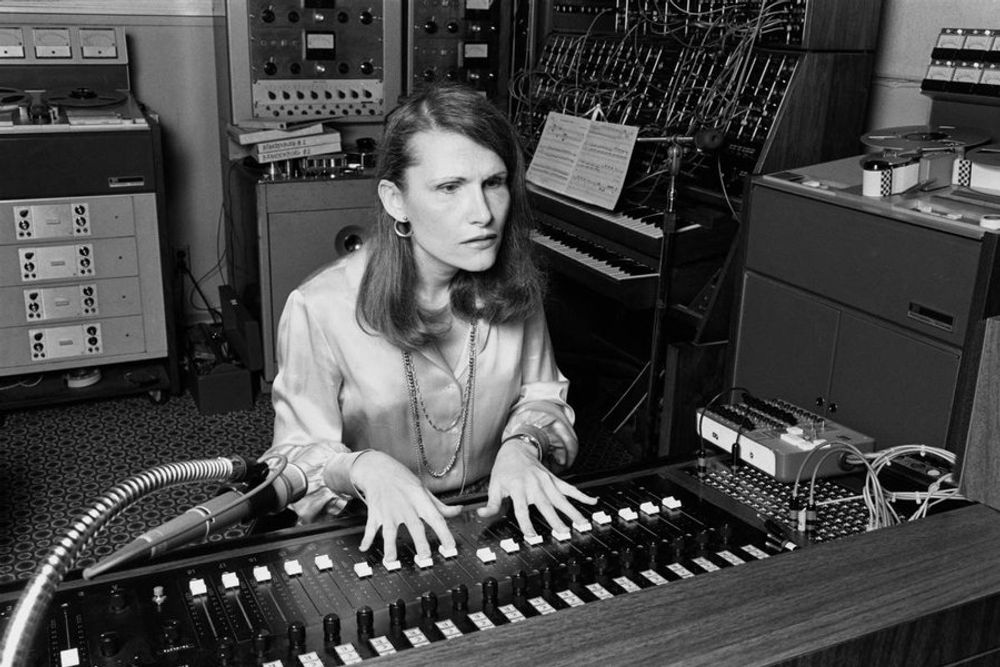
It’s Wendy Carlos’s birthday today. Carlos is one of the most influential electronic musicians of all time: half-artist, half-scientist, she is a pioneer without whom today’s music would sound very different. Her 1968 album Switched-On Bach introduced a generation to the synthesiser, she was an early creator of what we now call ambient music, and her soundtrack for Clockwork Orange is just as astonishing now as it was back in the 70s. You could say she’s the godmother of modern music, particularly electronic music.
Wendy is trans, and transitioned in 1972 – the same year I was born. And sadly her trans status means she missed out on many of the rewards her talent should have brought her: she has previously said that she “lost an entire decade” avoiding performing live (in a few cases she disguised herself as a man, crying in her hotel room beforehand) and working with other musicians because she didn’t want to go public about her transition. Carlos later said that those fears were unfounded – “The public turned out to be amazingly tolerant or, if you wish, indifferent […] There had never been any need of this charade to have taken place. It had proven a monstrous waste of years of my life” – but there were still many indignities, accidental or otherwise. The most recent version of the Clockwork Orange soundtrack that I’m aware of, from 2001, still credits her under her deadname.
I’m a huge admirer of her, and in addition to her recorded work I’d really recommend checking out podcasts in which she’s interviewed; her appearance on History Is Gay is really fun. She’s a true talent as well as a very entertaining storyteller.
-
Motion picture soundtrack
At the risk of sounding like those obviously fake stories that end “and everybody applauded”, I’d like to share a lovely little real-life movie moment that happened to me yesterday.
I was bouncing around the flat with my youngest and, as I often do, I picked up a guitar to plonk away on it. I came up with a wee tune I quite liked so I went over to the computer to record it and try a few other ideas. Mid-way through putting down the bass line, which I was happily headbanging along to, there was a clatter to the side of me and then a beat. My youngest, who’s just recently started learning drums, had sneaked onto the kit. One perfectly executed drum roll later and we were both locked into the same tune, playing along to the recorded guitars. I wasn’t sure whether to laugh or cry – it’s the first time something like this has happened – so I did a bit of both, grinning with watering eyes.
As someone with a lifelong love of music I’ve always hoped my kids would have the same, but I’ve also been very wary about trying to live vicariously through them: the instruments – so many instruments – are there if they want to play them and I’ll enthuse about music all day long, but I’d never try to get my kids to play instruments or listen to music they don’t want to play or listen to. So it’s really lovely to have my eldest fall in love with bass guitar and my youngest fall in love with the drums of their own accord.
-
Pop perfection
I went to see the Taylor Swift tour film last night. It’s one of the greatest live music things I’ve ever seen, and if you’re even vaguely interested in pop music it’s definitely worth a trip to the IMAX. Swift is a fantastic songwriter, an incredible performer and the sound and staging of the show are as good as it gets.
I’m well aware that I’m going to sound like an old woman saying this, but I am one so that’s how it’s going to come out. I think I enjoyed the tour movie more than I would have enjoyed the gig. It’s not just the ridiculous cost of tickets (the cheapest ones I saw were £300) and the travelling to Edinburgh, which is the nearest stop on the tour to me. It’s that an awful lot of people who go to gigs are awful, and have become more so since the COVID lockdowns. It’s not an original observation I know but it does feel like a lot of people forgot how to behave in public, and as a result gigs – particularly big gigs by famous people – are often ruined by shitfaced people loudly talking to their friends or worse, FaceTiming them and loudly yelling at the same time.
The other factor is the venues themselves. Football and rugby stadiums were built for football and rugby, not music, and they are places where sound goes to die. Unless you’re down by the front the wind carries a lot of the top end away, and your view will be of faraway screens. While the staging of Swift’s show (and of other big-gig masters such as U2) is built for big spaces and does a good job of spectacle, the view and sound and experience you get from the not-cheap seats isn’t close to what you get from the cosy seats of the IMAX. And yet while Swift tickets sold out in seconds for Edinburgh, the IMAX in Glasgow last night was only half full.